❌

Reading view

ATHLETICS: PATHS TO GLORY

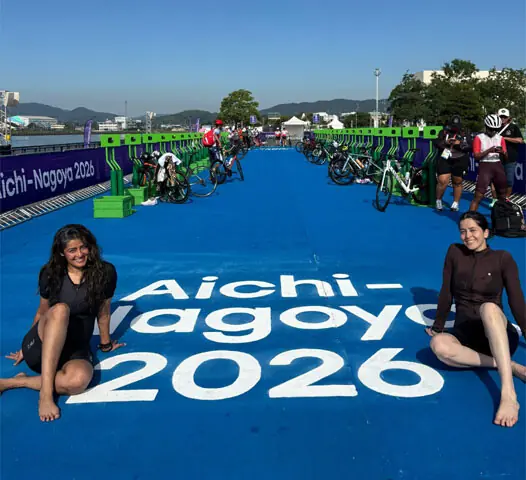
  Pakistani triathletes Sana Arif (left) and Anisha Ali at the competition venue of the 20th Asian Games in Aichi-Nagoya, Japan | Courtesy Sana Arif
Pakistani triathletes Sana Arif (left) and Anisha Ali at the competition venue of the 20th Asian Games in Aichi-Nagoya, Japan | Courtesy Sana Arif

For Sana Arif, the journey to the Asian Games began with a sport she had only learnt a few years earlier.

One of Pakistan’s pioneering women triathletes, Sana learnt to swim only in 2021, and went on to complete three Ironman 70.3 races — a gruelling endurance event combining a 1.9km swim, 90.1km of cycling and a 21.1km run. Born in Kuwait and raised in Lahore before returning to Kuwait, she had built her triathlon career largely through her own determination and training.

In 2026, that journey took her to Japan, where she and fellow Pakistani triathlete Anisha Ali from Hunza became part of the country’s first women’s triathlon contingent at the Asian Games. They were joined by male teammates Ali Hassan, Mohid Sadiq Lone and Muhammad Mustaghis Noor.

Sana’s teammate Anisha, 26, brought a very different sporting background to the team. A national-level athlete in judo, martial arts, rowing, boating, tug-of-war and fencing, she was no stranger to competition or rigorous training. But triathlon presented a new challenge, requiring her to master three disciplines simultaneously. Hailing from Gilgit-Baltistan, she says her upbringing around mountains taught her to embrace challenges rather than shy away from them. This was a mindset she carried with her to the Asian Games.

For Pakistan’s first women triathletes at the Asian Games, the competition was about more than medals. It was about simply showing up…

For Sana, the call that changed everything came almost by chance. She was in Pakistan on holiday when a friend told her that trials were being held for the Asian Games triathlon team. The timing was fortunate. She went along with a handful of other athletes, some stronger cyclists, others accomplished runners. But Sana had one advantage that mattered in a sport demanding proficiency in all three disciplines: she could swim well too.

A week later, she received a call from the Pakistan Triathlon Federation. She had been selected to represent Pakistan at the Asian Games.

The selection marked a first. Pakistan was sending women triathletes to compete at the continental Games, and Sana and Anisha would be part of a small pioneering team, entering a competition in which the country had never before had female representation.

Following her selection, Sana trained largely on her own. The federation president remained in regular contact, checking on her progress and advising her on areas that needed attention. But, beyond that, there was no extensive national high-performance training programme in place.

For a sport that combines swimming, cycling and running — each requiring its own technical skills, coaching and equipment — much of the responsibility remained with the athlete.

Even meeting her teammates was a relatively new experience. Sana had crossed paths with two of them during the trials, but they had been too occupied with the selection process to get to know each other properly. Their team chemistry would develop only after they arrived in Japan.

When they did, something unexpected happened. The team became a source of strength for one another.

“We all knew who we were competing against,” Sana says. “Everyone was friendly, shared their experiences and supported wherever it was needed.” There was also an awareness that they were entering the competition at a disadvantage. “Though we were the weaker team compared to others, none of us even for a second thought of giving up. We fought till the end.”

That spirit extended beyond Pakistan’s team. Sana recalls meeting athletes from other countries, including competitors who were among the best in their respective nations and had professional-level experience. Rather than making her feel inadequate, they did the opposite.

When she explained that the sprint format was very different from the long-distance races she was accustomed to, they reassured her. “They were there to calm me down and tell me that it was all okay,” she says.

Some even pointed out what Sana herself had begun to realise: simply being there had significance. She was representing a country that had never before sent women triathletes to the Asian Games. That, in itself, was an achievement.

The experience in Japan also challenged some of the complaints circulating about conditions for athletes at the Games. For the triathletes, the arrangements were, Sana says, excellent. The team was based in Gamagori, a city designated specifically for the triathlon. Their accommodation was close to the race venue and the beach, with an island visible from their location and a running track in the surrounding garden.

Food was another pleasant surprise. There was a dedicated table for Muslim athletes, as well as vegan options — details Sana appreciated as an athlete travelling from Pakistan. “The staff and people were great, and there was a lot of security too,” she recalls.

The competition itself, however, brought the inevitable nerves. “It was great, but there was also a lot of anxiety, stress and excitement — mixed emotions,” she says.

There were no medals for Pakistan. But for Sana, the value of the experience cannot be measured by a podium finish. If anything, the race revealed the gap between Pakistan’s ambitions and the support required to turn those ambitions into sustained international competitiveness.

Her diagnosis is blunt: Pakistan needs to treat the triathlon as a long-term high-performance sport rather than something athletes prepare for only when a major Games approaches. “If Pakistan wants competitive Asian Games athletes, they shouldn’t start receiving support six months before the event,” she says.

The problems begin with the basics. Athletes need proper equipment, financial support and structured training. Sana points out that Pakistani competitors arrived on rented bicycles, while the tri-suits provided to them were also not suitable for the demands of the sport. They were not even made from the appropriate fabric required for the triathlon.

It is difficult, she argues, to expect international-level performances without first investing in the athletes expected to deliver them. Her point goes beyond the triathlon.

Her teammate Anisha believes more Pakistani women are doing sports, but says many talented girls — particularly those from rural, remote and mountainous areas — still lack the facilities, coaching, financial support and safe spaces they need. Representation matters too, she says: seeing Pakistani women compete internationally can help young girls believe that sport is a possibility for them as well.

Pakistan has repeatedly produced athletes who reach international competitions through individual determination, personal sacrifice and, often, their own financial resources. But competing at the highest level requires more than determination. It requires a system.

For Sana, the Asian Games were therefore both an accomplishment and a starting point. The experience showed her what elite triathlon looks like and, perhaps more importantly, what Pakistan needs to build if it wants to compete seriously in the future.

The response at home has largely been encouraging. There has been criticism too, as there inevitably is whenever Pakistani athletes compete without winning medals. Sana, however, has little interest in allowing that noise to define the experience. “People will always have something to say whether you win or lose,” she says. “No one understands your struggle, and that is okay.”

What she does remember is the overwhelming support. “The amount of positivity I have received from everywhere is unexplainable.”

For a first appearance, perhaps that is the more important result. Sana, Anisha and their teammates did not return from Japan with medals. They returned with something less tangible but potentially more consequential: proof that Pakistani women can enter a demanding sport like triathlon, compete on an international stage and hold their own against athletes from countries with far more developed systems.

The next step is no longer simply getting them to the starting line. It is giving the next generation the training, equipment, coaching and financial support to arrive there ready to compete. The first women have now gone. The question is whether Pakistan will build a path for those who come next.

The writer is a journalist, documentary filmmaker and radio correspondent. Instagram: @madeeha.syed

Published in Dawn, EOS, October 18th, 2026
  •  

Accused in Laiba suicide case killed by ‘accomplices’ firing’, police claim

ISLAMABAD: The accused involved in allegedly defrauding International Islamic University Islamabad (IIUI) student Laiba in the name of a US visa was killed in firing by his own accomplices, police said on Tuesday.

A spokesperson for the Islamabad police confirmed the killing of the accused.

According to him, the under-custody accused was killed during firing on a police team in the jurisdiction of Ramna police station.

The spokesperson said a police team was taking the accused for recovery on his disclosure and pointation when four accomplices on two motorcycles allegedly opened indiscriminate fire on the police party in an attempt to get him freed.

The under-custody accused was injured in firing of his accomplices, while the police team remained safe due to bulletproof jackets and protective measures, the spokesperson said.

The injured accused was shifted to a hospital for medical assistance where he succumbed to his injuries, he added.

The spokesperson said the accused was nominated in the case of Laiba Ijaz, the student who committed suicide in Ramna police jurisdiction, and search operations were underway for arrest of his other accomplices.

He said a brother and cousins of the accused were already in jail, while cases of Rs8.5 million fraud were registered against them with the City Police Station, Mansehra. The deceased was a proclaimed offender in the said case.

On the other hand, police were unable to give any details about recovery of the money looted in the fraud from the slain accused.

Published in Dawn, October 21st, 2026

  •  

Season of uprisings

PERHAPS the most unfortunate aspect of the latest French popular uprising is that it may well facilitate Marine Le Pen’s journey to the Élysée Palace. The far-right contender for the presidency poses as the law-and-order saviour for a France that no longer exists, focusing — like the Trump regime — on immigration as the source of every societal woe.

The unrest that erupted in September with students from a couple of public high schools complaining about shrinking resources and inadequate facilities ballooned into a much broader rebellion. By last weekend, the protests had extended beyond disenchanted pupils and their parents and teachers to a far wider cross-section of society complaining about the cost of living — alongside the usual panoply of vandals, looters, and arsonists. The latter were on the fringes of largely peaceful demonstrations but inevitably grabbed the headlines, featuring images of shattered shopfronts and the historic Limoges town hall in flames.

To be fair, though, almost every report I came across acknowledged the carnivalesque aspect of the huge marches, distinguishing it from the criminality of opportunist gangs. Even President Emmanuel Macron made that distinction in his unimpressive address to the nation on Sunday, but offered little more than retribution for the offenders and a dialogue with ‘stakeholders’. Earlier, in response to the students’ demands, the government promised 3,000 more substitute teachers, but that’s not likely to alleviate concerns.

With France’s national debt at 119pc of its GDP, the usual excuse is that the state cannot afford to throw money at education (or health), let alone consider social spending that might ease wider cost-of-living woes. Yet economists have worked out that a relatively small increase in inheritance tax for the wealthiest one per cent of heirs would suffice for a substantial investment in education, while Thomas Piketty notes that the growth in private wealth means “France has never been richer”, notwithstanding its public debt.

Echoes of 1968 have been discerned in the events in France.

That’s a familiar story. In Europe alone, economic woes have prompted mass protests from the Iberian Peninsula to Albania. The rough end of the European housing crisis featured prominently in Spain, where citizens revolted once more after 87-year-old Maricarmen Abascal was forcibly evicted from her home of 70 years because she could not afford the 230pc rent increase. She died a fortnight later, prompting more outrage.

A snap election has been called for Nov 29 after the right-wing opposition thwarted two decrees from the Pedro Sánchez government aimed at redressing tenants’ woes. Similar concerns have brought Portuguese citizens to the streets, and broader affordability worries have led to protests in Belgium and Italy.

In Albania, meanwhile, the ‘flamingo’ protests that grew from environmental concerns over an island that Donald Trump’s daughter and son-in-law sought to colonise have expanded to include less esoteric concerns, spreading from the capital Tirana to various other cities and demanding the departure of the prime minister and opposition leader.

La France Insoumise, the only viable left-wing force in French politics, has backed the agitators and condemned the violence, but should LFI leader Jean-Luc Mélenchon make it into the second round of the next presidential election, there’s little doubt that the extreme centre epitomised by Macron will opt for Le Pen, effectively authorising a second Vichy regime. Similar patterns are likely to be witnessed in the rest of the continent.

Happily, the prospects in India differ. There is no scope for complacency, but the Cockroach Janta Party and its allies have clearly rattled the Modi regime. Its demise may not be imminent, but it’s no longer inconceivable. Every country deserves a Neha Bora. Several commentators in Pakistan have lamented the lack of parallels.

Sorrow and angst were expressed after 34 pupils and a teacher were killed last week in a roof collapse at a private Peshawar school. In many other countries, such a tragedy would have prompted demands for a nationwide reckoning, not least because of the criminally low state spending on education. But Pakistan, it seems, has better things to do.

Echoes of 1968 have been discerned in the events in France. Back then, university students, eventually backed by the unionised working class, briefly chased away Charles de Gaulle. He returned in apparent triumph but was gone within a year.

Meanwhile, our first field marshal, hailed by his Western sponsors as Pakistan’s de Gaulle, departed for good after a student-led popular rebellion in 1968-69. It isn’t necessary to condone what followed to hail the demise of the Ayub regime as a tremendous achievement. But perhaps it’s also a reminder to be careful what you wish for, given what followed in the next decade.

mahir.dawn@gmail.com

Published in Dawn, October 21st, 2026

  •  

A rubber-stamp parliament

IN a democracy, parliament is not only supposed to legislate; it is also expected to safeguard the national interest and deliberate on key policy matters. That criterion does not seem to apply to our parliament. One seldom witnesses a major foreign or national security issue being deliberated by the ‘representatives’ of the people, and there is hardly any meaningful debate even on critical constitutional amendments and legislation. This ineffectiveness of the country’s highest legislative body reflects the sorry state of democracy against the backdrop of creeping authoritarianism.

Last week, both Houses of parliament approved, within hours and by a two-thirds majority, the decision to remove an elected provincial government and impose a state of emergency and governor’s rule, with no substantive debate. A highly controversial matter was disposed of within hours, with some ministers and leaders of the ruling coalition justifying the action against a provincial government that enjoyed the support of a majority of the members of the assembly, and the arrest of its chief minister and members of his government.

It was obvious that the decision had already been taken elsewhere, and that a parliament of debatable legitimacy was, as usual, expected to rubber-stamp it. Most members may not even have understood the constitutional provisions invoked to declare a state of emergency in a province, or whether those provisions applied to the conditions at hand. It looked like a puppet show. But it was not the first time this parliament blindly toed the line.

Over the past two years, it has passed the 26th and 27th Amendments, virtually destroying the essence of a Constitution that rests on the independence of the judiciary. That was perhaps the most shameful moment in our parliamentary history: ministers were shown the draft only hours before the session, and members were handed it on the floor of the House. Most had not read it when they voted for amendments of critical importance. They were passed overnight.

One can hardly recollect a foreign or national security policy being debated in parliament, nor even in its committees; one wonders whether such policies are discussed and approved by the cabinet at all. The main reason the government has given for its action in KP is that the provincial government was unwilling to cooperate in counterterrorism operations in the province worst hit by the resurgence of militant violence.

The ruling coalition is bound to pay a heavy political price for its undemocratic actions.

But a question that is never answered is whether the state has a well-defined, overarching counterterrorism policy in place, and, if it does, whether that policy has ever been discussed in cabinet, let alone presented before parliament or any of its committees for deliberation. The truth is that we have no clarity on how to deal with this existential threat.

Over the past quarter of a century I have covered and written extensively on Pakistan’s struggle with terrorism, and I can vouch that we have never had a holistic approach to an issue for which the state itself has been responsible. Even now, as militant attacks claim the lives of an increasing number of security personnel, the state is pursuing a one-dimensional policy that relies solely on kinetic operations in the affected areas, with little success. The confusion persists despite the claims of the ‘hard state’.

Balochistan, another strategically located province, has been bleeding for over 25 years with rising separatist militancy. As a result, the state has now lost control of large parts of the province, with an unrepresentative provincial government at the helm. Yet neither the cabinet nor parliament has any say in such a grave national security matter. While the ousted provincial government is being held responsible for the worsening situation in KP, who is responsible for the state of affairs in Balochistan? The reality is that the policy on Balochistan lies outside the domain of the present civilian set-up or the so-called representative parliament.

Unsurprisingly, a critical foreign policy question — Pakistan’s signing of the trilateral Makkah Joint Defence Agreement — has not been ratified, or more precisely rubber-stamped, by parliament. Turkiye, the other signatory to the pact, is still waiting for its parliament to endorse it. It is an extremely important external and internal policy issue, with long-term implications for a country already facing multiple challenges. There is also the question of whether the pact will be activated with the escalation in the Houthis’ attacks on Saudi Arabia.

While a pliant parliament has been conveniently used to rubber-stamp controversial constitutional amendments and laws that curb judicial independence and freedom of expression, there has also been much talk about resetting the country’s administrative structure. The all-powerful and ubiquitous interior minister has publicly declared that the system has collapsed and called for a complete revamp. But what does this projected resetting mean for the present hybrid power structure and for parliament?

There are strong views that emergency rule in KP could be the first step towards extending it to the entire country. Will a parliament that has endorsed emergency rule in KP also rubber-stamp any such action, even though it would further curtail its own powers? One objective of emergency rule is to clear the ground for the resetting of administrative units, an extremely volatile issue for some of the coalition parties, particularly the PPP. The Sindh Assembly has already voted against administrative changes. Still, with the legitimacy question hanging over its head, it would be extremely hard for parliament to resist a measure that would further consolidate authoritarian rule in the country.

The ruling coalition — which has feverishly supported emergency rule in KP, the controversial constitutional amendments that curb judicial independence, and the Peca laws being deployed to control the media — will pay a heavy political price for its undemocratic actions that are paving the way for the winding up of the entire system.

The shadow of authoritarianism looms over the country as a parliament with a dubious mandate has already surrendered whatever little power it had left. The collapse of a system built on a mandate seen as stolen seems imminent, with its patrons planning a new setup. It will be a further leap backward, taking an already unstable state down a dangerous path.

The writer is an author and journalist.

zhussain100@yahoo.com

X: @hidhussain

Published in Dawn, October 21st, 2026

  •  

Missing lawmakers

FOLLOWING the imposition of emergency and governor’s rule in KP on Oct 11, many lawmakers of the PTI remain untraceable. The matter has been raised in parliament and in the courts. During a hearing of related petitions in the Peshawar High Court yesterday, PTI chairman Gohar Ali Khan said that 12 MNAs and 14 MPAs belonging to the KP Assembly had been “picked up”.

Soon after the proclamation of emergency, Federal Minister of State for Interior Talal Chaudhry had confirmed that KP’s non-functional Chief Minister Sohail Afridi and some members of his cabinet were in “preventive custody”. Meanwhile, on Monday, PTI lawmakers in the National Assembly demanded production orders for their fellow party MNAs. Opposition Leader Mahmood Achakzai endorsed the demand, while Raja Nasir Abbas, the opposition leader in the Senate, raised the issue in the Upper House.

One PTI MNA has been arrested at his madressah in Bannu, but the whereabouts of most of the missing lawmakers remain unknown, with their families also in the dark. Some lawmakers have reportedly been in detention since before Oct 11.

This is not the first time that opposition lawmakers in Pakistan have gone ‘missing’. The proclamation of emergency should not, however, mean holding fundamental rights in abeyance. Whether it is members of the assemblies, or ordinary citizens, the Constitution — if that document still holds any value for the wielders of power — guarantees due process to every Pakistani.

Therefore, Mr Afridi, as well as other PTI lawmakers, must be produced before the courts forthwith. The state must announce publicly what they are accused of, so that they can defend themselves, and engage counsel of their choice. Mr Chaudhry had said that if there are cases against the PTI leaders they would be charged, and if no evidence is found against them they would be released.

The state must keep its promise, and also grant the lawmakers access to their families. Members of the ruling coalition — belonging to both the PML-N and PPP — were on the receiving end of the state’s excesses during their time in opposition. Perhaps they should remember their own experiences, and the commitments their leaders made to upholding the rule of law.

Published in Dawn, October 21st, 2026

  •  

Toll on trade

A YEAR after Islamabad severed commercial ties with Kabul over security concerns, the border trade disruption is taking a growing toll on KP, where livelihoods, businesses, farm markets, and a large number of workers depend on cross-border commerce. Bilateral trade has fallen by more than 72pc, from $1.3bn in FY25 to $358m in FY26 — which means fewer customers for local shops, lower earnings for farmers, idle trucks, and lost jobs.

KP was already struggling to attract investment and create work amid rising terrorism; the loss of an established market makes recovery harder. The damage is not confined to the province. Farmers and factories in Punjab and Sindh, too, have been hit, and Pakistan’s exports to Central Asia have been badly disrupted.

Afghanistan has long been KP’s natural outlet because of its proximity and the long-standing commercial and tribal networks. Traders built their businesses around moving food, cement, pharmaceuticals, and other goods across the border. Medical tourism, hotels, and other services catering to Afghan visitors are suffering as well. When crossings shut, traders cannot send their goods to distant markets without facing higher costs, finding new buyers, and adapting to unfamiliar commercial conditions.

In fact, most services cannot be shifted at all. Rerouting shipments is not an easy fix. Pakistan’s shortest land routes to Central Asia run through Afghanistan. Alternatives mean longer distances, higher freight costs, and thinner margins. Small enterprises with little financial cushion are the most exposed to prolonged border trade closures.

KP needs expanding markets and productive investment to employ a growing workforce; it cannot afford to lose existing ones before alternatives are in place. Islamabad has valid security concerns — the Taliban must prevent Afghan territory from being used for attacks on Pakistan. But border closures also hurt citizens on both sides, who have nothing to do with Kabul’s policies.

Islamabad must find the right balance between its security priorities and the economic strain on KP’s residents. Sustained efforts to obtain genuine security assurances from Kabul and carefully monitored arrangements for legitimate trade may offer a way to protect both. It should also assess the losses of traders, transporters, and farmers, and help businesses find new markets. The government must protect its people from terrorism without restricting their livelihoods.

Published in Dawn, October 20th, 2026

  •  

ECONOMY: The Missing Entrepreneur of Sindh

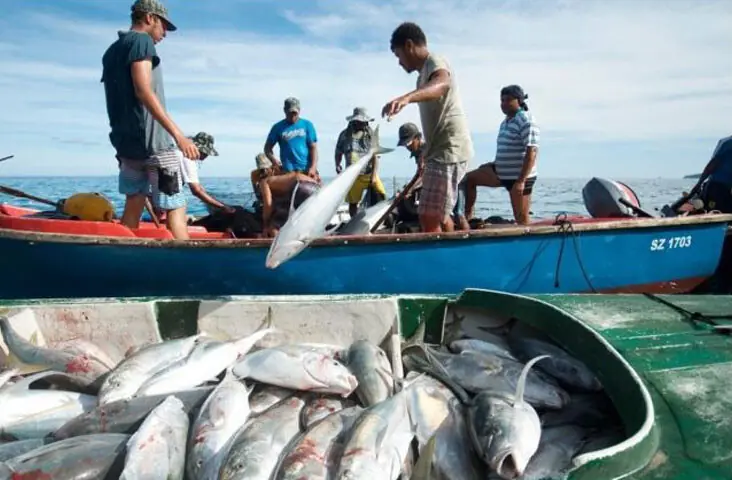
  Fishermen pictured along the coast of Sindh: despite an abundance of agricultural produce, fisheries and traditional crafts, Sindh’s potential has not resulted in local businesses that could create jobs beyond agriculture | AFP
Fishermen pictured along the coast of Sindh: despite an abundance of agricultural produce, fisheries and traditional crafts, Sindh’s potential has not resulted in local businesses that could create jobs beyond agriculture | AFP

During a recent visit to Borneo island in the Malay archipelago, I came across a shrimp farm on the coast of the rainforest-covered island, run by a Chinese woman entrepreneur. Using a seawater reservoir behind a mangrove forest, she had built a business exporting shrimp around the world.

My mind drifted home to Pakistan’s 1,058-kilometre coastline, along Sindh and Balochistan. Why, I wondered, do we see so little aquaculture of this kind?

I was reminded of a conversation I had with the owner of a hatchery recently established in Gharo in Sindh. He told me that one of his biggest worries was transporting the hatchlings quickly and safely to fish and shrimp farms in Muzaffargarh, Punjab.

The irony struck me. The hatchery is in coastal Sindh, close to the sea and the Indus delta, yet its young fish and shrimp have to travel hundreds of kilometres inland to find farms. I asked him why people were not investing in fish and shrimp farming in Sindh? He did not have a clear answer, except to say that there were not enough investors and the business climate is also not supportive.

But the lack of investors is not really an explanation. It is itself a question.

The problem in rural Sindh may not be a lack of capital, but its concentration — and the failure to create the conditions in which small businesses can grow into industries

Sindh has fertile land, a long coastline and a river, alongside abundant agricultural produce, livestock, fisheries and traditional crafts. Yet much of this potential has not translated into local processing, packaging and cold-chain businesses that could create jobs beyond agriculture. Why did this not happen?

THE AGRARIAN DIVIDE

Economic historian Imran Ali has documented how British canal colonies transformed western Punjab from the late 19th century. Irrigation brought semi-arid land under cultivation, encouraging commercial agriculture and the growth of new settlements and market towns. The colonial project also served revenue, political and military objectives. Regardless of their motives, the economic landscape was transformed.

Sindh too underwent an irrigation revolution, particularly after the Sukkur Barrage opened in 1932. But perhaps the social structure on to which this new agricultural wealth was grafted was different.

Economist Mahmood Hasan Khan points out the growth of small owner-cultivators and market relations in parts of Punjab, while the older landlord-sharecropper structure remained much stronger in Sindh. Economist Akmal Hussain argues that owner-cultivators have greater incentives to invest, potentially generating the savings and demand needed for industrialisation.

Where agricultural income is concentrated in fewer hands, the pattern of investment may be different.

THE CONCENTRATION OF CAPITAL

It would, however, be too easy to explain Sindh’s predicament simply by invoking “feudalism.”

Political economist Akbar Zaidi argues that agriculture in Pakistan has undergone a substantial capitalist transformation. Commercialisation and the ‘Green Revolution’ brought capitalist farmers, machinery and wage labour and, in some areas, small manufacturers, skilled workers and service businesses.

Sindh’s sugar mills, cotton ginning and rice milling show that agricultural wealth did become industrial capital. But large enterprises owned by wealthy families are not the same as a broad base of independent businesses. Both represent investment and capitalism, but the latter creates a much wider entrepreneurial class.

A farmer investing in transport, a workshop repairing agricultural machinery or a manufacturer producing spare parts can generate further demand for suppliers, traders and services. Why has this chain remained so weak across much of rural Sindh?

THE CITY AND THE HINTERLAND

Perhaps the problem was never simply the absence of capital. It may have been the concentration of capital and the failure to spread entrepreneurial investment widely enough through its towns and communities.

And then there is Karachi. Economist Kaiser Bengali has described Sindh as having a “dual identity”: Karachi on one side and the rest of the province on the other.

Partition created another rupture. Much of Sindh’s Hindu mercantile and entrepreneurial class migrated to India, while Muslim migrants from different parts of the Subcontinent brought new commercial skills, networks and capital to Karachi. Over the following decades, Karachi became Pakistan’s great port, financial centre and industrial metropolis. For someone from rural Sindh with money to invest, a good education or entrepreneurial ability, Karachi offered far greater opportunities than his own town.

Perhaps herein lies another paradox. Sindh generated considerable wealth at both ends of its economy: agricultural wealth in the countryside and commercial and industrial wealth in Karachi. Yet the economic centres in between remained relatively weak.

BEYOND INDUSTRIAL ESTATES

History, however, can only explain so much. Nearly eight decades have passed since Independence, and we also have to ask what we have done since then. Why have Sukkur, Larkana, Nawabshah, Mirpurkhas, Khairpur, Thatta and Badin not developed stronger clusters of small industry?

Industrial estates and special economic zones have been established or proposed outside Karachi, but infrastructure alone does not create an industrial ecosystem. Regional businesses also need technical training, accessible finance, shared processing and testing facilities, and reliable market connections.

Perhaps the more fundamental question is why we wait for investors instead of creating the conditions that produce investors.

THE MISSING STEP

A recent article by journalist Owais Tohid about thousands of women establishing tiny businesses across rural Sindh provides an interesting clue. These women are raising livestock, stitching clothes, producing handicrafts and running other small businesses with relatively modest amounts of capital.

Perhaps entrepreneurship was never absent. The problem is what happens next. How does a woman employing herself begin employing five or ten other women? How does a workshop become a factory? How does one successful shrimp farm become twenty, surrounded by hatcheries, feed suppliers, cold storage, processors, transporters and exporters?

This brings me back to that hatchery in Gharo. The coastline is there, as are the seawater, the hatchery, the technical knowledge and the market. And yet the hatchlings travel hundreds of kilometres to find the entrepreneurs willing and able to farm them.

Successive governments in Sindh must also bear part of the responsibility. A political economy historically dominated by large landowners may not have had sufficient incentive to create a broad class of independent entrepreneurs.

Industrial estates have been established, but we have rarely pursued industrial development around the natural strengths of individual regions with the persistence it requires: dates in Khairpur, fisheries and aquaculture along the coast, rice in upper Sindh, fruit processing around Mirpurkhas, and livestock and dairy across much of the province.

Nor can poverty alleviation alone be an economic policy. There is an obvious need for social protection in a province where millions remain poor. But cash support, however necessary, cannot by itself create economic mobility. The larger challenge is to create the conditions in which people can move beyond poverty.

A tenant becoming an owner, a woman running a tiny business beginning to employ others, a workshop growing into a factory, or a farmer’s produce being processed and packaged before it leaves the district rather than being sent elsewhere for someone else to add value to it — these are perhaps better measures of economic development.

The challenge for rural Sindh, therefore, may not simply be to find more investors. It is to understand why enterprise has failed to spread despite the province’s considerable natural resources and agricultural wealth, and then to create the conditions in which capital, skills and entrepreneurship can come together.

Ultimately, the measure of development should not merely be how many poor people the state is able to support, but how many people are able to reach a point where they no longer need that support.

The writer is an entrepreneur and President of WWF-Pakistan

Published in Dawn, EOS, October 18th, 2026

  •  

Trump & Pakistan

WRITING about Pakistan-US ties is like penning literary criticism of a Shakespearean play. One constantly reinterprets and looks for new answers to old questions.

How does one evaluate Pak-US ties under President Donald Trump? Do Trump’s extravagant compliments to Pakistan’s leadership reflect happy relations between the two countries? The short answer is no. American leaders routinely indulge in hyperbole. Add to it the sales pitch of a marketing ‘genius’, and you get Trump’s effusive but effervescent compliments.

Compared to Joe Biden’s time, US-Pakistan ties have no doubt been elevated, but not upgraded. The uptick stems from more than Trump’s bonhomie with Pakistan’s leadership. The relationship is largely a function of his experimental foreign policy. He is reassessing America’s China policy and relations with Russia, rebalancing ties with traditional allies and partners — to America’s advantage — and deprioritising, though not abandoning, the traditional foreign policy establishment’s overweening ambitions to maintain US global primacy. The emphasis is on unilateralism, the naked use of military power, and economic warfare.

This foreign policy stems from his whims, with his politics oriented towards the MAGA movement and the rich class, especially tech billionaires; tariffs used as leverage not only for trade but also for geopolitical gain; and a search for greater market share for America, as well as potential investment and business deals with China and Russia.

Pakistan has been an incidental beneficiary of Trump’s policies, good or bad. It has again tried to play its historical role of rescuer in America’s adventures. It has gained by dramatically enhancing its diplomatic profile in the Middle East and its image in America. Washington appears to appreciate the need to maintain Pakistan’s defence capability for regional stability, especially in South Asia, and to use it as leverage against India.

Pakistan, a populous country and a nuclear power, occupies an important geostrategic position between the subcontinent, Iran, Arabia, Central Asia, Russia, and China. Its strength is an asset, and its weakness a liability. One makes it a useful partner; the other makes it hard to ignore, much less alienate. Washington wants to contain China’s political and economic profile in Pakistan. Alienating it would shut the door on all US influence.

The US benefits from a tangible relationship with Pakistan.

America benefits from a tangible relationship with Pakistan in various areas of cooperation. The Trump administration approved a $686 million upgrade and sustainment package for Pakistan’s F-16 fleet. Separately, a $488m foreign military sales contract was awarded to Northrop Grumman for APG-66 and APG-68 radar engineering and technical support, covering 21 countries, including Pakistan.

Pak-US cooperation is also developing in the economic area, mainly in energy, IT, crypto, agriculture, renewable energy, and critical minerals, where Pakistan is drawing attention as a significant source. America is also the top destination for Pakistan’s exports. The US needs Pakistan’s cooperation to act against transnational terrorists who endanger regional, American, and global security. Counterterrorism cooperation thus continues. Lastly, Washington has always been concerned about a Pakistan-India conflict and will continue to play a crisis management role.

Behind the veneer of Trump’s rhetoric and personalised foreign policy, however, traditional foreign policy seems to be at work, led by China hawk and pro-India Secretary of Sta­te Marco Rubio, which may be circumscribing Pak-US ties. Oth­erwise, how do we explain that neither he, nor the deputy secreta­­ry, nor an under-secretary of state has visited Pakistan? There’s no semblance of a strategic relationship, despite Rubio’s lip service to the idea.

So, is Trump pursuing a dual-track policy, especially regarding the China policy and its derivative India policy, that influences the administration’s approach to Pakistan? Treasury Secretary Scott Bessent hinted at the ‘real’ China policy when he said in an interview that the relationship with China poses an unprecedented national security challenge. “China is … the biggest economic threat, and they’re the biggest military threat,” he said.

The reality is that Trump hasn’t done anything extraordinary for Pakistan that we might fear losing. Much of his freelance foreign policy will likely depart with him, but the impact on Pak-US ties might be minimal. US-Israeli wars in the Middle East have dented America’s standing in the region, providing a fresh rationale for continued engagement with Pakistan in the post-Trump world.

Bottom line: The relationship with the US is necessary but not indispensable. We should keep it that way to safeguard our strategic autonomy.

Published in Dawn, October 20th, 2026

  •  

Emergency matters

THE new setup in KP is taking shape rapidly and quietly. While everyone seems focused on the collective meltdown in the PTI, the province the party ruled until recently is busy setting up a new structure.

The governor announced his new advisory council within days, while the emergency-stricken districts have been provided with their own administrative machinery. A special emergency has been declared in the former Fata regions as well as Bannu, Lakki Marwat, Tank, and Dera Ismail Khan.

According to the information available in news reports, these regions will now be managed by a new Area Development Secretariat (ADS), which is to be headed by a bureaucrat, Yahya Akhundzada, an additional chief secretary (ACS). It is being reported that he has been given extensive powers akin to those of a cabinet or a provincial government. Along with this, a new council has been formed, consisting of four people from each district to assist him. An additional inspector general (AIG) of police is also part of this council. Most of these members have been selected, with a few refusals; not bad for a week’s worth of work.

At the federal level, a committee headed by Ishaq Dar has been formed to supervise the province. Besides Dar, the committee includes several PML-N stalwarts, mostly from Punjab, such as Rana Sanaullah, Azam Nazeer Tarar, and Attaullah Tarar. However, other members include Amir Muqam from KP and Khalid Maqbool Siddiqui from Karachi.

At times, the plan appears more ambitious than merely addressing terrorism and governance in KP. In the past week, whispers have been heard around Islamabad; well-informed journalists have also appeared on television and suggested that this setup might decide the future of the other provinces as well. If the technocratic cabinets are able to perform well, there is a chance similar setups may be introduced elsewhere. Faisal Vawda, who, too, has much inside news to share, has suggested or hinted at something similar.

This is lent credence by the manner in which the new administration has been installed in KP, where governor’s rule is accompanied by a special setup for the 12 districts; if there were ever to be smaller provinces in the country, these districts could easily take the form of a ‘South Khyber Pakhtunkhwa’ province.

At times, the plan appears more ambitious than merely addressing terrorism and governance in KP.

Be that as it may, all these ambitious plans — if there are any — will have to wait until the wrinkles are ironed out in KP. I say this because, from the outside, there seems to be a lack of clarity at the moment.

There is some confusion about how this new setup will work. After all, not only is there a governor now in charge of the province, but there is also a powerful ADS for southern KP. So, will the ADS report to the governor or directly to the federal government? That is a bit unclear at the moment.

This also raises the question of what the ADS’s relationship will be with the provincial bureaucracy. If the ACS and AIG report directly to Islamabad, will this eliminate the need to work with Peshawar entirely?

Journalists from the province say the ADS and the federal government will handle development and security directly. This is why the ADS, according to one colleague, is even being given its own set of finance and planning officials. These officials will be part of the new secretariat.

But what will happen in matters that do not fall under development and security, such as education and health?

That is why some feel that, for the moment, there may still be a need to coordinate with the provincial bureaucracy and thrash out other issues. And if that is the case, it can cause delays and hurdles. After all, red tape and bureaucratic hurdles are routine in the country, but if, in this case, rules need to be figured out or made anew, the delays might be more severe.

In addition, as mentioned earlier, there is confusion over how many issues in this special region will go directly to the prime minister or the provincial setup/governor before being routed to the prime minister. While journalists from KP feel the prime minister and Islamabad will deal with all matters directly, the ADR spokesman said in a television interview that the prime minister would handle issues in which the governor and his team could not address the needs of the 12 districts.

If the prime minister, or rather the federal government, is to look after every issue, will decision-making power go to the Dar-led committee? It is hard to imagine that Prime Minister Shehbaz Sharif will have the time to look into every matter individually. The prime minister also prefers to manage matters through committees. But how efficient will this prove to be? Of course, the assumption is that decision-making will be quick and efficient because it will take place elsewhere, and the committees we see exist in name only.

No doubt, this is always a possibility, but how many governance issues can be managed this way? Development and security decisions can perhaps be handled in this manner, but will there be no other issues? Though one should remain optimistic, I suppose.

However, let me venture to say that if this new technocratic setup proves to be successful and efficient, it might just end up increasing centralisation of decision-making, which is far removed from the idea of local government and service delivery at the people’s doorstep. For residents of the 12 districts, Islamabad and cities beyond are much farther away than Peshawar.

The writer is a journalist.

Published in Dawn, October 20th, 2026

  •  

Burnt bridges

A WEEK after the federal government imposed governor’s rule and emergency in KP, PPP Chairperson Bilawal Bhutto-Zardari invited the opposition to engage ‘positively’ with the centre, saying this could lead to their reversal.

Mr Bhutto-Zardari, addressing reporters at a Sunday memorial for the 2007 Karsaz attack on his late mother Benazir Bhutto’s homecoming procession, spoke about the need for a national effort to address the growing economic crisis, resurgent terrorism, and Pakistan’s increasingly dysfunctional electoral system. But his offer, however well-meaning, stands little chance of leading to a political breakthrough in the current climate. Without concrete confidence-building measures initiated by the ruling parties, the opposition is unlikely to put much faith in mere assurances, given that the centre has crossed a major political red line by deposing an elected provincial government and supplanting it with a setup handpicked by Islamabad.

Mr Bhutto-Zardari seemed to be missing the point when he called the ‘non-functional’ KP chief minister a “coward” who was “not ready to defend his own land”. Whatever his failings, the people of KP had elected him, and the remedy lay with them, not with Islamabad. By forcing him aside, the centre has signalled that it does not need public consensus to do as it pleases. The centre’s dispute with KP, after all, was not about whether terrorism needed confronting, but how. KP had resisted the centre’s approach to fighting terrorism, and the resulting stand-off had stymied any progress. In dismissing the provincial government, the centre had signalled that security policies would be prescribed for the province rather than derived in consultation with it. That bridge has already been burnt.

It is commendable that the PPP chairperson is at least talking about a path back to normalcy, but the PPP is a partner in the very government that imposed governor’s rule. If it wants the decision reversed, it should convince its ally in Islamabad, not ask the opposition to be ‘positive’. It is hoped that the PML-N will also reconsider its position. The latter party would do well to recall that, in 2009, when its government in Punjab was dismissed and governor’s rule imposed, it had itself joined a ‘long march’ on Islamabad to press its demands.

It is unbecoming of that party to have denied its opponents the same right to protest now, when it is in power. It will not be easy to build bridges with the opposition, but the PML-N, more than any other party, has the power to concede some ground to show goodwill. It should take up the National Assembly opposition leader on his offer to engage the jailed PTI chief, and facilitate that effort if it is serious about national reconciliation and a unified response to Pakistan’s crises.

Published in Dawn, October 20th, 2026

  •  

SOCIETY: BALOCHISTAN’S UNENDING CYCLES OF POVERTY

 Farm workers in Balochistan often work more than the stipulated eight hour daily, while often earning less than the minimum wage. Some even work for food | Photo by Zaheer Baloch
Farm workers in Balochistan often work more than the stipulated eight hour daily, while often earning less than the minimum wage. Some even work for food | Photo by Zaheer Baloch

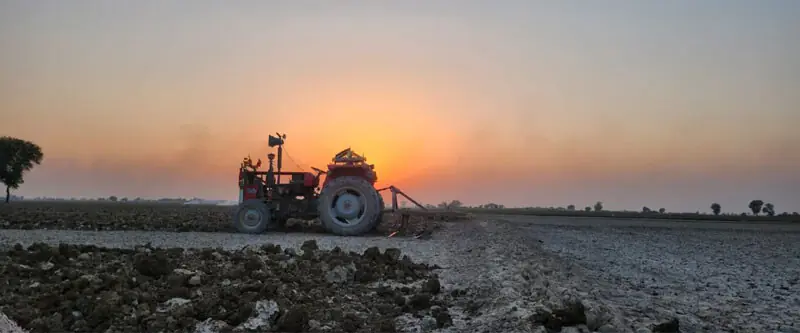
Mian Dad has spent much of his life ploughing fields on a tractor. He started as a young boy, helping drive a tractor that tilled land for a local landlord in his village in Tamboo, Nasirabad district, Balochistan.

Now, Mian drives the tractor himself, earns just Rs14,000 per month — a little over a third of the provincial minimum wage of Rs37,000. During peak cultivation season, he tells Eos, the work-day can stretch up to 16 hours — double the standard eight hours.

But Mian isn’t complaining. He now makes “a lot more” than what he earned as a tractor helper. It is still not enough, however, to feed his family, including his 11 children. “We look for odd jobs or work for food during the off-season,” he says. “When that doesn’t work, we have to beg.”

For agricultural workers in Balochistan, a lifetime of labour may still not be enough to escape poverty. Debt, unequal sharecropping arrangements and climate shocks can trap entire families in a vicious cycle of dependence

THE BOTTOM RUNG

Mian’s situation is not unusual in a province where poverty remains widespread. An estimated 47 percent of the population in Balochistan lives in poverty, compared with a national average of 28.9 percent, according to the Pakistan Economic Survey 2025-26.

Poverty is particularly acute in rural districts, where livelihoods depend mostly on agriculture. In a 2025 study by the global not-for-profit Population Council, District Vulnerability Index for Pakistan, 17 Balochistan districts were listed among the 20 most-vulnerable districts in the country. Nasirabad was towards the bottom in both provincial and national lists, ranking 11th most vulnerable out of 31 districts in Balochistan and 13th most vulnerable among the 129 districts assessed nationwide.

Agriculture is the main source of livelihood in Tamboo, Mian’s hometown, which has a population of around 130,000. As elsewhere in Balochistan, agricultural production in Tamboo involves a network of tribal chieftains, landlords, intermediaries known as bothars, farmers, tractor drivers, technicians and sharecroppers.

Workers like Mian Dad occupy the lower rungs of this hierarchy, often putting in long hours to cultivate the land. Locally, they are also referred to as begaar — which refers to a historical practice of forced, unpaid labour that was widely practised during the British era, including in princely states.

In today’s Balochistan, unpaid labour may arise from a lack of alternative employment, obligations linked to debt or, in some cases, pressure arising from tribal and social relationships.

INHERITED DEBT

It can take decades for those starting work as peasants to move up in this hierarchy.

Qadir Naseeb, whose family worked as peasants for generations in the Chattar area of Nasirabad, says his family didn’t have access to clean drinking water. He recently installed a tubewell near his hut. “Before [installing] the tubewell, the women in my family had to filter the water through a cloth to make it drinkable,” he tells Eos.

One of the reasons why upward mobility can take peasants decades, explains local researcher Muhammad Nawaz Khosa, is because they are often caught up in a cycle of debt. “Households often have to rely on interest-based loans to meet everyday expenses as well as the costs associated with cultivating the very land on which they work,” he explains.

In his book Balochistan Ki Nehri Zaraat [Canal-Irrigated Agriculture in Balochistan], Khosa writes that peasants often work as sharecroppers. In such cases, the peasants are responsible for managing production and handling expenses — often financed in the form of loans acquired from the landlord’s bothar.

The eventual harvest is then divided between the landowners and the peasant, with the peasant using his share of the harvest to pay off the loan. If the harvest fails to return a profit, the loss has to be borne by the peasant, leaving him mired in a vicious debt trap.

Such agreements also don’t factor in force majeure — whether it’s a pest attack or floods. In the case of a loss of harvest, the sharecropper has to pay off his debt to the landlord. In some instances, writes Khosa, peasants are also expected to bear the expenses associated with the landlord’s hujra [guest area], a system rooted in longstanding feudal traditions of the region.

This is something that Mian Dad and many others have experienced. Mian had to borrow Rs200,000 following the floods in 2022. The amount equals more than 14 months of his pay. While Mian was repaying the debt, a medical emergency forced him to take on another loan. He says he is now trapped in a cycle of that debt, worried that his future generations will have to work to pay it off.

Parts of Balochistan continue to exhibit forms of bonded labour, particularly within the households and estates of tribal and feudal elites, says Asad Baloch, a researcher who hails from a tribal family. Baloch says this practice has “considerably decreased” in Nasirabad as compared to previous generations. “But yes, remnants of such practices can be found in parts of the province,” he tells Eos.

In rural and remote parts of the province, he explains, the tribal chiefs function not just as cultural leaders, but as economic masters. Impoverished tribesmen often rely on their chiefs for basic survival, protection and mediation.

In some villages, there is a custom where one child from every household has to be in service of the tribal chief. In some cases, individuals work as guards or domestic workers, for minimal wages. Over time, limited economic opportunities and restricted access to education and alternative livelihoods continue to make it difficult for some individuals to pursue other means of earning a living.

RESETTING THE CLOCK

The 2022 floods that pushed Mian Dad into debt were not the first to disrupt the relationship between landlords and agricultural workers in Nasirabad. Dr Abid Mir, a lecturer at Government Degree College, Quetta, says the 2010 floods weakened some landlords’ hold over the families who worked for them.

“Widespread agricultural losses weakened some landlords’ ability to retain regular workers, prompting many peasant families to seek employment elsewhere,” he tells Eos. For some, this opened up the possibility of finding work on their own terms and seeking better education, healthcare and basic amenities for their families.

But the effects of climate-related disasters have been uneven. Families who remained in rural areas continued to face crop losses, declining incomes and mounting debts, Mir explains. For those already struggling to make ends meet, another failed harvest or flood could mean borrowing again simply to survive.

The same disaster that may loosen one family’s dependence on a landlord can deepen another’s debt to one. For agricultural workers such as Mian Dad, recovering from a disaster is not simply a matter of rebuilding a home or returning to the fields. It can mean years of repayment — and the fear that their children will inherit the debt.

The writer is a journalist and researcher.
X: @ImtiazBaluch

Additional input and editing by Hussain Dada.
X: @hydada83

Published in Dawn, EOS, October 18th, 2026
  •  

Climate exodus

SOUTH Asia may see a vast movement of people as climate change makes parts of the region harder to live in. According to the International Organisation for Migration, as many as 40.5m people could be forced to move by 2050. The warning deserves attention for what such displacement could mean for a region already struggling with poverty, overcrowded cities, unemployment, and competition for resources.

From the sinking coastlines of Bangladesh to the drought-hit districts of Pakistan, climate pressures are threatening millions of livelihoods. But it is not just the communities directly affected that will feel the impact. As farmers abandon unproductive land and families leave disaster-prone areas, towns and cities will have to accommodate growing populations.

Competition for housing, employment, water and public services could make life harder for poorer communities and generate social tensions. Countries with limited resources may struggle to provide for both established residents and newcomers. The danger is particularly acute in South Asia, where weak regional cooperation could hinder a coordinated response. Climate displacement could then become another source of instability unless governments prepare for it together.

The warning raises questions about how Pakistan intends to accommodate people whose homes and livelihoods become impossible to sustain. Our urban centres already struggle with inadequate housing, sanitation, transport, and job opportunities. An influx of climate-displaced families could deepen these problems.

Yet migration need not mean destitution. As the IOM chief has pointed out, moving can itself be a means of adapting to climate change. Pakistan must, therefore, recognise climate mobility as a permanent consideration in development planning. Provincial and local governments need reliable information about communities likely to leave, destinations likely to receive them, and services required to support their transition. Land-use policies, affordable housing, vocational training, and access to schools and healthcare must reflect changing population patterns.

Equally important is protecting the rights of displaced families, who should not lose access to documentation, education or public assistance simply because they have moved. Regional cooperation on forecasting, disaster preparedness and population movements could help countries anticipate shared pressures. The challenge is to ensure that people forced to move by climate change can rebuild their lives.

Published in Dawn, October 19th, 2026

  •  

The data centre and water question

AS plans for large data centres take shape in Pakistan, the debate has centred on jobs and investment, while a more basic concern has received little attention: water.

Why would a data centre compete for water? Computing generates heat, and evaporating water is one of the most cost-effective ways to remove it. By 2030, the United Nations University projects that data centres globally will use nearly triple the combined electricity usage of Pakistan, Bangladesh and Nigeria, with an associated water footprint equal to the basic domestic needs of 1.3 billion people. In Pakistan, the per capita water availability had plummeted from 5,600 cubic metres in 1947 to roughly 930 by 2023.

Some weeks ago, we argued in these pages for bringing compute to where Pakistan’s surplus electricity sits, thereby monetising capacity that consumers already pay for. Water is integral to this equation, and a deeper analysis is warranted, which we aim to provide here.

How data centres keep cool: Data centres are usually cooled through open evaporative systems, which results in most of the water being lost to the atmosphere. However, these systems are comparatively cost-effective and relatively energy-efficient. Other options include closed-loop systems that recirculate water or a coolant through sealed pipes, which can cut freshwater use by up to 70 per cent; and direct-to-chip and immersion cooling, which bring liquid straight to the processor. Additionally, dry cooling uses almost no water but, by Google’s own estimate, about 10pc more energy. So there is a trade-off in cost and energy, but for a country like ours that already pays for idle generation, it is a strategic investment choice.

Running the numbers: A 2016 US Department of Energy study puts average on-site data centre water use at 1.8 litres per kWh. At that rate, a 1 GW campus running continuously would consume about 16 million cubic metres a year, roughly 0.01pc of the 175 billion cubic metres the Indus supplies annually. Sky47’s 8.5MW Karakoram-01 would, based on these estimates, use around 134,000 cubic metres a year. Even accounting for Pakistan’s hotter temperatures, these figures remain marginal. Hence, nationally, data centres are not Pakistan’s water problem.

Thirsty infrastructure is workable when siting follows the water.

However, locally they can be. A 1 GW campus would draw about 10 million gallons a day from a single source, the same volume that Karachi’s new Rs14bn Dumlottee pipeline will add for the Defence and Clifton areas, in a city receiving 550-650 million gallons daily against a demand of around 1,200 million gallons. The burden falls on the nearest communities.

Pakistan has faced this question of siting before with its nuclear power plants. Reactors with cooling towers consume about 2.5 litres per kWh, according to a 2012 review by the US National Renewable Energy Laboratory. At 6,755 GWh generated by Karachi’s K-3 unit in 2024, by the Pakistan Atomic Energy Commission’s count, that’s about 17 million cubic metres a year, or about 12 million gallons a day, more than a 1 GW data centre campus. Pakistan avoided that burden through siting: K-2 and K-3 sit on the coast and cool with seawater, while Chashma draws on the Chashma-Jhelum link canal. Thirsty infrastructure is workable when siting follows the water.

The problem at the foundation: Pakistan’s water crisis lies elsewhere. More than 93pc of its water goes to agriculture, and over 60pc of that is lost in conveyance and application. Four crops (rice, wheat, sugarcane, and cotton) consume over 80pc of water resources yet contribute about 5pc of GDP; Pakistan generates just $1.4 of GDP per cubic metre withdrawn, the eighth-lowest in the world. The parallel with power is striking: consumers pay for electricity that never reaches them, and the country withdraws water that never reaches a crop.

The way forward: Three interventions follow:

  1. Immediate: make water a licensing condition, with energy-compute zones mandating closed-loop or dry cooling, public reporting of water use, and siting away from stressed aquifers. Dubai has promoted recycled water in district cooling since 2008, and Qatar has long incentivised non-potable cooling.

  2. Short-term: cool with wastewater. Pakistan treats barely 1pc of its collected wastewater. Meanwhile, Chennai’s tertiary treatment plants are designed to recycle a fifth of the city’s sewage for industry, and Amazon, which air-cools its Indian data centres, will use treated sewage in upcoming facilities in Mumbai and Hyderabad. Operators could co-finance similar plants in Karachi and Lahore.

  3. Long-term: reform agricultural water use. Punjab’s World Bank-backed irrigation programme improved over 15,000 watercourses while promoting drip irrigation and laser-levelling. Scaling it nationally and shifting acreage from rice and sugarcane towards pulses, vegetables, and sunflower would save water and cut edible oil imports. Saving just 1pc of the Indus water used for irrigation would supply a 1 GW campus for a century.

Weighing both sides: Both sides of this debate hold part of the truth. Critics are right that a poorly sited data centre can strain a community; advocates are right that the sector will not exhaust a country. Pakistan has missed too many economic waves to let a misframed debate cost it this one. The power and water are there to support the data centre industry. What remains is the discipline to manage matters both wisely and efficiently.

The writers are Fulbright scholars.

shahzaibsaqibwarraich@gmail.com

muhammadhassandajana@gmail.com

Published in Dawn, October 19th, 2026

  •  

Persisting fault lines

HISTORY, it has famously been said, repeats itself first as tragedy and then as farce. Today, it is repeating itself in Pakistan as both tragedy and farce. Recent events have deepened some of the country’s overlapping fault lines — enduring features that have shaped its political landscape for decades. Together they have contributed to its chronic instability and impeded its progress.

It has meant the absence of a calm and predictable environment in which to meet the country’s growing challenges. The country seems caught in a time warp with a power elite ensuring it cannot escape its past.

Four fault lines (there are others too) are laid bare by recent political developments: unceasing confrontation between the government and opposition; centre-province conflict resulting in dismissal of elected provincial governments; parliament’s marginal role in the political system; and weak institutions whose evolution is stymied or independence eroded by predatory ruling elites.

The ongoing confrontation between the PML-N-led government and PTI may have novel aspects but it reflects a long-standing fault line in the country’s divisive politics. Government-opposition conflicts have been endemic in Pakistan’s history, with political behaviour driven by the ethic of war rather than competition. Political leaders and parties have viewed opponents as enemies to be eliminated from the political arena in a terminal conflict, not rivals to compete with, much less accommodated. Branding opponents as disloyal to the country is a well-worn, unseemly tradition. This is evident today by the disingenuous narrative peddled by federal ministers that the ousted KP government was aligned with terrorist organisations.

A culture of compromise, tolerance, and restraint never took root leaving ruling and opposition parties perpetually at loggerheads. This, in turn, opened the door to both direct and indirect interventions by the military, which could always count on support from one political party or another to oust governments and expand its power. Divide and rule strategies pursued by the establishment also fuelled political conflict.

Some enduring aspects of the political landscape are holding Pakistan back.

There were rare moments of political consensus as for example when the 1973 Constitution was adopted, Charter of Democracy agreed (but never implemented) between Benazir Bhutto and Nawaz Sharif in 2006 and in more recent years, the unanimous passage of the 18th Constitutional Amendment in 2010. Beyond these and some other exceptions, the tradition of intolerance and authoritarian behaviour has persisted.

Opposition parties have rarely accepted the legitimacy of governments while governments refused to recognise opposition as a legitimate activity fundamental to democracy. The underlying reason has usually been disputed elections. Pakistan’s history is replete with losing sides contesting results and alleging ballot fraud, often for good reason. This happened most recently in the 2024 election which, despite its controversial nature, still saw PTI winning a plurality in the national legislature. It was blocked from forming the federal government by an alliance between its opponents and the establishment. Its uncompromising conduct today stems from what it sees as a stolen election and political manoeuvring to keep it out of power.

While linked to government-opposition conflict, the second fault line is distinct: troubled relations and friction between the centre and provinces, which have punctuated the country’s history and weakened federalism. Intolerance of opposition-controlled provincial governments by parties governing at the centre became a common feature from the very inception of Pakistan.

Just seven days after independence, the NWFP government was deposed, setting an unfortunate precedent. Thereafter, every province saw elected governments replaced by governor’s rule at some time or another, undermining the federation and testing the country’s unity. The consequences of intolerance of rivals together with the establishment’s efforts to centralise power and failure to make the federal arrangement work, were writ large in the rise of the Bengali nationalist movement that culminated in the break-up of Pakistan in 1971.

But no lesson was learnt and the fault line endured. Fast forward to the 1990s when the regionalised nature of election outcomes meant that parties forming governments at the federal level were often different from those that constituted provincial governments. This should have urged efforts to establish smooth and cooperative centre-province relations. But that did not happen. The notion that reciprocal obligations between the centre and provinces are more than a constitutional precept and actually have to be fulfilled by both sides still finds few takers.

A third fault line relates to parliament’s weakness and its inability to play its fundamental role of exercising oversight of executive actions and hold governments to account. Successive governments have viewed parliament principally as a means to maintain themselves in power rather than a forum to initiate and debate laws and policy. The preferred mode of legislating has often been through ordinance or using a brute majority to rush through laws without deliberation. This reduced parliament to little more than a rubber stamp.

The most recent examples are the 26th and 27th Constitutional amendments that were steamrolled through parliament in 2024 and 2025 without real debate and without even sharing their texts with members before moving them. There was virtually no debate when the two chambers recently endorsed the imposition of emergency in KP. Few if any governments encouraged parliament to play an active legislative and deliberative role. Instead, they preferred the legislature to be a passive body. This remains the case.

Even ruling parties with handsome majorities failed to recognise parliament’s utility as a forum to ventilate, change and share opinion. Whether this reflects lack of confidence in their backbenchers or poor understanding of how parliament should function, the outcome is marginalisation of the legislature’s role. This denudes the political system of democratic accountability.

The fourth fault line — weak institutions — is no less consequential. It is rooted in a political culture that has privileged personalities over institutions, and in a ruling elite that has little appetite for strong institutions because they impose checks and balances and place limits on power. Nothing illustrates this better than the judiciary. Its independence has been steadily eroded over the years by both civilian and military governments. The recent constitutional amendments have taken this further, making the superior judiciary subservient to the executive.

Political fault lines are not cast in stone. Their persistence doesn’t mean they cannot be overcome especially when their impact on the country is so damaging. But it requires bold, visionary leadership to break from the past.

The writer is a former ambassador to the US, UK and UN.

Published in Dawn, October 19th, 2026

  •  

LITERARY NOTES: Despite criticism, Hayaat-i-Javed and Sir Syed live on

EVEN 128 years after his death, Sir Syed Ahmed Khan lives on. Born on Oct 17, 1817, Sir Syed passed away in 1898, but he has been endowed with Hayaat-i-Javed, or the eternal life, it seems. True to its name, Hayaat-i-Javed (1901), Sir Syed’s biography penned by Altaf Husain Hali, too, along with Sir Syed, has lived for over 125 years.

Though Hayaat-i-Javed was received well, both Sir Syed and his biography could not escape scathing remarks from doubters. Shibli No’mani’s sardonic comments, criticising Hayaat-i-Javed, have become almost proverbial and today one can hardly read or review the book without recalling Shibli, who said it was ‘kitaab-ul-manaaqib’ (book of virtues) and ‘mudallal maddahi’ (eulogy supported by reasoning). Despite the criticism, the book is considered a milestone when it comes to biography writing in Urdu and is very much a part of Urdu’s literary canon because of its impact and lasting value.

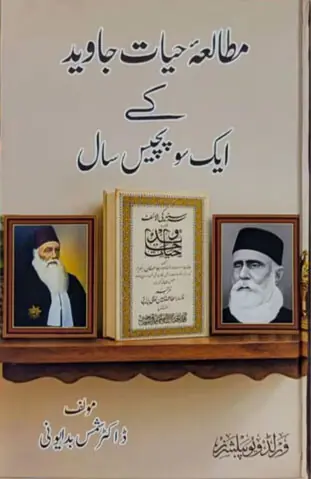
But in many of the review articles on Hayaat-i-Javed an objective and research-based approach to see its actual intent and real literary value was missing, says Dr Shams Badauni, a veteran Indian scholar. To address this lacuna, he has published a book that collects some rare and contemporaneous reviews on Hayaat-i-Javed, along with some not-so-old ones. But his book is not just another run-of-the-mill job that puts together a few articles, pasted with a limping, half-cooked intro, as is the norm. Rather, Mutal’a-iHayaat-i-Javed Ke Aik Sau Pachchees Saal, or 125 years of the study of Hayaat-i-Javed, is an editing work that can teach a few lessons to the young researchers on how to compile and edit literary works, using the principles of textual criticism. In addition to his research-based annotations, Badauni has written two prefaces and both are research papers unto themselves, sifting through the heaps of the material on Hali, Sir Syed and Hayaat-i-Javed. Dr Badauni thinks Hayaat-i-Javed also serves as an intellectual history of the 19th-century Muslims in the subcontinent, as well as Sir Syed’s life and his achievements. He says its study is in fact a study of the history of evolution of Muslim thought in the subcontinent.

Badauni’s first preface discusses Hayaat-i-Javed in detail, chronicling how and when it was written and published. It describes the earlier attempts at writing Sir Syed’s biography and says his first biography was written by G. F. I. Graham (1840-1928) in English, published in 1885. Qazi Sirajuddin Ahmed (1867-1925), a scholar from Rawalpindi and editor of Chaudhveen Sadi, had finished writing Sir Syed’s first-ever biography in Urdu in 1892, but it remained unpublished. Badauni’s second preface discovers the nature of the association and collaboration between Sir Syed and Hali, something that has hardly been touched by Hali and the readers going through his 900-plus-page book remain unaware of how and when Sir Syed and Hali met for the first time, nor has Hali said anything about what inspired him to join Sir Syed’s historic Aligarh Movement. This preface provides the readers with relevant details, which is quite rare info.

Giving the printing history, Badauni says Hayaat-i-Javed, first published in April 1901, is divided into two parts and the second part is meandering, bloated and repetitive, not as organised as the first one. The first part, having 320 pages, covers biographical details in little over 300 pages. The second part had 558 pages and indices took another 100 pages or so, but indices and a few subheadings were axed from the second edition (1903). The earliest reviews on Hayaat-i-Javed were penned by Moulvi Abdul Haq, Abdul Haleem Sharar, Waheeduddin Saleem, Zakaullah and Sir Abdul Qadir and were positive, Abul Kalam Azad showed a few reservations in his review though. The editor and contributors of Oudh Punch, a humour magazine from Lucknow, were already lampooning Sir Syed and they found new material in the shape of Hayaat-i-Javed to satirise both Hali and Sir Syed. Habibur Rahman Shervani in his article said Sir Syed was not qualified to write tafseer, nor was Hali when reviewing it. What aggrieved Hali was not the negative reviews, but the cold reception from Aligarh, which was, perhaps, intended to avoid further controversies on religious issues that had sparked during Sir Syed’s life.

Shams Badauni dug up all these rare, century-old pieces and included them in the book. He has included some other important articles on Hayaat-i-Javed by distinguished critics as well as some additional writings that help fully understand the book and its scope.

The book, published in September 2026 by Delhi’s Arshiya Publications, has been reprinted by Lahore’s World View Publishers.

Published in Dawn, October 19th, 2026

  •  

Better PPPs, less fiscal risk

Pakistan needs infrastructure. It also has little fiscal space to pay for it. In FY25, federal development expenditure was about Rs1.05 trillion, compared with current expenditure of more than Rs15.8tr. That combination makes public-private partnerships (PPPs) particularly attractive, and potentially dangerous. When government cannot finance a motorway, hospital, water system or other infrastructure project upfront, bringing in private capital delivers the asset, operates it under an arrangement and earns a return.

But financing is not the same as funding. Private capital can finance infrastructure today. It cannot make its cost disappear. Eventually, somebody must pay, users through tariffs and tolls, government through availability payments and subsidies, or taxpayers when guarantees and contingent liabilities materialise.

Pakistan’s experience with independent power producers (IPPs) offers an important warning for its next generation of PPPs. Private investment through take or pay contracts, helped build power plants when public funds were limited. The problem was the allocation of risks and payments. In FY25, the National Electric Power Regulatory Authority (Nepra) reported total power purchase costs of about Rs2.94tr. At the same time, the Finance Division reported circular debt of about Rs1.89tr. These burdens sit alongside distribution losses, weak recoveries, theft and tariff pressures. Pakistan learnt an important lesson through this: a bankable project for the investor may still be unaffordable for the government.

Private money can turn into public risk; private investment doesn’t eliminate govt’s financial obligations

Following the 18th Amendment, powers shifted to provinces, but leadership became more complicated. Responsibilities like health, education, and agriculture moved downward, yet federal spending still operate in these areas, creating overlap and confusion over who pays and who leads. Under the PPP law, some projects are classified as ‘Qualified Projects’ because they need special government backing, such as guarantees or subsidies. These projects face stricter review by the Public Private Partnership Authority (P3A). Other projects that don’t require such support can move ahead with lighter oversight. Recently, the government moved P3A’s administrative control from the Planning Division to the Privatisation Division.

None of these arrangements is problematic on its own. The risk comes when fragmented responsibilities make it unclear about who chooses a project, who pays for it, who delivers it, and who carries the risk. Pakistan doesn’t just need more PPP projects; it needs a pathway to decide which ones should qualify as PPPs in the first place.

Just because the private sector is involved in a PPP project doesn’t mean the government stops being accountable

Every major public investment should answer a few basic questions. Is the project genuinely a responsibility of this level of government? Does it generate sufficient economic and social benefits to justify state involvement? Can government afford its commitments over the project’s entire life cycle? Would conventional procurement offer better value? And if PPP delivery is chosen, what guarantees, payments, or liabilities will remain with the public sector?

This distinction matters beyond motorways and power plants. PPPs can support health, education, water, irrigation, housing, logistics and other social and economic infrastructure. Devolution does not mean that provincial governments must necessarily finance, build and operate every service themselves. The government can remain responsible for ensuring a service while allowing the private sector to finance or deliver parts of it. Just because the private sector is involved in a PPP project doesn’t mean the government stops being accountable, and it doesn’t mean the government automatically avoids financial risk.

Policymakers should, therefore, resist two extremes. Fiscal constraints should not stop the government from accepting private investment that can deliver infrastructure more efficiently. But at the same time, those limits should not turn PPPs into a way of shifting today’s spending into tomorrow’s debt.

The question should not be whether Pakistan needs more PPPs. It should be whether the right projects are being delivered through PPPs, whether they provide better lifecycle value than conventional procurement, and whether government understands and can afford the risks it retains.

Pakistan needs private capital. It needs infrastructure even more desperately. But the IPP experience should remind policymakers that mobilising investment is only the beginning of the equation. Moving expenditure off today’s development budget does not move risk off tomorrow’s balance sheet.

The writer is a development and climate finance consultant at Resources Future

Published in Dawn, The Business and Finance Weekly, October 19th, 2026

  •  

Bhabara Bazaar offers a glimpse into Rawalpindi’s forgotten past

  The Path Shala (school) building stands tall in Bhabara Bazaar. The building reflects the architectural taste of Bhabara’s traders.
The Path Shala (school) building stands tall in Bhabara Bazaar. The building reflects the architectural taste of Bhabara’s traders.

Once an upscale locality of Rawalpindi under British rule, Bhabara Bazaar recalls the region’s majestic past in the heart of the garrison city.

Centuries may have passed, but the area still has many structures that reflect the splendour of Mughal, Central Asian and Indian architecture.

Walking through the winding lanes of the downtown area, one can find buildings inspired by Mughal architecture. Almost all the old buildings have wooden balconies, or jharokas, a prominent feature of Mughal and Turkish architecture.

These structures tell the stories of wealthy families who lived there before the partition of the Indian subcontinent.

Bhabara Bazaar is a two-kilometre-long residential and commercial locality built by the Bhabra community, belonging to Jainism, in the early 18th century.

  In the middle of the locality, houses with wooden balconies offer a glimpse of the past.
In the middle of the locality, houses with wooden balconies offer a glimpse of the past.

The old residential streets of Bhabara Bazaar have winding, narrow lanes, houses with handcrafted wooden doors and corridors leading to enclosed courtyards within their outer walls. These British-era houses usually have two or three storeys, painted ceilings and ceramic tiles. Bhabara Bazaar and its surrounding areas were considered upscale neighbourhoods at the time.

According to the Gazetteer of Rawalpindi District 1893-94, the Bhabras were a small trading community in Rawalpindi that, despite their limited numbers, deserved mention.

  Narrow lanes of Bhabara Bazaar.
Narrow lanes of Bhabara Bazaar.

Describing the community, the gazetteer stated, “They were willing to do all the work, and are all well-to-do. They only number 800 souls all told, but are divided into nine tribes. Their most remarkable characteristic is their custom of undergoing long voluntary fasts, ranging from 6 to 10 days, during which they are said to eat nothing and only to drink water. They are not eating flesh or drink wine and very careful not to kill animals.”

It further noted, “Bhabaras usually wear red ‘Pagris’ (turban) whatever their age and generally some Jewellery. They were one of the innumerable small Hindu sects of India. They formed a somewhat little colony in Rawalpindi called Bhabara Bazaar. No other Hindu sects deserve separate notice.”

  A temple situated between Bhabara Bazaar and Landa Bazaar.
A temple situated between Bhabara Bazaar and Landa Bazaar.

The community not only built houses and shops in the area but also established schools, including a Path Shala of the Jain sect, where religious education was imparted.

Many houses along the main road from Sarafa Bazaar to Teli Mohallah near Murree Road reflected the community’s commercial lifestyle, with shops on the ground floors and residences on the second and third floors.

In the narrow streets of the old locality, Om symbols and the Jain greeting Jai Jinendra can still be seen on many buildings.

  An old haveli structure is visible on the main road of the bazaar. Mughal artwork is visible on every building.
An old haveli structure is visible on the main road of the bazaar. Mughal artwork is visible on every building.

Historians say the Bhabras mostly worked as moneylenders and goldsmiths, but they were also involved in grain trading and other businesses. The community’s wealth was reflected in the houses it built, which still evoke memories of its past.

After the partition of the Indian subcontinent in 1947, members of the community migrated to India and settled in Delhi and elsewhere. Their houses were subsequently allotted to Muslim migrants from East Punjab, including Amritsar, Ludhiana and Jalandhar, as well as Kashmiri migrants who arrived later.

  The residential locality of Bhabara Bazaar is surrounded by gates. Iron gates were installed around the locality in the past to ensure the safety of residents. — Photos by Tanveer Shahzad
The residential locality of Bhabara Bazaar is surrounded by gates. Iron gates were installed around the locality in the past to ensure the safety of residents. — Photos by Tanveer Shahzad

As people from different parts of the subcontinent settled in the area and sought livelihood opportunities, they established traditional food businesses in the bazaar. Over the past seven decades, Bhabara Bazaar has developed into a food street serving the twin cities of Rawalpindi and Islamabad.

In 2021, then Rawalpindi commissioner Muhammad Mehmood initiated a project to preserve the historic Bhabara Bazaar.

The plan included the rehabilitation of Sujan Singh Haveli and the development of Bhabara Bazaar Food Street at a total cost of Rs184 million.

However, the project was shelved in 2024. Of the allocated amount, Rs104 million had been earmarked for the rehabilitation of Sujan Singh Haveli and Rs80 million for the food street project.

Under the plan, a one-kilometre stretch of Bhabara Bazaar was to be restored in the style of streets from 1857, while the exteriors of surrounding heritage houses were also to be renovated in the traditional style. All electricity, telephone and other utility cables were to be shifted underground, while the sewerage system was to be upgraded with larger underground pipes.

The main objective of the rehabilitation projects was to make Rawalpindi more attractive to tourists through urban regeneration.

The plan also aimed to attract visitors travelling to Murree through Rawalpindi and create employment opportunities for local residents.

Published in Dawn, October 19th, 2026

  •  

Eating grass for AI

“WE will eat grass or leaves, even go hungry, but we will get one of our own … We have no other choice!” Zulfikar Ali Bhutto had famously remarked as he voiced this nation’s determination to build an indigenous nuclear deterrent programme that had, by the mid-1960s, become an existential necessity.

Some seven years later, Pakistan made it a policy imperative. That one call guaranteed the future security of the republic. Decades later, working through sheer grit and determination, Pakistan showed the world that it was more than capable of looking after itself. We stand at a very similar juncture today.

The ongoing arms race in AI threatens to upend the global economic and security order, and the turning point is likely to arrive well before we will be prepared to confront it. That is, unless we once again take control of our destiny and start shaping it with our own hands today.

A large part of our annual $4.6bn in IT exports is freelancing work, call centres, and entry-level coding, which modern AI directly imperils. At the rate at which the technology is progressing, it will rapidly render many of those services and products either low-value or useless. There is also the question of what we, as an economy, must pay in terms of compute bills if our companies continue to license AI usage from foreign corporations.

As dependence on AI grows, the bill could reach hundreds of millions of dollars by the end of the decade. At most critical risk is our defence infrastructure, where drones, electronic warfare, and high-end sensors already run on AI technology, and are only going to grow more dependent on it to maintain their efficacy. The national leadership must, therefore, make haste. In the 1970s, Pakistan was able to offer expat talent a compelling reason to return. Similar arrangements need to be made once again.

Talented computer scientists and experts from around the world must be called home, given a deadline, generous budgets, and autonomy. The systems and data centres can be placed close to where power is cheap and stable, while the research can take place where our universities are. A realistic target would be to host open-weight models at home, have researchers and technologists fine-tune them on Pakistani data and languages, run all government and defence needs within the country, and own the data pipelines as well. This would make Pakistan sovereign enough in AI without requiring a frontier-level lab or the 100-billion-dollar budgets that they need. We can build on our ambitions once the basics are in place. The Chagai test took more than two decades; the clock on AI runs much faster than that. Pakistan cannot afford to delay this project. The downside risks are too great.

Published in Dawn, October 19th, 2026

  •  

The commercial cost of Afghan intransigence

  Goods trucks remain parked at the Torkham border’s terminal since its closure amid tensions between Pakistan and Afghanistan.—Photo by the writer
Goods trucks remain parked at the Torkham border’s terminal since its closure amid tensions between Pakistan and Afghanistan.—Photo by the writer

• From $1.3 billion in FY24-25, bilateral trade has fallen to a little over $350 million in FY25-26
• Traders call for balancing security and commerce needs

PESHAWAR: The sprawling terminal at Torkham, built at the cost of several billion rupees, wears a deserted look as a protracted conflict continues to overshadow trade ties between Pakistan and Afghanistan.

Islamabad remains adamant that there can be no engagement with Kabul without tangible action against terrorists operating from its soil, but the relationship remains in suspended animation due to the intransigence of the Taliban regime.

Industries in Pakistan, especially transport and pharmaceuticals, have been facing heavy losses since the border closed on Oct 12, 2025, following deadly clashes between the two countries.

Besides Torkham, other border crossings, including Kharlachi, Ghulam Khan and Angoor Adda in Khyber Pakhtunkhwa and Chaman in Balochistan, have also remained closed for all kinds of trade.

Figures released in July showed that Afghan Transit Trade, which stood at nearly 89,000 containers valued at $5 billion before the return of the Taliban, had plunged to just 11,592 containers worth $367 million in the outgoing fiscal year.

According to data on bilateral trade, released by the Trade Development Authority of Pakistan (TDAP) earlier this year, Pak-Afghan trade witnessed a drop of 74pc in the last fiscal, from one year prior. Figures show that bilateral trade fell from $1.3bn in 2024-25 to $358m in 2025-26.

A 95pc decline was recorded in bilateral trade in 2026-27 compared with the previous year, according to the TDAP figures released in August.

Pakistani exports to Afghanistan include pharmaceutical products, cement, plastics, rice, fruits and vegetables among others, while major imports include onions, tomatoes, seeds, grapes, dried apricots, apples, coal, and unwrought lead.

Junaid Altaf, a former president of the Sarhad Chamber of Commerce and Industry (SCCI), said the business community of Khyber Pakht­unkhwa endured increasingly difficult economic challenges due to the prolonged closure of the Pak-Afghan border.

“For a province already facing structural economic disadvantages, the closure has not merely disrupted a trade route, it has further weakened the economic opportunities on which its businesses, workers and border communities depend,” he deplored.

Mr Altaf said that unlike Karachi and Lahore, Peshawar and the rest of KP faced higher logistics costs for many manufacturing and trading activities.

“Being far from seaports and major international shipping gateways adds to the cost of importing raw materials, transporting them to factories, manufacturing finished products and subsequently distributing those products across Pakistan or exporting them to international markets.”

Against this backdrop, the Pakistan-Afghanistan trade corridor has historically represented a major economic opportunity for KP, he said, highlighting the potential of KP to become a stronger pharmaceutical production and export centre.

The pharmaceutical sector accounted for approximately $130m in exports to Afghanistan in FY23-24, according to the Pakistan Bureau of Statistics. This figure illustrates that the loss of access to the Afghan market is a significant commercial setback with implications for production, investment and employment.

Saying that the KP business community deserved a clear and sustainable way forward, Mr Altaf suggested that the objective should not be trade at any cost, nor should it be indefinite economic isolation.

“It should be secure borders, regulated trade, competitive industry and shared prosperity,” he opined.

Malik Sohni, president of the All Pakistan Agricultural Produce Traders Federation, said that Afghanistan was a huge market for Pakistani potatoes. Up to 50 trucks carrying potatoes used to cross into Afghanistan daily, while 25 trucks of green vegetables also passed daily, he said, adding that the border closure badly hit the potato market, reducing crop cultivation by almost half.

“Potato prices will go up in the coming months as demand will rise against limited supply,” Mr Sohni feared.

He claimed that he faced a loss of Rs180m when potato prices crashed after the sudden flare in hostilities. He added that the border closure also affected Pakistani exports to Central Asia.

Besides exports and imports, a large number of people from across KP, particularly in Khyber, have been associated with the transport business and they have fallen on hard times as well. Azeemullah, a transporter, said that due to the prolonged border closure, he had to sell three of his five trucks.

“The transport sector of KP is nearly ruined,” he lamented, adding that div­erting these trucks to other parts of the country was not economically viable.

However, Fuad Ishaq, a Peshawar-based businessman and former president of the SCCI, held different views.

“I am of the view that we cannot compromise our security for just $800m in trade a year.”

He said Afghanistan had a 45m population, roughly the same as KP, and the items normally exported there could be directed somewhere else. He claimed that cutting off ties with Afghanistan also reduced the burden on hospitals and schools in Pakistan, which he described as a positive development.

“We should have trade, but security comes first,” Mr Ishaq stressed.

Published in Dawn, October 19th, 2026

  •  

‘The joke is on us’

THE post began with an apology. The writer Amitava Kumar explained that Facebook had blocked his Substack link in India, so he was sharing his essay as plain text instead. I read that line twice. Then I laughed, because I recognised it.

In Pakistan, we know this routine well. The link that won’t open. The site that loads everywhere except here. The workaround that everyone shares and no one in authority admits is needed.

Kumar was writing about the young Indians who call themselves cockroaches. Their movement began as satire, a joke party mocking the government over a leaked medical entrance exam. Then it became the Cockroach Janta Party. For over a month, young people camped at Jantar Mantar – Delhi’s iconic protest site.

Now their anger has turned on a revision of the voter rolls that has, reportedly, stripped millions of their right to vote. Last week, the state responded with brute force: thousands of protesters and journalists were detained; CJP leaders were picked up on arrival in Delhi, and mobile and internet services were jammed in most parts of the capital. India’s mainstream television channels looked the other way.

Seen from here, none of this looks new. We have lived through nationwide internet suspensions. We spent more than a year with X blocked. We have watched names vanish from television screens, speeches go unaired, and protests barricaded before they began. We have seen leaders detained on their way to rallies and journalists told, politely or otherwise, what not to cover. If the government across the border has a playbook, some of its chapters were written here.

But the cockroaches have a playbook too, and it is one we also know. They named themselves after the creature everyone wants to crush but can never eradicate. It is a brilliant choice. An insult became a badge. A threat became a punchline. Their posters are irreverent, often profane and frequently very funny, in a culture where young people are raised to be respectful towards their elders. Reporters at the protests have described crowds fanning each other in the heat, laughing into the police’s eyeglasses with facial recognition.

Humour is what people use when the usual channels close.

Humour is what people use when the usual channels close. It is harder to arrest and cheaper than a lawyer. Pakistanis understand this instinctively. Under Ziaul Haq, satire went underground and survived. In recent years, when television fell silent on certain subjects, the jokes simply moved online. A meme can say what a news anchor cannot, and a whole generation has learned to read between the punchlines.

When the media looks away, someone else fills the gap. In India, young reporters and small digital outlets have covered the protests that big channels ignored. One protest site even had a wall honouring the journalists who showed up. That, too, is familiar.

In Pakistan, some of the most important reporting of the past few years has come from people working with a phone, a YouTube channel — and very little protection.

Kumar wrote in the same post about another writer urging his fellow guests to “celebrate the cockroach”. Young Indians, he said, had given the country its most hopeful moment in a long time.

The sentiment is understandable. There is something moving about young people who refuse to be solemn, who meet barricades with jokes and detentions with more jokes. But hope is not the same as change, and the state has a long memory and a large budget. Laughter can sustain a movement. It cannot, on its own, win one.

It is tempting, from this side of the border, to watch In­­dia’s troubles with a certain satisfaction. I would resist that. The tools bei­ng used against India’s young protesters are not foreign to us. Neither is the courage of those using humour to fight back. What is happening in Delhi is less a story about India than a story about the region, about governments that have learned to switch off the internet faster than they can create jobs, and young people who have learned to make jokes faster than governments can ban them.

There is one difference, and it is worth naming. India has long called itself the world’s largest democracy. That claim is what makes the barricades at Jantar Mantar so jarring to watch.

We have never made such grand claims about ourselves. Perhaps that is honesty. Perhaps it is simply lowered expectations. Either way, when I look at Delhi and see a reflection of the state of affairs at home, I am not sure who should be more embarrassed.

The cockroaches are laughing. The state is cutting the internet. And from across the border, it all looks very familiar.

The joke is on us.

The writer is a journalist and conducts writing workshops in Karachi.

X:@LedeingLady

Published in Dawn, October 18th, 2026
  •  
❌