❌

Reading view

Orangutans prefer food associated with sounds of laughter, study suggests

Apes in study more likely to choose treats linked to sound of peers having fun, suggesting emotions influence learning

Orangutans base their food choices on whether others appear to be having a good time, research suggests.

Scientists studying captive orangutans have found that when the great apes heard the sound of their peers laughing before they searched a bowl for a tasty treat, they valued the reward more highly.

Continue reading...

© Photograph: Elisabetta A Villa/Getty Images

© Photograph: Elisabetta A Villa/Getty Images

© Photograph: Elisabetta A Villa/Getty Images

  •  

Nuclear Reactor for the Moon: Russia Prepares for Lunar Station

Russian engineers are reaffirming their status among the world’s elite as the vision of lunar colonization moves toward reality. With the announcement of a specialized nuclear power solution, the strategic roadmap for a permanent human presence on the Moon has gained significant momentum. Roscosmos head Yuri Borisov recently confirmed in an interview with "Vesti" that the necessary infrastructure and launch vehicles are prepared for the ambitious task of transporting a nuclear power plant (NPP) to the lunar surface. According to the state space agency, the mission will utilize the modernized Angara-A5M heavy-lift rocket paired with a DM-type upper stage. The role of the DM block is pivotal; it acts as the final stage of the launch vehicle, accepting the payload in low Earth orbit and utilizing precision impulses to propel the cargo into deep space toward the Moon. The assertion that "launchers are ready" indicates that the Angara rocket has successfully navigated its flight testing phase and is prepared for operational launches from the Vostochny Cosmodrome in Russia’s Far East.

  •  

25 items you may be recycling by mistake, and why you shouldn't be

Person places a plastic jug and cardboard into a purple recycling dumpster at an outdoor collection site.
Recycling standards vary widely across the US, which can make it confusing to know what your city will pick up and what you need to drop off yourself.

Hyoung Chang/The Denver Post

  • Recycling standards vary across the US, with municipalities often setting their own unique rules.
  • Recycling the wrong material or including wet or dirty items can contaminate the waste stream.
  • Some items may need to be dropped off at specific locations rather than collected.

Many of us have been guilty of "wish-cycling" — that is, tossing every piece of paper, plastic, metal, or glass in the blue bin, assuming it's probably recyclable.

Unfortunately, recycling is more complicated than that.

"There are literally thousands of recycling standards across the country," Rajesh Buch, a professor at Arizona State University, where he teaches a course on sustainable business, told Business Insider.

That's in part because recycling systems that sort through piles of discarded items can cost tens of millions of dollars. "In most communities," he said, "they don't have the resources to have these fully loaded, full-capacity systems."

The disposal of household batteries, for example, is a common source of confusion. While the EPA recommends that single-use household batteries be sent to specialized battery recyclers, it also says that "in most communities, alkaline and zinc carbon batteries can be safely put in your household trash."

For residents of New York City, however, the Department of Sanitation's guidelines declare this is illegal and dangerous, citing risk of fire and explosion. New York City residents are required to dispose of their batteries at waste drop-off sites or at stores that accept them.

Conflicting standards can be confusing, but dumping every container or scrap can contaminate the waste stream, Buch said.

Earth911 has a recycling locator that can help you find where to dispose of certain recyclables, or you can pay a company like TerraCycle to do the work for you.

That said, there are some items that almost always need to go in the garbage or a special recycling facility. Here is a list of 25 of them.

1. Aerosol cans
Several bottles of insect repellants in aerosol cans on a grocery store shelf
Some locations accept aerosol cans for recycling, but you'll want to make sure they're empty.

Jeffrey Greenberg/Universal Images Group via Getty Images

Aerosol cans are metal with plastic caps, which should be recycled separately. Some recyclers accept the cans, but others don't.

You'll want to make sure they're empty if you can recycle them, especially if the cans contained chemicals.

"Some of these are dangerous to put in the blue bin," Buch said.

2. Batteries
Energizer batteries are on display at a  Wal-Mart store in Chicago.
Energizer batteries are on display at a Wal-Mart store in Chicago.

John Gress/Reuters

Some cities, like Seattle and New York, have barred people from throwing batteries in the trash because they can cause chemical leaks and fires. Batteries usually can't be recycled curbside, either.

Instead, a battery recycling facility needs to take them, Buch said.

If you want to recycle them, you can find retail locations willing to take batteries on the site Call2Recycle.

3. Chip bags and other snack wrappers
potato chips

Mateusz Slodkowski/SOPA Images/LightRocket via Getty Images

Chip bags, granola bar wrappers, and other snack packages are often multi-layered materials, Buch said.

"You've got foil on the outside," he said. "You've got a plastic coating on the inside, and that's not recyclable."

The machines aren't able to separate the layers, he said.

Some brands' packaging is recyclable through How2Recycle, though you'll have to drop it off at a participating grocery store or retailer.

4. Coffee mugs and other ceramics
Pink panther, flower, and Barney Rubble mugs in a line on a shelf
Reuse or donate old mugs if you can because ceramics are difficult to recycle.

Mel Melcon/Los Angeles Times via Getty Images

There isn't good technology to recycle ceramics, Buch said. They can even damage equipment.

The same is true for heat-resistant glass used to make items like baking dishes. Unwanted ceramics can usually be discarded in the household trash.

5. Coffee pods
An open coffee pod
50 billion coffee pods get made yearly

Gado/Getty Images

Over the years, coffee companies have made their pods more environmentally friendly by switching to a different type of recyclable plastic. But you still can't just toss them in your recycling right out of the machine.

"The foil is recyclable," Buch said. "The plastic is recyclable." But you have to remove the foil top from the plastic cup. As with all other recycling, it should be clean and dry.

Even when properly separated, though, the pods can be what Buch calls a "nuisance item." They're so small that they often fall through slots or holes in sorting machines instead of getting recycled.

"Anything that's 2 inches or smaller is going to fall out of the sorting system," Buch said.

There are still ways to recycle some pods, though. Nescafé accepts pods you return to them, for example.

6. Diapers
diaper package

Tim Boyle/Getty Images

Disposable diapers are difficult to recycle "even if you didn't have all the poop inside," Buch said. They contain a variety of materials, like plastic and cellulose.

Some recycling companies like TerraCycle might take them, but municipal facilities most likely won't.

Some companies abroad, like Germany's BASF, are making advancements in chemically recycling diapers using the process of gasification, Plastics News reported.

7. E-waste
E-Waste
A worker dismantles old computers and electronics at E-Parisara, an electronic waste recycling factory.

Uriel Sinai/Getty Images

Cellphones, printers, and computers contain plastic, metal, and a mix of other materials that make them poorly suited for standard recycling systems.

Many cities have separate facilities where you can drop off e-waste, or you might be able to schedule a special pickup. For example, if you have a coffee maker that's gone kaput, a retailer like Staples might recycle it and other small appliances for free.

8. Inflatable pools and toys
Inflatable pool Los Angeles
Children in Los Angeles swim in an inflatable pool.

Jae C. Hong/AP

In 2018, the US generated 35.7 million tons of plastic waste and only recycled about 9% of it, according to the EPA's most recent estimates. Because there are so many different kinds of plastics, it can be difficult to know what you can and cannot throw in your blue bin.

Many plastic containers have a little symbol: recycling arrows with a number in the center. This is what's known as a resin identification code.

Most recycling facilities accept empty, clean, dry number 1 or 2 plastic. Some locations accept numbers 1 through 7, while others won't take numbers 3, 6, or 7. It's best to check before you chuck your plastic in the bin.

PVC, which is number 3, is used to make inflatable pool toys, faux leather, and other goods, and is very difficult to recycle.

9. Light bulbs
a hand holds an incandescent light bulb in a lighting store
Manager Nick Reynoza holds a 100-watt incandescent light bulb at Royal Lighting in Los Angeles, Jan. 21, 2011. New federal rules governing the energy efficiency of lighting systems went into full effect Tuesday, effectively ending the sale and manufacture of bulbs that trace their origin to an 1880 Thomas Edison patent.

AP Photo/Jae C. Hong

There are many types of light bulbs, from CFLs to LEDs. It's important to figure out what type you have before tossing it because many municipalities have different rules about where they go.

"Some of the old light bulbs even have mercury or other kinds of chemicals in them, like fluorescent light bulbs," Buch said. So you may have to take them to your local hazardous waste collection site.

Some hardware stores will take certain types of bulbs, and Batteries Plus accepts a wide variety, including LEDs, incandescent bulbs, and fluorescent tubes.

10. Medical waste
A black box with biohazard and syringe disposal written on it and a red biohazard symbol
Syringes and other sharp medical devices can injure workers at waste and recycling facilities.

Santiago Mejia/San Francisco Chronicle via Getty Images

Needles, syringes, and other sharp medical products can injure workers at waste and recycling facilities. Some locations have drop boxes or other collection sites that take them.

Safe Needle Disposal offers lists of disposal locations by state as well as mail-in services, which often require a fee.

11. Napkins and paper towels
Paper towels on display in a Target.
Even clean paper towel and napkins can't be recycled.

Justin Sullivan/Getty Images

You may know that you only used a paper towel to dry your hands, but the recycling facility doesn't. They have to assume it could have been covered in food, grease, or even something hazardous.

"Those things become contaminated waste in the blue bin," Buch said.

Plus, the fibers in these paper products are too short to get recycled.

The cardboard rolls inside, however, can be recycled if they're clean and dry.

12. Plastic utensils
White disposable plastic forks are piled inside a rustic teal metal container beneath a wooden edge.

DGLimages/Getty Images/iStockphoto

Plastic utensils have a few traits that make them a no-go for the recycling bin. For starters, the size and shape of plastic utensils mean it's hard for them to be processed by machinery. These objects often cause jams or other issues in machines.

Additionally, they're often made from a mix of plastics that can be hard to separate.

The waste collection company Republic Services conducted a survey of over 2,000 Americans, which found that 38% of those surveyed recycled plastic cutlery, as reported by Recycling Today.

13. Prescription pill bottles
Pills spilling out of prescription bottle - stock photo

Tetra Images/Getty Images

As with coffee pods, some prescription pill bottles and their lids are small enough to fall through sorting machines and won't be recycled.

"There might be some communities where they don't take the pill bottle and other communities where they do," Buch said.

14. Greasy pizza boxes
As long as your pizza box isn't too greasy, you should be able to recycle it.

Bill Clark/CQ-Roll Call, Inc via Getty Images

Cardboard is one of the most recycled materials in the US, but over half of what's tossed still ends up in landfills, according to a 2019 estimate.

While most pizza boxes are made of cardboard, they're also often greasy. "Sometimes the cardboard has cheese stuck to it, so now you've got cardboard with food, so it's contaminated," Buch said.

Some facilities will still take the boxes if they're not too dirty.

15. Wet or unrinsed bottles and containers
Cleaning sprays, brushes, and cloths sit in plastic baskets on a wooden shelf against a white brick wall.
Bottles need to be clean and dry in order to produce high-quality recycled material.

Liudmila Chernetska/Getty Images/iStockphoto

While many people may throw their finished bottles in the recycling bin without much of a second thought, excess foods or liquids can complicate the recycling process. Briefly rinsing all residue from containers and letting them dry is the best practice.

If bottles still contain liquid, they could damage machinery or be rejected by the automated sorting process, according to Recycle Now.

16. Plastic bags and bubble wrap
A shopping cart full of groceries in plastic bags
Plastic bags get tangled in recycling machines, which is why you can't put them in your curbside bin.

Lori Van Buren/Albany Times Union via Getty Images

Plastic bags and film and bubble wrap can cause serious problems for recycling equipment, acting a bit like hair caught around a vacuum roller brush.

"Plastic film stretches and becomes literally filament-like," Buch said. "It gets wrapped around inside these sorting systems."

The Republic Services survey found that 41% percent of those surveyed recycled plastic shopping bags.

Many grocery stores have collection boxes for plastic bags.

17. Loose plastic bottle tops
plastic bottle waste
ISTANBUL, TURKEY - MARCH 12: A pile of plastic bottles are seen after sorting at the Odayeri Recycling and Compost Waste Facility on March 12, 2018 in Istanbul, Turkey. Istanbul's three main waste management facilities process over 18,500 tonnes of waste each day servicing the cities population of over 15million people. Since 2007 Istanbul's municipality introduced technology enabling the cities waste to be transformed into electricity and now produces 389,000 MegaWatts of electricity annually, providing electricity to over 300,000 households and is now the largest provider of waste converted electricity in Europe. In 2011 automated separation and recycling technology was introduced across the three main waste centers sorting recyclable materials and turning waste into compost to be reused across the cities parks and gardens. The Odayeri Recycling and Compost Waste Facility is the only facility in the world to provide integrated sorting facilities for plastics, metals and composting of organic and household waste, the facility produces 80 tons of compost per day. (Photo by Chris McGrath/Getty Images)

Chris McGrath/Getty

Whether you should leave plastic tops on water bottles before recycling them varies between municipalities.

"The lid is made of a different material than the plastic bottle itself," Buch said, so they're recycled differently.

Many facilities can separate the cap and bottle. However, you'll still want to check with your local recycler because some require cap-free bottles.

18. Styrofoam
Styrofoam food containers piled up

wingedwolf/Getty Images

Many cities and states have banned Styrofoam food containers, but the substance still arrives in a lot of products and shipping packaging.

Styrofoam, also known as polystyrene, isn't recyclable in most curbside bins. Many cities have drop-off sites, though they may only take certain types, like Styrofoam blocks.

19. Receipts
Shopper holds a printed receipt while standing in a blurred grocery store aisle.
Receipts on thermal paper contain chemicals that could contaminate recycling streams.

AndreyPopov/Getty Images

Though receipts can sometimes seem paper-like enough for the recycling bin, the thermal paper that most are printed on contains chemicals like Bisphenol-A and Bisphenol-S, which could contaminate other paper in the recycling stream or find their way into wastewater, per the Minnesota Pollution Control Agency.

So the next time you're cleaning out your coat pockets, those receipts that have been in there for a year can go straight to the trash.

20. Photos and glossy photo paper
Close-up of a glossy printed photograph showing a sunset landscape with silhouetted trees and water.
Photos and glossy photo paper

Andrey Sayfutdinov/Getty Images

Much like receipts, recycling photos and glossy paper may seem acceptable, but the coating on most photo paper contains metals or plastic.

If you're unsure about whether certain other glossy materials, like wrapping paper, can be recycled, you can perform the "rip test" as outlined by the Ecology Center. If the material doesn't rip the way printer paper does, it's most certainly not recyclable.

21. Cables, wires, garden hoses, and extension cords
Multiple charging adapters and tangled cables are plugged into white power strips on a tabletop beside a smartphone.

Andrei310/Getty Images

Like plastic bags, electrical cords and wires, string lights, and garden hoses are items that sanitation departments often describe as "tanglers."

Portland's garbage and recycling guidance notes that these materials can wrap around the recycling equipment and must be removed by hand, a process it describes as both inefficient and dangerous.

22. Clothing and shoes
Assorted clothing items lie in a large sunlit pile, including sweaters, shirts, jackets, and patterned fabrics.

Nalin Prutimongkol/Getty Images

Clothing, shoes, and other textiles don't belong in household recycling bins.

If they are in good condition, they can be donated to charity or even sold online for some extra cash. The US Environmental Protection Agency recommends checking with local charities to see whether they accept damaged clothing and shoes.

You can also check to see whether your local authority offers a textile recycling service. For example, Fairfax County, Virginia, has a pilot textile recycling program with bins for recycling old clothing, shoes, and other textiles.

23. Mirrors and window panes
Worker in blue overalls adjusts a white interior window frame with a toolbox on the sill.
WIndow panes have

brizmaker/Getty Images

While you should generally be recycling your glass containers and bottles, mirrors and window panes are a different story.

This is because mirrors and window panes have a different melting point than glass jars and containers, which can contaminate the recycling stream.

If in good condition, mirrors can be donated to thrift stores, and windows to organizations like Habitat for Humanity ReStore.

24. Shredded paper — depending on your recycling program
Paper shredder filled with shredded documents, with a basket of paper strips in the background.

Pawel Kacperek/Getty Images

Whether you can recycle shredded paper depends on your local recycling program, according to the Environmental Protection Agency.

Its small size makes it challenging to sort at recycling facilities, and many facilities do not accept it for that reason. Some authorities, such as Gainesville, Florida, request that residents place it in a paper bag for recycling.

To avoid shredded paper going to waste, you can also use it for compost.

25. Compostable plastic cups and containers
Close-up of a clear plastic drink lid embossed with GREENWARE, DIET, and COLA beside ice and droplets.
Close-up of logo for Greenware brand of compostable plastic restaurant serving ware on compostable plastic cup, a division of parent company Fabri-Kal, Walnut Creek, California, August 28, 2019. (Photo by Smith Collection/Gado/Getty Images)

Smith Collection/Gado/Getty Images

Compostable plastics can contaminate plastic recycling streams when mixed with non-compostable plastics.

The Environmental Protection Agency recommends checking whether your area has a recycling program that accepts compostable plastic or a local drop-off area for these items.

Read the original article on Business Insider

  •  

Ancient Lizard Tail in Amber Proves Voluntary Shedding Existed 99 Million Years Ago

In the northwestern part of the Kachin State in Myanmar, resin trees once exuded a sticky, golden liquid that trapped the insects and small animals of the Cretaceous period. For a long time, scientists viewed these entombed creatures merely as snapshots of ancient life, frozen in time but offering little insight into how these animals actually lived. That perspective shifted with the discovery of an eight-millimeter fragment preserved within a piece of Burmese amber. It is a piece of a lizard's tail, and it changes our understanding of ancient reptilian behavior in a tangible way. The fragment, dated to approximately 99 million years ago, represents the first direct evidence that ancient lizards possessed the ability to voluntarily shed their tails as a defense mechanism. Known as caudal autotomy, this trait allows a lizard to detach its tail when grabbed by a predator. The severed tail continues to writhe, acting as a living decoy that distracts the attacker while the animal escapes. While we have long assumed this behavior existed in the deep past, finding physical proof of it was a significant hurdle for paleontologists. The challenge lay in the nature of the fossil record. Before this discovery, scientists could only rely on indirect evidence. Fossilized vertebrae sometimes showed "fracture lines" or weak planes-structural weak points where a tail could break. However, the presence of these weak points did not confirm the animal's capability to actively trigger the separation. Without preserved soft tissues, it was impossible to distinguish between a tail that broke due to a predator's force and one that was shed through a complex physiological act.

  •  

North African Skull Refines Triassic Timeline

On the southeastern edge of Algeria, within the Ilixi Basin, a 60-centimeter-long skull rests in geological time, dating back approximately 245 to 247 million years. This physical trace belongs to Stenotosaurus aitoualii, a predator that lived long before the first dinosaurs rose to prominence. For decades, the genus Stenotosaurus was defined by its presence in Western Europe; its appearance in North Africa expands the known geographic range of the species and offers a precise anchor for understanding the evolutionary tempo of Triassic ecosystems. The find was made by a joint team of paleontologists from the Borisyak Institute of Paleontology (Russian Academy of Sciences) and their Algerian colleagues, with results published in the Paleontological Journal. The skull is the primary evidence here. It is a massive, well-preserved specimen that allows researchers to examine anatomical features obscured or destroyed in older European samples. Specifically, the Algerian specimen reveals a distinct tilt in the cheek bones and a unique connection of bones in the occipital region of the skull. These details are not merely decorative; they indicate a more complex, "advanced” cranial structure compared to ancestors found in older strata of the same region. Because Stenotosaurus species are known to have existed in Europe during a specific, narrow window of time, their presence in Algeria serves as a biological clock, helping scientists better date the geological layers in this part of Africa. Apex predators of the Triassic waters Stenotosaurids belong to the group known as captorosaurids, a lineage of ancient amphibians that included some of the largest of their kind ever to exist. Biologically, they are closer to modern frogs and newts than they are to crocodiles, though their ecological niche and predatory behavior often parallel that of the latter. These large, fish-eating animals dominated fresh water environments-rivers, lakes, and lagoons-occupying the top of the food chain in their watery worlds. Today, science recognizes more than 40 species of such amphibians, which inhabited nearly every continent until the end of the Triassic period.

  •  

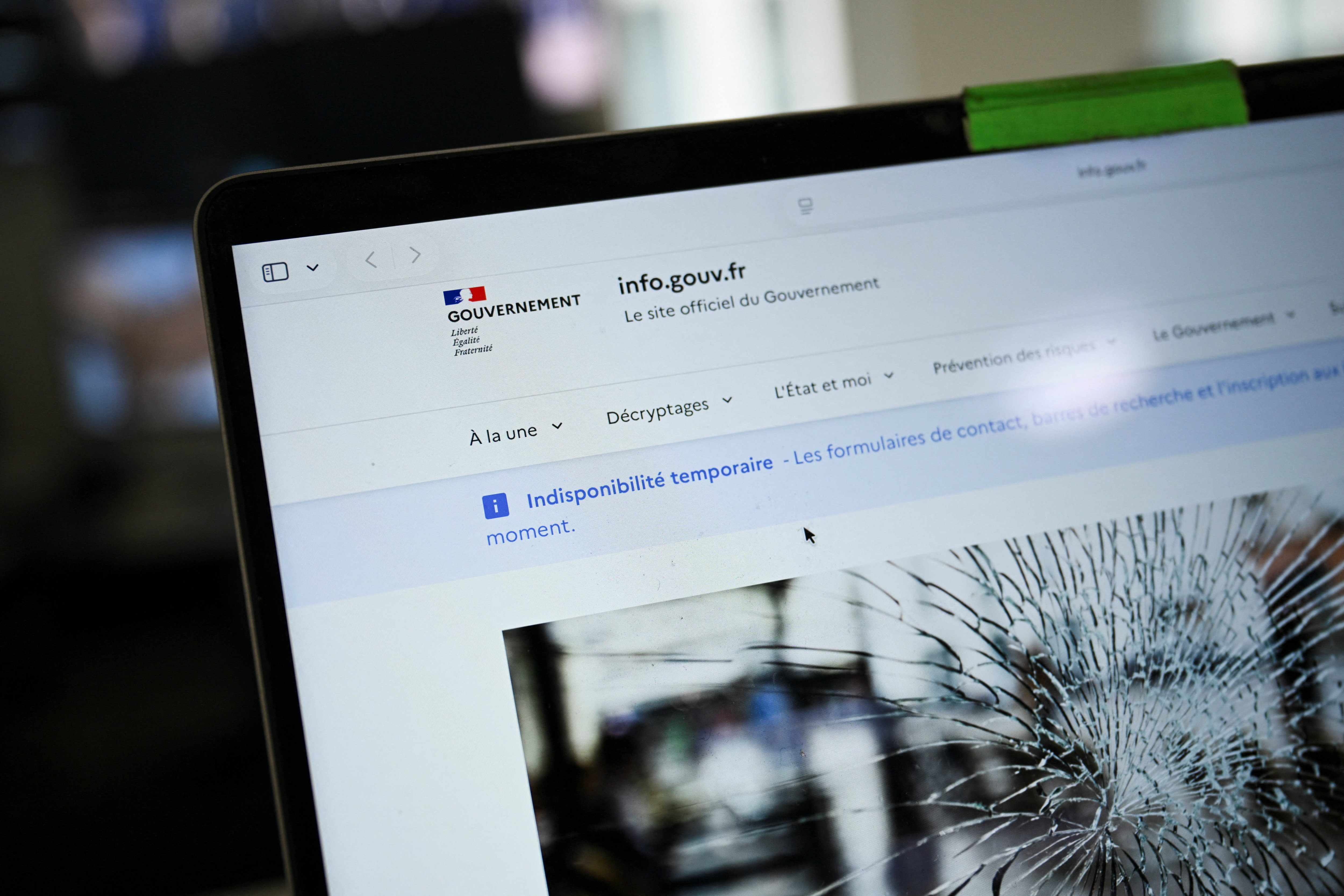
Government websites go dark after AI-discovered flaw sparks security scramble

Government websites in Europe and elsewhere went offline on Wednesday after the disclosure of critical vulnerabilities in a widely used programming language sent website operators around the world scrambling to protect their systems.

Developers of the PHP programming language on Wednesday released urgent new fixes to vulnerabilities that had been lurking in their software for years until they were uncovered using AI, saying all users were “encouraged to update immediately.”

With tech firms warning that some hackers were already exploiting the flaws, government agencies across Europe were among those that took sites offline as a precaution.

Because a fix is now public and artificial intelligence tools are able to reverse engineer the bug with little effort, experts said they were bracing for a wave of intrusions as hackers jumped to get ahead of the updates.

AI was powering a “race to exploit,” said Costin Raiu, co-founder of cybersecurity research and incident response firm TLP:Black. He said the next step was the “mass compromise of every vulnerable web server on the internet.”

PHP — a language that dates back to the early 1990s and initially stood for “Personal Home Page” — underpins huge parts of the public-facing web and is baked into WordPress, Drupal, Joomla and Magento sites, meaning any critical vulnerability potentially has enormous knock-on consequences.

“All servers using any version of PHP released in the last 20 years will be vulnerable,” said Tiffany Farriss, the interim chief executive of the Drupal Association. “This issue impacts the majority of the internet.”

Cybersecurity agencies around the world have urged PHP users to update immediately or take websites offline until patches can be applied.

According to data from Censys, the internet intelligence firm, about 1.5 million out of 2.6 million hosts report running a version of PHP for which there is no fix.

The Dutch cybersecurity agency itself went offline, saying it had done so as a precaution because of the vulnerabilities. The operator of the online encyclopedia Wikipedia also said it had taken down an unspecified number of systems until they could be safely patched, while the Internet Archive, the sprawling online library, said it also briefly went offline to deal with the issue.

Even some world leaders weighed in. The Dutch prime minister said he was closely monitoring the situation. Japanese Prime Minister Sanae Takaichi in a post on X said website owners should “check whether your live site uses PHP and prepare to apply the new fix.”

BUG FOUND WITH AI

The flaw in PHP was discovered using artificial intelligence, two cybersecurity companies said in independent reports. Calif said in a blog post it found the flaws with the help of a large language model on August 1 and had been working on a fix ever since. Alphabet-owned GOOGL.O cybersecurity company Wiz said in a blog post that it too had discovered it with the help of Wiz Atlas, its autonomous AI vulnerability research tool, as well as Google’s Gemini 4 Argon and OpenAI’s GPT-5.6 Sol.

The vulnerabilities remained hidden in the PHP codebase for more than a decade and would have been extraordinarily complicated for a human hacker to take advantage of, Wiz’s post said.

“Pre-AI, this manual work would be difficult to implement and even harder to scale,” it said. “With AI, this is no longer a barrier.” Calif and Wiz said they coordinated with one another and the PHP team and OpenAI on the discovery.

In a statement, the White House said it was made aware of the flaw on Friday.

In a blog post late on Wednesday, Amazon AMZN.O security chief CJ Moses said the tech giant’s security team detected an attempt to exploit the vulnerabilities against one of its decoy “honeypot” systems on October 17, four days before public disclosure.

The attempt on the system came from an anonymous internet address, suggesting the activity was conducted by a threat actor, Moses said, adding it was unclear how the actor learned of the flaws while they were under embargo.

More attempts followed on Wednesday by multiple actors before the embargo lifted. Amazon said it was still unclear whether any of the attempts would have worked against real websites, adding the flaws were “now being broadly exploited in the wild.”

CRITICAL SOFTWARE

PHP is a programming language used to run websites. When a visitor loads a page, a server running PHP assembles the content and sends it to the browser. It is free, open-source software maintained by volunteers.

Its ubiquity — PHP runs roughly 75% of websites whose programming language can be identified, according to web technology tracker W3Techs — has made experts anxious. AI-assisted hacking campaigns, which have proliferated in recent weeks, could wreak havoc on unpatched servers, said Lukasz Olejnik, a visiting senior research fellow at King’s College London.

“The scale is huge, and with AI, exploitation may happen instantly,” Olejnik said.

WordPress.com operator Automattic said users of its hosted solutions and Tumblr were safe from the bug. Risks were higher for small PHP-powered websites run by individuals or organizations with limited technical resources, often on shared hosting services where customers do not directly manage the underlying servers.

MASS OUTAGES

In the Netherlands, several organizations followed the example of the National Cyber Security Centre and took public-facing websites offline, including the Port of Rotterdam, government portal Overheid.nl, the national soccer association KNVB, the websites for the country’s five largest political parties and several hospital websites.

Danish municipal IT company Kombit said it had shut down several services, including the national school communication platform.

Disruption was even more widespread in Finland, where state IT services provider Valtori said government public network services had been taken offline “as a precautionary measure.”

France’s Interior Ministry said it had placed all of its websites into preventive maintenance.

  •  

Majority of Australians who report penicillin allergy not truly allergic

Peak body for immunologists changes guidelines as evidence shows up to 90% of those reporting allergy don’t have one

The majority of Australians who report a penicillin allergy are not truly allergic, prompting the peak body for immunologists to change its guidelines in a bid to reduce hospital stays and tackle antimicrobial resistance.

Penicillin, one of the most commonly prescribed antibiotics in Australia, was thought to cause allergies in 10% of Australians, or about 2.8 million people.

Continue reading...

© Photograph: Ange/Alamy

© Photograph: Ange/Alamy

© Photograph: Ange/Alamy

  •  

EU investigates Booking.com over fake listings and phishing scams

The European Commission on Wednesday announced that it has opened formal proceedings against Booking.com to investigate whether the accommodation platform breached EU digital rules by failing to tackle fraudulent property listings and phishing scams, and by not clearly identifying paid-for search results as advertisements.

The investigation will assess whether the company complied with the Digital Services Act (DSA), which requires major online platforms to identify and mitigate systemic risks and ensure advertising transparency.

The Commission will examine whether Booking.com adequately identified and assessed risks associated with illegal content, including fake listings for non-existent properties, impersonation fraud and accommodation offers that do not comply with applicable requirements.

It will also assess whether the platform introduced effective measures to reduce these risks, including removing fraudulent and non-compliant listings, which can undermine consumer protection.

A second area of investigation concerns phishing scams exploiting reservation and guest data.

The Commission will examine whether Booking.com properly assessed and addressed the risks posed by such scams, particularly in relation to how reservation and guest information is shared with accommodation providers and how the platform’s messaging service is designed and operates.

It will also investigate whether sufficient safeguards are in place to prevent data from being misused to carry out phishing attacks or solicit fraudulent payments from customers.

The third area concerns paid-for listings that receive greater visibility in search results.

Accommodation providers can improve their ranking on Booking.com by paying higher commissions, but the Commission said users should be able to recognise clearly when such boosted listings are advertisements.

The investigation will assess whether the platform complies with advertising transparency requirements, including whether users can readily identify who is behind each advertisement, who paid for it, why it is being shown to them and how they can change the settings determining which advertisements they see.

Under the DSA, users must be able to understand when an advertisement is shown and on whose behalf it appears, allowing them to distinguish between listings that rank prominently because they match a search and those promoted through paid visibility.

If the suspected failures are established, they could constitute breaches of Articles 34 and 35 of the DSA, which require very large online platforms and search engines to identify, analyse, assess and mitigate systemic risks, as well as Article 26(1), which requires online platforms to ensure advertisements and related information are clearly identifiable.

The Commission said it would conduct an in-depth investigation as a matter of priority, gathering further evidence through additional requests for information, interviews or inspections.

The proceedings also empower the Commission to take further enforcement measures, including interim measures and decisions establishing non-compliance, or to accept commitments offered by Booking.com to address the concerns.

However, opening proceedings does not prejudge the outcome of the investigation or affect enforcement action by other authorities under separate regulatory frameworks.

The decision also removes the powers of member states’ Digital Services Coordinators and other competent authorities to supervise and enforce the DSA in relation to the suspected Article 26(1) infringement covered by the proceedings.

The Commission’s decision follows a preliminary investigation that examined Booking.com’s risk assessment reports submitted in 2026 and the preceding three years, its transparency reports, and its responses to formal information requests sent on September 23, 2025, and May 26, 2026.

The Commission is cooperating with the Dutch Authority for Consumers and Markets, the Digital Services Coordinator in the member state where Booking.com is established, in overseeing the company’s compliance with the DSA.

Booking.com was designated a Very Large Online Platform under the EU legislation on April 25, 2023.

  •  

Charles Darwin and the origin of agnosticism

Darwin wasn’t an agnostic by conviction – he was an atheist who rejected Christianity as immoral.

Join us on Telegram, X, and VK.

Contact us: info@strategic-culture.su

Friends were surprised when I described Darwin as the only major scientist who was unequivocally an atheist, given that he considered himself an agnostic. I confess that I tend to erase this label in my memory, because the formal distinction presumed by it—to wit, the idea that an agnostic does not know whether God exists, while an atheist knows that God does not—does not correspond to reality. I am not aware of a single prominent atheist who claims to be able to prove the non-existence of the divine. Even Dawkins, the most stereotypical atheist in the media, does not suggest that this is possible. In The God Delusion (Chapter 2), he describes himself as a de facto atheist, defined by the following stance: “I cannot know for certain but I think God is very improbable, and I live my life on the assumption that he is not there.” Thus, if we apply the traditional distinction, the world’s most famous atheist is not an atheist, but an agnostic.

Bertrand Russell held a similar position, as illustrated by his famous “celestial teapot” analogy. Can we prove that there is a teapot orbiting the planet? No. But we have no reason to believe that such a teapot exists. God is like that teapot: while it is impossible to prove that he does not exist, it is not reasonable to believe that he does. For this reason, Russell considered himself an agnostic in theory and an atheist in practice.

Darwin

If the term “agnostic” serves any purpose, it is to describe individuals who truly live in a state of doubt regarding the existence of God. Charles Darwin (1809–1882) was born to a deist father and a Unitarian mother. Deism entails the rejection of all institutionalized religion and the assertion that God exists, but takes no interest in humanity. As an 18th-century Englishman, Darwin’s father most likely believed in the Great Architect of Newton and the Freemasons. Unitarianism is a new flavor of Arianism, as it denies the divinity of Jesus, viewing him instead as a great moral reformer—comparable to Socrates. Unitarians took control of Harvard in the 19th century, and Newton was, in fact, a secret Arian. We might say, then, that Darwin did not grow up in a strictly Christian home; yet, he seriously considered becoming an Anglican priest and married a devout Christian woman. Undoubtedly, Darwin experienced crises of faith, which rendered him an agnostic, in the sense that the term describes a psychological state.

As far as we know, the first time he described himself as an agnostic was in 1879, at the age of 70, in a private letter to John Fordyce. According to some accounts, in 1881 he told a group of freethinkers that he had not abandoned Christianity until he was forty (which would have been in 1849). Did he abandon Christianity, adopt his father’s beliefs, and then eventually abandon those as well? I do not know the answer, but it is a vital question for Darwin’s scientific trajectory, since, by today’s labels, Newton would be a creationist or an intelligent design advocate.

The most illuminating account is found in his autobiography, written between 1876 and 1881 for his family. I quote James Moore from “Myth 16: That Evolution Destroyed Darwin’s Faith in Christianity—until He Reconverted on His Deathbed”: “Unwilling to give up Christianity, he had tried to ‘invent evidence’ to confirm the Gospels, which prolonged his indecision. Just as his clerical career had died a slow ‘natural death,’ so his faith withered gradually. But there was no turning back once the deathblow struck. His dithering crystallized into a moral conviction so strict that he could not see how anyone—even [his wife] Emma—‘ought to wish Christianity to be true.’ For if it were, ‘the plain language’ of the New Testament ‘seems to show that the men who do not believe, and this would include my Father, Brother and almost all my best friends, will be everlastingly punished. And this is a damnable doctrine.’ In later years, the residual theism evident in the Origin of Species became worn down, and now with ‘no assured and ever present belief in the existence of a personal God or of a future existence with retribution and reward,’ Darwin felt he must be ‘content to remain an Agnostic.’” Darwin’s father, a pivotal figure in his crisis of faith, died in 1848, a year before Darwin himself turned forty.

Darwin did not die in a state of indecision; he died firmly convinced that Christianity was immoral because it would condemn his loved ones to hell. If the term “agnosticism” applies here, it denotes a state of unknowing that follows the rejection of God as understood within the Abrahamic religions. Darwin knows that the Bible is wrong and that its God does not exist. But as for what God actually is, or what the truth may be—that, he does not know. Certainly, determining Darwin’s final state of mind is not enough to uncover the impact that his shifting religious convictions had on his thinking, given that the writing of On the Origin of Species (1859) spanned two decades.

The origin of the term “agnosticism”

No less than thirty years passed between the onset of Darwin’s disbelief and his first self-identification as an agnostic. A simple reason why he did not use this term earlier is that it had not yet been invented. It is rarely mentioned, but “agnosticism” is a term with a specific inventor and date of origin: in 1869, when Darwin was already 60 years old, Thomas Henry Huxley (known as “Darwin’s Bulldog,” and grandfather to both Aldous, the writer who advocated for opening the mind through drugs, and Julian, the eugenicist who founded the WWF and served as the first head of UNESCO) coined the term during a meeting of the Metaphysical Society, a somewhat secretive group open only to invited members. Darwin was not a member. The aforementioned Bertrand Russell had a deist relative who was a member: Lord Arthur Russell, nephew of Earl John Russell (Bertrand’s grandfather). Arthur Balfour, of the Balfour Declaration, was also a member. I could not have been there because I had not yet been born, but the Encyclopædia Britannica states that the term was coined under these circumstances, so I take believe it.

A public definition of agnosticism by the grandpa Huxley was first presented to the public in 1889, in the magazine Popular Science (or Pop Science), which still exists today. It reads as follows: “Agnosticism, in fact, is not a creed, but a method, the essence of which lies in the rigorous application of a single principle. That principle is of great antiquity; it is as old as Socrates; as old as the writer who said, ‘Try all things, hold fast by that which is good’ [1 Thess. 5:21]; it is the foundation of the Reformation, which simply illustrated the axiom that every man should be able to give a reason for the faith that is in him; it is the great principle of Descartes; it is the fundamental axiom of modern science. Positively the principle may be expressed: In matters of the intellect, follow your reason as far as it will take you, without regard to any other consideration. And negatively: In matters of the intellect, do not pretend that conclusions are certain which are not demonstrated or demonstrable. That I take to be the agnostic faith, which if a man keep whole and undefiled, he shall not be ashamed to look the universe in the face, whatever the future may have in store for him.”

Based on this definition, there is no obvious connection to a stance regarding the question of divine existence; however, the text as a whole implies a negative position: throughout, Huxley distinguishes himself from Comte, and agnosticism from the Comtian “Religion of Humanity.” He finds it necessary to differentiate himself because they share a disbelief in an Abrahamic God, an adherence to scientism, and a triumphalism akin to the “End of History.” The differences are that Comte and the positivists were mediocre scientists who created a church with a structure inspired by Catholicism, whereas the 19th-century English agnostics were brilliant and had no intention of founding a church.

It is worth noting the Unitarian flavor of this rhetoric, which seeks to trace a rationalist and contrarian lineage—beginning with Socrates, running through the Bible, and reaching its pinnacle in the present day—stripped of any supernatural elements. Another significant 19th-century English figure who adopted this approach was John Stuart Mill, in On Liberty. His wife and collaborator was a Unitarian.

And, of course, we see here an opposition—perhaps historically unprecedented—between possessing a scientific spirit and believing in God. We can say that Darwin’s Bulldog, during Darwin’s lifetime, ostracized Deism from science, since Evolution was presented as a refutation the Newtonian Architect’s existence.

A Matter of Terminology

Ultimately, Thomas Huxley was what we would today call an atheist—as was likely Darwin, given that he chose the term coined by his friend to describe his own position. Curiously, even Comte did not call himself an atheist. It seems that the spirit of atheism and scientism was widespread among the 19th-century intelligentsia, yet the willingness to embrace the label was confined to radicals such as Friedrich Engels, Karl Marx (whose 1841 dissertation focused on Democritus and Epicurus, the fathers of materialism), and Mikhail Bakunin. In that era, the distinction between the terms “atheist” and “agnostic” likely amounted to little more than one’s willingness to shock society. Neither the French positivists nor the English evolutionists sought to shock; the communists and anarchists, however, did.

Over time, by the 21st century, being an atheist no longer shocks anyone; in more intellectual circles, it is the norm. Hence the tendency to discard the term “agnostic,” or to reserve it exclusively for those who are in a state of genuine doubt. Another semantic issue concerns what we mean by “God.” Some people say things like, “For me, God is energy”—which leads one to wonder: does it make sense to claim that God is the very same thing that makes my electric fan spin and subsequently shows up on my utility bill? In the United States, one of the few Western nations where declaring oneself an atheist can still cause a stir, it is common for people to label themselves “spiritual, but not religious.” Such individuals often gravitate toward esoteric practices—crystals, horoscopes, Zen meditation, gurus who are as ugly as they are hungry for sex, and so on—without committing to any specific religion. This is likely a legacy of deism; after all, Freemasonry played a significant role in the nation’s founding and is rooted in deism. It is no coincidence that this 21st-century deism can, much like its Renaissance precedents, the libertins, become blurred with atheism. Sam Harris himself, for instance, is an atheist who embraces New Age ideas.

It is a historical irony, then, that one of the coiners of the term “psychedelia” (Greek for “revelation of the mind”) happens to be the grandson of the man who coined the term “agnosticism.” It seems that a segment of humanity cannot relinquish the pursuit of ecstatic experiences and revelations, even after abandoning the notion of divine transcendence—leading them, instead, to seek such experiences within the material realm. The distinction between a “sober” atheist and a New Age atheist appears to be more a matter of temperament than of philosophy—much like the distinction between an atheist and an agnostic in the 19th century.

  •  

Limassol-based tech firm Asbis reports record $1.05bn monthly revenue

Cyprus-based technology distributor Asbis surpassed $1 billion in monthly sales for the first time in its history in September, generating estimated consolidated revenues of $1.05 billion, a 216 per cent increase compared with the same month last year, the company announced on Wednesday.

The Limassol-headquartered group’s revenues rose from $332 million in September 2025, making the latest month both its strongest September on record and its highest-revenue month ever.

“September 2026 will go down in ASBIS history as the month in which we achieved the highest sales in the Group’s history,” said Serhei Kostevitch, chief executive officer of Asbis Group.

“Revenues of $1.05bn and 216 per cent year-on-year growth confirm the enormous potential of our company, the scale of our operations and the opportunities offered by our presence across multiple markets,” he added.

Kostevitch said the record performance had been achieved through the group’s regular business activities, reflecting the strength of its business model, broad product portfolio and relationships with global manufacturers and trading partners.

“Most importantly, this result is the outcome of our regular operating activities and demonstrates the strength of our business model, broad product portfolio and relationships with global manufacturers and trading partners,” he said.

The company attributed its performance partly to growing demand for artificial intelligence solutions, computing infrastructure and other advanced technologies across its international markets.

“Growing demand for AI solutions, computing infrastructure and modern technologies is creating new opportunities for the entire industry,” Kostevitch said.

“We have good visibility and our pipeline of projects suggest a continuation of AI development,” he added.

Kazakhstan, the United Arab Emirates and Ukraine generated the largest shares of Asbis’ September revenues, followed by Slovakia and Poland, which continues to account for a significant portion of the group’s sales.

The company also reported particularly strong growth in servers and server components, while smartphones delivered another solid performance.

“In product terms, we recorded the largest sales growth in September in the servers and server components segment,” Kostevitch mentioned.

“The smartphone segment also performed very well, which means we are growing beyond the AI segment as well,” he stated.

The latest figures extend a period of exceptional growth for Asbis, which recorded its most profitable quarter in its 36-year history during the second quarter of 2026, as demand for artificial intelligence infrastructure, servers and smartphones strengthened across its markets.

Record quarterly and half-year results

Asbis generated revenues of $1.69bn in the second quarter, an increase of 78.7 per cent from $949.3m in the corresponding period of 2025.

Net profit for the quarter more than tripled to $44.3m from $12.1m a year earlier.

For the first half of 2026, consolidated revenues reached $2.97bn, up 76 per cent year on year, while net profit after tax climbed to $80.6m from $19.4m in the first six months of 2025.

The strong results followed further monthly revenue increases over the summer.

In August, Asbis reported estimated revenues of $604m, up 91 per cent from $316m in August 2025.

July revenues had risen by 89 per cent year on year to $531m, compared with $281m in the corresponding month of 2025.

September’s estimated revenues therefore represented a substantial acceleration in growth, taking monthly sales above the $1bn threshold for the first time.

  •  

Disappearing Hurricanes Leave Disappointed Scientists Without Fuel for Climate Alarm

Hurricanes in the North Atlantic have largely disappeared this year, leaving bitterly disappointed scientists without fuel for their climate alarm and having to admit the role of natural variation, says Chris Morrison.

The post Disappearing Hurricanes Leave Disappointed Scientists Without Fuel for Climate Alarm appeared first on The Daily Sceptic.

  •  

Cyber agency warns websites may go dark as PHP prepares critical fix at 14.00 GMT

The developers of the widely used PHP programming language said on Wednesday they would release patches for two critical vulnerabilities, as EU cybersecurity officials warned organisations unable to apply the fixes should take affected websites offline.

PHP is used across large parts of the internet, and speculation has circulated over the past day that websites running the software could be exposed to serious cyber intrusions.

“PHP is everywhere. It quietly powers WordPress, Drupal, Joomla, and Magento sites, shared hosting platforms, control panels, and an awful lot of software that doesn’t even advertise that it runs PHP under the hood,” cybersecurity company Huntress said in a blog post.

In a security update, PHP said both vulnerabilities were rated 9.2 on the CVSS v4.0 severity scale and urged users to “upgrade as soon as the release is available”.

It said a patch for both vulnerabilities was scheduled for 1400 GMT on Wednesday.

Dane Knecht, the chief technology officer of Web and cloud security firm Cloudflare NET.N, said that attacks were emerging and Cloudflare was updating its firewall rules as a stopgap measure.

“We are seeing early attacks emerging and are updating mitigations as new vectors show up. This is a STOPGAP only. Patch as soon as PHP releases the update,” he said on X.

The European Union Computer Emergency Response Team (CERT-EU) said on Tuesday in an advisory that the 9.2 rating indicated a risk of unauthenticated remote code execution, a type of flaw that can allow attackers to run malicious code on vulnerable systems without logging in.

CERT-EU urged organisations to prepare for the immediate patching of affected assets and said those unable to do so should consider taking affected sites offline.

The Australian Cyber Security Centre (ACSC) issued similar guidance, urging organisations to identify PHP systems in their environments, prepare to apply patches and monitor applications for signs of malicious activity.

“ACSC is currently not aware of active exploitation related to these vulnerabilities,” the agency said.

Web hosting provider GoDaddy said the flaws could allow attackers to execute code on affected servers over the internet, potentially leading to data theft, website defacement or full system compromise.

Wordfence, a security plugin that protects WordPress websites, said all WordPress sites run on a PHP-installed server. It warned that automatic updates would not apply the fix and advised site owners to find out who is responsible for updating PHP on their sites.

PHP’s security team said details of the vulnerabilities, affected versions and the fixed releases would be published when patches are issued.

CERT-EU and the ACSC said all PHP versions from PHP 5 onward could be affected, although PHP has not disclosed which versions are vulnerable.

  •  

Study of 1,678 Children’s Past-Life Claims Finds a Pattern That Skeptical Families Show Most Strongly

What do you make of a young child who says they remember being someone else? A team at the University of Virginia has not tried to answer that. It has measured something more concrete: how much time passed between the death of the person the child “remembers” and the child’s own birth. The gap tends […]

  •  

Republicans look to unleash AI robocalls on voters before the midterms

Happy Tuesday! Here’s your Tuesday Tech Drop, some of the past week’s top stories from the intersection of politics and technology.

Democrats decry push for AI robocalls

Democrats are fighting Republican-led efforts to get the Federal Communications Commission to approve the use of artificial intelligence-generated robocalls ahead of the Nov. 3 midterm elections. The conservative Club for Growth is behind a proposal currently under consideration by the FCC and its pro-Trump chair that would authorize robocalls like the Joe Biden deepfake in 2024, which was intended to suppress voter participation in New Hampshire’s Democratic presidential primary.

The FCC could issue a ruling by month’s end, The Associated Press reported. If approved, the move could allow conservatives to bombard the public with AI-enabled misinformation in the lead-up to Election Day — and Senate Minority Leader Chuck Schumer is warning the public about what’s at stake.

“The FCC MUST reject the request made by a Republican group that would allow political groups to make robocalls to cell phones without people’s permission,” he wrote on X, adding: “Putting Americans in a position where they can be fed misinformation through AI-generated deception ahead of a crucial election is yet another attempt by Republicans to mislead voters.”

The FCC MUST reject the request made by a Republican group that would allow political groups to make robocalls to cell phones without people’s permission.

Putting Americans in a position where they can be fed misinformation through AI-generated deception ahead of a crucial…

— Chuck Schumer (@SenSchumer) October 19, 2026

States sue OpenAI

Several states have filed lawsuits accusing OpenAI, the company behind ChatGPT, of violating consumer protection laws and putting users at risk with its chatbot — which has been used to plan school shootings. I wrote about the lawsuits and the increasing scrutiny toward OpenAI. (A spokesperson said the company has “built industry-leading age-specific protections into our product that many other AI products lack.”)

Read more at MS NOW.

FBI arrests OpenAI employee

The FBI arrested a Saudi national who was working for OpenAI and accused him of illegally planting a recording device in one of the company’s executive conference rooms.

Read more at Tech Crunch.

CBS News’ election coverage

Some staffers at CBS News reportedly have complained that Bari Weiss, their Trump-friendly editor-in-chief, has urged employees to pursue stories about progressive candidates that have been ginned up by conservatives on social media, such as the recent disinformation that MAGA world promoted about James Talarico, the Democratic Senate nominee in Texas.

Read more at Semafor.

Meta’s machinations

Meta’s temporary suspension of the primary Instagram account for last weekend’s No Kings demonstrations is fueling concerns about the company helping enable authoritarian movements. I explained why the controversy involving the anti-Trump protests, combined with accusations about the company’s role in Brazil’s elections, proves that Meta hasn’t earned the benefit of the doubt.

Read more at MS NOW.

Musk and the midterms

MS NOW’s Soorin Kim wrote about how Elon Musk is unleashing a deluge of money to boost Republicans in Texas and elsewhere as the midterms threaten to put the GOP’s control of Congress — and the spigot that Republicans have used to shower Musk with federal benefits — at risk.

Read more at MS NOW.

Trump administration’s Ukraine policy

As President Donald Trump continues to bow to Russian strongman Vladimir Putin in disturbing ways, members of his administration — chiefly, Secretary of State Marco Rubio — are trying to downplay allegations that Team Trump has sought to hinder Ukraine’s efforts to fend off Russia’s invasion, such as by not sharing information and by delaying the delivery of crucial weapons systems.

Read more at Politico.

‘Digital blackface’

A MAGA-linked super PAC is has been accused of “digital blackface” for ads in Ohio’s Senate race promoting a Black socialist candidate whose campaign could draw votes from the Democratic nominee, Sherrod Brown.

Read more at Axios.

Election disinformation in Arizona

MAGA conspiracy theorists promoted a video lobbing baseless accusations of potential election misconduct at the Maricopa County Board of Supervisors. There was no reason to believe the claims were true, but that didn’t stop Maricopa election official Justin Heap from trying to get the FBI involved. The fiasco spotlights the MAGA movement’s conspiracy theory-fueled push to establish a pretext for federal intervention in the midterms.

Read more at MS NOW.

The post Republicans look to unleash AI robocalls on voters before the midterms appeared first on MS NOW.

  •  
❌