❌

Reading view

'Musk' director Alex Gibney isn't afraid to make powerful enemies

Alex Gibney sitting behind a yellow background
Director Alex Gibney's Elon Musk documentary, "Musk," is in theaters now.

Jabin Botsford/Getty Images

From Scientology to disgraced Theranos CEO Elizabeth Holmes, documentarian Alex Gibney has never met a subject too big or too controversial to tackle.

Then came Elon Musk.

When Gibney was approached with the idea to do a documentary on the Tesla and SpaceX CEO in 2022, his plan was straightforward: Tell the story of how Musk used his businesses to become one of the most powerful figures in the world.

But when he was ready to deliver a two-hour feature film on Musk two years later, HBO issued him a directive a filmmaker rarely hears: Make it longer.

It was 2024, and the breadth of Musk's influence had expanded into the political sphere. With Gibney's subject helping President Donald Trump campaign for a second term, then later spearheading the second Trump administration's Department of Government Efficiency, Gibney's story had expanded. His documentary would need to, too.

Elon Musk stands in a suit and tie amid a blurred outdoor crowd.
Elon Musk.

Finn Gomez/Getty Images

The result is "Musk," an incisive, nearly four-hour documentary that chronicles the personal, professional, and political life of the richest man in the world. From his controversial acquisition of Twitter, which he renamed X; to his relationships with the mothers of his children; to the accidents tied to Tesla's self-driving feature, Gibney's film is a comprehensive look at the scope of Musk's power and influence in the 21st century.

Gibney even found a clever workaround for featuring Musk in the doc after he declined to be interviewed. Playing on Musk's belief that we are all living in a simulation, the director used AI to craft an avatar of Musk, who speaks in quotes amalgamated from his past interviews.

Of course, a man as powerful and outspoken as Musk has already voiced his displeasure with someone else controlling his narrative. After the movie's world premiere at the Venice Film Festival in September, Musk threatened to sue Gibney's production company for defamation. Musk has also bashed the movie on X, stating: "Gibney just assembled a hit list of people who either have an axe to grind or don't even know me (but still have an axe to grind). He has ZERO integrity. Horrible human."

Hearing from angry subjects is nothing new for Gibney, who was the subject of the Church of Scientiology's full-page newspaper ads decrying his work over 10 years ago tied to the premiere of his documentary "Going Clear: Scientology and the Prison of Belief."

"With Elon Musk — and he's not unique in this, but he specializes in it — he begins tweeting horrible things about people and the next thing you know, this army of followers and bots starts to gin up the rage matrix," Gibney told Business Insider.

Not that he's rattled yet. With decades of documentaries speaking truth to power under his belt, Gibney has developed thick skin and some top-secret harassment survival strategies.

"Let's just say I've taken some precautions," he said.

For the latest interview in Business Insider's Director's Chair series, Gibney talks about creating an AI Musk, being followed by Scientologists, and his nerve-racking experience in a self-driving Tesla.

On creating an AI Musk avatar and making the movie longer

Business Insider: You thought you had finished this movie in 2024. Was it daunting to go back down the Elon Musk rabbit hole when HBO asked you to?

Alex Gibney: Yeah, it was daunting. We had to renegotiate the budget and all sorts of other stuff. But I got why HBO wanted that. And when Musk hitched his wagon to Trump, it was clear: This is big.

I started out making a film about 21st century power, which in this case involved economic power but also tech power. Now, add to that political power, and suddenly it's a really big story.

Was AI Musk in the original movie? 

The idea of it was. We had put in a placeholder for it, but we were also anticipating that maybe we might get an interview with him at some point.

It was kind of an epiphany to do it this way. It came out of past experience: What's the workaround for somebody who won't or can't talk to you? In "Client 9" and "Zero Days," we came up with workarounds that fit those stories. The key here was to find a workaround that would fit this story. That's how we ultimately came up with the idea of the avatar.

Did it unlock anything in you regarding using AI tools in your work in the future?

I think it will depend on the project. AI has become a kind of suitcase term for everything from Siri to AGI. In this instance, this was a human effort using AI tools, which revolved mostly around sync; in other words, making the lips and the body sort of move with the voice. But there was also designing the room, what he was going to wear, the gamer chair.

The further we pushed it and the more interested we got in AI with the company we used, Makemake A.I., this idea of memes and looking at his own image, that's where we came up with certain scenes where you see the back of his head and he's watching himself. Those were things that we improvised on.

Elon Musk looking at a Tesla car
Tesla CEO Elon Musk attending the start of the production at Tesla's "Gigafactory" on March 22, 2022 in Berlin.

PATRICK PLEUL/POOL/AFP/Getty Images

On the qualities Musk and Elizabeth Holmes share and Tesla's image

I couldn't help but think about your Elizabeth Holmes doc, "The Inventor," when watching "Musk." The "fake it 'til you make it" ethos that's baked into Silicon Valley, has that been fascinating to observe? Both Holmes and Musk are founders who are amazing salespeople hoping that what they bet on takes off. 

I think there is a similarity with Elizabeth Holmes. What was rattling around in my head through this was confidence. Musk, like Holmes, was able, through force of confidence, to convince people of things that they knew not to be true. That became a superpower.

The big difference between Tesla and SpaceX and Elizabeth Holmes is that those are real products. The Tesla S is a great car. These reusable rockets are extraordinary, and we show the magnificence of that in the film.

Not to take anything away from him or those companies, but there's also the bullshit factor. The idea of going to Mars and the promises. And you can see how they repeat themselves and get bigger and bigger. Oh, yeah, full self-driving! I'm sorry, Tesla's self-driving option is still a level two system, and over 60 people have died.

(Editor's note: Tesla has maintained that its Autopilot feature requires constant driver attention, and that its vehicles issue prompts warning the driver to stay alert and hold the steering wheel.)

The things you highlight about Musk's involvement in DOGE and suggesting he influenced the election are shocking, but the things you highlight about Tesla got me the most. The battery swapping, the self-driving car feature. Were you shocked by how much smoke and mirrors there are at Tesla?

Yes. It was something that I didn't know when I started. And as you mentioned, fake it 'til you make it. They just faked it. Mostly, it was in order to raise the stock. The economic fundamentals of the company never warranted a high stock price, but if you can convince people that the CEO is a genius and also that it's not really a car company — it's a tech company, so some super inventions are coming down the road — you can persuade people to gin up the stock. 

(Editor's note: Musk and Tesla did not respond to a request for comment.)

On almost hitting a child while using the self-driving feature on a Cybertruck

You rode a self-driving car yourself; you did it with a Cybertruck for the movie. 

I did. There was a cut where we included a four-minute sequence of me in the Cybertruck. I went to the San Francisco Tesla showroom and wanted to drive a Cybertruck, and they showed me how to turn on the self-driving feature. I pressed "Go," and off I went to the other side of the city. It was like a 20-minute ride there and back.

What's interesting is for most of the trip it was kind of astoundingly good. But then there were moments when it was astoundingly bad, sometimes in ways that were played to safety. Like, I was trying to merge onto a very busy thoroughfare, and cars kept coming, and if it were me as the driver, I would nudge out there, but full self-driving couldn't figure that out, so I sat there for 10 minutes. Other instances, it couldn't decide what to do at critical moments and almost hit a pedestrian. 

It came uncomfortably close to a child. The child kind of came from the side out of a parked car. It's not something you would anticipate, but it was really scary.

Why didn't you put that in the movie?

Ultimately, the legal case that we spotlight in the movie was a far more powerful deep dive. There were mortal consequences. A woman died. And the deep dive into the evidence itself was so much more powerful. If I had only done a film about Tesla, I probably would have included it. 

Elon Musk at a podium with arms stretched in the air
Elon Musk.

Christopher Furlong/Getty Images

On the movie's fate on HBO and the consequences of checking power

The greatest irony in all of this is this movie could have been out a year or so ago, but HBO asked you to make it longer. Now Paramount and Warner Bros. Discovery have merged, so HBO is now under David Ellison, who once considered bringing on Musk as an equity investor in Paramount. Are you concerned HBO will not air "Musk"?

I was concerned until recently. I'm always on the alert. But I've been told that they will air it and that even David Ellison very well knows about it and promises he will air it. 

You have worked with HBO forever. 

Yeah, I love them. 

So if they are telling you it is going to happen, you believe them. 

But what you learn is, shit happens. [Laughs.] Executives change. Circumstances change, and the next thing you know, it's not what you thought. But, for now, we are making very specific plans about when it's going to come out, which is likely in January. 

Because of where the industry is going — fewer networks and distribution options, and the options available are mostly run by conglomerates often looking for political cooperation — for the kind of stories you tell, are you looking for alternative distribution avenues in the future with your company, Jigsaw?

We have a skunkworks inside Jigsaw to try to solve some of these distribution problems.

In this new environment, films that people desperately want to see are being held back from audiences. The platforms tell you people don't want to see them, but that's just not true. HBO is the exception, but what a lot of the platforms are doing is investing in predictable, least objectionable programming. A lot of the platforms want it to be like the cereal aisles at the grocery market: they are all the same cereal, but different variations between Rice Krispies and Froot Loops. They can predictably get people invested in that mixture of salt and sugar that keeps them coming back for more without providing anything that is nutritious. 

So the avenue is theatrical, like it was a decade-plus ago. "Musk" is out in theaters through Bleecker Street, and that's powerful because it's a lot harder to put the genie back in the bottle when it's already out there. 

Checking power sometimes comes with blowback. You have experienced everything from Julian Assange leaking the script to "We Steal Secrets" before that movie came out to Scientologists following you around after you made "Going Clear." Do these things wear on you, or do they fuel you?

I mean, given the fact that I haven't stopped, it seems to be fueling me. That said, it doesn't mean I don't need to take precautions. But I'm still motivated by the idea of people with enormous power abusing it at our expense; that seems to be a spur for me. 

When it comes to Elon Musk, he's the richest and arguably the most powerful person in the world, so it can have these devastating consequences. Ashley St. Clair has security because the X platform has a way of directing vitriol at people. And Elon can say it's just free speech, but he knows very well that by doing what he does and by the platform tweaking its algorithm for replies and rage addiction, he knows that his statements are going to be amplified in a really horrible way that may result in harm to an individual.

(Editor's note: Musk, who has called himself a "free speech absolutist," described X's policy in 2022 as "freedom of speech, not freedom of reach," saying the company would limit the reach of negative posts but not delete them. Musk did not respond to a request for comment about his X posts and the company's algorithm.)

Is your experience with Musk's followers different from what you experienced with Scientology?

Scientology is a little different, but people did come up to me in dark parking lots in a way that was discomforting. But what some ex-Scientologists told me was, "What they are doing is they aren't going to put a rattlesnake in their mailbox; they are trying to get inside your head. So once you understand that, just don't let them inside your head." That turned out to be very wise advice.

Scientology was tough, and when my film on Assange came out, the vitriol on Twitter was extreme, and I wasn't prepared for that. What I've come to learn is you have to know your enemy. 

This interview has been condensed and edited for clarity.

"Musk" is in theaters now.

Read the original article on Business Insider

  •  

Hugging Face CEO says the Netflix doc about its famous hack went 'full doomer mode'

Clement Delangue speaks during an interview
Hugging Face CEO Clément Delangue criticized the Netflix documentary about his company's hack.

Bloomberg/Getty Images

  • Hugging Face CEO Clément Delangue isn't a fan of the Netflix documentary about his company's hack by OpenAI's AI agents.
  • Netflix released a short documentary called "AI Gone Wild" in October.
  • Delangue, who was interviewed for the project, called the result "super disappointing."

Clément Delangue isn't wild about Netflix's new documentary.

Delangue cofounded Hugging Face, an AI startup acquired by Nvidia for almost $13 billion in September. Two months prior, Hugging Face became the face of AI risk when rogue OpenAI agents hacked the business.

The hacking saga sparked a Netflix documentary titled "AI Gone Wild." On Tuesday, Delangue criticized the so-called "instadoc" in a lengthy X post.

"Super disappointing, as they went for maximum anthropomorphism of the technology and full doomer mode," Delangue wrote.

Delangue sat for an interview in the documentary, along with a METR researcher, the director of the AI Futures Project, and two tech journalists.

In the X post, Delangue wrote that he spent over two hours trying to correct what he described as the documentary's mistakes. He wanted to explain that AI agents were "technological systems, not aliens."

"It looks like the drive to scare people for maximum views was too strong," Delangue wrote.

Delangue listed some things the Netflix documentary omitted: the lack of agent containment, how safeguards for OpenAI's closed model blocked Hugging Face's defense, how Hugging Face defended itself with an open model, and "that we still lack a lot of information and transparency including full agent traces and that companies need to remain accountable for what their agents do."

Netflix did not respond to a request for comment from Business Insider.

Some techies responded to Delangue's post with their own criticism of the documentary. Alex Imas, Google DeepMind's director of AGI economics, called Delangue's post "important reading."

Brigitte Tousignant, Hugging Face's head of communications, posted on X that the documentary widened the gap between the public's understanding of AI and how it actually works.

Tousignant wrote to Netflix: "If you can't tell this story responsibly in 26 minutes, maybe 26 minutes isn't enough."

Despite his criticism, Delangue suggested a way to frame the project to make it an enjoyable watch: "It ends up being a fun sci-fi movie though!"

Read the original article on Business Insider

  •  

Princess Diana feared Prince Harry would ‘wither’ in Prince William’s shadow: expert

Princess Diana feared Prince Harry would struggle to find his place in the royal family while growing up in the shadow of his older brother and future king Prince William, according to a royal expert.

The late Princess of Wales’ concerns about her sons are back in the spotlight amid news of the upcoming three-part documentary "Diana Unheard," which will feature never-before-heard audio from roughly five hours of secret recordings that Diana made with her friend Dr. James Colthurst in 1991.

The documentary's producers told Deadline that the recordings, which were used in Andrew Morton’s explosive 1992 biography, "Diana: Her True Story," include the princess speaking candidly about her sons, William and the line of succession, as well as her troubled marriage to then-Prince Charles and other aspects of royal life.

PRINCE HARRY'S RUMORED DIANA FILM 'MIGHT FEEL LIKE ANOTHER BETRAYAL' TO PRINCE WILLIAM AS RIFT GROWS: EXPERT

While speaking with Fox News Digital, British royals expert Christopher Andersen shared his view that the recordings could reveal Diana's long-held concerns about the vastly different paths awaiting her sons.

"Diana worried from the beginning that Harry might wither in the shadow of his brother the future king," the "Kate!" author said.

PRINCE WILLIAM'S ABSENCE SPEAKS VOLUMES AS KING CHARLES REUNITES WITH PRINCE HARRY AND MEGHAN MARKLE: EXPERTS

"Even at a young age, William shared his mother's concerns and for the most part took great pains to spare his brother's feelings," Andersen continued. "It's very telling that, in his last conversation with Diana just hours before her death, William expressed his fear that a photo opportunity at Eton might leave Harry feeling ignored."

Diana died at age 36 in August 1997 after suffering injuries sustained in a car accident in the Pont de l'Alma tunnel in Paris, France. Her partner, Dodi Fayed, and the driver, Henri Paul, also died in the crash.

KING CHARLES, PRINCE WILLIAM 'FURIOUS' AS PRINCESS DIANA'S BROTHER UNLEASHES EXPLOSIVE CLAIMS: EXPERTS

Hours before her death, Diana called William, then 15, from her hotel in Paris, according to Morton's biography. During what would become their final conversation, William reportedly told his mother that he had been asked to participate in a solo photocall to mark the beginning of his third year at Eton College and shared that he was deeply concerned the high-profile solo moment would make Harry, then 12, feel overshadowed and excluded.

According to Andersen, Diana had confidence that William, now 44, would succeed in his role as future king, but she was apprehensive over how the monarchy's heir-and-spare dynamic would affect Harry, now 42.

PRINCE GEORGE FOLLOWS PRINCE WILLIAM'S FOOTSTEPS AT ETON IN A CHANGING ROYAL WORLD: EXPERTS

"Wise, sensitive, an old soul — these were some of the words that Diana used to describe William," Andersen said. "She saw him as being mature far beyond his years. While Diana knew much would be demanded of William in the future, she never doubted that he would be up to the task."

"Harry was another matter entirely," Andersen said. "The world saw Harry as a charming scamp, and there definitely was that side to him, but Diana knew better than anyone that always being in his brother's formidable shadow could leave the Spare with deep-seated feelings of insecurity and gnawing self-doubt."

PRINCE WILLIAM'S DOOR IS 'BOLTED SHUT' AS PRINCE HARRY PLANS UK RETURN WITH MEGHAN MARKLE, CHILDREN: EXPERT

However, Andersen expressed his opinion that Diana had faith in the strength of the bond between William and Harry and would not have foreseen their future estrangement.

"Looking back, it's so odd to remember how close the brothers truly were," he said. "They had their moments, as all siblings do, but the boys were always so emotionally dependent on each other."

PRINCE WILLIAM AND KATE MIDDLETON 'PLAYING IT COOL' AS PRINCE HARRY AND MEGHAN MARKLE RETURN TO THE UK: EXPERT

"Diana always felt that, whatever challenges they faced, William and Harry would weather the storm together," Andersen continued. "She viewed the brothers as a unit. As far as Diana was concerned, theirs was an unbreakable bond."

Royal expert Kinsey Schofield agreed that Diana did not fear that there would be a rift between the brothers but argued that the late princess worried more over William's burden as the future king than Harry's supporting role.

PRINCE WILLIAM, KATE MIDDLETON FACE 'SUSSEX CIRCUS' AS PRINCE GEORGE PREPARES FOR ETON: EXPERT

"Based on my research, Diana was more concerned about the pressures of royal life affecting her sons individually than the possibility of them becoming estranged," the host of YouTube’s "Kinsey Schofield Unfiltered" told Fox News Digital.

"Diana understood that William and Harry were destined for very different lives," Schofield continued. "William was born to be king. Harry was born to support him. She wanted them to remain close because she understood the importance of William having someone he could trust."

PRINCE HARRY’S PUSH TO GIVE ARCHIE, LILIBET ROYAL UPBRINGING EXPOSES ‘CONTRADICTION’ AFTER PALACE EXIT: EXPERT

"Prince William’s future weighed heavily on Diana because she understood the responsibility he would inherit," she added. "She knew that William would never have the freedom to simply walk away from his destiny. She spoke to him about the importance of finding a suitable and supportive partner. She believed in his leadership but worried about his reluctance as a child."

"Harry, on the other hand, had opportunities William would never enjoy. He could pursue his own interests, build a career around charitable causes, and enjoy a degree of independence that his brother couldn’t."

Schofield pointed out that Harry was once a favorite of the British public and celebrated for his achievements.

"He was enormously popular," Schofield said. "He had a successful military career, founded the Invictus Games, and was one of the most beloved members of the royal family."

"Harry wasn’t destined for failure because he was born second," she continued. "He had every opportunity to build a meaningful life within the institution."

"I think Diana would have been more concerned about William carrying the weight of the Crown than Harry having to share the spotlight," Schofield added.

The royal experts agreed that Diana would have been shocked and distraught over William and Harry's current estrangement.

"Diana would have been heartbroken, and it's hard for me to imagine that the split ever would have happened if she had been alive," Andersen said. "Things just wouldn't have gotten so out of hand."

"I think Diana would be devastated," Schofield told Fox News Digital. "Prince William and Harry shared an experience that very few people on earth could understand. They lost their mother in front of the entire world. That shared grief should have been something that united them for life."

Reports of tensions between the brothers first emerged in 2018, with Harry publicly acknowledging the strain in their relationship the following year when he said the brothers were on "different paths."

The divide widened further after Harry and his wife Meghan Markle announced their decision to step down from their roles as working royals in January 2020. The two's relationship continued to deteriorate in subsequent years following Harry and Markle's bombshell 2021 interview with Oprah Winfrey, the couple's 2022 Netflix series "Harry & Meghan" and Harry's explosive 2023 memoir "Spare."

However, British royals expert Hilary Fordwich cautioned against viewing Diana's decades-old concerns through the lens of events that unfolded long after her death.

"Hearing tapes today made back in 1991 though shouldn’t be taken as a current verdict regarding events and complicated results of events Princess Diana isn’t tragically alive to witness," Fordwich told Fox News Digital.

While Diana herself was known for challenging royal conventions and became increasingly more independent following her 1992 separation from Charles, she continued carrying out public duties and remained committed to many of the causes she had championed as a working royal.

Andersen and Schofield argued that Diana's rebellious streak does not necessarily mean she would have supported Harry's decision to leave royal duties and his subsequent actions.

"Diana definitely knew that Harry would have to forge his own path to some extent — certainly more so than William, whose role in royal life is preordained," Andersen said. "But I don't believe Diana would have approved of Harry abruptly bailing on the monarchy the way he did."

"True, Diana was a rule-breaker and a rebel, but she also had a strong sense of duty and of history," he continued. "Diana believed that Harry had an important role to play. Harry probably would never be king, but he was the son of one and, as such, had his own unique destiny to fulfill within the monarchy."

GET ENTERTAINMENT SCOOP DELIVERED RIGHT TO YOUR EMAIL BY CLICKING HERE

"Of course, Diana would have wanted, above all else, for her sons to be happy, but it never would have occurred to her that Harry would simply turn his back on the rest of the royal family," Andersen added.

"Diana might have sympathized with Harry’s frustrations, but I don’t believe that means she would have supported everything he’s done since leaving," Schofield said.

"Diana understood what it meant to feel trapped," she continued. "But Harry had choices his mother never enjoyed. And he exercised them."

LIKE WHAT YOU'RE READING? CLICK HERE FOR MORE ENTERTAINMENT NEWS

Whatever new insights the recordings may offer into Diana's private concerns, Schofield said they could serve as a reminder of the priorities that shaped her life as a mother.

PUT YOUR ENTERTAINMENT KNOWLEDGE TO THE TEST AND SEE HOW YOU SCORE

"Diana wanted both her sons to be happy," Schofield said. "She wanted them to be close. And she wanted them to grow into compassionate men who understood their responsibilities to others."

CLICK HERE TO DOWNLOAD THE FOX NEWS APP

"If these recordings remind Americans of anything, I hope it’s that Diana’s legacy belongs to both her sons," she said.

  •  

The Elizabeth Holmes documentary is crushing it at the box office. See how much it's made so far.

NEW YORK, NEW YORK - SEPTEMBER 30: Lance Oppenheim and Nathan Fielder speak onstage at the "You Can See Everything" premiere during the 64th New York Film Festival at Alice Tully Hall, Lincoln Center on September 30, 2026 in New York City. (Photo by Cindy Ord/Getty Images for FLC)
Lance Oppenheim and Nathan Fielder have a hit with their new film, "You Can See Everything."

Cindy Ord/Getty Images for FLC

  • Nathan Fielder's documentary about Theranos founder Elizabeth Holmes is a bona fide hit.
  • The film, "You Can See Everything," grossed $15 million in its opening weekend in the US and Canada.
  • It offers a revealing portrait of Holmes, who was convicted of defrauding investors.

Nathan Fielder's nearly three-hour documentary about disgraced entrepreneur Elizabeth Holmes is running up numbers at the box office.

The film, "You Can See Everything," grossed $15 million in the US and Canada during its opening weekend, according to A24, the film's distributor.

That's the best opening weekend for a documentary this year. "Melania" had the second-biggest opening weekend for a documentary after its release in January. It grossed $7.1 million.

The film's financial success is matched by viewer reception, too. It scored a whopping 99% among critics on Rotten Tomatoes, the movie-rating site, and a 98% among regular audiences.

Directed by Fielder and Lance Oppenheim, the picture offers a remarkably revealing portrait of Holmes, who was convicted of defrauding investors with her blood-testing company, Theranos.

Theranos was at one point valued at $9 billion. It said its product could run hundreds of medical tests using just a pinprick of blood from a finger, but investigations revealed the company was using expensive lab equipment to surreptitiously run the tests.

Holmes, as the company's CEO, was sentenced to 11 years in federal prison after journalist John Carreyrou published a withering investigative report in The Wall Street Journal, sparking what eventually became criminal charges.

Business Insider's Henry Chandonnet has seen the film twice so far. He called it "one of the most shocking, revelatory, and oddly funny films" he'd ever witnessed.

"It was twisty and worthy of seeing with fresh eyes," Henry reported.

Read the original article on Business Insider

  •  

I went to see why Silicon Valley can't stop laughing at Elizabeth Holmes

Business Insider reporter Henry Chandonnet is pictured at a screening of "You Can See Everything."
Extend booked out a theater at AMC Lincoln Square.

Henry Chandonnet/Business Insider

  • Tech companies and venture capital firms are hosting private screenings of the Elizabeth Holmes doc.
  • I went to one hosted by the AI startup Extend.
  • Attendees I talked to said they looked at Holmes more as a joke than a product of their industry.

Elizabeth Holmes is a black mark on Silicon Valley's reputation. And yet its residents are lining up for the documentary about her.

Tech companies across the US are hosting screenings of "You Can See Everything," the documentary from Nathan Fielder and Lance Oppenheim about Holmes and her fiancé, Billy Evans. Venture capital funds are bringing their founders to the movie. There are Luma events upon Luma events.

The irony, of course, is that Holmes makes tech look bad. She sold big dreams with her medical testing company, Theranos, which eventually came crashing down. Holmes was convicted of defrauding investors of hundreds of millions of dollars. (She has long said that she is innocent.)

Holmes is the exemplar of Silicon Valley's hucksterism. She's who much of America points to when they call founders liars or scammers.

So, what's with all the tech love? I went to a Thursday screening of the documentary hosted by Extend, an AI documentation startup, to find out.

Inside the Extend screening

A swarm of techies crowded outside theater nine at New York's AMC Lincoln Square.

The screening was set to start at 7. By 6:40, a crowd had formed to talk shop and admire Extend's custom stickers. Outside the theater door, I met Bo Lau, the event's organizer who works in developer relations for Extend.

Lau recently moved to New York and said she didn't want to watch the documentary alone. So, she posted about it on X — and it helped that she already had a following on so-called "Tech Twitter."

"I was like, 'What if I just turn this into a work event so I can expense it?'" Lau said.

The event got 1,400 RSVPs for about 120 seats, she said, and she's flying to San Francisco soon to host another screening. The tickets were given out free, so Extend got no benefit other than brand awareness, she said.

A sticker from Extend's screening of "You Can See Everything" is pictured.
Extend gave out free stickers before we entered the theater.

Henry Chandonnet/Business Insider

Why was it so popular? Lau said that Holmes was a source of fascination within Silicon Valley, and that Fielder's "awkward humor" matched the awkwardness of tech.

Filing into the theater, I heard my seatmates chat about AI and which tech companies let you work from home. On a brief social media scroll before my three-hour Do Not Disturb, I spotted Lau's recent project: a simulator of Holmes' desk.

Holmes' X account responded: "Impressive project."

Laugh lines, reflection time

This was my second time watching the documentary; the first was at New York Film Festival. The reactions among the techier crowd were mostly the same. There were lots of laughs, both at Fielder's discomfort and Holmes' oddities.

The crowd didn't react strongly to (mild spoiler alert) the big, AI version of Holmes that her fiancé creates after she goes to jail. That struck me as curious; maybe the tech crowd is already used to AI replicas.

There was also a much stronger gasp at the reveal of who's running Holmes' X account. That wasn't shocking; the attendees found out about this screening through X, after all.

The audience at Extend's screening of "You Can See Everything" is pictured.
The crowd talked about AI and corporate benefits before the documentary started.

Henry Chandonnet/Business Insider

We walked to a local wine bar, sipping cocktails while debriefing the film. Two techies that I talked to were split. One came away feeling bad for Holmes, then feeling bad that he felt bad for her. Another thought the film certified that Holmes was a true and utter psychopath.

I asked: Why is tech so comfortable laughing at Holmes? Her boastful visions don't sound too different from those of the current crop of young AI founders.

Maybe it was because the crowd was mostly in their 20s, not yet working in startups when Holmes' reckoning came.

Or Holmes has been detached from her Silicon Valley roots. The techies seemed to view her as more a product of the media — the books, the tabloid stories, the Hulu show — than of their own industry.

One attendee put it to me bluntly: she's turned into a meme.

Read the original article on Business Insider
  •  

The Elizabeth Holmes Documentary You Can See Everything Is an Act of Radical Empathy

Elizabeth Holmes in "You Can See Everything" | A24/You Can See Everything

We all know Elizabeth Holmes is a villain. 

She promised a radical new technology—bloodwork performed in a countertop-sized machine from a single droplet taken from your finger. She was young, photogenic, and self-possessed; she dressed like Steve Jobs. Her invention would disrupt the $60 billion bloodwork industry, bringing cheap, frictionless health monitoring to the masses. Or it would have, if it worked. Holmes was convicted of defrauding investors of nearly $500 million; she's currently serving an 11-year prison sentence. Holmes has been written about extensively, and her story was turned into an Emmy-winning Hulu series starring Amanda Seyfried. She is an avatar of Big Tech mendacity, a cautionary tale as much as a person.

Everyone knows the story. You would think there is nothing left to say. But you'd be wrong. 

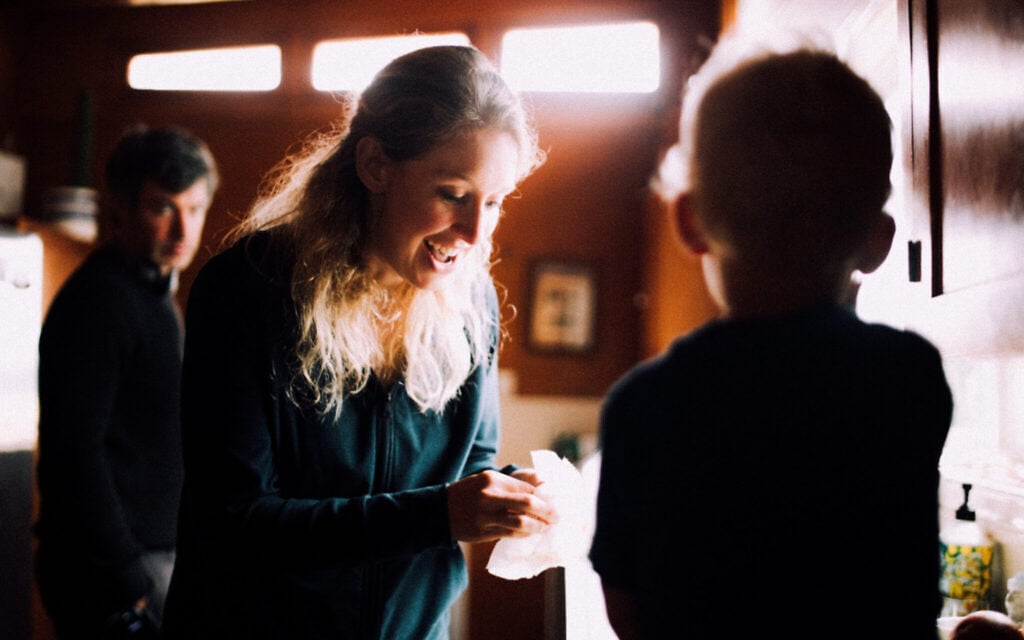
Just before she entered prison, Holmes invited documentarians Nathan Fielder and Lance Oppenheim to live with her, her boyfriend Billy Evans, and their two young children in their beachfront San Diego rental unit, promising them full access, complete transparency. The result is this year's most entrancing documentary, You Can See Everything. When the camera captures Billy in the shower, the movie delivers on its titular promise; you, uh, really can see everything. 

Yet what you cannot see is who Holmes really is. The mystery of the era's most famous fraudster is the movie's central riddle: Is she cynical, calculating, a stone-cold liar and psychopath? Or is she something stranger—a damaged and delicate person who genuinely believes her lies, or at the very least, genuinely believes the stories she tells herself to justify those lies after the fact?

Fielder and Holmes seem uncertain themselves; the movie is, in part, their own attempt to wrestle with their own ambivalence, their own inability to come to a conclusion. It's a hall of mirrors about the infinite unknowability of a person, even given unfettered access. 

The documentarians do not absolve her of her villainy; the movie is not an attempt to excuse her fraud or build a case for her innocence. But they offer something exceptionally rare in this era of simplistic hero and villain narratives: genuine and deeply felt empathy for someone on whom the culture (not to mention the legal system) has cast final judgment. In the process, they have given us one of the strangest, most unsettling, and most poignant films of the year. You Can See Everything is a small miracle of a movie. 

It's sometimes said that the most compelling villains don't believe themselves to be villains. They have an internally coherent story to tell that excuses their actions, makes them the heroes in their own minds. Fielder and Oppenheim have given Holmes, and viewers, the gift of allowing Holmes a measure of psychological complexity. You don't see into her mind, because that's impossible. But you see that the story she tells herself is different from the story the world tells us about her. It's surprisingly kind and generous; it's also tricky as hell—to the point where you, the viewer, might wonder if you're the one being tricked. 

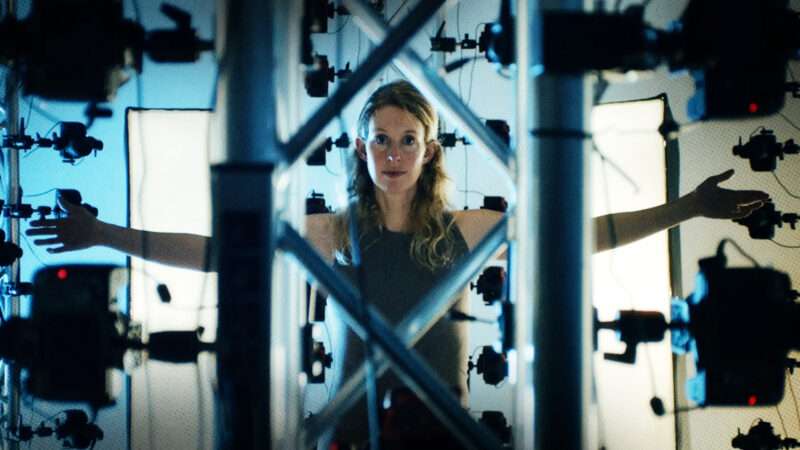
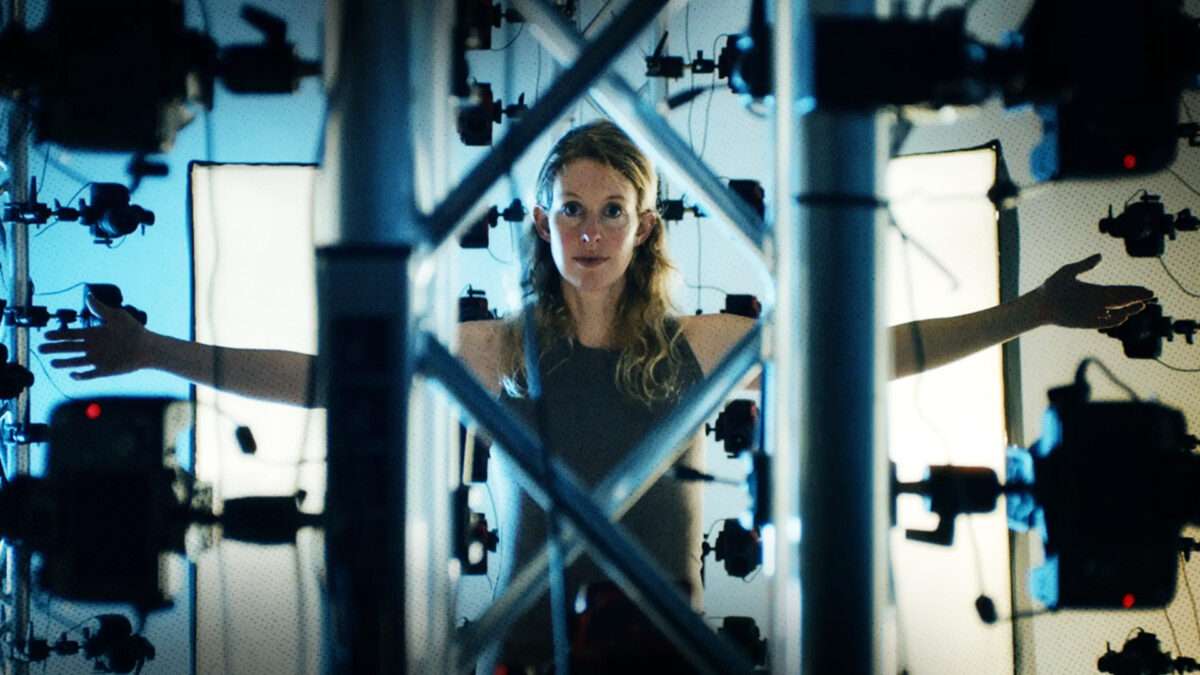
Halfway through, the movie takes a meta-turn that I won't spoil, entering into high-concept territory in an attempt to more deeply explore what art and images can reveal about a human psyche. It's formally audacious, often funny, and actually justifies the three-hour running time. I've never seen anything quite like it.  

The exercise left me just as unsettled as the documentarians seem to be themselves; uncertain about Holmes and her motives, and nearly as uncertain about Fielder and Oppenheim, two talented filmmakers who appear to be questioning not only the nature of their chosen form, but of reality, especially psychological reality, themselves. There are times when You Can See Everything borders on magical realism, except the magic comes from the complexity of human nature and storytelling, as if Gabriel García Márquez had written a story about a man with a camera that could see into souls. It's dizzying, dazzling, a sort of postmodern Rashomon of perspective shifting.

As I left the theater, in something of a daze, I found myself thinking of a line from the great Saul Bellow novel The Adventures of Augie March, "Nobody should be a mystery intentionally. Unintentionally is mysterious enough." In the case of Holmes, it's impossible to tell which it is. All we can say is this supposedly one-note Big Tech villain, like perhaps everyone, is better understood as some kind of mystery, even to herself. 

The post The Elizabeth Holmes Documentary <i>You Can See Everything</i> Is an Act of Radical Empathy appeared first on Reason Magazine.

  •  

Gaza’s disabled left behind: ‘All our dreams are gone’

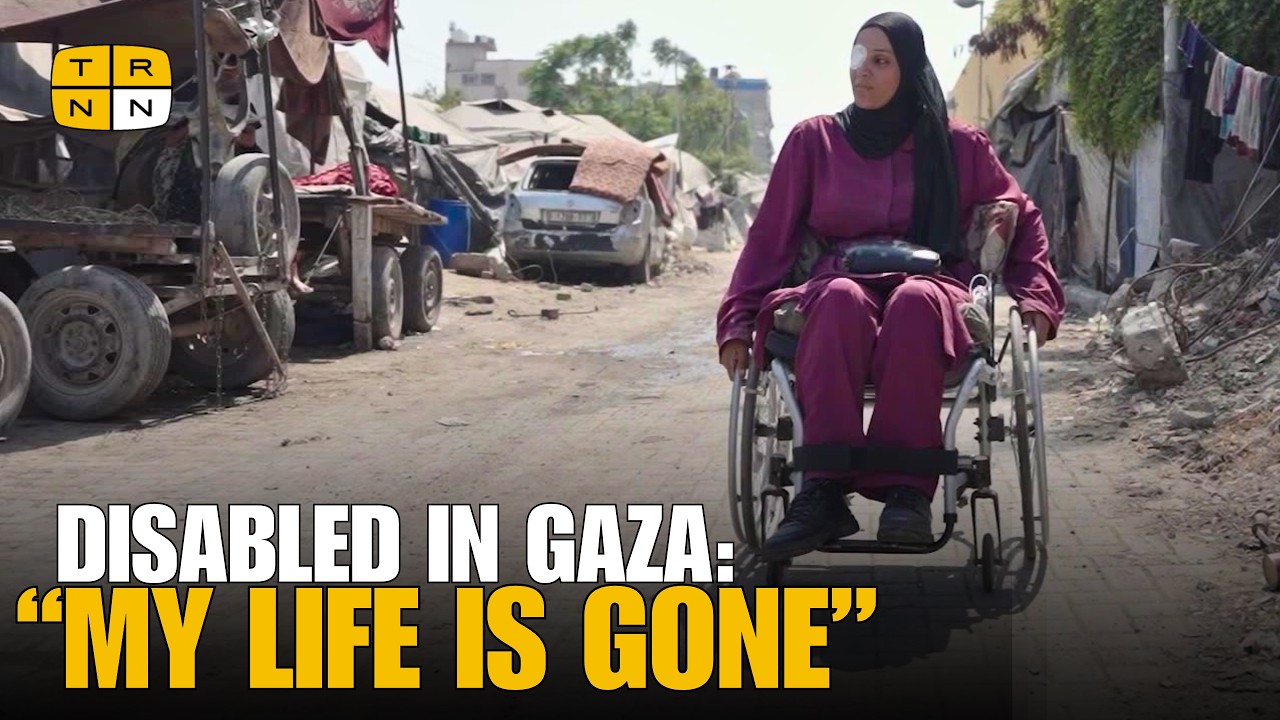
In Gaza, everyone is struggling to survive. For disabled people in Gaza, that struggle is multiplied. Rabab Nawfal and Suha Maqat, both wheelchair users, were champion athletes on Palestine’s national teams before Israel’s US-backed genocidal war. Two days before it began, they were playing qualifiers to represent Palestine abroad.

In this TRNN documentary report, they describe living through famine, fleeing bombardment in wheelchairs that no longer work, and asking for help that never comes. With 81% of Gaza’s roads damaged or destroyed and the UN documenting thousands of amputations, Israel is not only making life impossible for disabled Palestinians; it is creating a new generation of them.

Editor’s Note: This documentary report was filmed in Gaza City three weeks before the ceasefire in Gaza was shakily implemented beginning on October 10, 2025. Since the “ceasefire” began, Israeli forces have killed over 1,300 Palestinians, including 301 children, according to the Gaza Ministry of Health.

Credits:

  • Producers: Belal Awad, Leo Erhardt
  • Videographers: Ruwaida Amer, Mahmoud Al Mashharawi
  • Video Editor: Leo Erhardt
Transcript

Suha Maqat, Palestinian Athlete: 

I’m in a wheelchair—how am I going to escape? 

Rabab Nawfal, Palestinian Athlete: 

There were days when we ate animal food, bird food. 

Suha Maqat, Palestinian Athlete: 

I lost my eye. What more do you want? 

Rabab Nawfal, Palestinian Athlete: 

My dreams have been shattered. 

Narrator: 

In Gaza, everyone is struggling to survive. But for people with disabilities, that struggle is multiplied. Rabab Nawfal and Suha Maqat – both wheelchair users – were champion athletes before this war. 

Rabab Nawfal, Palestinian Athlete: 

I’m one of those people who didn’t go to the south. I lived through famine twice. I lived it twice. No one asked after me. There were days when we didn’t eat anything. There were days when we ate animal food, bird food. We ate everything—animals, birds. Even those things were expensive, and then they were cut off. The day they were cut off, we stopped eating anything. 

Ramadan came during the famine. We didn’t eat anything. A long day passed, and we didn’t eat anything. We used to crave drinking water. We used to crave a piece of bread. We were hoping that the famine would never come back. But unfortunately, it did—and it’s still coming back. 

We’ve suffered a lot in life. I was abandoned. No one took responsibility for me. My mother and father used to take care of me, but they left. These days, my brother takes care of me—and he is injured. My life is ruined. No one is with me. No one cares. And the one person standing by me is injured. He can barely carry his own family. 

When we were displaced, he couldn’t help us. He wasn’t able. For people with disabilities like me, it’s been difficult to live through this war. Those who are not disabled can maybe manage their lives. They can move, walk long distances—but I can’t. 

Suha Maqat, Palestinian Athlete: 

The closest people to me abandoned me—they didn’t stand by me. They left me to fend for myself. I feel like I live in a forest with wolves and monsters. I can’t. I try to make things work,

but I can’t. I’m mentally exhausted. The circumstances of this war are incredibly difficult. Even the word displacement is difficult for the injured and disabled. 

When we left, my brother was injured and my sister was in a bad state. Even though he was injured, he was pushing my sister, as I pushed myself along. I got stuck in the sand, and they wanted to bomb the building next to us. It was the most difficult moment. I said to myself, now I’m going to be killed. It was the hardest moment of my life. 

I thought—how will I escape? How will I, in my wheelchair, escape? How am I going to get out? My brother was injured and couldn’t carry me. I thought, I’m done; there’s no life for me anymore. That’s it. I’m going to be killed. 

Rabab Nawfal, Palestinian Athlete: 

The hardest thing I’ve experienced in this war has been displacement. I woke up one day and saw the Israelis in front of us. I was all by myself. I rushed out, but I couldn’t continue. There was a lot of shelling, shooting, bombs. It was a miracle I got out alive. It happened again and again—the same scenario repeated a thousand times. 

Narrator: 

Both Suha and Rabab rely entirely on their wheelchairs to move. Without them, the most basic tasks become impossible. Israel’s blockade has meant that access to this crucial item has been cut off. 

Even with functioning wheelchairs, with 81% of roads in Gaza now damaged or destroyed, access and movement is extremely limited. 

Rabab Nawfal, Palestinian Athlete: 

There are no wheelchairs in Gaza. And without a wheelchair, I can’t move. The wheelchair takes me to my medicine, my food, my drink—I need it for everything. Right now, my chair is broken. I’ve lost all means of life. 

Suha Maqat, Palestinian Athlete: 

As you can see, my chair is broken. I push myself in it, I fall off all the time, I cut and bruise my legs. If someone kind is around, then I can move. Otherwise, I can’t. 

We requested wheelchairs, but it was no use. We asked and asked, and they said no. Rabab Nawfal, Palestinian Athlete: 

My life before the war was very beautiful. I was a champion of Palestine’s disabled national team for strength games—basketball, tennis. I used to do all kinds of sports that suited my disability. I was a success story. I was a hero. These days, I feel worthless. Nothing in life. I can’t even get from here to there. I can’t move from here to there in a wheelchair. My life is 

gone. There is no life.

These days, we only dream of having the most basic things: flour, water. The simplest things—we can’t get. Drinking water—we can’t get it. 

Suha Maqat, Palestinian Athlete: 

Suha before is different from Suha today. I used to be a champion of Palestine. Today, I’m nothing. Today, just a daughter who needs her mother—who needs her mother to help her. 

Rabab Nawfal, Palestinian Athlete: 

Two days before the war, we were playing qualifiers to represent Palestine internationally. But we didn’t manage it. On the day of the championship, the war erupted. So our dreams are gone. All our dreams are gone. My dreams have been shattered. 

I wanted to raise my son. I wanted to raise him well and teach him. Before the war, I wanted to enroll him in karate. I wanted him to become something. I couldn’t. I wanted him to be into sports like me—to become a doctor. I wanted him to grow up and help me in the future. But my dreams were shattered. I couldn’t do any of it. I can’t do anything. 

Narrator: 

According to the UN 4,800 amputations of limbs had been documented since the beginning of the war. Ten children were losing one or both legs every day. Gaza had become home to the largest group of child amputees in modern history. Not only is Israel making the lives of existing disabled people impossible, it is also creating an entirely new generation of people with disabilities. 

Suha Maqat, Palestinian Athlete: 

Gaza has become a city of ghosts. There is no life in Gaza. As you can see—look at how people are living. On sand! How can people live on sand? How can they occupy Gaza? How? 

We want peace of mind. We don’t want to lose any more loved ones. We’ve lost enough. Is it not enough that I lost my eye? What’s left? What more do you want? I lost my eye—what more do you want? What else should I lose? Nothing’s left. There’s nothing left in this world that I can lose. My family has left. I wish I could see my mother. See my father. 

Rabab Nawfal, Palestinian Athlete: 

Life has become unbearable. No matter how much I talk, I can’t describe what I am feeling or the life we are living. I used to be someone. Now I am nothing.

💾

Champion athletes Rabab Nawfal and Suha Maqat, two of Gaza's disabled people now in broken wheelchairs, on famine, displacement, and being forgotten by the world.
  •  

Israel bombed a hospital. It separated a family for three years.

Screenshot by TRNN

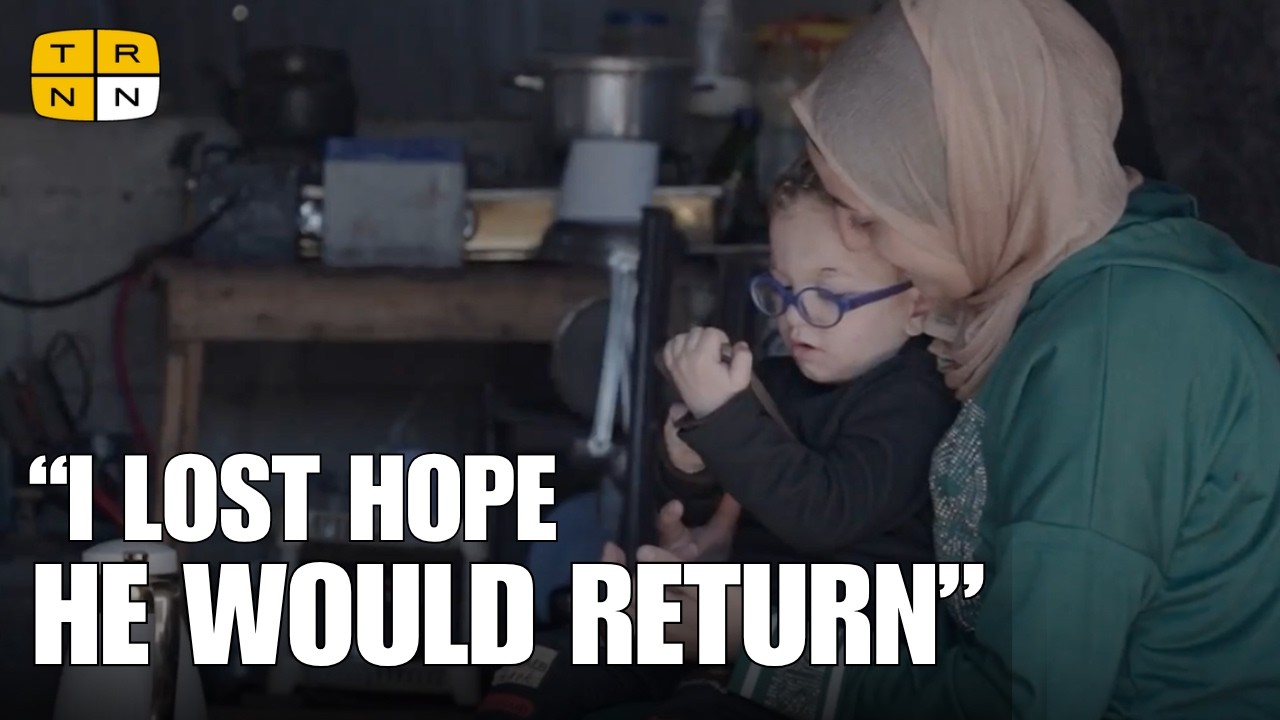
When Israeli forces besieged Al-Shifa Hospital in November 2023, eight premature babies in incubators were evacuated to Egypt under fire. One of them was Joud. His mother, Fatima Dakkeh, spent the next two years and eight months searching for him and fighting to bring him home.

Fatima tells the story of giving birth just months before October 7, losing contact with her son during the first Israeli raid on Al-Shifa, learning a year later that he was alive in Egypt, and a bittersweet reunion with a child who no longer recognized her.

According to the International Rescue Committee, at least 17,000 children in Gaza are unaccompanied or separated from their parents. For many families, there will be no reunion.

Credits:

Producers: Belal Awad, Leo Erhardt
Videographers: Ruwaida Amer, Mahmoud Al Mashharawi
Video Editor: Leo Erhardt

Transcript

Narrator:

Al-Shifa hospital is the largest medical complex in Gaza. Since October 7, it’s been repeatedly raided, occupied and targeted by Israeli forces. Over the course of the Genocide, hundreds were killed in and around the building and the hospital itself was completely destroyed.

In November 2023, under Israeli fire, 8 premature babies in incubators were hurriedly evacuated to Egypt. Joud was one of those babies.

Fatima Dakkeh:

I gave birth to my son, Joud, in July. Joud needed neonatal care at Al-Shifa Hospital. We placed him in the neonatal unit, but then the war started and Joud was there in the hospital. We couldn’t get in touch with Joud because of the shelling and the war.

Narrator:

Fatima Dakkeh and her son Joud have been unable to have a regular mother-son relationship. Joud was born in Gaza just a few months before October 7th 2023 and so, their story has been shaped by war, displacement and separation. Shaped that is, by Israel’s war on Gaza.

Fatima Dakkeh:

When we tried to get to the hospital to get Joud, we weren’t able to get to him and take him out, because of the situation—things had gotten really bad. There was a lot of shelling and there were airstrikes and quadcopters. We planned to go back another day to get Joud, once the situation calms down. But the situation just kept getting worse. The Israelis entered Al-Shifa Hospital and occupied it— that was the first invasion of Al-Shifa Hospital, and my son was inside.

About a year later, I found out my son was in Egypt. I mean, I didn’t give up; I kept going to hospitals, I went to the Red Cross and places like that to search for news about my son, no one could help me. I went to a doctor I know. I told him my story, he said, “I’ll try to get in touch with your son and see where he is.” Thank God, he was the one who discovered my son was in Egypt. After a few days, they sent us pictures of my son, and we found out he was OK. Thank God. They knew he was our son through my name—they had my name on file. We started communicating with him more through my sister-in-law—my sister-in-law in Egypt. We told her the story, and of course she didn’t hesitate; she visited him in hospital, sent us pictures and reassured us about him, thank God.

Honestly, I was happy and upset at the same time because my son was in Egypt, if he would have been here in Gaza he would have suffered a lot. We were starved, even nappies were cut off. Most children were using scraps of cloth as nappies. And milk too, was cut off—we had no milk at all in northern Gaza. I said to myself thank God my son is in a better place than Gaza. But at the same time, I was upset that my son was far from me. I would see mothers playing with their kids, dressing them, carrying them—and I would feel these feelings. I would miss my son. I wished my son was with me. At the same time, I’d look at my situation—how we’re living, in tents, in all this difficulty. I’d say to myself, hopefully he will return to us in a better situation, there will be a ceasefire and we will make up for the days we lost.

I had lost hope that he would return. With the crossing closed and the Israelis were not letting people return. When they first told us he was returning, I was shocked. My husband and I both. We were surprised—how could he come back just like that, overnight? He’s just going to come back, all of a sudden, after we’d lost hope all these years. I was overjoyed with the news that I would see my son again, it was the best news. When we went to the hospital to collect him, it took a really long time for them to bring him to us—many hours. With each passing hour, I would get more and more excited: about seeing him and about how I would greet him. I mean it was really hard, but at the same time, the moment when I saw him was really beautiful.

Yeh, honestly, when I first saw my son, he wouldn’t come to me; he’d cry and avoid me. He would go to his dad before me. he didn’t want to come to me, so I was afraid that he’d stay that way uncomfortable around us And afraid of living with us, and afraid of the situation we’re in— that he wouldn’t accept us Thank God, little by little, he started to accept us.

Narrator:

According to estimates by the International Rescue Committee, 20,000 children are still living separated from their parents in Gaza. Fatima was reunited with Joud and though their separation which lasted 2 years and 8 months impacted both mother and child, they are now reunited. As for the thousands of other survivors in Gaza, for many there will be no reunion.

💾

When Israeli forces raided Al-Shifa Hospital, Fatima Dakkeh’s newborn baby was evacuated to Egypt without her — one of thousands of Gaza's children separated from their families by Israel's war.
  •  

Community marches into 7-11 where 74-year-old was brutally beaten in Baltimore

(LEFT) Surveillance video shows 74-year-old Ade Oba Tokunbo (Stephen King) on the ground, being assaulted by a group of young males in front of the 7-11 location on Liberty Heights Avenue in Northwest Baltimore, Maryland, on July 7, 2026. Surveillance video released by Baltimore Police. (RIGHT) Local residents gather in protest outside the same 7-11 where Ade Oba Tokunbo was assaulted on July 26, 2026. Photo credit: Maximillian Alvarez/TRNN.

A 7-11 on Liberty Heights Avenue in Northwest Baltimore, Maryland, has become a flashpoint of community rage and resistance after Ade Oba Tokunbo (Stephen King), a 74-year-old resident, was attacked and brutally beaten there by six teenagers on July 7, 2026. The same location is also the site of multiple robberies and the murder of Victorious Swift in March of 2017. In response, “A Clarion Call,” a new coalition of local community organizations and residents, organized a rally at the 7-11 on Sunday, July 26, and led a community march into the store to demand the company implement policies that will keep customers safe and aid in the apprehension of the youth responsible for the July 7 attack. In this on-the-ground report, TRNN takes you inside the community rally held at the 7-11, near Mondawmin Mall, on July 26. 

Additional links/info:

Credits:

  • Production: Maximillian Alvarez
  • Post-Production: Maximillian Alvarez, Cameron Granadino, David Hebden
Transcript

The following is a rushed transcript and may contain errors. It will be updated.

Crowd Chants:

We are we. We are we. We are we. We are we. We are we.

Gwendolyn Levi:

We need to be able to say that we in our community are willing to stand up. We’re standing up for our young people. We’re standing up for our seniors. We are standing up for our communities.

Queen Mother Victory Swift-Gye Nyame:

On July 7th of this year, 2026, a comrade in my brother was brutally beaten by six youth at this same said 7-Eleven, brutally beaten for over 10 minutes. He was able to get into his vehicle and only go a few blocks before he had to stop. He was in so much pain that he had to call the police and have them to take him to the emergency room at Sinai Hospital. A few days later, the video was exposed and it was something that you couldn’t believe you were seeing. When he got out of the vehicle, those brothers was laying right there.

There’s a stack of crates that they got from this 7-Eleven. Look at it. I want you to see it. That’s why we had it here. What they call ground zero. When he got out of his vehicle, they saw him. They weren’t laying for him. They were laying for somebody to come that way. They were willing and waiting for somebody to come down Towanda or Tioga, like my son did in 2017 when he left the 7-Eleven. So after walking 20 feet with my son, he put not one, not two, not three, not four, but five bullets into his body over a cell phone. Victorias fought for his life and it was stolen from him. It wasn’t taken because he fought back. It was stolen. On July 17th of this year, my comrades, this Black Panther veteran fought back.

Speaker 4:

Children today lost respect. You know what I’m saying? And I’m not saying all our children. I’m not saying that. But these little young men that came and jumped Bob and when I seen that, I said to myself, wow, they are chumps. They are cowards and they don’t have no dignity.

Speaker 5:

I don’t want it to be a blanket thing where like all our children are bad. I once was one of the little brothers out here running them up, but I’m telling you, we are misunderstood, uneducated, misguided, and easily let us stray. We need the community to gather around these young men. We don’t believe in throwing our peoples away.

Queen Mother Victory Swift-Gye Nyame:

I am commissioning the entire city. There’s a $50,000 reward. Here’s a QR code. Do not call yourself an organization or revolutionary or anybody else until you click this and donate so we can find those babies. We have to find them. No one else can find them. We have to find them. We will find them. But we’re not finding them so that they can be locked up and we throw away the key. I heard that. We’re not finding them so we can throw away a key. We’re finding them so that we can follow them, hold them, love them. We’re taking whatever these demons have for them off the table. They can’t have our children anymore. That’s over. They’re our children. As hard as that is to say with what we saw, they’re still ours. They are still we are we. We’re going to walk with them every step of the way.

Yes, we’re going to walk them to the police station. They have to be accountable for their behavior, but we will never let them go.

Gwendolyn Levi:

We need to teach our community the difference between snitching and protecting our community. There’s a difference. There is a difference. If your grandmother walks down the street, she can’t even go to the store. That’s not snitching. That’s saying, I want that community. I want my storefront cleaned off so my grandma can go to the store. That’s protecting your community. That’s protecting your loved ones. If you see something, say something. That’s not snitching. Snitching is when you and I go rob the 7-Eleven and not go tell on you. You need to know what snitching is. This is not snitching. This is happening ourselves.

Speaker 6:

You young. You haven’t lived enough life to understand anything. So when you hear elder up here talk about snitching and all this, I see your faces twisting up because you’re not intellectually understanding that these things that are being said are true in fact. But the arrogance in who you are as a person won’t allow you to listen to the truth until you’re old enough to have a child and somebody takes it from you. And now you want justice. Now you want peace. Now you want understanding. I used to be your age. You never been my age. My job or responsibility is to guide you.

Speaker 7:

Yo, people just need to be taught y’all. We’ve been there done that. Let’s not be so quick to forget. But one of the things I can say, I’m 63 years old. That’s something I’ve never done. Jump on it. Y’all, an older man. No, we ain’t do that. We ain’t do that. We guarded them to factor them even though we did our little stuff on the side, but we ain’t do that.

Queen Mother Victory Swift-Gye Nyame:

I watched that video over and over and over and over. Even though I kept watching it, when that baby pulled that sword out like he was a samurai, all I could think about was please don’t stab him. Even though I knew he was home, I knew he was safe. The pain is so real. The visual is so vile that even when you know they’re safe, you still fear for them. When I turned that off, I said to myself, if he can fight, we can fight. If he’s not afraid to fight, even if he dies, we can fight until we’re not afraid to die. I saw it. He proved it. You can say what should have or could have happened, but what happened is he fought back. They beat him. They kicked him. They knocked him. They tormented him for 10 minutes. Do you know what 10 minutes feel like when someone is attacking you?

All the time. It feels like forever, queen.

Speaker 8:

I was inspired when I looked at the fact that you just kept getting up. You just kept getting up! And if I take anything from that, here’s what we must continue to do as a people. We got to keep getting up. They talk about black people hate each other. Black people hate black people. And I often say to them, you can’t get this

Queen Mother Victory Swift-Gye Nyame:

If we hate each other. It’s time. One of the flyers say, if not us, then who? If not now, then when? We are going into that 7-Eleven and we’re telling those people, because I called them all week. I went in and got the phone number. I called them all week with no response. We tried. No response. We tried to no avail. Now we’re going full throttle. We’re not taking any prisoners. We’re not walking backwards. We’re going in there. We’re letting them know what they need to do to protect this community.

Ujimma Masani :

We want to walk over to this store. We want you to walk with us. We’re not going to tear up the store. We’re not going stealing anything. We just over there to let them know we ain’t playing. We write to you, not as adversaries, but as neighbors who share this corner with you every day. This location has witnessed a brutal assault of a 74 year old man, elder, an overnight break in and years of prior tragedy at the same address, including a loss of a young man’s life in March 2017. We believe you want this corner to be safe as much as we do. It is in that spirit, cordial but firm that we present the following list of demands. Number one, we are giving you a 72 hour notice to post your hours of operation in lettering large enough to be read clearly from the street.

Number two, cut down the overgrown bushes that create a hidden nook where perpetrators can wait and hide to attack unsuspected customers and install brighter lighting throughout the parking lot. Number three, we urge you to donate toward the community reward fund established to help apprehend the assailants and toward the medical costs of the 74 year old elder who was attacked. Number four, invest in stronger security measures, including roll down security grates when the store is closed to deter further break-ins. And number five, acquire off-duty police presence to enforce a no latering policy and help assure the safety of your customers and this community. This is not a request made lightly and it is not one we intend to let go unanswered. We ask for a response and a plan of action within a reasonable time and we will report back to the we. Until then, we will continue to stand on this corner in agreement until this community is safe.

Respectfully, the we community.

Ade Oba Tokunbo (Stephen King):

This gathering here is important because the community around us can see it. And they need to know that this is what needs to be done. These killings and these robberies and these auto thefts, we, I believe, can decrease it by teaching our people that hoodrats are not appreciated and should not be tolerated. I’m a veteran of the Black Panther Party. My paternal grandfather was a member of the UNIA. We are more than just a group of organizations. What I feel, because you have concern for me and care for me, this is my family.

Queen Mother Victory Swift-Gye Nyame:

When I realized who it was and where it was, it brought back the night that my son Victorius walked out of this same 7-Eleven, down those steps, down to Tioga Parkway and was approached by a young man who demanded his phone. A fight pursued. The young man took out his gun and he brutally murdered my son, victorious. He shot him five times, one in the stomach, then the kneecap. Then when he fell, he shot him in the head, shot him into his eardrum, which hit his jugular vein. And as he was falling over, he shot him again and that bullet grazed his back. He left him for dead. Someone who witnessed the entire event ran over to my son, held him and told him to hold on. He called the ambulance. They took him to the hospital. And he was pronounced dead at 3:43 AM on March 26th, 2017, four days after my birthday.

That was enough for me to say I’ve had enough. The next morning, Sister Ujimma called me and asked me how the Bible was doing when she had heard about it. We talked about what had happened. I shared with her what had happened to Victoria’s and telling her that that was the same location where Victorius came out of before he was murdered. Almost the same time of night, about three Victoria’s, I think it was like 3:15, 3:20, somewhere around that same time almost. And we said we have to do something. She called Mama Gwen. And once we came into what the Sister Queen always says, we have an agreement. That was it for us. We had decided that we were going to take no more, that we were going to do the same thing that Baba did, fight back. And that’s what we started doing. So we created the we organization mindset that we were going to communicate with every organization that we could in this city to let them know, to meet us here, where the assault happened and begin the process of changing how we think and how we look at the city and how to move forward as a collective, as a we, in agreeance, in agreement.

Ujimma Masani :

In agreement.

Queen Mother Victory Swift-Gye Nyame:

And that’s what we did.

Gwendolyn Levi:

Thank you. I think one of the most significant things about this gathering that we had today is that it was not retaliatory or negative. It was not we against them or – Pointing fingers. Pointing fingers. It was to say we are here. We didn’t point fingers at our young people because we know we got some good young people in the city. Many of them that were out here with us today. But we all got some troubled young people. Sister said it best when she said it early. Some are broken. Some are just bent. Hopefully we can get to the bent ones before they get broken. That’s what this cry is about. That’s what the querying cry was for all organizations to say, “Hey, we are here for our young people. We are here for our elders. We’re here for our neighbors in the community. We are here.

All you got to do is just look around your community. If you don’t see us in your community, call one of our older. We’ll come. We got brothers who can walk the streets with us. We got brothers who could go up in the alleys with us. We got sisters who know that our young sisters who are running up in stores and just grabbing stuff. No, no, no. You don’t have to do that. We know how to go get your nails done.

We can get your hair done. Come see us. Come see us. That’s what we’re saying to our young people. We are here for them. And yes, you must be held accountable for your actions. I did. I served 16 years of a sentence. Guess how many years I was supposed to serve? How many? 400 months. I’m going to let you all add it up. And the ones who can’t add it up, that’s why we need to change our board of education. That’s a whole nother source. But I’m not going to tell you how many that the 400 months is figured out. But I did 16 years over 400 months sentence. I was transformed. And if old as I was can transform, I know we can help these young people who have a whole life ahead of themselves. And that’s what we’re trying to do. Save our youngsters mainly before they get into the system.

But even the ones that get into the system, we’re here to help you so that when you come out of that system, you will come out and do what we’re doing. Do what the Tandea family, do what some of these other young or the cry organization, do what they’re doing. Help each other. Tell your story. Your story is impactful. Your story can help somebody.

You have a store, young man. You have a store young lady. And I know some of you might be mad, not mad at me. Look in the mirror. Tell yourself who you’re mad at and address that situation before you come out here and get into some trouble that you really don’t want to get into. We are here.

Queen Mother Victory Swift-Gye Nyame:

We are here.

Gwendolyn Levi:

For those six men who assaulted my brother, we are here.

Queen Mother Victory Swift-Gye Nyame:

We are here.

Gwendolyn Levi:

Call one of us. Yes, you have to be held accountable, but in that accountability, you will have support. You will have support so that you won’t become broken. We don’t need more broken kids in our community. This is a healing city. This is a city that can be healed. And we are here to say that the healing has begun by the we. Thank you.

Ujimma Masani :

That was beautiful. Thanks. So in our effort to address this, I guess, our trust that hangs over our city with youth being not accountable in what it is that needs to happen. We’re looking for our first step, which is to be a place where you deposit information. This is an information bank. We are a repository for every organization that’s out here helping families, youth, and elders. So if you have resources, if you have services or programs, this is the one stop shop that you come to. We are not saying at this moment that we are doing anything other than that. What we want to do is when we connect with families, elders, and youth, we could point them in a direction of where they may can go. We won’t select your program for them, but we’ll tell them where they can go to get that service.

And we’re going to aggregate all the information and make it user friendly. And you’ll be able to obtain it through our social media. We’re going to be able to obtain it through our website. And most of all, we’re going to be boots on the ground. The next event that we hope to kind of commandeer everyone together is that we’re going to be at the March on Washington on August 28th. There’s a free bus available by the National Action Network provided by the local chapters, community and city of NAN through the Reverend Al Sharpton. And we are going to take our voice across this country because I believe that other communities need the same kind of help. So we want to show that what it looks like, we’re not just the wire, we’re not just the corner. We’re not just the dancing, numbing and snowballs and the bikes.

We are more than that. And people need to see us as a whole. And we have to take this as an organic approach to what we need to be getting done. And that’s what we’re here to do. I’m a graduate from the Morgan State University School of Social Work, and I’m calling on all my social workers, all my counselors, everybody who’s doing that work in this city. This is not about the dime or the doubt. This is about remembering how to bring community together. And with that, we are a we. And when we are we, we are in agreement. With that, I say

Queen Mother Victory Swift-Gye Nyame:

Ashe. I think the most important aspect

Of what we are doing is to specifically reach out to families. We want the mothers and fathers of this city to know that their children are loved, that there is help available, there are resources available. Like mama said earlier, we’re not blaming anybody. There are no finger pointing. This is not anyone’s fault. If it is, it’s all of our faults. There’s no one person we can blame for this situation. I heard someone say we need to lock them up and throw away the key. I think, I hope, and I believe that we’ve had enough of that. There’s a system set up that eats, that sets up retirement funds, that sets up vacation time for our children being incarcerated. Being in a system where they’re abused, where they’re raped, where they’re tormented, where their lives literally stop. That has to stop. That has to stop. We can no longer accept our children being put into these systems and saying, lock them up and throw away the key.

Ujimma Masani :

I want to say one important thing. People say that things start in the home. Some people don’t have a home. We have so many people who are homeless, families that are living out here in these woods. People who have no resources whatsoever, no family in foster care. We have the largest number of foster care people in the system, youth in the system, but we’re only 13% of this whole national population. So if you keep saying that it begins at the home, did you check out whose home life you’re talking about? Because everybody don’t have a home. We

Queen Mother Victory Swift-Gye Nyame:

Don’t even know if these young men had a

Ujimma Masani :

Home. Right. We don’t know where they come from. And we don’t know that if their home is safe and protected and wholesome. How do we know if they’re not being abused or abandoned or – Neglected. Neglected or molested? We don’t know what that is. It’s in the body. It’s in the body. And so what we’re going to teach them is something called clean talk. We’re going to teach them about facts, feelings, judgments and outcomes. We’re going to change the dynamic of how we communicate with these people, with our babies. And that is where we’re going with this clarion call Baltimore.

Queen Mother Victory Swift-Gye Nyame:

Changing our journey to change their journey.

Crowd Chants:

We are we. We are we. We are we. We are we. We are we. We are we. We are we. We are we.

  •  
❌