❌

Reading view

Ebola patient in Nigeria believed to have contracted disease in Uganda, Switzerland says

The Ebola patient in Nigeria, the Ugandan-born wife of a Swiss diplomat based in Abuja, is believed to have contracted the disease while travelling in Uganda, a Swiss government statement to Reuters said on Thursday.

Nigeria reported the case, its first Ebola case in more than a decade, on Tuesday, becoming ‌the fourth African country and the most populous yet to be affected by an outbreak that was announced in Democratic Republic of Congo in mid-May and has since become the fastest-spreading on record.

Ugandan authorities have said the woman who fell ill in Nigeria had travelled to eastern Congo before transiting through Uganda. But the World Health Organization and ​Africa’s top health agency said on Thursday they had not received confirmed information that the woman had travelled to Congo.

The woman “has been in a private clinic in Abuja for around a week with symptoms. She is believed to have contracted the virus whilst travelling to Uganda around two weeks ago,” said an emailed statement from the Swiss Federal Department of Foreign Affairs.

“Her husband is in isolation; he has not shown any symptoms. He was travelling with his wife when she is believed to have contracted Ebola.”

Uganda reported 20 cases in May and June, mostly imported from Congo, but the World Health Organization declared the country Ebola-free in August.

Ugandan government spokesperson Alan Kasujja told Reuters late on Thursday that Uganda had no Ebola cases.

“That’s a fact. If we did, as has happened before, we’d be the first to say,” he said.

Asked whether the Ugandan government had proof that the woman had travelled to Congo, Kasujja said, “Like what? A passport stamp? Without infringing on the patient’s rights?”

AFRICA CDC, WHO SAY NO INFORMATION THAT PATIENT WENT TO CONGO

Africa Centres for Disease Control and Prevention official Wessam Mankoula said on Thursday that Nigeria and Uganda were sharing information to establish the patient’s movements and possible source of exposure.

“So far, there is no validated information (that) this case traveled to DRC (Democratic Republic of Congo),” Mankoula told an online press conference.

The WHO said information it had received about the case did not include travel outside Uganda.

“The facts which we have received is that the patient returned to Abuja on October 3, being away from September 16 in Uganda,” WHO representative to Nigeria Pavel Ursu told the press conference.

Ursu said the focus in Nigeria was now on containing the viral infection and that the patient remained hospitalised, with her biochemical markers improving.

Jean Kaseya, Africa CDC director, told Reuters on Wednesday that the patient had been on a two-week holiday in Uganda.

Patrick Otim, a WHO emergency response manager, said on Thursday the source of her infection was still unknown as health authorities were working to piece together her travel history.

One issue under investigation is which health facilities the woman visited in Abuja after the onset of her symptoms and before her hospitalisation 48 hours later, Otim said.

KENYA TRACES ALL CONTACTS OF FIRST CASE

Separately, a senior Kenyan health official said authorities there had now traced all 135 contacts of the country’s first Ebola case, which was confirmed on October 6 and after which a further eight cases have been reported.

“We have been able to account for them 100%,” health ministry director-general Patrick Amoth said. He said the last contact to be traced was a Ugandan citizen who had arrived in Kenya in early October on the same flight as the index patient but exited by road via the Namanga border post with Tanzania, which meant it took more time to find him.

Africa CDC is investigating whether the Kenyan case may have come into contact with the patient being treated in Nigeria, as both travelled from Uganda’s Entebbe airport on the same day, Mankoula said. Transmission between the two was one of the possible scenarios being examined, he said.

Ebola spreads through direct contact with the bodily fluids of infected people, whether living or dead. The disease can cause fever, vomiting, diarrhoea and, in severe cases, internal and external bleeding.

The rare Ebola species behind the current outbreak kills about half of those infected and has no approved treatment or vaccine.

So far the outbreak is confirmed to have killed about 4,700 people across the four African countries that have reported cases, according to the Africa CDC.

  •  

Ebola Outbreak in Africa Reaches Widest Expansion Ever

Health officials are urgently seeking answers about the origins of a case newly identified in Nigeria, the first in that West African nation.

© Marvellous Durowaiye/Reuters

Nizamiye Hospital in Abuja, Nigeria, where the country’s first Ebola patient was admitted this week. An African health official said that if authorities could not come up with ways to stamp out the outbreak, “the whole continent can be affected.”
  •  

Cómo los frigoríficos usados de Europa envenenan el noroeste de Nigeria

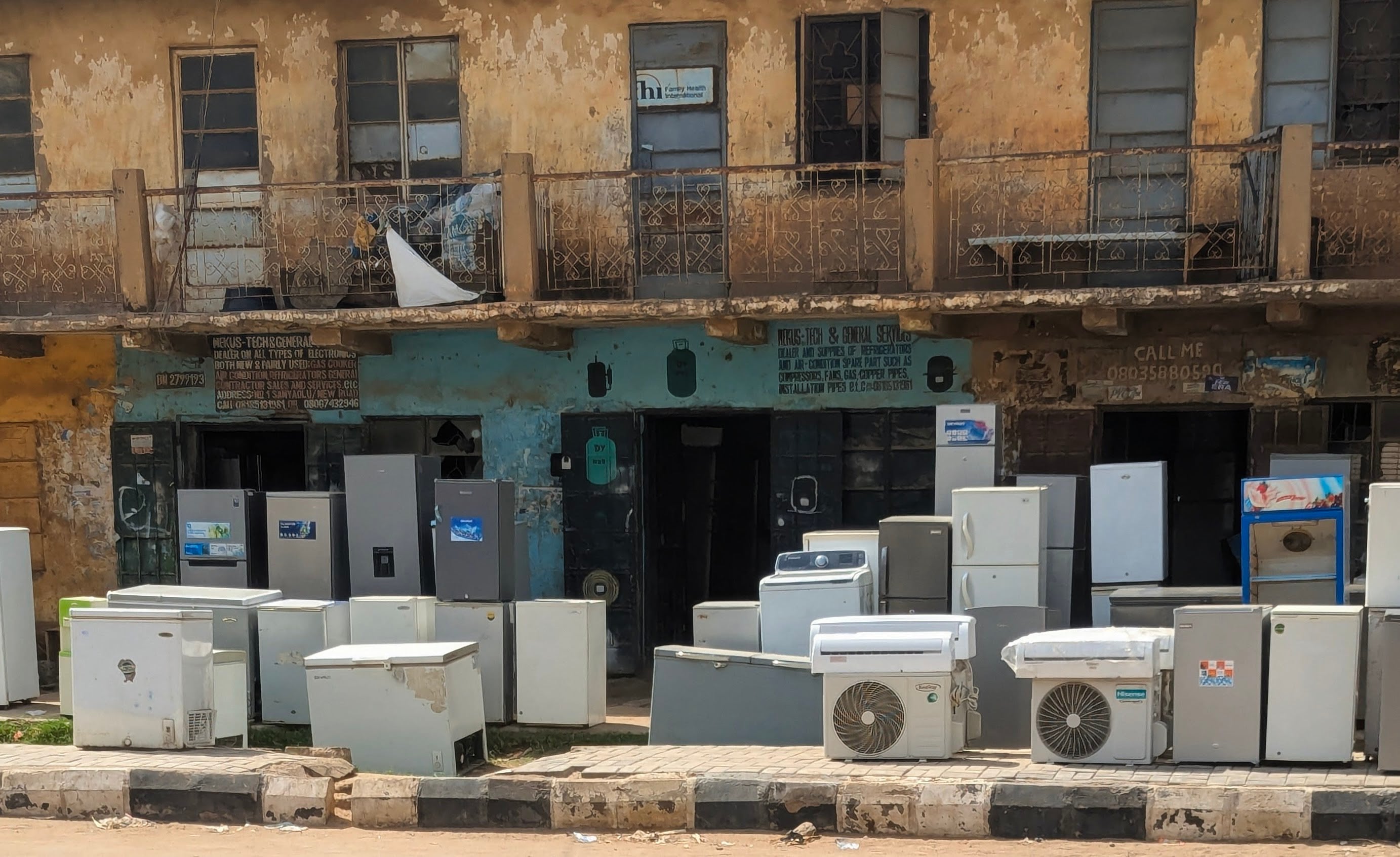
Aminu Issa es uno de los vendedores de refrescos más conocidos del mercado de Sabon Gari, en el Estado de Kano, al norte de Nigeria. Cuando puso en marcha su negocio, compró dos frigoríficos de segunda mano a un comerciante de aparatos electrónicos usados en el bullicioso mercado donde trabaja. La inflación y sus escasos ingresos le impedían comprar electrodomésticos nuevos, por lo que recurrió a los de segunda mano que se venden en Sabon Gari, uno de los principales centros de comercio electrónico usado del norte de Nigeria. Issa pagó 100.000 nairas (unos 67 euros) por los dos frigoríficos, un precio que en aquel momento casi le habría permitido comprar uno nuevo de tamaño similar.

Seguir leyendo

© Abdulwaheed Sofiullahi

La tienda de Abdulrazaq Umar, donde vende electrónicos usados en el mercado de Sabon Gari, en el Estado de Kano, (Nigeria), el pasado el 27 de mayo.
  •  

El brote de ébola se expande a África Occidental tras la confirmación del primer caso en Nigeria

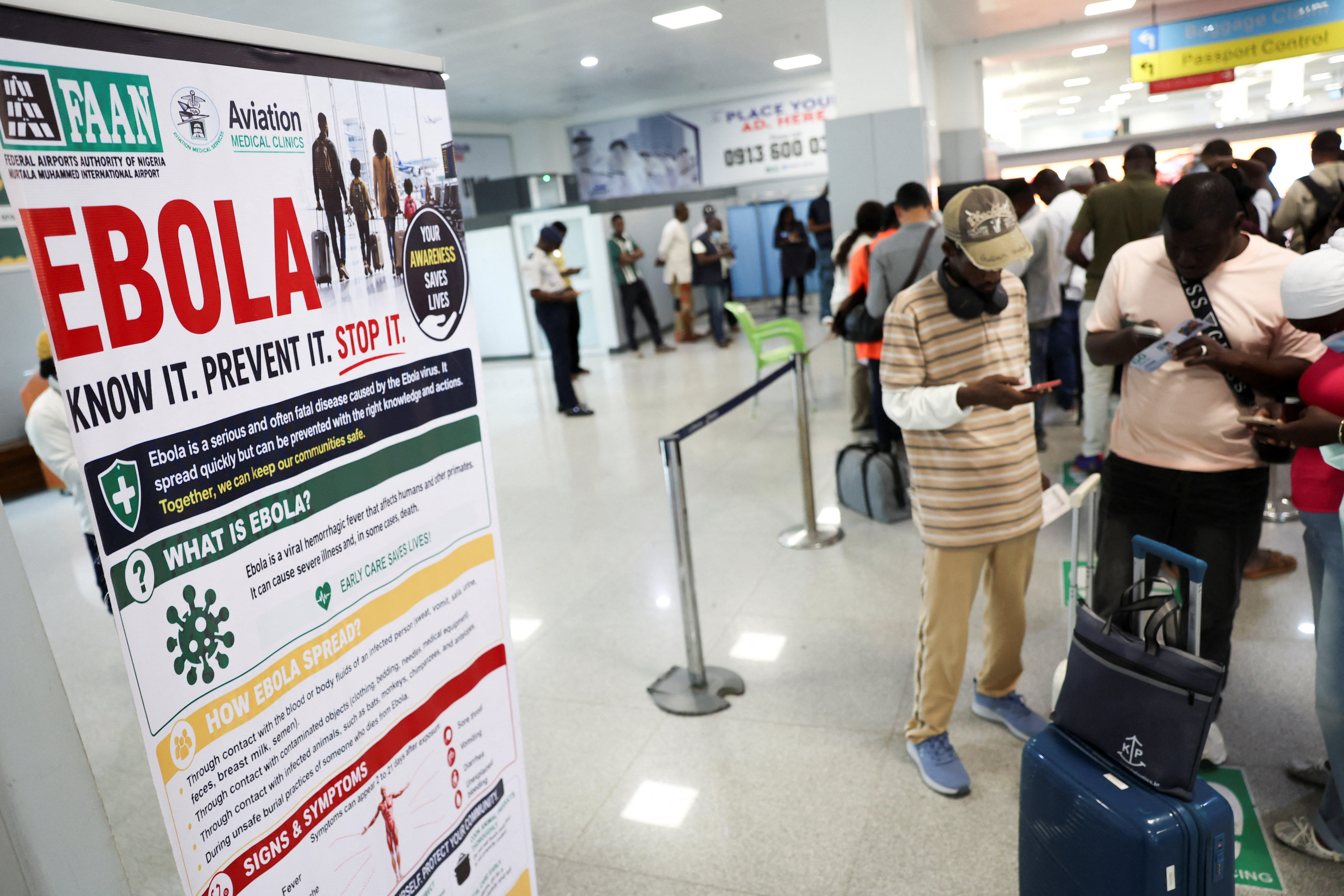
Nigeria notificó este martes su primer caso de ébola en más de una década, después de que una mujer extranjera residente en Abuya, la capital del país, diera positivo en la prueba de detección del virus, según recoge la agencia Reuters.

Seguir leyendo

© Gradel Muyisa Mumbere (REUTERS)

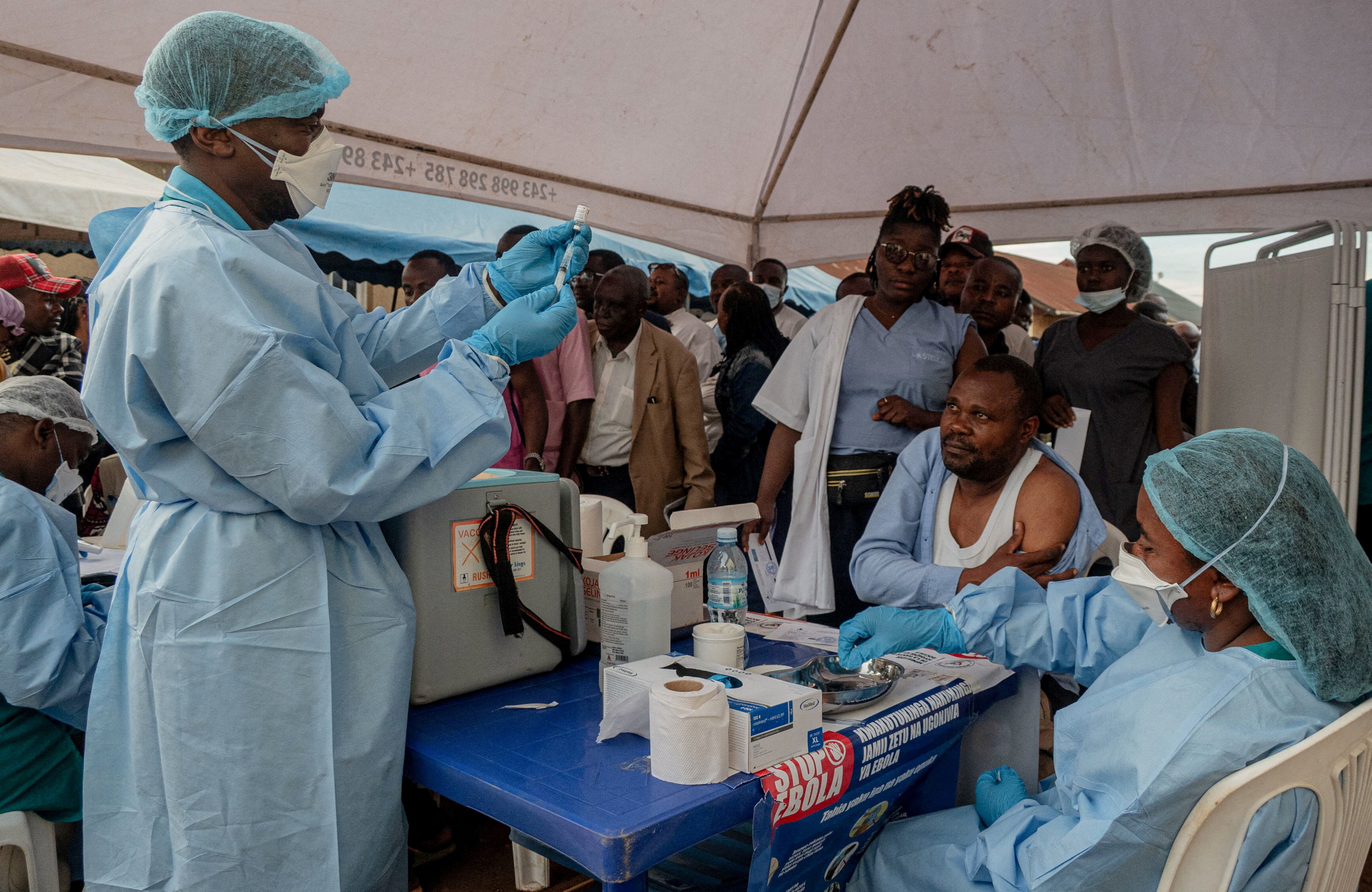
Los profesionales sanitarios y el personal humanitario que trabajan en primera línea de la respuesta al ébola se reúnen para recibir una vacuna debido a su posible exposición al virus como parte de su labor con casos sospechosos.
  •  

Nigeria Confirms First Ebola Case as Outbreak Spreads in Africa

Nigeria’s authorities detected the first case of Ebola in Abuja, triggering contact tracing immediately. Photo: Reuters.

Nigeria confirmed its first Ebola case on Tuesday, a woman who traveled from Uganda to the capital, Abuja, in the latest spread of an outbreak centered in the east of the Democratic Republic of Congo (DRC).


Health Minister Muhammad Ali Pate announced the diagnosis through a statement. The patient landed in Nigeria on an international flight from Uganda and went to a private medical facility in Abuja shortly after arriving, where she remained under care for several days before laboratory results confirmed the infection.

“The patient, a woman who recently arrived in Nigeria on an international flight from Uganda, was admitted to a private hospital where she received medical attention for several days before the diagnosis was confirmed,” Pate said.

RELATED: Ebola Outbreak in DR Congo Tops 8,700 Cases and 4,200 Deaths

She is now isolated and receiving medical attention. “Contact tracing has begun and 44 close contacts have been identified so far,” the minister added.

The confirmation sounded health alarms and added Nigeria to a continental alert that has gripped Africa since the outbreak began. The case pulls the country into an epidemic whose epicenter sits in the eastern Democratic Republic of the Congo (DRC). Uganda, where the woman boarded her flight, is also among the affected nations.

.@Fmohnigeria reported the first case in Nigeria of #Ebola caused by Bundibugyo virus. The patient is in isolation, since the onset of symptoms and receiving necessary clinical care: https://t.co/moqIMOGt24

Contact tracing is ongoing. @WHO and partners are working with the…

— Tedros Adhanom Ghebreyesus (@DrTedros) October 21, 2026

Outbreak Keeps Spreading

The current emergency began in May with the declaration of an outbreak of viral hemorrhagic fever in the DRC. The World Health Organization (W.H.O.) classified the outbreak in the DRC and neighboring Uganda as a “public health emergency of international concern” on May 17.

The current epidemic differs from previous Ebola outbreaks in one crucial way. Earlier waves were caused by the Zaire ebolavirus, but the infections now spreading across the region are driven by the Bundibugyo strain, an unusual variant for which no treatment or vaccine is available.

That absence of medical countermeasures has weighed heavily on the DRC, which is weathering a critical situation marked by high numbers of infections and deaths and intense community transmission. Official data count about 9,000 confirmed infections and roughly 4,381 deaths, making this the most devastating Ebola outbreak in the country’s history.

While Nigeria deals with its first case, Kenya’s Ministry of Health reported a new patient on Tuesday, raising the total number of infections detected in the country in this outbreak to eight.

Nigeria has experience with Ebola. The country contained a small outbreak in 2014 after a traveler arrived in Lagos, according to general public health records. Whether any of the 44 contacts develop symptoms in the coming days will indicate how far the virus may have spread inside the country.

Since emergency was declared the virus has crossed DRC borders, spread into Uganda, and now reached Nigeria, leaving contact tracers in Abuja racing to map every movement the patient made since landing, against a strain with no approved vaccine or treatment.

  •  

Nigeria confirms Ebola case as outbreak spreads into western Africa

Case in Africa’s most populous country was detected in a woman who had travelled from Uganda

Nigeria has confirmed an Ebola case in its capital, Abuja, after a woman who arrived from Uganda tested positive for the virus, the health ministry said.

The woman began showing symptoms on 7 October and was admitted to a hospital in Abuja four days later, where she was later diagnosed with Ebola. It is unclear when she arrived in Nigeria, Africa’s most populous country.

Continue reading...

© Photograph: Sebastien Kitsa Musayi/AP

© Photograph: Sebastien Kitsa Musayi/AP

© Photograph: Sebastien Kitsa Musayi/AP

  •  

Integration and the Neighbours Who Integrated Perfectly Until You Had to Live Next Door

How successful is racial integration in Britain? The ultimate test, says James Hartwood, is living next door – which is when even small cultural differences are magnified to the max and tensions can boil over.

The post Integration and the Neighbours Who Integrated Perfectly Until You Had to Live Next Door appeared first on The Daily Sceptic.

  •  
❌