Lubna S. Olayan, chair of the board of directors of Saudi Awwal Bank, has announced the bank’s financial results for the nine months ending Sept. 30. SAB recorded a net profit after zakat and income tax of SR6.6 billion ($1.75 billion) for the period, representing an increase of 3 percent compared with the corresponding period in 2025. The total operating income increased by 1 percent year on year to SR11.2 billion, while the third-quarter revenue rose by 5 percent to SR3.8 billi
Six pioneering Arab female researchers from the GCC, including Saudi Arabia, have been recognized at the 13th edition of the L’Oréal-UNESCO For Women in Science Middle East Program. Their work addresses pressing regional and global priorities, from infectious diseases and personalized medicine to water security, advanced materials and sustainable technologies. Since its regional launch in 2014, the program has supported 69 Arab women researchers with more than SR4 million ($1.0
from SGT Report: Rumble(“play”, {“video”:”v7ezifs”,”div”:”rumble_v7ezifs”}); Get PHYSICAL precious metal from SD Bullion: https://sdbullion.com/gold-silver-ira?utm_source=sgtreport FREE shipping on orders over $199 Is there a world in which a $415 silver price could exist TODAY? Yep, but only if we could have ditched the Wall Street manipulators in favor of Asia and fair trading over the pat few […]
Sevilla es conocida por su ambiente, sus colores, su gente y su forma de vivir, siempre con alegría y mucho arte. Y si hay algo que nunca puede faltar en suelo sevillano, es la música. ¿Y qué mejor manera de disfrutarla que con un festival que lo tiene todo? El Jardín de las Delicias trae la respuesta. Su nombre no es casualidad: adentrarse en sus puertas significa descubrir un jardín que hará las delicias de cualquier amante de la fantasía, el color y, por supuesto, la buena música.
El 17 de octubre, el Centro Andaluz de Arte Contemporáneo (CAAC), ubicado en la icónica Cartuja, abrió sus puertas para acoger la primera edición del Jardín de las Delicias en Sevilla. Una cita musical que vivió una emocionante jornada de espectáculos, conciertos, actividades y propuestas gastronómicas para cerrar con buen sabor de boca. Desde primera hora de la tarde, el recinto recibía a miles de personas con un objetivo muy claro: disfrutar y dejarse la voz.
Nada más entrar, cada rincón sorprendía con una decoración cuidada al detalle e inspirada en el legendario Jardín de las Delicias de El Bosco: cisnes, flamencos, hadas, flores, plantas que cobran vida y bosques de fantasía, todo envuelto en una explosión de color. “Está super bien organizado, es muy guay, muy mágico”, comentaban impresionados los primeros visitantes.
Una experiencia que también conecta con una larga trayectoria del festival en Madrid. “Lo que más me gusta del Jardín te diría que es la música en español, la capacidad que tiene de generar energía positiva, buen rollo, el ambiente, el público joven, todo lo que genera ese halo de fantasía esa decoración tan bonita que tiene”, explicaba María León, responsable de Comunicación de Endesa Andalucía, patrocinadora oficial del festival.
Tras seis ediciones celebradas en Madrid, El Jardín de las Delicias ha consolidado su apuesta por la música en español, con artistas de referencia como Dani Martín, Melendi, Leiva e Izal. En su primera cita en Sevilla, el festival ha mantenido esa esencia con un cartel que combina nombres consagrados y talentos emergentes: Sebastián Yatra, Siloé, Taburete, Álvaro de Luna, Marlena, Hey Kid, Hermanos Martínez, Tu Otra Bonita y Q2.
“Fue el primer festival que fui de toda mi vida y ha sido el último festival de esta gira. Así que ha sido cerrarlo perfecto”, comentaba Hey Kid. “Soy un afortunado, porque hay tantas bandas y tanta gente que querría estar allí tocando y que esté yo y que confíen en nosotros es un lujo y es una suerte”, añadía emocionado.
Otro de los grupos que ya ha actuado en las ediciones madrileñas del Jardín de las Delicias y que ahora se sumaba a la cita sevillana es Siloé, que se entregaba al público de la capital andaluza: “Le tenemos mucho cariño a esta ciudad, nos ha regalado momentos muy especiales y hoy es un día más en el que darles nuestra música, compartir con ellos, en un recinto y en un festival como este que es inigualable”.
También, destacaban la decoración y ambientación del festival, uno de los puntos más llamativos y diferenciadores. “A mí lo que más me gusta es cómo se cuida la estética del lugar, es decir, se llama jardín y vienes y hay un jardín. Haberse desmarcado en ese aspecto yo creo que es lo bonito, lo que lo hace personal”, comentaba Fito Robles, cantante de Siloé.
“Le tenemos mucho cariño a esta ciudad, nos ha regalado momentos muy especiales y hoy es un día más en el que darles nuestra música", Siloé
Quienes también se rendían al festival y a su público eran Marlena, que lo definían como “uno de sus festivales favoritos”. “Siempre lo asociábamos al "jardín es casa", porque además era en Madrid, pero que este año haya sido en Sevilla y que estén extendiéndose con un público tan increíble, seguirá siendo casa haya por donde estén”, explicaban. El dúo también destacaba la energía de los asistentes durante las actuaciones: “Yo creo que también la vibra del público, no sé si por el tipo de cartel o el tipo de artista que venimos a estos festivales, es increíble. Es una fuerza desde principio a final del concierto muy fuerte”.
La primera edición del Jardín de las Delicias en Sevilla ha supuesto mucho más que la llegada de un nuevo festival a la ciudad. Para los sevillanos, es un orgullo acoger una propuesta que une música, cultura y fantasía, tres ingredientes que encajan con la forma tan especial de vivir que tiene la capital andaluza.
Como explicaba León, “Sevilla tiene una relación muy especial con la música, con la cultura, con las emociones, con vivir los espacios abiertos, vivir la calle, generar energía”. Una conexión que convierte a la ciudad en el escenario idóneo: “Tenía que estar aquí el festival porque además se combina mucho tradición y modernidad, cosa que en Sevilla yo creo que somos expertos, así que creo que era el sitio idóneo”, añadía.
Detrás de esta primera cita sevillana también hay una apuesta por la sostenibilidad que forma parte de la identidad del festival. De hecho, en una clara apuesta por la economía circular, el 70 % de la señalética y el 100 % de la decoración son reutilizados de otras ediciones. “Nosotros empezamos en 2022 en Madrid y vimos una oportunidad con un festival que tenía una apuesta muy fuerte con una estética con mucha personalidad y que tenía un foco muy puesto en temas sostenibles”, recordaba León.
Además, la presencia de miles de asistentes convierte el festival en una oportunidad para acercar la conciencia medioambiental a un público joven. “Pensamos que tener ese punto de vista hacia la sostenibilidad puede ayudarles a crear conciencia y a que en su día a día puedan llevarse algo de lo que aprendan aquí”, señalaba.
“Pensamos que tener ese punto de vista hacia la sostenibilidad puede ayudarles a crear conciencia", María León
Para Endesa la música es, precisamente, “un lenguaje universal” y un punto de encuentro, y esa es también la esencia del Jardín de las Delicias: convertir cada concierto en una experiencia mágica y conectar con la ciudad que lo acoge. En su estreno sevillano, el festival ha encontrado un lugar lleno de ambiente y buena gente con un propósito muy claro: que esto no haya hecho más que empezar.
Un buen resultado estético puede ser tu objetivo. Pero tu seguridad siempre debe ser la prioridad.
Turquía se ha consolidado como uno de los destinos de referencia para quienes buscan tratamientos de cirugía estética, especialmente rinoplastias, cirugía mamaria y remodelación corporal.
Para muchos pacientes españoles, la posibilidad de viajar a Estambul para realizarse una intervención estética resulta atractiva. Las redes sociales están llenas de fotografías del antes y el después, testimonios de pacientes y paquetes de tratamiento con precios llamativos.
Pero detrás de cada fotografía hay algo mucho más importante: una intervención médica que requiere profesionales cualificados, instalaciones adecuadas, una planificación rigurosa y un seguimiento posoperatorio apropiado.
Antes de preguntar cuánto cuesta tu nueva nariz, pregúntate quién se va a encargar de tu seguridad.
Acıbadem Healthcare Group, uno de los principales grupos hospitalarios privados de Turquía, con una amplia presencia internacional, recomienda a los pacientes informarse bien antes de tomar la decisión de viajar al extranjero para recibir un tratamiento médico.
Estas son las cinco preguntas que deberías hacerte.
1. ¿Sabes realmente quién te va a operar?
Un perfil de Instagram atractivo no es una acreditación médica.
Antes de elegir a un cirujano, dedica tiempo a investigar su trayectoria profesional.
Solicita su currículum, comprueba dónde se ha formado, cuáles son sus especialidades, qué acreditaciones profesionales posee y cuánta experiencia tiene en la intervención que estás considerando.
Si estás pensando en una rinoplastia, pregunta cuántas intervenciones de este tipo realiza habitualmente, si tiene experiencia en casos similares al tuyo y cómo aborda tanto la estética facial como la función respiratoria.
También es importante que puedas hablar directamente con el cirujano antes de tomar una decisión, en lugar de comunicarte únicamente con un representante comercial.
La experiencia de un cirujano debe poder comprobarse, no simplemente darse por sentada.
2. ¿Te vas a operar en un hospital o simplemente en una clínica bonita?
Una recepción de lujo, unas instalaciones elegantes y unos vídeos espectaculares en redes sociales no garantizan por sí solos la calidad de la atención médica.
Antes de viajar, pregunta dónde se realizará exactamente tu intervención.
¿El centro dispone de las autorizaciones sanitarias necesarias? ¿Cuenta con quirófanos equipados, servicios de anestesia, instalaciones de recuperación y protocolos para responder ante posibles complicaciones?
¿Y qué ocurriría si surgiera una emergencia durante o después de la operación?
Hay otra pregunta fundamental: ¿dispone el hospital de acreditaciones internacionales reconocidas?
Acreditaciones como las otorgadas por la Joint Commission International (JCI) permiten identificar instituciones que han sido evaluadas conforme a determinados estándares internacionales de calidad asistencial y seguridad del paciente.
Es importante comprobar que la acreditación corresponde al hospital concreto donde se realizará la intervención, y no limitarse a las afirmaciones generales de una marca o grupo sanitario.
3. ¿Quién estará a tu lado cuando regreses a España?
Esta es una de las preguntas que más fácilmente se pasan por alto al planificar una intervención estética en el extranjero.
Tu tratamiento no termina cuando sales del quirófano. Y mucho menos cuando subes al avión de regreso.
Antes de viajar, comprueba si el proveedor sanitario dispone de una oficina de representación o de atención al paciente en España.
¿Puedes contactar con alguien en tu país antes de viajar? ¿Tendrás un interlocutor que facilite la comunicación con tu equipo médico cuando regreses? ¿Qué debes hacer si surgen dudas o complicaciones durante la recuperación?
Contar con una oficina de representación internacional no sustituye la atención médica presencial, pero puede facilitar la comunicación y la coordinación entre el paciente y el hospital.
Porque una buena atención no debería terminar al cruzar una frontera.
4. Rinoplastia: ¿estás eligiendo una nariz nueva o al equipo médico adecuado?
La rinoplastia es una de las decisiones más personales dentro de la cirugía estética.
Una modificación aparentemente pequeña en la forma de la nariz puede influir en la armonía del rostro. Sin embargo, se trata de una intervención compleja que va mucho más allá de la apariencia.
La nariz no es únicamente un elemento estético. También cumple una función esencial en la respiración.
Por eso, antes de operarte, es importante saber si la planificación quirúrgica tiene en cuenta tu anatomía facial, las características de tu piel, la función nasal y tus expectativas.
También debes conocer los tiempos reales de recuperación. La inflamación puede prolongarse durante meses y el resultado definitivo puede tardar un año o incluso más en apreciarse.
La pregunta más importante no es si tu cirujano puede reproducir la nariz de una fotografía. Es si el resultado que buscas es adecuado para tu rostro y tu salud.
Y recuerda: ningún cirujano responsable puede garantizar un resultado perfecto.
5. ¿Sabes qué incluye realmente el precio de tu intervención?
Un precio atractivo puede llamar tu atención. Pero ¿sabes exactamente qué estás contratando?
Antes de realizar cualquier pago, solicita un presupuesto detallado y un plan de tratamiento por escrito.
Infórmate sobre las pruebas preoperatorias, la anestesia, la hospitalización, la medicación, el alojamiento, los traslados y las revisiones posteriores.
Pregunta también qué ocurriría si necesitaras permanecer más tiempo ingresado o recibir atención médica adicional.
Y no olvides consultar cuándo podrás volar después de la intervención, qué riesgos puede implicar el viaje y si tu seguro ofrece cobertura para tratamientos realizados en el extranjero.
Una decisión bien informada empieza con transparencia, no con una oferta por tiempo limitado.
Acıbadem: una red hospitalaria internacional que sitúa la seguridad del paciente en el centro
Para Acıbadem Healthcare Group, la atención a pacientes internacionales va mucho más allá de realizar una intervención médica.
Con una amplia red de hospitales y centros médicos en Turquía y Europa, instalaciones con acreditaciones internacionales y oficinas de atención a pacientes en distintos países, Acıbadem ha desarrollado un modelo de atención que busca acompañar al paciente durante las diferentes etapas de su tratamiento.
Entre sus especialidades se encuentra la cirugía plástica, reparadora y estética, con procedimientos como la rinoplastia, la cirugía mamaria y la remodelación corporal.
Su enfoque no se limita al momento de la operación, sino que incluye la evaluación previa, la organización del viaje, la coordinación médica y la comunicación posterior al tratamiento.
Antes de viajar: información, evaluación y planificación
Los pacientes españoles pueden ponerse en contacto con las oficinas de representación de Acıbadem en Madrid y Barcelona, donde equipos de habla hispana facilitan la comunicación con los especialistas médicos en Turquía.
A través de estas oficinas, los pacientes pueden recibir orientación para enviar su documentación médica, solicitar una valoración de su caso, conocer las opciones de tratamiento y obtener información sobre los costes previstos.
De esta manera, pueden resolver muchas de sus dudas antes de tomar la decisión de viajar.
A tu llegada a Estambul: una experiencia coordinada
Viajar a otro país para someterse a una intervención puede generar incertidumbre, especialmente cuando no se conoce el idioma o el funcionamiento del sistema sanitario.
Los servicios internacionales de Acıbadem pueden coordinar la recepción y los traslados desde el aeropuerto, la organización del alojamiento y la programación de las citas médicas.
Además, se dispone de servicios de interpretación para facilitar la comunicación entre los pacientes internacionales y los equipos médicos durante las visitas hospitalarias.
El objetivo es que el paciente pueda centrarse en su atención médica sin tener que gestionar por su cuenta todos los aspectos logísticos del viaje.
Durante el tratamiento: atención médica en un entorno hospitalario
En Acıbadem, las intervenciones estéticas pueden realizarse dentro de un entorno hospitalario multidisciplinar, con acceso a diferentes especialidades médicas, servicios de diagnóstico y recursos de atención perioperatoria.
Cada caso se evalúa de manera individual, teniendo en cuenta el historial médico, las expectativas y las necesidades específicas del paciente.
El grupo cuenta con hospitales acreditados por Joint Commission International, aunque siempre es recomendable confirmar la acreditación vigente del centro donde se realizará el procedimiento.
Después de regresar a España: mantener el contacto
Volver a casa no tiene por qué significar perder la comunicación con el equipo médico de Estambul.
A través de sus servicios de coordinación internacional y de sus oficinas en Madrid y Barcelona, Acıbadem facilita la comunicación relacionada con el seguimiento, los informes médicos y las dudas que puedan surgir después del tratamiento.
Las revisiones y los procedimientos que deben seguirse ante cualquier posible complicación deben acordarse previamente con el médico responsable.
Pacientes reales, experiencias reales: mucho más que un antes y un después
Para quienes están pensando en realizarse una intervención estética en el extranjero, conocer las experiencias de otros pacientes puede resultar especialmente útil.
Sus historias permiten descubrir aspectos que no siempre aparecen en una fotografía: cómo tomaron la decisión, qué les llevó a elegir un hospital, cómo fue su experiencia en Estambul y qué supuso para ellos el proceso de recuperación.
Pacientes españoles que han elegido Acıbadem para sus tratamientos estéticos han compartido sus experiencias personales, incluidas intervenciones de rinoplastia y otros procedimientos.
Sus testimonios ofrecen una perspectiva más cercana sobre lo que implica viajar a otro país para recibir atención médica.
Descubre las experiencias de pacientes españoles que eligieron Acıbadem para su tratamiento estético.
[Insertar aquí el vídeo testimonial autorizado de pacientes de Acıbadem España.]
Cada experiencia es individual. Los resultados y los tiempos de recuperación pueden variar, y ningún resultado quirúrgico está garantizado.
Tu seguridad vale mucho más que una foto del antes y el después
La cirugía estética es una decisión personal. Pero elegir dónde y con quién operarte es, ante todo, una decisión médica.
Tanto si estás pensando en una rinoplastia como en una cirugía mamaria u otro procedimiento estético, dedica tiempo a investigar al cirujano, comprobar las instalaciones, conocer los posibles riesgos y preguntar por el seguimiento posterior.
No tengas miedo de solicitar credenciales. No dudes en hacer preguntas difíciles. Y nunca te sientas presionado para decidir antes de estar preparado.
Tu transformación puede comenzar en Estambul. Pero tu tranquilidad debería empezar mucho antes de salir de España.
Si deseas obtener más información sobre procedimientos estéticos, valoraciones médicas y servicios de atención a pacientes internacionales, puedes contactar con las oficinas de Acıbadem en Madrid y Barcelona.
Acıbadem Healthcare Group — Atención médica internacional, centrada en ti.
Todos los procedimientos quirúrgicos implican riesgos. La idoneidad del tratamiento debe determinarse mediante una evaluación médica individualizada.
Miguel de Cervantes, nacido en Alcalá de Henares, abre las primeras páginas de El Quijote con una referencia culinaria para describir a su protagonista y contexto social: “Una olla de algo más vaca que carnero, salpicón las más noches, duelos y quebrantos los sábados, lentejas los viernes, algún palomino de añadidura los domingos”. Esta descripción, hoy en día, sigue resumiendo muy bien la gastronomía de Alcalá de Henares, siendo un espejo fiel de la historia de la ciudad como cruce de diferentes culturas.
En los fogones de esta ciudad Patrimonio de la Humanidad se entrelaza el legado castellano y la influencia madrileña para dar lugar a una de las cocinas más completas, ricas y variadas de la Comunidad de Madrid. Sus recetas se han transmitido de generación en generación y sirven para comprender la historia alcalaína, desde los productos frescos de la vega del río Henares hasta los asados y guisos del recetario clásico, combinando sencillez, tradición y memoria cultural.
"La gastronomía de Alcalá de Henares forma parte del patrimonio inmaterial de esta ciudad y, como la misma ciudad, ha ido evolucionando con las costumbres y con la diversidad cultural de una ciudad milenaria abierta a otras culturas. Hoy en día, como destino turístico de primer orden, la tradición de la cocina castellana se funde con otros sabores traídos desde los variados orígenes de su población y con la innovación constante", explica Javier Lerma, de la concejalía de turismo de Alcalá de Henares.
Por eso, visitar esta ciudad es una gran oportunidad para conocer su patrimonio histórico y cultural y, sobre todo, disfrutar de su gastronomía. Para descubrir sus principales atractivos, existen diferentes guías oficiales que se pueden consultar en la página web de Turismo de Alcalá de Henares.
Hay tradiciones que se esperan todo el año. Y en WAH Show, Halloween ya tiene nombre propio: Wahlloween. La celebración temática regresa una vez más a El Espacio WAH, en Ifema Madrid, para convertir una de las fechas más esperadas del otoño en una experiencia donde los disfraces, la música en directo, la gastronomía y el espectáculo confluyen en un mismo lugar.
Lejos de los planes convencionales de Halloween, Wahlloween propone una forma diferente de celebrar estas fechas: una experiencia de aproximadamente cinco horas en la que la fiesta comienza mucho antes de que arranque el espectáculo y continúa después de que termine.
Con una ambientación especialmente diseñada para la ocasión, sorpresas durante la experiencia y un público que también forma parte de la celebración, Wahlloween vuelve dispuesto a convertirse en uno de esos planes que nadie quiere perderse.
En Wahlloween, venir disfrazado es casi una declaración de intenciones. Y quienes se lo tomen en serio tendrán recompensa: todos los asistentes que acudan con un disfraz completo y elaborado recibirán un cóctel de cortesía, con opción con o sin alcohol.
La invitación es a dejar volar la imaginación, sacar el lado más creativo y sorprender con caracterizaciones que estén a la altura de la celebración. Porque en Wahlloween, el público también forma parte del espectáculo.
Además, cada función contará con un concurso de disfraces que premiará la originalidad y el esfuerzo de quienes se conviertan, por una noche, en parte del universo Wahlloween.
Tres actos y cinco horas para un Halloween diferente
La cita mantiene la esencia que ha convertido WAH en una de las experiencias de entretenimiento más reconocidas de Madrid: gastronomía internacional, música en directo y una gran producción escénica.
La experiencia comienza en el Food Hall, continúa con un espectáculo musical de gran formato protagonizado por más de 40 artistas y culmina en La Catedral, donde la celebración sigue su curso. Todo ello en un espacio de más de 5.000 m² en Ifema Madridque, durante estas fechas, se llena de ambiente temático, disfraces y alguna que otra sorpresa especial.
Cabe destacar que Wahlloween regresa coincidiendo con la sexta temporada de WAH Show, estrenada el pasado 17 de septiembre. Con más de 550.000 espectadores y reconocido con el Travellers’ Choice 2026 de Tripadvisor, WAH se encuentra entre el 10 % de las experiencias mejor valoradas del mundo.
Un proyecto 100 % Made in Spain que, temporada tras temporada, sigue reuniendo a quienes buscan algo más que un espectáculo: una experiencia para compartir, celebrar y recordar. Y si hay una ocasión para vivirlo de una forma diferente, es Halloween.
Horarios, entradas para WAHLLOWEEN
Wahlloween se celebrará en cinco únicas funciones especiales, del 29 de octubre al 1 de noviembre (de jueves a domingo), iniciándose a las 19.30, y el sábado por la mañana (31 de octubre), iniciándose a las 13.30.
Las entradas están disponibles desde 41 euros, con opciones VIP desde 91 euros, además de packs especiales para grupos y celebraciones, que permiten diseñar experiencias personalizadas y vivir esta cita de Halloween de una forma única.
Además, WAH Show continúa con su programación habitual durante el resto de la temporada, con funciones regulares de jueves a sábado, ofreciendo la experiencia gastromusical que ya ha conquistado a miles de personas.
Las entradas están disponibles en www.wahshow.com o llamando al 910 736 201 (de lunes a viernes de 9.00 a 22:00); y sábados, domingos y festivos de 9.00 a 21.00.
Del 29 de octubre al 1 de noviembre, WAH Show convierte su espacio en IFEMA Madrid en el escenario de una celebración temática con cinco funciones especiales tan terroríficas como inolvidables.
from SGT Report: This is NOT satire: Doanld J. Trump is now considering Laura Loomer as the next White House Press Secretary after lyin’ “Lawyer” Katie Zacharia got the boot after just a week. Trump called Loomer ‘brilliant’ in a Truth Social post about Loomer who is lobbying for the position. It’s just par for […]
Horror films have produced some of the most iconic figures in pop culture.
But not all scary movies are completely fictional; some are actually based on real life.
"The Conjuring" was based on the real-life Perron family in Rhode Island.
Horror movies are reliably successful at the box office — just look at "Obsession" and "Backrooms" this year.
They often have relatively low budgets, deliver strong box-office returns, and can create IP that leads to sequels and spin-offs for years to come. Plus, when Halloween rolls around, costumes and masks provide another bump to a studio's bottom line.
But creating a completely original, compelling, and terrifying horror story can be challenging. That's why some of the most iconic and successful scary movies are based on real-world events.
For example, "The Conjuring" franchise is based on the case files of real paranormal investigators Lorraine and Ed Warren. In total, the films have made almost $3 billion at the box office.
These are the real stories and crimes that influenced some of the most classic horror films of all time, including "The Exorcist," "Nightmare on Elm Street," and "Jaws."
"The Conjuring" is about the Perron family and the traumatic experiences they're having in their new Rhode Island home.
Patrick Wilson and Vera Farmiga as Ed and Lorraine Warren.
Warner Bros.
The Perrons (husband Roger, wife Carolyn, and their five daughters) moved into what was known as the Old Arnold Estate in 1971, The Providence Journal reported.
Almost immediately, the family reported paranormal activity, such as floating or moving furniture, doors opening and closing, disembodied sounds, and even being pushed, pulled, and hurt by unseen spirits.
Upon calling in paranormal investigators Ed and Lorraine Warren, they found that the property was haunted by various ghosts, but that one particularly malevolent spirit, Bathsheba, was preying on them.
Bathsheba Sherman, who lived on the property in the 1800s, has been described as a suspected Satanist who was charged with the violent murder of her first child, though historians say she was never convicted of a crime or accused of witchcraft.
The property sold for $1.5 million in 2022. It has since been acquired by "Ghost Hunters" star Jason Hawes for $1.3 million, according to land records.
"The Conjuring 2" is about a girl being possessed by a demon in London.
New Line Cinema
The Hodgson family reported experiencing unusual phenomena in their London home in August 1977, such as furniture flying through the air, and objects hurling toward witnesses, The Daily Mail reported.
Most famously, however, Janet, one of four Hodgson children, claimed she was being possessed by a man named Bill Wilkins — it was later confirmed that a man by that name did, in fact, live in the house and died there of a brain hemorrhage, People reported.
While Janet later said that around "2%" of the haunting was made up, she maintains that the Enfield Poltergeist was real.
You can listen to audio of her while she claimed she was possessed to make up your own mind.
The third film is "The Conjuring: The Devil Made Me Do It," which is about the real trial of Arne Cheyenne Johnson.
Warner Bros.
In the third "Conjuring" film, Ed and Lorraine are tasked with helping a young man, Arne, who murdered his landlord after getting possessed by a demon, which Ed witnessed. In his trial, the Warrens supported Arne using the defense of demonic possession, a first in the United States.
This is based on the real case of 19-year-old Johnson, who really did murder his landlord in 1981 and subsequently claimed he was innocent because he'd been possessed, as reported at the time by The New York Times.
Johnson (and the Warrens) claimed that a demon was exorcised from the body of 11-year-old David Glatzel and then moved to Johnson. His girlfriend claimed she heard Johnson challenge the demon itself to leave Glatzel and possess him instead.
Several months after Johnson's encounter with Warrens and the Glatzels, he stabbed his landlord to death, and then claimed he had no memory of the crime and was possessed.
In reality, this defense was rejected; his lawyers then pivoted toward the self-defense strategy, and he was convicted of manslaughter. He served five years in prison.
The fourth main film, "The Conjuring: Last Rites," is based on the Smurl haunting in the '70s and '80s.
"The Conjuring: Last Rites."
Warner Bros. Pictures
In what's supposed to be the final cinematic appearance of Patrick Wilson and Vera Farmiga as the Warrens, "Last Rites" is a loose adaptation of the alleged Smurl haunting, which took place in West Pittson, Pennsylvania.
Per The Times Leader, Jack and Janet Smurl, played by Elliot Cowan and Rebecca Calder, respectively, called the Warrens to their home in 1986 to address claims that a demon had slammed their 75-pound German shepherd into a wall, threw one of their children down the stairs, and even bitten Jack's ear.
"The Smurls are truly a family coming under a visual attack," Ed Warren said at the time. "The ghost, devil, demon — or whatever you call it — is in that home."
An exorcism was performed in that year, but it was, apparently, unsuccessful.
Of course, the Smurls had plenty of doubters, including a priest who stayed in their home for two nights and reported nothing suspicious. The Smurls eventually left West Pittson and moved to Wilkes-Barre, about 10 miles away.
The film dramatizes this story, but is mainly focused on passing the demon-hunting torch from Ed and Lorraine to their daughter, Judy (Mia Tomlinson).
"Annabelle," "Annabelle: Creation," and "Annabelle Comes Home" tell the story of an evil doll that terrorizes her owner.
New Line Cinema
Annabelle is a doll believed to be imbued with an evil spirit. While the real-life Raggedy Ann doll (viewable at The Haunted Warren Museum in Salem, Massachusetts) is much less creepy-looking than her movie counterpart, she is said to have terrorized her owner.
According to The New Haven Register, the story of the doll begins in 1970, when a nurse received it as a birthday gift from her mother. She soon began to notice that the doll would change positions by itself. She then started finding creepy notes with messages like "Help me" written on them. And she claimed she once found the doll leaking blood.
Once again, the Warrens were contacted for help. According to them, the doll wasn't possessed, but it was being manipulated by a spirit. They cleansed the home and took the doll to their museum, where it remains to this day.
"The Amityville Horror" connects the murders of the DeFeo family with a demonic presence in the house.
Paul Hawthorne/Getty Images
On November 13, 1974, at 3:15 a.m., Ronald DeFeo Jr. stole his father's gun and murdered his family in their home in Amityville, New York, claiming that voices in the house made him do it, according to PIX11.
He was later convicted and sentenced to 25 years to life in prison. He died in 2021.
A year after the murders, in 1975, the Lutz family moved into the home and claimed to experience paranormal activity almost immediately, per ABC News.
George — the patriarch of the Lutz family — claimed to wake up frequently at 3:15 a.m. (the time of the murders) and hear gunshots. His daughter Missy gained an imaginary friend named Jodie. Missy says she did not know anything about the murders at the time.
The Lutz family fled their home only 28 days after moving in, sparking one of the greatest debates in paranormal history: Is the Amityville home haunted?
"The Haunting in Connecticut" is about a family that moves into a former funeral home, which turns out to be haunted.
Lionsgate
"The Haunting in Connecticut" is based on the plight of the Snedeker family. Their name was changed to Campbell in the movie.
NBC Connecticut reported the Snedekers moved into a new home in the '80s to be closer to the University of Connecticut's hospital, since their son Phillip was undergoing treatment for cancer. The family soon realized that the house they had moved into used to be a funeral home.
According to his mother, Carmen, Phillip quickly became withdrawn and angry and started seeing a ghostly man who would tell him to lash out.
He was later committed due to a schizophrenia diagnosis. But after Phillip left, things reportedly got a lot worse for the rest of the family.
They eventually called in a priest — as well as the Warrens — to perform an exorcism.
"Veronica" is about a Spanish teenager who used an Ouija board to contact a dead loved one with disastrous consequences.
Sony Pictures
The film is based on a real Spanish teenager whose death was never solved, as Business Insider previously wrote.
In 1992, a student named Estefania Gutierrez performed a "makeshift séance" at her high school. A few months later, she died in the hospital after experiencing seizures and claiming to see shadowy figures.
The story gets even stranger: A year after Gutierrez died, her parents called the police because they were experiencing paranormal activity, similar to the shadowy figures their daughter had reported.
The police were skeptical until they, too, heard disembodied noises. According to Newsweek, the official report called the home "a situation of mystery and rarity."
"The Strangers" is a terrifying look into the mindset of monsters who commit crimes just because they can.
Rogue Pictures
The poster for "The Strangers" claims that the film was "inspired by true events," though it's more of an amalgam of a few terrifying true tales.
Director Bryan Bertino said he drew his main inspiration from an experience from his childhood, according to the film's production notes.
"As a kid, I lived in a house on a street in the middle of nowhere. One night, while our parents were out, somebody knocked on the front door and my little sister answered it. At the door were some people asking for somebody that didn't live there. We later found out that these people were knocking on doors in the area and, if no one was home, breaking into the houses," said Bertino.
Fans of the film have also compared it to the Manson murders and the unsolved murders of the Sharp family, known as the Keddie Cabin Murders.
"The Exorcist," one of the most beloved horror films of all time, is about a preteen girl who becomes possessed by a demon.
Warner Bros.
"The Exorcist," is based on the story of a 14-year-old boy known as Roland Doe, who began exhibiting strange behavior in 1949, according to The New York Post. His family reported furniture moving on its own, scratches all over Doe's body, and loud, disembodied voices.
After a cross-country move and no change in Doe's strange behavior, his family enlisted the help of the Catholic church. One of the priests involved in the Doe case, Father Raymond Bishop, kept a diary, per The Daily Mail.
One of his entries stated, "At midnight, the Fathers planned to give (Roland) Holy Communion, but Satan would have no part of it. Even while the institution of the Blessed Sacrament was explained, his body was badly scratched and branded. The word 'HELLO' was printed on his chest and thigh."
Eventually, after multiple attempts, the "demon" was exorcised, and Doe returned to normal. He never spoke of the incident publicly.
His real identity was revealed by The Skeptical Inquirer in 2021: Ronald E. Hunkeler. Hunkeler died in 2020 at the age of 86. Before that, he'd been an engineer at NASA and, according to The New York Post, was always afraid his colleagues would find out about his past.
"The Exorcism of Emily Rose" is also about a girl possessed by a demon.
Sony Pictures Releasing
The story of Anneliese Michel, a young German woman — renamed Emily Rose in the film — is tragic.
When Michel was a teenager, she experienced the first symptoms of her alleged possession. She was diagnosed with epilepsy, and given medication to help treat the disease, according to The Washington Post.
But the meds didn't help. Michel continued to have seizures, and she began to claim she was having visions and hearing voices telling her she was a sinner. She became depressed and turned to religion: At her peak, she was genuflecting (kneeling) 600 times a day, eventually rupturing her knee ligaments.
By the time Michel was 23, she had been treated with dozens of different medications (nothing helped), and had undergone 67 exorcisms in 10 months, the Post reported.
She eventually stopped eating and died of starvation in 1976. She weighed 68 pounds.
Her parents and two of her priests were later found guilty of negligent homicide for allowing her to starve, per the German outlet DW.
"The Texas Chain Saw Massacre" is about a group of hitchhikers who pick the wrong family to catch a ride from — they end up being cannibals.
Bryanston Distributing
The main villain of "The Texas Chain Saw Massacre" is Leatherface, who was based on real-life killer Ed Gein.
Gein, who grew up in La Crosse, Wisconsin, in the early 1900s, was obsessed with his mother; he rarely interacted with anyone besides her, and when she died, he spiraled, per Encyclopedia Britannica.
Known as "the Butcher of Plainfield," he confessed to killing two women, but, more disturbingly, he took to robbing the graves of recently buried women.
He used their body parts to create something like a woman suit that he wore, pretending to be his mother, according to the book "Deviant." He also had lamps, belts, and bowls made out of human body parts.
Gein's story also partly inspired "Psycho" and "The Silence of the Lambs."
"Poltergeist" tells the story of a family who buys a haunted house built on top of a Native American burial ground.
MGM/UA Entertainment Company
The plot of 1982 classic "Poltergeist" was based on the Hermann family of Long Island, New York, who claimed to be haunted by a poltergeist that made objects fly through their home, according to Life Magazine.
The Hermann family eventually moved away, but they maintained that the house was haunted.
"When a Stranger Calls" is about a babysitter who's being terrorized by a mysterious caller inside the house with her.
Screen Gems
The film is based on the real unsolved murder of 13-year-old Janett Christman in 1950.
As the Columbia Daily Tribune wrote, Christman was babysitting 3-year-old Greg Romack when she called the Columbia Police Department and told them to "come quick," but she hung up before the police could trace her call.
When the Romacks returned home, they discovered Christman's body in a pool of blood. She had been raped and strangled with a cord. The police eventually ruled that it had been an "inside job" — the killer knew the house and its layout well.
"Dead Ringers" explores the mysterious deaths of a pair of co-dependent twin brothers.
Twentieth Century Fox
The Marcus twins shared a gynecology practice, an apartment in New York City, a house in the Hamptons — and eventually their deaths.
Apparently, 45-year-old Stewart and Cyril Marcus were addicted to barbiturates; when their decomposing bodies were found, their mysterious deaths were first ruled as being caused by an overdose, then by withdrawal (they may have been attempting to wean themselves off the drugs), The New York Times wrote.
The medical examiner told The New York Times that Cyril outlived his brother by a couple of days, and continued to live in the apartment before eventually dying himself.
The film received a TV reboot on Prime Video in 2023, starring Rachel Weisz.
"Jaws" is the story of a small beachside town that's being terrorized by a vengeful shark.
Jaws/IMDB
The terrifying tale of the most famous great white shark ever is based upon a string of shark attacks on the Jersey Shore in 1916.
According to Smithsonian Magazine, 25-year-old Charles Vansant bled to death from a bite in Beach Haven, New Jersey. Five days later — and 45 miles north — a bellhop from Spring Lake also bled to death from a shark bite.
The story only gets more terrifying. The same shark then swam 30 miles north and 10 miles inland, killing both a boy and a man trying to save the boy in a creek, NJ.com wrote.
Finally, the fifth victim was attacked 30 minutes later in the same creek — he survived.
According to NJ.com, George Burgess, an ichthyologist (a scientist who concentrates on the study of fish), called it the "most unique set of shark attacks that have ever occurred. "
"The Girl Next Door" is about a boy who tries to save his neighbor from her twisted adopted family.
Modern Distributors
The murder of Sylvia Likens is known as the "worst crime in Indiana history," the Indy Star reported. Likens was just 16 when she was found dead in the basement of her temporary home.
Her carnival-worker parents left Sylvia and her sister in the care of Gertrude Baniszewski, a mother of seven, paying Baniszewski by the week.
Three months later, on October 26, 1965, police found Sylvia's emaciated corpse, apparently covered in hundreds of wounds, Indianapolis Monthly wrote. Baniszewski — with the help of some of her children and a few neighborhood kids — had tortured the girl to death.
Baniszewski was sentenced to 21 years in prison, but she was eventually released on parole. The rest of the children who were involved served between two and seven years.
"The Possession" is the tale of a family being tortured by a demon inside a dybbuk box.
Lionsgate
Jason Haxton bought the dybbuk box on eBay after an earlier owner posted a chilling account of the events that allegedly befell him after he bought it at an estate sale, My San Antonio reported.
He claimed that he bought the box for his mom's birthday and that she almost instantaneously had a stroke upon receiving it, Riverfront Times reported.
He also claimed that the final straw that inspired him to get rid of the box was when his sister, brother, and brother's wife all stayed over, and each one reported having the same exact nightmare, according to a reposting of the original eBay listing.
You might be wondering what exactly a dybbuk is. According to Encyclopedia Britannica, it's a "disembodied human spirit that, because of former sins, wanders restlessly until it finds a haven in the body of a living person," originating in Jewish folklore.
"The Rite" is based upon the life of a real priest, Father Gary Thomas, and his time at the Vatican while training to become an exorcist.
Warner Bros.
"The Rite" is based on the life of Father Gary Thomas, a priest who is one of 14 Vatican-certified exorcists who works in the US, the Los Angeles Times reported. Thomas told the Times he's exorcised the demons from five people, and that he receives multiple requests for exorcisms daily.
Father Thomas trained for three months in Rome to become a certified exorcist, completing his training in 2005, The Telegraph wrote.
Similarly, the 2023 film "The Pope's Exorcist" is based on the life of real-life priest Father Gabriele Amorth.
Russell Crowe as Father Gabriele Amorth in a scene from Screen Gems' "The Pope's Exorcist."
Jonathan Hession/Sony Pictures via AP
Russell Crowe played Amorth in the 2023 film "The Pope's Exorcist," which was based on Amorth's memoirs, "An Exorcist Tells His Story" and "An Exorcist: More Stories."
Smithsonian Magazine wrote that Amorth said he'd performed over 100,000 exorcisms before his death in 2016. He was still performing them that year — and he even let "The Exorcist" director William Friedkin observe one.
Friedkin, who died just a few months after the film's release, wrote about the experience in Vanity Fair. "Out of a hundred people who seek my help," Amorth told Friedkin, "one or two at the most may be possessed."
"Wolf Creek" is about three backpackers in the Australian Outback who unknowingly hitch a ride from a sadistic murderer.
Dimension Films
The horrifying tale of the backpackers in "Wolf Creek" is based on a real string of murders in Australia's Belanglo State Forest in the '90s at the hands of Ivan Milat, aka "the Backpacker Killer."
Milat maintained that he was innocent until his death in 2019, The Daily Mail wrote, but was convicted for torturing and killing at least seven people, all backpackers and hitchhikers. Some think that he killed even more.
"Eaten Alive" is about the owner of a Texas hotel who feeds people to his pet crocodile.
Motion Picture Marketing (MPM)
Eccentric bootlegger Joe Ball owned a Texas bar called the Sociable Inn in the early 1900s. He also kept multiple alligators in an enclosure near the saloon.
A known ladies' man, Ball had relations with various waitresses, bartenders, and hostesses — three of whom went missing. Turns out, Ball had murdered two of them, reported Texas Monthly.
Many believe he then fed them to his pet alligators, though there was never any evidence — his keeping them as pets was enough to cause concern and create rumors.
When the police came around for questioning in 1938, however, he shot himself in the heart, the San Antonio Express-News wrote.
"Open Water" tells the harrowing tale of a couple fighting to stay alive after their boat leaves them behind in the middle of the ocean.
Lions Gate Films
Tom and Eileen Lonergan were scuba diving at the Great Barrier Reef in Australia in 1998 when they were left behind by their boat after someone messed up the head count. They were never heard from again, The Independent wrote.
According to the outlet, the diving company didn't even realize they were missing until two days later, when their passports and other personal effects were found on the boat.
Months after their disappearance, Tom's dive slate was found 100 miles north of their original disappearance. He had written "We have been abandoned" by the diving company, adding "Help!"
Their dive jackets and one of Eileen's fins eventually washed ashore, but there were no signs of a shark attack or any other violent activity.
Some believe they were eaten by sharks, while others maintain that it was a murder-suicide pact.
Their bodies were never found.
"A Nightmare on Elm Street" is best known for bringing Freddy Krueger, a serial killer who murders people in their dreams, into the mainstream.
New Line Cinema
The idea for this iconic franchise came from a Los Angeles Times article that Wes Craven, the film's writer and director, read about a boy who was too terrified to sleep after surviving the Killing Fields in Cambodia.
Here's what Craven said to Vulture about his inspiration: "He told his parents he was afraid that if he slept, the thing chasing him would get him, so he tried to stay awake for days at a time."
Craven continued, "When he finally fell asleep, his parents thought this crisis was over. Then they heard screams in the middle of the night. By the time they got to him, he was dead. He died in the middle of a nightmare. Here was a youngster having a vision of a horror that everyone older was denying. That became the central line of 'Nightmare on Elm Street.'"
Leonardo DRS has been heavily involved in mobile counter-unmanned aerial systems (C-UAS) efforts including the U.S. Army M-SHORAD (Maneuver Short-Range Air Defense) Increment 1 program, also known as SGT STOUT, which provides an air defense capability for ground maneuver forces against low-altitude aerial threats. The company is now preparing for the forthcoming M-SHORAD Increment 4 program, which requires a vehicle-agnostic, reconfigurable, palletized or “sled”-based air defense capability.
TWZ’s Jamie Hunter spoke in-depth with Joe Rolwes, Director of Business Development at Leonardo DRS, about how mobile air defense is evolving and the various technologies that are being employed.
from SGT Report: Are we still “winning” as promised? You tell me. Are your bills shrinking or getting larger with each passing month? Covid “vaccines” are being pushed on pregnant women and newborns again as the war for your mind wages on and on. Christopher James ‘A Warrior Calls’ joins me to discuss some of […]
Airbus U.S. Space and Defense has been actively developing and iterating the technology for its Lakota Connector, an uncrewed, autonomous variant of the multi-mission UH-72B Lakota helicopter. This includes testing under Team Lakota Connector, that has brought together Shield AI, L3Harris Technologies, and Parry Labs in a prototyping phase for the U.S. Marine Corps.
TWZ’s Jamie Hunter spoke with Carl Forsling from Airbus U.S., at the AUSA 2026 trade event in Washington D.C. A former U.S. Marine Corps CH-46 Sea Knight and MV-22 Osprey pilot, Forsling explained the requirement for uncrewed logistics in contested theaters, and what’s next for Team Lakota Connector.
General Atomics Aeronautical Systems (GA-ASI) and Hanwha Aerospace completed operations in a simulated battlefield scenario with the Mojave short take-off and landing (STOL) drone on September 16. The testing formed part of a Defense Drone Technology Exhibition and included Mojave operating from an austere short runway at the Seungjin Training Field in Pocheon-si. The flying portion of the trials also saw the Mojave operating down at low level to demonstrate its ability to terrain mask to avoid potential threats and to support ground forces at close quarters.
TWZ’s Jamie Hunter spoke to Matt Petraitis, senior manager of U.S. Army programs at GA-ASI, at the AUSA 2026 trade event being held this week in Washington D.C. about how the Mojave landed on a rough maneuver trail typically used by tanks and artillery vehicles, and about the company’s plans for Mojave in partnership with Hanwha Aerospace.
from SGT Report: If you think Bill Gates, Albert Bourla and Tony Fauci are enemies of humanity, you’re right, they are. But do NOT forget about the FDA which brought us the Covid bioweapons AND Moderna’s mNEXSPIKE. And with 21 ‘Plague vaccines’ in the pipeline, the worst might still be ahead of us. But BE […]
from SGT Report: The BOMBSHELL information you are about to hear comes at great cost to the personal safety of Jesse Beltran, Matt Hazen and the whistle blowers who are bringing it to light. We have all been transfected by bioweapons, GHOST technology, RF emitting devices and nanotech which now lives in many of us, […]
La manera en la que nos movemos está cambiando. También nuestros coches. La apuesta de Kia con su sistema ECO es un compromiso con la eficiencia y, por tanto, con el futuro
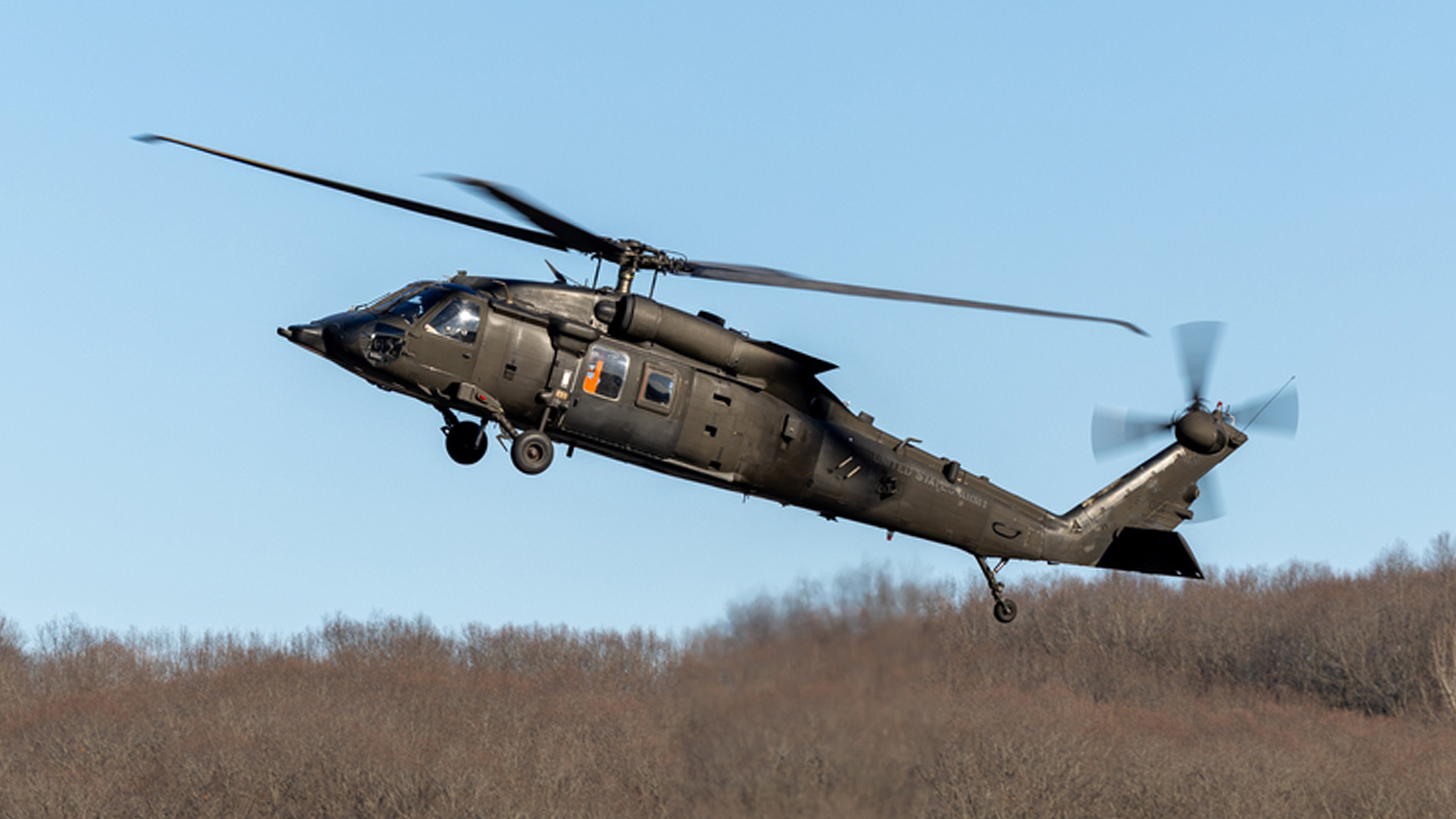
The UH-60 Black Hawk has been the rugged workhorse of U.S. Army aviation for nearly 50 years, with around 4,000 examples currently in service with 36 nations worldwide. Many of these helicopters, and new aircraft coming off the line, are set to fly as far out as 2070, and Sikorsky is curating a suite of upgrades to keep them valuable assets for the future fight. A new “digital backbone” is designed to underpin swift technological insertions such as launched effects, with related initiatives including the provision of more power to lug greater payloads, and the fully-autonomous U-Hawk cargo drone variant.
“As part of an overall “Black Hawk 2070” modernization effort we’re developing a number of complementary capabilities, including our U-Hawk uncrewed cargo variant, which we plan to fly later this year,” Jason Wrigley, Sikorsky’s director of business development for Black Hawk, told TWZ at the company’s Stratford plant in Connecticut.
Sikorsky plans to fly its U-Hawk uncrewed cargo version of the Black Hawk this year. Sikorsky
“A new digital backbone for the Black Hawk is at an advanced design phase in our labs and it’s designed to provide interfaces throughout the aircraft that will provide power, data, a network, cooling and most importantly, open architecture interfaces that enable the easy integration of new equipment, such as sensors. We see this as a core building block for the next generation of Black Hawk, along with new engines and other airframe improvements designed to futureproof the platform.”
The new digital backbone is designed to work in concert with a modern, software-driven strategy that meets the Army’s Modular Open Systems Approach and the desire to add technologies cheaper, faster, and more easily. Wrigley says that as customers identify new capabilities and needs for their Black Hawks, the digital backbone will be sufficiently efficient to permit customization even on a mission-by-mission basis. Sikorsky is also introducing a new modular nose to the H-60, which is reconfigurable with sufficient volume to support even more sensors and electronics.
“There’s a big focus on open architecture and that ability to quickly plug-and-play,” says Wrigley. “The new modular nose will change the look of the Black Hawk up front to provide even more space for equipment that will work directly with the new digital architecture.”
The new modular nose will give the Black Hawk more than twice the internal volume of the original nose section and it’s designed to provide space for internal electronics and an integrated mount for external sensor pods. It is designed to provide sufficient space to accommodate electronics that enable roles such as search and rescue, drone control, and flying in degraded environments, and it will also house some of the equipment required as the Black Hawk’s autonomous capabilities expand.
Sikorsky plans to introduce a new modular nose to the UH-60M. Sikorsky
Joshua Powers spent 22 years as an Army Aviation officer flying the Black Hawk, and he’s well qualified for his new role with Sikorsky handling business development for rapid capabilities insertions. “Army units know the Black Hawk inside out; how to fly it, maintain it, and use it to maximum effect. The upgrades we are developing will bring new capabilities faster, without time-consuming and complex changes to sustainment, training, and operations, plus we are adding more range, more payload, and more power to meet the demands of the Indo-Pacific region.”
“I find it amazing to pair new technology with a rugged platform like the Black Hawk. These new innovations are needed to meet the needs of the new complex battlefield. The fight I fought in Iraq is very different from the current operating environment and what future warriors are going to go up against, and what we’re asking them to do is very different from what came before.”
Bringing autonomous co-pilots to the Black Hawk
Autonomy is a central pillar of Sikorsky’s strategy for the future Black Hawk. The company’s MATRIX autonomy software is now being matured on a UH-60M variant, and while it’s not necessarily designed to completely replace pilots, MATRIX will assume some of their workload, making flying safer and simpler as mission sets grow increasingly complex and dangerous. “Pilots that are controlling collaborative drones, for example, need to be able to focus on the drone mission, and autonomy will help lighten their cognitive load,” explains Wrigley.
“The standard Black Hawk crew operates with two pilots. Adding our MATRIX autonomy system gives the operator options – a single pilot could fly without an unbearable workload and still fulfil a mission commander role, for example. The Army could then operate the Black Hawk with no pilots at all when that’s the appropriate option.”
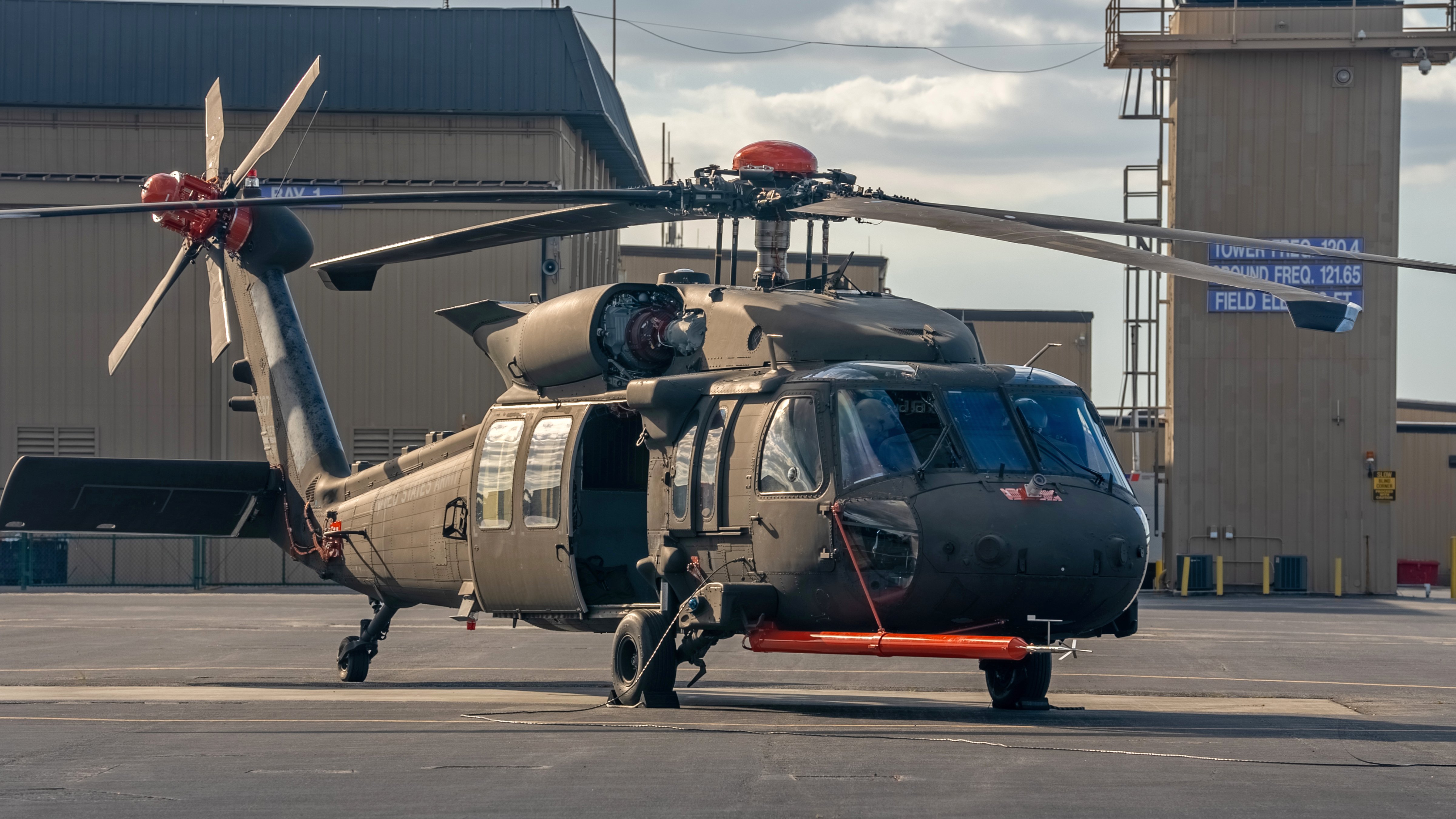
The U.S. Army received its first UH-60MX Optionally Piloted Vehicle (OPV) on March 20, 2026. Sikorsky
“We delivered the first UH-60MX to the Army earlier this year,” says Wrigley. The delivery marked the first full authority fly-by-wire and optionally-piloted UH-60 in the Army fleet. “They are using it for testing and soldier feedback to develop tactics, techniques and procedures for the autonomous Black Hawk. We have since received a contract to deliver three more MX aircraft to the Army.”
MATRIX autonomy kits have now been installed on all three U.S. Army Black Hawk models; the UH-60A, UH-60L and UH-60M. Sikorsky plans to incorporate autonomy options into all Black Hawks as they are built, plus the MATRIX system will be able to be retrofitted to existing examples.
Powers is well aware of the benefits autonomy will provide from complex combat operations to more mundane day-to-day missions. “Flying at night and seeing the tracer fire coming up at you, things like that, I honestly feel that’s not the big threat. It’s when you’re going to land and there’s just a big dust cloud. When you’re tired, you aren’t as focused. Having MATRIX, whether that’s with one, two, or no pilots, it’s about that reduced workload on the mission. Pilots won’t be as fatigued, plus they have the safety net of a fully autonomous aircraft that can, if needed, land in all of those difficult environments. It will give commanders more operational flexibility and the ability to mitigate risk in less-than-ideal conditions dictated by the enemy or weather.”
The first UH-60MX during testing alongside Sikorsky’s UH-60A Optionally Piloted Black Hawk. Sikorsky
“The Black Hawk operation isn’t just about pilots, it’s also that integrated four-person crew. As a pilot, you’re relying on your senses and also on the guys in the back to watch out and tell you where you’re going. MATRIX is just going to help that team effort and put you in a better position to bring the crew back safely. It integrates all the systems and sensors and uses altitude, airspeed, radar altimeter, drift indications, and puts the fly-by-wire technology to where it can make rapid adjustments and changes based on what it’s seeing with the sensors.”
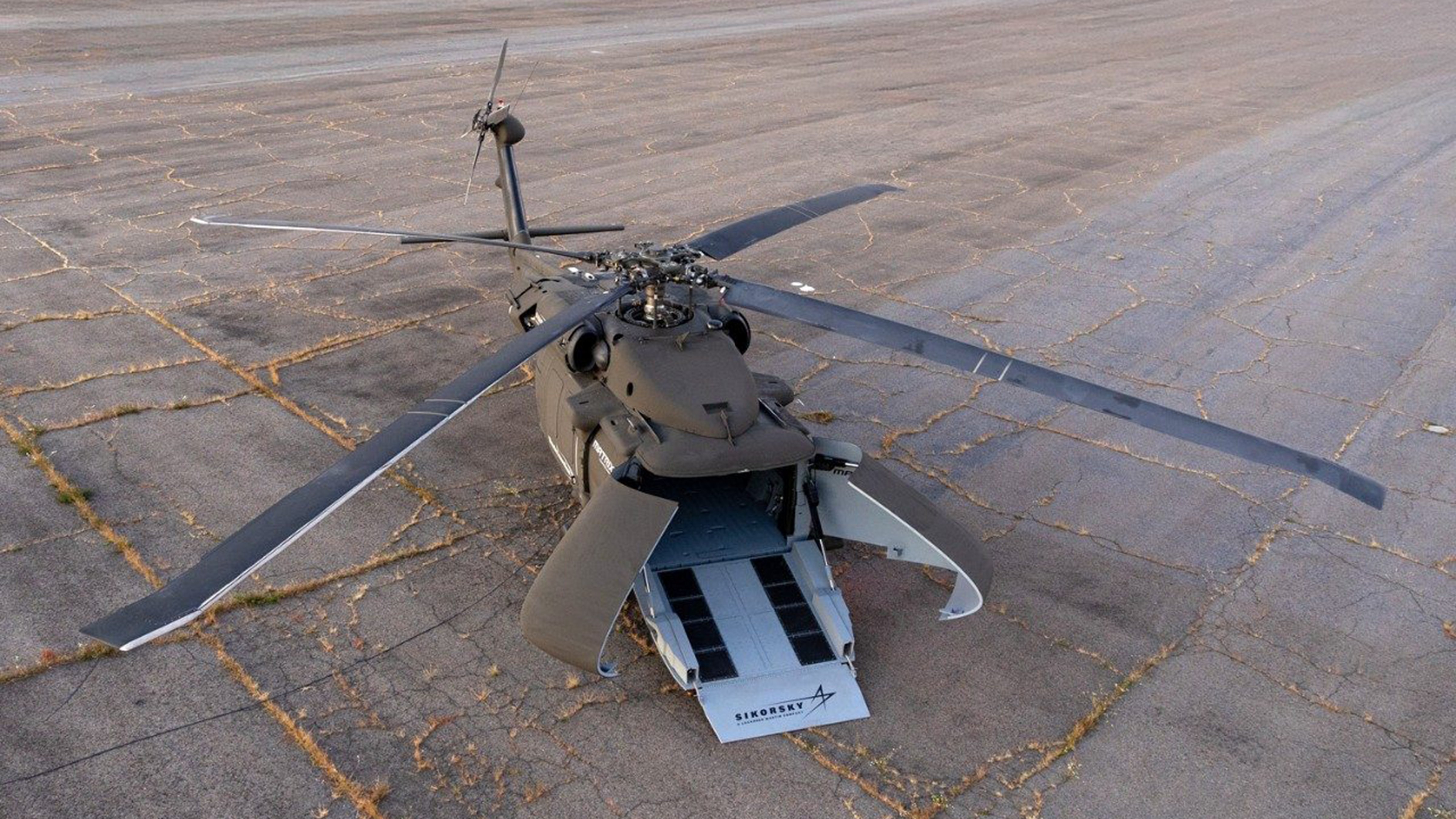
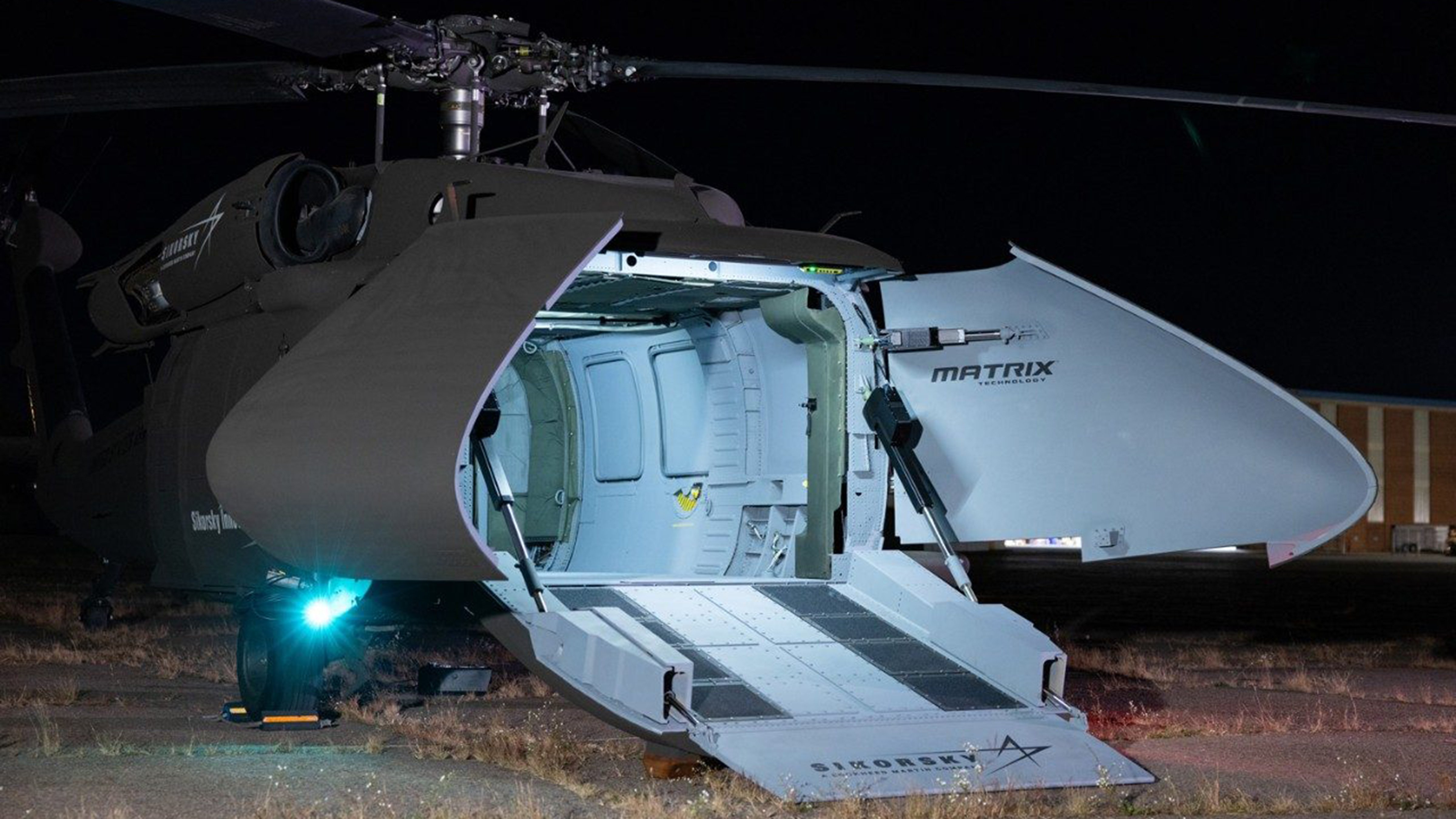
The volume of testing, the maturity, and the confidence in MATRIX helped Sikorsky to develop the S-70UAS, or U-Hawk, which was unveiled in 2025. The U-Hawk project essentially removes the cockpit and its associated equipment from a Black Hawk and replaces the front end with cargo doors to provide a huge internal space as a supply drone.
“We acquired a used UH-60L Black Hawk as the template for our initial U-Hawk. We added the clamshell doors and that was the actual aircraft that we showed at AUSA last year,” says Wrigley. “Since then we’ve been adding the fly-by-wire and integrating the MATRIX autonomy. It’s currently in our innovations hangar in Bridgeport, Connecticut, getting the final work done and it will make its first flight as a U-Hawk later this year.”
The first U-Hawk is based on a modified UH-60L. Sikorsky
Sikorsky sees the U-Hawk as a natural evolution for the Black Hawk in contested logistics missions, when cargo needs to be moved but the threat is sufficiently high that it drives a need for uncrewed platforms to tackle the mission.
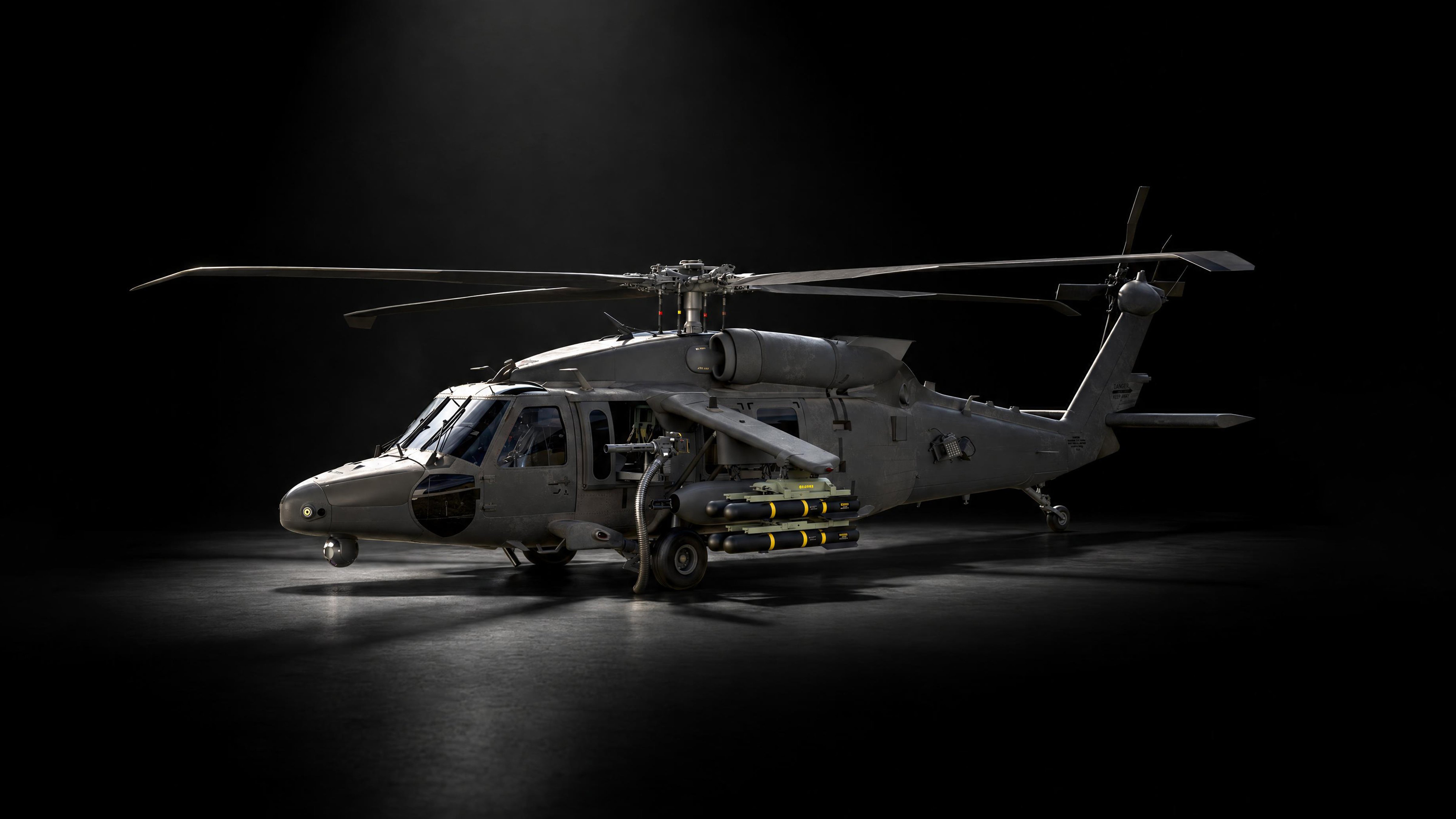
“We’re spending a lot of time on the U-Hawk and its roles. As well as being an uncrewed cargo helicopter, it can also be a truck that can carry a large volume of launched effects,” explains Wrigley. “There are Black Hawk models on the market right now that are being divested, and we see those as being an ideal option for conversion to U-Hawk configuration to affordably introduce this capability to the market.”
Drone dispenser
The integration of small drones dubbed ‘launched effects’ into rotary-wing operations is a major initiative from the Army as a new means to collect intelligence for commanders on the battlefield, relay communications, jam and distract enemy emitters, and act as loitering munitions. These mini air-launched drones can be carried and fired from stub-wing-mounted launchers, with other concepts seeing larger volumes of them carried inside the cabin as a “mega-pack,” with Sikorsky seeing both as being highly-applicable to both the Black Hawk and the U-Hawk.
This is exactly the kind of capability that the digital backbone in the Black Hawk is intended to open the door to; installing plug-and-play drone command kits, which could enable the Black Hawk to act as a “drone mothership” to launch, task, and command swarms of multi-mission launched effects.
A Launched Effect-Medium Range is fired from a UH-60M Black Hawk during Project Convergence-Capstone 6, in July 2026. U.S. Army
The Army tested its latest operational concepts for launched effects during the Project Convergence Capstone 6 demonstration event this summer. This annual exercise is designed to develop concepts and tactics as well as gather soldier feedback, as it works to transition new systems into service. The latest exercise built on previous launched effects testing on the Black Hawk, when a UH-60M deployed Anduril’s Altius-700 launched effects that then operated as an autonomous hunter-killer team to locate targets, share data on those targets, and then strike them, without the need for the Black Hawk to expose itself to threats.
“As a young Black Hawk pilot, the OH-58 Kiowa Warrior was the primary scout platform, but it was limited by range and its ability to be detected,” explains Joshua Powers. “Today, we launch small drones that can remain unseen and they can give us real-time feedback. Launched effects make our lift assets more capable.”
“We see the Black Hawk as the aircraft capable of carrying, deploying and then acting as an airborne mission command node for launched effects,” adds Jason Wrigley. “In the operational environment of the future, it’s really about the mass of those launched effects. This isn’t about carrying one or two of them, this is about carrying and controlling a large number of them.”
A “quiver” of launched effects inside the U-Hawk shown at the AUSA 2026 trade event. Jamie Hunter
“We’ve tested them on the stub-wings, but we are also exploring what we call “quiver” – that large number of launched effects inside the cabin in that “mega-pack.” This creates additional opportunities for mass that we think is going to be really critical. We’ve done a lot of operational analysis in concert with the Army on what the right mix of launched effects might be to extend the standoff range of the aircraft to improve survivability – which is of course what it’s all about – but the right mix will ultimately come down to the mission. We have seen a lot of testing over the past few years, so we do believe this is a capability that can be introduced operationally soon on the Black Hawk.”
More power for more missions
To support the increased lift that might be needed for a missionized Black Hawk lugging large payloads, including an arsenal of launched effects, Sikorsky is well along in development of a new engine that is designed to create over 1,000 pounds of increased payload capacity and increased range for the Black Hawk. The T901 Improved Turbine Engine (ITE) from GE Aerospace provides 50 percent more horsepower over the existing T700 engines in the UH-60M.
“One of the key building blocks of the future of the Black Hawk are the twin ITEs as we look to expand the mission capability and the utility of this aircraft for decades to come,” explains Wrigley. Sikorsky began initial testing of the first UH-60M with ITE in January 2025. “We are actively in the test program right now at our test facility in West Palm Beach, Florida. The twin ITEs in each Black Hawk and that additional power translates into some pretty significant operational opportunities. Since our first flight with ITE in May 2025 we’ve flown the aircraft with the new engine for over 50 hours and up to 17,000 ft above sea level.”
A UH-60M fitted with twin GE Aerospace T901 Improved Turbine Engines (ITE). Sikorsky
Sikorsky is accompanying the addition of the new engines with a significant expansion of the fuel tank to increase capacity and range. This is being done without impinging on cabin volume and thus retaining the important ability to transport 11 combat troops, while increasing range by around 100 nautical miles. “The T901 also improves fuel efficiency and eases maintenance – so overall we are really improving the payload capacity of the aircraft. We’ll be getting to the milestone C production decision on ITE within the next couple of years, and at that point it will become a core element of the Black Hawk program going forward,” Wrigley explains.
Building Black Hawks
Touring the Black Hawk production line in Stratford, Connecticut, it’s a hive of activity. Many of the major components for each helicopter are manufactured here. The long final assembly line sees teams of workers busily constructing UH-60M and HH-60M medevac Black Hawks for both domestic and foreign military sales customers, along with new HH-60W Combat Rescue Helicopters for the U.S. Air Force and MH-60R Seahawks.
“We’re designing all of these upgrades with the intent that they will all be available off the production line in new build aircraft, as well as in kit form for upgrades to existing assets in the field,” notes Wrigley. “Here in Stratford in what we call the “back shop” we build all the rotor blades, gearboxes, and many other components that go into each aircraft. We are already thinking ahead and we’ve invested significantly into additive manufacturing, with 11 parts on the Black Hawk today that are additively manufactured. It’s a great place to start, but there’s a long way to go and we’re working on qualifying more challenging components and load-bearing parts.”
A brand new UH-60M in pre-delivery testing. Sikorsky
Cohesively, the digital backbone, larger fuel tank, new engines, and the new modular nose will all be introduced on the production floor in the coming years to pave the way for that increased payload capacity to carry fully-equipped combat troops, supplies, and all the new kit needed for the future fight and the Black Hawk’s role as a multi-mission forward battlefield node. The autonomous U-Hawk and the optionally piloted flexibility afforded by MATRIX – all of these pieces of the future Black Hawk are presently coming together under an overarching effort.
“The future Black Hawk will be that complement to the future long-range MV-75 Cheyenne II,” says Powers. “These won’t be a one-for-one replacement for every Black Hawk currently in the fleet – the MV-75 has a specific purpose and function that the Black Hawk isn’t designed to do. What the Black Hawk can do with these new upgrades is shape the battlefield and with its autonomy be out there flying missions into contested environments.”
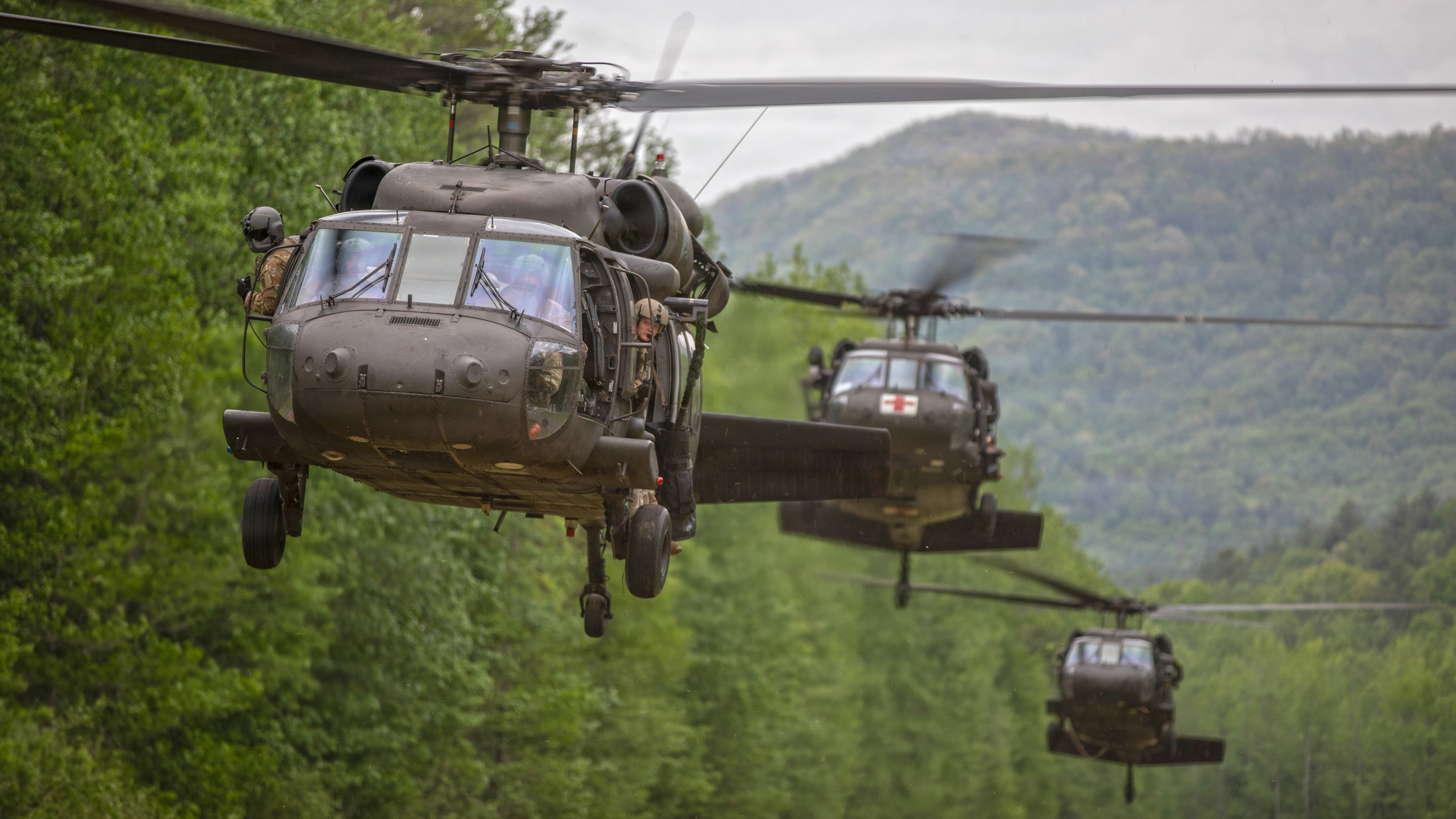
U.S. Army UH-60 Black Hawks assigned to 4th Ranger Training Battalion. U.S. Army
“Those homeland missions are equally necessary. I recall talking about this in flight school when choosing an aircraft to fly, how it’s one thing to be deployed on combat missions, but it’s also about being back in the homeland on disaster relief when you need the Black Hawk to go out and save lives, those kinds of missions the Army National Guard does – it really underlines the importance and versatility of the Black Hawk.”
Over the past 50 years and looking ahead to the next 50, continuing the proven legacy of the Black Hawk will mean constant evolution to meet new missions and needs. Sikorsky’s task is for all of these new elements to meld into a future Black Hawk that’s ready to roll off this production line soon, that still also provides the same dependable, rugged capability for the Army at home or overseas, well into the future.
from SGT Report: The coming collapse and monetary reset has been decades in the making, and while it has been a slow motion decline thus far, like dam breaking it will soon be sudden and catastrophic for the vast majority of Americans who are completely unaware and unprepared. Chris Marcus of Arcadia Economics joins me […]

 Login