❌

Reading view

Why is Putin Hunting Telegram’s Founder Pavel Durov and Branding Him a Terror Facilitator?

Russia has charged Telegram founder Pavel Durov with facilitating terrorist activity in the country and put him on an international wanted list, alleging that his hugely popular messaging app was being used by ‌Ukrainian spies to organize attacks inside Russia.

The charges, announced by the Federal Security Service (FSB), followed a long investigation into Telegram.

The FSB accused Telegram of failing to remove “numerous channels, chats and bots” allegedly used by “Ukrainian intelligence agencies, terrorist and extremist organizations to prepare and coordinate acts of sabotage and terrorism, mass murder, and cyberfraud” in Russia, which resulted in “numerous human casualties.”

It further said that a chatbot available on Telegram called “Daivinchik/Leo” had been ​used by Ukrainian spies to recruit young Russians to carry out sabotage and terrorist operations.

Reportedly, Ukrainian special agents pose as young women on the app to recruit Russian men and use them for spying or carrying out sabotage activities.

Russia has also issued an international arrest warrant against Durov, who was born in Russia but currently lives in Dubai.

Notably, the Telegram app, which is hugely popular in Russia, is already heavily restricted in Russia.

Russian citizens can now access Telegram only by using a VPN to encrypt their traffic and conceal their location. However, despite these restrictions, state bodies, including the Kremlin and the defense ministry, continue to post ⁠on it regularly.

The crackdown on Telegram is part of Russia’s broader effort to restrict access to foreign tech platforms and assert control over the internet. Apart from Telegram, other popular messaging apps such as WhatsApp, Instagram, Facebook Messenger, Signal, Discord, Snapchat, and Apple FaceTime are also banned in Russia.

Russia has now gone one step ahead and formally charged Telegram founder Durov with aiding terrorism, despite the fact that the app is hugely popular in Russia.

However, notwithstanding Russian restrictions on Telegram and the charging of its founder with terrorism, both Russia and Ukraine have used the app extensively in the ongoing war.

In fact, the Telegram app has also been described as a “virtual battlefield” in the war between Russia and Ukraine, where it is used ​by officials, soldiers, defense ministry handles, and influential bloggers on both sides.

So, how did a messaging app become key to the Russia-Ukraine War?

Telegram As A “Virtual Battlefield” in the Russia-Ukraine War

In the Soviet Union, media was heavily controlled by the state to control public discourse.

Russia inherited this culture of controlling the narrative through its influence on the media. However, with the proliferation of digital and social media, the state’s ability to control the media weakened.

Telegram was one of the most popular messaging apps in Russia and Ukraine in 2022 when the war began.

In Russia, Ukraine, and many Eastern European countries, Telegram served as a crucial alternative to state-monitored communication channels for sharing news.

With Russia’s invasion of Ukraine, Facebook and Instagram were banned over extremism charges by a Moscow court, and access to Twitter was restricted by the Russian censorship body Roskomnadzor.

As there was disdain for traditional state-controlled media in Russia and many other social media channels were banned outright, the role of Telegram, already hugely popular in Russia, in shaping narratives and controlling perceptions of the war became even more critical.

According to a Levada survey, among Russian youth aged 18-24, TV was the least popular news source, with 41% relying on Telegram channels for news. Additionally, during the first two months of the conflict, 76.6% of Ukrainians used social media for news, with Telegram as the most favored platform at 65.7%.

Telegram was also used by both the Russian and Ukrainian governments to broadcast air raid warnings and distribute maps of local bomb shelters.

Some of Telegram’s unique features, such as the ability to make a channel public or private, the option to have unlimited subscribers, and the lack of algorithms that boost or restrict content visibility, have made Telegram a popular information-dissemination tool for both pro- and anti-war voices.
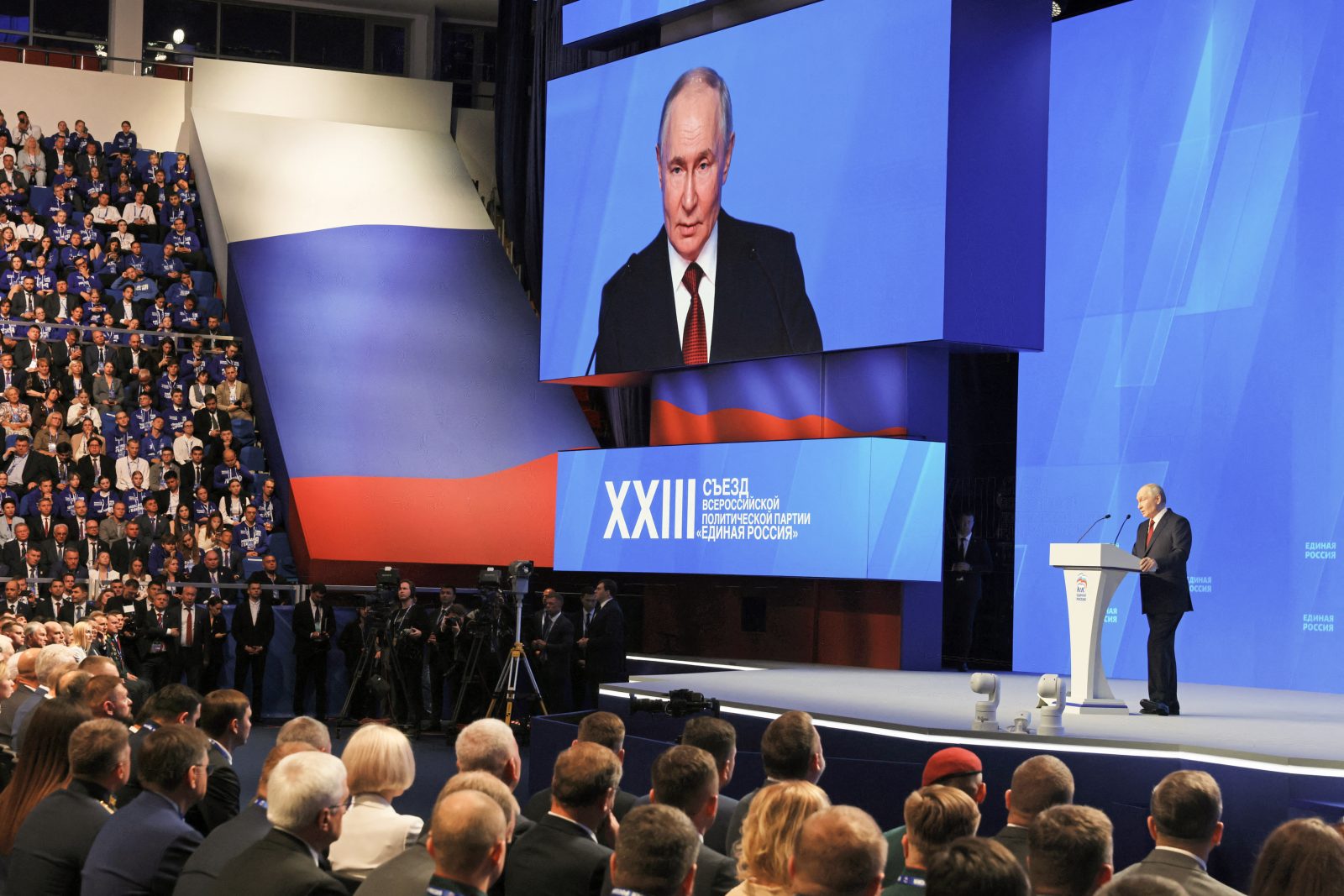
In this pool photograph distributed by Russian state agency Sputnik, Russia’s Vladimir Putin addresses the audience at the 23rd Congress of the United Russia party in Moscow on June 28, 2026. Vladimir Putin vowed on June 28, 2026 to ensure security and overcome challenges as Ukraine stepped up its retaliatory strikes inside Russia amid Moscow’s four-year war. (Photo by Yekaterina SHTUKINA / POOL / AFP)

According to a research paper titled ‘Telegram as a Battlefield,’ over 40% of Telegram channels are dedicated to news, with approximately 17% directly related to the war and ongoing events in Ukraine.

As the war progressed, many war bloggers who were not part of traditional media outlets began posting on Telegram, reaching millions of people.

For millions of people, these war bloggers became an alternative source of information and war updates, often coming straight from the front lines.

Given its popularity as a source of information for war updates, many pro-government channels also used Telegram to push their narrative and spread disinformation.

The paper ‘Telegram as a Battlefield’ also found that after the invasion, average views per post for Pro-Kremlin channels rose from 15,929 to 67,442 (a 323% increase) and for Anti-Kremlin channels from 25,346 to 104,778 (313% increase), highlighting how Telegram emerged as a critical battlefield for disseminating information, propaganda, and shaping narratives.

However, it noted that anti-Kremlin channels consistently garnered higher viewership than pro-Kremlin channels, especially post-invasion.

Also, as the war progressed, Ukraine, just like in the case of drone technology, used Telegram in more innovative ways than Russian government circles.

Ukrainians used it for air-raid alerts, bomb-shelter maps, and official updates from President Zelensky and military commands.

Ukraine also used Telegram as an intelligence-collecting tool. It crowdsourced intelligence via tip bots and channels that shared enemy vehicle movements, leading to successful strikes.

Common people in Ukrainian villages often shared information on Russian military movements with the Ukrainian military and intelligence securely via Telegram.

Telegram, in fact, became a vast depository of HUMINT (human intelligence) for Ukraine.

Furthermore, the platform was also used by Russian government critics to share information with the Ukrainian military across the border.

Telegram was also used to document war crimes and OSINT (open source intelligence).

Ukrainian intelligence also used Telegram to communicate with people in occupied territories and to encourage them to share intelligence on the Russian military.

Frontline troops also use the app to organize logistics, share drone feeds, and have informal discussions with their military commands.

Telegram has also been described as the conflict’s digital battle space, where organizing logistics, war blogging from the frontlines, propaganda, disinformation campaigns, narrative warfare, intelligence collection, recruitment of spies and saboteurs, cataloging of war crimes, and dissemination of public interest information like air raid warnings and bomb shelter maps all take place in real time.

Telegram, in fact, is providing the most unfiltered view of the war.

“Telegram has become this really key battleground in the information war,” Dr. Ian Garner, a historian and translator of Russian war propaganda, told Time magazine. “And it’s interesting that this information war has been outsourced to a private company.”

While Russia has often tried to use Telegram to its advantage, Ukraine has shown much more ingenuity in using it, which explains Moscow’s love-hate relationship with the app.

Russia might have restricted the app and now formally charged its founder with terrorism, but official Russian media handles are still using it, and even common Russian citizens can use it using VPN services.

However, even after these formal charges, Telegram will continue to remain the digital battle space of the Russia-Ukraine War.

  • Sumit Ahlawat has over a decade of experience in news media. He has worked with Press Trust of India, Times Now, Zee  News, Economic Times, and Microsoft  News. He holds a Master’s Degree in International Media and Modern History from the University of Sheffield, UK. 
  • He can be reached at ahlawat.sumit85 (at) gmail.com

The post Why is Putin Hunting Telegram’s Founder Pavel Durov and Branding Him a Terror Facilitator? appeared first on EURASIAN TIMES.

  •  

F-16 Crashes in Ukraine: Days After “Historic” Su-35 Shootdown, Ukraine Loses Its Fifth Fighting Falcon

A Ukrainian F-16 fighter jet crashed during a combat mission chasing aerial targets launched by Russia, marking the fifth loss of the US-origin aircraft. Interestingly, the crash occurred after a Ukrainian Fighting Falcon allegedly scored a historic first air-to-air kill against a Russian Su-35.

On July 29, the Ukrainian Air Force lost contact with an F-16 Fighting Falcon jet while it was performing a combat mission to intercept Russian aerial targets on the frontline, the service announced in a statement posted on Telegram. “According to preliminary data, an emergency situation occurred on board the aircraft, and the pilot was forced to eject.”

“The pilot is currently safe. He was successfully evacuated and taken to a medical facility for examination and diagnostic tests,” the service noted.

The exact cause of the crash and the nature of the emergency are unclear, but experts are purportedly examining the crash site to determine the cause. 

Some reports swirling on social media claimed that the F-16 had been shot down by Russia, but the claims could not be corroborated.

An F-16 fighter jet operated by the Ukrainian Air Force crashed while performing a combat mission near the frontlines on July 29, the Ukrainian side informed.

According to avaliable information, an unspecified "emergency situation" occured on board the plane, forcing the pilot… pic.twitter.com/o6110OfjWa

— Status-6 (War & Military News) (@Archer83Able) July 29, 2026

Ukraine has received dozens of F-16 AM/BM aircraft from NATO allies. These jets are used primarily for air defense against missiles and drones, though they have increasingly been employed in more offensive and integrated missions.

In fact, the latest crash surprisingly comes just days after General Dan Caine, Joint Chiefs of Staff, confirmed that one of these jets downed a Russian jet.

“I want to highlight the incredible work that the Ukrainian industrial base is doing. It ranges from their surface-to-air capabilities to their air-to-air capabilities. I’ll note that recently we had the first air-to-air kill where a Ukrainian F-16 shot down a Russian fighter,”  Air Force General Dan Caine, Joint Chiefs of Staff, told the Senate Appropriations Committee.

Caine did not identify the type of Russian aircraft, but the experts posited that the timing and context point strongly to the Russian Su-35 claimed to have been downed by the Ukrainian Air Force on the eastern front on July 8, 2026. In fact, footage of the burning wreckage of an alleged Su-35 was also posted to social media at the time.

U.S. General John “Dan” Caine, Chairman of the Joint Chiefs of Staff:

“Recently we had the first air-to-air kill where a Ukrainian F-16 shot down a Russian fighter.”

This almost certainly refers to the July 8, 2026 shootdown of a Russian Su-35 on the eastern front. https://t.co/nuoqscFLAB pic.twitter.com/eXr6pOSMhU

— Special Kherson Cat 🐈🇺🇦 (@bayraktar_1love) July 21, 2026

The Ukrainians hailed the kill as historic, given that their F-16 fighters are older-generation aircraft, whereas Russia’s Su-35 is a cutting-edge 4.5th-generation jet with thrust-vectoring engines, powerful radar, and long-range missiles.

According to several OSINT (Open-Source Intelligence) reports, the kill was part of a well-planned ambush that included a Patriot surface-to-air missile system and three F-16s.

According to these claims, one Ukrainian F-16 flew low as bait, simulating an attack to lure a Russian Su-35 into a vulnerable position, while two others provided cover from a higher altitude. Meanwhile, a nearby Patriot system illuminated the target with its radar, aiding the engagement by exploiting gaps in the Su-35’s awareness. 

Subsequently, the Russian pilot flew into the trap and was shot down, most likely by an AIM-120 AMRAAM launched from an F-16.

File Image: Ukrainian F-16.

The purported shootdown suggested that Ukrainian pilots and planners are now conducting more complex, offensive, and integrated operations. In fact, experts went so far as to say that if these tactics are sustained, the Ukrainian forces would be able to gradually erode Russia’s long-standing advantage in contested airspace along the front, forcing Russian aircraft to fly higher, farther back, or with greater caution.

The latest crash, however, underscores that F-16s remain heavily committed to intercepting Russian drone and missile swarms.

The loss is a setback for Ukraine, which has received only a limited number of F-16s so far and has already lost 5 to crashes.

Ukrainian F-16 Losses: Setback For Ukraine

The first F-16 crash occurred just weeks after Ukraine received the first aircraft in August 2024, and claimed the life of the pilot. Even though the tragic incident was first thought to be the result of a technical issue or pilot error, later reports raised the potential of friendly fire from a Ukrainian Patriot missile defense system.

The second crash of an F-16 occurred in April 2025, killing the pilot again. Initially, several theories, including that of an air-to-air combat between Russia and Ukraine, as well as friendly fire, were floated. However, Russia put all speculations to rest by announcing that the F-16 was shot down by an air defense system.

The third crash was reported to have occurred on May 16, 2025, when the F-16 in question was repelling a Russian aerial attack. At the time, reports stated that the pilot destroyed three Russian aerial targets and was using an aircraft cannon to attack a fourth when an unknown emergency occurred, and the Air Force lost contact with the pilot.

The Air Force said the pilot steered the plane away from the settlement it was flying over and successfully ejected, after which he was rescued.

The fourth crash came merely a month after this, on June 29, 2025. The aircraft was damaged, entered a spin, lost control, and crashed during a large Russian aerial attack. The pilot did everything he could and flew the jet away from the settlement, but did not have time to eject.

Since there aren’t enough of these aircraft in Ukraine’s inventory, every loss significantly reduces the combat power available. This is especially true because not all aircraft are always battle-ready due to maintenance, upgrades, and high operational tempo.

The F-16s, along with the Mirage 2000-5 supplied by France, are heavily used for intercepting Russian cruise missiles and drones and, more recently, for complex offensive missions. These aircraft are Ukraine’s most capable Western fighters and form the core of its modern air operations. Therefore, losing an F-16 reduces the number of sorties Ukraine can generate and limits its ability to contest airspace near the front lines.


The post F-16 Crashes in Ukraine: Days After “Historic” Su-35 Shootdown, Ukraine Loses Its Fifth Fighting Falcon appeared first on EURASIAN TIMES.

  •  

Su-57 For IAF: India Rules Out New Sukhoi Fighter Jets, To Prioritize Su-30 MKI Upgrades

A senior official from the Indian Ministry of Defense (MoD) has indicated that New Delhi is not currently planning to buy new Sukhois. The statement comes as Moscow has been aggressively pushing to export its Su-57 fighter jets to the IAF

In a recent interview with Moneycontrol, Defense Secretary Rajesh Kumar Singh stated that India has no plans to acquire a “new version of the Sukhois.”

“No, we have not thought about Sukhois. If you are asking about the new version of the Sukhois, the answer is no. But we are actively considering upgrading the existing Sukhois… It is a success story. It is a very important platform with the induction of BrahMos missiles, and we hope to further upgrade and improve it,” Singh said when asked whether there are any plans to buy a fifth-generation aircraft outside of the AMCA (Advanced Medium Combat Aircraft), India’s own indigenous fifth-generation fighter program.

While he did not name either aircraft, the remarks have been widely interpreted as referring to Russia’s Su-57 fifth-generation fighter. In fact, the statement marks a clearer official signal against a near-term Su-57 acquisition, in contrast to previous signals.

In April 2026, for instance, Chairman and Managing Director of the state-run Hindustan Aeronautics Limited (HAL), Dr. D.K. Sunil, said, “A committee of Russians has also studied and said that roughly 50% of the facilities can be used for producing this aircraft, but some new investments will be required.” Thus, hinting that, while India was neither committing to nor rejecting the offer, it was merely in a pre-decision, information-gathering phase.

Meanwhile, the Indian Air Force (IAF) chief, Air Chief Marshal A.P. Singh, indicated last year that the service might have to opt for an off-the-shelf purchase of a fifth-generation stealth aircraft.

“As far as the Su-57 is concerned, I just want to say that we have to weigh all the options, and we in the defense ministry and the Indian Air Force have a very set process for the induction of any weapon system, and that process will be followed. So what comes will depend on what meets the requirement and what is best for us,” he stated.

Singh’s latest comments also align with the IAF’s upgrade program for the Su-30MKI fleet aimed at modernizing avionics, sensors, and other systems while increasing domestic content.

“We are processing an upgrade program for the existing Su-30 MKI fleet. This will be the first time an indigenous upgrade of any fleet is being planned,” the IAF chief told Prakash Nanda, the Chairman of the Editorial Board of the EurAsian Times.

India’s Su-57 Conundrum

Russia first publicly offered the Su-57E export variant to India at Aero India in February 2025. This was followed by a “golden deal” that included the supply of off-the-shelf aircraft, the production of the Su-57 in India, and assistance in developing India’s fifth-generation Advanced Medium Combat Aircraft (AMCA).

Later, the Russian state arms exporter Rosoboronexport expanded it to include the use of existing Su-30MKI infrastructure to facilitate local manufacturing of the Su-57E in India, as previously reported by the EurAsian Times.

In June 2026, Russian President Vladimir Putin publicly renewed the pitch, citing the former FGFA (Fifth-Generation Fighter Aircraft) collaboration between the two allies and calling it the world’s best fifth-generation aircraft. Additionally, he stated that Russia was ready to work with India “without any issues or limitations.”

Notably, India and Russia had earlier collaborated on the Fifth-Generation Fighter Aircraft (FGFA) program under a 2007 agreement. However, India later withdrew from the program, amid shortfalls in stealth performance, engine capability, insufficient access to design data and source code, and concerns that the aircraft did not fully meet the Indian Air Force’s requirements for independent upgradeability and maintenance, as explained in a detailed EurAsian Times report you can read here.

Ex-Rafale Pilot Who Praised China’s J-10C & JF-17 Fighter Jets Now Under Investigation for Beijing Ties

In fact, doubts about the aircraft’s stealth characteristics and the extent to which Moscow would be willing to part with technology persist to this day, and are believed to be one of the reasons why India has been reluctant to acquire the Su-57.

Moreover, critics have expressed skepticism that the purchase or joint production of the Russian fighter may divert attention from India’s AMCA fifth-generation fighter program and put the indigenous aircraft on the back burner, as has happened in the past.

However, the situation has become increasingly complex, as AMCA appears to be farther away than initially anticipated. Defense observers and veterans predict the first flight may slip to 2032, as private manufacturers may not meet tight deadlines.

This would leave the IAF with a major stealth gap vis-à-vis the People’s Liberation Army Air Force (PLAAF), which has two operational fifth-generation fighters, the J-20 and the J-35. In fact, it has expanded its J-20 inventory to 500 fighters, according to recent reports.

Not just that, China has been testing two different sixth-generation prototypes: the J-36 and the J-50, both of which are regularly spotted in flight, suggesting that development is taking place at an unprecedented pace. In fact, Beijing may be ready to induct a sixth-generation fighter by the time India inducts its first AMCA.

The situation can become overly dangerous if Pakistan acquires the Chinese J-35A stealth fighters, as consistently noted by media reports.

The Russian Sukhoi Su-57 fifth-generation fighter aircraft prepares to take off during Aero India 2025, a military aviation exhibition at the Yelahanka Air Force Station in Bengaluru on February 12, 2025. (Photo by Idrees MOHAMMED / AFP)

Staring at a dwindling squadron strength, the IAF is currently inching closer to signing a deal for 114 Rafale fighter jets, 94 of which will be produced locally.

F-16 Crashes in Ukraine: Days After “Historic” Su-35 Shootdown, Ukraine Loses Its Fifth Fighting Falcon

While this acquisition will help add the numbers needed for a large-scale two-front war, it will not arrest the growing technological gap between India and its adversaries.

Some veterans have argued that a limited off-the-shelf purchase of Su-57s could serve as an interim measure, provided it does not divert resources or attention from the AMCA.

“The 114 Rafales will address the quantitative requirement but not the qualitative enhancement requirement. That leaves only the Su-57 as the only available near-term option, though it is not perfect,” the IAF veteran and ex-Vice Chief of IAF, Air Marshal Anil Khosla, earlier told the EurAsian Times. “A deal for a limited number may be considered, provided it advances the AMCA program rather than curtails it.”

Others emphasize viewing large-scale commitment to a foreign fifth-generation platform as carrying industrial, sustainment, and strategic risks.

For example, IAF veteran, Air Marshal Anil Chopra, told EurAsian Times: “India should focus on producing the Rafale locally, advance work on AMCA and its variants, accelerate production of the indigenous Tejas fighters, and buy about 40 Su-57 fighters off-the-shelf from Russia as an interim solution instead of getting into local production.

Earlier this year, the Indian MoD informed the Parliamentary Standing Committee on Defense of its interest in joining a sixth-generation fighter. India has two options: join the UK-Japan-Italy GCAP program or team up with France for their potential 6th-gen aircraft.

The post Su-57 For IAF: India Rules Out New Sukhoi Fighter Jets, To Prioritize Su-30 MKI Upgrades appeared first on EURASIAN TIMES.

  •  

Russia Confirms Imminent Induction of Perm Nuclear Sub with Hypersonic Zircon Missiles and Poseidon UUV

Although Russia scaled back its 2026 Navy Day celebrations amid Ukrainian threats, it projected an optimistic outlook by confirming plans for the imminent launch of the Perm-class nuclear submarine armed with hypersonic Zircon missiles, and announcing substantial progress on the nuclear-capable Poseidon unmanned underwater vehicle (UUV).

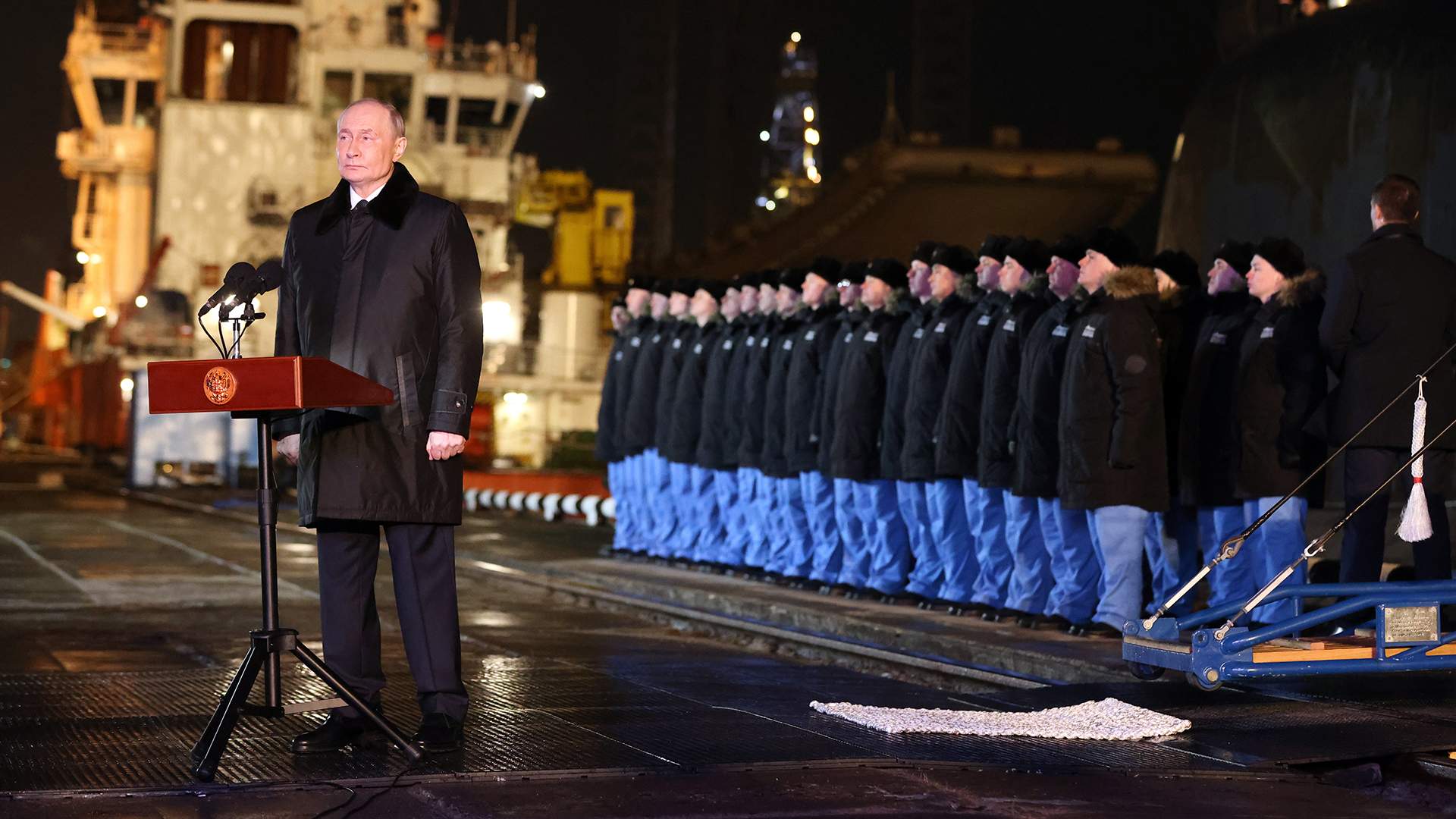
Russia scaled down the main St. Petersburg naval parade for the second consecutive year, citing security concerns over Ukrainian long-range drones. Instead, President Vladimir Putin marked the day at Navy headquarters in St. Petersburg, praising the Navy’s contribution to the war in Ukraine and the strengthening of the naval leg of the nuclear triad.

As visuals of the event surfaced online, Ukraine-based military bloggers and pro-Ukraine OSINT analysts pointed to a submarine painted on the wall visible in the video, while mocking the absence of actual warships from the parade.

“The cameraman is probably in Kolyma by now,” netizens joked, referring to Soviet-era labor camps.

Meanwhile, the Navy Commander-in-Chief of the Russian Navy, Admiral Alexander Moiseyev, presented a status report on the induction of new vessels into service. Moiseyev reported to President Vladimir Putin that 20 ships, vessels, and boats had already been commissioned in 2026, with plans for another 21 by the end of this year.

The most noteworthy of these upcoming inductions is that of the Perm-class nuclear submarine armed with the Zircon (or Tsirkon) hypersonic missile.

Russian Navy Chief Moiseyev reports to Putin:

First nuclear-powered submarine capable of carrying Zircon nuke-capable hypersonic missiles — to be commissioned by end of year.

21 more vessels to be commissioned before year-end. pic.twitter.com/OlDLUMIQva

— Sputnik India (@Sputnik_India) July 26, 2026

Perm is the fifth boat in the Yasen-M series. The keel for its construction was laid in 2016, and the submarine was launched in March 2025 in a ceremony attended remotely by Putin.

Designed by the Malakhit Design Bureau and built at Sevmash, it features a partial double-hull configuration, a rubber coating to reduce its acoustic signature, modern navigation, communication, and hydroacoustic systems, high-precision weapons, and robotic equipment. The mast housing of the Perm submarine includes a rescue chamber capable of holding the entire crew. During the launch ceremony, Putin described it as the first multipurpose submarine equipped to carry Tsirkon hypersonic cruise missiles.

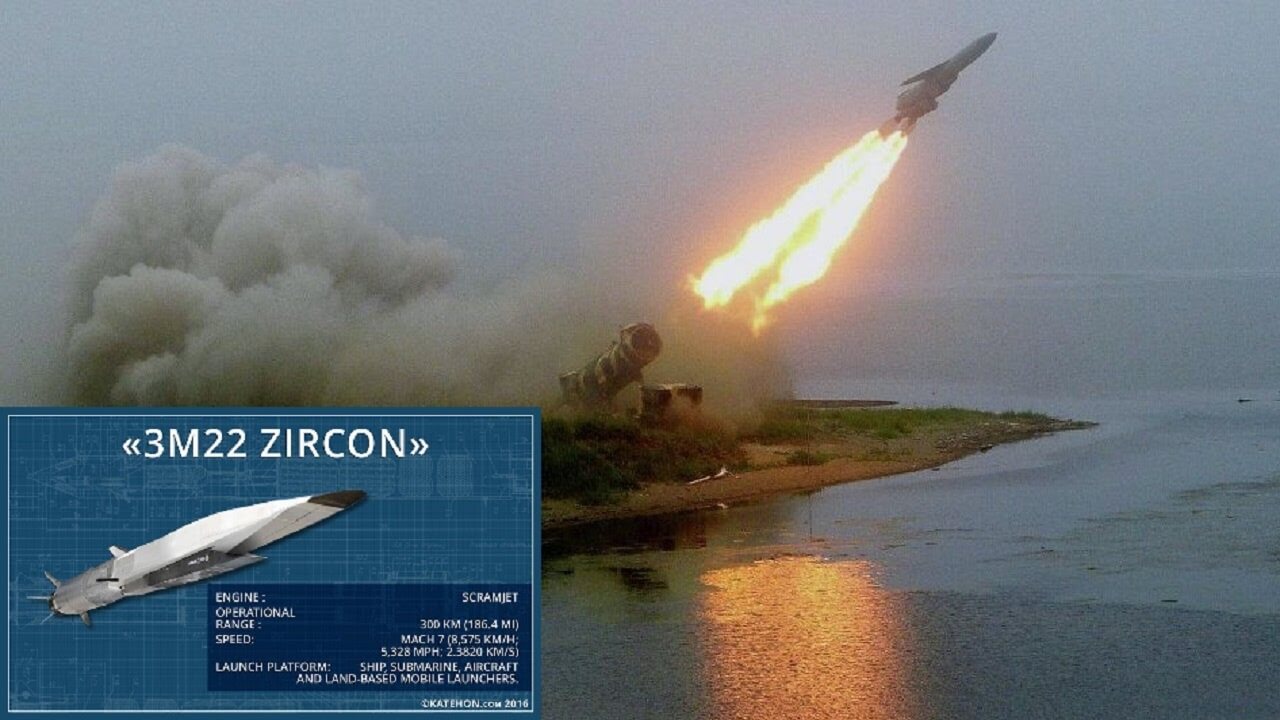
Zircon is a sea-launched hypersonic missile that Russia claims can reach Mach 8–9 and has a range of 500–1,000 km. It is intended for both anti-ship and land-attack roles

Zircon’s high speed is designed to compress defender reaction times and complicate interception compared with conventional subsonic or supersonic cruise missiles. Analysts believe that since kinetic energy is the best predictor of lethality against large surface targets, the missile’s extraordinary speed would make it a great attack vector against larger warships, such as an adversary’s aircraft carrier groups

Russian President Vladimir Putin launched the ‘Perm’ Yasen-M submarine.in

Russian officials state that the hypersonic missile’s kinetic energy on impact will enable Russia to attack hardened, deep, and ground targets.

The missile has been used to launch devastating strikes on Ukraine on several occasions. In fact, Boris Obnosov, CEO of Tactical Missiles Corporation, earlier said in an interview with Rossiya-24 television that the missile can defeat nearly all air defense systems.

Speaking at the Navy Day event, Putin said ongoing work is improving its accuracy, noting that “its latest combat use shows that it is becoming increasingly accurate” and that few countries field comparable weapons. Additionally, he boasted that few countries in the world possess weapons like Zircon.

Experts believe the combination of the Perm submarine and the Zircon missile could prove lethal. Equipping a quiet nuclear attack submarine with Zircon would allow relatively close approaches to high-value targets, such as aircraft-carrier groups, major surface combatants, or coastal infrastructure. The launch of hypersonic missiles would, thus, leave defenders little warning and time to react.

Zircon-Missile
File Image: Tsirkon hypersonic missile launched from a Russian warship

The Perm submarine will carry a mixed load of Zircon, Oniks, and Kalibr missiles, as well as torpedoes, enabling it to switch between anti-ship, land-attack, and anti-submarine roles.

The induction of a modern Yasen-M boat would strengthen the multipurpose nuclear attack submarine force, support sea denial and power projection objectives, and complement the strategic ballistic-missile submarine force that forms part of the nuclear triad. Moreover, it would be akin to a shot in the arm for the overall combat posture, especially as Russia’s Black Sea Fleet (BSF) has been hammered by Ukraine in the ongoing war, signaling vulnerability of the Russian naval forces.

Separately, Putin announced another weapon system expected to take Russia’s underwater combat capability to another level: the Poseidon is nearing completion.

Poseidon Nearing Completion

Putin announced that the Poseidon nuclear-powered unmanned underwater vehicle (UUV) is in its final stage of development.

“As for the Poseidon we have been talking a lot about, this uncrewed underwater vehicle is at the final stage,” he said at a meeting with Russian Navy servicemen, as reported by TASS News Agency. “We are about to complete [the work on it] and put it on combat alert.”

The statement follows his October 2025 claim of a successful test in which the vehicle’s nuclear power plant was activated after launch from a submarine, as reported by EurAsian Times at the time.

During the launch, the Russian President claimed there was “no way to intercept” the drone torpedo, which could travel faster than conventional submarines and reach any continent in the world. “It is unlikely that anything similar will appear in the near future,” he noted, adding that no country could match Poseidon’s speed and diving depth.

Specific details about Poseidon remain shrouded in secrecy. However,  open-source reports indicate it can carry a nuclear warhead of up to two megatons, uses nuclear propulsion for long range and endurance, and may be deployed from specialized motherships such as the Belgorod or the purpose-built Khabarovsk-class boats under construction.

Notably, the Poseidon torpedo can be remotely steered to its targets, functioning like a drone once released from the submarine.

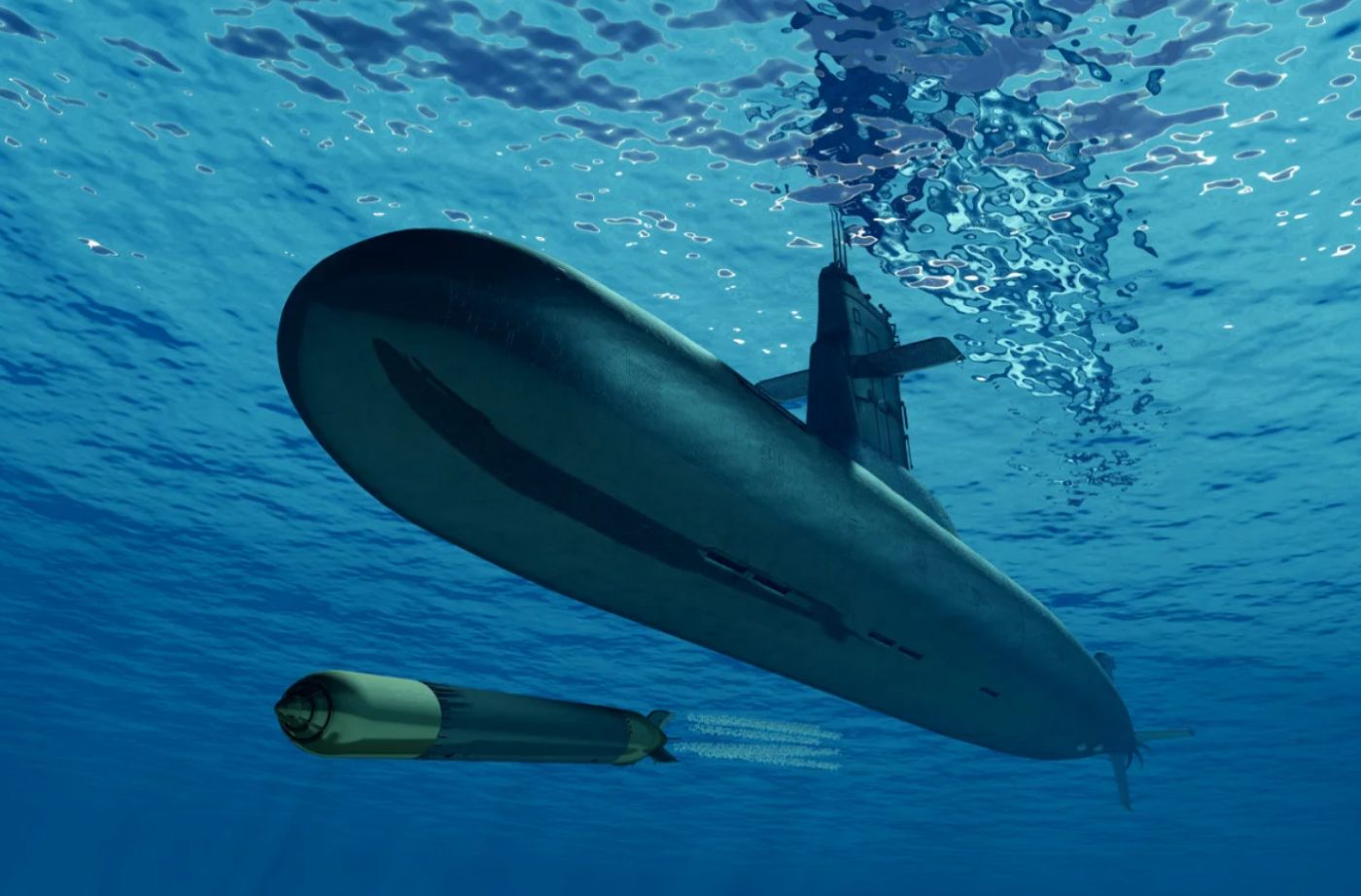
Poseidon torpedo
Image for Representation: Poseidon torpedo

Poseidon can reportedly operate at depths of more than 1 kilometer (0.6 mile) and travel at speeds of up to 70 knots while remaining undetectable. Russian commentators have noted that its torpedoes can produce radioactive tsunamis up to 1,000 feet high, in veiled threats issued to the West amid tensions stirred by the invasion of Ukraine.

Despite dismissing these threats as a gross exaggeration, military analysts have acknowledged that Poseidon torpedoes could seriously target coastal cities, ports, naval bases, and high-value maritime infrastructure of hostile states. In fact, experts believe that it is merely a new weapon meant to enforce Russia’s nuclear triad.

“Poseidon is a doomsday weapon. It is a post-apocalypse weapon. Most importantly, it is a nuclear weapon. As such, it can serve only as a deterrent. It has no combat value. It cannot be used in wars. It can only prevent wars,” Vijainder K. Thakur, an Indian Air Force veteran and military expert, earlier told EurAsian Times.

The development of Poseidon is believed to be a hedge against advances in NATO missile defense systems and to add redundancy to the sea-based leg of the nuclear triad. Poseidon’s main potential contribution is to Russia’s strategic nuclear posture at sea, providing a hard-to-counter second-strike option and complicating adversary planning.

The post Russia Confirms Imminent Induction of Perm Nuclear Sub with Hypersonic Zircon Missiles and Poseidon UUV appeared first on EURASIAN TIMES.

  •  

Ukraine Just Punched a Hole in Iran & Russia’s Secret Caspian Highway — Tehran Vows Consequences

Iran has warned of “unforeseen” consequences after Ukraine’s attack on an Iranian vessel in the Caspian Sea.

“This action by Ukraine was an absolutely illegal and unjustified act, contrary to the Charter of the United Nations, as well as a dangerous act of adventurism that will certainly not go unanswered by us,” the ministry’s spokesman Esmaeil Baqaei said in a weekly press briefing, adding that the consequences of Ukraine’s action “will certainly be unforeseen”.

Earlier, Iran’s Foreign Minister Abbas Araghchi warned that Tehran would respond to a deadly attack by Ukraine on an Iranian ship.

It came after Ukrainian President Volodymyr Zelensky said Kyiv had carried out long-range strikes in the Caspian Sea against vessels transporting military cargo involving Iran, underscoring the increasingly international dimensions of Russia’s war in Ukraine.”

Zelenskyy has attacked an Iranian commercial vessel, killing a sailor,” Araghchi said on X, describing it as “a blatant UN Charter violation done at Israel’s behest to drag Europe into its war”.He added that, during calls with the European Union’s Kaja Kallas and Russian top diplomat Sergei Lavrov, he “made clear that what the freeloader in Kyiv did CANNOT GO UNANSWERED”.

Iran’s foreign ministry said the attack caused the ship “to explode, killing one sailor and injuring several others”.The Islamic republic “has never intervened in the conflict between Russia and Ukraine”, the ministry said in a statement.

Ukrainian President Volodymyr Zelensky said on social media that armed forces had achieved “very strong results with long‑range strikes in the Caspian Sea — including vessels used in military cargo shipments involving Iran, as well as a warship”.

Ukraine’s intelligence services reported on Telegram that drone attacks had been carried out against “cargo vessels under international sanctions that were used to transport military cargo between Iran and Russia”.According to Iranian state television, the foreign ministry summoned the Ukrainian charge d’affaires in Tehran to protest this “hostile and criminal act”.

Ukraine Punches Hole in the “Caspian Highway”

As EurAsian Times reported earlier, it is Russia that is sending components for attack drones to Iran via the Caspian Sea, helping Tehran restock its arsenal.

It is said that many vessels operating between Russian ports like Astrakhan and Makhachkala and Iranian ports such as Bandar Anzali in the Caspian Sea function as a “dark” or shadow fleet. The merchant vessels of the two countries are said to be turning off their automatic identification system transponders in the Caspian Sea, allowing them to transport goods undetected by satellite surveillance.

According to a report in the New York Times, Iranian officials have said that efforts to open alternative trade routes are progressing rapidly, with four Iranian ports (Amirabad, Bandar Anzali,  Nowshahr, and Caspian port)  along the Caspian working around the clock to bring in wheat, corn, animal feed, sunflower oil, and other supplies.

Similarly, Russian trade officials have been quoted as saying there has been a swift increase in Caspian shipping in recent months. Two million tons of Russian wheat that used to be shipped annually to Iran through the Black Sea — now under threat of Ukrainian attacks — is now going via the Caspian.

Apparently, between July and February, Iran imported nearly 6 million tons of grain from Russia, double year-ago levels. Four Iranian Caspian ports now run 24/7 to process surges in wheat, corn, animal feed, and sunflower oil rerouted from blocked southern routes.

America’s New Headache: How Iran’s Kheibar Shekan Missiles Are Challenging U.S. Air Defense Systems

Russia is said to operate three grain-exporting ports on the Caspian: two in Astrakhan and one in Makhachkala, with a combined capacity of at least 3 million tons. A new 1.5-million-ton terminal in Makhachkala is expected to be completed by 2028.

In other words, the landlocked Caspian Sea, the largest lake in the world, has been proven to be a safe passageway for overt and covert trade between Russia and Iran. By rebuilding Iran’s offensive capabilities, this is helping Tehran persist as an adversary of the US despite overwhelming American military superiority.

File Image

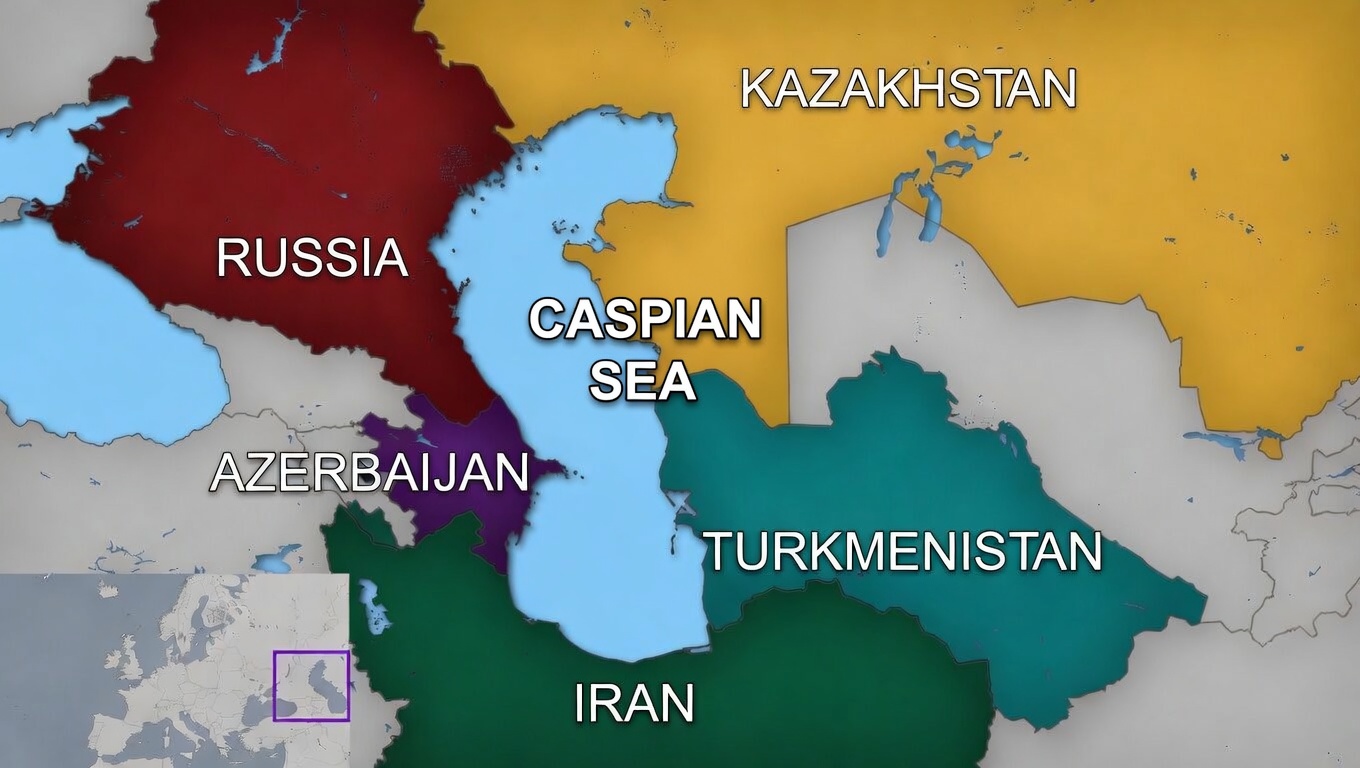
Unlike the Persian Gulf, the United States cannot interdict ships on the Caspian because only the five bordering nations have access. And that is because, under the 2018 Convention on the Legal Status of the Caspian Sea, only the five bordering nations—Russia, Iran, Azerbaijan, Kazakhstan, and Turkmenistan—have exclusive jurisdiction over it.

Third-party militaries are strictly prohibited. Only the five littoral states can maintain military forces there. The US Navy, or, for that matter, any NATO member, has no legal right or physical ability to enter, patrol, or intercept ships here.

Containing vast reserves of oil and gas, the Caspian Sea has, of late, assumed many strategic dimensions. First is its geography – sitting at the crossroads of Europe, Asia, the Middle East, and Central Asia, it acts as a buffer zone and transit corridor between competing spheres of influence.

Trump Orders Pentagon to Ditch China & Russia Materials from Missiles, Jets & Drones: “Buy Secure, Not Cheap”

Multimodal (rail, road, maritime) arteries such as the Trans-Caspian International Transport Route (connecting China through Central Asian states, the Caspian Sea, the South Caucasus, and Turkey to the European Union) and the North-South transport links involving Russia, Iran, and India. These bypass traditional oceanic chokepoints and are vital for regional integration.

Important pipeline systems linked to the Caspian region help transport energy to Europe and global markets while bypassing Russia or Iran in some cases. This makes the region central to European energy security, global oil supply diversification, and geopolitical influence over energy corridors.

Secondly, and this is particularly significant in the context of Iran, Moscow and Tehran signed a strategic partnership treaty in 2025 and have pledged to enhance military cooperation, including regular naval exercises in the Caspian.

In 2020, Iran and Russia started their first joint strategic naval exercises in the Caspian Sea. Since then, Russia’s Caspian Flotilla has been regularly hosting Iranian Navy and IRGC Navy vessels. Mutual port calls and what are called “PASSEX” drills, which focus on, among others,  air defense and anti-ship missile launches, have become more frequent or routine.

Apparently, these exercises allow Iran to test Russian-provided air-defense radars and electronic warfare systems that are harder to deploy in the Persian Gulf due to US monitoring.

It may be noted that in March, Israel had targeted the 4th Artesh Naval District Headquarters at Bandar Anzali, destroying several naval assets, including missile boats (likely Sina-class) and the Hamzeh corvette. This reportedly wiped out roughly half of Iran’s warships and patrol vessels in the Caspian, affecting the supply chains, particularly relating to  Russian-supplied drone components, ammunition, and other military hardware.

Israel called it “one of the most significant” strikes conducted during combat operations, as this “shattered the illusion that the Caspian Sea was a secure and closed corridor for Moscow and Tehran to bypass blockades in the Persian Gulf”.

Israel’s Qatar Ultimatum: Ex-PM Pledges to Declare Qatar an Enemy State Despite Its Strong U.S. Ties

After Israeli strikes hit Iran’s Caspian naval command, Russia is reported to have increased joint drills with Iran to keep the country as a militarily viable partner against Western pressure, giving, in the process, the Caspian Flotilla a combat-relevant mission beyond coastal patrol.

By attacking an Iranian ship in the Caspian Sea, Ukraine did more than hit one vessel. It struck at a key supply route that links Russia and Iran.

Iran still calls this route commercial, but it has become a two-way military channel: Iranian drones and parts go north to help Russia fight Ukraine, while Russian parts and technology go south to help Iran rebuild its weapons.

  • Author and veteran journalist Prakash Nanda is Chairman of the Editorial Board of the EurAsian Times and has been commenting on politics, foreign policy, and strategic affairs for nearly three decades. He is a former National Fellow of the Indian Council for Historical Research and a recipient of the Seoul Peace Prize Scholarship.
  • CONTACT: prakash.nanda (at) hotmail.com

The post Ukraine Just Punched a Hole in Iran & Russia’s Secret Caspian Highway — Tehran Vows Consequences appeared first on EURASIAN TIMES.

  •  
❌