❌

Reading view

How splits on the right may threaten Poland’s pro-European camp
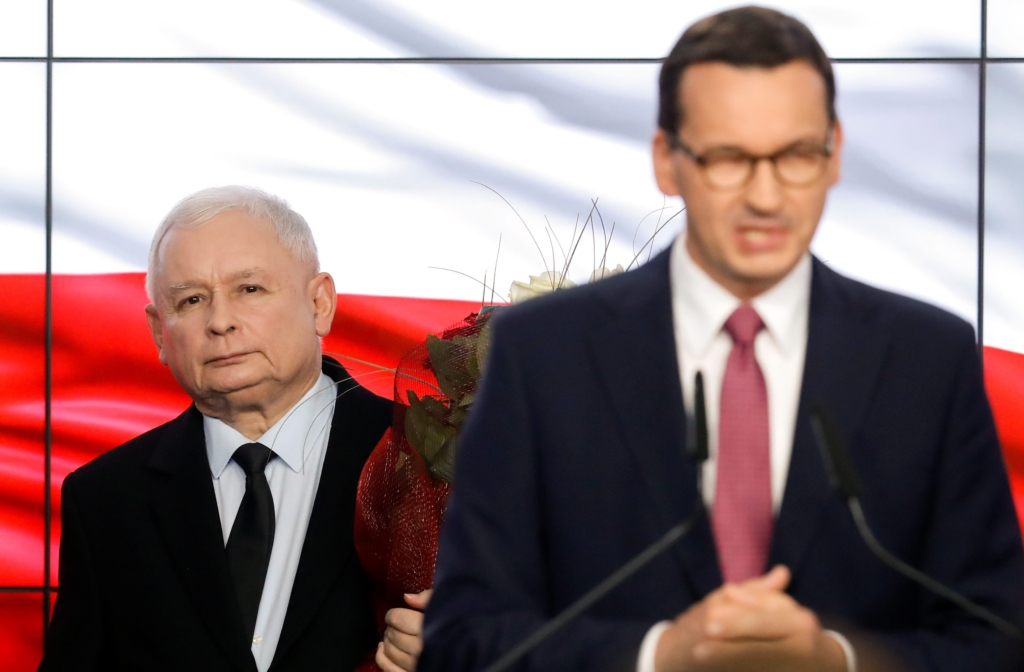
Ein Foto zeigt zwei Männer in Anzügen, einer am Rednerpult, im Hintergrund ein Mann mit Blumen vor einer rot-weißen Flagge.
Cover image: picture alliance / REUTERS | KACPER PEMPEL
Image

Problem

Poland’s party system is unravelling. The Law and Justice (PiS) party, led by Jaroslaw Kaczyński, has split. More than 40 of its members have formed a separate parliamentary caucus that includes Mateusz Morawiecki, prime minister for most of the party’s rule from 2015 to 2023. This ends an era of over 20 years that has been shaped by two powerful men and their parties: Kaczynski’s right-wing nationalist, Eurosceptic PiS and Donald Tusk’s liberal-conservative, pro-European Civic Coalition (KO).

At first glance, the collapse of his old enemy is a gift to Tusk. KO leads with 29%; PiS has slipped below 19% since the split. Four groupings now compete on the right, and Poland’s voting system punishes fragmentation, so four medium-sized parties win fewer seats than one large party on the same vote.

However, Morawiecki broke away in protest at PiS’s radicalisation, hoping to win over the very centre-right voters who helped return Tusk to power in 2023 after eight years of PiS rule. Most are now disillusioned (Tusk’s government has dismal approval ratings), politically homeless and angry. If they split their vote among the four right-wing parties or stay at home, Tusk may meet the same fate as Kaczynski in 2023: he could win the election in 2027 but be unable to assemble a majority coalition.

The other problem is one of method. For two decades Tusk has, often successfully, run against Kaczynski rather than on a programme of his own. Polarisation served both men well: each could rally his own voters by invoking the threat of the other, and smaller parties were squeezed out. Kaczynski’s decline forces Tusk to find another way to win.

Solution

Rather than betting on his enemy’s demise, Tusk should proactively set the agenda and win centrists beyond his base, as in 2023. Economic and social questions will matter, but foreign policy is set to loom unusually large in next year’s campaign. A record 25% of Poles favour leaving the EU (“Polexit”), hostility to Ukraine is rising and the right-wing parties are competing to outdo one another in anti-EU, anti-German and xenophobic rhetoric.

Tusk, a risk-averse tactician, has long avoided confrontation on those fundamental issues, calculating that exposing himself to attack from the right would be self-defeating. The far-right, however, has filled that vacuum, for example through its campaign against SAFE, the EU’s defence-loan scheme, and in the hardening mood towards Ukraine.

A more volatile party system may paradoxically make anti-Tusk majorities easier to build. That is an argument for the leader of Poland’s pro-European camp to take up the fight rather than duck it. Tusk needs to explain to Polish voters, more forcefully than before, why the EU is the best response to pressure from Donald Trump and Russia; why anchoring Ukraine in Europe is a Polish raison d’état; and how Poland’s interests differ from those the nationalists describe.

Context

Poles vote for a new parliament in October 2027. Tusk’s five-party coalition faces an uphill struggle to stay in office. The coalition partners have weak support or may not be able to re-enter the government at all.

Recent polls give the four right-wing parties a majority between them; whether their rivalries would allow a coalition is another matter. PiS has moved further right in recent months to stop core voters defecting to more radical rivals, in a shift which provoked Morawiecki’s rebellion. His departure will probably set off further political realignments before the 2027 election.
Source

  •  

Europe’s problem in Italy: How to resist the rise of Roberto Vannacci

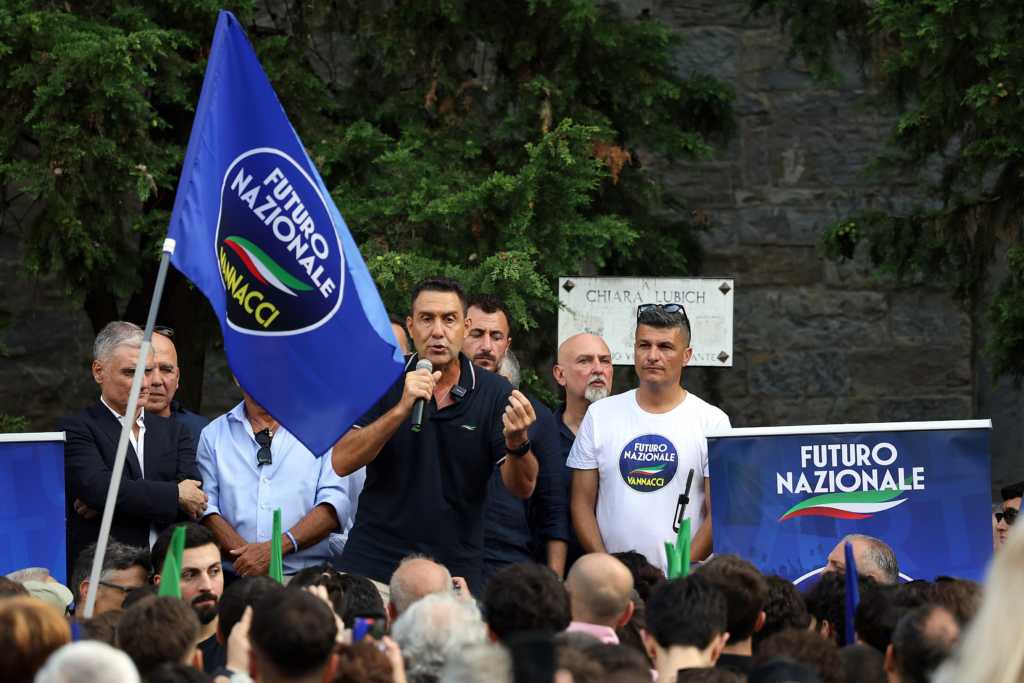
Ein Foto zeigt einen Mann am Mikrofon, der auf einem Podium vor einer Menschenmenge spricht, mit blauer Fahne und Bannern im Hintergrund.
Foto IPP/ACGE Genova 11/07/2026 Comizio Roberto Vannacci nella foto: Roberto Vannacci Italy Photo Press World Copyright | picture alliance / IPP | Italy Photo Press
Image

Problem

Italy’s 2027 electoral campaign has begun. So far, the contest has been defined by opposition parties exploiting what they see as prime minister Giorgia Meloni’s flaws in government policy on Russia, Ukraine and defence spending.

One person in particular is fuelling this criticism: former general Roberto Vannacci and his far-right party, National Future (Futuro Nazionale). With Meloni struggling to justify her commitment to Ukraine, NATO and the EU, and an Italian left radicalising along pacifist lines, National Future embodies an ideological nationalism which could prove indispensable for Italy’s right-wing bloc ahead of 2027.

Vannacci is also a Trojan horse for Russian influence inside Italy. He has publicly stated that he would have “no problem” accepting party and legal funding from Moscow or Beijing, and has adopted a transactional, sovereigntist posture modelled closely on Hungary’s Viktor Orbán. Domestically, this is an easy argument to win: a recent ECFR policy brief confirmed that Italians are favourable to resuming imports of Russian gas and oil. This openness to Russia is compounded by his military past: Vannacci was Italy’s military attaché in Moscow, raising anxieties about counterintelligence and security.

Should National Future enter a governing coalition, Vannacci’s background could shatter the EU’s collective security consensus. A Rome influenced by Vannacci would actively block EU defence initiatives, veto sanctions and leak sensitive security coordination. For Meloni, normalising Vannacci would trigger an immediate rupture with the European mainstream with which she has been cooperating since 2022. Ultimately, he alone could paralyse Brussels’ capacity as a coherent geopolitical actor.

Solution

To fully grasp the extent of the danger that Vannacci poses to the EU, Europeans need to look beyond the playbook of contemporary European populism. While figures like Marine Le Pen have spent years achieving dédiabolisation—meticulously distancing themselves from Vladimir Putin’s regime to capture mainstream credibility—Vannacci is highly likely to align himself with the pro-Russia Alternative for Germany (AfD).

Italians and Europeans alike should thus not treat National Future as just another right-wing movement. Instead, Vannacci—who also sits in the European Parliament—should be dealt with as a strategic issue. Whether or not National Future joins a second Meloni government, his party’s emergence demonstrates that Europe’s mainstream must no longer simply contain the far right or the far left. Now Europeans need to preserve the credibility of democratic politics as new radical actors reshape the political landscape.

Meloni should exclude National Future from any form of governance. She needs to resist this new far-right siren call by using the political capital she has built in the EU since 2022: she has been at the forefront of support for Ukraine, collaboration on trade, initiatives on migration, and contributions to EU reactions to international developments. Importantly, Meloni has maintained a friendly relationship with European Commission president Ursula von der Leyen.

However, the conservative mainstream also needs to react. It is normalising anti-EU parties by seeking their political support at the EU level and in the European Parliament. Building a cordon sanitaire around anti-EU forces requires everyone’s engagement: EU conservative leaders should work together to show their voters that they reject such extreme views. Pragmatic collaboration will also help overcome some divisions which are freezing decision-making on issues such as Russian security threats and migration.

Context

Meloni entered office in 2022 and gradually established herself as a pragmatic conservative leader, separate from more openly revisionist forces on the European right. But her recent decision not to attend a Coalition of the Willing meeting in Paris on July 13th highlights the pressure she is under, ahead of Italy’s 2027 election, to focus on domestic commitments instead of European debates on Russia, Ukraine and defence.

Here, Vannacci is a key force. National Future, which he founded only four months ago, is polling around 6% and establishing itself as the second-largest force in Italy’s right-wing bloc. Vannacci’s platform combines nationalist rhetoric, opposition to military support for Ukraine, openness to legally permissible Russian and Chinese electoral funding, and a confrontational approach to liberal democratic values.

His ideological trajectory mirrors the social architecture, ethnonationalism and systemic Euroscepticism of the AfD. Vannacci is not constrained by regional economic interests or coalition dynamics, unlike the leader of Italy’s right-wing League party, Matteo Salvini. This defines Vannacci as a loose cannon; National Future is well-positioned to capitalise on societal anxieties and economic grievances to pull the Overton window toward radical revisionism.

Source

  •  

How to think about a Le Pen presidency of France

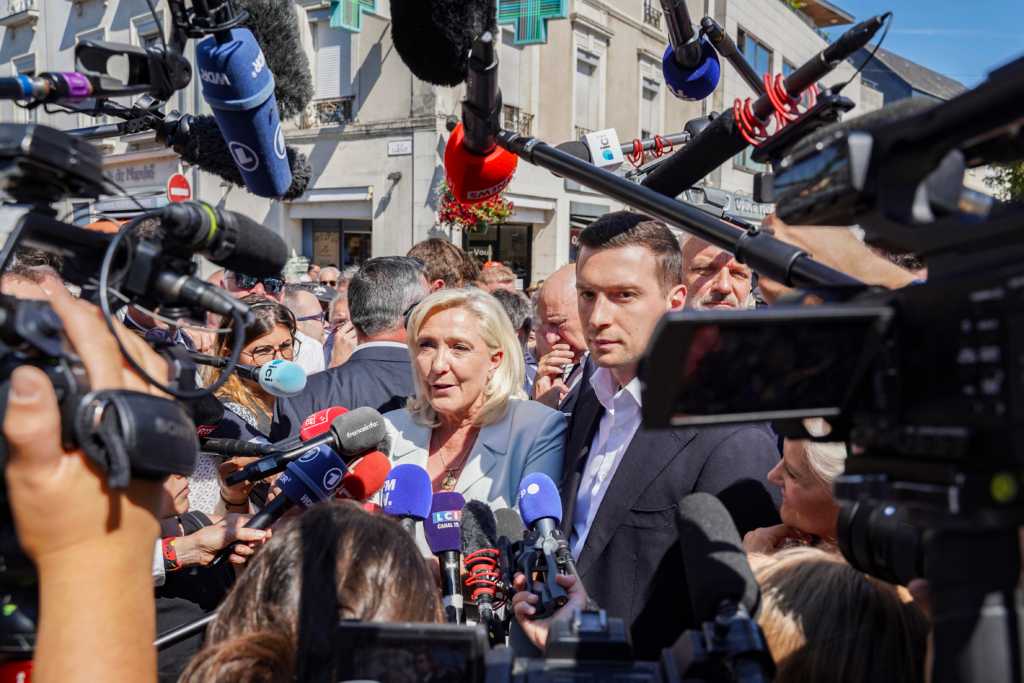
FRANCE: MARINE LE PEN AND JORDAN BARDELLA S FIRST CAMPAIGN APPEARANCE FOLLOWING THE ANNOUNCEMENT OF HER PRESIDENTIAL CANDIDACY
Cover image: picture alliance / Hans Lucas | Frédéric Pétry
NPP Metaball Banner

The restoration of a matriarch

July 7th saw one period of uncertainty in French politics end and another begin. Despite an appeals court upholding Marine Le Pen’s fraud conviction, the leader of the far-right National Rally (Rassemblement National, RN) will run for president next year. The election result remains wide open, but she is polling strongly and the possibility of a Le Pen-ist France is once again plausible. Should she win, the rest of Europe would have to contend with a highly abrasive and confrontational leadership in Paris, determined to unwind significant parts of the country’s integration with the rest of the EU.

Bracing for impact

European policymakers must prepare for that turbulent eventuality. In particular, they should:

  • Avoid clinging to precedents when thinking about an RN-led France. A President Le Pen would be neither “a Viktor Orban” nor “a Giorgia Meloni”, but a distinct phenomenon rooted in French political traditions and circumstances.
  • Seek to understand the party and its instincts. Le Pen is a familiar figure, but her party has never held national power before and has evolved over time. Knowing how it ticks will be essential.
  • Manage expectations about the pliability of a Le Pen presidency. Unlike Bardella, she primarily thinks not in terms of alliances with the broader political right (at home or in Europe) but of the RN as a monolithic national movement, beyond left and right, dedicated to French autonomy. Working with others will come less easily to her.
  • Prepare to deploy the arts of European and international politics. As France is one of the keystone states of the EU, its turn away from the project could be highly disruptive. Handling a Le Pen presidency will demand a clear sense of where cooperation could be possible (elements of European defence, perhaps) and where events might necessitate coalitions-of-the-willing circumventing Paris.

Courting public opinion

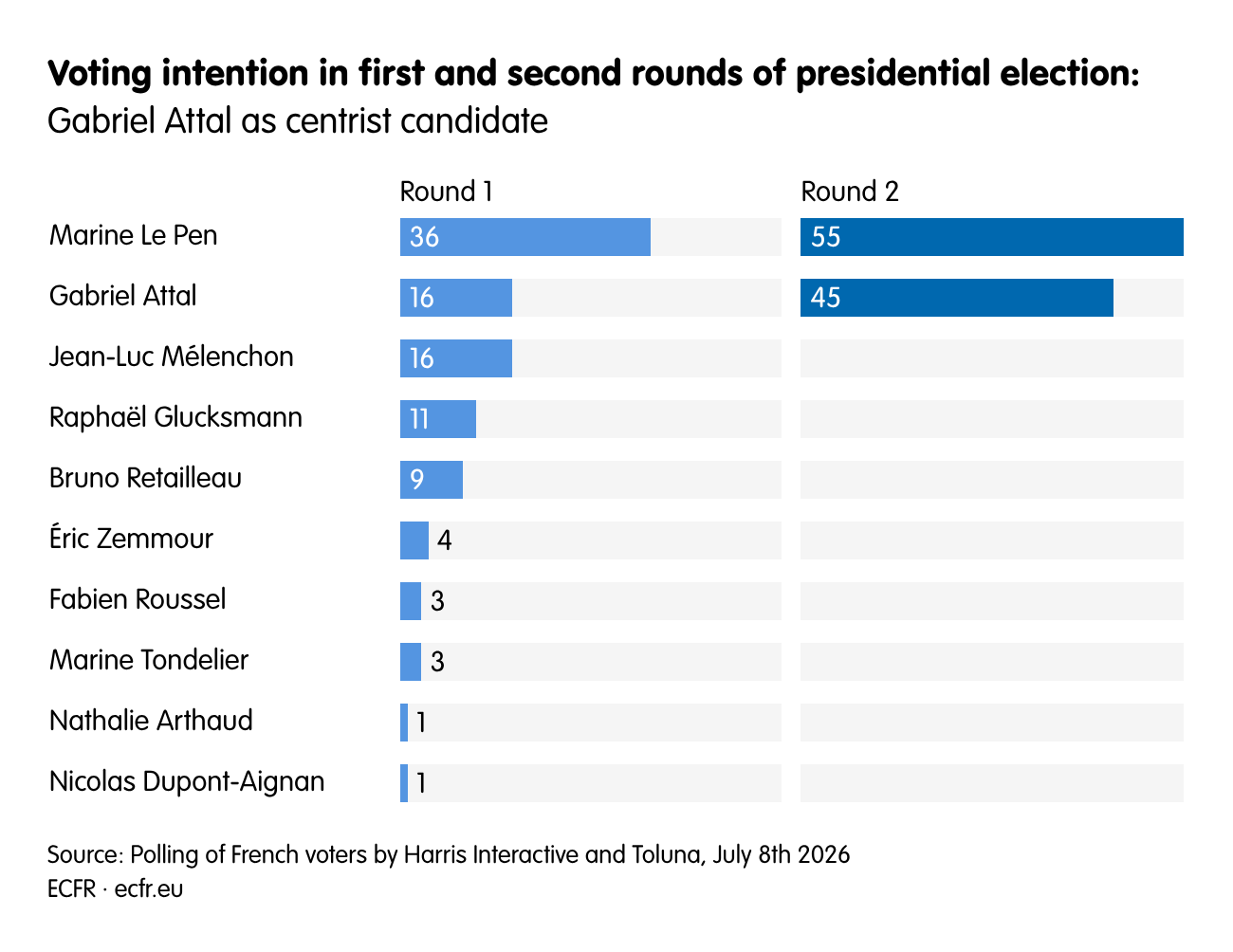
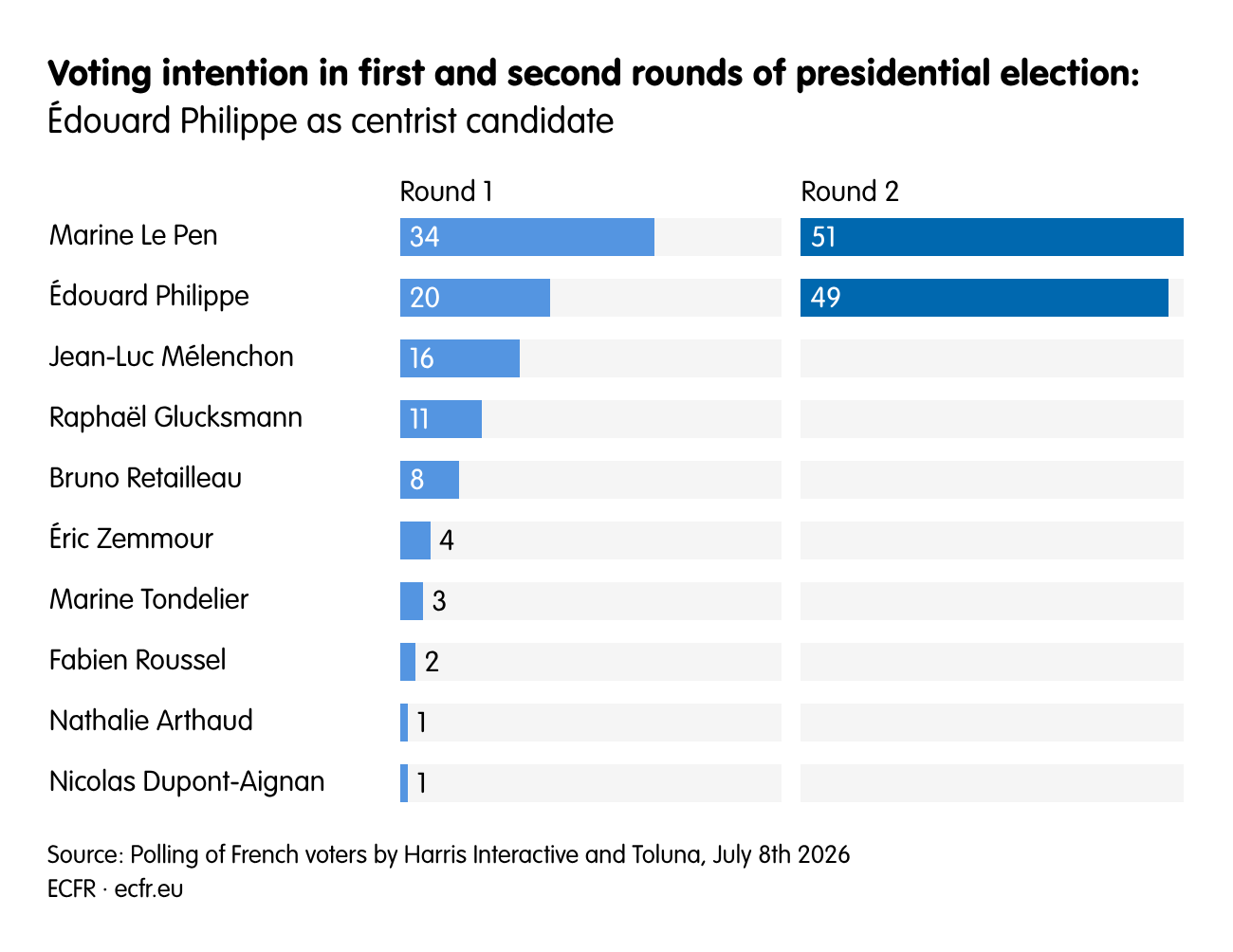
Voting intention in first and second rounds of presidential election:

France’s appeals court on July 7th confirmed Le Pen’s conviction for embezzling European public funds. It reduced her “ineligibility” sentence, opening the possibility of her running as a candidate in the presidential election, but required her to serve a year of house arrest wearing an electronic tag. Le Pen has always said she would not run in those circumstances, but has announced that she will appeal to the Court of Cassation, France’s highest court, suspending the penalty until it delivers its verdict at some point in the new year. Until then, she is tag-free and able to take back the reins from her young protégé, Jordan Bardella. The possibility that his more cautious approach might temper the party’s populist radicalism now seems remote.

Now entering her fourth presidential campaign, Le Pen is an experienced candidate well-known to the French electorate. Having taken over the party (then called the National Front) from her father in 2011, she has sought to detoxify its image. Le Pen presents herself as both an empathetic leader and an unapologetic nationalist who champions “national priority” for French citizens over foreigners. She is polling far ahead of challengers in the first round and appears highly competitive in the second. Current polls put her slightly ahead of her strongest (centrist) challengers in the second round of voting, though French presidential elections can see significant volatility.

Source

  •  

Marine Le Pen’s comeback

NPP Metaball Banner

This week, Mark Leonard welcomes Célia Belin, head of ECFR’s Paris office and senior policy fellow, and Jeremy Cliffe, ECFR’s editorial director and senior policy fellow, to discuss Marine Le Pen’s decision to run in France’s 2027 presidential election.

After a Paris appeal court ruling rescinded her ban from holding public office, Le Pen has reasserted leadership of the far-right National Rally (RN) and sidelined Jordan Bardella, who was widely expected to lead the party into the 2027 election. Her announcement has led to rivals across the centre and the left recalibrating their strategies in an already volatile political landscape.

Together, Mark, Célia and Jeremy explore how Le Pen’s candidacy changes France’s electoral outlook. They discuss whether she is a stronger candidate than Bardella, how French political parties are preparing for an election that RN enters as the favourite, and they draw on ECFR research to examine what an RN presidency could mean in practice.

Would a Le Pen government seek confrontation with Brussels? How might it reshape France’s approach to migration, the EU budget and European integration? Could nationalist governments across Europe really cooperate? And how would a Le Pen presidency impact relations with Ukraine, the US and France’s European allies?

This podcast episode was recorded on July 8th 2026.

Bookshelf

Source

💾

  •  
❌