
❌

Reading view

“Leave No One Behind”: U.S. and South Korea Launch Underwater Hunt to Recover Lost American Aircraft

The United States and South Korea have joined hands to locate the wreckage of two World War-era aircraft that crashed into the sea more than seven decades ago, during the height of the Korean War.

The two allies began a combined underwater excavation project on August 3 in waters off South Korea’s eastern coast in an effort to locate the wreckage of American aircraft that went down during the 1950–53 Korean War, Seoul’s Ministry of Defense (MoD) stated.

The effort, which involves the US Defense POW/MIA Accounting Agency (DPAA) and the ministry’s Agency for KIA Recovery & Identification, will be carried out in Gangneung and Yangyang in Gangwon until August 28.

The MoD noted that about 40 people would be sent for the project, including members of the Korean Navy’s First Fleet and the Air Force’s 18th Fighter Wing, as well as American underwater planners and divers.

The divers will try locating the wreckage of a US F4U Corsair fighter that reportedly crashed in waters off Yangyang County in February 1952 while escorting another damaged attack aircraft.

Following this, the research team will focus on recovering the wreckage of the Curtiss C-46 Commando, a US military transport aircraft that crashed twice in the Gangneung area in October and November of 1952, as reported by Yonhap News Agency.

In the first instance, the plane crash left 17 people missing, while in the November incident, two people were found dead and seven were reported missing.

It is noteworthy that the F4U Corsair played a major role as a fighter-bomber and close air support (CAS) aircraft for the US Navy and Marine Corps during the Korean War, despite being a piston-engine design in the early jet age. Corsairs scored a modest number of aerial victories—around 10 total credited to Navy and Marine pilots—according to some accounts. However, the Corsairs also unfortunately suffered significant losses, primarily due to intense anti-aircraft fire at low altitude during their CAS role.

According to some sources, a F4U-4B Corsair of the Fighter Squadron 53 crashed into the sea on 21 February, 1952 while escorting a flak-damaged US aircraft toward Sokcho-ri Airfield (K-50). The pilot was purportedly flying through a snowstorm, which caused disorientation, and the aircraft suddenly swerved and crashed into the sea, killing the pilot.

File:F4U-4 VF-113-114 CV-47 Korea.jpeg - Wikimedia Commons
Vought F4U-4 Corsair fighters of U.S. Navy fighter squadrons VF-114 Executioners (V-4XX) and VF-113 Stingers (V-3XX, on the catapult), assigned to Carrier Air Group 11 (CVG-11), on the aircraft carrier USS Philippine Sea (CV-47) during the Korean War in 1951/52- Wikimedia Commons

Separately, the Curtiss C-46 Commando—a twin-engine, heavy-lift cargo and troop carrier that had already proven itself in World War II—was extensively used to transport men and materiel during the Korean War.

Although the reports did not identify the exact aircraft the researchers are looking for, some sources note that a C-46D-10-CU (serial 44-77538) crashed into the sea a few kilometers offshore on October 16, 1952, shortly after takeoff from Kangnung (K-18) en route to Pohang. Meanwhile, a second C-46D-15-CU (serial 44-78114) crashed approximately 200 yards past the end of the runway on November 15, 1952, after an engine failure during a courier flight on the same route.

The EurAsian Times, however, could not verify the exact aircraft the US and South Korean teams are searching for or the cause of their crashes.

The combined survey team will use maritime unmanned systems and underwater detection equipment to carry out the search. Once potential sites are identified, divers or remote sensing technology will examine the locations, the Korean media reported.

The initiative to find the old relics is significant but not rare.  Several archaic World War II aircraft, aircraft carriers, and ship wrecks lost in combat have been recovered by US entities, including the US Navy, the DPAA, Project Recover, and private American recovery groups.  These efforts often focus on accounting for missing aircrew, in line with the US military’s motto—“Leave no one behind.”  However, some recoveries are meant for historical preservation or museum restoration. 

Discoveries In Recent Years

Earlier this year, a team of maritime and naval conservation organizations embarked on a quest to recover a World War II torpedo bomber—TBD-1 Devastator— from the sea floor, where it has rested for more than 80 years.

The US Naval History and Heritage Command partnered with the Air and Sea Heritage Foundation to recover the aircraft that ditched off Jaluit Atoll in the Marshall Islands in February 1942 from the USS Yorktown aircraft carrier. 
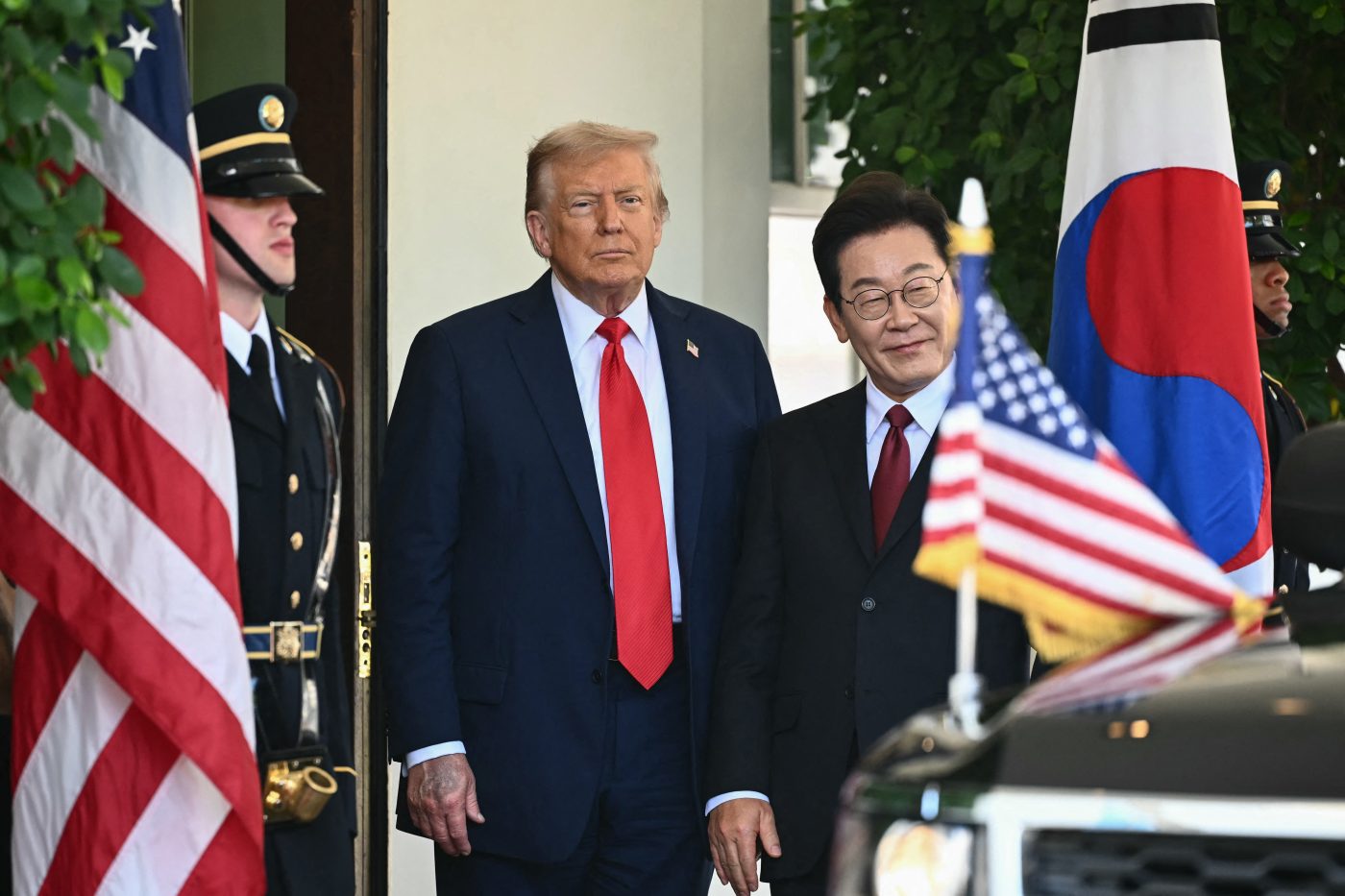
US President Donald Trump greets South Korean President Lee Jae Myung as he arrives at the West Wing entrance of the White House in Washington, DC, on August 25, 2025. Trump on Monday suggested that a “purge or revolution” was underway in South Korea, hours before new President Lee Jae Myung was due at the White House. He did not specify to what he was referring but said he would bring it up with Lee. (Photo by Mandel NGAN / AFP)

Similarly, a B-17 Flying Fortress that went down in the Baltic Sea in 1943 during intense fighting against the Nazis was located and recovered by researchers from Texas A&M University near Denmark in February 2026. 

In 2017, Project Recover located the debris of the B-24 bomber that was shot down by anti-aircraft fire in 1944 near Hansa Bay, Papua New Guinea. In 2023, DPAA conducted its deepest underwater recovery mission to date, with elite US Navy divers descending about 200 feet underwater in a pressurized bell. They recovered some remains, dog tags, a bombardier’s ring, and other items, according to reports.

In 2019, researchers managed to locate the final resting place of the USS Hornet, the World War II aircraft carrier sunk in a 1942 battle with the Japanese Navy. The research ship R/V Petrel reportedly discovered the carrier in waters off the Solomon Islands at a depth of about 17,500 feet. The carrier was seen lying upright and almost undamaged on the deep and barren ocean below in overhead sonar photos

In 2018, a search team headed by Microsoft co-founder Paul Allen discovered wreckage from the USS Lexington, an aircraft carrier that sank during World War II, in the Coral Sea. The R/V Petrel, the team’s research vessel, discovered the wreckage approximately 800 kilometers off the eastern coast of Australia, at a depth of 3,000 meters.

More recently, the US  managed to find the wreckage of a civilian aircraft, Pan Am “Clipper Endeavor”, which mysteriously crashed in Puerto Rico in 1952, killing 52 people. The operation was led by the Air/Sea Heritage Foundation, in partnership with others, including Discovery Channel’s “Expedition Unknown.” 

It is worth noting that these are just a few of many notable discoveries that the US has made in collaboration with other agencies and partners from sea beds far from its own shores, and do not encapsulate the whole picture of these efforts.


The post “Leave No One Behind”: U.S. and South Korea Launch Underwater Hunt to Recover Lost American Aircraft appeared first on EURASIAN TIMES.
  •  

Biggest Weakness Emerges in India’s Military Setup: Rank, Power & Toxic Rift Between “Babus” & Soldiers

If anything, Indian Defense Minister Rajnath Singh’s call on August 3 for greater “military-civil integration” to create “a robust defense ecosystem to tackle emerging challenges” implies that there is still a structural mismatch between generalist bureaucrats (critically called Babus) and uniformed personnel within the Ministry of Defense (MoD). 

In other words, in India’s higher defense reforms, integration between the military and civil components of the Ministry of Defense (MoD) is being seen as important as greater jointness among the three armed services (army, air force, and navy).

For decades, the relationship between civilian staff and military personnel within the MoD has been described by experts as both a strength and a fault line, particularly at the level of defense management.

Therefore, as India moves toward theatre commands, self-reliance under the “Atmanirbhar Bharat” (Self-reliant India) scheme, and faster procurement of defense components, the question is: how has this synergy worked in retrospect, and what should it look like in the future?

Addressing the 85th Armed Forces Headquarters (AFHQ) Civilian Services Day celebrations in New Delhi on Monday,  Singh emphasised that both the uniformed and civil services cannot proceed along separate paths, adding that, as joint and integrated structures develop, there will be a need for continuity and expertise across all areas – policy, administration, human resource management, financial processes, logistics, and institutional knowledge.

He highlighted the importance of further enhancing structured cross-exposure between civilian and military officers, suggesting joint training programs and developmental assignments for both sides to learn from each other’s experiences.

“Military officers bring operational experience, a command perspective, and an understanding of warfare, while civilian officers contribute through administrative continuity, policy experience, an understanding of government processes, and institutional memory. When these strengths combine, decision-making becomes more informed, balanced, and effective,” stated the Defense Minister.

As things stand today, there are nine major participating groups dealing with India’s defence – three military services, and the non-military six – Department of Defence(DoD), the Department of Military Affairs(DMA), the Department of Defence Production ( DDP), the Department of Defence Research and Development (DDR&D), the Department of Ex-Servicemen Welfare (DESW), and Defence Finance.

While these nine groups are — three military services, and the non-military six – inside the MoD, there are three others outside the domain having considerable influence on defense matters – the Ministry of Finance (controlling the defense spending), the Cabinet Secretariat (policy matters that have implications for other ministries) and the Prime Minister’s Office (which can always intervene or arbitrate selectively).

However, we will focus here only on the MoD, particularly on the integration of the military services with the non-military ones.

To begin with, one is reminded of what late Vice Admiral Verghese Koithara had said: each of the major participating groups in Indian defense is known for  “jealously guarding its turf and mistrustful of the others”.

Incidentally, the Admiral was talking of eight groups, because the DMA was a later creation. But the spirit behind his comment remains intact.

It may be noted that the total workforce under the MoD stands at approximately 2.92 million (29.2 lakh) personnel, making it the largest employer in the world. Expenditure on salaries and pensions for both civilian and non-civilian personnel is fully integrated into the official MoD budget.

The total strength encompasses active military personnel, reservists, and defense civilians. Approximately 1.43 million active-duty personnel serving across the Army, Navy, and Air Force are complemented by roughly 1 million reserve personnel.

Approximately 400,000 defense civilians are distributed across administrative services. They come mainly from the Indian Defense Accounts Service, Indian Ordnance Factories Service, Defense Research & Development Organization scientists, and the Armed Forces Headquarters Civil Service, the Defense Accounts Department (DAD), Border Roads Organization (BRO), DRDO, and top bureaucracy.

The apex bureaucratic positions like the Defense Secretary, Secretary (Defense Production), and Secretary (Ex-Servicemen Welfare) are often held by IAS officers.

The last 5 years have seen some important defense reforms in India. For the first time, a serving 4-star General became Secretary in MoD as Chief of Defense Staff. DMA handles procurement, tri-service matters, and jointness. This is said to have broken the wall between the civilian secretariat and the military.

Service HQs have been integrated with the HQ of MoD. Joint Secretaries from the military now sit in the MoD and sign files. This means operational officers are now part of the procurement and policy process.

Before this reform, the MoD was entirely dominated by generalist civilian bureaucrats under the Department of Defense (DoD), led by the Defense Secretary. The Army, Navy, and Air Force headquarters operated merely as “attached offices,” meaning military files had to be routed through junior civilian desk officers for approval.

However, there are still well-documented latent and reported mutual resentment between military and civilian personnel in the MoD, which analysts and scholars refer to as “civil-military dissonance”.

The friction does not stem from opposition to the constitutional principle of political/democratic civilian control, which the military fully accepts. Instead, the resentment focuses on “bureaucratic control,” where career civil servants are perceived to act as a barrier between the uniformed leadership and the political executive.

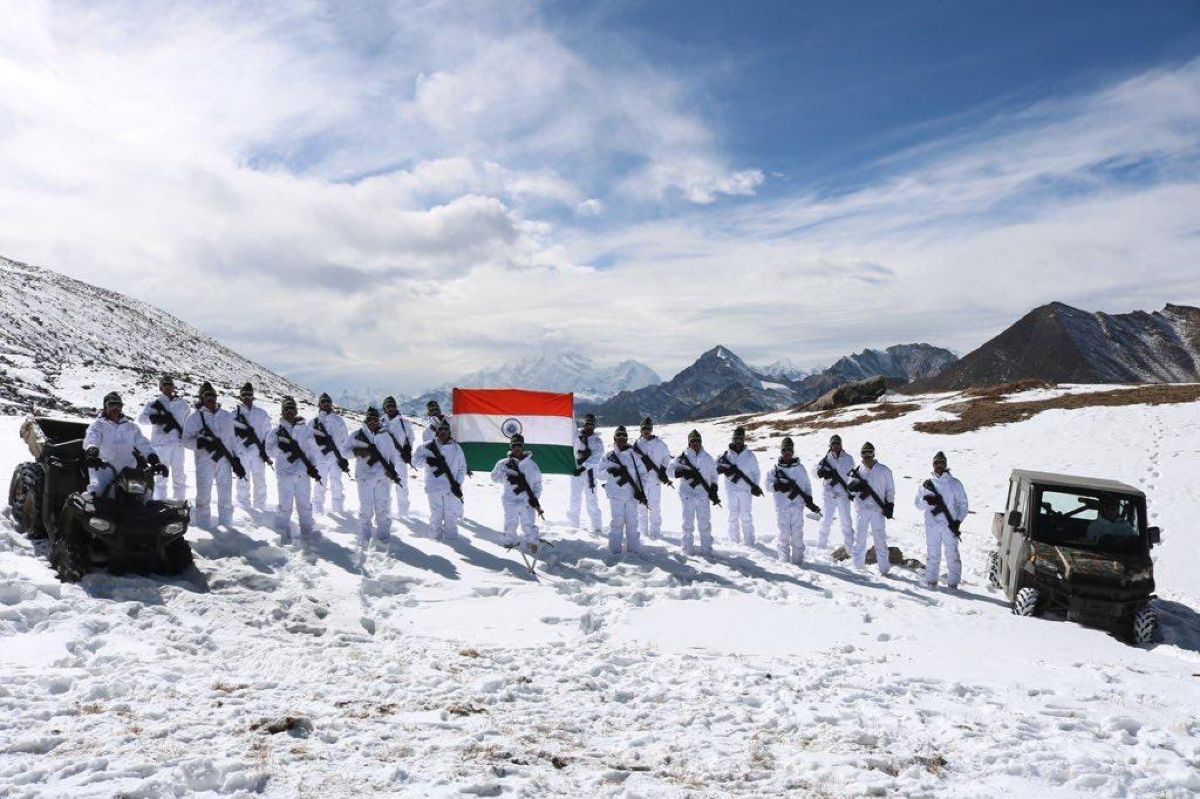
Indian Army Twitter
File Image: Indian Army/Twitter

A primary driver of public friction involves rank parity and protocol equivalence between military officers and civilian cadres. As Admiral Arun Prakash points out, the three Chiefs have been accorded “no locus standi in the structure of the GoI, so much so that the Secretary of the Department of Defense is deemed to represent the three Services in most forums”.

According to the “Government of India Allocation of Business Rules” (AoB Rules) and the “Government of India Transaction of Business Rules” (ToB Rules), the Secretary of DoD (a IAS officer) is allocated the responsibilities of “(a) Defence of India and every part thereof including preparation for defence and all such acts as may be conducive in times of war to its prosecution and after its termination to effective Demobilisation; (b) The Armed Forces of the Union, namely, Army, Navy and Air Force; (c) Integrated Headquarters of the Ministry of Defence comprising of Army Headquarters, Naval Headquarters, Air Headquarters and Defence Staff Headquarters”.

This looks particularly strange as, in terms of protocol, the Defense Secretary ranks at 23 in the order of preference, along with “Army Commanders/ Vice-Chief of the Army Staff or equivalent in other services”. In contrast, a Service Chief of Staff holding the rank of full General or equivalent rank is at number 12.

Even at 16, Officiating Chiefs of Staff holding the rank of Lieutenant General or equivalent rank are higher in protocol than the Defense Secretary.

Similarly, the Military officers are said to have resented the equation of lower-tier civilian administrative posts of Joint Secretary with senior military ranks like Major Generals. It is argued that a Major General has significantly more operational responsibility and seniority (often over 32 years of service) compared to an IAS officer reaching Joint Secretary level in roughly 18 years.

Military officials often point out that allowances, non-functional financial upgrades, and pension structures have favored civilian bureaucracies over the unique hazards of military service. Successive Central Pay Commission awards have frequently triggered military dissatisfaction.

In other words, there is an underlying perception of hierarchical degradation that persists within the armed forces.

Secondly, there are gaps between the military and civilian officials over what is called “Policies vs Operations”. While civilians are accused of lacking operational understanding, the military is accused of not understanding procurement rules. This really leads to delays in equipment purchase.

Perhaps, realizing these deep-seated systemic silos, Defense Minister Singh said on Monday that the military and civilian wings can no longer afford to operate in isolated silos to build an effective national defense ecosystem.

As he underscored, the civilian officials should read  Indian military history, examining it from a civilian perspective, thereby fostering fresh ideas and new perspectives. He called upon the Civilian Services to evolve into the “strategic brain” of India’s defence management architecture by developing a comprehensive understanding of the defence sector, functioning effectively in a joint environment, and continuously enhancing its expertise to face the emerging challenges.

Notably, when one talks of dissonance between the military and civilian officers, it is perhaps more to do with purely civilians like IAS and other central services within the MoD rather than the non-military technical and scientific personnel.

There has been relatively smoother synergy in areas like defense production and infrastructure building. For instance, Defence Public Sector Undertakings like the HAL, BEL, BDL and OFB, which are run with a mix of civilian managers, engineers, scientists and military users, have produced platforms and ammunition like Tejas, Arjun, BrahMos.  succeeded because civilian scientists in DRDO worked with military feedback loops.

Similarly, the BRO, a civilian-led organization with military engineers, has built highly acclaimed critical roads in the country’s northern and north-eastern border (Line of Actual Control) with China.

However, it is with the civilian officials working within the MoD that military officials have some issues, such as policy decisions, pay, and ranks.

But then, it is also to be noted that while services may all agree on their fight against the civilians,  when it comes to “promoting jointness” in military matters, they do not have the same ideas.  There is an intense rivalry amongst them. Although the situation has improved of late,  there are differences over whether the country should have theater commands, and if it will have them, then how those will be operated.

In other words, there are, overall,  challenges in building better “Civil-Military Synergy”. There seem to be merits when some experts argue that National Defense College (NDC) and the College of Defense Management (CDM) could bridge strategic and administrative silos, fostering deeper synergy, mutual understanding, and coordinated policy-making between senior civilian bureaucrats and military leadership.

There are also ideas like extending the DMA model to have military officers in all key procurement and policy wings, and civilian officers in Integrated Theatre Commands. Defense civilians should have tenures in field formations and military officers in  MoD finance and policy.

Another interesting suggestion is to extend the synergy beyond the MoD and involve the private sector, startups, academia and state governments. Of course, in a way this is happening with projects like defence corridors, and through collaboration in the space, cyber and AI  sectors.

Viewed thus, the core challenge to the synergy that the Defense Minister has talked about is removing what is said to be the “Trust Deficit” between the civilian and military wings within the MoD, due to decades of suspicion.

The synergy does not mean the dilution of civilian supremacy at the policy-making level, be it the MoD, or the Union cabinet, or the Parliament.   But it means the military’s voice is heard in policy-making.  The military does not grudge civilian control; it opposes “the bureaucratic control”.

Synergy does not imply that civilians are made into soldiers, or soldiers into ‘babus’. Its goal is to make both into “defense managers”

  • Author and veteran journalist Prakash Nanda is Chairman of the Editorial Board of the EurAsian Times and has been commenting on politics, foreign policy, and strategic affairs for nearly three decades. He is a former National Fellow of the Indian Council for Historical Research and a recipient of the Seoul Peace Prize Scholarship.
  • CONTACT: prakash.nanda (at) hotmail.com

The post Biggest Weakness Emerges in India’s Military Setup: Rank, Power & Toxic Rift Between “Babus” & Soldiers appeared first on EURASIAN TIMES.

  •  
❌