❌

Reading view

Indonesia’s First Aircraft Carrier Is On Its Way From Italy

Indonesia is about to become the second Southeast Asian country to operate an aircraft carrier, nearly three decades after Thailand became the first with HTMS Chakri Naruebet. The latest addition to the region’s small carrier club is the former Italian Navy carrier Giuseppe Garibaldi, which departed Italy earlier this week, bound for Indonesia, where it will eventually become KRI Gajah Mada. Indonesian Navy Chief of Staff Admiral Muhammad Ali confirmed the ship’s departure on Tuesday.

Garibaldi is expected to spend more than 20 days making the journey from Italy to Indonesia, passing through the Suez Canal and Red Sea. Italian frigates are accompanying the carrier during the transit.
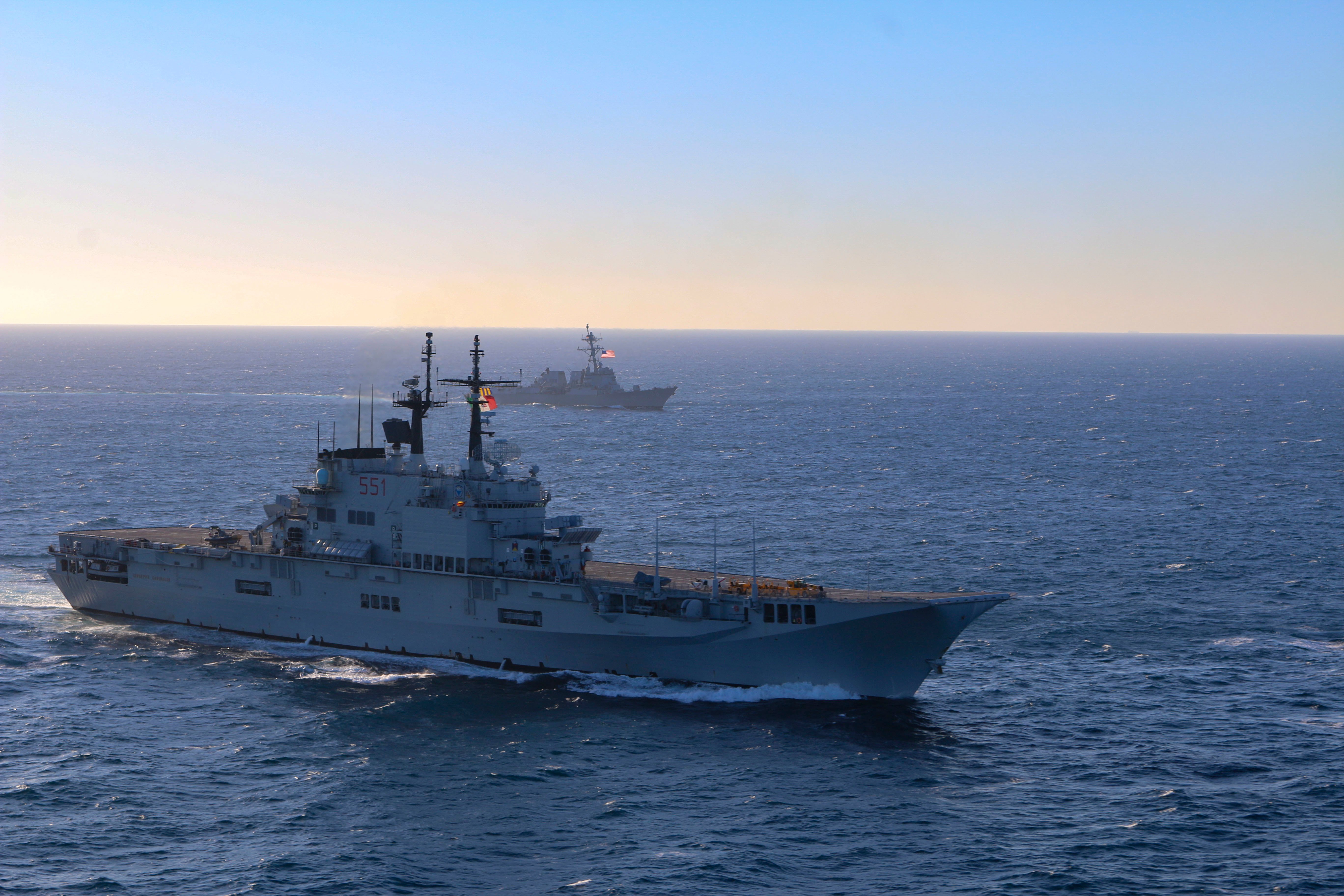
220222-N-NO901-0004 BAY OF CADIZ (Feb. 22, 2022) Arleigh Burke-class guided-missile destroyer USS Forrest Sherman (DDG 98) participates in a photo exercise with Italian aircraft carrier ITS Giuseppe Garibaldi, USS Roosevelt (DDG 80) and Blue Ridge-class command and control ship USS Mount Whitney (LCC 20), Feb. 22, 2022. USS Forrest Sherman is on a regularly scheduled deployment conducting routine operations in the U.S. Sixth Fleet area of operations. (U.S. Navy photo by Naval Air Crewman (Helicopter) 2nd Class Reuben Richardson)
The Italian aircraft carrier Giuseppe Garibaldi alongside the Arleigh Burke class destroyer USS Forrest Sherman in the U.S. Sixth Fleet area of operations in 2022. U.S. Navy photo by Naval Air Crewman (Helicopter) 2nd Class Reuben Richardson

According to Admiral Ali, the ship is scheduled to reach Indonesia between September 15 and 20.

The carrier will retain its Italian identity throughout the voyage, sailing as Giuseppe Garibaldi under the Italian flag until the formal transfer, when it will be renamed and placed under Indonesian command.

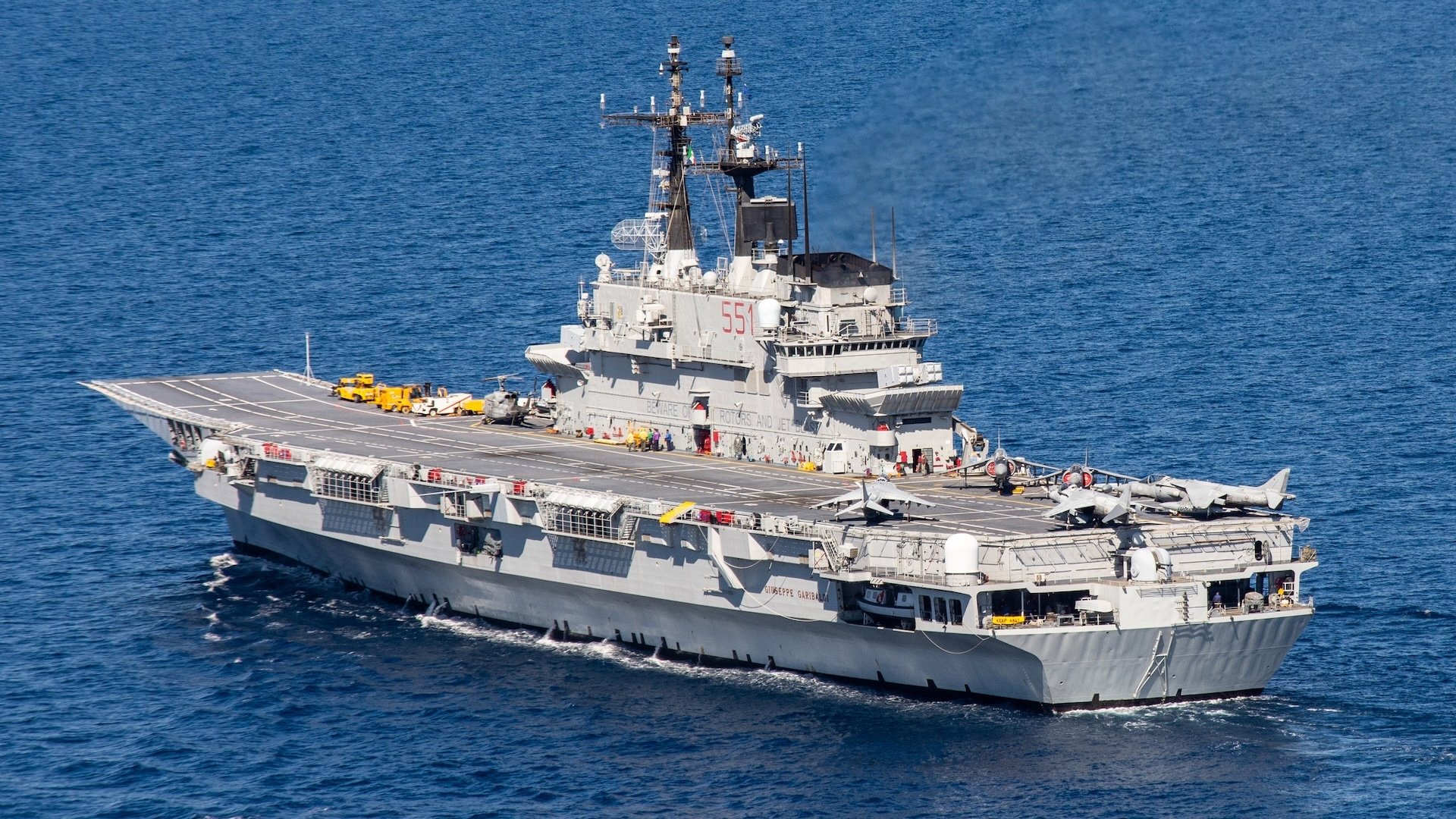
Commissioned in 1985, Garibaldi was initially described as a “helicopter cruiser” before being redesignated as an aircraft-carrying cruiser in 1989 and receiving the Italian Navy’s AV-8B Harrier II jump jets. The ship subsequently served as Italy’s flagship and later shifted toward amphibious operations and command-and-control duties after the larger Cavour entered service.

At around 13,850 tons full load, Garibaldi combined a relatively compact aviation capability with a multirole weapon and sensor fit, at least in its early period of service. Its armament historically included two octuple launchers for Sea Sparrow/Aspide surface-to-air missiles, four Otomat Mk 2 anti-ship missiles, two 2 triple torpedo tubes, and three twin Oto Melara 40mm guns.
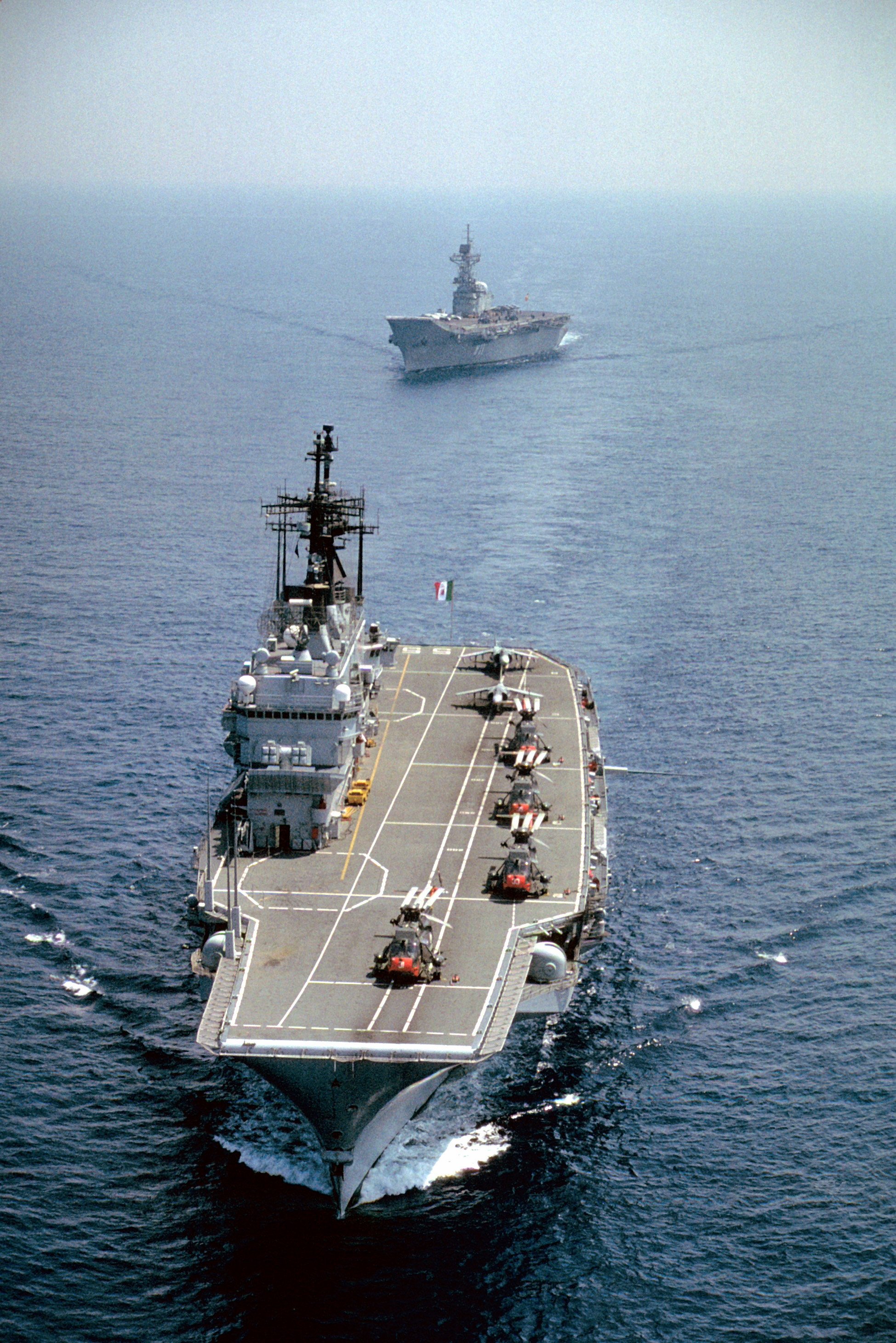
The Spanish navy's aircraft carrier PRINCIPE DE ASTURIAS (R-11) follows the Italian navy's aircraft carrier GUISEPPE GARIBALDI (C-551) as the two vessels take part in the joint exercise Dragon Hammer '92.
The Giuseppe Garibaldi underway in the Mediterranean during its early period of Italian Navy service. Note the Mk 29 octuple launcher for Sea Sparrow/Aspide immediately in front of the bridge. In the background is the Spanish Navy aircraft carrier Príncipe de Asturias, on which the Chakri Naruebet is closely based. U.S. Department of Defense

Indonesia is acquiring the ship through an intergovernmental grant arrangement rather than purchasing it through a conventional commercial transaction.

Although it has spent almost four decades in Italian service, the ship offers considerable flexibility, combining a large aviation facility with the ability to serve as a command and support platform.

Jakarta says it plans to use the ship primarily as a helicopter-capable aviation platform, with aircraft from the Indonesian Navy, Air Force, and Army expected to operate from its deck.
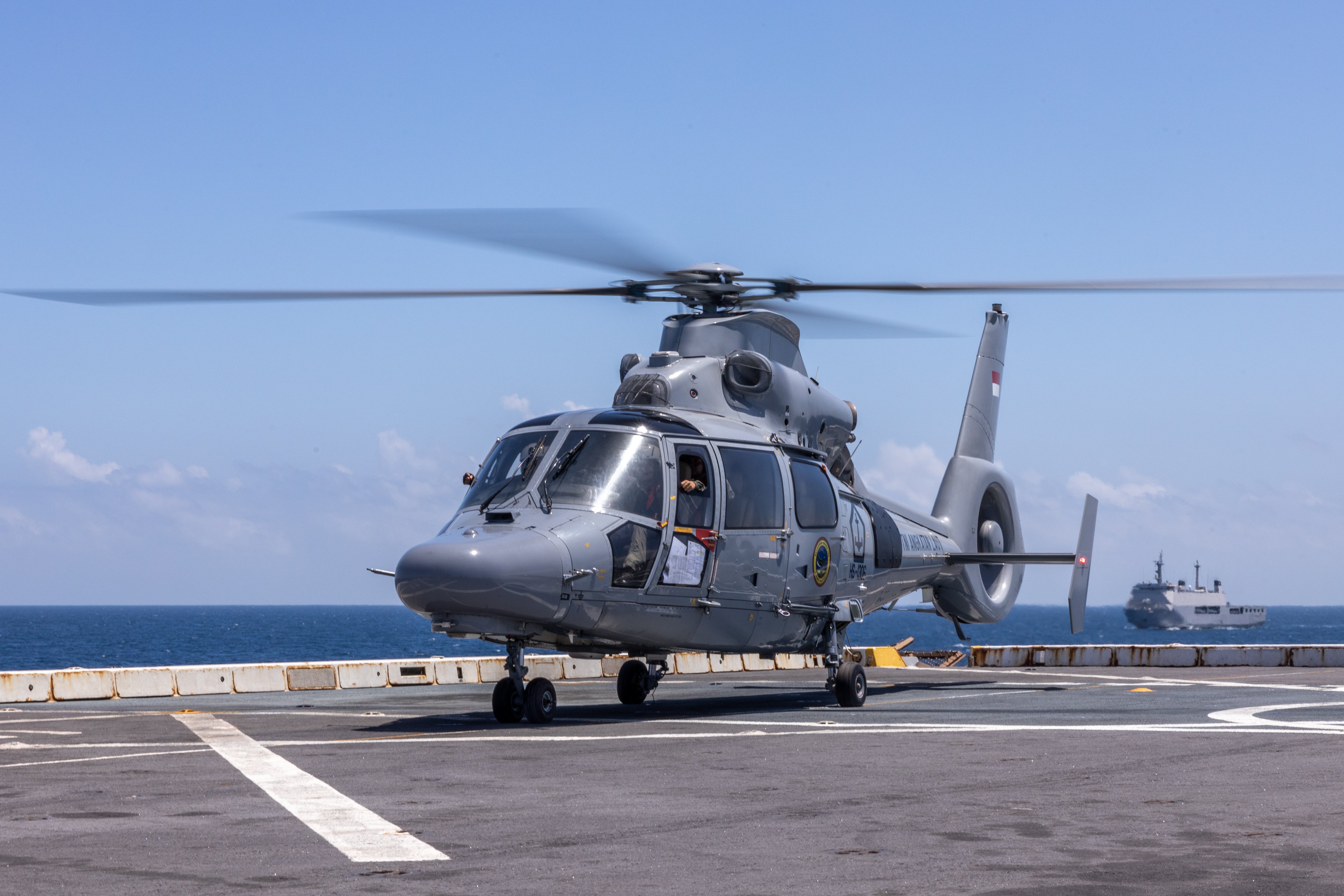
An Indonesia National Armed Forces AS565 Panther helicopter lands on the flight deck of the amphibious transport dock ship USS Green Bay (LPD 20), during a cross-deck exercise in the Java Sea, Sept. 4, 2024. The exercise showed the capabilities of multilateral communication and cooperation, enhancing interoperability between U.S., Singaporean and Indonesian fighting forces. Super Garuda Shield is an annual exercise that has significantly grown in scope and size since 2009. Super Garuda Shield 2024 is the third consecutive time this exercise has grown into a combined and joint event, focused on commitment to partnership and a Free and Open Indo-Pacific. (U.S. Marine Corps photo by Lance Cpl. Peter J. Eilen)
An Indonesian Navy AS565 Panther helicopter lands on the flight deck of the amphibious transport dock ship USS Green Bay, during a cross-deck exercise in the Java Sea in 2024. U.S. Marine Corps photo by Lance Cpl. Peter J. Eilen

Ahead of the ship’s arrival, preparations have included establishing a training facility at Juanda Naval Air Station/International Airport in Sidoarjo, East Java. Here, the large outline of a carrier flight deck has been painted on an apron/helipad area on the southern side of the installation, to familiarize naval pilots and deck crews with carrier flight-deck procedures.

The carrier flight deck outline at Juanda Naval Air Station. TNI AL

Thailand’s experience provides useful context here. When Chakri Naruebet entered service in 1997, it was configured to operate AV-8S Harriers as well as helicopters. The Harriers were subsequently retired, leaving the ship to perform a much broader range of roles, including helicopter operations, disaster response, training, and VIP duties. TWZ has previously examined that unusual evolution in detail.
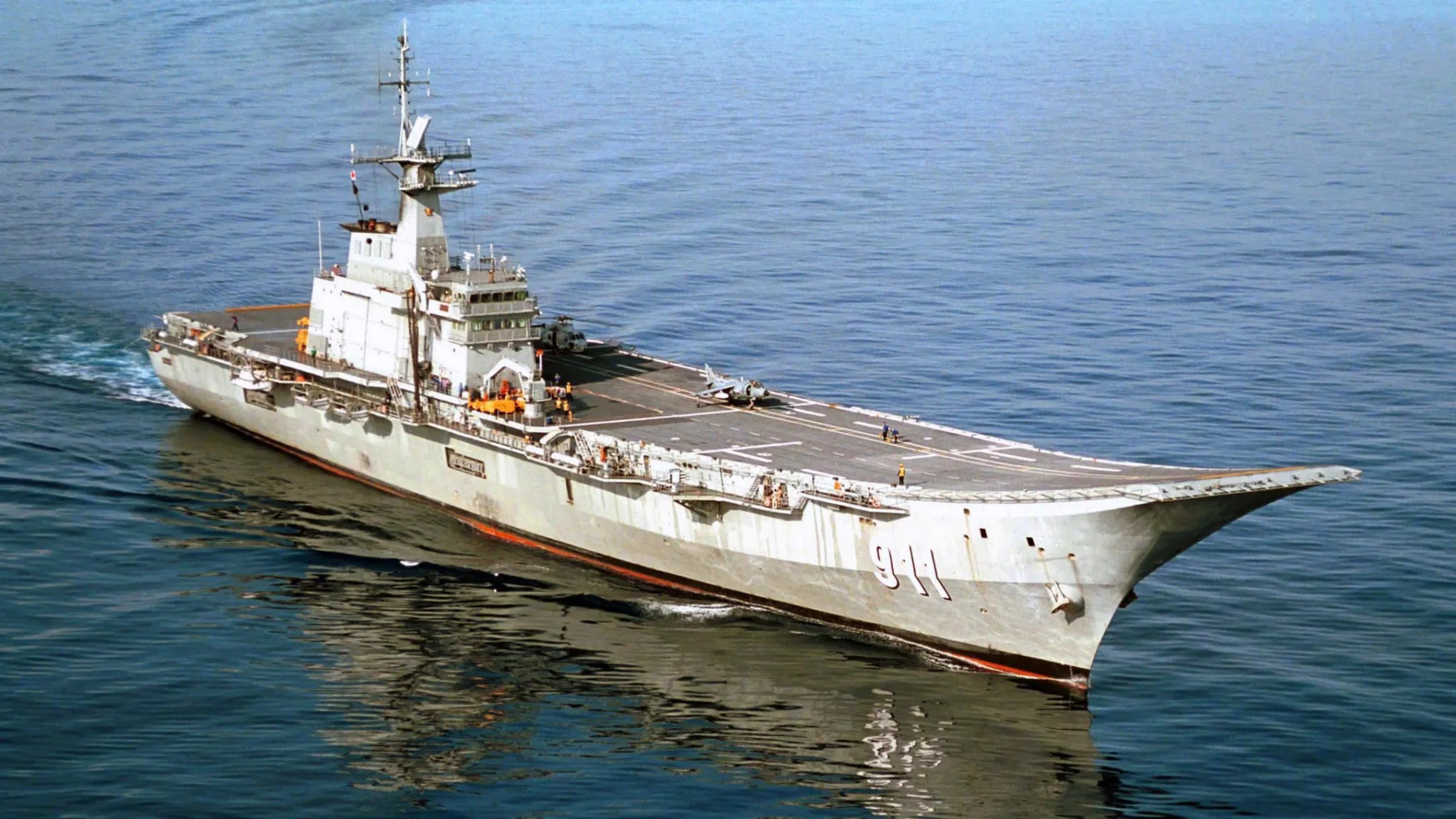
HTMS Chakri Naruebet underway in the South China Sea in April 2001 with a single AV-8S and an S-70B seen on the deck. U.S. Navy

Once in service, Indonesia will likely operate the Gajah Mada as a mobile aviation base. This will allow helicopters to provide transport, surveillance, logistics, search and rescue, disaster relief, and potentially anti-submarine warfare and amphibious support capabilities over much greater distances than when operating from land bases, and in much larger numbers than operating from other Indonesian Navy vessels.

The potential mission set is particularly relevant for Indonesia, whose territory stretches across thousands of islands.

Occupying a strategic position at the southern end of the South China Sea, Indonesia is also locked in a maritime dispute with China, including incidents in which Chinese fishing boats accompanied by Chinese Coast Guard vessels have entered Indonesia’s exclusive economic zone in the South China Sea. The tense situation as regards China seems to be driving something of a defense spending spree in Indonesia, with high-profile acquisitions including French-made Rafale fighters and submarines.

Meanwhile, in peacetime, disaster response is also a significant consideration for Indonesia. The Gajah Mada will be able to bring helicopters, personnel, supplies, and command-and-control capabilities to areas where local infrastructure has been damaged or where access is otherwise difficult.

The ship is also likely to take part in maritime security missions and regional deployments including multinational training exercises.

There is potential for Indonesia to adapt the warship for drone operations too, something that Italian shipbuilder Fincantieri has previously proposed. While Indonesia has not announced such a capability as part of the ship’s initial configuration, it has acquired Turkish-made Bayraktar TB3 drones, which have demonstrated operations from carrier decks.
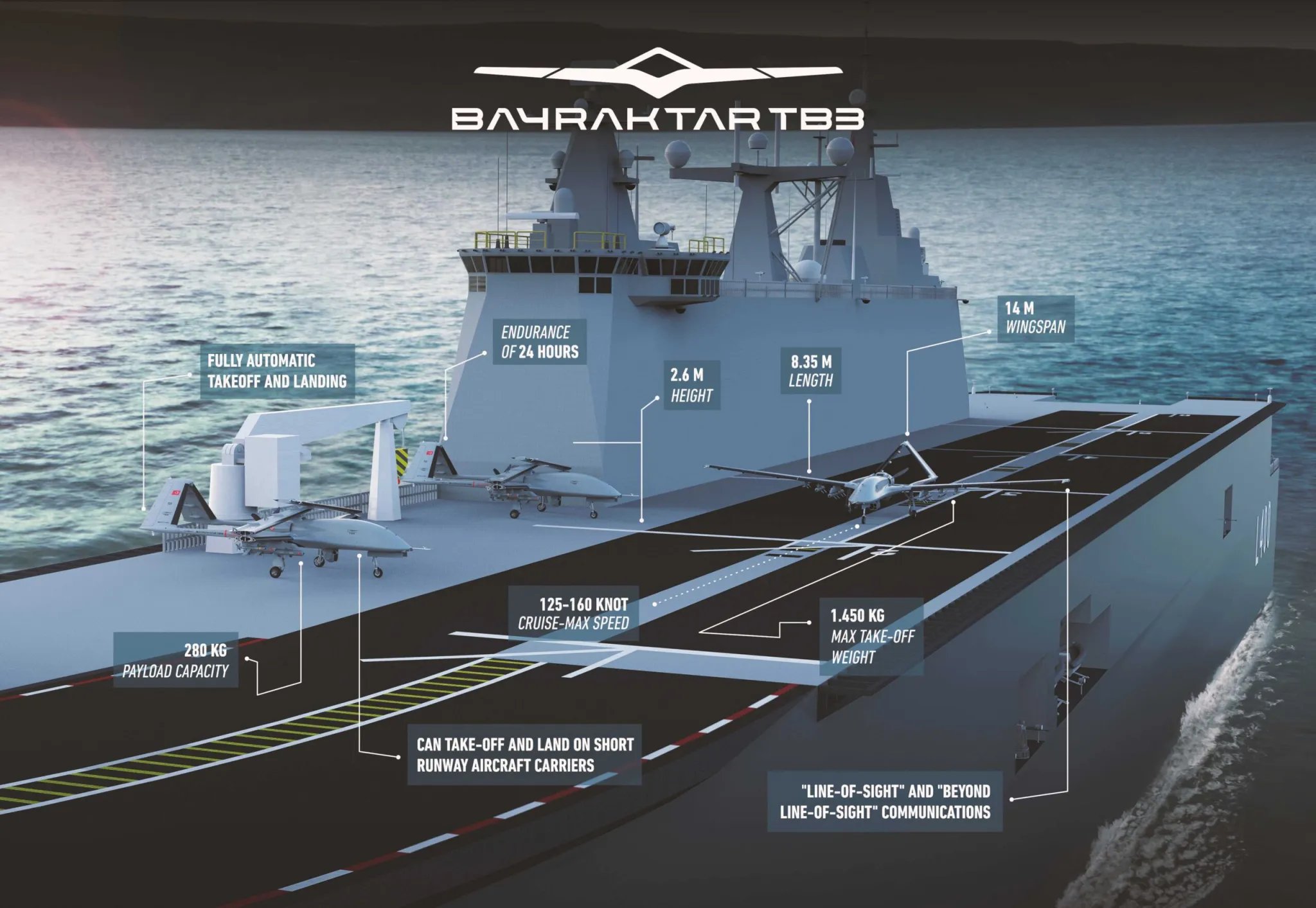
Infographic on the TB3’s operational capabilities. Baykar

As well as Turkey’s Anadolu, which has evolved into a platform for operating drones after Turkey lost access to the F-35B program, other navies are similarly experimenting with integrating uncrewed aircraft into helicopter-carrier-sized ships, reflecting a broader shift toward using large flight decks for mixed crewed and uncrewed aviation. The trend includes experiments with fixed-wing drones on amphibious assault ships, including in China and the United States.
ANTALYA, TURKIYE - APRIL 09: Bayraktar TB3 unmanned aerial vehicle takes part in the live-fire phase from TCG Anadolu on the final day of the 'Blue Homeland-2026' (Mavi Vatan) tactical exercise in the Eastern Mediterranean, in Antalya, Turkiye, on April 9, 2026. The extensive drills, also conducted across the Black Sea and the Aegean Sea, involved 120 ships, 50 aircraft, and 15,000 personnel to enhance the operational readiness and coordination of the Turkish Armed Forces. (Photo by Orhan Cicek/Anadolu via Getty Images)
A Bayraktar TB3 on the deck of Anadolu during an exercise in the Eastern Mediterranean in April 2026. Photo by Orhan Cicek/Anadolu via Getty Images Anadolu

For Indonesia, a future combination of helicopters and drones could provide the Gajah Mada with persistent surveillance and potentially strike capabilities without requiring the country to develop a conventional fixed-wing carrier air wing.

How extensively Indonesia eventually makes use of any of its capabilities will depend on its ability to sustain the ship and build the associated aviation infrastructure and expertise.

The Indonesian Navy is constructing the warship’s future base in Lampung, on the southern tip of the Indonesian island of Sumatra. The facility is expected to be finished around the time the ship arrives and operational by the end of September.

The Italian carrier Giuseppe Garibaldi (C551) and the USS America (CV-66) conduct joint operations in the Adriatic Sea off the coast of Croatia in 1996. The image provides a good size comparison between the Italian warship and even a non-nuclear U.S. Navy aircraft carrier. DoD photo by Petty Officer 3rd Class Michael D. Flinn, U.S. Navy

The ship’s formal transformation into an Indonesian warship is planned for September 25. A commissioning and flag-changing ceremony is scheduled for that date, with President Prabowo Subianto expected to attend and officiate.

At that point, the carrier will become KRI Gajah Mada, taking its name from the famous Majapahit-era military commander and statesman.

The Navy plans to include the ship in celebrations marking the 81st anniversary of the Indonesian National Defense Forces, or TNI, in October.

Thailand’s experience with the Chakri Naruebet, which only very rarely goes to sea for any length of time, underscores the fact that buying a carrier is the relatively easy part. Creating a sustainable carrier aviation capability around it is much more challenging.

Nevertheless, the Gajah Mada gives Jakarta something it has never previously possessed: a large, dedicated maritime aviation platform capable of carrying helicopters from multiple services. As such, it could prove useful across a wide spectrum of missions.

Ciontact the author: thomas@thewarzone.com

The post Indonesia’s First Aircraft Carrier Is On Its Way From Italy appeared first on TWZ.
  •  

Saab’s Gripen F Two-Seater Takes To The Air For The First Time

Saab’s first Gripen F two-seat fighter has taken to the air, marking the beginning of the flight-test campaign for a variant being developed in close cooperation with Brazil.

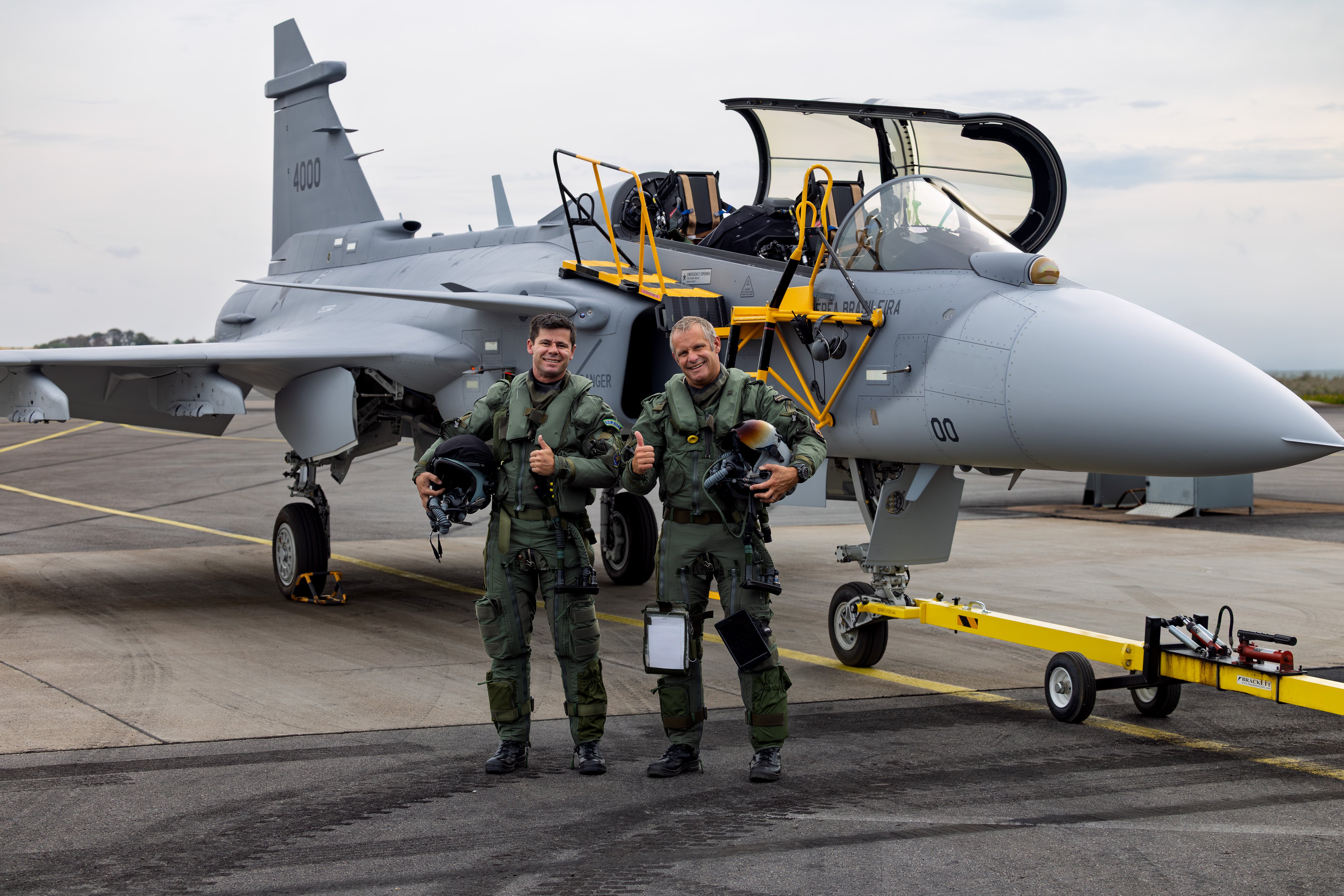
The aircraft departed Saab’s airfield at Linköping, Sweden, at 9:40 a.m. local time today and remained airborne for approximately 40 minutes. Saab chief test pilot Jakob Högberg and Brazilian Air Force test pilot Lt. Col. Aviator Abdon de Rezende Vasconcelos were in the cockpit for the inaugural sortie.

Gripen F test pilots Jakob Högberg and Lt. Col. Aviator Abdon de Rezende Vasconcelos. Saab

According to Saab, the flight was intended primarily to verify the aircraft’s core systems and initial flying characteristics. The company says the aircraft will now enter a more extensive test program, including progressive expansion of its permitted flight envelope.

That work will eventually cover the aircraft’s speed, altitude, G-loading, and angle-of-attack limits, as well as the tactical capabilities and systems associated specifically with the rear cockpit.

“This first flight represents an important step forward for both Saab and the Brazilian Air Force,” said Lars Tossman, head of Saab business area Aeronautics.  “Seeing Gripen F take to the skies is particularly significant for all the Swedish and Brazilian teams whose years of engineering work have helped turn this aircraft into a reality. It is designed to accelerate pilot training while enhancing operational performance in advanced combat missions.”

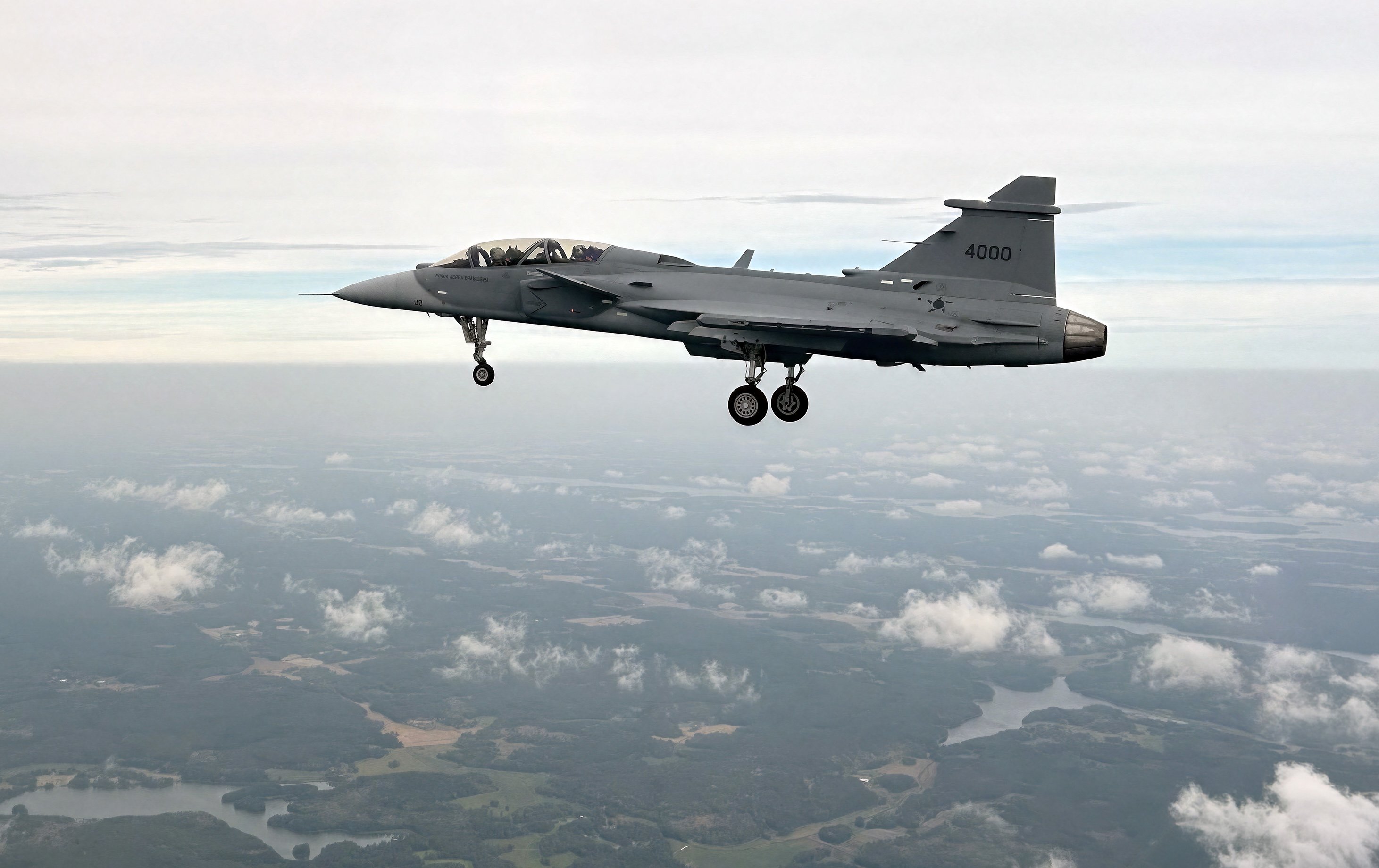
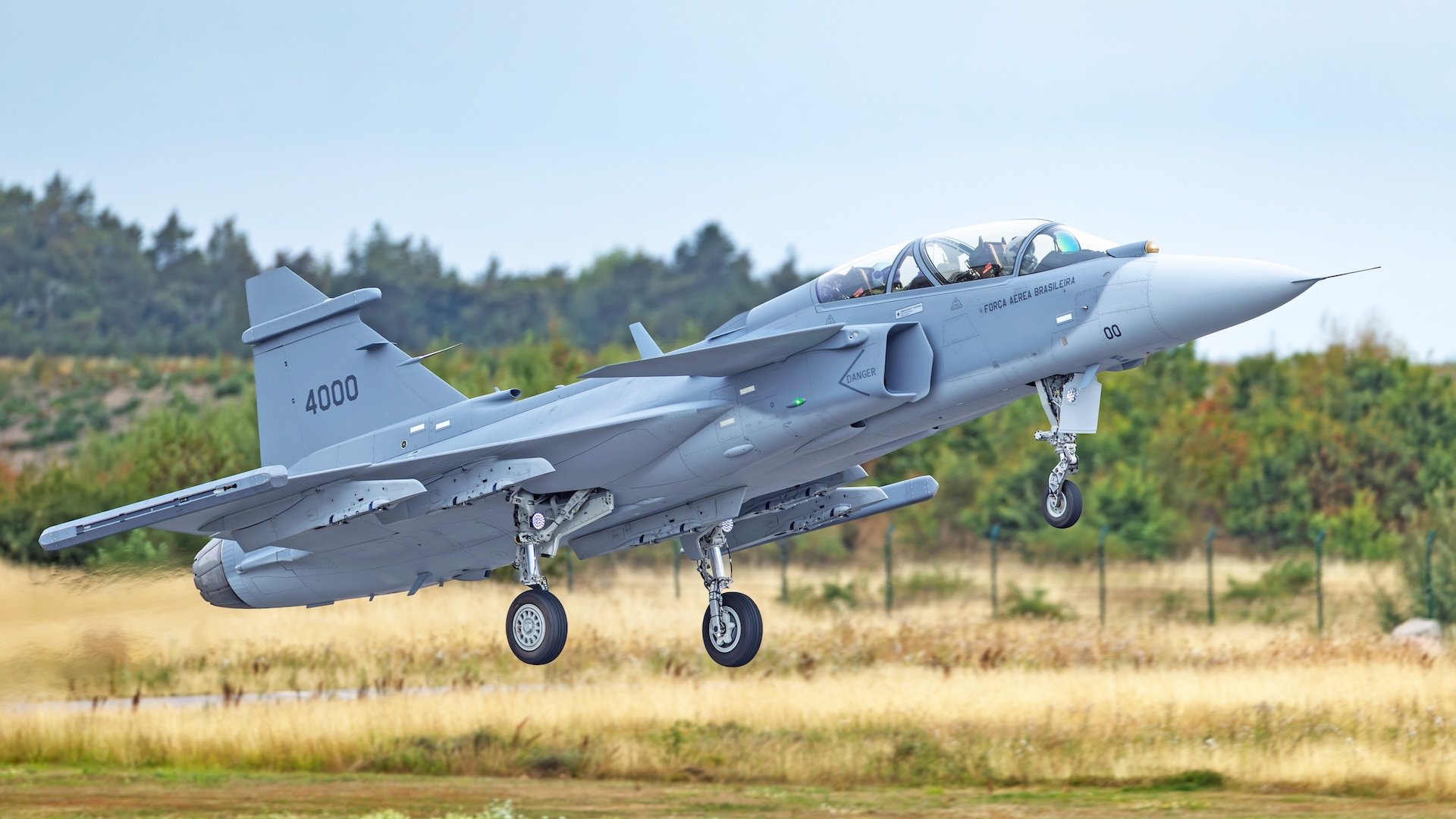
First flight of the Gripen F, with landing gear extended. Saab

The Gripen F is the two-seat derivative of the Gripen E, but it is not simply a conventional trainer version of the single-seat fighter. Saab has designed the rear cockpit to be independently functional, allowing the aircraft to retain an operational combat role while carrying a second crew member.

The configuration is therefore intended to support conversion training and mission preparation while also offering potential advantages during complex combat missions through the division of cockpit workload. This could also include as a ‘drone controller,’ a growing area of interest for many air forces and something that Saab is also working toward with its uncrewed aircraft plans.

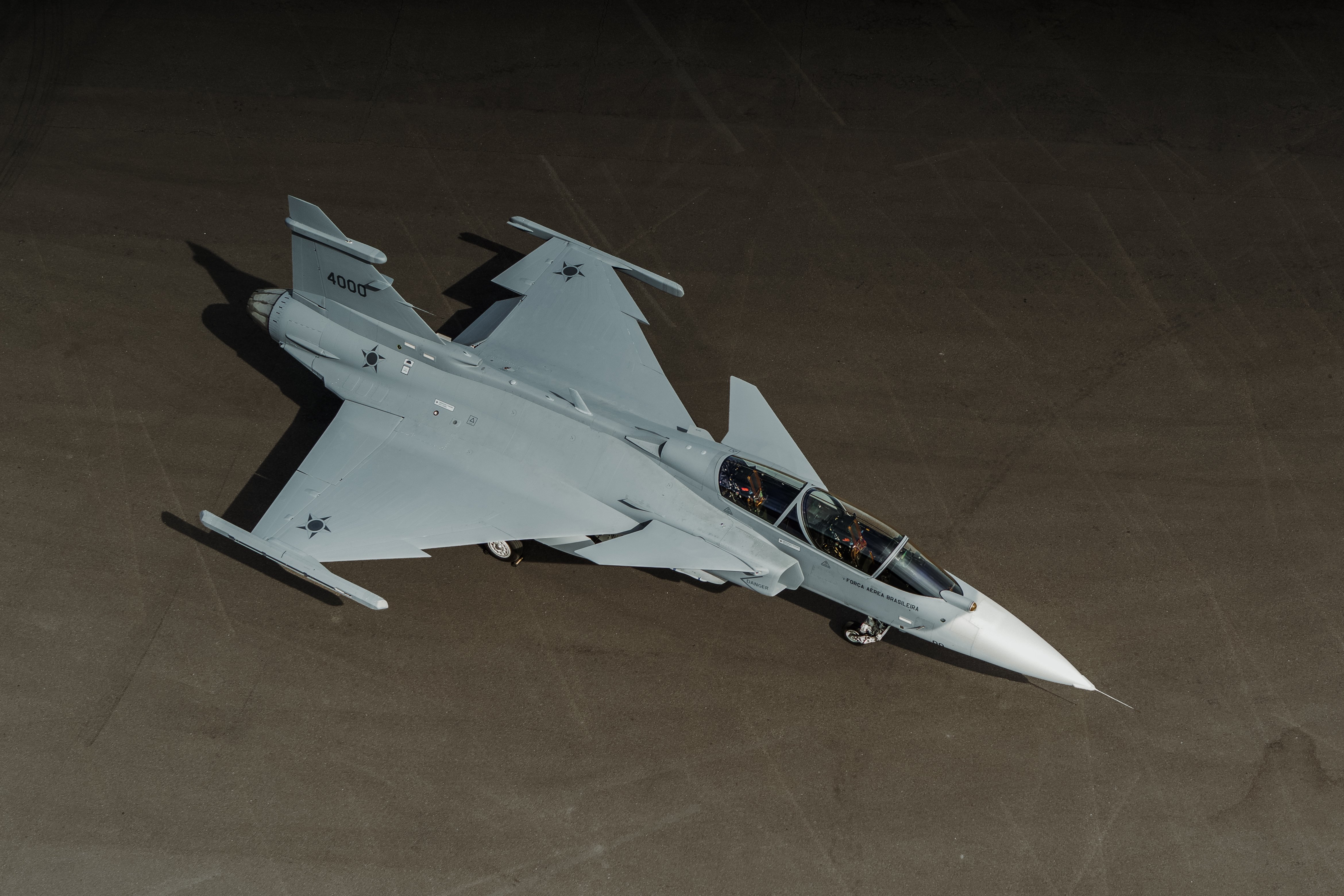
The Gripen F before its first flight. Saab

Combining the Gripen F, in particular, with a high-end drone of the kind that Saab envisages, would make a good deal of sense.

Saab has already pitched its stealthy, supersonic Autonomous Collaborative Platform (ACP) ‘fighter drone’ as an adjunct for the single-seater, describing it as “a great asset to the Gripen E.” Saab envisages the Gripen E serving as a tactical mission commander for one or more ACPs, working in conjunction with the company’s GlobalEye airborne early warning and control (AEW&C) aircraft.

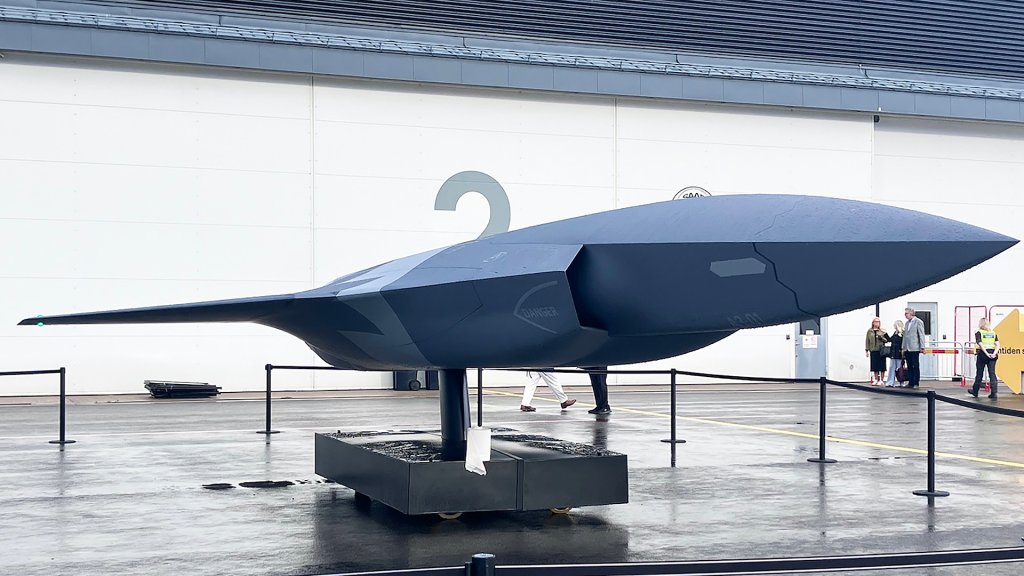
Saab has unveiled its roadmap for its Autonomous Collaborative Platform (ACP) program, a stealthy, supersonic ‘fighter drone,’ which could enter service in the 2030s with the Swedish Air Force and potentially other customers. The aerospace and defense company is already working on two uncrewed technology demonstrators and today presented a full-scale mock-up of an operational drone that those two aircraft could inform.
The Saab A3 concept for its future Autonomous Collaborative Platform (ACP) ‘fighter drone.’ Thomas Newdick Thomas Newdick

The dual-crew benefits of the Gripen F, combined with the ACP, could give Saab an even more compelling route into the CCA market. After all, a fourth-generation fighter like the Gripen (Saab, it should be noted, rigorously avoids using this generational terminology), can remain highly relevant when teamed with CCAs, and a high-performance, stealthy drone like the ACP could make that combination even more potent. It could, at least possibly in some cases, allow air forces to skip the sixth-generation crewed combat air platforms altogether, or at least greatly reduce the need for them.

Brazil is central to the Gripen F program. The country was the launch customer for the two-seat variant and participated directly in its development as part of the broader technology-transfer arrangement underpinning its Gripen acquisition.

The first Gripen F was formally rolled out at Saab’s Linköping facility in June. Brazil’s original 2014 agreement with Saab covers 36 aircraft, in the form of 28 single-seat Gripen E fighters and eight Gripen F two-seaters. Deliveries of Brazilian Gripens began in 2020.

Rollout of the Gripen F. Saab

The F-model has also attracted interest beyond Brazil. Saab has subsequently received Gripen F orders from Thailand and Colombia. The South American nation will get two Gripen Fs, while the breakdown of Thailand’s Gripen E/F order has not been revealed. According to Saab, the 16 new-build Gripens ordered for Ukraine will all be single-seaters.

As for the Swedish Air Force, it plans to buy 60 single-seat Gripen Es, but bearing in mind the changing security situation in Europe, and the increasing focus on uncrewed aircraft, a future Gripen F order should not be ruled out. In particular, Saab has said it expects the Swedish government to acquire new Gripen E/Fs to backfill the 12 earlier Gripen C/D variants it has donated to Kyiv, and which are expected to arrive in Ukraine early next year.

Ukraine intends to purchase 20 Gripen E/F aircraft. In conjunction with the sale, Sweden will donate up to 16 Gripen C/D, including advanced ammunition. To replace the donated aircraft, new modern Gripen E/F will be procured for the Swedish Air Force. https://t.co/kPHjVDXnSb pic.twitter.com/IxEhsy2yvN

— Försvarsdepartementet (@ForsvarsdepSv) May 28, 2026

Saab also remains upbeat about the prospect of a Canadian order for the Gripen E/F.

Sweden has made a strong push to sell Gripen to Ottawa, and Saab offered to build the jet in Canada, in an effort to secure support for its previous bid, which it lost to Lockheed Martin and the F-35. Since then, Saab has also emerged as the preferred candidate to supply Canada with its future AEW&C capabilities via its GlobalEye.

Days after trade talks between Ottawa and Washington collapsed this month, further straining the Canada-United States relationship, Saab chief executive Micael Johansson told TWZ and other journalists that Gripen would be the “perfect” option if Canada moves ahead with a joint fighter purchase. The Swedish jet would add “combat mass” alongside the F-35, according to Johansson.

“I don’t think Canada will give up the F-35 completely; they will go forward with that to some extent,” Johansson said.

Johansson also pointed to the Gripen’s ability to operate from highway strips as well as conventional runways: “You get to use all kinds of airstrips that you cannot use with the F-35,” he added.

Part of the Saab pitch to Canada is the establishment of a new domestic final assembly line for the Gripen E/F, which would be the third such facility after Sweden and Brazil.

As for the Brazilian connection, this extends well beyond aircraft procurement. Saab says more than 350 Brazilian engineers, technicians, and pilots have participated in activities covering Gripen development, production, flight testing, and maintenance. Brazilian industry, including Embraer, has consequently become deeply involved in the program.

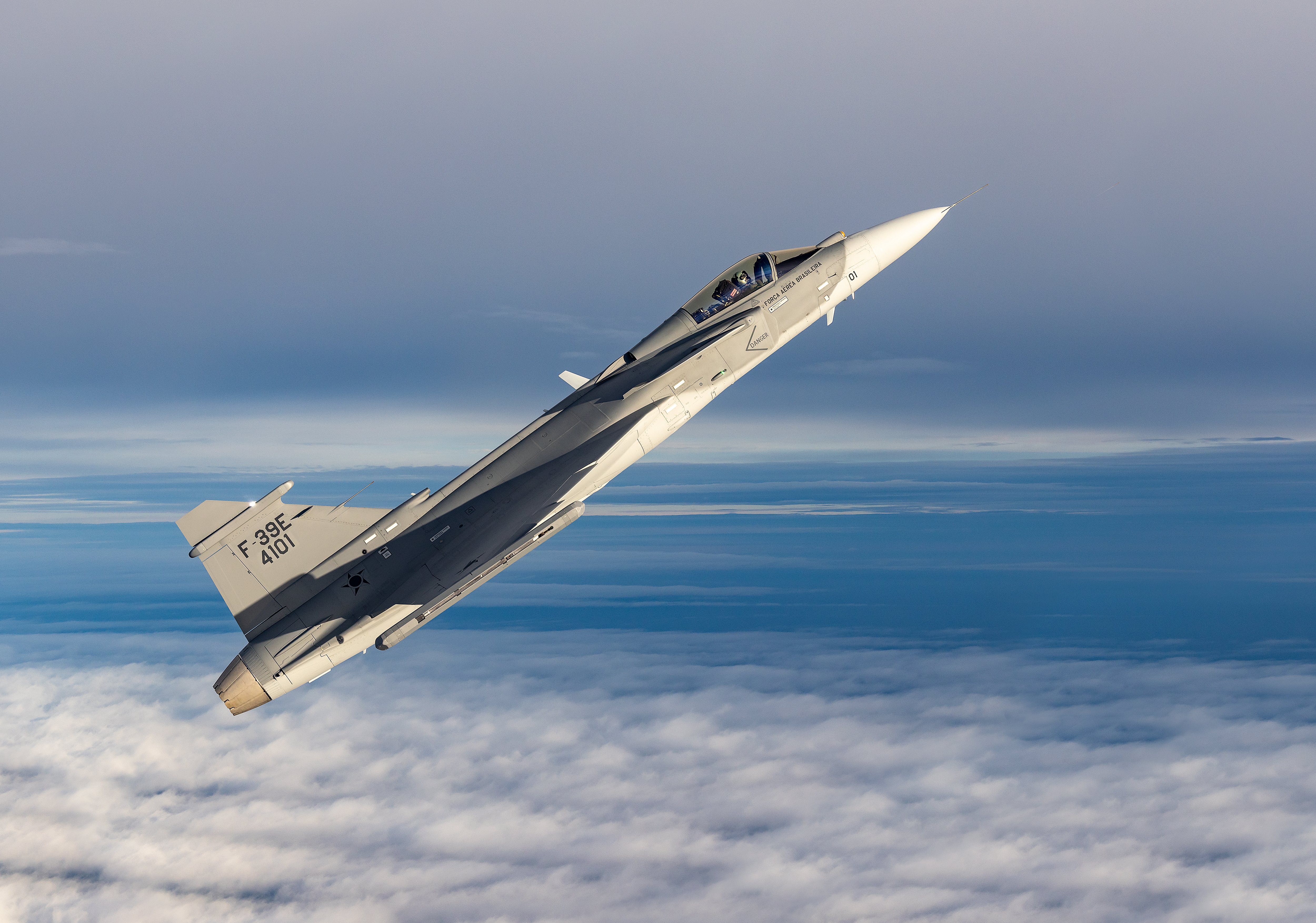
A Brazilian Air Force Gripen E. Saab

Meanwhile, Saab is continuing to expand what the fighter can actually do once it leaves the factory.

Recent work has included a test launch of the Taurus KEPD 350 cruise missile, as well as last year’s integration of Helsing’s Centaur AI agent, which was tested in a beyond-visual-range combat scenario.

🇸🇪 TAURUS LAUNCH
Today a TAURUS KEPD 350 cruise missile was launched from a Swedish JAS 39 Gripen for the first time. The test was conducted at the Vidsel Test Range in Norrbotten.
Today TAURUS is a long-range cruise missile that introduces a new deep-strike capability.
📷 FMV pic.twitter.com/vYcL75Lu4p

— Flygvapnet (@flygvapnet) August 21, 2026

Speaking last week, Johan Segertoft, head of Saab’s Gripen business unit, points to the fighter’s digital architecture as a key enabler of the rapid integration of new capabilities. The company says the Centaur integration took just 10 weeks.

“We chose BVR because it’s one of the most complex things to prove that we could take third-party software and do it, but there’s a lot of things in an aircraft and outside an aircraft that benefit from the advancement of software,” Segertoft said.

Since the Gripen E first flew in 2017, Saab has implemented around 300 capability upgrades, according to Segertoft. He contrasts that with what he describes as a theoretical maximum of around five upgrades for competing aircraft.

The Gripen E used in the Centaur AI trials. Saab

That approach is summed up by Saab’s internal mantra, Segertoft says: “code in the evening, deploy in the morning, learn by lunch.”

The Gripen F test campaign will now move beyond basic systems checks toward progressively more demanding flight conditions. Saab’s Flight Test Center in Sweden will conduct the campaign before the aircraft undergoes the remaining acceptance procedures and is eventually handed over to the Brazilian Air Force.

The first flight therefore represents a milestone not only for Saab’s new two-seat fighter but also for the industrial partnership that produced it. Potentially, that model could be repeated in Canada in the future.

Contact the author: thomas@thewarzone.com

The post Saab’s Gripen F Two-Seater Takes To The Air For The First Time appeared first on TWZ.

  •  
❌