This story originally appeared in Common Dreams on Aug. 31, 2026.It is shared here under a Creative Commons (CC BY-NC-ND 3.0) license.
President Donald Trump on Monday warned Americans that they risk becoming “backwards and poor” unless they allow Big Tech companies to build artificial intelligence data centers in their communities.
In a social mediapost, the president expressed indignation that any town or city wouldn’t welcome data centers, which have drawn nationwide opposition for generating pollution and jacking up utility bills.
“The only reason that communities throughout the USA should not want Data Centers is if they want to end up being backwards and poor,” Trump wrote. “If they want to be successful and rich, with far lower taxes and jobs all over the place, let Data Reign.”
In reality, AI data centers create very few jobs once they are completed, as most of their functions are fully automated.
Trump then said that Americans “will only have yourselves to blame” if they “kill the Golden Goose” that is AI data centers.
“China could not be happier with this anti Data Center movement,” Trump wrote. “Actually, they can’t believe it is happening!”
Building AI data centers has become massively unpopular throughout the US.
A poll conducted by Embold Research and published by Heatmap Pro earlier this month shows that 75% of Americans now oppose building AI data centers in their area, including 61% registering strong opposition.
While Republicans polled in the survey were more supportive of data centers than Democrats and independent voters, it nonetheless found that opposition among Republicans outweighed support by 43 points.
Polling analyst G. Elliott Morris marveled at how politically tone deaf the president sounds when it comes to data centers, commenting that “Donald Trump is actively trying to help as many Democratic senators as possible get elected.”
Longtime GOP operative Frank Luntz similarly noted data centers’ unpopularity, citing a recent Gallup poll showing 63% of Republican voters oppose having one of the facilities built in their communities.
“We’re about to see whether President Trump can sway those voters to support them, as he’s done on many issues before,” Luntz remarked.
Democratic US Senate hopeful Abdul El-Sayed wasted no time tying the president’s position on data centers to his opponent, Republican Mike Rogers.
“Make no mistake—this is Mike Rogers’ position on data centers,” wrote El-Sayed. “He’s got up to $2.6 million invested in companies cashing in on the data center boom, all while Michiganders watch their utility bills soar. You can’t trust a word out of Mike’s mouth because he’s only out for himself, for Donald Trump, and for Big Tech—not Michigan.”
Faiz Shakir, a longtime adviser to US Sen. Bernie Sanders (I-Vt.), observed that Trump is merely “sharing the perspective of Wall Street and Big Tech” and is showing “no interest… in grappling with the mass revolt across American communities, or to learn anything from them.”
Screenwriter David Simon, creator of the acclaimed television series The Wire, accused Trump of brazenly lying about data centers’ economic benefits.
“If data centers are a geographic benefit to communities, you can be sure they’d be siting and building them in affluent and politically connected environs,” wrote Simon. “Curiously, they’re dumped in poorer, less influential places. Go fucking figure.”
Republican Kentucky state Rep. Savannah Maddox took issue with the president disparaging communities opposed to data centers, which include many of the rural communities that voted for him in three presidential elections.
“Rural doesn’t mean ‘backwards and poor’ and development doesn’t always equate to being ‘successful and rich,’” wrote Maddox. “President Trump wouldn’t be president without the rural voters who inhabit America’s heartland. It is not wrong of us to question the sudden and wide-scale effort to convert arable land into data centers. We are not stupid for wanting to protect our rural way of life.”
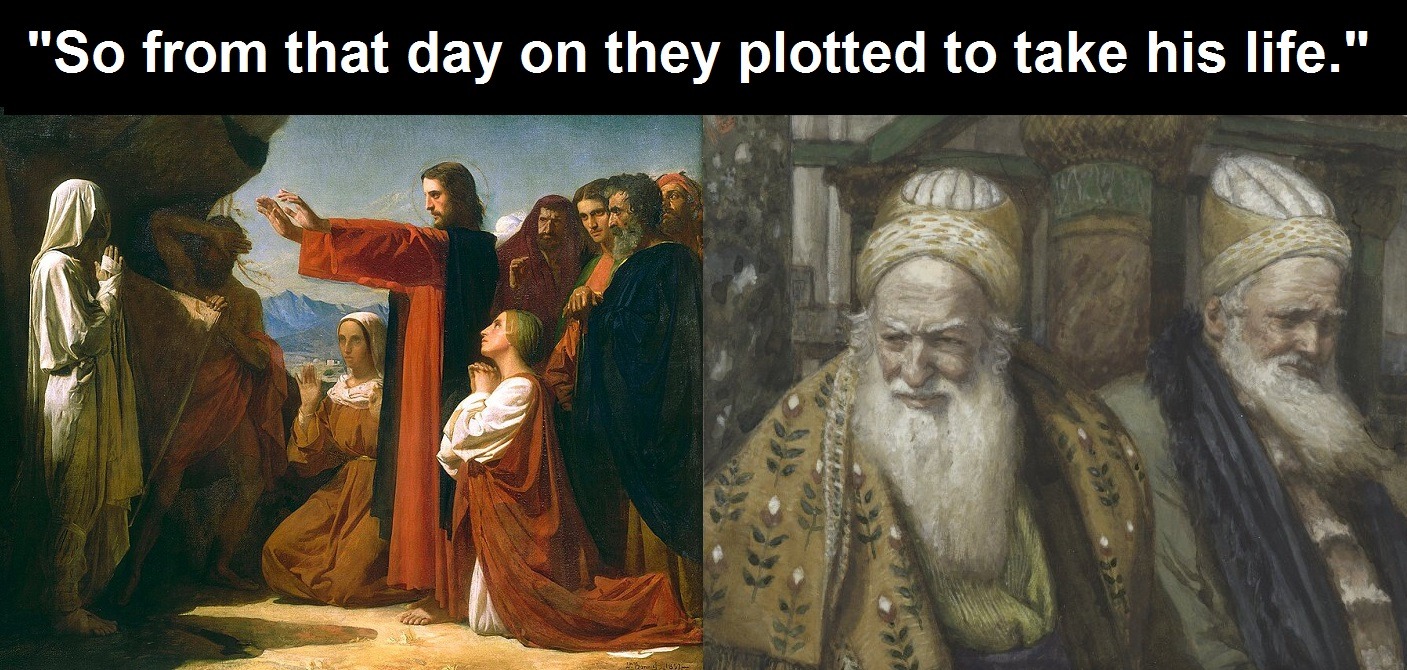
Left image: The Raising of Lazarus, 1857, Léon Joseph Florentin Bonnat. Right image: Annas and Caiaphas by James Tissot, between 1886 and 1894. Bible verse is from John 11:53.
by Brian Shilhavy
I previously wrote about how a man born blind who was healed by Jesus and received his sight, resulted in the formerly blind man being kicked out of the church.
Not only was he kicked out of the church, but everyone else who believed that he received his sight through Jesus was also threatened with being kicked out of the church, because this healing was not approved by the religious and health authorities, and it was done on the “Sabbath” which was illegal. See:
This forced Jesus and his disciples to leave the area and hide, as the Jews looked for ways to arrest Jesus.
However, Jesus returned to the area later, in an event that sealed his fate among the Satanic Jews, where he actually brought a man back to life after he had been dead for four days.
After learning that his friend Lazarus was sick, Jesus purposely stayed behind to allow him to die, and then only decided to go see his sisters after he knew that Lazarus was already laid into a tomb. So this was clearly a pre-planned event by Jesus, knowing full well what the consequences would be.
His disciples were not too eager to follow him back to Judea:
Yet when he heard that Lazarus was sick, he stayed where he was two more days.
Then he said to his disciples,
“Let us go back to Judea.”
“But Rabbi,” they said, “a short while ago the Jews tried to stone you, and yet you are going back there?”
(John 11:6-8)
Jesus assured them that this was all part of God’s plan, but they were still hesitant, and literally thought they were all going to be killed by the Jews by following Jesus back to Judea.
Then Thomas (called Didymus) said to the rest of the disciples,
“Let us also go, that we may die with him.”
(John 11:16)
The Event that Rocked the Jewish Nation and Sealed the Fate of Jesus Christ to be Executed
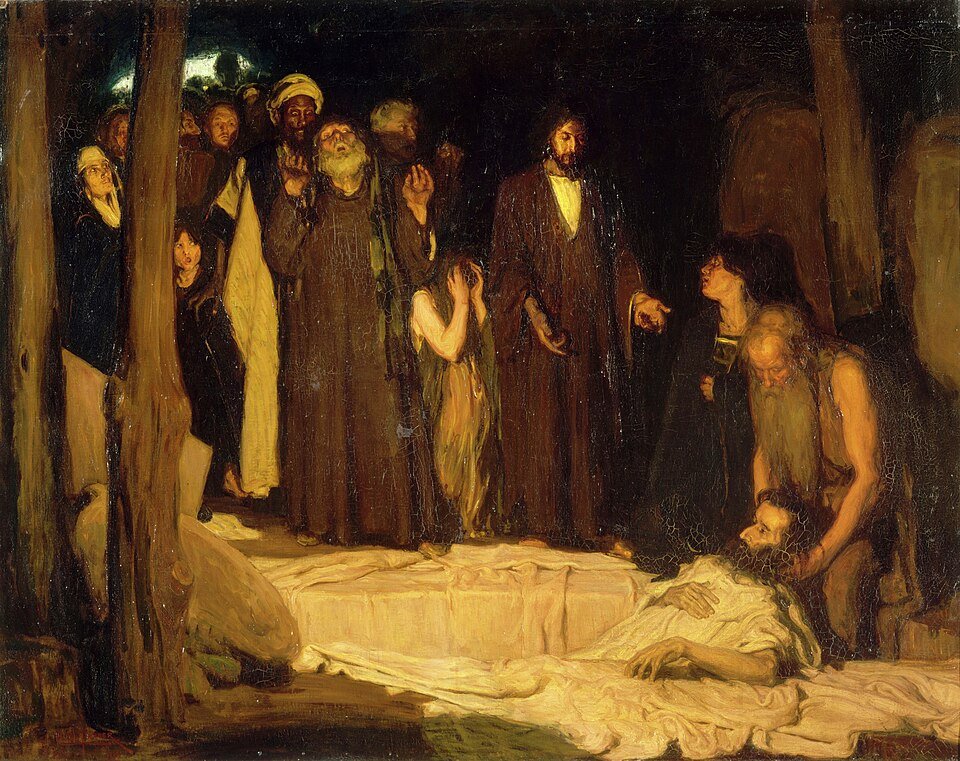
In 1896, artist Henry Ossawa Tanner brought Lazarus to the forefront of popular culture in Paris, entering Resurrection of Lazarus in the Paris Salon, winning a medal. It was so respected that the French government bought the painting. Source.
With the Satanic Jews already very upset and very nervous about the fact that Jesus had healed a man born blind, Jesus now takes his ministry a step even further, by daring to raise a dead man from his grave, demonstrating his power over not only the ruling Jews, but over Satan himself.
John starts the story with Jesus meeting the two sisters outside of town (he did not dare to enter the town yet, because many Jews were there and it would have been too dangerous).
On his arrival, Jesus found that Lazarus had already been in the tomb for four days.
Bethany was less than two miles from Jerusalem, and many Jews had come to Martha and Mary to comfort them in the loss of their brother.
When Martha heard that Jesus was coming, she went out to meet him, but Mary stayed at home.
“Lord,” Martha said to Jesus, “if you had been here, my brother would not have died. But I know that even now God will give you whatever you ask.”
Jesus said to her,
“Your brother will rise again.”
Martha answered,
“I know he will rise again in the resurrection at the last day.”
Jesus said to her,
“I am the resurrection and the life. He who believes in me will live, even though he dies; and whoever lives and believes in me will never die. Do you believe this?”
“Yes, Lord,” she told him, “I believe that you are the Christ (Messiah), the Son of God, who was to come into the world.”
And after she had said this, she went back and called her sister Mary aside.
“The Teacher is here,” she said, “and is asking for you.”
When Mary heard this, she got up quickly and went to him.
Now Jesus had not yet entered the village, but was still at the place where Martha had met him. (John 11:17-30)
With the two sisters of Lazarus now coming outside the town to meet him, Jesus had the crowd on his side, and proceeded to do what he had traveled there to do.
When the Jews who had been with Mary in the house, comforting her, noticed how quickly she got up and went out, they followed her, supposing she was going to the tomb to mourn there.
When Mary reached the place where Jesus was and saw him, she fell at his feet and said,
“Lord, if you had been here, my brother would not have died.”
When Jesus saw her weeping, and the Jews who had come along with her also weeping, he was deeply moved in spirit and troubled.
“Where have you laid him?” he asked.
“Come and see, Lord,” they replied.
Jesus wept.
Then the Jews said,
“See how he loved him!”
But some of them said,
“Could not he who opened the eyes of the blind man have kept this man from dying?”
Jesus, once more deeply moved, came to the tomb. It was a cave with a stone laid across the entrance.
“Take away the stone,” he said.
“But, Lord,” said Martha, the sister of the dead man, “by this time there is a bad odor, for he has been there four days.”
Then Jesus said,
“Did I not tell you that if you believed, you would see the glory of God?”
So they took away the stone.
Then Jesus looked up and said,
“Father, I thank you that you have heard me. I knew that you always hear me, but I said this for the benefit of the people standing here, that they may believe that you sent me.”
When he had said this, Jesus called in a loud voice,
“Lazarus, come out!”
The dead man came out, his hands and feet wrapped with strips of linen, and a cloth around his face.
Jesus said to them,
“Take off the grave clothes and let him go.”
(John 11:31-44)
To the people who knew and loved the family of Lazarus, this was the most amazing miracle that had ever been done in the history of the world, and the news spread fast!
To the ruling Satanic Jews, this was the worst sin that Jesus had committed to date, because it completely destroyed their power base in Satan’s world order.
So they immediately began to make plans to execute him, thinking that his execution would eliminate their problems.
Therefore many of the Jews who had come to visit Mary, and had seen what Jesus did, put their faith in him.
But some of them went to the Pharisees and told them what Jesus had done.
Then the chief priests and the Pharisees called a meeting of the Sanhedrin.
“What are we accomplishing?” they asked.
“Here is this man performing many miraculous signs. If we let him go on like this, everyone will believe in him, and then the Romans will come and take away both our place and our nation.”
Then one of them, named Caiaphas, who was high priest that year, spoke up,
“You know nothing at all! You do not realize that it is better for you that one man die for the people than that the whole nation perish.”
He did not say this on his own, but as high priest that year he prophesied that Jesus would die for the Jewish nation, and not only for that nation but also for the scattered children of God, to bring them together and make them one.
So from that day on they plotted to take his life.
Therefore Jesus no longer moved about publicly among the Jews. Instead he withdrew to a region near the desert, to a village called Ephraim, where he stayed with his disciples.
(John 11:45-54)
The Noahide Laws – The Satanic Jews’ Attempt to Carry On What Their Jewish Forefathers Started
Jesus is still a threat to Satan’s world order today, and the Satanic Jews have continued to try and stop people from believing in and following Jesus since the First Century.
They failed miserably in the First Century, because even though they were afraid that the Romans would come and take over their city if they allowed Jesus to live, after they executed Jesus, Jesus just rose from the dead and continued his ministry in his resurrected state, and then the Romans came anyway in 70 AD and destroyed their temple and their city, ending the Jewish nation.
But in 1948, after World War II, the Zionist allies began their reign of terror on the Palestinians living in the area that was formerly Israel, and setup their own Jewish nation that today is still practicing genocide against the Palestinian people, while also attacking Lebanon and Iran, all with U.S. weapons in the current Trump Zionist regime.
There is no doubt that this was the main reason that Trump was put back in power in 2025, and then began the Iran War.
The Satanic Jews use the Noahide Laws to try and solidify their power worldwide, promoting the Jews as the “chosen people” at the expense of everyone else, and making it a sin, punishable by death, to believe that Jesus is the Jewish Messiah.
I published an article in 2024 explaining that the Zionists in the House of Representatives under Trump have been trying to implement the Noahide Laws in the U.S. disguised as “Antisemitism” bills. See:
And now, in November of this year (2026), the “most committed Noahide leaders from around the globe will gather in Jerusalem — to formally establish the World Noahide Movement.”
They have put up an official website that describes, for the first time in public to my knowledge, just what the Noahide Laws are.
For two thousand years, the words of Israel’s prophets waited. We waited.
The people of Israel returned home. The State of Israel was built. And now, quietly, tens of thousands of non-Jews on multiple continents are choosing to live by the universal moral laws given at Sinai to all humanity. They are called Noahides . They are awakening. They are organizing. And for the first time in history, they have an address: Jerusalem .
This November, the most committed Noahide leaders from around the globe will gather in Jerusalem — to formally establish the World Noahide Movement.
The question is not whether this will happen. It’s happening.The question is who will be there when it does.
You Will See With Your Own Eyes That You Are Not Alone.
For most Noahides, the journey is often lonely. You study. You speak to the Creator. You attend online classes.
This congress will change all this.
For four days, you will live alongside fellow Noahides from six continents. So far we have registrants from: Bolivia, France, Germany, the United States, India, Israel, Georgia, Canada, the Netherlands, Mexico, Chile, the United Kingdom, Senegal, Switzerland, New Zealand, South Africa, and Lithuania.
You arrive feeling isolated. You leave knowing you are part of an international family.
I personally highly doubt that the Noahide Laws will ever be implemented in the U.S.
The Zionists chose Donald Trump to try and implement this, and that was their biggest mistake, in my opinion.
Because now the whole world knows that Trump worked together with Jeffrey Epstein and is also a pedophile just like everyone else in Epstein’s network.
And the most damaging parts of the “Epstein Files” have still not been released, and are allegedly being used to leverage Trump.
But this does not mean that the Zionist religious fanatics, most of whom are Evangelical Christians, are no longer a danger to the U.S. and the rest of the world.
Israel still has the “Samson Option” where they could try to destroy the Middle East through nuclear warfare, especially since they have been unable to defeat Iran. See:
There are also rumors that false flag attacks could happen in the U.S. with events even more devastating than 9/11, where Trump could theoretically try to stop the midterm elections, and implement something like martial law which could potentially include the Noahide Laws. See:
Whatever does happen, there is one thing I am quite sure about: Satan will fail, just as he has historically when trying to stop people from believing in and following the true Jewish Messiah, Jesus Christ.
However, if Satan’s worldly throne currently is in the United States, the revived Roman Empire, Americans could suffer the most when God deals his next blow against the Satanic world system.
This is not consistent with the false, Dispensationalist Evangelical views of end time prophecies, and they will be the most surprised that things did not go their way after all, as they suffer the consequences of God’s judgment against this nation instead of being “raptured” out of the world to be spared the devastation that is coming.
Watch out for false prophets. They come to you in sheep’s clothing, but inwardly they are ferocious wolves.
By their fruit you will recognize them.
Do people pick grapes from thornbushes, or figs from thistles?
Likewise every good tree bears good fruit, but a bad tree bears bad fruit. A good tree cannot bear bad fruit, and a bad tree cannot bear good fruit.
Every tree that does not bear good fruit is cut down and thrown into the fire. Thus, by their fruit you will recognize them.
Not everyone who says to me, ‘Lord, Lord,’ will enter the kingdom of heaven, but only he who does the will of my Father who is in heaven.
Many will say to me on that day, ‘Lord, Lord, did we not prophesy in your name, and in your name drive out demons and perform many miracles?’
Then I will tell them plainly, ‘I never knew you. Away from me, you evildoers!’ (Matthew 7:15-23)
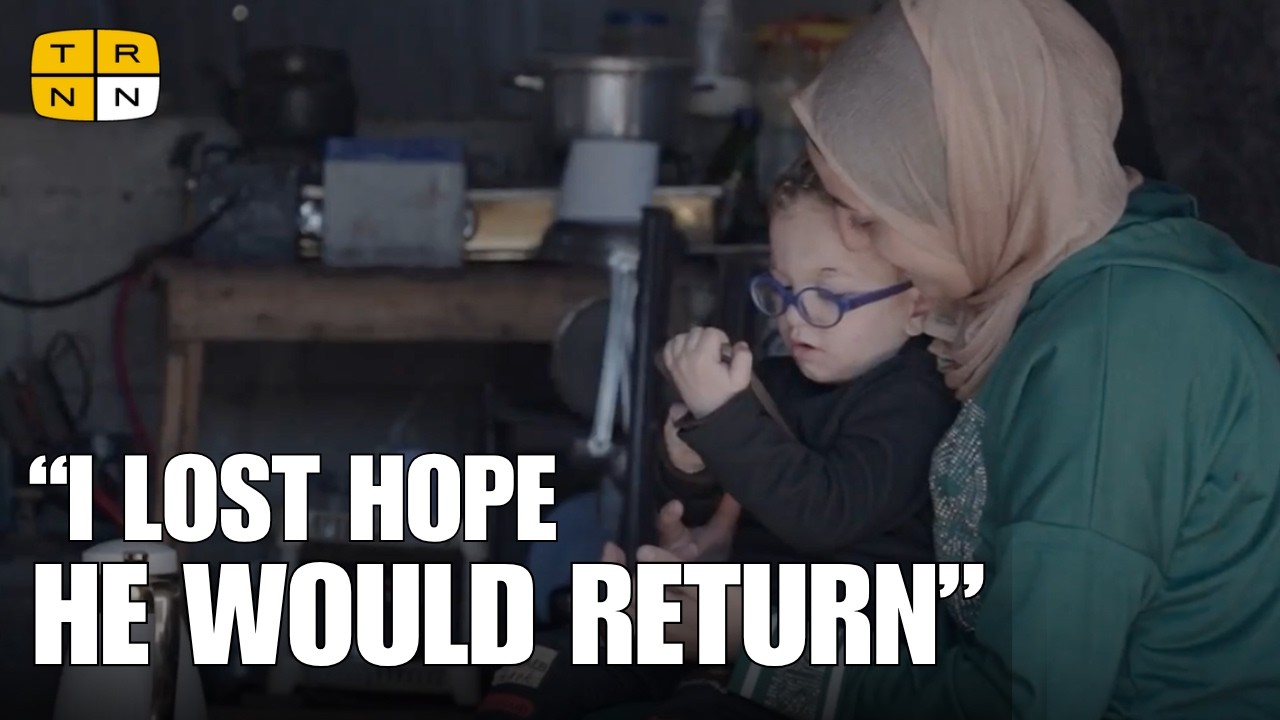
When Israeli forces besieged Al-Shifa Hospital in November 2023, eight premature babies in incubators were evacuated to Egypt under fire. One of them was Joud. His mother, Fatima Dakkeh, spent the next two years and eight months searching for him and fighting to bring him home.
Fatima tells the story of giving birth just months before October 7, losing contact with her son during the first Israeli raid on Al-Shifa, learning a year later that he was alive in Egypt, and a bittersweet reunion with a child who no longer recognized her.
According to the International Rescue Committee, at least 17,000 children in Gaza are unaccompanied or separated from their parents. For many families, there will be no reunion.
Credits:
Producers: Belal Awad, Leo Erhardt Videographers: Ruwaida Amer, Mahmoud Al Mashharawi Video Editor: Leo Erhardt
Transcript
Narrator:
Al-Shifa hospital is the largest medical complex in Gaza. Since October 7, it’s been repeatedly raided, occupied and targeted by Israeli forces. Over the course of the Genocide, hundreds were killed in and around the building and the hospital itself was completely destroyed.
In November 2023, under Israeli fire, 8 premature babies in incubators were hurriedly evacuated to Egypt. Joud was one of those babies.
Fatima Dakkeh:
I gave birth to my son, Joud, in July. Joud needed neonatal care at Al-Shifa Hospital. We placed him in the neonatal unit, but then the war started and Joud was there in the hospital. We couldn’t get in touch with Joud because of the shelling and the war.
Narrator:
Fatima Dakkeh and her son Joud have been unable to have a regular mother-son relationship. Joud was born in Gaza just a few months before October 7th 2023 and so, their story has been shaped by war, displacement and separation. Shaped that is, by Israel’s war on Gaza.
Fatima Dakkeh:
When we tried to get to the hospital to get Joud, we weren’t able to get to him and take him out, because of the situation—things had gotten really bad. There was a lot of shelling and there were airstrikes and quadcopters. We planned to go back another day to get Joud, once the situation calms down. But the situation just kept getting worse. The Israelis entered Al-Shifa Hospital and occupied it— that was the first invasion of Al-Shifa Hospital, and my son was inside.
About a year later, I found out my son was in Egypt. I mean, I didn’t give up; I kept going to hospitals, I went to the Red Cross and places like that to search for news about my son, no one could help me. I went to a doctor I know. I told him my story, he said, “I’ll try to get in touch with your son and see where he is.” Thank God, he was the one who discovered my son was in Egypt. After a few days, they sent us pictures of my son, and we found out he was OK. Thank God. They knew he was our son through my name—they had my name on file. We started communicating with him more through my sister-in-law—my sister-in-law in Egypt. We told her the story, and of course she didn’t hesitate; she visited him in hospital, sent us pictures and reassured us about him, thank God.
Honestly, I was happy and upset at the same time because my son was in Egypt, if he would have been here in Gaza he would have suffered a lot. We were starved, even nappies were cut off. Most children were using scraps of cloth as nappies. And milk too, was cut off—we had no milk at all in northern Gaza. I said to myself thank God my son is in a better place than Gaza. But at the same time, I was upset that my son was far from me. I would see mothers playing with their kids, dressing them, carrying them—and I would feel these feelings. I would miss my son. I wished my son was with me. At the same time, I’d look at my situation—how we’re living, in tents, in all this difficulty. I’d say to myself, hopefully he will return to us in a better situation, there will be a ceasefire and we will make up for the days we lost.
I had lost hope that he would return. With the crossing closed and the Israelis were not letting people return. When they first told us he was returning, I was shocked. My husband and I both. We were surprised—how could he come back just like that, overnight? He’s just going to come back, all of a sudden, after we’d lost hope all these years. I was overjoyed with the news that I would see my son again, it was the best news. When we went to the hospital to collect him, it took a really long time for them to bring him to us—many hours. With each passing hour, I would get more and more excited: about seeing him and about how I would greet him. I mean it was really hard, but at the same time, the moment when I saw him was really beautiful.
Yeh, honestly, when I first saw my son, he wouldn’t come to me; he’d cry and avoid me. He would go to his dad before me. he didn’t want to come to me, so I was afraid that he’d stay that way uncomfortable around us And afraid of living with us, and afraid of the situation we’re in— that he wouldn’t accept us Thank God, little by little, he started to accept us.
Narrator:
According to estimates by the International Rescue Committee, 20,000 children are still living separated from their parents in Gaza. Fatima was reunited with Joud and though their separation which lasted 2 years and 8 months impacted both mother and child, they are now reunited. As for the thousands of other survivors in Gaza, for many there will be no reunion.
When Israeli forces raided Al-Shifa Hospital, Fatima Dakkeh’s newborn baby was evacuated to Egypt without her — one of thousands of Gaza's children separated from their families by Israel's war.
More than a century before Albert Einstein revolutionized physics with his theory of general relativity, and nearly two centuries before astronomers accepted the existence of black holes, an English clergyman and scientist named John Michell proposed a startling idea. In 1783, Michell suggested that some stars might possess such immense gravity that even light could not escape from them. These invisible objects, which he called "dark stars," bear a remarkable resemblance to what we now know as black holes.
The Hamburg Regional Court has sentenced a 34-year-old Afghan migrant to two years’ probation for rape and several counts of aggravated assault against his former partner, an 18-year-old girl. German social media accounts have already sharply criticized the sentence, arguing it is another example of lenient sentencing in the face of serious crimes.
While the defendant initially admitted only to striking her with his hand, he ultimately confessed to the remaining charges. The court convicted him of four counts of assault, one count of aggravated assault, and one count of rape. As a condition of his probation, he must pay an additional €3,000 in compensation after paying another €2,000 in damages to the victim before the verdict.
Judge Malte Wellhausen detailed that the six offenses occurred between autumn 2016 and spring 2018. The trial faced substantial procedural delays, leading the court to count four months of the sentence of the Afghan man, who works in IT, as already served.
The court found the Afghan man physically assaulted his former girlfriend on five separate occasions, including an incident where he used a leather belt and another instance where he choked her to the point of respiratory distress. The rape took place in October 2016, approximately ten years ago.
The defendant first met the 18-year-old high school graduate from Lower Saxony through an online platform. Physical abuse began only months after their initial meeting, starting when he struck her face. When the young woman reacted with fear and tears, the defendant remarked, “That wasn’t even hard.”
Routine physical assaults followed over minor issues, as well as disputes stemming from the victim’s parents opposing her relationship with the Afghan-born defendant.
The sexual assault occurred in his bedroom while both were in bed, leaving the victim with physical pain and bleeding. Despite the nature of the assault, she did not initially identify the incident as rape. Over the following months, the physical abuse persisted, including the incident involving the leather belt while the woman reportedly blamed herself for the incidents, according to German newspaper Welt.
In August 2017, after overhearing her covertly speaking with a friend on the phone, the defendant struck her face, causing her nose to bleed, and choked her violently by the neck. Rather than reaching out for assistance, the victim suffered severe distress, blamed herself, and engaged in self-harm.
During a subsequent trip to the United States, the defendant proposed to her, and she accepted out of fear. She eventually managed to break away from the relationship in 2018 by relocating her life to Denmark.
The criminal investigation began after the woman noticed a missing person report that featured a photograph of a garden in the Poppenbüttel district of Hamburg, where she had previously resided with the defendant. Concerned for the safety of the woman shown in the report, she eventually spoke with police officers and detailed the abuse she had endured, prompting authorities to open a criminal case.
Judicial findings later confirmed that the disappearance of the other woman was entirely unrelated to the defendant. Authorities proceeded with the investigation despite the victim’s reluctance to participate from Denmark. Further delays arose due to pandemic border closures and the illness of an expert witness, pushing the formal filing of charges to 2024.
The victim in the case tried to avoid the trial altogether and only joined in for video testimony after facing potential prosecution. The court ultimately found her account credible due to its memory detail and complete lack of malicious intent toward the accused.
Defense lawyer Claudia Krüger was positive about the ruling, calling it “a judgment with a sense of proportion. I am very satisfied.“
While the defense had argued for a suspended sentence, prosecutors had requested a prison term of three years and two months. The defense won out but the sentence is subject to appeal.
A 23-year-old Guinean national already under an order to leave France (QQTF) is in pre-trial detention after being accused of raping a 17-year-old girl in foster care in Évreux on the evening of July 26. The details of this case are only now being reported, a month later.
The teenager, who lives in a foster home and was receiving psychological care, encountered the man near the city’s cathedral. Prosecutors say he forced her into his car, issued threats, paused at a kebab shop to eat, and then took her to his apartment close to the cathedral. Once inside, he is alleged to have slapped her, pushed her onto the bed and raped her as she cried out, according to French newspaper Paris-Normandie.
A roommate heard the screams. Afraid of confronting the resident himself, he called the police. Officers arrived to find the suspect insisting that “everything is fine.” From the rear of the apartment, they could still hear the girl sobbing. They entered immediately.
A subsequent medical examination recorded ten days of temporary incapacity for the victim. The suspect, who holds a permanent bodywork job in the Paris region and has no previous convictions, denied any rape allegations. He told investigators the girl had consented. Prosecutors rejected his request for release, pointing to the victim’s vulnerability, the risk that he might pressure her, and his irregular immigration status. A deportation order against him had already been issued but never carried out.
Cover image: picture alliance / Hans Lucas | Imen Ben Youssef
The profile of social activism in North Africa is changing. Young people in the region shifted away from demanding regime change after the thwarted hopes of the 2011 Arab uprisings and the 2019 Hirak movement in Algeria. Now, they tend to seek practical improvements in their social and economic conditions rather than wholesale political reform.
Many of these new social movements focus on environmental concerns, and increasingly on the impact of global warming. North Africa is among the regions in the world most affected by climate change. But its countries are also some of the most promising sites for renewable energy generation, given their abundant sunshine and proximity to the European market. Activists have targeted some renewables projects, testifying to a feeling that authorities are failing to ensure energy transitions are fair and meaningful.
These trends in activism in North Africa match a recent turn in European engagement with the region, away from support for political reform and towards socioeconomic issues. This includes cooperation on clean energy projects. But Europeans should bear in mind that cooperation with North African governments on projects that ignore local interests will fall short of the objective of promoting greater opportunity and long-term stability in the region. This underlines the importance of including local businesses and civil society representatives in initiatives from the very start.
Changing social movements
The Arab uprisings and Hirak protests were driven in large part by social and economic concerns, and sought a political remedy by calling for a change of government. But hopes for better politics have since foundered across North Africa. The region’s protests and social movements now tend to focus on practical and often locally based demands for a more effective state and better services for communities. The 2025 Gen Z protests in Morocco, for example, began as a response to failings in maternity health care before swelling into wider calls for social justice. The shift to more issue-based activism reflects North Africans’ disappointment in past attempts at political reform as well as long-simmering social tensions. These include anger at poor governance and the strain rapid urbanisation puts on jobs and housing.
The shift to more issue-based activism reflects North Africans’ disappointment in past attempts at political reform as well as long-simmering social tensions
But climate change is also encroaching ever more on North Africans’ quality of life. Historically a water-scarce region, North Africa is now experiencing extreme temperatures, rising sea levels, drought and desertification. Once-fertile agricultural land is becoming barren, and flooding from extreme weather events exacerbates the problems for farmers and food supplies. Climate change is also contributing to power cuts and water shortages, as well as catastrophes from flash floods to wildfires. One opinion poll in 2024 showed that one in six people in North Africa had experienced harm from climate change in the previous two years (or knew somebody who had), and that 71% of North Africans saw it as a threat.
With governments often failing to implement policies to mitigate climate impacts, social movements have adopted an environmental focus. These movements sometimes blend protest with community self-help initiatives, and are often local rather than national. Their less explicitly political nature brings them a measure of tolerance by authorities, as does the fact that the movements often pursue environmental objectives that governments also embrace. But activists still face similar restrictions to all civil society movements in North Africa, at times drawing surveillance and repression.
Changing the environment
Such climate-related movements have sprung up across North Africa. In Morocco, a group of Tangier-based NGOs and unions halted a building development that would have involved deforestation, and they now publish an annual report on local environmental issues. Youth for Climate Tunisia trains young people to mobilise on climate issues and organises digital campaigns. The Egyptian group Greenish promotes climate education and capacity building for local communities. Algeria has several community-based groups that work on improving access to water and countering desertification.
Other groups focus on wider environmental concerns. Egypt’s VeryNile pioneered efforts to work with local fishers to collect and recycle plastic pollution from the Nile. In Tunisia, local protests against the impact of phosphate processing in Gabès snowballed after a series of toxic gas leaks in October 2025, becoming a mass movement that continues almost a year later.
But North African social movements also mobilise when green transitions disadvantage local communities and marginalised groups. As North African countries increasingly seek foreign investment in renewable energy projects, some communities worry that land and water resources will be diverted to benefit wealthy elites and foreign investors. In Tunisia, solar projects have aroused local opposition because they take land out of community use and reinforce regional inequalities. In Morocco, solar megaprojects such as the plant in Ouarzazate have prompted anger in nearby communities because of the amount of water they consume.
Changing European policy
One thing that unites these disparate movements is that activists seek concrete improvements in quality of life, as well as a bigger role in determining their countries’ futures. This aligns with an increasing sense in Europe that the best way for the EU and member states to promote rights and opportunity in North Africa is through a focus on socioeconomic development.
As the EU’s 2025 Pact for the Mediterranean showed, European policymakers aim to cooperate with North African partners on tangible initiatives that match local government priorities, including in green energy and water management. But the environment-focused social movements should remind European policymakers that working only with governments is not enough to ensure progress on economic and social rights, as I argued in an ECFR policy brief last year. The EU must frame its projects in a way that gives local populations as much agency as possible, by breaking down barriers for small businesses and including civil society in project design and planning.
The EU must also ensure that the projects it supports genuinely offer mutual benefit. In climate policy, the pact’s logic of “a partnership of equals” means European support for renewable energy projects including solar and wind power and the production of green hydrogen. Such projects would then supply clean energy for Europe and promote North African development as well as reduce local energy costs. In turn, greater opportunities and lower prices in the region could help promote the stability that European policymakers also seek.
But not all climate and environmental projects meet these goals—as the local criticisms show. To fulfil the promise of clean energy projects for both sides, Europeans must complement their investment in power generation with other measures to limit environmental trade-offs and to help benefits to flow to local communities. These should include infrastructure development and technology transfer to build up a local clean energy ecosystem. That is the best way for Europe to help ensure that the aspirations expressed in North African environmental movements are met.
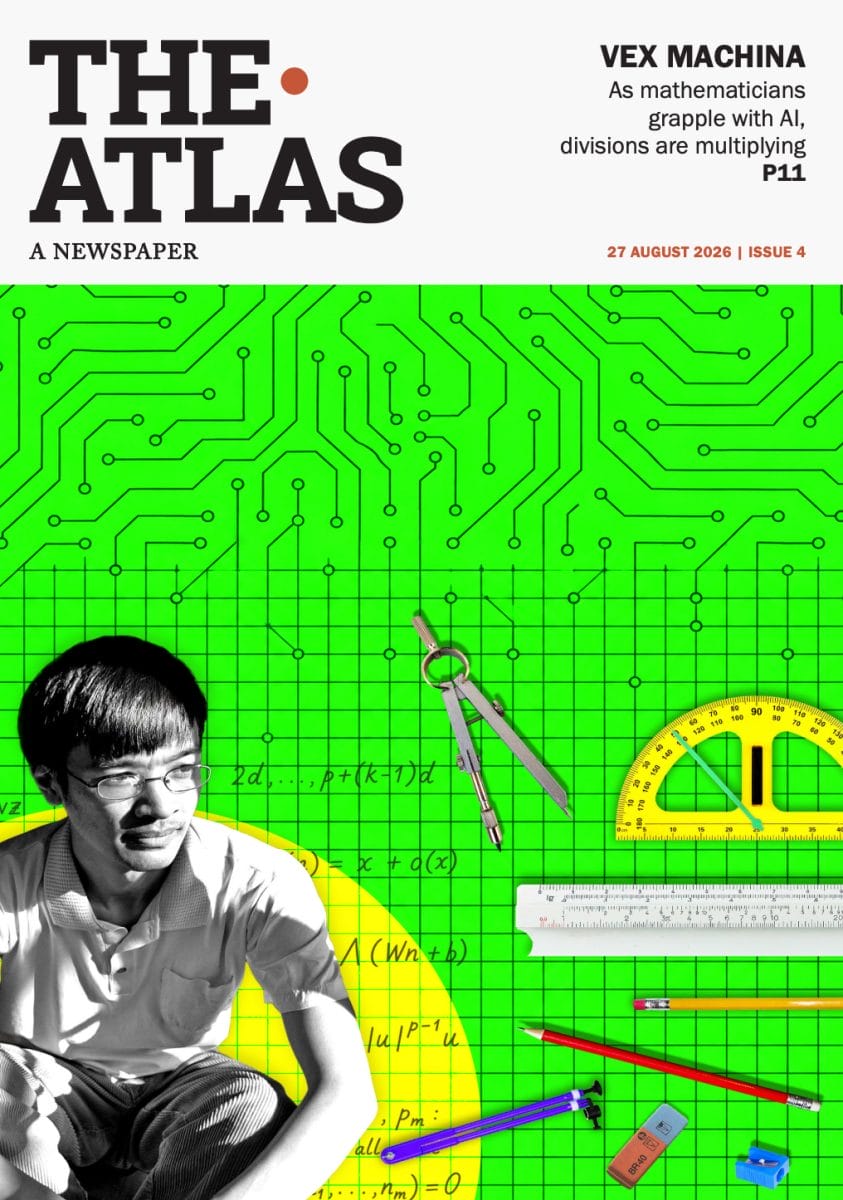
This story first appeared as the cover story in Issue 4 of The Atlas, a new global publication by Coda Story and The Continent. Sign up to the newspaper here.
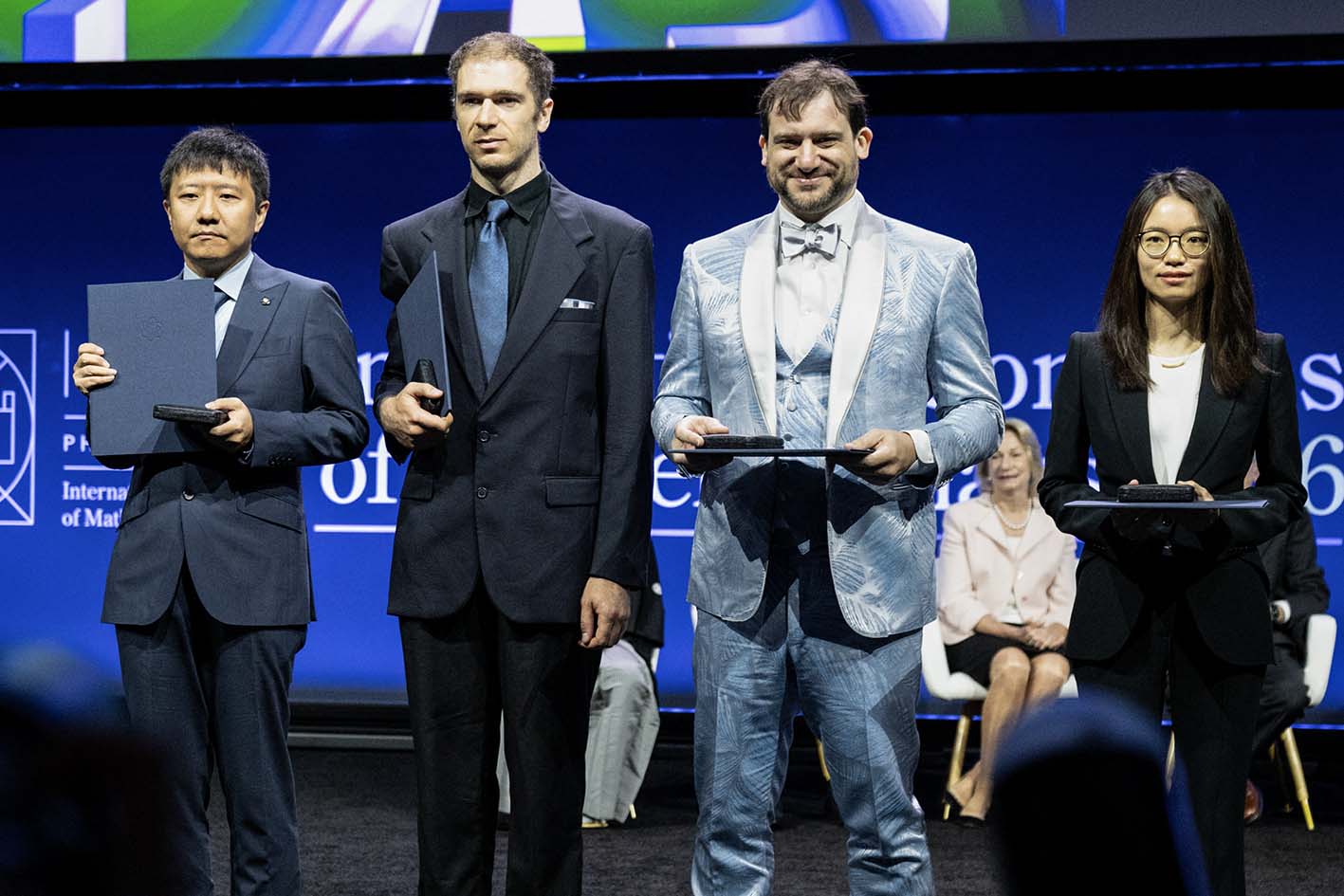
In late July, at the International Congress of Mathematicians (ICM) in Philadelphia, the mathematician Jacob Tsimerman was awarded one of four Fields Medals – the highest honour in mathematics.
A few hours later, Tsimerman announced that he was joining OpenAI.
Tsimerman’s departure from theoretical mathematics, while at the absolute peak of his powers, highlights the fault line in a debate that is upending the normally quiet world of higher mathematics. “What a dick move,” said one mathematics professor, speaking to The Atlas off the record.
Tsimerman, who has written extensively about his fear of “omnicidal futures involving artificial intelligence” – a fear that AI could wipe out humanity, closely associated with the AI “doomer” community – has said he will work on OpenAI’s safety team.
Tsimerman and OpenAI did not respond to a request for comment.
In recent months, OpenAI has announced proofs of various longstanding mathematical problems, solved with one of the company’s latest large language models. Other companies have also made advancements: RedNote, a Chinese AI model, obtained a perfect score at the International Mathematical Olympiad in Shanghai in July.
Human mathematicians, at all levels of the profession, are reeling from the implications. Tim Gowers, a professor at the University of Cambridge who helped to verify one of OpenAI’s proofs, has written that even if AI models fail to progress further, “we have still probably entered an era where it will become very difficult for humans to compete with AI at solving mathematical problems”.
This is a startling assessment – and a marketing coup for the likes of OpenAI.
“Mathematicians actually have a special role in this,” said Joshua Grochow, an associate professor in Computer Science and (by courtesy)Mathematics at the University of Colorado Boulder. “The AI companies’ PR pitch is essentially to say, ‘Look, we have solved math. the intellectually hardest thing ever, therefore we can solve everything.’ ”
LLMs have not solved math – far from it. Nonetheless, Grochow added, recently some capabilities have improved. “They are legitimately able to produce real math, new math that they had not produced before. So you can’t deny that utility. You can deny the extent of that utility, but you can’t say it’s all BS.”
Miek Messerschmidt, a senior lecturer in mathematics at the University of the Witwatersrand in Johannesburg, recently used Anthropic’s Claude to take a crack at a problem that had stumped him. Claude solved it within 30 minutes. “How did I feel? You mean emotionally? I was relieved, because I didn’t have to go down this dead end any more. But I was also disconcerted by what this entity could do in such a short amount of time.”
This year’s Fields medallists: mathematicians Yu Deng (China), John Pardon (US), Jacob Tsimerman (Canada) and Hong Wang (China). Photo: Erin Blewett / AFP.
NEW VARIABLES
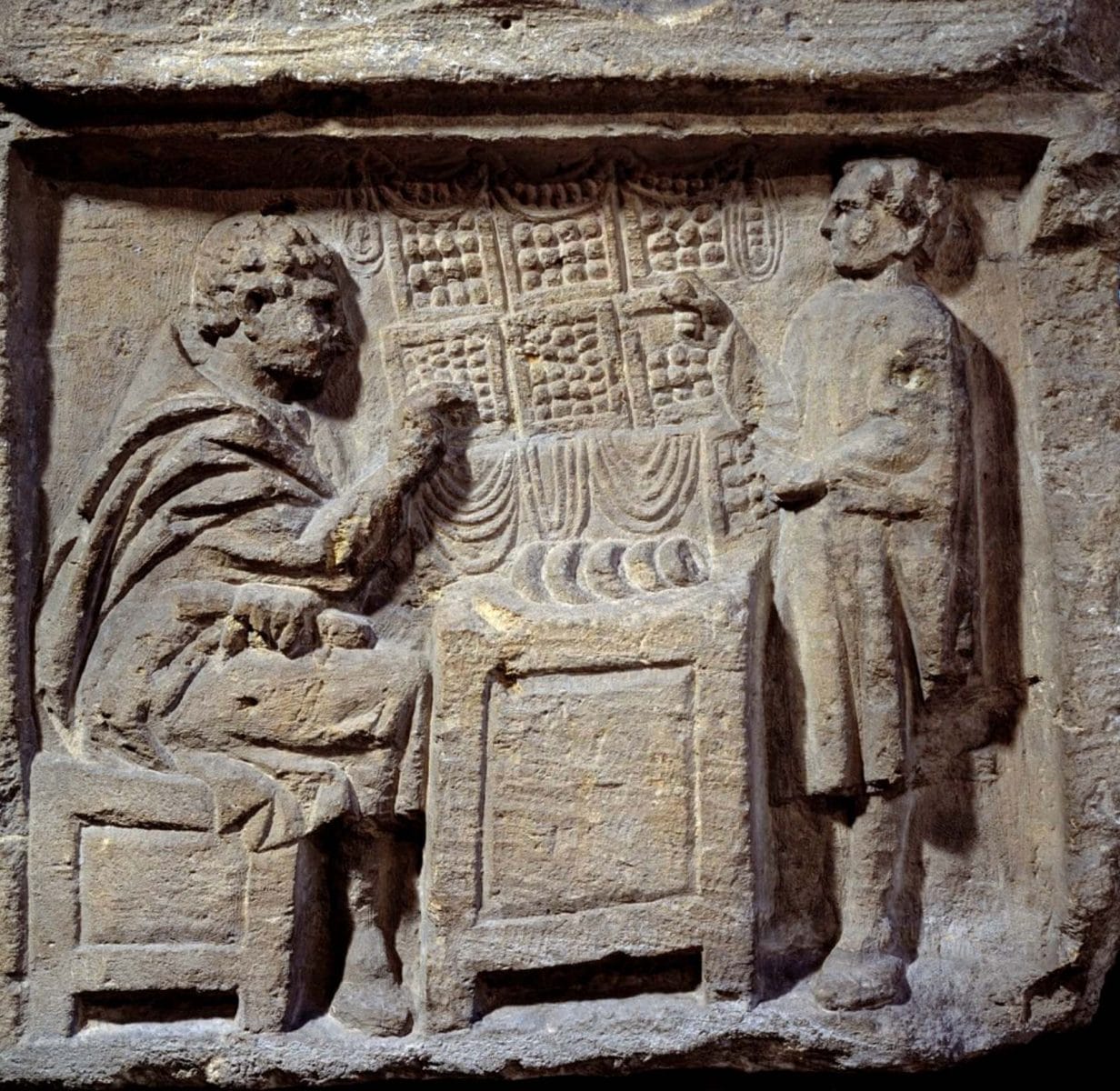
Mathematics has been disrupted by technological leaps before. The abacus. The mechanical calculator. The blackboard, even, which played an instrumental role in standardising training and mathematical notation (“It’s hard to research, because most of what’s written on blackboards doesn’t stay there very long,” said mathematics historian Michael Barany).
But AI is a different kind of disruption. Where previous advances helped mathematicians expand the frontiers of their knowledge, large language models threaten the livelihoods, and purpose, of mathematicians themselves.
“Our place in society at developing new ideas has been quite unthreatened for quite some time,” said Tim Chartier, a Professor in the Department of Mathematics and Computer Science at Davidson College. “For a long time, the frontier of mathematics could only be expired by the mathematicians themselves. There were no tools that could push into that boundary, except the research mathematician…At this current time, it’s not like we don’t need research mathematicians – but the landscape has changed so quickly, it’s hard to know what that will look like a year from now, two years from now.”
This matters for everyone: for thousands of years, mathematics has been considered to be the foundation of scientific knowledge. There is no physics without mathematics. No astronomy without mathematics. And there is no computer science – or AI – without mathematics. What happens if there are cracks in the foundation?
“I think that LLMs pose an existential threat to the mathematical community,” wrote Tasmin Chu, a PhD student at the California Institute of Technology, in an essay published on 2 August – the day after OpenAI released a set of ten new mathematical results, resolving or making progress on various problems.
“This is a polemic, not a press release,” Chu continued. “I know that others feel the same way; I have spent today crashing out and learning that top mathematicians I know are crashing out.”
Some of what mathematicians are worried about is the same as what everyone else is worried about: that AI will take their jobs; that AI companies have absorbed everyone’s work, and are reproducing it without attribution or compensation; that students aren’t learning properly any more; and that there won’t be jobs for them when they graduate.
But some worries are more specific to the field. Like the fear that, if mathematics becomes too reliant on particular AI models, then AI companies will have the power to restrict access to a select few – or make it prohibitively expensive. That promising young mathematicians, instead of turning to research, will use their talents instead to refine proprietary algorithms, which may or may not be used for the common good. That there will be no one left to understand, let alone vouch for, the mathematics produced by the machines. That objective truth, or anything close to it, is going to be much harder to prove – a fear shared with journalists, incidentally, who find it increasingly difficult to verify whether a photograph is real or fake.
2nd Century relief of a merchant using an abacus. Photo: Musée de La Cour d’Or - Metz Métropole.
MATHEMATICIAN IN THE LOOP
After speaking with more than a dozen leading mathematicians from around the world, The Atlas can confirm that Chu is not alone with her fears: it’s all anyone is talking about. The crisis is existential – and mathematicians are looking to one man in particular to guide them through it.
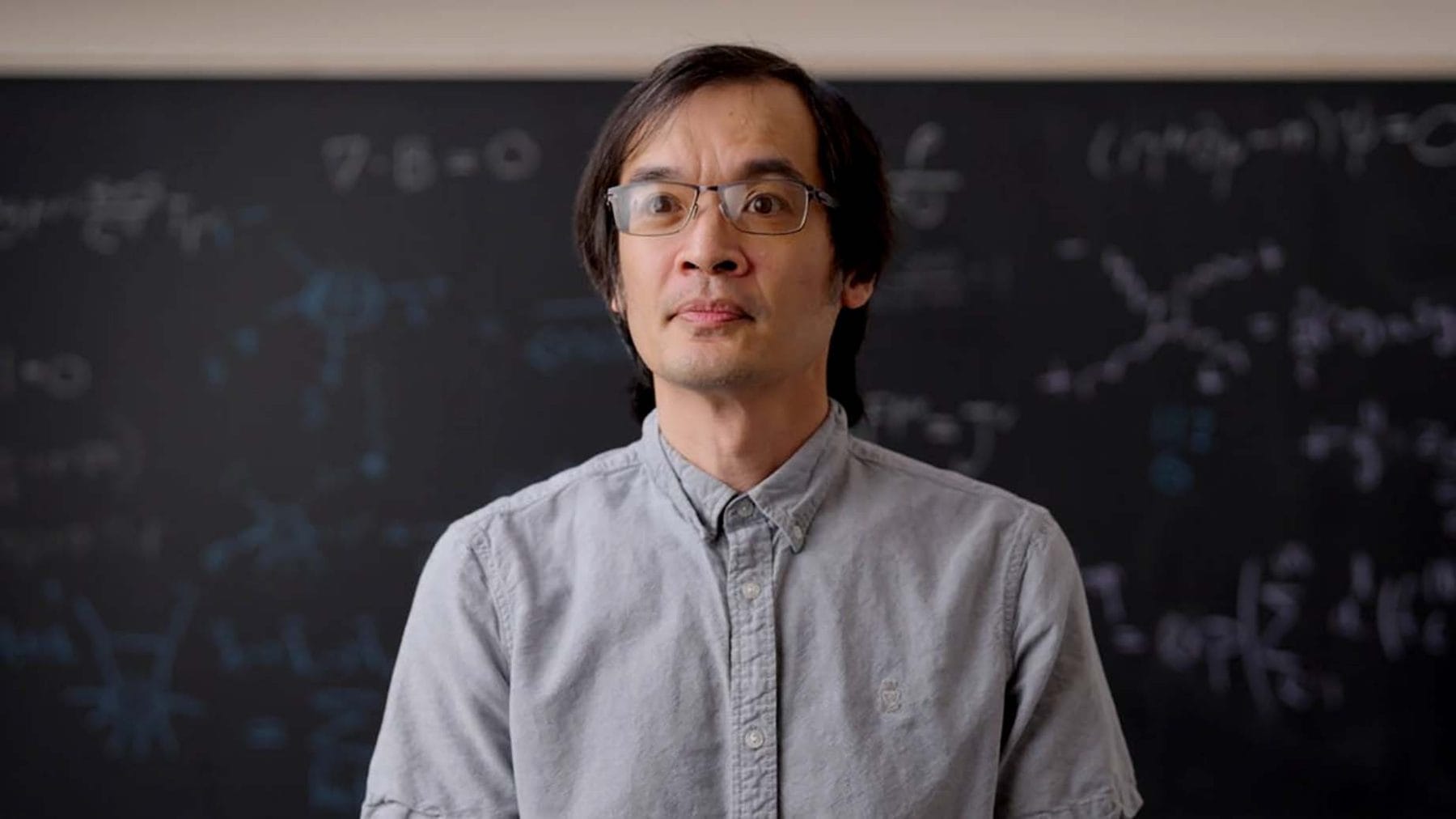
There are no working mathematicians who are truly famous. The closest anyone gets is Terence Tao, a professor at UCLA, who is often referred to as the world’s greatest living mathematician. A prodigy, Tao skipped five grades of school, receiving his masters degree at age 16. By 21, he had earned a PhD from Princeton, and was awarded the Fields Medal just ten years later, in 2006, for his pioneering work with Ben Green on prime number theory.
But what sets Tao apart, in a field infamously incomprehensible to outsiders, is his ability to communicate to both mathematicians and laypeople alike. This has made him a de facto spokesperson for the mathematics community – and extremely influential in setting its norms. “From all accounts he’s a lovely man,” said one researcher, speaking anonymously.
“But the social pressure to agree with Terry Tao is really strong.”
On July 24, the day after Jacob Tsimerman joined OpenAI, Tao gave a public lecture at the ICM titled “Mathematics in the Age of AI”. In it, he presents his “working hypothesis”: that AI tools for mathematics, which he already uses in his own research, will keep getting better. This will allow for collaboration on a vastly greater scale than has ever been possible before, Tao argues, and speed up the pace of research – revealing new, previously unimagined frontiers.
But it will also change, fundamentally, the role of human mathematicians. There will be little point in problem-solving – the computers will handle that. But the humans will still have to do the really hard work: understanding why AI-generated proofs are correct, and explaining this to others. The sooner they embrace this and plan accordingly, Tao concludes, the better.
The Atlas reached out to Terence Tao to request an interview. His human assistant, UCLA media relations officer Holly Ober, declined the request, making a referral instead to a “living document” which is maintained by Tao’s Claude AI assistant, on his website. This document synthesises Tao’s current thinking on AI, based on his public writings and talks, even “interviewing” Tao with follow-up questions.
As per his AI assistant, Tao believes that the topic of AI in mathematics is too important to be left to just a small number of spokespeople – and that his own “influence on this discussion should diminish as the rest of the community steps up.”
Terence Tao, often referred to as the world’s greatest living mathematician. Photo: OpenAI Academy.
AN UNSOLVED EQUATION
Not everyone believes in the inevitability of AI defining the future of mathematics. According to several sources, both organisers and funders were disappointed with the turnout at the ICM in Philadelphia. Despite the gravity of the occasion, the congress was not at capacity.
Ila Varma and Tarik Aougab, associate professors at the University of Toronto and Haverford College respectively, may have had something to do with that. In March, they launched a petition to boycott the ICM due to the ongoing war in Iran, increasing authoritarianism in the United States and the risks faced by visiting academics – if they were even allowed in. “AI companies were invited, but most African mathematicians who tried to attend couldn’t get visas,” Varma said.
More than 2,600 people signed the petition. For Varma, this is evidence that mathematicians may yet use their status to resist the influence – and the cash – of the big AI companies.
“There’s an idea that the positionality of mathematics in society is to decide who’s smart, who’s worthy of the most lucrative career opportunities and the privileges that go along with it. And now we are being asked to take this technology that is likely to be extremely unhealthy for users, that’s bad for the environment, this thing built on unethical labour, and our discipline is being used against many of our wishes to tell society that this thing is intelligent, and that you should let it do your thinking for you.”
Michael Harris, a professor at the Institut de Mathématiques de Jussieu in Paris, was at the ICM in Philadelphia. “The talks I attended on AI, starting with Tao’s public lecture, took pains to insist on the need for human mathematicians to make sense of anything produced in the name of the discipline, by machines or by humans,” he said. “There is a growing resistance to any use of AI whatsoever in mathematics, especially among young people, and this will become evident over the next few months.”
One of the clearest voices of dissent belongs to Max Weinreich, Assistant Professor of Mathematics at the City University of New York.
In an essay published earlier this month, Weinreich makes the case against what he describes as “artificial mathematics”: “Mathematicians do not need to use AI, nor should we use AI; soon, I argue, you will not want to have your name associated with AI. Instead, we should use our intellectual authority to oppose its development.”
His opposition is about more than mathematics, he told The Atlas. In his view, the environmental and financial implications of the AI boom pose major societal risks – and mathematicians, given their privileged position, are one of the few groups of people who can do anything about it.
As John Fletcher, a theoretical physicist and mathematician, observed: “There is a lot of power in being perceived as the smartest people in the world.”
Po-Shen Loh, a professor at Carnegie Mellon and former coach of the US International Mathematical Olympiad team, backs mathematicians to figure it out – by treating it like a maths problem. “AI is making mathematicians engage with the real world. They are smart enough to realise they have an existential crisis. They’re quickly racing down to discover all the dead ends, to see what works and what doesn’t.”
And when they figure it out, maybe they’ll let the rest of us know.
A version of this story, edited for length, first appeared in The Atlas newspaper. Additional reporting by: Shougat Dasgupta, Masho Lomashvilli, Irina Matchavariani.
Mansões, carros de luxo, viagens, restaurantes caros. Enquanto fazem lobby para tentar enfraquecer o governo brasileiro e o Supremo Tribunal Federal (STF) junto ao governo de Donald Trump, o ex-deputado federal Eduardo Bolsonaro e o influenciador Paulo Figueiredo mantêm um alto padrão de vida nos Estados Unidos (EUA).
Ambos já afirmaram enfrentar dificuldades financeiras devido ao que chamam de “perseguição política”. No entanto, um levantamento da Agência Pública e do ICL Notícias revela um cenário diferente. Além de viverem em casas milionárias, no último ano os dois adquiriram carros caros, têm frequentado restaurantes sofisticados, mantêm os filhos em escolas particulares e acumularam uma extensa agenda de viagens.
Eduardo Bolsonaro e Paulo Figueiredo foram centrais na articulação para impor tarifas contra o Brasil e retaliações contra ministros do Supremo. Desde 2025, eles participaram de dezenas de reuniões com deputados republicanos e membros do governo dos EUA pedindo intervenções em resposta à condenação do ex-presidente Jair Bolsonaro por tentativa de golpe de Estado em 8 de janeiro de 2023.
Em maio de 2025, três meses após se mudar para o Texas e anunciar que viveria uma espécie de “autoexílio”, Eduardo Bolsonaro comprou um carro novo. Não exatamente um modelo econômico para atravessar tempos difíceis. Ele adquiriu um GMC Acadia Elevation 2025 preto, um SUV de três fileiras de assentos, avaliado em cerca de 43,8 mil dólares nos EUA, o que equivale a aproximadamente R$ 226 mil.
Os registros de gastos associados à família Bolsonaro nos EUA mostram que, desde a mudança para o país, em fevereiro do ano passado, o padrão de vida não parece ter encolhido, nem mesmo após o STF determinar o bloqueio dos bens de Eduardo Bolsonaro e de sua esposa, Heloísa Bolsonaro, em julho de 2025. Eduardo ainda perdeu o salário que recebia como deputado federal em dezembro, quando seu mandato foi cassado por faltas, e, desde 2015, não recebe salário como escrivão da PF, de onde a corporação recomendou sua demissão por abandono do cargo.
Ao chegar aos EUA, o ex-deputado escolheu Arlington, no Texas, onde já havia mantido uma empresa entre 2023 e 2024. A residência alugada estava longe de ter as dimensões de um refúgio improvisado. Tinha pouco mais de 300 metros quadrados, quatro quartos e quatro banheiros, com valor de mercado estimado em 707,7 mil dólares (cerca de R$ 3,6 milhões). O valor da locação anunciado em sites imobiliários, quando eles alugaram a casa, era de 4,5 mil dólares, aproximadamente R$ 23,3 mil na cotação atual.
Em maio de 2025, Jair Bolsonaro chegou a transferir R$ 2 milhões ao filho. “Botei dinheiro na mão dele, dinheiro limpo, legal, Pix”, afirmou o ex-presidente.
Dias depois, Eduardo chegou a reclamar para o pai, em mensagens trocadas por Whatsapp, que estava “se fodendo” nos EUA. Ao reclamar de uma entrevista em que Jair dizia que o filho era imaturo, Eduardo reclamou que, ao jogar ele para baixo, o ex-presidente o estaria condenando a passar o “resto da vida nessa porra aqui”. “VTNC seu ingrato do caralho!”, escreveu.
A situação parece ter melhorado desde então. Pouco mais de um ano depois, em maio de 2026, a família trocou Arlington por um endereço ainda mais valorizado, em Southlake, uma das cidades mais ricas do Texas, onde a renda familiar média é de 250 mil dólares – três vezes maior do que em Arlington, por exemplo. Eduardo, a esposa e os dois filhos moram atualmente em uma casa que oferece “uma vida de resort”, conforme revelou o The Intercept Brasil.
Avaliada em 1,22 milhão de dólares, cerca de R$ 6 milhões, a mansão foi anunciada para aluguel por aproximadamente 5,9 mil dólares (em torno de R$ 30 mil mensais), segundo anúncios imobiliários que permaneceram ativos até fevereiro deste ano. O imóvel tem 424 metros quadrados de área construída, em um terreno de 1.366 metros quadrados, quatro quartos e piscina, além de acesso a um clube com quadras de tênis e a uma lagoa.
A filha mais velha do casal Bolsonaro, de cinco anos, foi matriculada numa escola cristã a cerca de 15 minutos de casa, com custo anual de 18 mil dólares (R$ 93,4 mil), conforme divulgado no site da escola.
Eduardo nega ter usado parte da verba do filme Dark Horse para custear sua vida nos EUA. O filme foi financiado com cerca de R$ 61 milhões do banqueiro Daniel Vorcaro, por meio do Fundo Havengate. O negócio veio à tona após reportagem do Intercept Brasil. Conforme revelou o portal, Flávio Bolsonaro chegou a pedir o dobro desse valor ao banqueiro, hoje preso por gestão fraudulenta e estelionato, lavagem de dinheiro, corrupção de servidores públicos, organização criminosa e obstrução da Justiça.
“A história de que recebi dinheiro do fundo de investimento não se sustenta e é tosca”, afirmou Eduardo em suas redes sociais. “No meu processo migratório, expliquei às autoridades americanas toda a origem dos meus recursos e não tive qualquer problema”, disse.
Procurado pela reportagem, Eduardo não respondeu como financia seu padrão de vida nos Estados Unidos.
Em outras ocasiões, ele afirmou que se mantém com “renda passiva” e já disse também que recebe dinheiro por meio de cursos que ministra – os cerca de 50 mil dólares que ele disse ter investido no filme Dark Horse, por exemplo, teriam esta origem.
20 viagens em 18 meses
Chama a atenção o volume de dinheiro que Eduardo Bolsonaro vem gastando com viagens dentro e fora dos EUA. Desde fevereiro do ano passado, o ex-deputado federal viajou ao menos 20 vezes, entre compromissos políticos e passeios turísticos.
Para comemorar o primeiro aniversário de Heloísa Bolsonaro após a mudança para os EUA, a família foi para a Disney em junho de 2025. Cinco meses depois, em dezembro, Eduardo Bolsonaro esteve na cidade de Park City, em Utah, destino nas montanhas conhecido internacionalmente por suas estações de esqui. A passagem ocorreu justamente no início da alta temporada de neve na região.
Já em fevereiro deste ano, Eduardo viajou para West Palm Beach, na Flórida, onde o custo diário de acomodação pode ser superior a R$ 1.000. Dali, ele participou do Latin Gala em Mar A Lago, o resort de Trump. Na festa para a comunidade Latina, ele premiou Fernando Cerimedo, marketeiro político responsável por mentiras sobre as urnas brasileiras que está preso na Bolívia por tentativa de assassinar a namorada.
Durante a Copa do Mundo, ele foi a Miami assistir à partida entre Brasil e Escócia, que ocorreu no dia 24 de junho. Ele ficou hospedado em um hotel de luxo, que cobra diárias de R$ 16 mil e chega a oferecer pacotes de experiência avaliados em um milhão de dólares, conforme revelou a Revista Fórum.
Mas a maior parte dos deslocamentos do ex-deputado, desde que se mudou para os EUA, está ligada à sua atuação política. Ao lado de Paulo Figueiredo, Eduardo tem se mobilizado para pressionar o governo norte-americano a impor sanções ao Brasil e a ministros do STF. Juntos, os dois estiveram pelo menos sete vezes em Washington e fizeram outras três viagens a Mar-a-Lago, na Flórida. Paulo frequenta o resort desde 2019 e parece manter sua primeira impressão: “simplesmente lindo!”
Em meados de maio, Eduardo hospedou-se, junto com Paulo, no histórico hotel Willard Intercontinental Washington, quando se reuniram com Trump na Casa Branca. Eduardo e sua turma alugaram os quartos, que têm preço inicial a partir de R$ 1,5 mil por noite, mas podem chegar a custar R$ 50 mil por diária. Eles chegaram a receber, no hotel, a visita de Darren Beattie, assessor sênior de política para o Brasil no Departamento de Estado.
A agenda de Eduardo Bolsonaro e Paulo Figueiredo também cruzou as fronteiras norte-americanas, com pelo menos três viagens ao Oriente Médio.
“Pra quem surfa, sabe que isso aqui é o que há de melhor no mundo.” Com uma prancha debaixo do braço, Eduardo Bolsonaro aparece diante da maior piscina de ondas artificiais do mundo, em Abu Dhabi. No vídeo, publicado em 8 de fevereiro, ele também demonstra suas habilidades ao longo de uma sequência de manobras. As imagens foram gravadas no Surf Abu Dhabi, na ilha de Hudayriyat, onde uma sessão de 45 minutos para surfistas de nível intermediário e avançado custa 1,8 mil dirhams dos Emirados Árabes Unidos (AED) $ 953 — cerca de R$ 2,5 mil.
Na ocasião, Eduardo viajava pelo Oriente Médio ao lado do irmão, o senador e então pré-candidato à presidência Flávio Bolsonaro, e de Paulo Figueiredo. O trio divulgou encontros com autoridades no Bahrein e nos Emirados Árabes Unidos como parte de sua agenda política na região. Mas, entre um compromisso e outro, as redes sociais também registraram momentos de lazer.
Figueiredo, por exemplo, compartilhou avaliações de restaurantes em Dubai, como o CZN Burak Dubai, especializado em culinária turca, onde comeu um dos melhores kebabs da sua vida, além de um ensopado de camarão apimentado. “Divino”, “sobremesa perfeita” estão entre os elogios feitos à casa, cujo preço estimado por pessoa é de R$ 140 a R$ 210. Ele também visitou o Clay Dubai, na marina da cidade, onde se paga entre R$ 560 e R$ 630 por pessoa. “Este lugar não é apenas LINDO, mas tudo o que comemos estava delicioso”, escreveu. Em um restaurante de comida japonesa, reclamou de ter comido um sushi de abacate com salmão por 45 dólares. “ATENÇÃO! Este lugar é uma armadilha para turistas!”, escreveu.
Procurado pela reportagem, Paulo Figueiredo dirigiu ironias e agressões contra a Agência Pública antes de afirmar: “Eu me financio através das minhas empresas e não devo satisfação a ninguém”.
Em intervalo de 6 meses, Figueiredo comprou mansão de R$ 6,1 milhões e Cybertruck da Tesla
Os registros levantados pela reportagem indicam que Paulo Figueiredo também elevou seu padrão de vida no último ano. Em novembro de 2025, conforme revelaram a Agência Pública e o ICL Notícias, o influenciador comprou por 1,2 milhão de dólares — cerca de R$ 6,1 milhões — uma mansão em Clermont, na Flórida. Para fechar o negócio, contratou um financiamento imobiliário de 1 milhão de dólares.
A propriedade fica em um terreno de 17,5 mil metros quadrados, o equivalente a cerca de dois campos e meio de futebol, e tem 515 metros quadrados de área construída. São dois andares, seis quartos e cinco banheiros, além de salas de estar e de jantar, cozinha gourmet e sala de jogos. Do lado de fora, há piscina de água salgada, jacuzzi para 12 pessoas, varanda, lareira e até uma casa na árvore.
Seis meses depois, em maio de 2026, Figueiredo ampliou a garagem com um Cybertruck 2026, da Tesla, montadora de Elon Musk. O veículo tem valor de mercado estimado em 83 mil dólares, o que equivale a R$ 427,9 mil. O influenciador também possui, desde 2024, uma BMW Série 6 de 2004, hoje avaliada em cerca de 9 mil dólares (aproximadamente R$ 51 mil).
A compra da mansão ocorreu apenas um mês depois de Figueiredo informar à Justiça dos Estados Unidos que não tinha recursos para contratar um advogado para representar sua empresa, a International Treasure Group, condenada à revelia. A ação contra a companhia faz parte de um processo de falência que visa recuperar transferências supostamente vinculadas ao esquema de fraude atribuído ao magnata chinês Miles Guo.
A International Treasure Group entrou no processo após receber 140 mil dólares — cerca de R$ 670 mil — por serviços prestados à rede social Gettr entre agosto de 2021 e abril de 2022, segundo a defesa de Figueiredo. Fundada pelo ex-assessor de Donald Trump, Jason Miller, a plataforma tinha Guo como financiador oculto.
A mansão em Clermont não é o único imóvel de Figueiredo na Flórida. Ele também possui uma casa em Weston, colocada à venda em junho deste ano por 1,09 milhão de dólares — cerca de R$ 5,5 milhões —, segundo sites imobiliários americanos. Desde 2016, a propriedade estava registrada em nome da Olive-Fig Tree Real Properties LLC, empresa que também pertence ao influenciador.
Em outubro de 2025, porém, o imóvel de Weston foi transferido para o nome de Figueiredo, segundo documentos do estado da Flórida. No mês seguinte, ele adquiriu a mansão de Clermont.
As movimentações contrastam com declarações feitas pelo próprio Figueiredo sobre sua situação financeira. Em 2024, quando já articulava, nos Estados Unidos, possíveis retaliações contra autoridades brasileiras, ele deu seu testemunho em uma audiência no Congresso americano, afirmando ser vítima de perseguição do STF e que estava “desempregado, sem minhas redes sociais e suas respectivas monetizações, responsável por sustentar minhas duas filhas americanas de 7 e 8 anos”.
Paulo é cidadão americano, assim como suas filhas, e usa este fato para alardear que tem sido censurado pelo STF – o que embasou diversas ações de aliados no governo e no legislativo norte-americano, como a lei “No Censors in Our shores”, proposto pela deputada republicana Maria Elvira Salazar um mês depois dela ter recebido uma doação de campanha de Paulo no maior valor possível na época (R$ 57 mil), conforme revelou a Pública.
Na Flórida, Paulo frequenta restaurantes renomados e costuma ser bastante crítico quanto à gastronomia. Frequenta restaurantes com estrelas Michelin, mas nem sempre sai satisfeito. Por exemplo, em abril, ele foi ao restaurante de culinária asiática fusion Nami, no hotel Lake Nona Wave, em Orlando, onde também se paga, por pessoa, cerca de 500 reais por refeição. “Fiquei muito decepcionado, ainda mais por se tratar de um restaurante com estrela Michelin. As porções são ridiculamente pequenas, não condizendo com o preço cobrado. Pra ser sincero, este é o primeiro lugar com estrela Michelin onde definitivamente não pretendo voltar”.
Em outros restaurantes, ele reclama dos valores pagos por porções pequenas, o que ele diz ser regra em Miami, “restaurantes muito caros com comida mediana”.
Não que ele não tope pagar caro. Há cerca de um ano, ele foi com a esposa ao Restaurante MAASS, em Fort Lauderdale, onde pagou “quase 400 dólares” – R$ 2 mil reais – em um menu degustação para duas pessoas. “Mesmo experimentando o menu degustação, nada do que comi foi memorável e me fez querer voltar”, escreveu.
Kazakhstan’s Central Election Commission announced final results on 25 August confirming a decisive victory for the Adilet party in the country’s first elections to the new unicameral Kurultai. Adilet won 71.17 percent of the vote and 110 of the 145 seats, establishing a dominant position in the legislature created under the constitution that took effect on 1 July.
Adilet is the recently formed pro-presidential party in Kazakhstan created months before the elections as the successor after the long-ruling Amanat party dissolved into it.
Final figures show 9,351,539 ballots cast from an electoral roll of 12,623,289, for a turnout of 74.08 percent. Five parties cleared the 5 percent threshold required for representation:
The People’s Party of Kazakhstan (3.11 percent) and Baytaq Green Party (1.07 percent) fell short. A further 2.51 percent of voters chose the “against all” option.
The Kurultai replaces the former bicameral parliament and is elected entirely by proportional representation from party lists in a single nationwide constituency. The 23 August vote was the first parliamentary election held under the new constitutional framework approved in a March referendum.
First session convened
President Kassym-Jomart Tokayev has signed a decree convening the inaugural session of the Kurultai for 28 August at 11 a.m. The opening will formally launch the work of the new 145-member legislature and mark the next stage in implementing the institutional changes introduced by the constitution.
Once the Kurultai begins its work, the sitting government is required to resign. Under the new rules, the president will nominate a candidate for prime minister after consultations with the party factions represented in the chamber. The appointed prime minister then has ten days to propose the structure and composition of the cabinet; ministers are appointed by the president following further consultations with the Kurultai.
The constitution also creates the office of vice president. Tokayev has indicated that an appointment — “a well-known person you all know” — would be announced within days of the election and must receive Kurultai approval within two months of the first session. The vice president may not serve as a lawmaker or belong to a political party and would assume presidential powers if the head of state leaves office early.
Experts: Higher stakes for parties and foreign policy
At an expert discussion organised by the Kazakhstan Institute for Strategic Studies (KazISS) on 24 August, analysts said the vote raises the stakes for political parties, the functioning of the new parliament, and Kazakhstan’s positioning amid growing geopolitical interest in Central Asia.
KazISS Director Zhandos Shaimardanov highlighted the combination of high turnout and a dominant party alongside four smaller ones as features likely to shape the legislature. “The task now is to understand how this electoral choice will translate into the work of the new Kurultai, its legislative priorities and the parties’ day-to-day activities,” he said.
Italian Asia expert Domenico Palmieri stressed that the election itself is only the beginning. The real test of the institutional reform will come in the months ahead as deputies begin legislating. He noted the relatively high turnout compared with many European countries and described the voting process as technically smooth.
Political scientist Andrey Kazantsev cautioned against reading the strong participation solely as enthusiasm for party politics. In a period of international uncertainty, many voters appeared more concerned with the country’s overall direction and the future for their families. Because deputies are now elected exclusively from party lists, parties face greater responsibility for translating public expectations into concrete policy. “The demand is high. Now the parties have to provide the supply side,” he said.
Ken Moriyasu of the Hudson Institute placed the transition in a wider regional and global context. Interest in Central Asia has risen in both Washington and Beijing as the United States seeks to diversify critical mineral supplies away from China and Beijing looks to overland Eurasian routes less vulnerable to maritime disruption. “Both China and the U.S. are trying to escape each other, and they’re meeting each other in Central Asia,” Moriyasu observed. Greater clarity and stability in Kazakhstan’s domestic institutions, he argued, could strengthen Astana’s ability to maintain its multi-vector foreign policy and contribute to gradual regional consolidation.
What comes next
With final results certified and the first session scheduled for 28 August, attention turns to the practical launch of the new system: formation of the government, the appointment of a vice president, and the early legislative agenda of a chamber in which one party holds a commanding majority while four others retain a formal presence.
The high turnout and orderly conduct of the vote have been widely noted. Whether the new Kurultai delivers more responsive and effective governance – and how the dominant Adilet faction works with the smaller parties – will determine if the constitutional redesign of 2026 translates into lasting political change.
The Shanghai Cooperation Organization (SCO) has turned quarter a century in June, and, significantly, it has grown to counter Western hegemony in the global political and financial systems. Throughout the SCO’s history, Russia has viewed it primarily as a platform to utilize in order to remain influential in Central Asia at an affordable cost and never lose it to China, and establish multipolarity in the face of the Western-led order which it sees as threatening. During the first 15 years, the SCO was only secondary for Russia after to the Collective Security Treaty Organization (CSTO) and the Commonwealth of Independent States (CIS). Subsequently, the platform has become more important in Moscow’s diplomatic bag. After 2014 and particularly after 2022, it has become one of the last institutions where Russia can act as a normal member of the international community, rather than an isolated pariah state.
Russia’s multilateralism is of a broader pattern: international institutions are important to it primarily as a means to affirm its status and overcome Western constraints, and less as a means of profound integration.
The Founding Logic: Border Security and a Secondary Track
In the 2010s, a working division emerged. After the 2018 Qingdao Summit, the International Institute for Strategic Studies stated: “Russia leads in politico-military affairs, communications, and culture, whereas China leads in economic development, investment, and infrastructure.” The comparative advantage was not accidental: Russia was not able to compete with China for capital. Yet Russia possessed cultural and military capabilities with which it could dominate a region with a Soviet-trained population: the Russian language was relatively accessible and many Central Asian officers had been trained in Russia. Russia’s relevance to the SCO has payed its way in the Peace Mission joint exercises, in which Russia typically takes the lead while China is comparatively inexperienced in training military forces’ interoperability. This “division of labor” allows Moscow to maintain presence in the security field where Beijing becomes less significant.
The SCO was obviously never intended to be the real driver of Russia’s regional agenda, as its parallel institution-building reveals.
The organization’s initial pledges of “mutual trust, mutual respect, equality, ... respect for diverse civilizations” are appropriate for Russia twice over: they preclude the organization from permitting the outside world to examine its own policies and practices, and they set the SCO apart from the European Union model that the Kremlin has always seen as a tool for exporting Western values.
The same is evident in Naarajärvi’s conceptual framework of new-regionalism, where the SCO is ranked low in “political integration” and Central Asian regionalization is characterized as being “tightly in the hands of the state administrations”[2]—an aspect the researcher considers to be somewhat old. For Russia, it is not a failure but the essence: inscribing itself as the center of the forum simultaneously shields its rulers’ sovereignty from external criticism.
The SCO has become more integral to Russia’s interests in the last few years: following the imposition of Western sanctions its search for alternative venues for diplomatic negotiations and non-Western political forums has grown, as well as the need to rely on China as an economic partner of last resort.
L’Islanda come baluardo contro l’omologazione tecnocratica Nella complessa e turbolenta architettura istituzionale dell’Occidente contemporaneo, la data del 29 agosto 2026 rimarrà ricordata come uno spartiacque di fondamentale importanza, in cui ...

 Login