❌

Reading view

Russia’s New Stealthy Lower-Cost Air-Launched Standoff Weapons On Display In Egypt

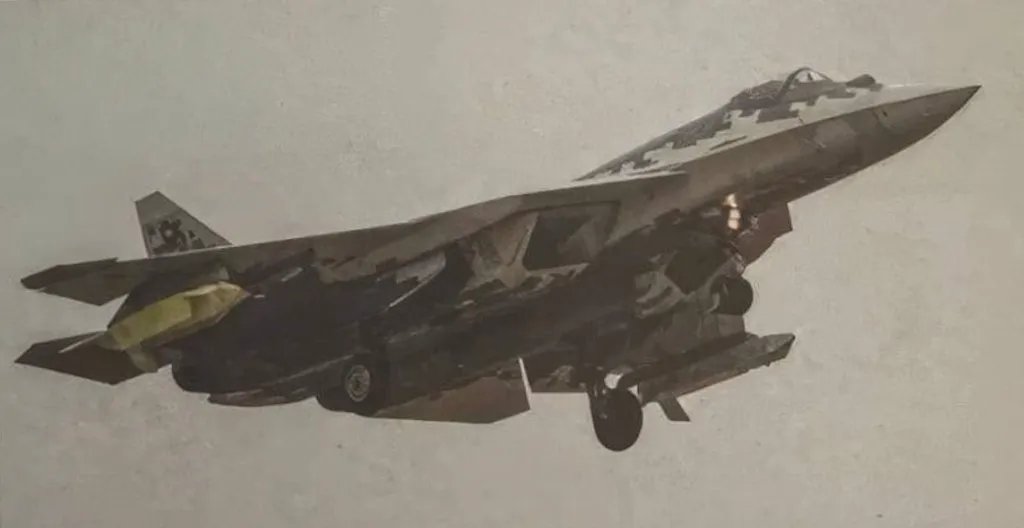
Russia is displaying some of its newest air-launched precision weapons in public for the first time at the El Alamein International Airshow in Egypt this week. The S-71K Kovyor and related S-71M Monokhrom, and the S8000 Banderol, reflect Russia’s effort to field larger numbers of relatively inexpensive standoff weapons alongside its more sophisticated and costly missile types. As such, their development and early employment are closely tied to the war in Ukraine, but they also reflect wider global interest in these kinds of weapons.

The weapons, seen in the tweet embedded below, comprise, clockwise from top left: S-71K Kovyor, an unknown smaller guided munition, S8000 Banderol, and S-71M Monokhrom:

Novel munitions for the Russian aircraft, on an expo. pic.twitter.com/L1UPTb8qhX

— krakek (@krakek1) September 6, 2026

For Russia, the requirement has become increasingly important as the war in Ukraine has evolved into a prolonged contest in which industrial capacity is as critical as technology. Russia has expended huge numbers of cruise and ballistic missiles against Ukrainian targets while also developing an enormous strike-drone campaign. At the same time, Ukrainian air defenses have become progressively more capable, forcing Moscow to use combinations of missiles, drones, decoys, and different flight profiles to penetrate or saturate the defensive network. One lesson is the fact that a weapon does not necessarily have to be as capable as a high-end cruise missile if it can be manufactured in much greater numbers and still present a credible threat to the target.

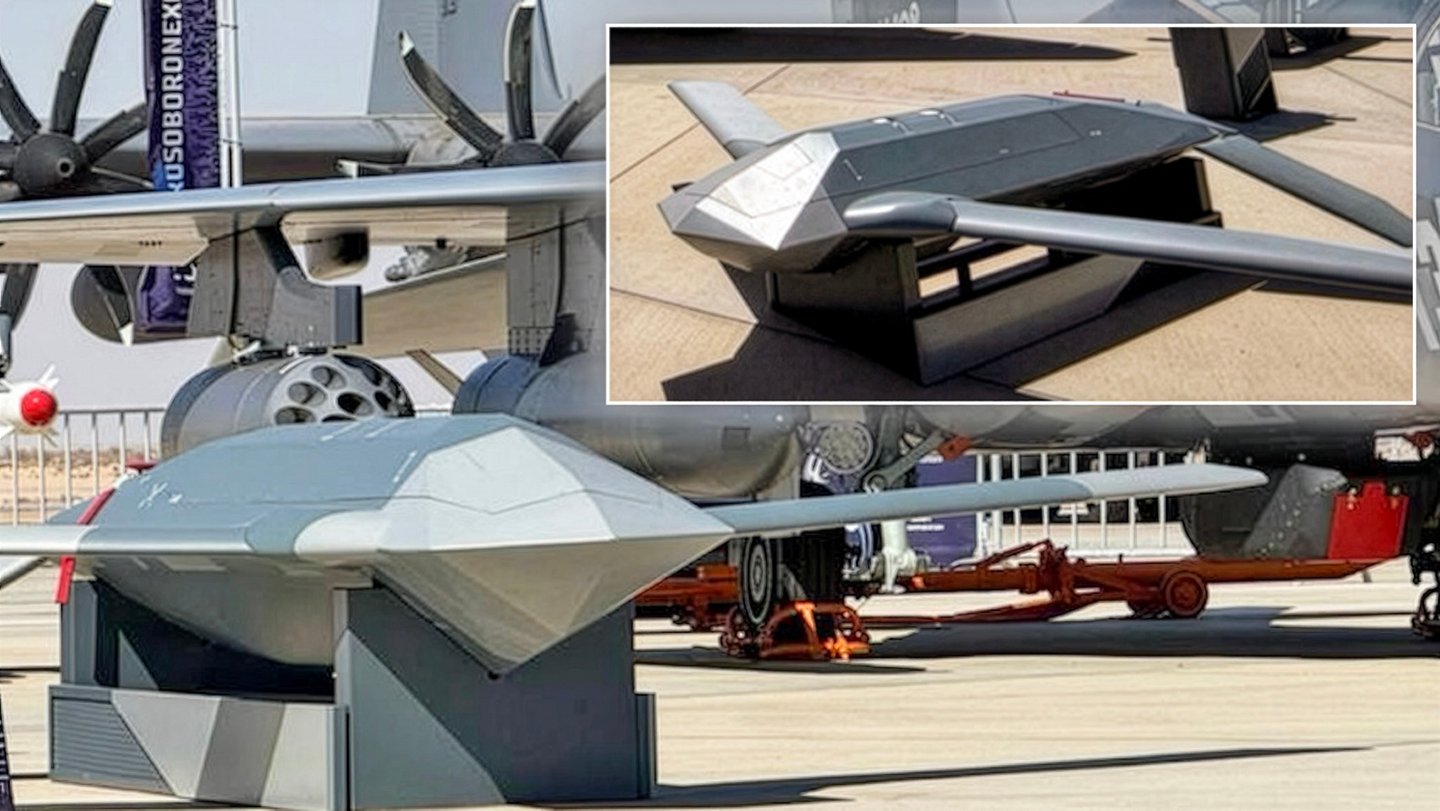
The S-71M, which TWZ previously reported on in detail after Ukrainian intelligence obtained an example, is a compact, turbojet-powered weapon with a distinctly angular airframe intended to reduce its radar signature. Imagery from Egypt gives a better look at its front end, including a faceted nose flowing into a broad central fuselage. The nose has at least one optically flat transparency for an infrared or TV seeker. Its wings are sharply swept and fold against the belly of the weapon for carriage, while the rear of the weapon terminates in an inverted-V tail arrangement. The overall shape is notably different from Russia’s more conventional cruise missiles of the past.
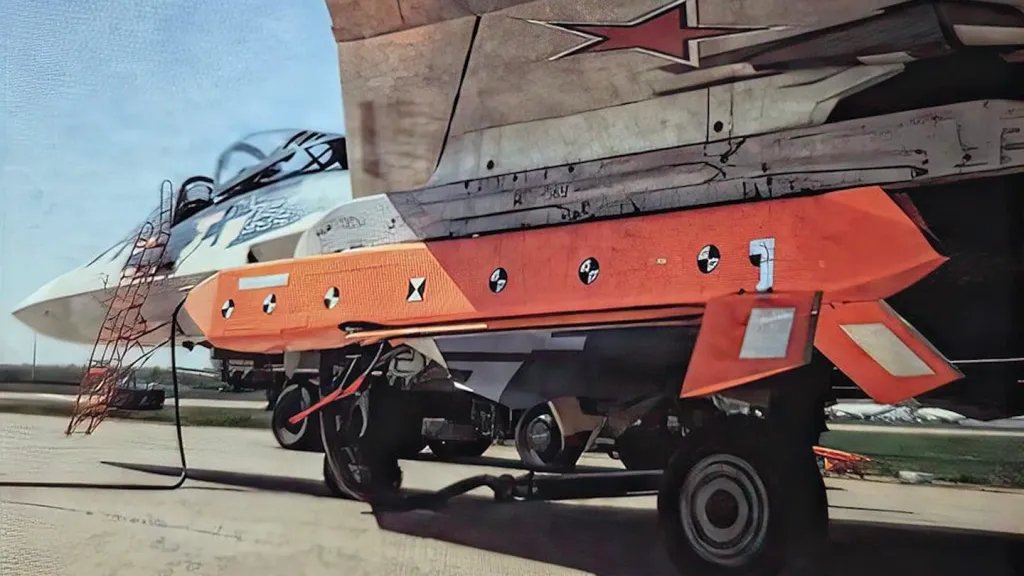
An S-71M test article under the wing of a Su-57. via X

Ukrainian analysis found that the S-71M incorporates an OFAB-250-270 high-explosive fragmentation bomb as its warhead and relies primarily on inertial guidance, rather than carrying a sophisticated terminal seeker, although the seeker window raises questions about that.

Ukrainian intelligence also described its construction as being relatively straightforward, with fiberglass composite material making up much of the outer structure and no evidence identified of specialized radar-absorbing coatings.

As we noted previously, the weapon appears intended as a less expensive, but still survivable standoff weapon option that can be produced in significant numbers.

The S-71M has been tested from the Su-57 Felon fighter, also present at El Alamein. In a press release, the United Aircraft Corporation (UAC), responsible for the Su-57, said that the S-71M and the S-71K displayed alongside it “were designed for fifth-generation fighters,” although there is no reason why they couldn’t be launched from a wide variety of platforms.

A Su-57 performing at El Alamein, with one of its main internal weapons bays apparently loaded with Kh-69 standoff missiles:

T-50-9 in El-Alamein, opening both main weapon bays. Two, presumably, Kh-69 can be seen in the front one.

Source: @ T汪汪T pic.twitter.com/f6csKc6Y9D

— George N. (@GeorgeN28581) September 8, 2026

Regardless of launch platform, the nature of the war in Ukraine makes the S-71M particularly useful. Russia has increasingly relied on extemporized glide bombs for attacks against targets relatively close to the front, but those weapons require the launching aircraft to operate within a certain distance of Ukrainian defenses. At least in their earlier iterations, such weapons were also crude and prone to failure. Longer-range cruise missiles offer considerably greater standoff but are more complex and expensive. The S-71M sits somewhere between those categories, providing an air-launched, powered weapon with a relatively large warhead and some degree of low observability without the cost and complexity of a full-size, truly stealthy cruise missile.

The S-71K appears to represent a more capable version of the basic concept. Public information remains limited, but the weapon has been associated with electro-optical guidance and greater onboard processing, potentially giving it a capability to deal with targets in a more flexible manner than the largely pre-programmed S-71M. Exactly how that capability is employed, and how autonomous the weapon actually is, remain less clear from the imagery and information released to date.
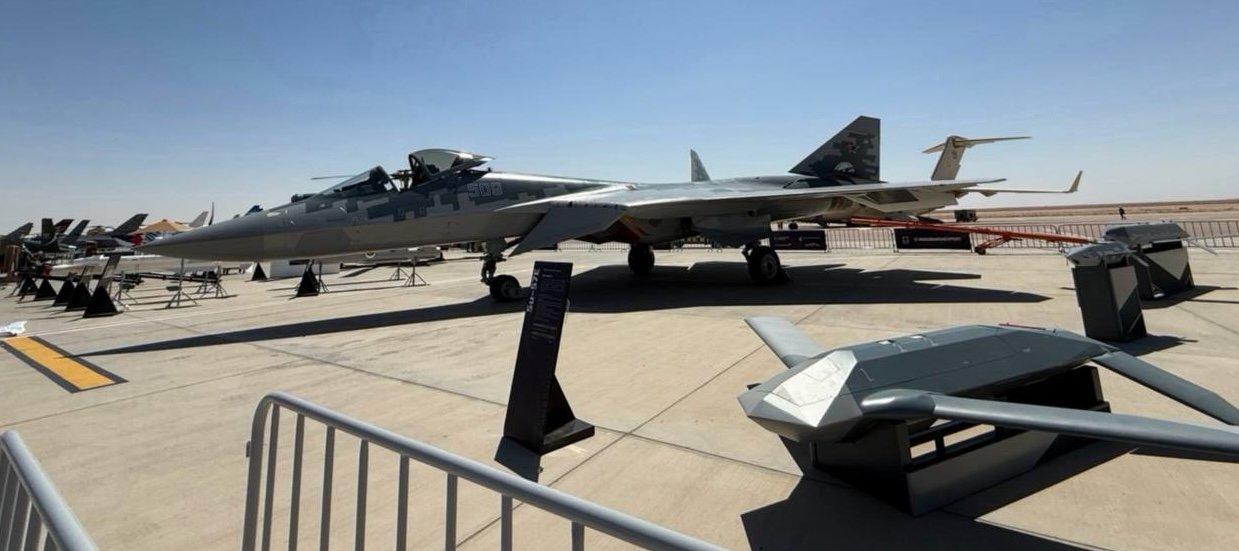
An S-71K missile presented in front of a Su-57 Felon at El Alamein. UAC
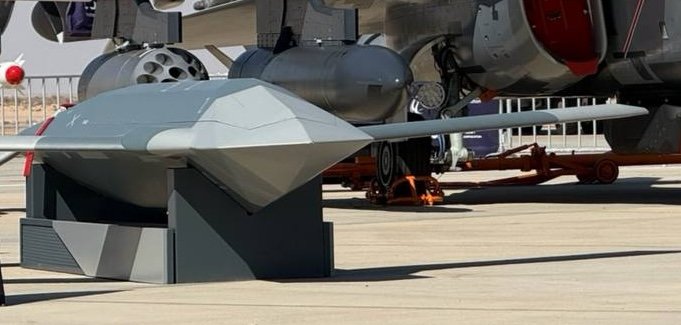
A close-up of the same S-71K missile at El Alamein. UAC
A Su-57 undergoes trials with a pair of S-71K missiles under the wings. via X

As displayed at El Alamein, the S-71K retains the overall faceted, low-observable appearance of the S-71M but has a visibly different airframe and wing arrangement. Its body is notably broad and compact relative to its length, with folding wings that are relatively thick, and a more refined inverted-V tail giving it more the appearance of a small uncrewed aircraft than a conventional air-to-surface missile.
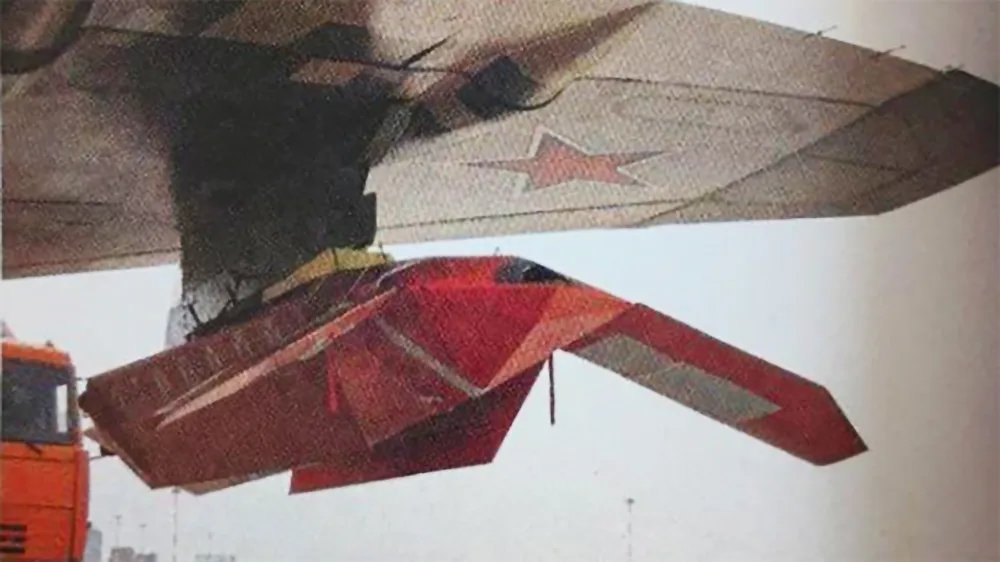
A rear view of a test S-71K under the wing of a Su-57. via X

Meanwhile, the Banderol represents a somewhat different path to the same general problem. Ukraine’s intelligence service previously obtained and analyzed an example of the small jet-powered cruise missile, which TWZ reported on last year. The weapon is considerably smaller than Russia’s principal cruise missiles and has been associated with launch from drones and helicopters. Its reported range of around 500 kilometers (311 miles) and relatively small warhead make it something of a complementary system intended to provide another, more economical way of putting a precision weapon onto a target from the air.
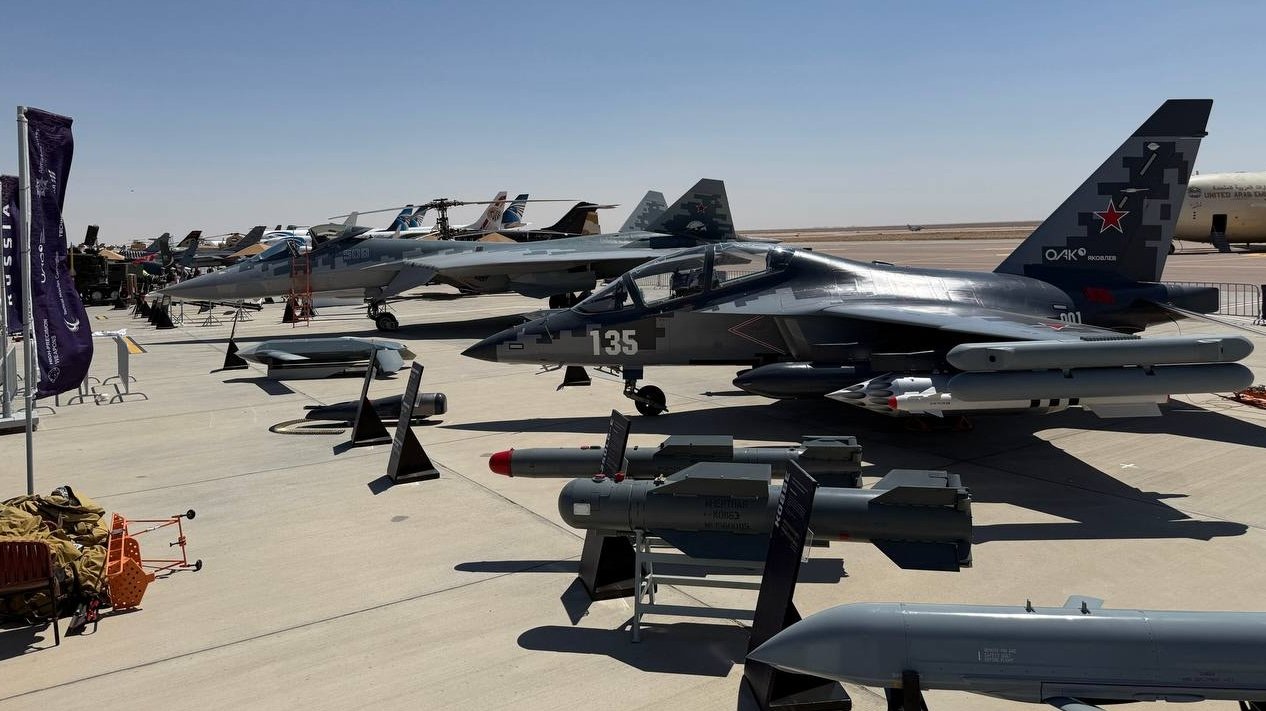
The front portion of a Banderol is seen nearest the camera in a line-up at El Alamein, which also includes a Yak-130M combat trainer and a Su-57. UAC

In terms of its appearance, the Banderol is more conventionally missile-like, with an ogival central fuselage, a pointed nose, and sharply swept folding wings. Its proportions underline just how small it is compared with Russia’s better-known air-launched cruise missiles.
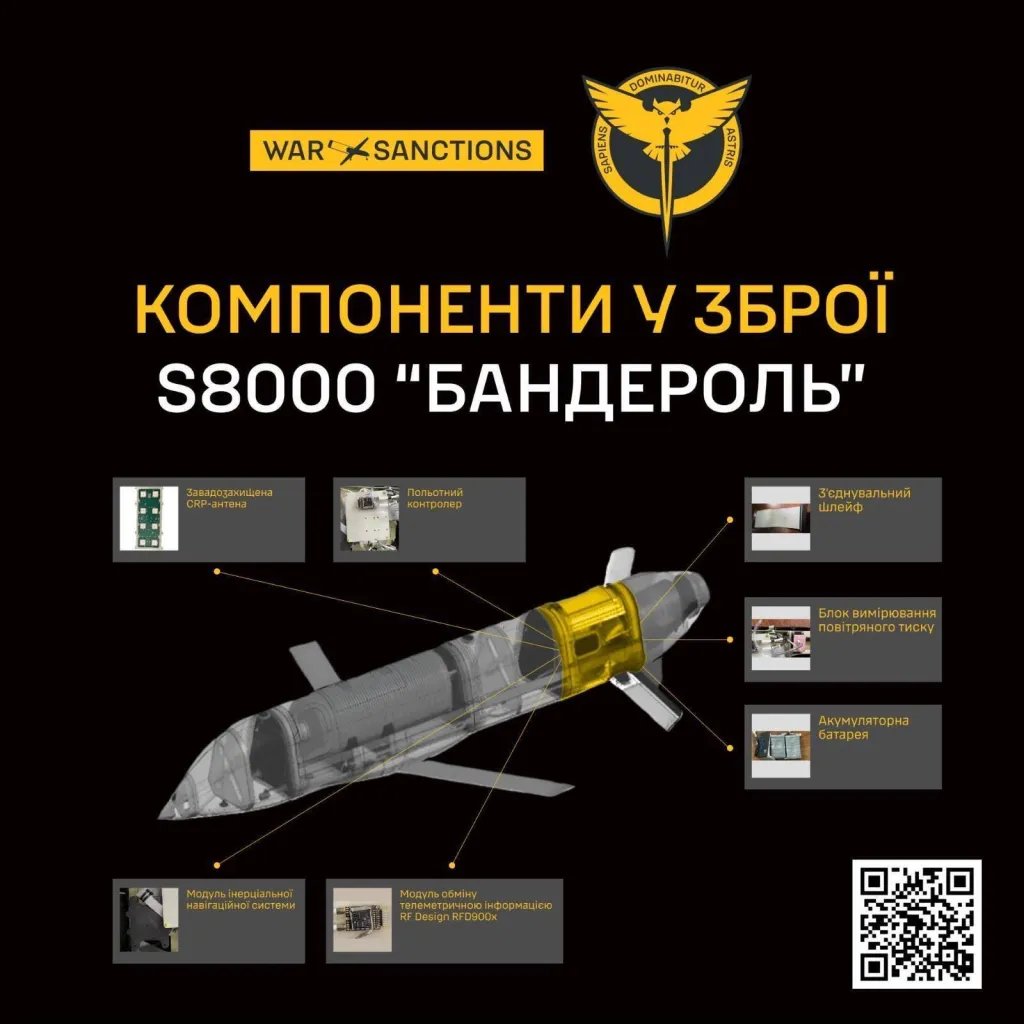
An infographic prepared by Ukraine showing the Banderol cruise missile and some of its foreign-sourced components. GUR photo

The Banderol is particularly relevant in the context of the economics of the Ukraine conflict. Russian forces have increasingly used combinations of relatively inexpensive one-way attack drones and more expensive cruise and ballistic missiles. The drones can be produced in large numbers and used to complicate air-defense operations, while the more capable missiles provide greater speed, range, payload, or penetration capability. A small turbojet-powered weapon such as Banderol offers another point on that spectrum.

At least one image has recently emerged showing a Banderol carried by a Russian Mi-28NM Havoc attack helicopter. This would be in line with unconfirmed reports from Ukraine last month that Russia was using the Mi-28 as an additional launch platform for the weapon, including firing them from over the Sea of Azov to attack targets around Odesa.

An S8000 “Banderol” (“Dan-T”) small cruise missile mounted on a Russian Mi-28NM attack helicopter. pic.twitter.com/Xcx3MmFK3B

— OSINTWarfare (@OSINTWarfare) September 6, 2026

Its reported use also illustrates how the distinction between a cruise missile and a large one-way attack drone is becoming increasingly blurred. The Banderol incorporates a conventional missile-like airframe and jet propulsion but has been associated with drone operations and makes extensive use of commercially available components. TWZ’s earlier examination of the weapon also highlighted the extent to which modern Russian weapons programs can combine relatively simple airframes with foreign-sourced electronics and propulsion technology.

Russia has revealed an Orion (Inokhodets) UAV carrying the S8000 Banderol air-launched cruise missile, marking the clearest Russian footage yet of the weapon integrated with the drone. #Russia #Orion #CruiseMissile #Defense pic.twitter.com/yLHb7h1oW9

— Drone Wars (@Drone_Wars_) July 13, 2026

Likely Banderol loitering munition on the ground (perspective exaggerates it's size) and under Orion drone.

Banderol has been reported as one of the munition used in recent strikes and appears to use a jet engine and a FAB-100 warhead or similar. pic.twitter.com/j50DUsNuVe

— krakek (@krakek1) April 27, 2025

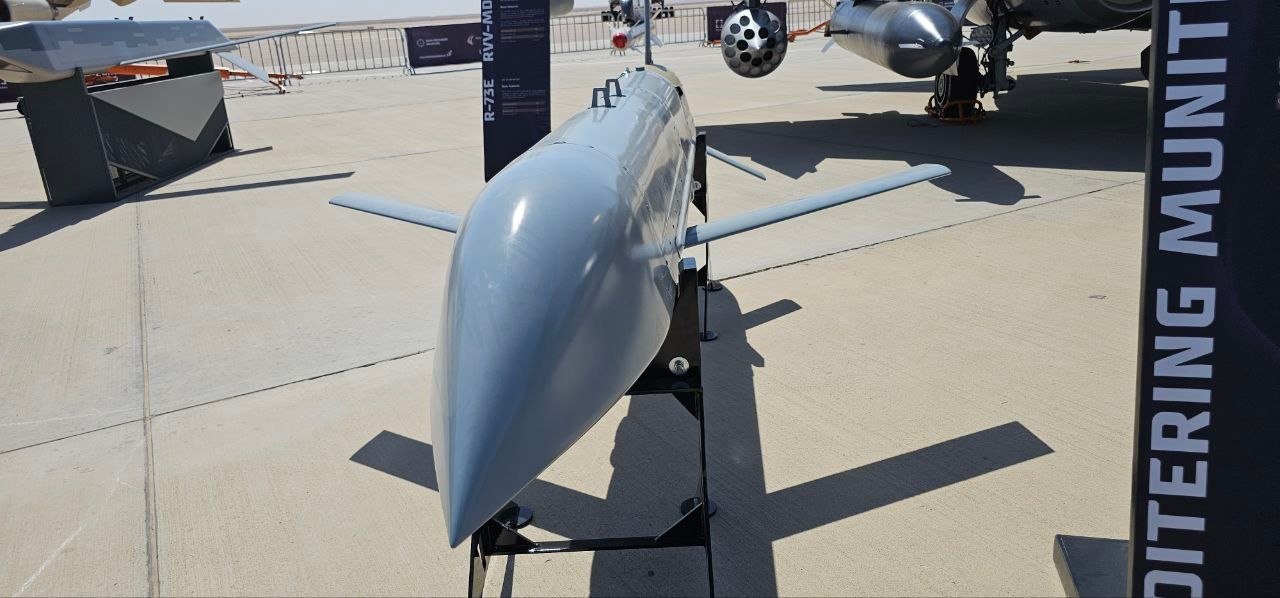
Seen together at El Alamein, the three weapons provide an unusually useful snapshot of where Russian air-launched strike development is heading. They are presented alongside a fourth, so-far unidentified munition. This unnamed weapon is notably short and fat, with a cruciform tail, and an optical window in the nose. Its overall size and shape suggest it may have been developed specifically to arm drones.

The appearance of the weapons at an arms fair underscores the fact that Russia is not the only country confronting the problem of producing and fielding sufficient precision weapons at an acceptable cost. The growing interest in lower-cost cruise missiles, loitering munitions, attritable aircraft, and other forms of expendable precision strike is now evident well beyond Russia.

Russia is also clearly trying to make these weapons harder to intercept, an increasingly important consideration as Ukrainian air defenses have demonstrated an ability to shoot down even glide bombs in some circumstances. The S-71K in particular incorporates unusually pronounced low-observable shaping, suggesting that survivability was also a central requirement from the outset.

There is, however, a significant complication to Russia’s attempt to turn its wartime experience into an export opportunity. Buying any kind of weapons from Moscow has become considerably more difficult because of sanctions, restrictions on access to foreign technology and financing, and the wider political risks associated with maintaining a Russian defense relationship. Those factors matter just as much to a prospective customer as the performance of the weapon itself.

Author’s note: earlier reporting on the S-71 family appears to have transposed the S-71K and S-71M versions. Most authoritative accounts now indicate that the more refined, more stealthy version is the S-71K Kovyor (meaning carpet), while the simpler weapon is the S-71M Monokhrom.

Update, September 9:

Rostec, the Russian state-owned defense conglomerate, has provided more details of the weapon identified at El Alamein as the Banderol. Rostec calls this weapon the ‘Dan-T’ loitering munition, which is an export designation for Banderol.

According to Rostec:

The ‘Dan-T’ munition operates on a ‘fire-and-forget’ principle and is adapted for launch from Russian and foreign aircraft and helicopters. The munition is equipped with a compact jet engine and can strike targets at a range of hundreds of kilometers. The ‘Dan-T’ features a special flight mode designed to evade enemy air defence systems.

Rostec adds that the Dan-T has been combat-tested in the war in Ukraine, where it claims there have been “hundreds of successful launches” against enemy targets in the Special Military Operation zone. “We expect this munition to attract widespread interest from foreign customers,” said Rostec.
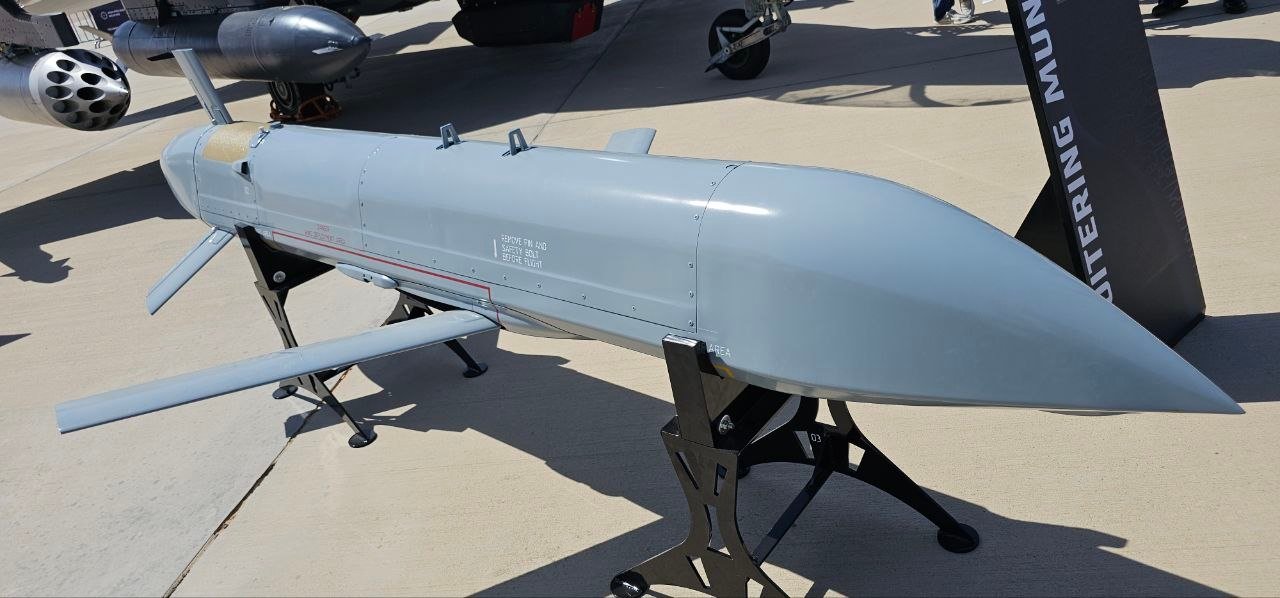
Rostec
Rostec

Contact the author: thomas@thewarzone.com

The post Russia’s New Stealthy Lower-Cost Air-Launched Standoff Weapons On Display In Egypt appeared first on TWZ.
  •  

The Barentsburg Trap

On 2 September, Norwegian authorities detained Russian state-owned research vessel Professor Molchanov at Barentsburg in Spitsbergen (Svalbard), following a lawsuit filed by Ukraine’s Naftogaz.

At first sight, the detention of the Russian research vessel appears as a routine event in Norway’s long-standing strategy to oust Russia from Spitsbergen and establish absolute sovereignty of the archipelago—free from the legal restrictions stipulated by the 1920 Spitsbergen (Svalbard) Treaty. At closer sight, it opens a loophole for expropriating Russian property on the archipelago. But more importantly, trying to accommodate the current geopolitical situation to its national legal proceedings and violating the 1920 Treaty by placing national law above international law, Norway has driven itself into a legal trap.

Article 32 of the 1982 UN Convention on the Law of the Sea (UNCLOS) states that state-owned vessels operated for non-commercial purposes enjoy sovereign immunity from foreign jurisdiction. Naftogaz, long pursuing Russian assets, claims that the research vessel’s visits to Spitsbergen had predominantly commercial purposes.

Norway portrays the incident as a purely technical matter based on national legislation. According to the Norwegian Ministry of Justice, its decision followed the 2023 ruling of the Permanent Court of Arbitration in the Hague as an enforcement of an approximately $4.22bn arbitral award from the Russian Federation to Naftogaz for its Crimean assets. The order for the enforcement of this ruling was issued by the District Court of Nord-Troms and Senja (in Tromsø, mainland Norway), and the Governor of Svalbard acted as a regular enforcer.

This seemingly flawless normative scheme falls apart when examined from the perspective of the basic principles of international law.

Norway’s sovereignty over Spitsbergen is based on the 1920 Spitsbergen Treaty—an international treaty that provides for the creation of a special international legal regime on the archipelago’s land territory and in its territorial waters. Essentially, the Treaty provides for the creation of a territorial enclave, similar to the Kaliningrad region but, unlike in the latter case, does not generate its own continental shelf and exclusive economic zone in the adjacent maritime areas.

The 1982 UN Convention assumes that a state has full sovereignty over its ports. However, under the 1920 Spitsbergen Treaty, Norway does not have such absolute rights and, accordingly, has no legal basis for applying the provisions of the Convention in the archipelago’s ports. Article 3 of the Spitsbergen Treaty states: “The nationals of all the High Contracting Parties shall have equal liberty of access and entry for any reason or object whatever to the waters, fjords and ports of the territories specified in Article 1; subject to the observance of local laws and regulations, they may carry on there without impediment all maritime, industrial, mining and commercial operations on a footing of absolute equality”.

It follows from this stipulation of the Treaty that:

  • The Treaty’s regime excludes the application of the provisions of the 1982 Convention, including Article 32, in Spitsbergen archipelago’s ports.
  • The Professor Molchanov research vessel has all grounds to engage in any of the activities listed in the Treaty, including commercial ones.
  • All states-signatories to the Spitsbergen Treaty, including Norway, agreed that the Norwegian government, in addition to exercising sovereign functions in the archipelago, is obliged to ensure the contracting parties’ rights as specified in the Treaty.

The Russian research vessel did not violate the law on the archipelago, which means that its detention is a direct violation of the powers granted to Norway by the parties to the Spitsbergen Treaty.

Furthermore, the third paragraph of Article 3 of the Treaty reads: “Notwithstanding any rules relating to coasting trade which may be in force in Norway, ships of the High Contracting Parties going to or coming from the territories specified in Article 1 shall have the right to put into Norwegian ports.” This provision thus distinguishes between the archipelago’s local ports and ports on the Norwegian mainland, as well as between laws pertaining to the archipelago and those regulations that may be in force on the Norwegian mainland—the national legislation of the mainland, which incorporates the provisions of international agreements to which Norway is a party.

Claims that the 1958 Convention on the Recognition and Enforcement of Foreign Arbitral Awards, known as the New York Convention and ostensibly forming the legal basis for the detention of the Professor Molchanov vessel, and the UNCLOS are applicable to Svalbard because they are “merely part of Norwegian law” are inconsistent with the provisions of § 2, Part II of the Svalbard Act, which states: “Other legal provisions do not apply in Svalbard unless expressly provided”.

In the Norwegian legal system, an international treaty has no legal force for authorities until the Storting (parliament) passes a special law incorporating it or transforming it into national legislation, after which the treaty acquires the force of national law. The 1958 New York Convention was incorporated into Norwegian law through the Arbitration Act and the Enforcement Act. The 1982 UN Convention was incorporated through a series of laws, including the Maritime Boundary Act and the Act on the Management of Living Marine Resources. Upon ratification, these conventions became part of Norwegian law. When ratifying them, Norway made no reservations regarding their applicability to Spitsbergen, a territory with a special international legal regime.

The application of Norwegian national laws incorporating the provisions of international treaties immediately creates a conflict with Article 3 of the 1920 Treaty, which permits application of only local archipelago-related laws, but prohibits imposing restrictions on commercial and research navigation by Norway’s international obligations to third parties (whether the UN or Naftogaz) valid exclusively for the mainland.

In cases of collision of norms, the fundamental principle of international law—Pacta sunt servanda (Treaties must be observed)—takes unconditional effect. This is enshrined in Article 26 of the 1969 Vienna Convention on the Law of Treaties and reinforced by Article 27 of the same Convention, which states: “A party may not invoke the provisions of its internal law as justification for its failure to perform a treaty.”

By placing the procedural code of the continental part of the country and the material claims of the Ukrainian company above Article 3 of the 1920 Treaty, Norway committed an internationally unlawful act.

For the Russian side, this incident means disrupted scientific programs, canceled expedition tours, and other losses. Therefore, in accordance with Article 31 of Responsibility of States for Internationally Wrongful Acts, codified by the UN International Law Commission and approved by UNGA Resolution 56/83 in 2001, Norway, as the offending state, is obligated to fully compensate for the caused damage.

In accordance with Article 36 of the ILC Act, Moscow has the right to lay financial claims to the Kingdom of Norway for:

  • Actual damage: costs for the vessel’s forced demurrage at Barentsburg, maintenance of the crew and expedition members, port fees, and fuel costs to maintain the vessel.
  • Lost profit: compensation for the disruption of chartered voyages, obligations to refund tourists and scientists, and the disruption of subsequent commercial contracts.
  • Legal costs: Oslo must fully compensate for the costs of hiring Norwegian lawyers to appeal unlawful arrest of the vessel in the Hålogaland Court of Appeal.

The detention of the Professor Molchanov has also exposed long-standing problems in Russia’s legal approach to areas outside its sovereignty and a catastrophic imbalance in the parties’ legal preparedness.

Norway has a well-honed legal apparatus. For decades, Oslo has been deliberately and proactively using legal and administrative mechanisms to systematically emasculate the provisions of the 1920 Treaty and gradually strengthen its sovereignty. Every action has meticulously been calculated at the level of regulations and instructions for local implementers.

Since the Treaty’s very inception, beginning with the prior international agreement known as the Mining Regulations for Svalbard, Norway has actively employed manipulative legal and terminological engineering in developing the Treaty’s provisions. Specifically, it clearly used these methods to emasculate the provisions of Article 7 of the Treaty, which regulates the rights of the contracting parties to the archipelago’s natural resources.[1]

As for Russia, it could confront the Norwegian systemic rulemaking machine by accumulated academic knowledge, but for some inexplicable reason it lies idle. Russia has a robust research base,[2] but the results of fundamental applied research conducted by Russian scientists on the Spitsbergen track have been ignored for years.

Russian government agencies still lack a clear understanding that the legal response to the Norwegians’ actions should be symmetrical, systemic, and proactive, rather than belatedly reactive.

The incident with the Professor Molchanov vessel cries out for institutional change—it is time Russia moved from ad hoc reactions to continuous legal monitoring. For example, by establishing a permanent position for a leading international lawyer on Spitsbergen within the state-owned trust Arktikugol, which would monitor Norwegian lawmaking in real time, follow Oslo’s court practice, and promptly provide authorities with ready-made legal advice before another Russian vessel is arrested or a similar legal event occurs.

A similarly deficient legal policy is observed in the delimitation in the Arctic Ocean, to which Spitsbergen is directly related.[3] An analysis of the concluded bilateral treaties on delimitation in the Arctic and of national applications to the UN Commission on the Limits of the Continental Shelf shows that, before submitting applications with geological claims to the Arctic Ocean shelf, Russia should have established a permanent situation center at a dedicated research institute of the Russian Academy of Sciences. This has still not been done.

International law is a formidable weapon, and its proper use must be a powerful tool for protecting Russia’s national interests in the Arctic and other areas beyond its territorial sovereignty. Russia’s legally ineffective management, in the face the Ministry for the Development of the Russian Far East, has unwittingly opened a loophole for Norway to arrest the Professor Molchanov vessel, which may serve as a precedent for further confiscation of Arktikugol’s assets on the archipelago, which occupies a significant position in the geopolitical balance of power.

By detaining the Russian research vessel, Norwegian authorities have opened Pandora’s Box. If Spitsbergen becomes a testing ground for forced recovery of assets in geopolitical disputes involving third parties, its special international legal regime will be significantly damaged. Today, Oslo arrested a Russian research vessel following a lawsuit filed by Kyiv. Tomorrow, on the same grounds, courts in mainland Norway will begin detaining American, Iranian, Chinese, or Taiwanese vessels in Spitsbergen ports, following lawsuits filed by third parties. To avoid turning this international outpost into a zone of permanent legal chaos, Norway’s judicial system must return to the legal framework and immediately release the Professor Molchanov.

And it is time Russia learnt to use the expertise of its legal scholars and transform it into the competences of institutions that could effectively protect its national interests.

  •  

Iceland Votes No: Sovereignty Over Brussels

On August 29, 2026, Icelanders delivered a verdict that carried an uncomfortable implication for Brussels. By 52.8 percent to 47.2 percent, they rejected the proposal to resume EU accession negotiations. The result was not a rejection of Europe. It was a vote for retaining control. The final tally was close but unambiguous: 118,040 votes against […]
  •  
❌