❌

Reading view

‘It is a horrible and terrible crime’ – Illegal African migrant sentenced to 13 years in prison for raping 75-year-old woman in her home in France

A 33-year-old Cameroonian illegal migrant has been sentenced to 13 years in prison for raping a 75-year-old woman in her home in Ozoir-la-Ferrière, Seine-et-Marne, France.

The Seine-et-Marne criminal court handed down the sentence on Monday, along with a permanent ban from French territory and registration in a list of sexual and violent offenders (FIJAIS).

The attack occurred in the early hours of Jan. 1, 2024, which Remix News covered at the time. Shortly before 6:30 a.m., the intoxicated man, who had a whiskey bottle in his pocket, broke into the home of an elderly couple on a quiet residential street. He first entered the room of the victim’s husband, who is bedridden and severely disabled after a stroke. The husband cried out but could not intervene.

🇫🇷🔴A French journalist says there is a shocking pattern of foreigners raping elderly women in France.

Just this week, a Moroccan migrant was arrested for raping and torturing a 74-year-old woman in Romainville with a telescopic baton.

"She’s raped, a 74-year-old woman, it’s… pic.twitter.com/R5hmO30kxh

— Remix News & Views (@RMXnews) April 10, 2026

The intruder then went to the 75-year-old woman’s bedroom and forced the woman to have unprotected sexual intercourse. He then demanded money and took a €50 note before leaving. He remained in the house for about 45 minutes.

Investigators identified him through video surveillance. On New Year’s Day, he traveled from Paris’s Saint-Lazare station to Ozoir-la-Ferrière after a night of heavy drinking during which he and two companions consumed five bottles of alcohol. Once in the town, he is believed to have gone first to the home of a prostitute he knew who lived on the same street; that woman then led him toward the victims’ house.

The defendant, who is married and has four children in Cameroon, entered France in 2022 after traveling through Libya and Italy. On arrival, he was housed free of charge in a maid’s room in Paris’s 16th arrondissement by the association “Surviving Insecurity – Diogenes,” for which he also worked. His asylum applications were rejected twice, and he was in an irregular situation at the time of the crime.

During the trial, the attorney general noted that ten years of detention would cost French taxpayers approximately €1 million.

The victim, now 78, has not left her home since the attack. She has said she believed she was going to die. Her son, who is in his fifties, has moved back in with his parents to care for them.

The victim’s lawyer, Christophe Gérard, told Le Figaro: “There are two types of rape: incestuous family rapes and those committed in the street, in parking lots, or even worse at home, the place where one is supposed to be safest. The events took place in the middle of the night, on New Year’s, on the 1st. The son left his parents’ house around 10:30 p.m., closed everything, before discovering in the early morning that his mother had been raped. It is a horrible and terrible crime.”

Just months ago, Remix News published in an in-depth news article covering at least 14 cases involving migrants raping elderly French women in recent years.

The post ‘It is a horrible and terrible crime’ – Illegal African migrant sentenced to 13 years in prison for raping 75-year-old woman in her home in France appeared first on Remix News.

  •  

German man from Kosovo on trial for raping a woman during a job interview, calls it the ‘best sex’ of his life

Go on a job interview in Germany and become a rape victim? That is what happened to one young woman, according to prosecutors.

Authorities say a 45-year-old German citizen, who originally from Kosovo, raped a 24-year-old woman during a job interview for a secretary position in an empty warehouse in the city of Kerpen. While the woman’s lawyer said she has been traumatized by the rape, the suspect said it was the “best sex” of his life.

🇩🇪🔴 Go on a job interview in Germany and get raped?

According to prosecutors, a 45-year-old “German” originally from Kosovo raped a 24-year-old woman during a job interview for a secretary position in an empty warehouse in the city of Kerpen.

While the woman's lawyer said she… pic.twitter.com/nkjZNn0xlU

— Remix News & Views (@RMXnews) September 9, 2026

During the “job interview,” he asked her a series of inappropriate questions, including whether she was still a virgin, say prosecutors.

When she tried to leave, he reportedly grabbed her handbag, blocked her way, and told her “she could not leave.” The German-Kosovar man then proceeded to press her against a wall, strip her, and rape her. The defendant repeatedly forced her to perform oral sex and sexual intercourse while asking her if “she enjoyed it.” Prosecutors say the woman only endured the rape because she was afraid the man would hurt her.

After the crime, he allegedly gave her €100, reports the German newspaper Kölner Stadt-Anzeiger.

During the trial, he denied that he raped her and said, “She wanted it… she participated.”

The defendant, who owns his own company, reportedly has a wife and three children.

This is not the only case in Germany in which a migrant has been accused of rape in connection with a job interview. In Braunschweig in December 2022, a 37-year-old Syrian conducted an unauthorized “job interview” with a 19-year-old in the morning at a restaurant. That evening he went to her apartment under the pretext of discussing the position further and raped her there. He was later convicted and sentenced to two years and ten months.

The post German man from Kosovo on trial for raping a woman during a job interview, calls it the ‘best sex’ of his life appeared first on Remix News.

  •  

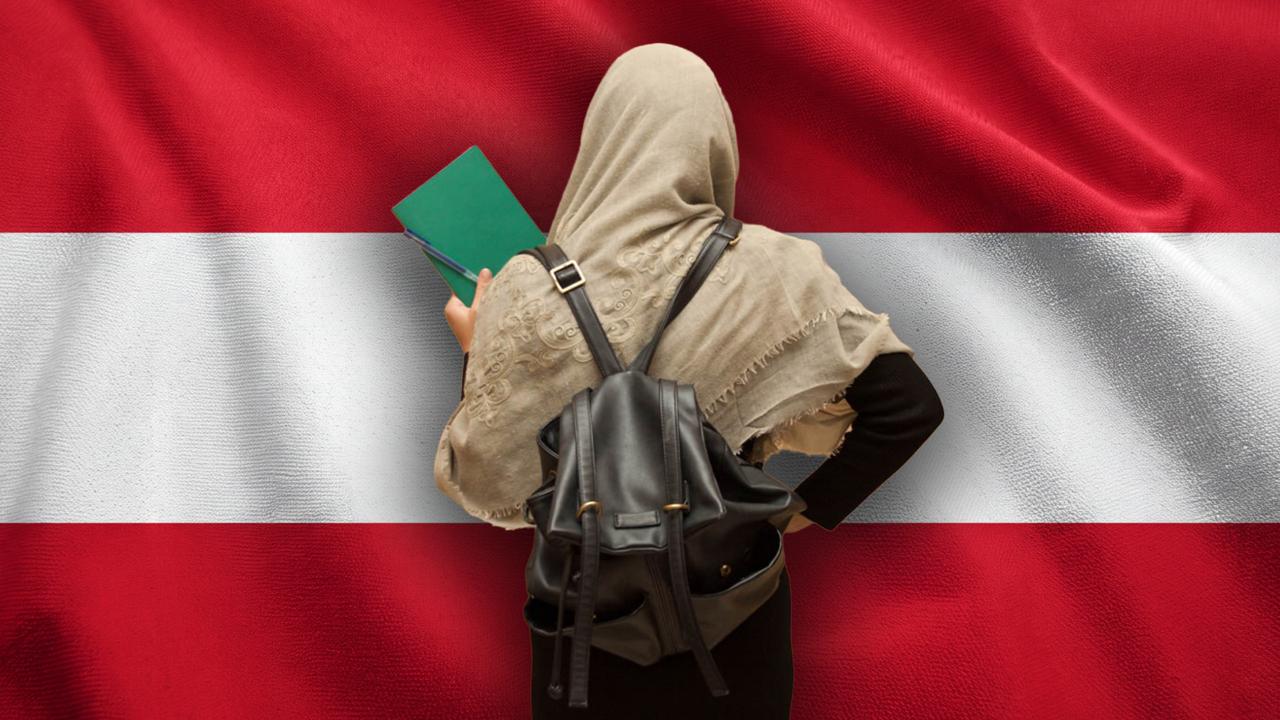
Austria’s headscarf ban for under-14 schoolgirls comes into force

Austria’s new nationwide ban on “traditional Muslim” head coverings, including hijabs and burqas, for girls under 14 in both public and private schools, has now taken effect as of Sept. 7, 2026. in Vienna, Lower Austria, and Burgenland. The start date coincided with the start of the new school year. Austria’s remaining states will follow with a ban next week as well.

The measure, framed by the government as a child-protection and gender-equality policy, immediately faced visible resistance from Muslims and the first formal legal challenge.

At an Islamic primary school in Vienna, reporters from Austrian news outlet Heute observed young girls arriving to school still wearing headscarves accompanied by their mothers. One child wore a pink hijab coordinated with her dress; two slightly older students entered in simple hijabs without parents. School officials did not immediately clarify how they would apply the ban on private Islamic institutions.

The law requires schools to start with conversations involving the student and her legal guardians. Repeated violations trigger involvement of child-protection services, with fines of €150 to €800 possible for parents as a last resort. Teachers, already under strain, must initiate these talks. There are now fears of real conflict arising in the coming months.

Integration Minister Claudia Bauer of the conservative ÖVP described the headscarf as “a sign of oppression and a means of controlling girls from the earliest childhood.” Chancellor Christian Stocker has separately called for a constitutional ban on political Islam, saying he does not “want to live in an Islamic state.”

The right-wing Freedom Party of Austria (FPÖ), the most popular party in the country is known for its even harsher stance toward migrants and Islam in the country. FPÖ politician Ricarda Berger stated there is “no place for political Islam in Austria, and certainly not in our schools.”

The party wants a general ban on all headscarves and face coverings in schools for both students and teachers alike, which would cover all ages.

Education Minister Christoph Wiederkehr of the liberal NEOS acknowledged uncertainty about the law’s fate at the Constitutional Court, stating: “You can never be completely certain.”

He added that the government and education ministry “carried out very intensive consultations” to draft a constitutionally compliant text.

Only the Greens opposed the bill in parliament. Green politician Sigi Maurer accused Wiederkehr of “creating new conflicts and offloading them onto the teachers,” saying the minister wanted to “foist the role of police officers onto them.”

Teachers’ union chairman Paul Kimberger noted that some communities had already announced they would resist and that certain conversations with parents “will probably have limited success.”

The Islamic Religious Community in Austria (IGGÖ), the largest Islamic organization in the country, condemned the ban as discriminatory. Spokesperson Carla Amina Baghajati said, “We believe it unjustifiably restricts the fundamental right to freedom of religion and disproportionately affects Muslim girls. Rather than protecting children, it singles out a specific religious practice and risks excluding the very children it claims to support.”

The IGGÖ has pledged to support families challenging the law at the Constitutional Court. A request for annulment was filed on the first day of school.

A 2020 Constitutional Court ruling had struck down an earlier ban limited to children under 10, finding it violated Austria’s duty of religious neutrality. The court dismissed premature challenges to the new law in July because it had not yet entered force, but that procedural barrier is now gone. Left-wing student groups have called for protests. An 11-year-old girl demonstrated against the ban in February carrying a banner that, translated into English, read, “My headscarf, my decision.”

The Constitutional Court is likely to have the final word on the issue.

The post Austria’s headscarf ban for under-14 schoolgirls comes into force appeared first on Remix News.

  •  
❌