❌

Reading view

Baltimore residents fight City Council over controversial data center bill

Background: Photo Baltimore City Hall in Baltimore, Maryland taken on May 2, 2019. Photo by Alex Wroblewski/Getty Images (color of imaged altered by TRNN). Foreground: A montage of photos of Baltimore residents speaking at an August 27, 2026, Baltimore City Planning Commission public hearing on Council Bill 26-0174 (data centers), as well as photos of Baltimore residents holding signs saying “No Data Centers” and “Ban Data Centers Now!” at a rally in front of Baltimore City Hall on June 29, 2026. Photos by Maximillian Alvarez/TRNN. Image design by TRNN.

Editor’s Note: Council Bill 26-0174 (data centers) will get another public hearing in front of the Baltimore City Council’s Land Use & Transportation Committee on the 4th floor of City Hall on the morning of September 24.

Baltimore, Maryland, currently has a moratorium on new data center development, but a proposed City Council bill has residents nervous that the door is creaking open for data centers to come into the city—and that City Council views this as “inevitable.”

Council Bill 26-0174, sponsored by City Councilmember Phylicia Porter, would require new data center projects in Baltimore to go through a conditional use approval process that includes a health equity assessment. Residents opposed to the bill say that while the bill may be well intentioned, they want a full data center ban, not stricter guidelines for data centers operating in Baltimore.

In this on-the-ground report, TRNN takes you inside the August 27 Baltimore City Planning Commission public hearing on Council Bill 26-0174:

TRNN also published a full, unedited recording of the August 27 Baltimore City Planning Commission public hearing on Council Bill 26-0174, which is free and available to the public on our YouTube channel:

Credits:

  • Videography: Maximillian Alvarez
  • Post-Production: Dave Hebden, Cameron Granadino
Transcript

The following is a rushed transcript and may contain errors. It will be updated.

Speaker 1:

We all are well aware that we’re not dealing with good faith actors when it comes to the people who want to build data centers.

Speaker 2:

I currently work at a data center. That doesn’t mean that I approve of data centers. Every

Speaker 3:

Every time it storms, it seems that a bunch of lights go down in the city. I’m confused why we’re even talking about a data center if we can’t keep our own lights on.

Maximillian Alvarez:

Baltimore currently has a moratorium on new data center development while a city study examines the potential impacts that data centers would have on our city. However, even though that study hasn’t been completed yet, a proposed city council bill has residents here nervous that the door is creaking open for data centers to come into the city and that city council views this as inevitable. Council Bill 260174, sponsored by city council member Felicia Porter, would require new data center projects to go through a conditional use approval process that includes a health equity assessment. Now, residents who are opposed to the bill say that the bill may be well intentioned, but what they want is a full data center ban in Baltimore, not stricter guidelines for data centers to operate in Baltimore. Now, the bill is going to get another public hearing in front of the Baltimore City Council’s Land Use and Transportation Committee on the fourth floor of City Hall on the morning of September 24th.

And that meeting is open to the public. Now, I was there in the room during the last public hearing on Council Bill 260174, which took place on August 27th when the bill was reviewed by the Baltimore City Planning Commission and residents were given a chance to voice their public comments. Now, the planning commission ultimately declined to support the bill and opposition from members of the public to data centers of any sort was frankly overwhelming, but you don’t got to take my word for it. Watch for yourself.

Andy Ellis:

We’re here at the Baltimore City Planning Commission getting ready to hear a bill that would allow data centers to come in if they had a health equity assessment into Baltimore. This happens despite the fact that we have an existing moratorium. And so we’re here today to testify against the bill because we think that the moratorium should be extended or made into a ban so that we can stop data centers from coming into the community.

Blaire Postman:

Hi, I’m Blaire from Cat Ladies for America. I’m a resident of Baltimore and I’m here today because even though there’s a moratorium on AI data centers in the city, it seems like they’re laying the groundwork for them to allow them and allow them to come in without a lot of oversight. And that makes me very angry. Claws out!

Speaker 8:

The next item is number eight, city council bill number 26-017 zoning conditional use, health equity assessment data centers.

Councilmember Phylicia Porter,:

I am Councilwoman Phylicia Porter and I represent Baltimore’s 10th District and chair of the Public Health and Environment Committee and bill sponsor for 26-0174. The data center industry is looking at Baltimore at the peninsula, Fairfield, Hawkins Point and other industrial areas. At the same time, the federal government is accelerating AI infrastructure development and scrutinizing state and local laws. It regards its obstacles to that development. This creates a real risk for jurisdictions relying only on a temporary moratorium without a permanent framework under development, which will face legal and economic pressure. Other jurisdictions have already quickly learned how that pressure can arrive. Hill County, Texas faced a hundred million dollars in federal lawsuit shortly after adopting its moratorium and rescinded under that pause under the weight of that litigation. This lesson is not that Baltimore should surrender its authority. This lesson is that Baltimore must exercise its authority carefully, deliberately, and now.

A moratorium alone without companion framework and process is exposed to taking legal challenges. Moving bill 26-0174 through this process, hearings, testimonies, amendments, votes itself is a part of that good faith planning effort that the Supreme Court has been requiring. Bill 26-0174 does not promote or green light data centers. It strategically and administratively blocks development at every step of the way that does not align with community. It creates public accountable process for deciding whether a qualifying data center is appropriate for a particular location and under what conditions it may process. This is the foundational right of the conditional use ordinance process. Traditional zoning asks whether proposed use is compatible with the land around it. A health equity assessment asks an equally important question, what will this decision mean for the people who already live in those conditions surrounding that land? Bill 26-0174 puts that cumulative reality into the decision making process of the city council before approval, not after residents become ill, household costs rise and public infrastructure is strained.

This is environmental justice and it’s basic due diligence.

Jon Laria:

There are maybe some questions, but it took me a while to sort of get this straight in my head, but there are only written submissions opposed to this bill by people who are opposed to data centers and so are you. Yes. So it’s kind of odd because they’re opposing a bill and I think the reason that’s happening is because most people are starting with the idea that there’s a moratorium, meaning zero data centers. And your bill provides a path, a difficult path, but a path to data centers. No,

Councilmember Phylicia Porter,:

That’s not correct. So it is not correct. So the study adds a legal framework attached to the moratorium right now as shared within my remarks, right now we are under a moratorium where we are legally unrestricted. We are unprotected right now under this moratorium without the conjoining health equity framework attached to it.

Jon Laria:

I’m not sure I understand.

Councilmember Phylicia Porter,:

Yeah. So no worries. So when you have a data center and we currently have, I will say if you have a data center that comes into the city that’s under a moratorium right now, if they sue Baltimore City, they sue Baltimore City saying this is unjust. We understand that data center developers are getting very crafty in their arguments. They’re arguing First Amendment rights. They are arguing other rights that provide them a pathway forward. We are seeing that those moratoriums are getting overturned. The successful moratoriums that have been upheld are always assigned and/or connected to a framework that allows good faith effort to showcase that they are doing some sort of regulatory footprint with that moratorium, not just saying that you want a moratorium. So that is the issue.

Jon Laria:

Okay. Although we are doing this study, I mean the moratorium is not just a moratorium. A moratorium that just says moratorium because we feel like it, I see the weakness that you’re describing, but a moratorium so we can study it seems like a defensible position.

Councilmember Phylicia Porter,:

It’s not because again, what was mentioned in the planning commission report was that there is a lack of health equity associated with the current moratorium. This answers that response.

Jon Laria:

But it is sort of an odd posture because I think, and people should speak for themselves, but we have all these people who are opposed to data centers and they will come and testify and they’ve submitted testimony saying no data centers because I think they see in your bill a pathway to data centers and their view is we don’t want them at all. And under the moratorium – I’m not arguing with anyone. I’m just trying to get straight because they have all these people who are going to come up and say no data centers because they perceive perhaps your bill as loosening the restrictions, which is actually not how you intend

Councilmember Phylicia Porter,:

To bill. It’s not the intent of the bill. And I will also caveat, how many data centers have an application now with the current city of Baltimore that once this moratorium goes away, if we do not have the regulatory framework in place, how many of them will be actually going through the process?

Speaker 1:

But if I’m understanding the bill correctly, basically we currently have a moratorium that is pending a health review, health study review in the findings there. And that the bill is saying we need to do something that is stricter than a review and stricter than a moratorium because a moratorium can be overturned. And basically the bill is saying we’re going to provide a path to a data center, but the path is going to be very difficult. And so the hope, I believe if I’m understanding correctly, is that with the difficulty of the path, the data center should not be able to be built unless it passes very strict scrutiny that it likely will not pass. My concern as a citizen of Baltimore is this. I understand we all know full well, we cannot legislate the hearts and minds of people. We cannot put into a bill.

We all have to be nice to each other. However, we all are well aware that we’re not dealing with good faith actors when it comes to the people who want to build data centers. We’ve already heard testimony that there are people in rooms looking, combing through every law, probably across the country with fine tooth combs to see where they can actually exploit loopholes. And my concern is a citizen of the city and someone who cares about the city, who has young people who I care about in the city, who I want them to grow up in a place with clean air, clean water, not having the sound pollution and the headaches and all the things that come with having a data center in their vicinity. My concern is that if we know that we’re dealing with bad faith actors, then is it not our responsibility as citizens and as people in government to deal with the world that we have and not the world that we want to be?

You know what I mean? Deal with the people who we know are building these, which are bad faith actors and not deal with the fantasy of, oh, well, it’s going to be really hard so people aren’t going to be able to pass the test when people are looking to do everything they can to subvert every possible obstacle to getting these built.

Speaker 2:

So I’m a longtime Baltimore resident, electrician with IBW. I’m here to speak against obviously data centers. Obviously the contradiction here is that majority of the work for the IBW right now is data centers. I currently work at a data center. That doesn’t mean that I approve of data centers. One of the things that I think that we’re all missing here is that Baltimore is a city that has suffered from de-industrialization for a long period of time. Obviously the shutdown of General Millers, the shutdown of Bethlehem Steel. What we could be talking about instead of wasting our time with this is we could be thinking about how can we generate the power that the grid demands for something like this. We could be talking about solar farms, wind generation, be talking about battery storage. If you look at PJM’s own records, they say that Baltimore and the mid-Atlantic region is at risk of rolling blackouts, as others have said, by 2028.

Obviously our grid needs investment. Our infrastructure needs investment. The city needs investment. Investment from Google Meta does not solve our issues. If we actually care about having a city that functions, we’re going to need to be thinking about where are we putting power, not where are we taking power to? It’s really just that simple. And on that topic, if we’re talking about actually maintaining a labor force, we should be talking about how do we get the young people in our city into the trades that this type of work demands by doing some type of local hire mandates, something to make sure that our young people are not just left in the wind. Roughly 25% of young black men in the city aren’t working. Why are we not talking about what we can be doing for our city? It pains me. I just see no solutions, but we’re talking about something that can help billionaires become trillionaires.

Speaker 10:

Baltimore ordered the nine month study specifically required to recommend conditional use standards for data centers, yet this bill is already establishing conditional use framework. Why not finish the study and let the evidence inform the legislation? Second, under this bill, the company seeking approval prepares the health equity assessment evaluating its project’s potential health and environmental impacts. Subjection C9 even requires that applicants to explain the compelling public interest in its own project would serve. When a company has financial stake in an outcome, relying heavily on evidence prepared by that same company creates a conflict of interest. Why isn’t this assessment independent from the applicant seeking approval? Where is the scientific independence in this process? Finally, if this legislation is truly about putting community first, where is the community process when this hearing is being held in the middle of the day? As other people have stated, my friend, she had to leave.

Many working class Baltimoreans cannot take off to participate. So we are urging that this study be completed, that we require independent assessment, give affected communities meaningful participation. Please oppose this bill and enact a ban on data centers.

Blaire Postman:

I’m a 29 year resident of Remington in Baltimore. I want to tell you about a new building that’s being built. I know this hearing is not about that, but it’s relevant. This new building is going to use more energy than Remington and Charles Village combined. It required the building of a new electric substation. It’s going to be as big as the convention center. It’s on the edge of Stony Run, ground not appropriate for such a large building requiring very deep pilings. It’s displacing animals already. There are deer on my street. For the first time in 29 years, there are deer on my street. My street is five blocks from any wooded area. Deer are walking five city blocks to come to my street to eat all my flowers. I don’t care that they’re eating my flowers because they’re hungry. This building also has a truck road.

It’s going to result in this destruction of over a hundred trees. There was strong community opposition to this building. We were told that this building would not be a data center. I personally don’t know if it’s a data center. The amount of power it’s using, the size of it makes me wonder. So I have some questions. How did this happen? What’s the definition of a data center? And I just want to say that’s why I want to ban. I don’t believe this is a legal issue. I believe it’s a trust issue. There are bad actors. The megas of the world are bad actors and often our representatives do not support us. Odette supported our community. We voiced our opposition and yet Zeke Cohen voted for this and said data centers are inevitable and we need them.

Speaker 11:

I want to also remind everybody that people in Baltimore City, many, many are living on the edge. They’re living week to week. They’re living month to month already. Now, data centers are needed for AI. So you have AI and data centers working together. For some reason, we’re rushing into unregulated, unplanned black box of technology. I don’t know why, except I think it’s the investors who are creating this, creating this need and creating this bubble. So we have people, regular people striving to just get by. AI on the one hand is displacing jobs. It has displaced jobs. Everybody involved in AI says it’s going to massively destroy jobs. Sam Altman bragged about it. On the other hand, we have data centers which have raised utility rates for people around the city. As they’re built, they will raise more utility rates. Now we have people who are barely getting by.

What happens to them?

Speaker 3:

I love Baltimore. It’s a fantastic city. Fell in love here. We’ll have lots of friends and I’m connected to a lot of local art communities. It’s an important city to me and everyone in this room. And I say that because there’s a lot of conversations going on about water, about power. Every time it storms, it seems that a bunch of lights go down in the city. I’m confused why we’re even talking about a data center if we can’t keep our own lights on. I see streets and potholes all over the place and I would really like Baltimore to be a city that is ready for something like a data center. And to be clear, I want a ban on data centers.

But if I’m looking at the infrastructure we currently have just to support homes, just to support me, just to support my friends and family using regular water, I turn the heat down on my water heater. I’m doing what I can to try to make sure that I’m a good citizen in a drought, in a moment of contention. So I am asking council to put a ban on data centers, period, until we deal with potholes, until I can drive my car and not worry about it, period, until we can deal with power outages after storms, until we can make sure that all of our neighbors have access to grocery stores that are healthy for them in their local neighborhoods.

Speaker 12:

I’m a longtime participant in Baltimore’s professional filmmaking community. I’m also a longtime member of IATSE Local 487. So I think I’ll kind of address my concerns in terms of in sort of a cinematic fashion with a metaphor of sorts. When I think of the evolution of data centers as a topic of debate in the public consciousness, I can’t help but think of vampires as a metaphor for what they offer, both in how they mystify the impressionable and how they have the power to leach resources and destroy communities. When I look at this bill, it almost feels like they’re saying, “Hey, vampires want to come to Baltimore. We want to lay the groundwork to only allow the right vampires to come into the city. Vampires are risky. We want to make sure we know what a vampire is and then we want to make sure we get the old money vampires who have accumulated their wealth over hundreds of years and only bite certain kinds of people, maybe vampires that’ll make some of us super hot and young forever.

We want the best vampires for the community.” I don’t think I’m alone when I think of that and I go, “What if we just did no vampires?

💾

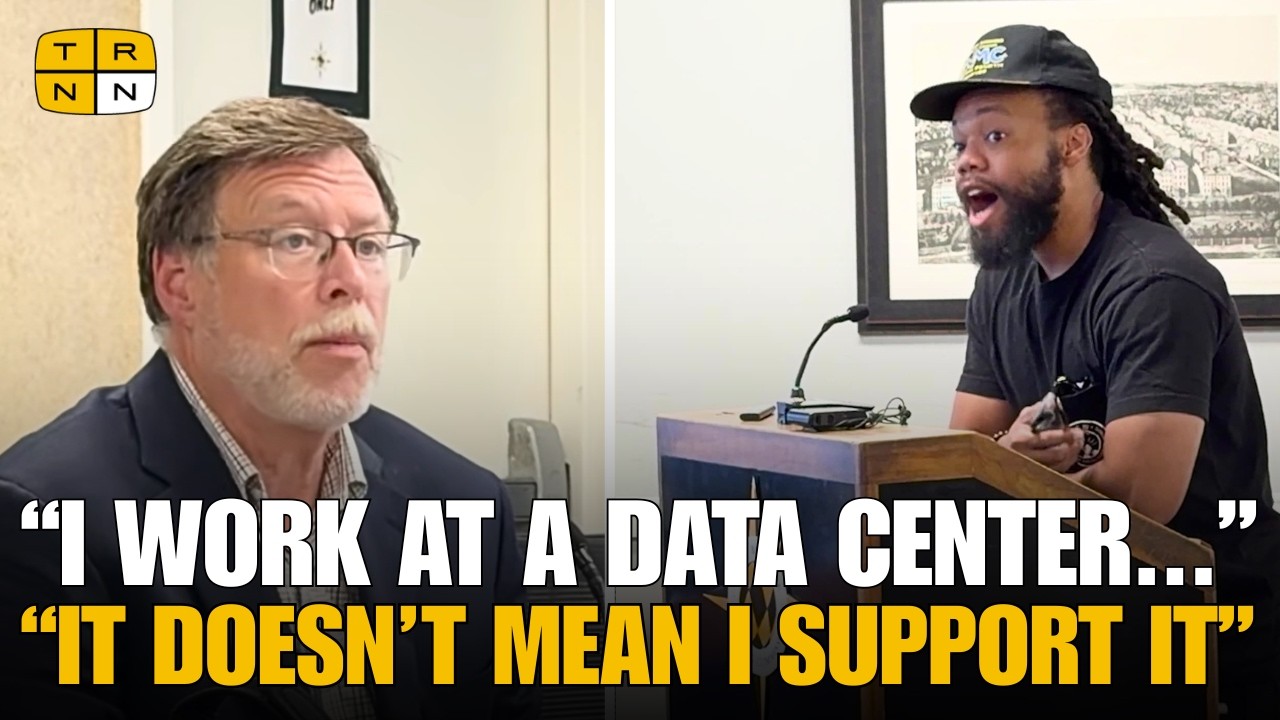
“When I look at this bill, it almost feels like they're saying, ‘Hey, vampires want to come to Baltimore. We want to lay the groundwork to only allow the right vampires to come into the city”... What if we just did ‘No vampires’”?
  •  

The big immigration lie: China increasingly dominate Germany’s automobile industry

This is an article about China’s booming automobile industry and Germany’s declining automobile industry, but in reality, it is really a story about how anti-immigration China increasingly dominates the open borders, multicultural West.

That is not the typical way to open an article in our modern Western press, but this framing is entirely accurate, fair, and a reflection of reality.

For one, we need to stop trying to understand China entirely through the lens of “communism” or “authoritarianism.” Whether it is Bloomberg, Spiegel, the Wall Street Journal, the New York Times, or the Guardian, all of these media megaphones endlessly gloss over a core reality: China is an ethnostate that exists to advance the interest of the Han Chinese people.

Not only is China incredibly successful in this regard, but there is nothing inherently wrong in pursuing this goal. In fact, it not only accounts for China’s increasing strength, but also accounts for the economic success of a range of Asian countries, including Japan, South Korea, and Taiwan, all of which feature stringent anti-immigration policies that ensure ethnic and cultural homogeneity.

The latest data from Germany’s automobile industry only adds to the growing body of evidence that despite years of diversity and mass immigration, Germany is failing. The data shows that China has now become Germany’s largest supplier of new passenger cars after imports from China more than doubled in the first seven months of 2026, official figures show.

The surge in Chinese vehicles is the main driver behind a sharp rise in overall car imports. Notably, at the same time, German exports declined.

This is far from the only data point. Remix News has been running an ongoing series comparing Western countries like Germany that have tied their economic fortunes to mass immigration to anti-immigration Asian countries (part 1, part 2, part 3, part 4, part 5, and part 6). Once again, the latest figures prove that despite claims that immigration has made the German economy stronger, the reality is that Asian countries are proving this baseless claim wrong many times over.

Between January and July, 175,000 new passenger cars arrived from China in Germany, 13.8 percent of all imports and 120.9 percent more than in the same period a year earlier. That leap pushed China ahead of other importers, including the Czech Republic which sent 173,000 cars and Spain with 157,000 cars. A year earlier, China had ranked only fourth among supplier countries.

At the same time, German exports of new passenger cars fell. Around 2 million vehicles left the country, 4 percent fewer than a year earlier. Their value dropped 8.9 percent to €73.5 billion.

These numbers do not tell the full story either and actually underplay the strength of the Chinese auto manufacturing industry.

Headlines also now routinely dominate the German press regarding the decline of the auto sector, including planned layoffs for tens of thousands of VW workers.

How does China beat out Germany?

China has pulled ahead of Germany by investing in its own native population instead of relying on foreign labor. In fact, there are more foreigners in just one German city, Berlin, than there are in all of China, a country of 1.4 billion people.

Many German leftists and even those in the Christian Democrats (CDU) claim the German economy would fall apart without immigrants. However, China and other Asian countries provide a sharp contrast to this ideological and factually unsound narrative. Instead, these Asian countries sharply rejected mass immigration and turned to innovation, automation, and investment in research and development. At the same time, Asian countries are known for their stringent and in-depth education systems designed for the benefit of their own native populations.

The result is that these Asian nations have now soared ahead of languishing European economies that chose open borders and foreign workforces, which often fueled illusory GDP growth resembling a pyramid scheme based entirely on rising populations rather than true innovation and productivity growth.

In key industries, including automobile production, machine tools, chemical production, and renewable energy, China and other anti-immigration Asian countries are leapfrogging ahead. This is all on top of China’s chokehold on rare earth metals, which theoretically could allow China to shut down production of Western weapons, automobiles, and renewable energy, just to name a few sectors.

Europe relies on protectionism to block superior and cost-effective Chinese technology

In terms of automobile exports to Europe, China’s growth has to be put in context. The reality is that China would be on the verge of bankrupting or overtaking nearly every European automobile company if it was not for extreme protectionism.

China’s growth in Europe is mostly coming from hybrid vehicles, as EU tariffs on battery electric vehicles (BEVs) can go as high as 45 percent. On the other hand, plug-in hybrid electric vehicles (PHEVs) only face the standard 10 percent duty.

Without these tariffs on BEVs, the European EV automobile market would collapse due to Chinese competition. Despite these barriers, more and more Chinese vehicles are making their way into the European market. China is simply far too innovative in nearly every aspect of EV production. China is also building battery production plants within Europe because the Europeans can no longer do it themselves. Even top automobile executives, whether in the United States or Europe, admit they are years behind China.

European automakers are so far behind that they rely on batteries, which are by far the most expensive and vital components of any electric vehicle, almost exclusively from China. China accounts for over 80 percent of global battery cell production and supplies a major share of the cells and lithium iron phosphate (LFP) chemistry used in European-branded electric vehicles. There are other players, however, these also include immigration-restrictionist nations like South Korea and Japan.

Europe is now racing to place tariffs on PHEVs as well, as European automaker CEOs beg for relief. However, these same European automakers would have no electric vehicle market at all if they were cut off from Chinese batteries.

For those who do not want to read long treatises on the dominance of Chinese automakers, there are also plenty of video formats available that explore this topic. This video from “Modern MBA” is just one that illustrates just how far ahead Chinese auto manufacturers are in terms of innovation and development. This dominance is not down to cheap labor either or even government subsidies. At its heart, this dominance is about the engineering talent and technological leapfrogging Chinese automakers have managed to achieve in an extremely short time.

Diversity has not benefited the West

It seems as Europe becomes more “diverse,” it also falls farther and farther behind in terms of industrial strength, with the automobile industry perhaps one of the most glaring examples. However, this basic claim undersells just how far European industry has fallen in comparison to China.

China, with its anti-immigration policies, has ascended into the modern age and pulled ahead in key modern industries on a scale that is unprecedented in world history. Just like many other modern Asian nations that pursue similar anti-immigration policies, instead of relying on waves of cheap foreign labor, China continues to automate and innovate around its falling population through robotics, engineering and artificial intelligence.

The future of Germany and other Western nations also appears less and less bright. A multicultural student body has led to chaos in classrooms, falling test scores, lower achievement, and conflict among students across the Western world. Meanwhile, systems like Singapore and major Chinese cities, such as Beijing, Shanghai, Jiangsu, and Zhejiang, consistently maintain elite scores in mathematics, reading, and science cycle after cycle of PISA testing.

That is why headlines like “Asia dominates global education. A historic decline for the West,” are par for the course.

If White European countries pursued similar policies as their Asian counterparts, these same Western news outlets that dominate the West would endlessly berate them as racists, Nazis, and xenophobes. There is some occasional sniping at the immigration policies of these Asian countries, yet this central and core policy of maintaining ethnic homogeneity is more or less ignored.

For one, these countries are not White, so mostly White journalists do not know how to approach this topic.

However, there is another reason and it is perhaps more important.

If these same journalists continuously attacked the Asian tigers on a daily basis for being racist and xenophobic — while still complaining that they are continuously more successful in terms of education, innovation, and economics — then their Western liberal audiences might begin to second-guess their own open-borders policies.

It could also be possible that Western liberal audiences are not actually as smart as they think they are, and they will forever fail to make this connection.

Nevertheless, on a fundamental level, these Asian countries represent a core threat to the open-borders vision that has been relentlessly promoted among Western countries.

The reality is the Western world is confronted daily with the failures of diversity and multiculturalism.

The other reality is that we are ruled by elites, business executives, and an ideologically captured populace that not only refuses to acknowledge this despite facts, figures, data, and real-world experience. In fact, those who point all of this out are facing persecution, censorship, and even imprisonment.

The post The big immigration lie: China increasingly dominate Germany’s automobile industry appeared first on Remix News.

  •  

Germany: Chemical giant Evonik to cut thousands of jobs

Essen-based chemical group Evonik plans to cut 3,200 jobs worldwide, including 2,150 in Germany, and is looking to put new money into Asia and the United States instead.

Interim chief Claus Rettig said management, the supervisory board and employee representatives were aligned on the diagnosis. “The board of directors, supervisory board and employee representatives share a conviction: We are in a structural and economic crisis of our industry,” Rettig announced.

Two-thirds of the planned cuts fall in Germany. Evonik employed more than 31,000 people worldwide at the end of 2025, according to German news outlet Tagesschau. Existing savings and efficiency programs are already expected to remove about 2,800 jobs by the end of this year. The additional wave is scheduled through the end of 2029 and is to be carried out “in a socially responsible manner” through early retirements, severance payments and leaving vacant posts unfilled. The company says there will be no compulsory redundancies.

Growth, Rettig said, looks better outside Europe. Further investment projects are being examined in Asia and America.

Evonik also wants to sell subsidiaries Oxeno and Syneqt, which together employ more than 4,300 people. 

“We speak with investors at Oxeno, but that’s not yet the case with Syneqt,” Rettig said. He added that both units are to be put up for sale.

The group is one of Germany’s largest chemical firms. Revenue in 2025 came to €14.1 billion, down 7 percent from the year before. Its portfolio covers more than 4,000 products used in pharmaceuticals, food and mechanical engineering.

The cuts sit inside a wider slump. Germany’s chemical-pharmaceutical industry remains the country’s third-largest industrial sector, with more than 476,000 employees. In May, the Munich-based ifo Institute warned that the sector’s business climate had deteriorated sharply. High energy prices, bureaucracy and the Iran war were cited as causes.

“The consequences of the hostilities in the Middle East are hitting the already struggling chemical industry with full force,” said Anna Wolf, head of the ifo Centre for Innovation Economics.

Evonik’s answer is a familiar story in German industry this year: fewer jobs at home, asset sales, and a search for cheaper growth abroad.

The post Germany: Chemical giant Evonik to cut thousands of jobs appeared first on Remix News.

  •  

Filling the gaps after Helene. Volunteer groups have stepped up across the NC mountains over last 2 years.

In many Western NC communities devastated by Helene, volunteer organizations have helped bring relief while government funding has been slow.

Filling the gaps after Helene. Volunteer groups have stepped up across the NC mountains over last 2 years. is a story from Carolina Public Press, an award-winning independent newsroom. Our breakthrough journalism shines a light on the critical overlooked and under-reported issues facing North Carolina’s more than 11 million residents. Please consider making a contribution to support our journalism.

  •  

US MDs, SCIENTISTS Outcry vs mRNA VACCINES! Open Letter to Trump, RFK Jr. to REMOVAL them by a Coalition of 63 Million Followers

by Nicolas Hulscher, MPH – originally published on his Substack Focal Points

All links to previopus Gospa News post or videos have deen added in the aftermath by virtue of the ties with topic covered

A coalition of 168 physicians, scientists, researchers, health-freedom advocates, and public figures—collectively representing over 63 million followers across social media—has just sent an open letter to HHS Secretary Robert F. Kennedy Jr. and President Donald Trump calling for decisive action on the mRNA platform.

The effort was coordinated by Dr. Mary Talley Bowden and includes signatories such as Dr. Peter McCullough, Louisiana Deputy Surgeon General Dr. Sean Troxclair, U.S. Rep. Thomas Massie, former U.S. Rep. Marjorie Taylor Greene, Tucker Carlson, and myself. The full list is at the bottom of this article.

The letter argues that current federal actions have fallen short of the health-freedom movement’s stated goals and calls for the removal of mRNA/gene-therapy-derived vaccine technologies, termination of the COVID-19 PREP Act declaration, repeal of the PREP Act, an end to pharmaceutical direct-to-consumer advertising, and reforms addressing conflicts of interest and coercive healthcare incentives.

“The COVID mRNA SHOTS qualify as GENE THERAPY according to the EU’s definition” Eminent Canadian Bioimmunologist Jessica Rose sentenced

Below is the full open letter and list of signatories:


Open Letter Regarding the Removal of the mRNA Platform

Dear Secretary Kennedy and President Trump,

Executive summary

As influential leaders within the MAHA and health freedom movements, we are writing to object to policies under your oversight related to the mRNA platform, and to call you to act on our policy goals.

While the centerpiece of the MAHA and health freedom agenda has been removal of mRNA shots, you have failed to take decisive action on this front despite overwhelming credible evidence to the harm of this technology. Instead, your policies related to mRNA technology are neutered and self-defeating, putting pregnant women and children at risk, misleading parents and eroding their rights, and failing to help those harmed by vaccines.

If you continue to ignore our central issue of removing the mRNA platform, the MAHA and health freedom movements will withdraw their support of you, and you will face the political consequences.

Our objections

We are writing to express deep concerns about policies emerging from HHS, the CDC, and the FDA. Specifically, we object to:

  • The administration of COVID mRNA shots to over 50 million Americans this year. Included are 7 million children, despite no studies demonstrating prevention of hospitalization or death and voluminous data demonstrating severe harms, including deaths of children (at least 10 acknowledged by the FDA to date).
  • The appointment of Erica Schwartz to lead the CDC, who declared during her Senate confirmation hearing that mRNA technology is safe and effective. As you are well aware, it is not possible to make legally valid determinations of safety or efficacy for EUA Countermeasures under ongoing public health emergency under the PREP Act. No technology can be presumptively deemed safe or effective for medical applications for all people or all ages and health statuses.
  • The approval of a new mRNA flu shot that was not tested against a true placebo, lacks long-term safety data, did not measure hospitalization or death outcomes, showed significantly higher side effects, higher deaths, and was not compared to early treatment or any alternative prophylaxis.
  • The absence of meaningful help for those injured from the mRNA shots.

Brain Damages after COVID mRNA Vaccines: Pfizer Knew of 44,000 Injured since 2020! Study confirms Alert already launched by CDC and FDA

  • The HHS award of $1.24 billion contracts with Pfizer for future mRNA shots, including for children.
  • Failure of the CDC to provide up-to-date cancer statistics amid rising concerns of accelerating incidence of cancer linked to mRNA shots.
  • Failure to enforce the contractual obligations of mRNA shot providers to report adverse events to VAERS.

Removal of the mRNA platform from the market remains one of the central goals of the grassroots medical freedom movement.

From SONG ON COVID-VACCINE (Video) to the “Brief Battle” vs LETHAL TURBO-CANCER. The Tragic and Mysterious Story of Dolly Parton

Millions of concerned citizens set aside partisan differences and identities to support the historic MAGA/MAHA alliance. Instead of decisive policy actions on these core issues, we see distractions, linguistic misdirections, and watered-down announcements that avoid serious action on the deadly mRNA injections.

Meaningless and constitution-corroding executive action

Despite the Executive Order from August 10, 2026 reducing the recommended vaccination schedule from 17 to 11 types of vaccines, it simultaneously elevates pneumococcal and HPV shots into the “universal core recommendation”.

The elevation of HPV shots to universal core recommendation is surprising given Merck just reached a $50M settlement¹ with 200 plaintiffs who alleged the Gardasil HPV vaccine caused autoimmunity. In addition, the EO promotes the unconstitutional notion of “shared” decision making between the federal government and parents with respect to the mRNA and some additional vaccines. This Orwellian language does not belong in a free society.

Overwhelming credible data calls for the removal of mRNA

We do not need more data to determine whether mRNA products should be removed from the market. The data are already in from multiple credible sources, including over 4,550 peer reviewed publications, the Pfizer documents released through Aaron Siri’s lawsuits, the VAERS and V-safe datasets, and data from foreign governments.

Exclusive Study! “PFIZER MASKED TOXIC SUBSTANCE inside COVID-19 mRNA VACCINE” (Video). Groundbreaking Discovery on Dangerous ALC-0315 by an Italian Biochemist G. Segalla

These sources document catastrophic levels of deaths and serious injuries from the mRNA injections, as well as reproductive harm, including approximately 400% increase in miscarriage rates.

Self-defeating action puts pregnant women at risk, erodes parental rights

You stated that the shots were removed from the CDC recommendation for pregnant women. Yet pregnancy remains listed as a “high-risk” health category in the revised FDA policy for mRNA shots. It is especially troubling that the new versions of these injections are recommended for all pregnant women, even though this platform has never been tested and proven safe in pregnancy.

FAUCI & CDC KNEW THAT COVID VACCINES COULD TRIGGER MISCARRIAGE (5 videos). As Denounced by Gospa News in 2021 on 3,573 Cases of Fetal Death among Vaccinated Women

Pregnant women have not been made safer by this linguistic shift. Removing the mRNA injection from CDC recommendations for pregnant women and healthy children is meaningless when the American Academy of Pediatrics, to which the vast majority of pediatricians belong, still recommends all babies get a mRNA shot.

Further, the CDC still recommends the shots for every child except those labeled “healthy.” Those outside of this category include children with minor ailments such as an acute illness or allergies. The risks of these shots far outweigh any benefits, particularly given they now carry an FDA warning for increased risk of myocarditis and pericarditis in children.

SCANDALl! Pfizer Knew very Soon that its Covid mRNA Vaccine caused Heart Damage on Kids. But has Used them as Guinea-Pig

Parental choice is not realistic when parents are not getting informed consent on the true risks of these products. CDC language appears to erode parental rights. Even for healthy children, the CDC frames the decision as one that parents must “share” with healthcare providers—including pharmacists who lack authority to treat patients. By treating the decision to inject a child with mRNA as a “shared decision,” while treating routine injections as the default, a dangerous legal precedent is being set that assigns powers to the federal government that have historically belonged solely to parents.

Failure to remove labeling of COVID-19 injections as FDA-approved

The CDC’s COVID shot policy claims to be evidence-based. However, no evidence has been provided—and none exists to our knowledge—showing that the categories of people labeled “vulnerable” under this policy would benefit from mRNA injections.

A formal Citizen Petition authored by Children’s Health Defense, asking to properly relabel the COVID-19 vaccines by Pfizer and Moderna as “EUA Countermeasures” is pending with HHS since December 8, 2025.

Under the PREP Act declaration for COVID emergency, the products that went on the market de novo as “EUA Countermeasures” – a non-investigational legal status – cannot be declared “safe, effective and fully approved by the FDA” without complying with the investigational pharmaceutical product requirements under the applicable federal law.

SCIENCE Magazine Finally Admitted the mRNA Vaccines Dangerous Side Effects! Shots linked to Long Covid, Neurologic Damages and POTS

The PREP Act was extended by the Biden Administration in December 2024 and upheld by you to date to last until December 31, 2029. The COVID-19 injections never underwent legally valid investigational assessment for safety and efficacy, being subject to only emergency distribution requirements, since the PREP Act precludes use of bio-chemical compounds in clinical investigation.

This Petition gathered a record number of public comments in support of it (over 104,000). Your failure to respond to this Petition speaks louder than any placating HHS / Trump Administration messaging on vaccine schedule issues in advance of the midterm elections.

Conflating clearly established risks with an automatically assumed benefit from a product that remains a poorly regulated, liability-free EUA Countermeasure under the PREP Act emergency declaration defies both scientific reason and common sense.

The health freedom movement will withdraw support without action

We did not fight to place you in positions of leadership so that our clearly stated policy goals would suffer a “bait and switch” that rebranded the grassroots powerful objection to the damaging mRNA platform as a concern about coloring agents in Skittles.

Health freedom is not the possession of Secretary Kennedy or his advisors. Health freedom agenda arose from the voices of millions of those impacted by the harmful government policies during the pandemic.

COVID VACCINES. The Most CHILLING STUDY on GENETIC DAMAGES in USA! mRNA Jabs Induced Severe, Long-Lasting Disruption Linked to Cancer and Chronic Disease

The MAHA/health freedom vote was a historic game-changer. Neither Republicans nor the Democrats could have prevailed without this critical swing vote.

Health freedom voters can and will walk away if we continue to see inaction—or condescending non-policy—on our core issues.

If you continue to ignore the centerpiece of our policy agenda—removing all mRNA products covered by PREP Act emergency declarations entirely from the market—you will pay a political price. We will run our own candidates at the state level, and we will support other challengers and sponsors who share our values and advance our draft bills at the federal level for the midterms and for 2028.

WUHAN-GATES – 90. SARS-Cov-2 BIOWEAPON Hidden by FAUCI’s ADVISOR. Morens Plead Guilty for Conspiracy in Concealing Records on US-funded Experiments in Wuhan

Our call to action

We ask you to deliver our actual policy goals in the near term, or face the political consequences:

  1. Ban mRNA/gene therapy-derived technologies for all vaccines, due to their demonstrated abject failure regarding safety, efficacy, and disease prevention after more than four years of real-world use and billions of doses administered.
  2. Terminate the PREP Act declaration for COVID injections, as no emergency exists. Extending this declaration, with its ironclad liability shield for manufacturers and administrators, serves no public health interest.
  3. Recommend that Congress repeal the PREP Act entirely, due to its numerous constitutional conflicts.
  4. Ban pharmaceutical direct-to-consumer advertising, as is the practice in every other country except New Zealand.
  5. Review and revise current HHS-level policies that create perverse incentives for healthcare providers to engage in medical coercion, including but not limited to vaccinations.
  6. End conflicts of interest at the CDC, FDA, NIH, and NIAID.

by Nicolas Hulscher, MPH – originally published on his Substack Focal Points

Epidemiologist and Foundation Administrator, McCullough Foundation

Support our mission: mcculloughfnd.org

Please consider following both the McCullough Foundation and my personal account on X (formerly Twitter) for further content.


The names below with a link are those for which we have written an article on Gospa News regarding vaccines.

Signatories

Deborah Adams, RN
Sally Adams, DVM
Adnan Al-Daini, PhD
Arden Andersen, DO, MSPH, PhD
Lars Bo Appel, World Council for Health
Robert Apter, MD
Anthony Arnott, MD
Raphael Balbino, MD
Clayton Baker, MD, Brownstone Institute Senior Scholar, Global Wellness Forum Council
Bradley Banko, MD
Richard Bartlett, MD, Texas HHS Meritorious Service Award, Texas Health Disparities Taskforce
Nancy Benedict, RN
Laura Bevis, DNP, APRN
Kimberly Biss, MD, FACOG, Senior OBGYN Fellow for Independent Medical Alliance
Marsha Blakeslee, DO, Personaldocs LLC
Mary Talley Bowden, MD, Americans for Health Freedom, Independent Medical Alliance, VSRF
Avery B. Brinkley, Jr., MD
Mark Brody, MD
Margaret Aranda Brown, MD, PhD, CTP
Lisa Bryhn, MD
Dariusz Brzezinkski, DC
Ora Burstein, MD
David B. Collum, PhD.
Carrie S Cannon, MD, MS, CTP
Buckley Carlson
Tucker Carlson
Renee Carlson, BSN, RN (ret)
Lora Chamberlain, DO
Pete Chambers, LTC (Ret), DO
Geeta Chougule, World Council for Health
Liz Churchill, Medical Freedom Activist
Ryan Cole, MD, Head of Medical and Scientifc Affairs, Independent Medical Alliance
Esther N. Cooper, MD, Texas Medical Do No Harm Physician Activist
Jean Coyer, NP
Greta Crawford, Survivor of COVID Hospital Protocol, Founder of ProtocolKills.com
Michelle A. Cretella, MD, Past Executive Director of the American College of Pediatricians
Barbara A. Crothers, DO, FCAP, FMCP-M
John Davidson, Director, “Epidemic of Fraud”
Hannah Davis, BSN, RN
John Day, MD
Xylie Desiree, Founder, Interest of Justice
Maryanne Demasi, PhD, Investigative Journalist
Jan DeNapoli, MHS, PA (ret)
Jimmy Dore, Host of “The Jimmy Dore Show”
Jeff Dornik, CEO Pickax
William Campbell Douglass III, MD, MS – DutyToDissent.Substack.com
Edward Dowd, Phinance Technologies
Henry Ealy, Energetic Health Institute
Richard Edgerly, MD
Charles Fall, Green Liberty Caucus
Brian Festa, Esq.
Harry Fisher, EMT, Medical Freedom Activist
Catherine Austin Fitts, The Solari Report
Christina Flaming, CRNA, DNAP
Jon Fleetwood, Investigative Journalist
Kim D. Folse, DC
Tracy Forker, RN
Jeremy Friedman, Esq.
Lynn Fynn, MD, Global COVID Summit, Independent Medical Alliance
Suzanne Gazda, MD
Eleftherios Gkioulekas, PhD, Professor
Simon Goddek, PhD
Russ Gonnering, MD, MMM, FACS, CPHQ(ret)
Dana H. Granberg-Nill, MD, COO Goldcare.com
Marjorie Taylor Greene, Former U.S. Representative – GA
Erin Greer, MD
Arthur Grinstead, MD
Joseph Guarino, MD, Piedmont Occupational and Urgent Care
Meredith Harwell, DC
Sierra Hamm, RN, BSN, World Council for Health
Dan Hartman, Father of COVID vaccine victim Sean Hartman
Thomas F. Haviland, 2022-2025 “Worldwide Embalmer Blood Clot Survey”
Mary Helms, Health Freedom Advocate
Margaret Hertel, Naturalist
Eric Hensen, DO
Jennifer Hibberd, DDS, FRCDC, Global COVID Summit
Trisha Hope, National Delegate, Texas
Lyndsey Nicole House, RN
Nicolas Hulscher, MPH, Epidemiologist, McCullough Foundation
John Humiston, MD
Stella Immanuel, MD, Faith and Freedom
Ehsan Joader, Medical Freedom Advocate
Daniel Jones, APRN, FNP-C
Jack Jasper, The Paradox Press
Bobbie Jo Jenkins, RN
Sayer Ji, Founder Restore the 1st and Greenmedinfo, Chairman Global Wellness Forum
Shannon Joy, The Shannon Joy Show
Laura Kasner, “Worldwide Embalmer Blood Clot Survey”
Tamra Kelly, MSN, CRNA, APRN
Sandy Kim, MD
Stacy Kiraly-Duran, RPh
Steven Kirsch, Founder, Vaccine Safety Research Foundation
Deanna Kline, AGNP-C, MSN, RN, Author, Substack NPTru4u
Jack Kruse, MD, Kruse Longevity Centers, Inc
Brian Kung, MD
Karl Lambert, ARNP
Seth Landry, FNP
Sasha Latypova, Independent Investigator and Writer, “Due Diligence and Art”
Tess Lawrie, PhD, Founder, World Council for Health
Levi Leatherberry, National Organizer for Medical Freedom
Lionel Lee, DO, FACOEP
Susan Lee, MD
Debbie Lerman, The Brownstone Institute
Maria Liljeblad, World Council for Health
Katarina Lindley, DO FACOFP, Americans for Health Freedom, Independent Medical Alliance
John Littell, MD
Lisa Lopes, World Council for Health
Donna Lowery, RN
Aseem Malhotra, MD
Robert Malone, MD, MS, pioneer of mRNA technology
Jill G. Malone, PhD
Leslie Manookian, Founder/President, Health Freedom Defense Fund
Ben Marble, MD, Nobel Peace Prize Nominee
Allen Martin, Parent of COVID vaccine victim Trista Martin
Taylor Martin, Parent of COVID vaccine victim Trista Martin
Thomas Massie, U.S. Representative – KY
Jonathan Maxham, DO
Kevin McCairn, PhD, Synpatek Labs
Culpepper McCuller, MD, Informed Health Initiative
Peter McCullough, MD, President, McCullough Foundation
Shane Mekeland, Rep., MN (R) District 27A
Reni Moon, MD
Kirk Moore, MD, Ex-Defendant, Freedom Surgical and Aesthetics
Cindy L. Morris, MD, World Council for Health
David Nelson, PhD
MyHuong Nguyễn, MD
Hanna Parikka, MSc, Biotechnology
Gayln Perry, MD
Ivan Raiklin, Esq., Green Beret Lieutenant Colonel (ret)
Tom Renz, Esq.
Charles Rixey, MA, MBA, Edogawa Hospital & D.R.A.S.T.I.C.
Brian Roberts, Americans for Health Freedom
Jessica Rose, The Brownstone Institute
Jeanne A. Rungby, MD, World Council for Health
Molly Rutherford, MD, Americans for Health Freedom
Erica Samp, Vaccine-injured mother from Iowa with Federal lawsuit pending
Andy Schmitt, The Paradox Press
Carl Scott, PhD, Professor, Author, Dissident Conservative Substack
Cynthia Shoemake, RN
Michelle Simpson, RN
Brad Skistimas, Five Times August
Patrick Slater, MD, Austin Ear Clinic
Laurel Starr, MD
Daniel Stock, MD, Senior Fellow, Independent Medical Alliance
Mary Kelly Sutton, MD
Edward Szall, CEO, TLM Global, Producer, Died Suddenly
James Thorp, MD, ObGYN – Maternal Fetal Medicine
Mark Trozzi, MD, World Council for Health
Sean Troxclair, MD, Deputy Surgeon General of Louisiana
Tamella Trulson, MD
Jeffrey Tucker, The Brownstone Institute
Dan Twelmeyer, Medical Freedom Activist, Iowa
Suzanne Vandenhul, MD
Kenneth G. Varley, MD, FRCPC, BSc, MSc, MBA
Rajeev Varma, MD
Joe Varon, MD, President and CMO, Independent Medical Alliance
David Vella, MD, CovidAccountabilityNow.org
Denise Verni, PA
Kelly Victory, MD, President, Victory Health
Joel Wallskog, MD, Co-Chair React19
Bret Weinstein, PhD
Sheri Weinstein, MD, Founder, Health and Freedom Forum
Marcus Wheeler, MD
Lauren Witzke
Gizela Wolan-Szymanski, RN
Katherine Zbodula, NP
Andrew Zywiec, MD, Co-founder, CEO Ekklesia Research Group


  •  
❌