❌

Reading view

Blackbeard Hypersonic Missile Seen Flying On F/A-18 Super Hornet For The First Time

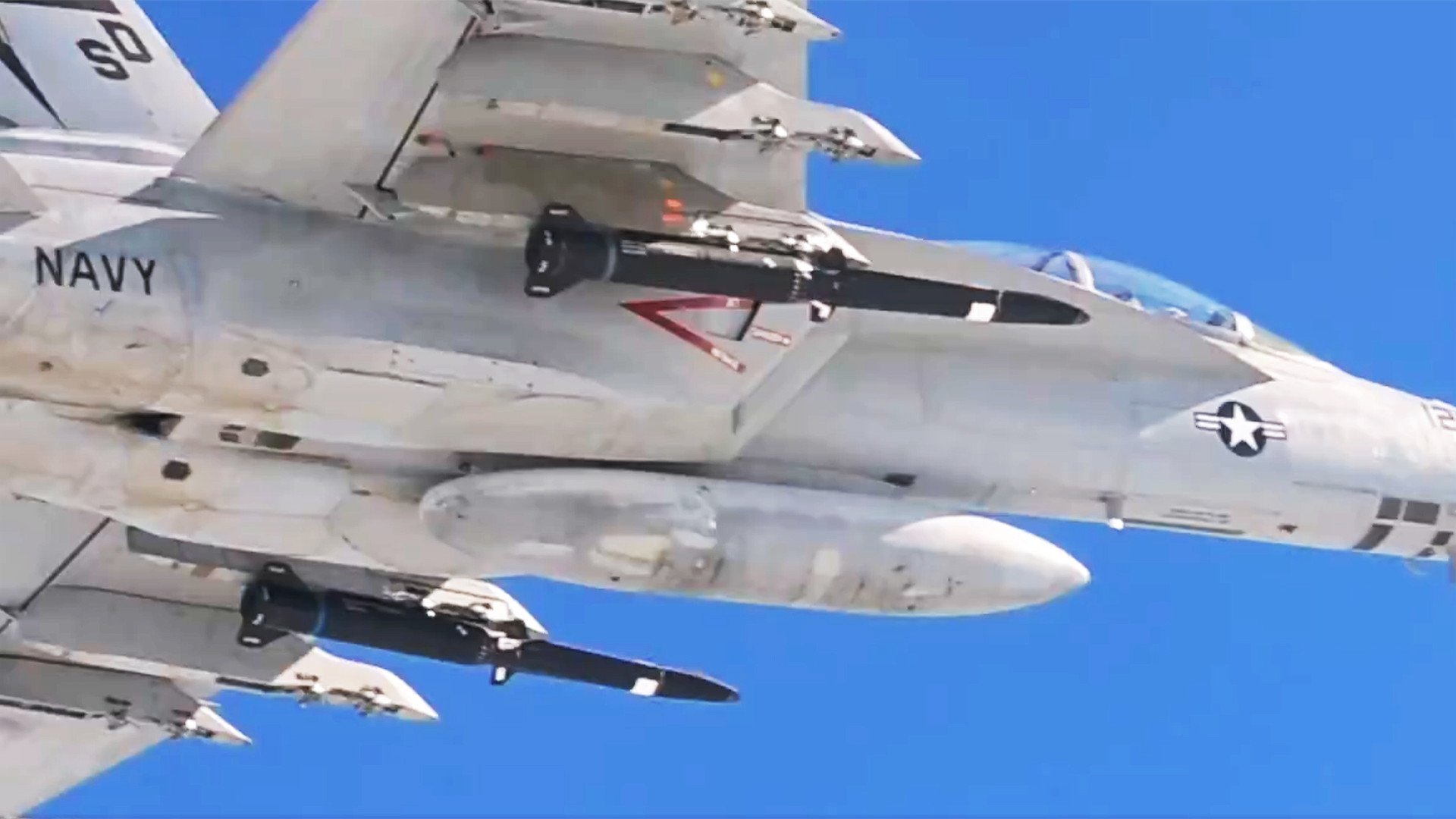
The U.S. Navy has given us the first look at Blackbeard hypersonic strike missiles under the wings of F/A-18E/F Super Hornets during actual flight testing. The Navy is hoping to have Blackbeard in at least limited service no later than 2028, giving its carrier air wings an all-new fast-flying standoff weapon, particularly for engaging enemy ships. The missile is also being designed to be relatively cheap and quick to manufacture.

The Navy’s Office of the Portfolio Acquisition Executive for Aviation (PAE-A) has released a video montage of Blackbeard undergoing flight testing, seen in the social media post below. The service confirmed that it had at least begun test-loading the missiles onto F/A-18E/F Super Hornets in a presentation at the Tailhook Association’s annual convention last month. Now we know the program has moved ahead substantially from that point.

Coming soon to a theater near you…BLACKBEARD!@USPACOM @CENTCOM @PAEAviation pic.twitter.com/KgBtIqdf8I

— NAVAIR (@NAVAIRNews) September 25, 2026

The company behind Blackbeard, defense start-up Castelion, has received several multi-million-dollar contracts from the Navy just this year explicitly to support integration of the weapon onto the Super Hornet, as well as otherwise accelerating its development. In its daily contracting on September 14, the Pentagon announced the Navy had struck yet another deal with Castelion, valued at $43.65 million, “for the manufacturing, assembly, testing, and delivery of the first production lot of 444 All-Up Rounds (AURs), defined as fully functional tactical missiles packaged within specialized shipping and storage containers.”
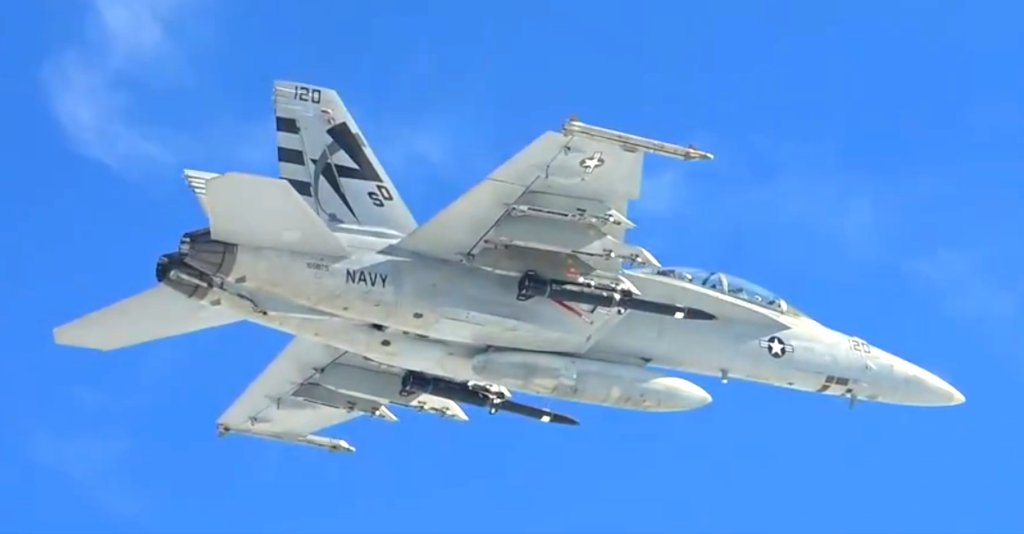
A screen capture from the Blackbeard flight testing video montage the Navy released today. USN capture

In terms of what we know today about Blackbeard’s design and capabilities, as we have previously written:

“A profile photo [seen below] at the company’s headquarters reveals a weapon with a ballistic missile-like booster, on top of which is mounted what could be an unpowered hypersonic glide vehicle (HGV). A booster brings an HGV to the desired velocity and altitude before releasing it toward its target. The concept is in contrast to air-breathing cruise missiles capable of traveling at hypersonic speeds. Hypersonic speed is generally defined as anything above Mach 5, which larger ballistic missiles also reach in the course of their flights. More precise performance figures for Blackbeard are lacking, but Castelion has previously hinted it could hit targets out to just under 500 miles. Alternatively, the second stage may also have its own motor, allowing it to continue accelerating or sustain high-speed flight. A similar arrangement has been suggested as the propulsion system for the Russian Zircon missile.”
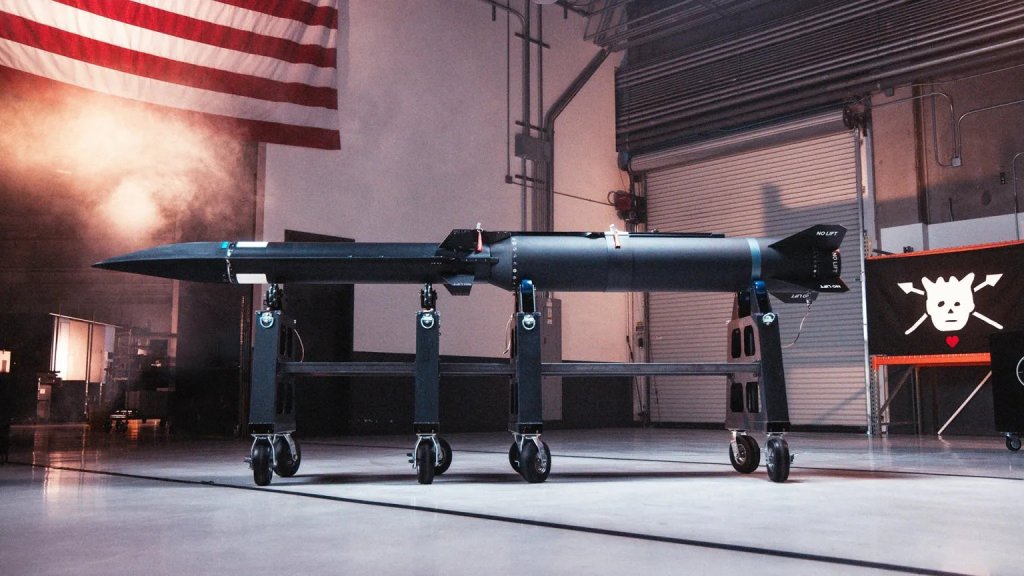
Castelion

“Both stages of the weapon have cruciform fins, while the upper one features a prominent ‘chine’ line along the length of its body, and a slightly beaklike nose. The trolley on which the weapon is mounted provides some idea of its overall size. The blue stripes seen on each stage normally signify that a munition is an inert, non-explosive round utilized for training or tracking purposes. This would indicate a real (unarmed) missile rather than a dummy or mockup.”

A picture shown at Tailhook had also offered a new look at the front of the missile, exposing what looked to be an aperture on one side of the design’s wedge-shaped nose. As we wrote after that image emerged:

“The apparent apertures are also seen pointed up, but many air-launched munitions do flip down after release.”

“How exactly Blackbeard is guided remains unknown, but a downward-angled aperture at the nose end for a seeker system would make sense for this weapon, which the Navy is pursuing primarily as a new way to target enemy ships. In particular, a wide array of existing anti-ship and land attack missiles, as well as certain anti-air types, have variously shaped apertures in their noses for imaging infrared seekers. Imaging infrared has the benefit of being immune to radio frequency electronic warfare jamming. In addition, it is a passive capability that does not send out signals that can give an opponent advance notice of an incoming attack. Blackbeard’s full guidance package very likely also includes some means of navigating to a target area first, and it could have multiple modes of operation.”

The new flight testing footage released today also underscores the relatively small size of Blackbeard overall. While the Super Hornet is set to be the first operational launch platform, it is very likely to be integrated on other aircraft quickly thereafter. The Navy is acquiring Blackbeard under a program called the Multi-mission Affordable Capacity Effector (MACE).
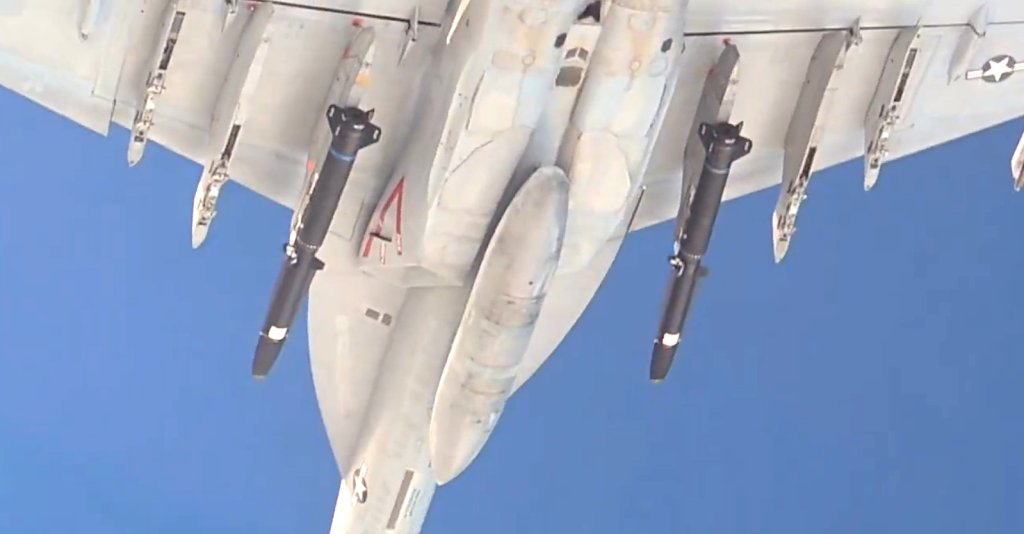
Another screen capture from the new Navy video offering a different of Blackbeards under the wings of a Super Hornet, underscoring their relatively small size. USN capture

Requirements for MACE that the Navy put out previously explicitly called for a design compact enough for carrier-based F-35C (and land-based F-35A) Joint Strike Fighters to carry four of them internally. Whether that remains a goal in any way is unclear. Still, being able to carry some number of Blackbeards internally would not only give those jets a hypersonic strike weapon, but one that they could carry in the most stealthy configuration. The Navy also notably does operate the F-35A outside of the test and evaluation community, which might point to air-launched Blackbeards entering service elsewhere in the future. As an aside, the U.S. Army is pursuing a ground-launched version of this missile, as well.

Another critical aspect of Blackbeard is the emphasis on lower cost and the ability to produce the missiles readily at scale. The conflict with Iran has fully driven home long-standing concerns about the depth of U.S. stockpiles of various critical munitions, as well as its ability to replenish them quickly. Blackbeard reflects a larger push across America’s armed forces to add more cost-effective weapons that can be acquired on faster timetables to their arsenals. Bringing in new, smaller companies like Castelion to develop and build these munitions has also been a major point of focus. To put this all in immediate context, in May, the Pentagon announced a framework agreement to buy 12,000 Blackbeards over the next five years.

As mentioned, the Navy’s stated goal now is to reach an early operational capability with Blackbeard by 2028, if not sooner. What the exact fielding plan for those missiles might be is unclear. PAE-A did write “Coming soon to a theater near you” in its post on X containing the video montage, and tagged the official accounts for U.S. Central Command (CENTCOM) and U.S. Pacific Command (PACOM). CENTCOM oversees U.S. military activities in and around the Middle East, including ongoing operations against Iran. U.S. military officials have also long touted hypersonic weapons, in general, as key to success in any future conflict in the Pacific, especially a high-end fight against China.

It’s also worth noting here that U.S. military hypersonic missile programs across the services have faced repeated setbacks and delays over the years. This, in turn, has prompted discussion about a worrisome gap emerging in this arena between the United States and its chief global competitors, especially China. It is very possible now that Blackbeard could be the first operational air-launched type in American inventory, depending on how the U.S. Air Force does or does not proceed with its Hypersonic Attack Cruise Missile (HACM) program. The Air Force has said previously that it is aiming for HACM to be operational, at least on a limited level, before the end of Fiscal Year 2027, which begins next month.

If nothing else, we have clear evidence that the air-launched version of Blackbeard is now deep in flight testing for the U.S. Navy.

Contact the author: joe@twz.com

The post Blackbeard Hypersonic Missile Seen Flying On F/A-18 Super Hornet For The First Time appeared first on TWZ.
  •  

An SR-71 Blackbird Has Vanished (Updated)

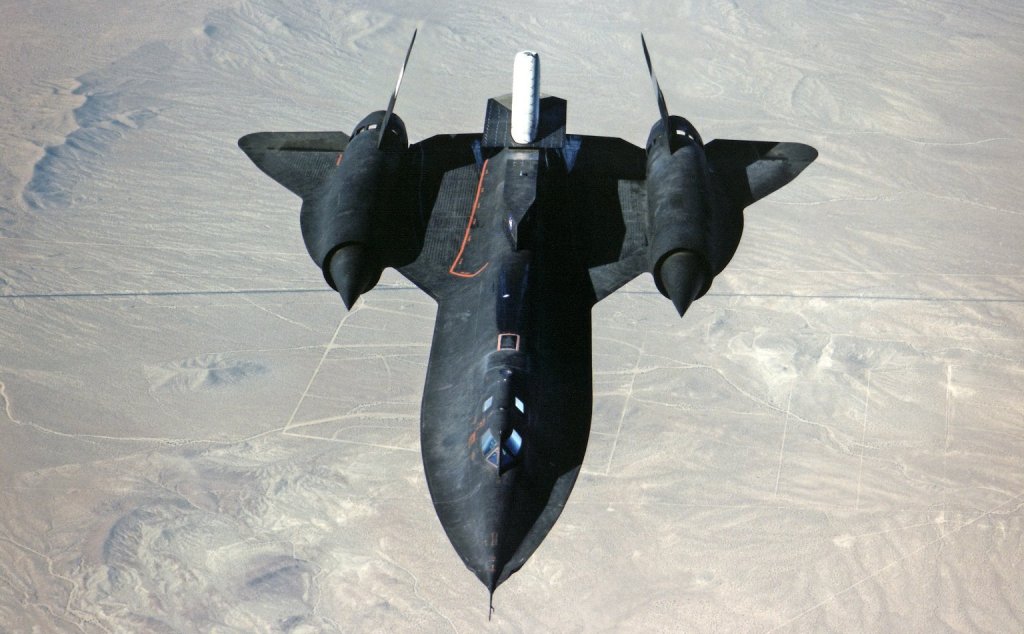
Last week, NASA Administrator Jared Isaacman cryptically teased plans for a new high- and fast-flying X-plane with a silhouette of an aircraft that immediately drew comparisons to the famed SR-71 Blackbird as a backdrop. In our report, we looked at what it could mean, including the possibility of reviving the SR-71, or at least using it to inform or even cobble together a new airframe. Now it turns out that an SR-71 that had been on display at NASA’s Armstrong Flight Research Center for years is suspiciously missing.

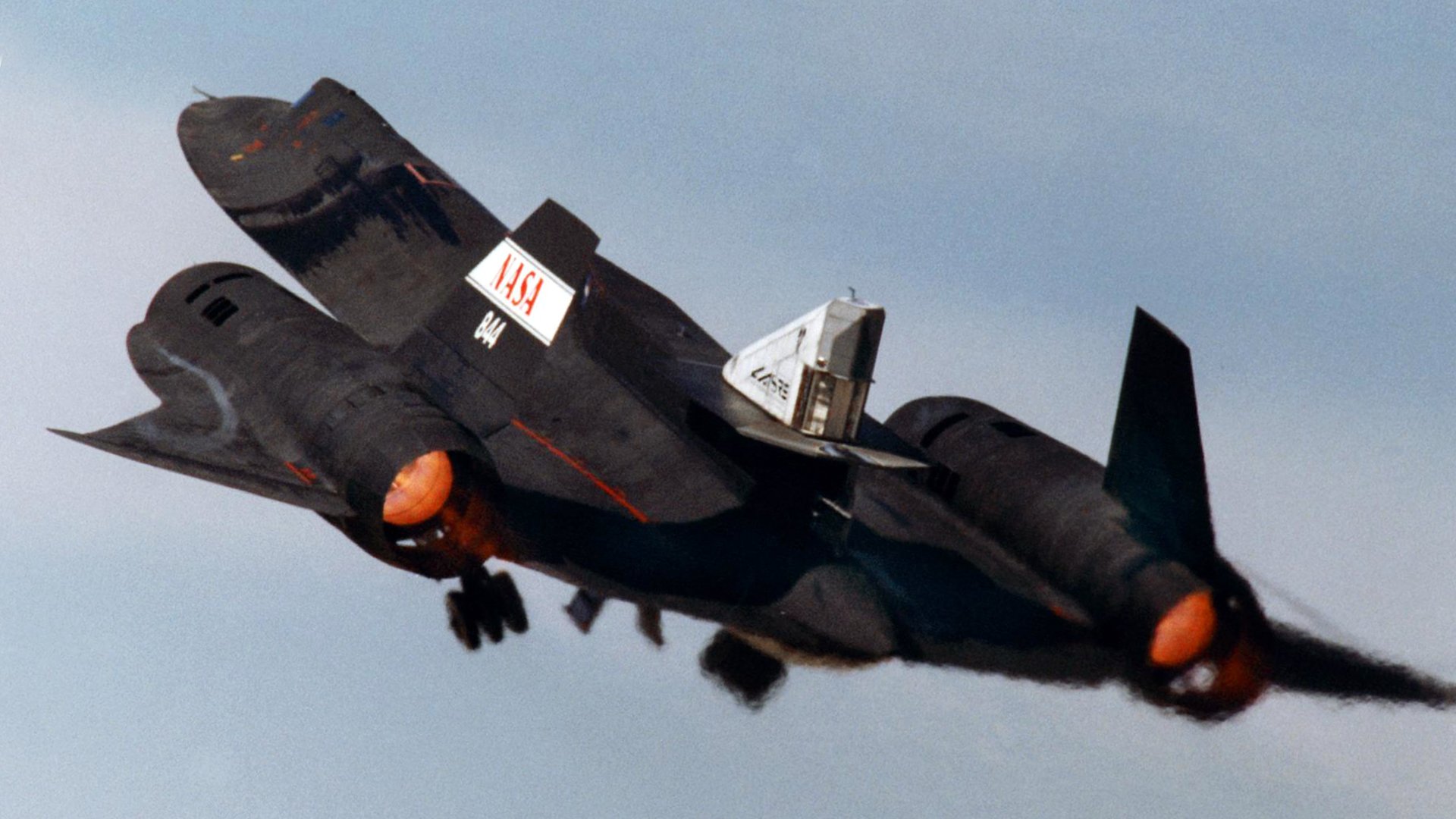
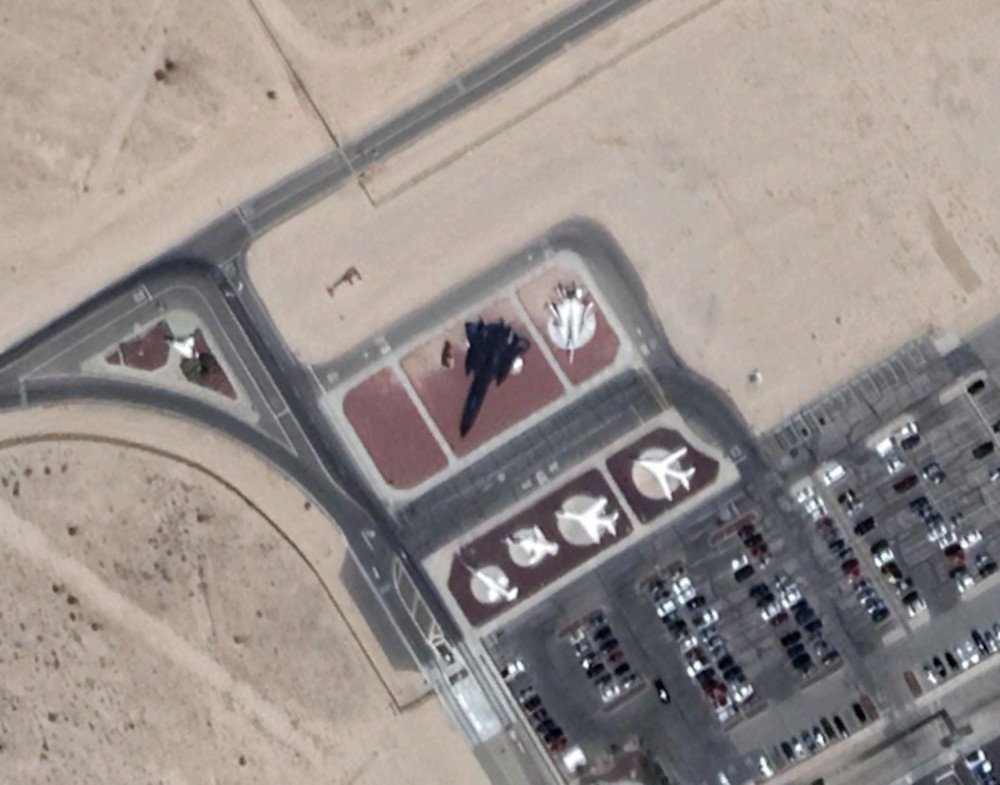
Steve Trimble, Aviation Week‘s defense editor and friend of TWZ, was first to report the disappearance of the former NASA SR-71, also known by the tail number 844, at Armstrong. That facility is collocated with Edwards Air Force Base in California. Trimble’s piece says that satellite imagery shows the jet has not been seen since at least May 17. The aircraft in question, which originally carried the U.S. Air Force serial number 61-7980, was the last Blackbird produced and the last one to fly, taking to the skies for the final time in 1999.

A satellite image taken in 2018 showing SR-71, tail number 844, on display outside of the Armstrong Flight Research Center in California. Google Earth

“The current disposition of the aircraft is unclear, but Aviation Week sources suggest that the aircraft was moved into a hangar earlier this year for an inspection,” according to the story. “The presentation and the disappearance of the display SR-71S with the 844 tail number for NASA raises the possibility of a return-to-flight program after a more than 26-year-long hiatus.”

Another look at SR-71 tail number 844 during its service with NASA. This picture was taken on October 31, 1997, during a flight in support of the NASA/Rocketdyne/Lockheed Martin Linear Aerospike SR-71 Experiment (LASRE). NASA

The presentation mentioned above is the one NASA’s Isaacman gave last week at the annual All-In Summit in Los Angeles, California, during which he shared the SR-71-esque silhouette.

“In the service of the first A [aeronautics] in NASA, we are rebuilding our X-plane fleet. The X-59 is researching quiet supersonic flight, but it’s just the beginning,” he said at that time. “As NASA recommits to flight test and works alongside industry to push the boundaries of airframe and propulsion design, it will not be long before NASA once again is flying as high and as fast as we had in decades past, and then even more.”

Isaacman has made expanding NASA’s X-plane fleets a top priority since taking charge of the agency last year.

“You sure that’s a Blackbird?” the NASA administrator said during a live interview that immediately followed his remarks after the image was brought up, but did not offer any further clarification.

NASA Administrator showed this image during a presentation last week while talking about plans for new X-planes. NASA

“NASA has a long history of building and flying experimental aircraft that push the boundaries of what is possible,” NASA told TWZ directly when asked for more information. “As Administrator Isaacman has said, we want to see more X-planes flying in the years ahead, developing the technologies that will allow us to fly higher, farther, and faster than we have in decades. We look forward to sharing more as those efforts progress.”

We have reached back out to NASA in light of Aviation Week‘s report.

As we wrote in our initial reporting on Isaacman’s comments:

“As for bringing a Blackbird back into operation for high-speed testing, which is now at the forefront of military aeronautics (and civilian to a lesser degree) after decades of being sidelined, that would be a very challenging operation. The SR-71s are long retired and have been placed in museums and other display areas. While the Pentagon could technically claw some of them back from their ‘on loan’ status, reconstituting even one of them would be a major undertaking as the entire support ecosystem that once sustained them has been gone for decades. Still, having a Mach 3+ capable jet for testing would be a highly relevant tool in a new age of high-speed flight exploration.”

“On the other hand, building a new test aircraft that aims higher and faster than the SR-71, but may be based on its ‘DNA,’ is certainly possible. Such an aircraft could leverage material science, avionics, flight controls, and engines that are seven decades more modern than its progenitor. Technology demonstrators in this class could also already exist in the classified domain. NASA could possibly assume ownership of one after the Pentagon declassifies it, as well.”

“Regardless of how such an exotic aircraft is obtained, one of the biggest differentiating factors could be that a NASA aircraft is piloted by a human onboard, instead of it being a drone, but an uncrewed aircraft is possible too.“

Aviation Week‘s report today notes that tail number 844 would probably be the best available candidate for returning to flight status. In addition to being the last produced and the last to fly, NASA previously upgraded it, including with “an automated digital flight and inlet control system to virtually eliminate the Blackbird’s problem of violent engine unstarts at high speed.” It has also been sitting in a controlled area in the Mojave Desert that is great for preservation.

It is also worth pointing out here that Isaacman is personally aware of the time and resources it takes to reconstitute high-end vintage military aircraft. He founded private ‘red air’ aggressor firm Draken International, making him once the owner of the world’s largest private air force stocked with old jets. His own private collection includes a demilitarized, ex-Ukrainian two-seat MiG-29UB that he flies regularly. He has also been working to restore a former Royal Air Force swing-wing Panavia Tornado F2 interceptor, which would be the most complex private military jet flying, if or when it returned to working condition.

At the same time, the SR-71 is in a completely different category, having been the very definition of a high-demand, low-density asset even at the very peak of its service life with the Air Force. Only 32 of these jets were ever built, and they were notoriously complex and expensive to operate and maintain. The aircraft’s Pratt & Whitney J58 turbojets ran on JP-7 fuel that is no longer in regular production. After 9/11, the possibility was raised of returning a Blackbird to service to support the Global War on Terror, but doing so was projected to cost between $40 and $45 million – and that was just two years after 844’s last flight.

There is also a possibility, in line with Isaacman’s comments last week, that 844 could re-merge in a substantially different, reworked form. There is even the potential it could be retrofitted for uncrewed, or at least pilot-optional, flight. Any such conversion effort would also be a major undertaking, as would sustaining the resulting bespoke jet. As we noted earlier, NASA could also use the SR-71 at Edwards to help inform other future designs.

At the same time, maybe this is all a coincidence and the SR-71 in question is getting some other form of TLC, but its months-long absence is certainly a curious development in light of the current push for new X-planes under Isaacman’s leadership.

Update: 11:00 PM ET –

NASA has now provided TWZ with the following statement in response to our queries for more information about SR-71 tail number 844:

“NASA has a long history of pushing the boundaries of experimental aviation, and we continue to explore opportunities to build on that legacy. As Administrator Isaacman has said, we want to see NASA flying higher, farther, and faster than we have in decades. We recognize the interest in the SR-71 and its remarkable history at NASA but have no additional information to share regarding the aircraft at this time.”

Update: 9/25/2026 ET –

It has come to our attention that NASA Administrator Jared Isaacman made additional comments regarding the SR-71 at the EAA AirVenture airshow in July.

“There was a time that a lot of the technology that you see demonstrated here in the F-22 Raptor, like thrust vectoring controls, fly-by-wire, was pioneered by NASA. This is during the days when we had X-planes that included the SR71 Blackbird,” Isaacman said during a speech at the event. “We’re rebuilding our X-plane uh portfolio. We’re going higher, we’re going faster, until we blur the lines between in and out of the atmosphere, and that’s underway right now.”

“I’d say that NASA intends to field an exciting, inspiring, and technologically useful portfolio of X-planes, and I want us to go higher and faster than we’ve ever gone before,” he added during a subsequent question-and-answer session when asked specifically about any plans for a new crewed hypersonic aircraft or a successor to the SR-71. “We’ll see if we can pull anything off in the next handful of years, but, yeah, that is an area of great interest from a developmental perspective.”

Isaacman’s full speech at EAA AirVenture 2026 and the subsequent question-and-answer session are contained in the video below. The SR-71 comes up at 7:35 and 36:35 in the runtime.

The SR-71 also came up during a separate panel discussion at the AirVenture show, which included Isaacman.

“What aircraft that you haven’t flown would you like to try?” a member of the audience asked.

“SR-71 Blackbird,” Isaacman chimed in first without any hesitation.

The other panelists agreed.

“Do you have the power to bring that back then, Jared? That’s the next question,” the panel’s moderator added.

“That’s classified,” Isaacman responded.

The full panel discussion can be found in the video below. The exchange above starts at 1:00:50 in the runtime.

Contact the author: joe@twz.com

The post An SR-71 Blackbird Has Vanished (Updated) appeared first on TWZ.

  •  
❌