❌

Reading view

Boeing Wins F/A-XX Next Generation Navy Stealth Fighter Contract (Updated)

After blowing past a self-imposed August deadline, the U.S. Navy has finally announced Boeing as the winner of its F/A-XX next-generation carrier-based fighter competition. F/A-XX has become one of the most hotly anticipated U.S. defense procurement decisions in recent memory after the Pentagon tried to shelve the program indefinitely last year.

Boeing had been competing against Northrop Grumman for the F/A-XX contract. An earlier down-select reportedly eliminated Lockheed Martin back in March 2025.

TWZ has now published an initial analysis of Boeing’s winning F/A-XX design based on what can be seen in the new rendering, which you can find here.

As mentioned, the Pentagon had moved to freeze the F/A-XX program in June 2025. Three months earlier, Boeing had won a separate U.S. Air Force competition to produce what is now called the F-47. U.S. military officials had argued that the U.S. industrial base lacked the capacity to support work on two next-generation fighters simultaneously.
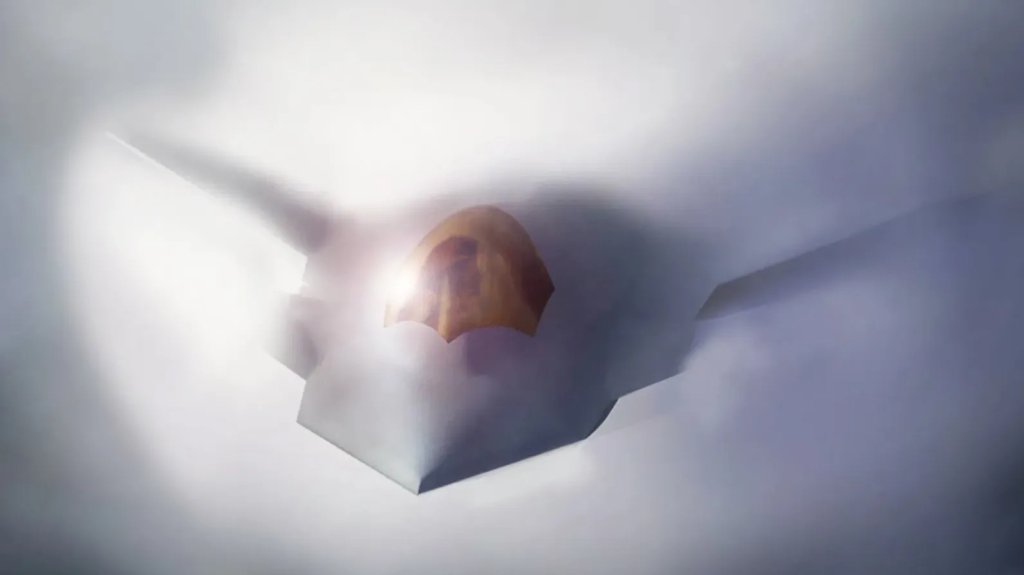
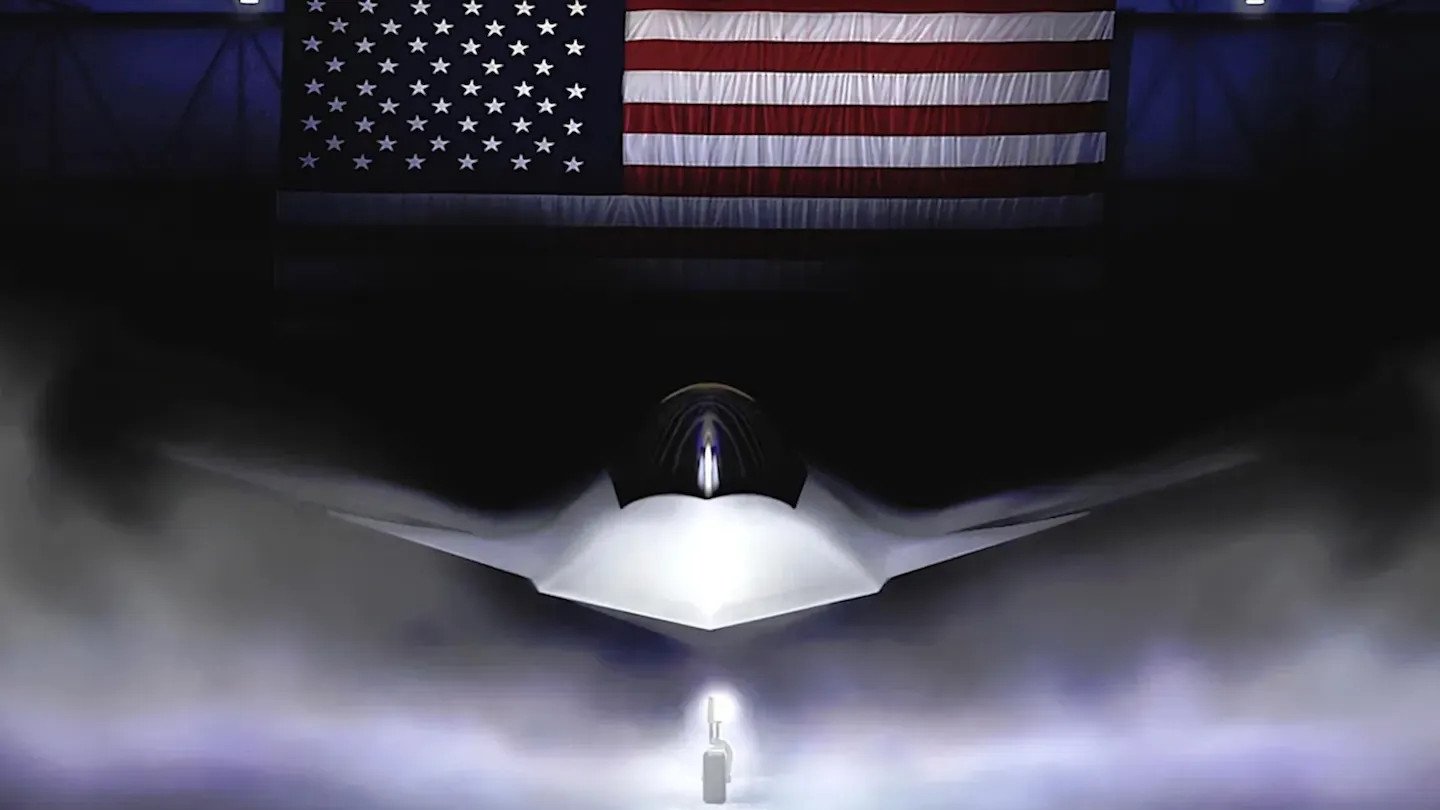
A rendering of Boeing’s F-47 for the US Air Force. USAF

Congress subsequently intervened to keep the F/A-XX program running, but its future had remained very murky until earlier this year. In April, Chief of Naval Operations (CNO) Adm. Daryl Caudle said that a winner of the competition would finally be announced in August. Secretary Pete Hegseth and Acting Secretary of the Navy Hung Cao both publicly committed to that same timeline later that month. There had been concerns that the program might have slipped back into limbo after that deadline came and went. Adm. Caudle told Aviation Week‘s Brian Everstine that he himself was no longer aware of when this decision might come on the sidelines of the Tailhook Association’s annual convention last month.

Just two weeks ago, Air Force Gen. Dale White, the service’s Direct Reporting Portfolio Manager for Critical Major Weapon Systems, reiterated concerns about industrial capacity in response to a question about potential challenges in building F/A-XXs at the same time as F-47s. White also acknowledged that these concerns were “not unique” to F/A-XX and F-47.

In this context, Boeing’s win today is perhaps unsurprising. The company will be able to leverage design work it has already been doing in relation to the F-47 program, as well as relevant production experience and supply chains. TWZ had previously highlighted similarities between what was seen in a rendering the company released of its F/A-XX proposal and official renders of what it is building for the Air Force. We still have yet to learn just how closely related the two designs are.
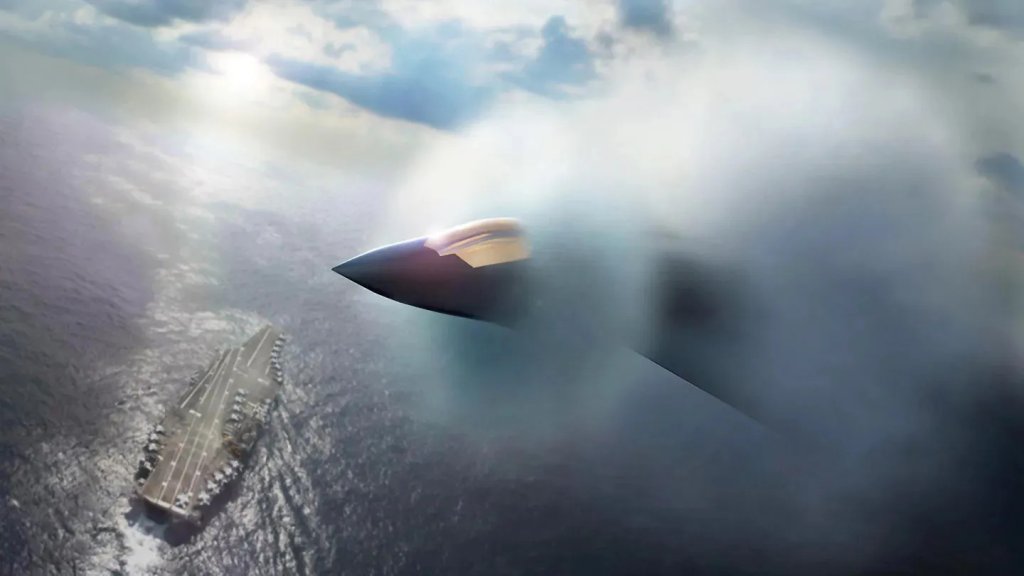
Boeing’s previously released F/A-XX rendering. Boeing

It is also worth noting here that Boeing previously pushed back publicly on the assertion that it was not ready to meet Air Force and Navy needs at the same time.

Regardless of any industrial base considerations, top Navy officials have been consistently vocal about the need for F/A-XX, even after the Pentagon’s move to put the program on ice last year. The service has presented the next-generation fighters as essential for staying ahead of top global competitors like China and Russia, as well as smaller adversaries, such as Iran.

“I know these things are expensive, and I know the defense industrial base is compressed, but we have got to figure out how to walk and chew gum here with aircraft,” CNO Caudle said in January, just weeks before the start of major combat operations against Iran. “The folks that used to be not in [the] headspace that I needed a stealth aircraft of this level to fly a mission into their country, will gain capability that the F-18 [F/A-18E/F Super Hornet] will not match against.”
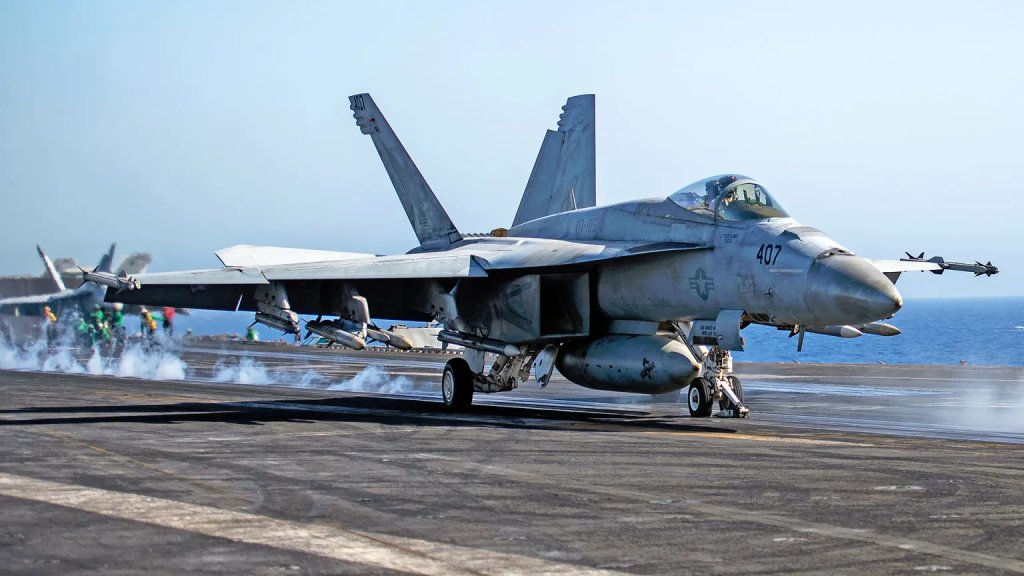
A US Navy F/A-18E Super Hornet seen being launched from a carrier. USN

“This is an ever-evolving theme, and when you’ve got partnerships … well coupled with each other across China and Russia and Iran and North Korea, and terrorist groups that are getting that kit from all of those through back-channel ways, our ability to fly with impunity with our existing airframes is fleeting,” he added at that time. “So, if I don’t start building that [F/A-XX] immediately, you’re not going to get it for some time.”

The conflict with Iran, where U.S. crewed and uncrewed aircraft have now been lost to that country’s air defenses, adds a certain weight to Caudle’s comments here.

The selection of Boeing for F/A-XX also comes now as the Navy is making new moves regarding other aspects of its future carrier air wing plans. In particular, the service is increasingly solidifying its vision for new carrier-based Collaborative Combat Aircraft (CCA) drones. Acting as airborne controllers for advanced drones has long been understood to be a key mission for the Navy’s forthcoming sixth-generation crewed fighters.

Update: 5:52 PM ET –

The Pentagon has now issued a full press release for the F/A-XX contract award to Boeing, which is valued at approximately $20 billion. The deal covers the “full-scale development phase” and includes the procurement of “multiple test aircraft for ground, airworthiness, systems, and weapons integration testing.”

“The F/A-XX is a critical pillar in our commitment to maintaining peace through strength. F/A-XX will dominate contested airspace, extend operational reach, and deliver a decisive combat advantage for the warfighter,” Michael P. Duffey, Under Secretary of War for Acquisition and Sustainment, has said in a statement. “The F/A-XX platform represents a crucial, non-negotiable investment in America’s national security and long-term air combat capabilities. We are joining forces with Boeing to field these capabilities rapidly, ensuring our warfighters possess the lethal and highly networked systems required to deter aggression, project undisputed power, and secure absolute air superiority.”

“This achievement marks a new era for the U.S. Navy,” Acting Secretary of the Navy Hung Cao also said in a statement. “The Sixth-Generation fighter is a generational leap in air superiority and will provide the world’s best aviators with unparalleled capabilities to fight, win, and come home safe. We are excited to partner with Boeing, and for our warfighters to continue to dominate the skies and defeat our nation’s enemies.”

“The F/A-XX will provide advanced carrier-based power projection that extends the range of the most agile and survivable airfields: U.S. Navy carriers. In addition, F/A-XX will be interoperable with manned and unmanned platforms such as Collaborative Combat Aircraft (CCA) and increase the capability of every CCA it teams with,” the press release adds. “Following this contact award announcement, Boeing will deliver the platform to augment and eventually replace legacy F/A-18E/F Super Hornets and EA-18G Growlers beginning in the 2030s, and operate alongside the F-35C.”

The Navy has not yet announced a formal designation for the F/A-XX aircraft. If Boeing’s base design does share significant DNA with the F-47, it is possible that the designation for the new sixth-generation carrier-based fighter could reflect that.

It is also worth noting how muted the F/A-XX announcement has been across the board given how hotly anticipated it was. The contrast with the F-47 contract announcement, which was a live-broadcast event headed up by President Donald Trump from White House, is particularly striking.

Update: 6:14 PM ET –

Boeing has now put out its own press release regarding the F/A-XX contract award, which notes that “technical and programmatic details” about the aircraft “remain classified under U.S. national security and export laws.”

“It’s an honor to be selected to produce the Navy’s first sixth–generation platform,” Steve Parker, President and CEO of Boeing Defense, Space & Security, said in a statement. “Backed by decades of work, bolstered by game-changing innovations and solidified by the investments we’ve made in new facilities uniquely suited to build multiple products with next generation capabilities, our dedicated and talented team is ready to execute this critical program.”

6th-gen edge.

Thank you, @USNavy, for continuing our partnership to design, build and deliver your F/A-XX aircraft. We’re honored to produce the 6th-generation fighter that will revolutionize advancements in naval aviation to maintain U.S. carrier air superiority.

Release:… pic.twitter.com/LaGUxgefSm

— Boeing Defense (@BoeingDefense) September 29, 2026

“Delivering two advanced fighters in parallel was always our plan, and we invested accordingly,” Parker added. “We are ready and able to build multiple concurrent future combat aircraft franchise programs.”

Boeing’s release explicitly highlights a major ongoing expansion of its production and other facilities in St. Louis, Missouri. That work is also widely understood to be supporting the F-47 program, as TWZ reported separately just earlier today.

“Investment in facilities is just one part of the story,” Boeing’s Parker also said. “We’re also investing in technology and people so that we can deliver for our customers.”

As an aside, Boeing also received a separate contract today from the Navy, valued at $16,667,607, to support the final shutdown of the production line for the F/A-18E/F Super Hornet fighter and EA-18G Growler electronic warfare jet.

Great timing. The same afternoon Boeing gets F/A-XX, the Navy gives them a new contract for shutting down the F/A-18, EA-18 line

Boom times are coming for STL though: F-47, F/A-XX, F-15EX increase, T-7 ramping up, MQ-25. pic.twitter.com/9TnMBC7jMb

— Brian Everstine (@beverstine) September 29, 2026

Contact the author: joe@twz.com

The post Boeing Wins F/A-XX Next Generation Navy Stealth Fighter Contract (Updated) appeared first on TWZ.
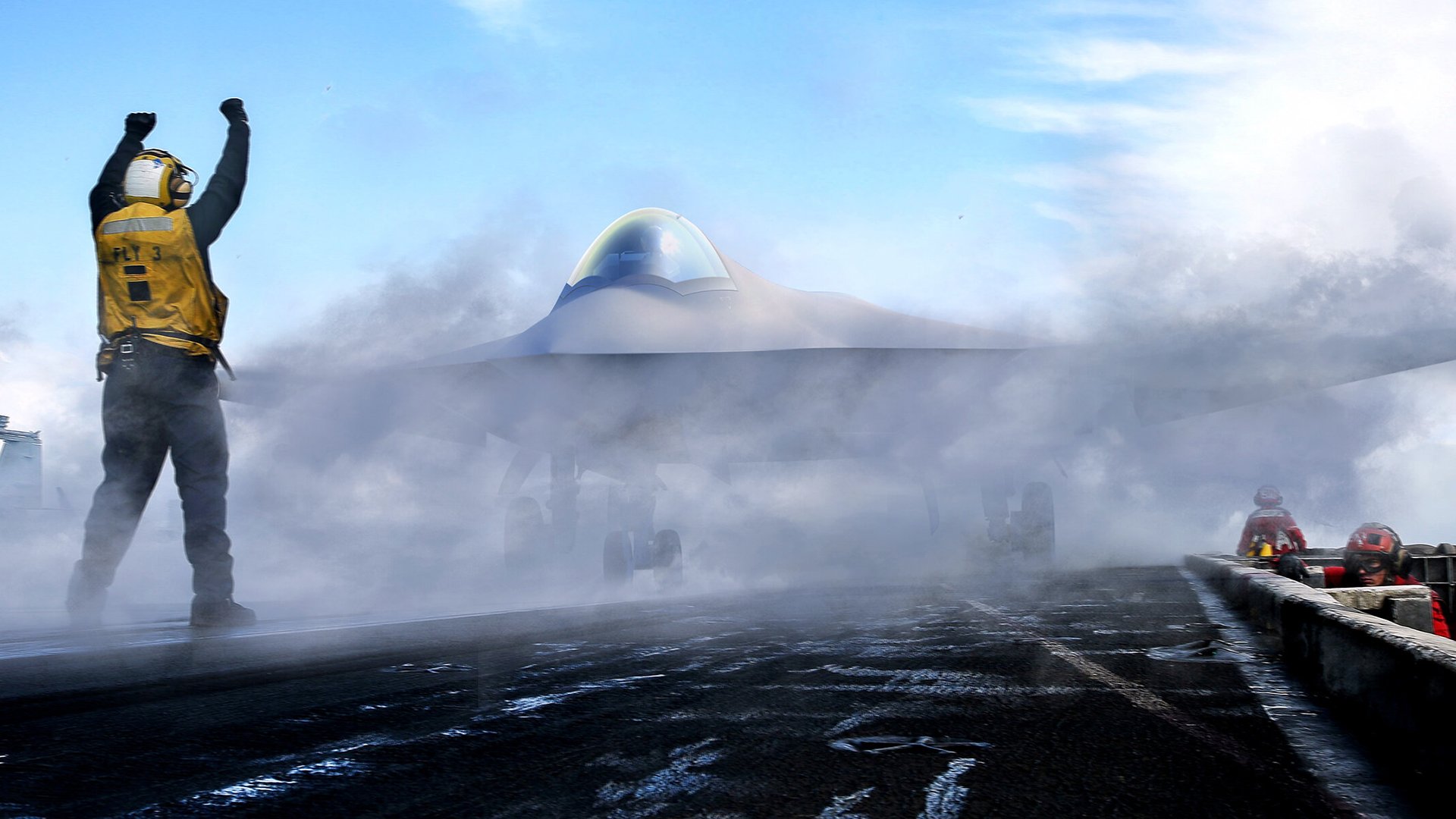
  •  

Full F-47 Production Line “Not Too Far Away”: USAF General

A top U.S. Air Force acquisition officer says work to set up a full production line for the F-47 sixth-generation fighter is getting closer and closer on the horizon. Prime contractor Boeing is in the midst of a nearly $2 billion expansion to its facilities in St. Louis, Missouri. The F-47 program otherwise continues to progress along an aggressive schedule, with a first flight still being targeted for 2028 and the goal of production jets entering operational service in the early 2030s.

Air Force Brig. Gen. Timothy Helfrich, the service’s Portfolio Acquisition Executive for Fighters and Advanced Aircraft, provided an update on the F-47 program during a virtual talk hosted by the Air & Space Forces Association’s Mitchell Institute for Aerospace Studies yesterday. Boeing won the Air Force competition to produce the F-47 in March 2023, and at least one pre-production example is being built now. The Air Force’s stated plan now is to acquire at least 185 of these jets.

“We have an imperative, I would call it a strategic asset, which is fighter production capacity,” Helfrich said during his opening remarks. “We only have so many production lines, and so we have to get the very most out of those that we can while planning for CCA [Collaborative Combat Aircraft drone] production, and pretty soon F-47 production.”

A rendering of the F-47 sixth-generation fighter. USAF

“There are only three active fighter production lines, right? We got F-35 down in Fort Worth, the F-15EX in St. Louis, and F-16 in Greenville,” Helfrich elaborated later on in the discussion in response to a question about steps the Air Force is taking to maintain sufficient operational capacity across its fighter fleets, in general. “So we need to grow the existing production lines, and we need to – or at least maximize what we can get out of those existing production lines, and we need to add production lines.”

“We’re not too far away from an F-47 production line, which will be additive to the production capacity,” he added.

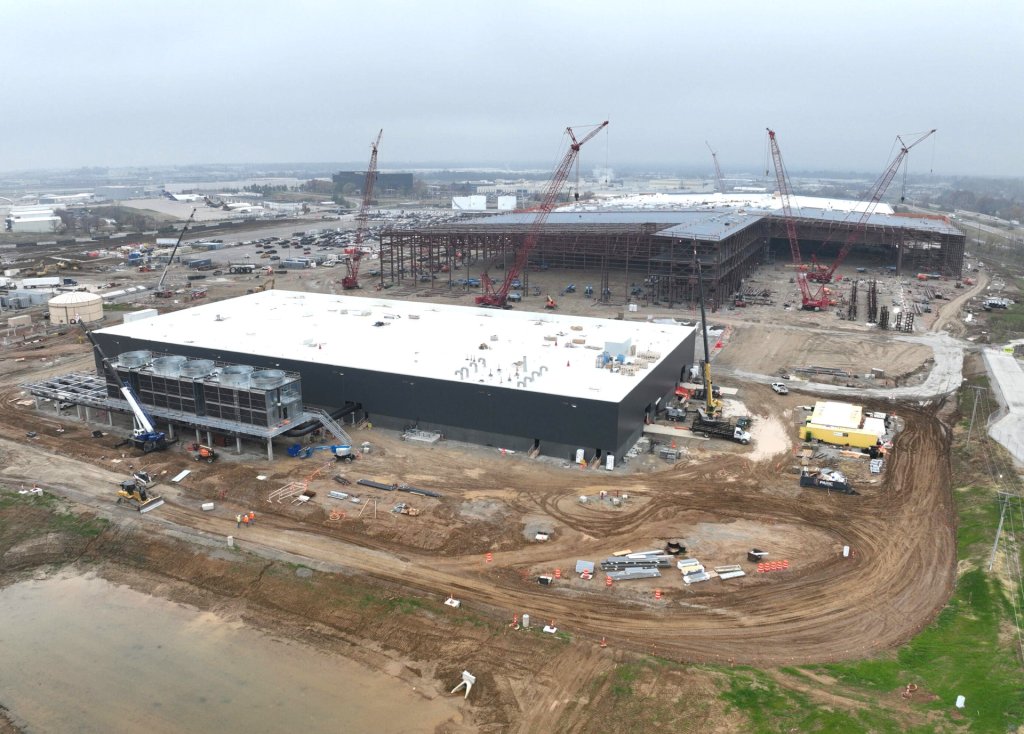
Since 2023, Boeing has been working to substantially expand its production and other facilities in St. Louis by more than one million square feet. The company has repeatedly shied away from explicitly linking the $1.8 billion construction project to the F-47 program, but there have been clear signs of a connection for years now.

An undated aerial view of work to expand Boeing’s facilities in St. Louis. PARIC Corporation

“The project’s first phase includes plans to erect and renovate 1.1 million ft.2 of facilities on the 110-acre Brownleigh and 75-acre Northern tracts adjacent to St. Louis Lambert International Airport, according to planning documents released by the airport authority in 2023,” Aviation Week reported in 2025. “Phase 1 includes the construction of a 880,000-ft.2 aircraft assembly building on the Brownleigh [site], plus a 185,000-ft.2 hangar, 80,000-ft.2 radar cross-section test facility, open aircraft shelters, hush house, maintenance building, fuel calibration building and fire house totaling 90,000 ft.2 on the Northern tract.”

At that time, parts of the new facility were reportedly expected to open in 2026 ahead of the completion of the full project in 2030.

A post across Boeing’s social media accounts in July highlighted continued progress with this construction. This included the completion of roof and exterior panels and the installation of hangar doors at a section of the site dedicated to “Advanced Combat Aircraft Assembly,” as well as the “first steel column installed for the Central Utility Plan” in the North Tract area.

Progress you can see. Built for what's next.
Momentum continues on our St. Louis expansion:

✅ Advanced Combat Aircraft Assembly: roof and exterior panels complete, hangar doors installed
✅ North Tract: first steel column installed for the Central Utility Plant

Fueling future… pic.twitter.com/281prUMMCV

— Boeing Defense (@BoeingDefense) July 6, 2026

“Momentum continues on our St. Louis expansion,” Dan Gillian, Vice President and General Manager of Air Dominance at Boeing, also said in July, according to Flight Global. “We are expanding our defence footprint while supporting next-generation capabilities.”

All of this is in line with Brig. Gen. Helfrich’s comments yesterday about a full production line for the F-47 steadily taking shape now. This, in turn, fits squarely with the aforementioned aggressive timeline the Air Force is pursuing for the program overall. Accelerated work on the F-47 has been aided by years of flight testing in secret of advanced demonstrator aircraft.

There is also a question of whether Boeing’s expansion of its production capacity in St. Louis could also be tied to the Navy’s F/A-XX next-generation carrier-based fighter program. Boeing has been facing off against Northrop Grumman in the F/A-XX competition with a design that looks related, at least to some degree, to the F-47.

A rendering of Boeing’s proposed F/A-XX design. Boeing

The F-47 and F/A-XX programs have become very closely intertwined in other ways. In 2025, the Pentagon moved to freeze F/A-XX, explicitly over concerns about competition for industrial base resources with F-47. This would include production line capacity. Congress subsequently intervened to keep the Navy effort going, but a final winner still has yet to be announced.

Just earlier this month, Air Force Gen. Dale White, the service’s Direct Reporting Portfolio Manager for Critical Major Weapon Systems, reiterated concerns about industrial capacity. White’s comments came in response to a question about potential challenges in building F/A-XXs at the same time as F-47s at a media roundtable at the Air & Space Forces’ Air, Space and Cyber Conference at which TWZ was in attendance. The general also acknowledged that these concerns were “not unique” to F/A-XX and F-47.

During the virtual talk yesterday, Brig. Gen. Helfrich otherwise touted continued progress on the F-47 program.

“The F-47 is going to be the world’s first sixth-generation fighter, and I can’t wait to fly it [sic; see it fly] this administration,” he said. “That’s a commitment that I made, that we are on track to do.”

The “administration” referred to here is President Donald Trump’s second term in office, which will come to a close in January 2029. With this deadline in mind, the Air Force has openly said in the past that it is aiming for a first flight of the F-47 in 2028. Beyond that, the stated goal is to be operating the jets operationally sometime in the early 2030s.

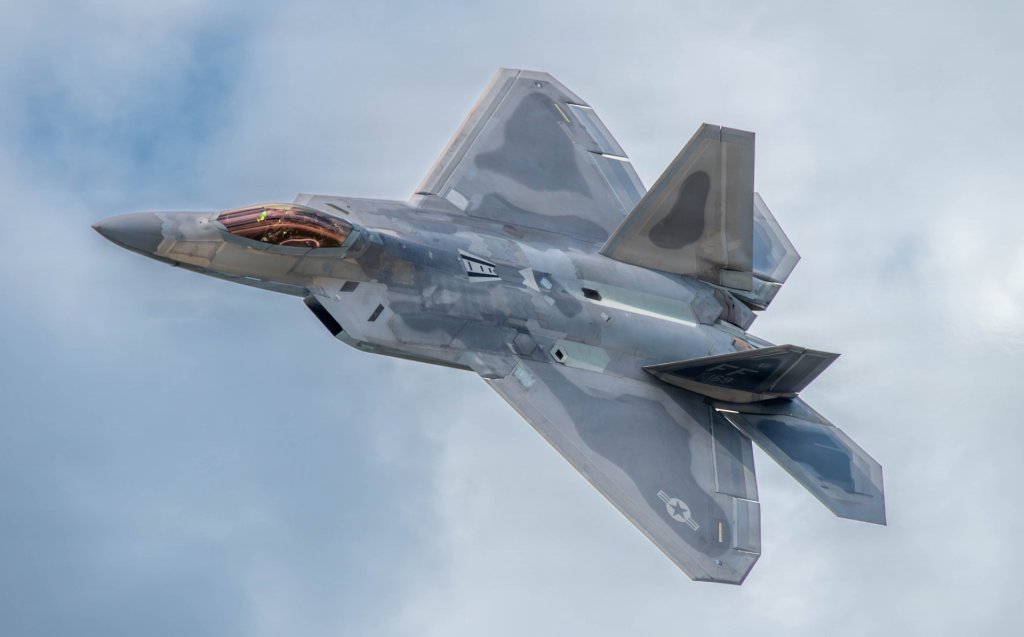
As noted, the Air Force has said previously that it is planning to acquire a fleet of at least 185 F-47s, which is in line with the original vision of the aircraft as a direct successor to the F-22 Raptor. However, there have already been signs that the final F-47 fleet figure could grow amid an evolving view of the F-22’s continued role in the near-term. A huge, multi-faceted modernization effort for the F-22 fleet is now underway, as you can read more about here.

A stock picture of a US Air Force F-22 Raptor. USAF

When the jets do enter service, “one of the things that we know F-47 is going to bring is more survivability and lethality than anything that’s ever been delivered before. And going into that highly contested environment, you have to meet certain levels of survivability if you want to execute there,” Helfrich noted yesterday. “Beyond just the survivability and lethality that we know is going to come, there’s also an adaptability that the F-47 will bring.”

“The F-47 will come out of the box with full open architecture,” he continued. “Amongst other great things, it brings the ability to upgrade rapidly, faster than the threat if needed. That is what is going to be required in that kind of environment. Other things it’s going to bring, it’s going to be much more survivable than our fifth-gen platforms, as well as have a combat radius of over 1,000 nautical miles, which you’re familiar with. That’s a long way, which is needed for that kind of environment. You need to be able to execute and persist there.”

“Especially in these highly contested environments, no one’s going to be fighting alone. So we need to make sure that we are integrating,” he added. “There’s some ability to get lift from one platform to another, right? Whether it’s a mission system, it’s communications, it’s open architectures, we’re seeing that integration pay dividends, so that we are integrated from day one.”

This kind of integration and cross-platform commonality in mission systems will be particularly relevant for F-47s acting as airborne controllers for CCA drones. Brig. Gen. Helfrich’s comments above also came in the midst of a discussion about future operations involving both F-47s and B-21 Raider bombers.

Many questions do still remain about plans for the F-47 and its design, including what engines will power the aircraft when it first enters service. In July, TWZ published a deep-dive feature about what is known about the aircraft to date, which you can find here.

In the meantime, the Air Force and Boeing are continuing to push ahead with laying the groundwork for full production of the F-47 as the jet gets closer to its first flight in the coming years.

Contact the author: joe@twz.com

The post Full F-47 Production Line “Not Too Far Away”: USAF General appeared first on TWZ.

  •  

Heavily Damaged Submarine USS Connecticut Now Won’t Return To Service Until 2027

The U.S. Navy’s schedule for getting USS Connecticut, one of its prized Seawolf class nuclear attack submarines, back into service has slipped into next summer. The boat suffered severe damage, especially to its bow, in a collision with an underwater seamount in the South China Sea in 2021. The service had previously hoped that repairs would be finished before the end of this year, and planning is also now underway for the submarine’s retirement in 2031. This would mean it could serve for just four years before being pulled from service once and for all.

“USS Connecticut (SSN 22) is currently undergoing a complex Extended Docking Selected Restricted Availability (EDSRA) at Puget Sound Naval Shipyard & Intermediate Maintenance Facility. Current work consists of structural and systems restoration and required lifecycle maintenance,” a Navy official told TWZ today. “The Navy’s target completion date for the availability is the summer of 2027. PSNS & IMF is dedicated to executing this work with the highest standards of safety, technical accuracy, and craftsmanship to ensure the ship returns to the fleet ready to take its place at the tip of the spear in defense of our nation’s interests.”

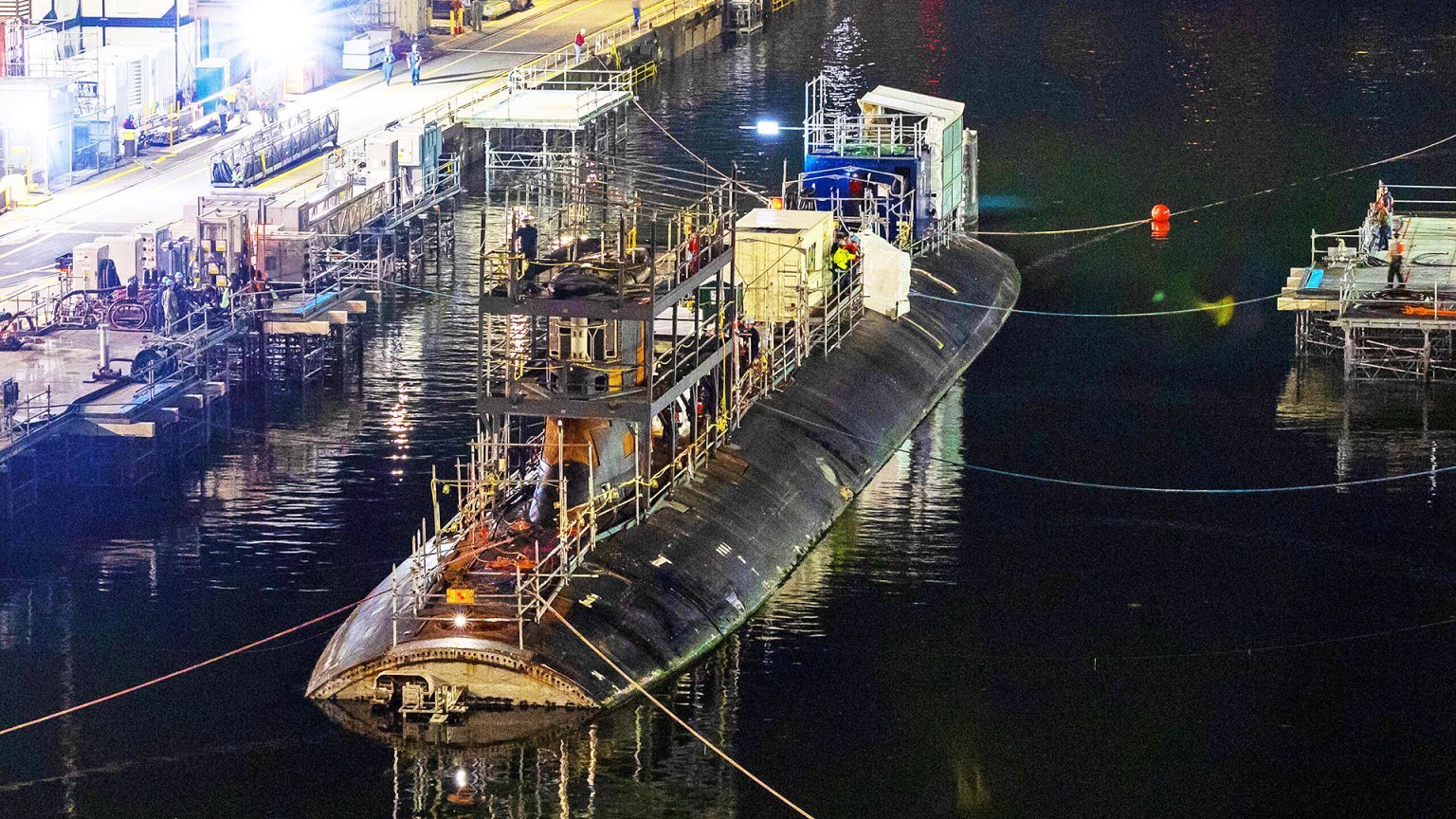
The USS Connecticut seen at the Puget Sound Naval Shipyard in 2023. USN

USS Connecticut is the second of just three Seawolf class submarines commissioned between 1997 and 2005, the others being USS Seawolf and USS Jimmy Carter. The Jimmy Carter, which came last, is a one-of-a-kind subvariant of the design that is optimized for underwater espionage missions. However, the Seawolf and Connecticut also feature advanced capabilities compared to other submarines in the Navy’s inventory today, and the service utilizes all three for a variety of specialized tasks, for which they are in very high demand.

After USS Connecticut hit the seamount in October 2021, the submarine first limped to Guam, and then made its way to San Diego in southern California. From there, it headed north to the Puget Sound area, where it has been ever since. The Navy’s investigation into the incident put heavy emphasis on how a weak command environment and lax attitudes toward the performance of key tasks had put the submarine on a path to the accident, as you can read more about in detail here.

The EDSRA formally began in February 2023. At that time, the Navy projected that the repairs would be completed in September 2025. By July 2023, the schedule had already shifted to early 2026, according to Naval News. In July 2025, the service confirmed to TWZ that the timeline had moved again to the right, to late 2026.

Another view of USS Connecticut at the Puget Sound Naval Shipyard in 2023. This picture offers a good sense of the extent of the damage to its bow. USN

The exact reasons for the delays are unclear. TWZ has stressed the particular complexities of major repairs to any of the Navy’s trio of Seawolf class submarines in our past reporting on Connecticut. As we wrote in 2023 around the start of the EDSRA:

“As for the USS Connecticut, as the images show, her state remains relatively the same, at least in terms of what is visible, compared to when she arrived over a year and a half ago. Her sonar dome is still missing and, clearly, the boat has been idle for some time, with huge sections of its anechoic coating missing from its sail.”

“Major repairs to the submarine’s bow, sonar, and other underside structure components will be challenging as the Seawolf class is long out of production. On top of that, just three boats were ever built, with one being a heavily modified sub-type in its own right, the highly secretive USS Jimmy Carter (SSN-23). In the past, similar damage has been fixed by leveraging spare parts and entire sections of decommissioned submarines of the same class. That simply is not an option in this case.”

The Navy’s 2025 Fiscal Year budget proposal highlighted exactly these broader issues in seeking funds for spare bow domes “for use in the event replacement is required,” separate from the incident with the USS Connecticut. The original sustainment strategy for the Seawolf class did not include these items, which have a “three plus year lead time” to produce.

With the EDRSA, the Navy is also taking the opportunity to conduct a deep overhaul of USS Connecticut, which could include the integration of various upgrades. The Navy’s budget documents have long highlighted efforts to modernize key systems on all three Seawolf class submarines, some of which were first designed in the 1970s.

USS Connecticut underway in 2009. USN

How much the repairs and accompanying overhaul will cost is also not clear. In 2021, Congress approved $40 million for “emergency repairs” for Connecticut and an additional $10 million for a new bow dome, but the full price tag is expected to be far steeper. The Seawolf class submarines were extremely expensive to procure in the first place, costing approximately $3.1 billion apiece in 1983, or some $10.6 billion in 2026 dollars. This was due in large part to the truncated order, from 29 down to three, as a result of post-Cold War drawdowns.

Depending on when repairs to the USS Connecticut are actually finished, the Navy could find itself for at least a time with just one Seawolf class submarine in active service. USS Seawolf is currently scheduled to start a routine maintenance availability next May, which will then run through February 2030, per Navy budget documents. As mentioned, the Navy is now also planning to inactivate USS Connecticut in 2031, making it the first Seawolf class submarine to be retired, per its most recent annual shipbuilding plan.

The service still has plans to acquire a new class of attack submarines, which has been discussed in the past as something closer to a true successor to the Seawolf class than the Virginia class boats being procured now. However, these new submarines, currently referred to as SSN(X), are not expected to arrive until the mid-2040s at the earliest. Between now and then, the Navy is set to acquire a one-of-a-kind seabed warfare version of the Virginia, which could well take over for the USS Jimmy Carter, as you can read more about here. In August, the service announced that stretched Block IV and V Virginia class submarines with Virginia Payload Modules (VPM) will now be categorized as guided-missile types (SSGN), as well.

When it comes to USS Connecticut, the Navy remains committed to getting the highly capable submarine back to the fleet after being sidelined for nearly five years now. At the same time, the boat has now already entered the twilight of its career, with just four years of active service life left if the current repair schedule holds.

Contact the author: joe@twz.com

The post Heavily Damaged Submarine USS Connecticut Now Won’t Return To Service Until 2027 appeared first on TWZ.

  •  
❌