Login

Europe’s housing crisis is an immigration crisis, as Berlin data confirms
Across the West, native Europeans are dying out but rental prices continue to go up every year. While the left would like to point the finger at capitalists and greedy landlords, the primary factor driving the housing affordability crisis is mass immigration.
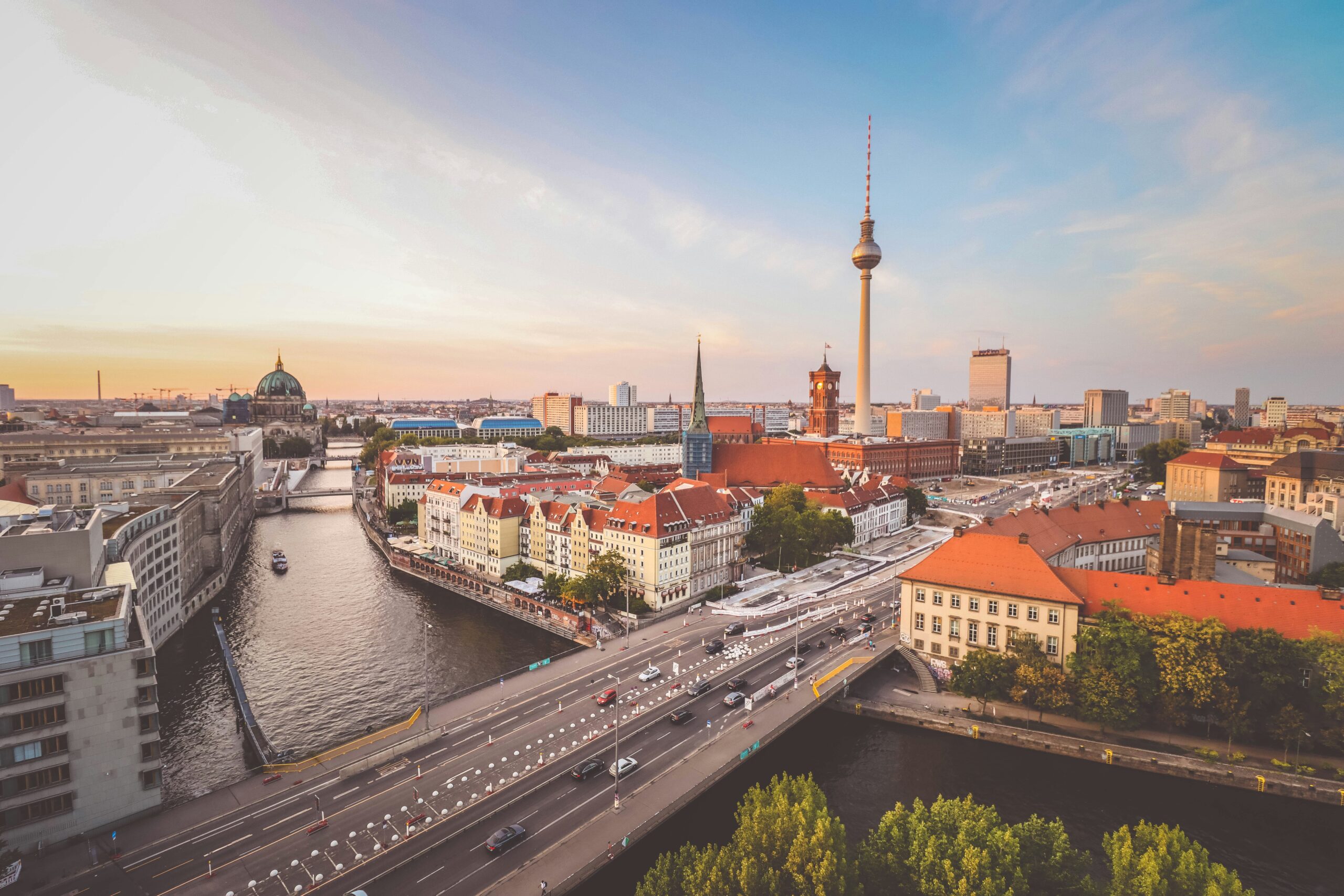
Berlin is a prime example of this trend, as German journalist and author Jens Winter pointed out on X using clear population and housing data.
“Rental prices on the market have more than doubled in Berlin since 2011—plenty of money for corporations. But where is the increased demand coming from? While the native population of the capital has declined by 260,000 since 2011, the number of foreigners and people with a migration background has risen by 650,000 over the same period. That means: Without migration, there would be less demand for housing in Berlin today than in 2011,” he wrote.
In a follow-up post, he wrote that the German “conservative” party is just as guilty as the left.
“The CDU-aligned real estate lobby is raking in big money with migration in Berlin. The Germans have a choice: dying out in the CDU’s multikulti capitalism or in the Left’s multikulti socialism. Understandable response: If we’re going to disappear anyway, why bust our asses for it?” he wrote.
Die CDU-nahe Immobilien-Lobby scheffelt mit Migration in Berlin mächtig Geld. Die Deutschen haben die Wahl: Aussterben im Multikulti-Kapitalismus der CDU oder im Multikulti-Sozialismus der Linken. Verständliche Antwort: Wenn schon verschwinden, warum dafür dann hart arbeiten? https://t.co/GPrTp62SXO
— Jens Winter (@mr_jenswinter) September 26, 2026
While the doubling of rents is real, there is a basic supply and demand reality that the left would like to deny. It is indeed true that predatory property owners, major institutional players, and money printing have played contributing roles to the housing crisis, but no matter how many greedy property owners are involved, if the population of a city falls, rental and housing prices are almost inevitably going to fall.
Mass immigration means that population numbers never fall. Any breathing space for German families to repopulate, have more children, and fill in the gaps left by older generations passing away is immediately filled by hundreds of thousands of foreigners.
The data shows that the population of native Germans fell by 260,000 people. In a system that rejects mass immigration and foreign real estate investors, this could have been a boon for birthrates and increasing home ownership. For one, Germans who already lived in Berlin, and those looking to move to Berlin, would have been more easily able to afford rents and housing due to less competition on the housing market. Secondly, more native Germans would have had a chance to start families — and those who already had families could have afforded an extra child or two — by securing affordable housing.
However, Germany does not reject mass immigration.
Instead, 650,000 foreigners arrived in the same period of time and housing and rental prices soared. The left, however, refuses to do simple math.
There is of course another solution, but it is far more complicated than simply allowing population levels to fall in a country that has never had so many people living in it. Instead of ending mass immigration, left-wing parties, along with the CDU, demand more housing is built.
However, there are myriad reasons why the required housing is not being built, including high construction and material costs, red tape, zoning, and a lack of skilled workers. The same parties have been making the same demands for years now, but construction cannot keep pace with demand in Berlin or other major cities across Germany.
The Left Party may promise to build more, but the reality is that it will not happen. Nothing the left offers will lead to the necessary building. Before Olaf Scholz of the far-left Social Democrats (SPD) won the chancellorship, he promised that his “goal” was to create 400,000 new apartments per year, which would include 100,000 units of social housing, saying, “That’s not witchcraft, we just have to want to do it.”
It never happened under Scholz and it won’t happen under a left-wing government in Berlin either.
Should more housing even be built?
As Western cities race to replace their native European populations, the question becomes whether life really becomes better in a crowded multicultural city when it means more traffic, longer waiting times at hospitals, crowded classrooms, and imported crime — just to name a few ills.
The newcomers also did not fix the skilled worker shortage that could potentially build all the homes and apartments politicians and lobbyists claim Europe needs. While a certain number of new houses and apartments always need to be built, the question then becomes should Western civilization really be involved in endless building to accommodate millions of foreigners.
On top of all of these questions, the buildings developers managed to build are now in fact uglier than ever, more expensive than ever, and are built more slowly than ever.
In fact, data shows that the time from start to completion for a project is longer than it has been in decades. Again, where are all these young migrants from Africa and the Middle East to fuel a new construction boom with their master artisan and building skills?
The reality is they largely do not exist. Many skilled builders who are immigrants are from neighboring European countries, such as Poland, and they increasingly see fewer reasons to work in Germany.
The pro-migration left is making housing worse
Winter’s X post is especially relevant given that the Left Party recently won a first place finish in Berlin elections, securing over 25 percent of the vote. Commentators and analysts have contributed the rise of the party in Germany’s capital due a variety of factors, but two major components are the party’s ability to secure the vote of German citizens with a migration background and young voters.
The second factor is Berlin’s housing crisis, which helped drive support from groups like non-voters, the young, and foreigners.
German taxpayer-funded Deutsche Welle, wrote: “That makes sense to 17-year-old Liska, who voted for the socialists: ‘The Left Party did appeal to me, especially because of the social issues — getting prices down, making rents more affordable.’ Rents in Berlin are indeed rising at a massive pace — by some 7% in the last two years alone — and first-time tenants are likely to be the hardest hit. Polls also showed that by far the biggest proportion of Berlin voters — 37% — thought that the Left Party was the most likely to create affordable housing.”
The Left Party and various other left-wing parties have convinced young people that there are easy fixes to the housing crisis. The problem is not relegated to Berlin, as all of Germany has seen tight vacancies as more and more migrants arrive, as Remix News previously reported.
In the end, the left and its voters are choosing a path where more and more building only leads to overcrowding and environmental degradation.
Mass immigration and higher housing costs hurt birthrates
Numerous studies have shown that immigration has helped drive soaring rental and housing prices across the Western world — not just in Germany. In turn, studies have also shown that soaring housing prices have depressed birthrates, including in countries like the Netherlands, according to the Netherlands Interdisciplinary Demographic Institute (NIDI).
Again, the same story is taking place in the Netherlands, with the natural population increase for the Dutch at near zero or negative. Nevertheless, the population rose from about 16.8 million in 2013 to 18.1 million in 2025, with net migration accounting for virtually all of the recent increase.
It must also be remembered that just like in Germany, most of these migrants want to head to the major cities, such as Amsterdam.
Official housing-need forecasts in the Netherlands also attribute a large share of future extra demand, often 45 percent or more of the extra dwellings required, to population growth that is itself 95 percent migration-driven.
Great for landlords, bad for the citizens.
Of course, the Alternative for Germany has tried to tie the housing crisis to mass immigration, and they have successfully made this case to some extent.
WATCH:
— Remix News & Views (@RMXnews) February 15, 2024Mass immigration is fueling the West's housing crisis.
Here's how it's happening in Germany.
In a powerful speech in the German Bundestag, @AfD politician Carolin Bachmann slams the ruling government for allowing 2 million migrants into the country while families… pic.twitter.com/DMEqiV316S

The problem is that as more and more of the population becomes foreign, this argument holds less and less sway. Immigration may raise housing prices but if immigration brought a person to a country in the first place, and if more immigration might also enable more and more of their family members and fellow countrymen to arrive, then these voters have every incentive to keep immigration levels high regardless of housing costs.
Many of these migrants are not paying for rent anyway. There are millions of foreigners on social welfare, which means not only are they taking housing places of native Germans, but they are being paid to do it. They then often have far higher birthrates than native Germans, even with limited space, which entitles them to larger spaces.
The cycle is self-reinforcing and relentless. That means unless dramatic action is taken against mass immigration, housing and rental prices may never truly come down.
The post Europe’s housing crisis is an immigration crisis, as Berlin data confirms appeared first on Remix News.