❌

Reading view

Lula vows to fight for Brazil’s presidency: “Starting tomorrow, we begin a new campaign.”

Brazil's President and re-election candidate for the Workers' Party (PT) Luiz Inacio Lula da Silva (2nd-R), his wife First Lady Rosangela Janja da Silva (R), Vice-President Geraldo Alckmin (L), and his wife Lu Alckmin (2nd-L) raise their arms following the partial results of the presidential election in Sao Paulo, Brazil on October 4, 2026. Photo by NELSON ALMEIDA / AFP via Getty Images

This story originally appeared in Panamerican Dispatch on Oct. 05, 2026, and is shared here with permission.

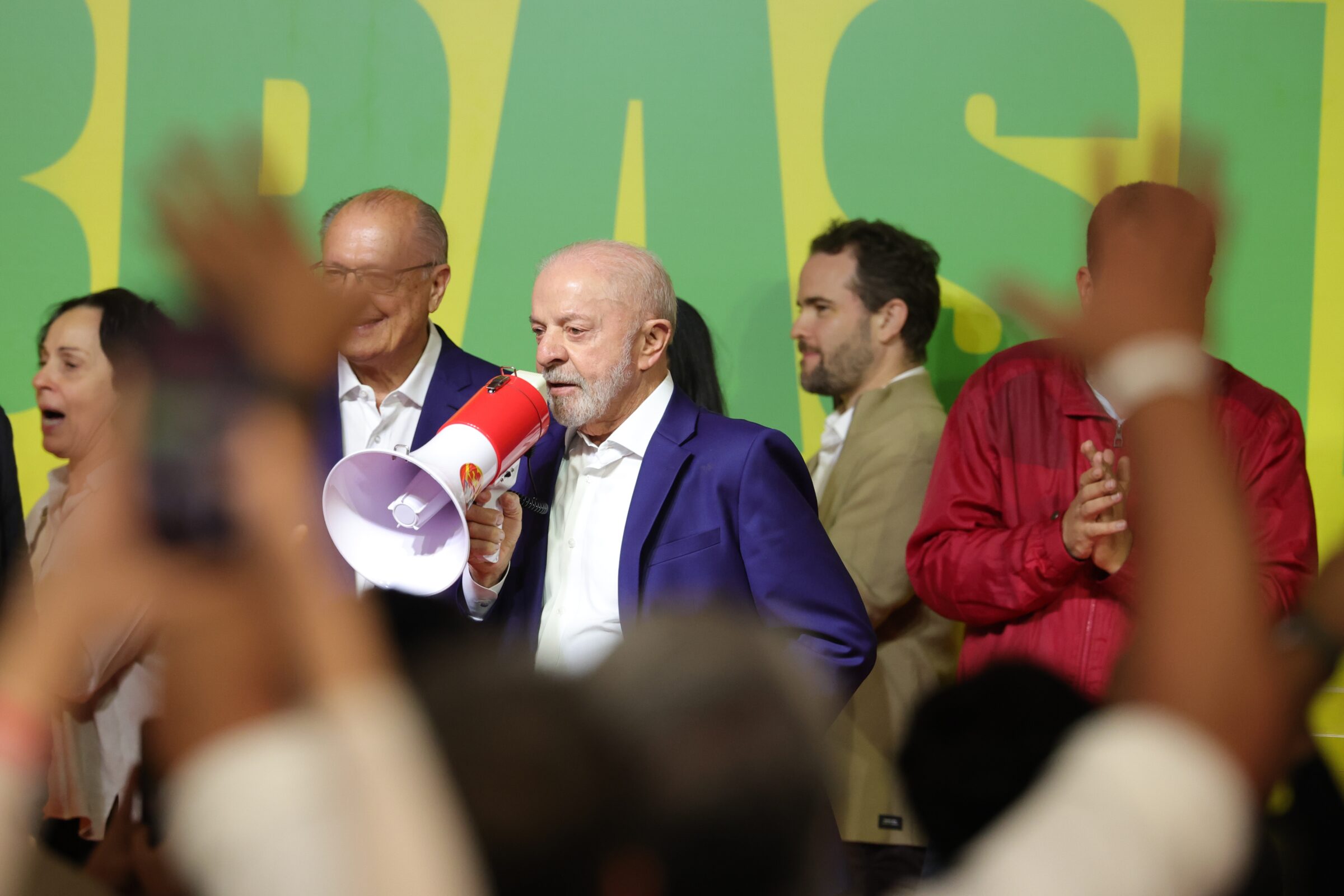
President Luiz Inácio Lula da Silva spoke on Sunday, after the release of the results of the first round of the 2026 elections. He said his campaign for a second round of the presidential race begins this Monday, October 5.

Lula will face Senator Flávio Bolsonaro in the runoff, scheduled for October 25.

In his speech, Lula stated that he intends to present to voters the differences between the two candidates’ platforms.

“Starting tomorrow, we begin a new campaign,” he said. “We will be able to show the difference between the proposals that exist for Brazil. The Brazilian people will have no doubt about choosing who will win the election.”

Lula also launched direct attacks on Flávio Bolsonaro’s political track record and cited the candidate’s past.

“He has a dark history,” Lula said. “With dark connections, with extremely serious suspicions, with ties to militia members and organized crime. All of this will become clear.”

The president mentioned Banco Master. He claimed that Flávio had a hand in the institution’s creation.

“Banco Master resulted in the greatest corruption scandal in this country and the biggest free-for-all involving politicians,” he said.

The accusations raised by Lula are part of his runoff campaign rhetoric and are expected to be a key point of contention between the two candidates in the coming weeks.

The president also argued that the race should be framed as a choice over the country’s future. He stated that his candidacy represents an opportunity to drive change in the Brazilian economy.

“We will show what has been done and what society expects to be done,” he said. “No one is better positioned than us to offer a future to Brazilian society.”

Lula further stated that Brazil needs to take a “qualitative leap” to become internationally competitive.

“I’m very good at the knockout stage”

Commenting on the first-round results, Lula referred to the fact that he had won the second Rond vote in previous presidential elections.

“It didn’t work out [this time],” he said. “You know why? Because the people like seeing me compete in the runoff.”

In a lighthearted tone, he added, “I’m very good at the knockout stage.”

The runoff will be a head-to-head contest between Lula and Flávio Bolsonaro, after neither candidate secured more than 50% of the valid votes in the first round. The vote will take place on October 25.

“More than 20 million people didn’t turn out to vote,” he said. “We are going to make an appeal: at this historic moment for Brazil. Voting is essential to determine the country’s future.”

“Bolsonaro supporters had better get ready,” he said. “Because we are going to defeat them.”

You can watch Lula’s speech below.

This article was originally published by Revista Forum. You can read the original in Portuguese, here.

  •  

Putin and Vučić dominate Bosnia elections, as EU fades out of view

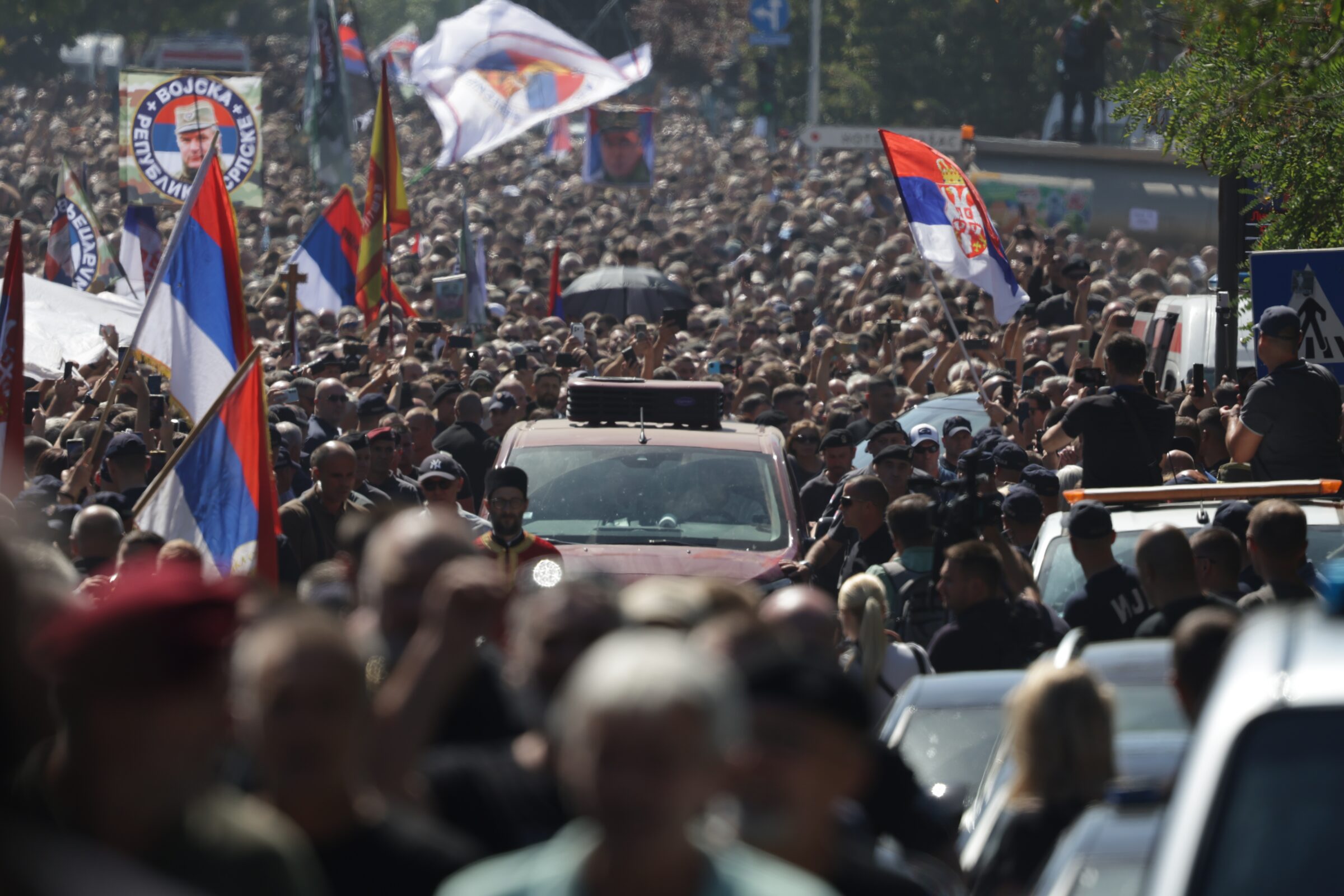
Bosnia and Herzegovina’s election, held on Sunday (4 October), has reinforced the country’s deep ethnic and political divisions, with nationalist parties retaining a strong grip on power and low turnout underscoring voters’ growing disillusionment with a political system that has long frustrated the country’s ambitions to join the European Union.

Public support for EU membership remains strong. According to a 2026 survey by Bosnia’s directorate for European integration, 74.4 percent of citizens said they would vote for EU membership in a referendum. Even in Republika Srpska, the ethnic Serb component, where support is lower, 54.1 percent said they would back joining the bloc.

And Bosnia became an EU candidate in 2022, but its path towards membership remains stalled.

The European Commission has identified 14 priorities that the country must address before it can move towards opening accession negotiations. So far, it has not opened a single accession-talks chapter and does not have a chief negotiator for EU membership.

Meanwhile, Bosnia’s complicated political system, built around three constituent ethnic groups, continues to hamper the adoption of reforms.

Forgotten elections

The Bosnian nationwide turnout was just 42 percent, reflecting political apathy, but the complexity of its system also means few people in the EU followed what went on.

Instead of a single president, Bosnia and Herzegovina has a tripartite presidency comprising one Bosniak (South Slavic ethnic group), one Croat, and one Serb.

Voters registered in the federation may vote for either the Bosniak or Croat member, but not both. Voters in Republika Srpska elect the Serb member.

From the provisional results, on Sunday, Denis Becirović won a second term as the Bosniak member of the presidency with 38.12 percent.

He is to be joined by Darijana Filipović (46.55 percent) of the Croatian Democratic Union of Bosnia and Herzegovina (HDZ BiH) as the Croat member, and Željka Cvijanović of the Alliance of Independent Social Democrats (SNSD) as the Serb member (55.37 percent).

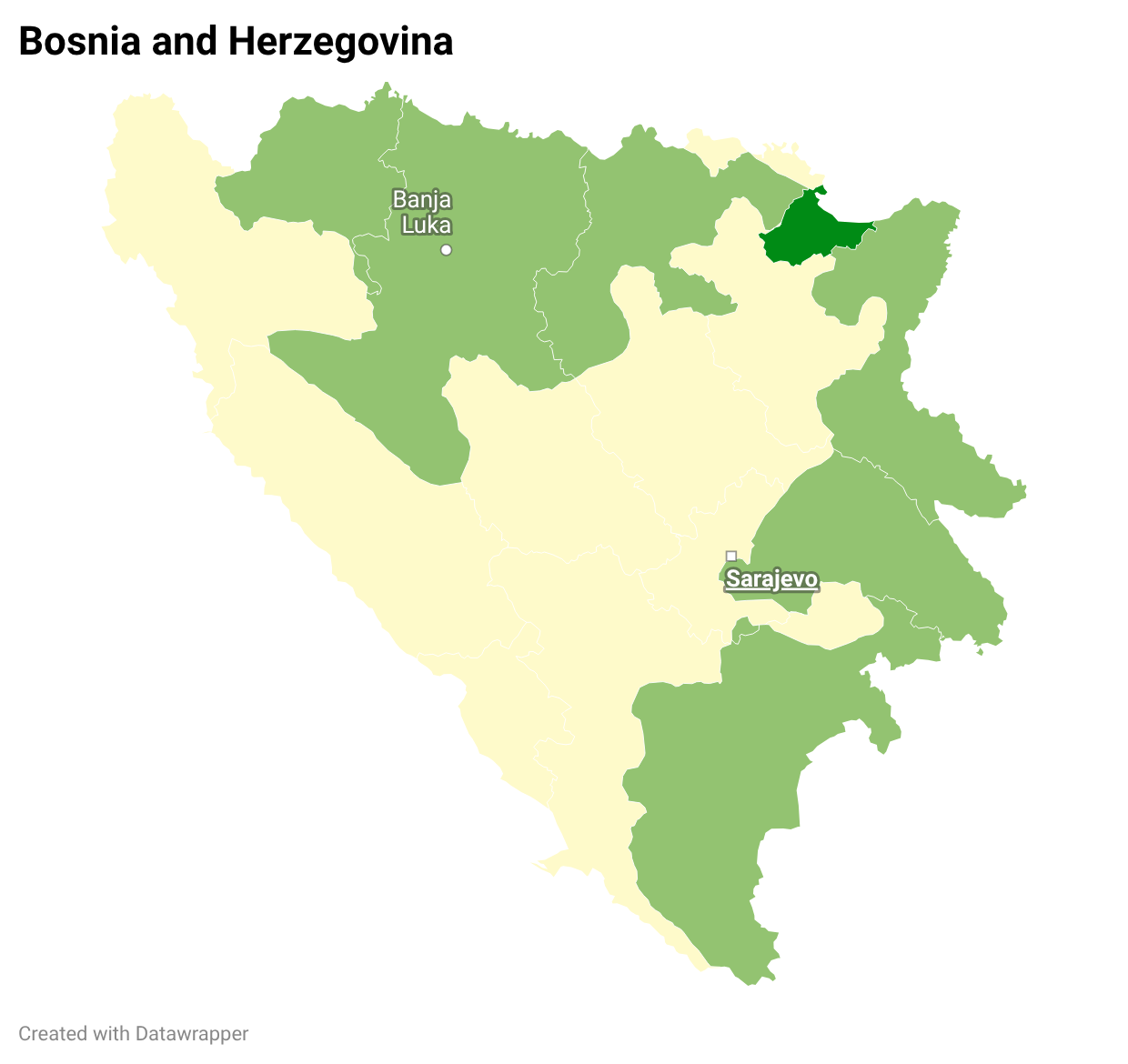
In light green is the Republika Srpbska. In dark green is the region of Brcko who has another legal status.

The Bosnian system excludes citizens who do not identify as Serb, Croat, or Bosnian from standing for the presidency.

And the post-war power sharing agreement includes 14 parliaments and governments in total for the country of some 3.1 million people, making reforms hard to push through.

But amid the complexities, the biggest winner from Sunday’s elections could be Serb nationalist politician Milorad Dodik, while the big loser could be the EU, according to Adi Ćerimagić, a senior analyst on the Western Balkans at the European Stability Initiative think tank.

This article continues, but the full version is available only to EUobserver.com subscribers. Visit account.euobserver.com/membership

  •  

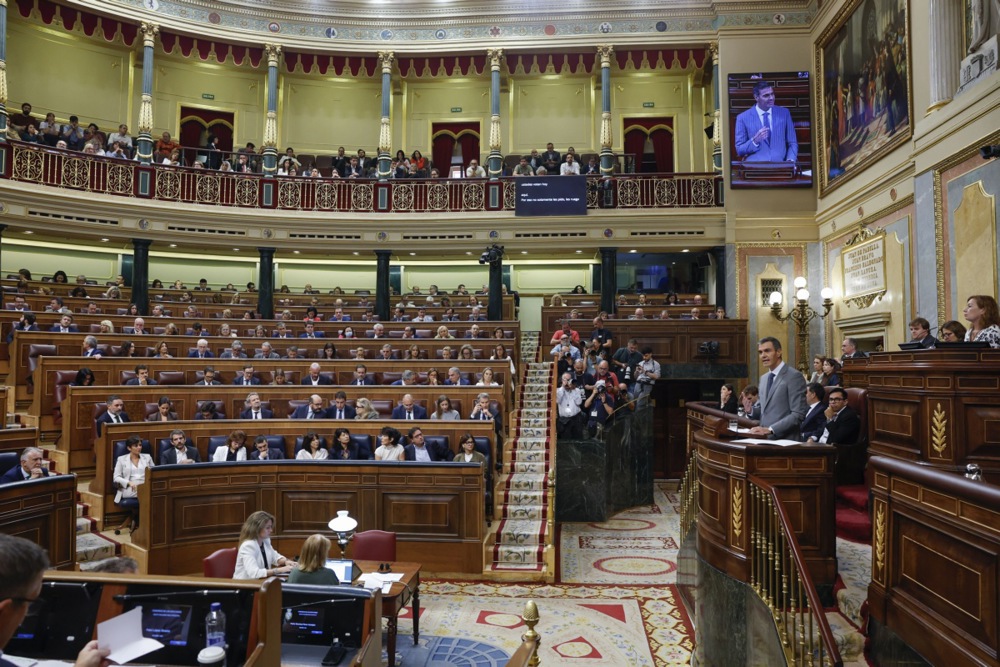
Spain’s 54-day sprint to the polls: can Sánchez’s housing gamble stop the far-right from entering into government?

After years without being able to pass a budget, a coalition that wavered over every major proposal, the Ceuta crisis, a string of corruption cases and people taking to the streets over the housing crisis, Spanish prime minister Pedro Sánchez has called snap elections for 29 November — just as a rightwing victory appears increasingly unstoppable.

Monday’s (5 October) move is barely a surprise. Sánchez’s gambles have proven effective in the past to keep his grasp on power. 

Even before the summer, an early election wasn’t considered a far-fetched possibility. Sources in Sánchez’s centre-left Spanish Socialist Workers’ Party (PSOE) and its allies linked it to the budget vote anytime from October onwards, with some analysts pointing to November 2026 as a politically attractive date.

Spain now faces a 54-day sprint to the polls, the shortest window the law allows, with Sánchez betting that the housing issue can turn the campaign in his favour.

But why now?

The eviction of an 87-year-old woman from her rental home after 70 years on 23 September prompted people across the country to take to the streets against Spain’s ongoing housing crisis.

And last Friday, the Spanish lower house in parliament rejected two new housing decree-laws. It was the centre-right People’s Party (PP), far-right Vox, Catalan pro-independence party Junts and Navarrese regional party UPN who voted them down, exposing once again how fragile Sánchez’s parliamentary coalition is.

But with parliament dissolved, a political manoeuvre could now see similar housing decrees approved anyway – helping Sánchez make the housing crisis his main election motto.

Housing bet

In Spain, when parliament is dissolved ahead of an election, responsibility for ratifying government-approved laws passes to a smaller standing committee of 69 lawmakers, known as the Diputación Permanente [Permanent Deputation], which continues to operate until the new parliament is sworn in.

The maths in that body favours Sánchez. His socialist party and the left-wing and regional parties that backed the original housing decrees hold 35 seats, against 34 for the opposition.

This article continues, but the full version is available only to EUobserver.com subscribers. Visit account.euobserver.com/membership

  •  

Trump cheers Bolsonaro Jr’s advance on Lula in Brazil, but EU fears for Mercosur alliance

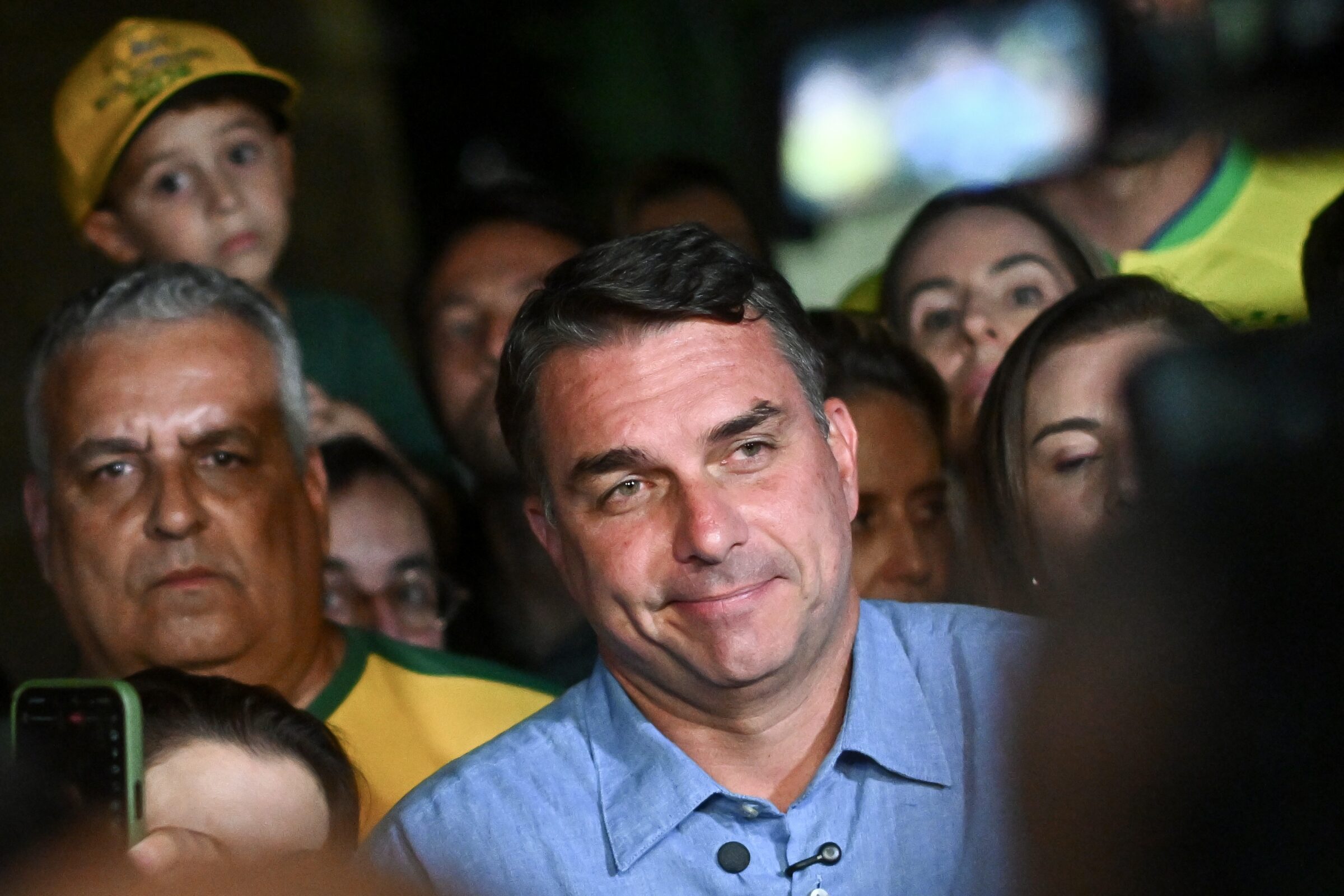
Flávio Bolsonaro surprisingly topped the polls in the first round of Brazil’s presidential election on Sunday (4 October), making him the favourite to topple President Luiz Inácio Lula da Silva in the run-off in three weeks.

The result is the latest in a series of strong performances by far-right candidates in Latin America. US president Donald Trump has been particularly invested in Brazil.

Despite lagging behind in most pre-election polls, senator Flávio Bolsonaro (45), the son of former president Jair Bolsonaro, won around 47 percent of the vote, with votes from more than 99.9 percent of districts counted. Bolsonaro was strongest in the country’s southern states.

President Lula took 45 percent, after performing strongest in Brazil’s north-east, and advanced to the second round, to be held on 25 October.

Latin American experts believe that Bolsonaro will likely win the second round as most of the candidates who failed to reach the runoff are ideologically closer to him than Lula.

Although voting is compulsory in Brazil, one in five of eligible voters did not take part in the first round.

This year’s election has been widely described as one of the most significant in modern Brazilian history, its outcome exceptionally important for the United States and Europe. It is also key for the rest of the planet, given the global impact of deforestation in the Amazon rainforest.

Conservative forces aligned with Bolsonaro also made gains in the elections to Congress. Jair Bolsonaro’s wife Michelle won a senate seat. She had previously fallen out with Flávio but the two have since publicly reconciled. And the former president’s son Carlos Bolsonaro also won a seat, while another son, Jair Renan, was elected to the lower house of congress.

Trump’s stake in Brazil

Though the campaign focused primarily on domestic issues, particularly the economy, security and corruption, Trump’s influence loomed large.

Trump criticised Brazil’s judiciary when Jair Bolsonaro was sentenced to 27 years following an unsuccessful attempted coup after he narrowly lost the 2022 election to Lula. The former Brazilian president is under house arrest due to health problems, and a court ruled he could not stand.

The US president described the trial of Bolsonaro as a “witch hunt”. Although Trump did not openly endorse Flávio Bolsonaro, Bolsonaro played up his ideological proximity to him.

In contrast, Lula sharply criticised Trump and built a reputation as a leader unafraid to stand up to Trump. Americas Quarterly editor Brian Winter said some in Brazil joke that Lula’s most effective surrogate is Trump.

Luiz Inácio Lula da Silva delivers a speech after learning the official results election on Sunday (4 October).

Lula is known for his multipolar foreign policy. He seeks “pragmatic relations” with the US, China, Russia and others. Lula maintains friendly relations with Vladimir Putin, although he recently spoke out against the invasion of Ukraine.

If Bolsonaro were to win the second round, Brazil would probably join a coalition of countries conducting military operations against drug cartels alongside the Pentagon. It is a controversial initiative, and like other left leaders in the region, Lula has rejected it.

This article continues, but the full version is available only to EUobserver.com subscribers. Visit account.euobserver.com/membership

  •  
❌