❌

Reading view

2nd Country with Both JF-17 & J-10C Jets? Will Azerbaijan Become 3rd Customer of China’s Vigorous Dragons?

China has displayed a full-scale J-10CE mock-up in Azerbaijani markings at the sixth Azerbaijan International Defense Exhibition (ADEX-2026), which opened at the Baku Expo Center on September 30.

China National Aero-Technology Import & Export Corporation (CATIC), which represents Aviation Industry Corporation of China (AVIC), made its debut at ADEX this year by bringing a range of advanced aviation equipment, including the J-10CE fighter jet, L-15A advanced trainer aircraft, Y-20 transport aircraft, Z-20 helicopter, and Wing Loong drones.

Notably, this comes days after photos of a full-scale J-10CE (Vigorous Dragons) mock-up displayed at ADEX 2026 surfaced on social media, showing Azerbaijan’s national flag markings.

Whether this display leads to a sale of J-10C jets remains to be seen, but analysts see it as a potential pathway.

Azerbaijan has not hinted whether it wants to buy the J-10CE. However, reports of its interest in the aircraft have circulated since the Azerbaijani Air Force Commander, Lieutenant General Namig Islamzade, was photographed examining the aircraft during the Zhuhai Air Show in China in November 2024, as the EurAsian Times reported at the time.

Azerbaijan Air Force already operates the JF-17 Block III fighter produced jointly by China and Pakistan. If Azerbaijan goes ahead and acquires the aircraft, it would become the third country to acquire the J-10C after Pakistan and Uzbekistan, and the second country in the world to operate both the JF-17 and the J-10C after Pakistan.

Image
The J-10CE fighter jet is among a range of Chinese-made aircraft being showcased at ADEX 2026 (Via China Military Bugle on X)

China, for one, has been pushing the J-10CE in the export market by emphasizing that the aircraft has been tested in combat. Pakistan deployed the J-10CE against India during the May 2025 conflict and claimed to have downed multiple Indian Air Force aircraft, including the Rafale, using the long-range PL-15 air-to-air missiles.

IAF called them “Manohar Kahaniya” or Pulp Fiction tales and, in turn, claimed downing nearly a dozen PAF warplanes, including F-16s and JF-17s.

China has positioned itself as a reliable non-Western arms supplier to countries looking to modernize their militaries while reducing reliance on Russia.

Azerbaijan’s existing experience with Chinese avionics, sensors and weapons systems—gained through its JF-17 Block III fleet—could make the J-10CE an attractive option. Chinese experts have presented the more capable J-10CE as a natural high-end complement in a high-low mix, better suited to complex missions than the lighter JF-17.

Coupled with Azerbaijan’s recent acquisition of the Chinese HQ-9BE long-range air-defense system, a J-10CE purchase would integrate Chinese platforms into a cohesive combat architecture for Baku’s forces.

Baku has been considering replacing aging Soviet-era MiG-29s and Su-25s and bolstering its overall military posture to counter Armenia. This could potentially create a perfect opportunity for China’s state export machinery.

Armenia, an arch-nemesis of Azerbaijan, meanwhile, maintains a very limited fighter jet inventory. The bulk of the Armenian Air Force consists of a small number of Su-25 Frogfoots, many of which it lost in the war with Azerbaijan in 2020. It also has older Su-25s and just four Su-30SMs.

Previous reports indicated that Armenia has been in talks with India to acquire 8–12 Su-30MKI multirole fighter jets, in a package variously estimated at $2.5–3 billion, though neither government has confirmed a contract.

Meanwhile, Armenia has emerged as one of the most important buyers of Indian arms, having acquired the Pinaka multi-barrel rocket launcher, the Akash surface-to-air missile system, Swathi weapon-locating radars, ATAGS 155 mm towed howitzers, and the MArG 155 wheeled artillery system.

J-10C

The J-10C is a single-engine, 4.5-generation delta-canard multirole fighter. Its export version, the J-10CE, uses the indigenous Shenyang WS-10 turbofan and carries an AESA radar and an infrared search-and-track sensor. It can be armed with the PL-10, a short-range missile with an imaging-infrared seeker, and the longer-range PL-15.
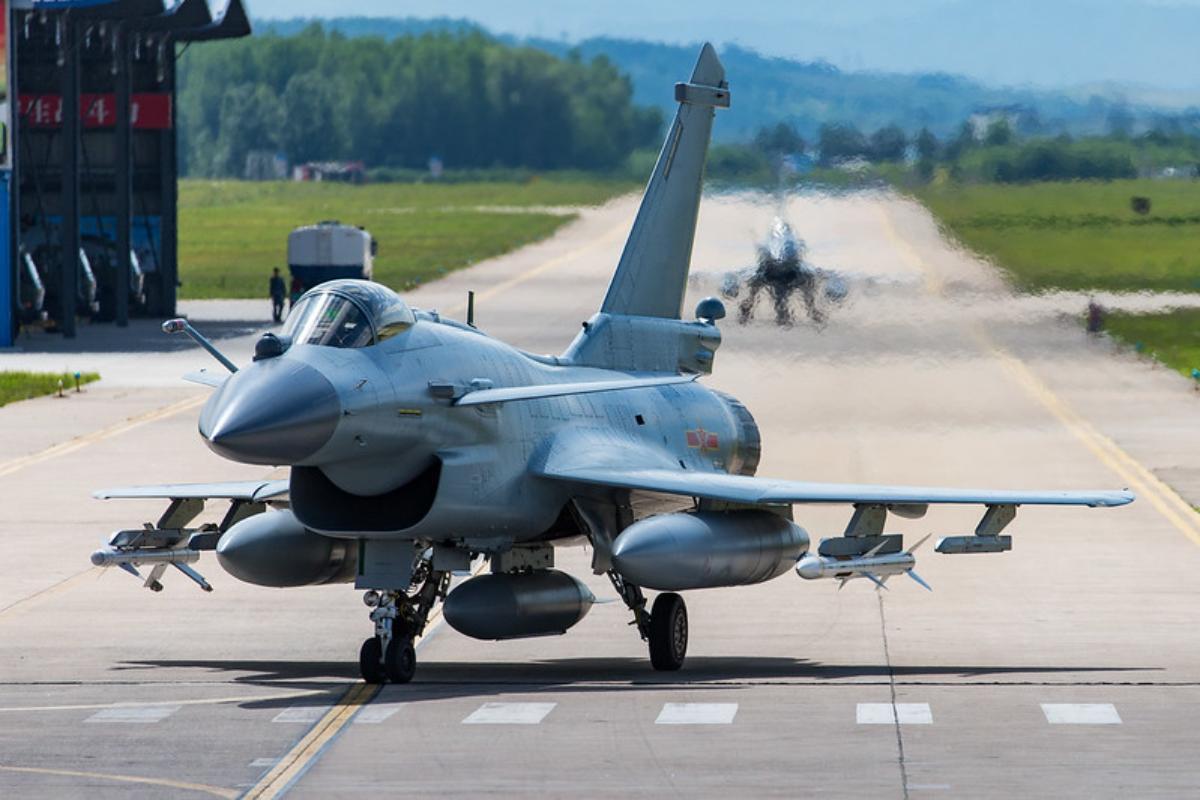
File Image: J-10C

It also has a glass cockpit, an electronic-warfare suite, beyond-visual-range engagement and precision strike, with in-flight refueling on configured aircraft. A targeting pod supports laser- and satellite-guided munitions. Chinese media often liken it to later F-16s; like the F-16, it uses fly-by-wire to control an unstable airframe.

Chinese state media say the J-10CE will continue to be upgraded for export. Designer Li Jun told China Daily it can be tailored for air superiority or strike, with optional payloads, and that its AESA radar and network-centric systems outperform older mechanically scanned setups. Claims of gallium-nitride radar upgrades, radar-absorbing coatings and engine changes remain unverified.

“The J-10CE can adapt to customers’ needs, including air superiority and strike against ground targets, and can be customized based on the environments and mission requirements of different users. We can also offer optional payload packages to clients,” Li said, making a direct appeal to countries looking to upgrade their fleets.

“The aircraft’s avionics system has received a generational upgrade. Its Active Electronically Scanned Array radar system can rapidly detect and track targets, far outperforming traditional mechanically scanned radars,” Li stated. “The jet boasts powerful features, including network-centric cooperative combat, beyond visual range multiple target engagement in intense electromagnetic scenarios, and multimodal precision strikes. It can also prevail in medium- and low-altitude dogfights,” he added.

However, these reports could not be independently verified.

Despite a coordinated export campaign, the J-10CE has had limited success in the export market.

Countries like Bangladesh and Indonesia have both expressed interest in the jet, but it has not culminated in a deal. Moreover, Egypt recently decided to procure additional Rafale jets (it was also pitched the J-10C).


The post 2nd Country with Both JF-17 & J-10C Jets? Will Azerbaijan Become 3rd Customer of China’s Vigorous Dragons? appeared first on EURASIAN TIMES.
  •  

As Trump & Xi Talk — U.S. and China’s Nuclear Submarines Race For Dominance in the Indo-Pacific

The recent summit between US President Donald Trump and Chinese President Xi Jinping may have projected an image of renewed engagement; however, while two Presidents negotiated above the surface, their navies were preparing for a contest in which nuclear-powered attack submarines (SSNs) could play a decisive role.

The strategic rivalry between Washington and Beijing seems to be moving on a very different track—especially under the waters of the Indo-Pacific.

At the moment, the United States may have a substantial lead in the number of SSNs, technology, and operational experience, but China is rapidly catching up by expanding its undersea capabilities.

In its quest to narrow the gap with the US, China has entered a race for undersea advantage across the Indo-Pacific, which could shape deterrence, sea control, and the strategic balance of power for decades to come.

For maritime domination, both SSNs and SSBNs (nuclear-powered ballistic missile submarines) play critical roles.

SSBNs primarily provide nuclear deterrence by ensuring a credible second-strike capability, whereas SSNs are essentially designed to conduct hunter-killer missions, including tracking and, if necessary, engaging adversary SSBNs, as well as escorting carrier strike groups (CSGs) for sea control missions.

As Korean scholar Dongkeun Lee points out, in the context of the Indo-Pacific, SSN operations can be broadly classified into two primary missions: (1) countering SSBN capabilities and (2) escorting CSGs. The former is closely associated with nuclear deterrence, whereas the latter reflects the traditional sea power function of controlling and protecting key sea lines of communication (SLOCs).

Both missions are particularly important in this part of the world as its principal flashpoints, including the East China Sea, the South China Sea, and the Taiwan Strait, are all maritime domains. Maintaining credible naval capabilities, therefore,  is essential to advancing both deterrence and broader strategic objectives in the region.

Incidentally, around one-third of global shipping traverses the South China Sea. The maritime gateways here are critical not only for China but also for Taiwan, South Korea and Japan.

American CSGs continue to play a major role in controlling and protecting these critical SLOCs. Consequently, SSNs play an equally crucial role in escorting CSGs. By providing lethal undersea capabilities that can silently target threats across multiple domains, including surface and subsurface targets, SSNs can effectively eliminate threats to aircraft carriers.

The United States permanently deploys an aircraft carrier to the Seventh Fleet, based in Yokosuka, Japan, and it is common for more than one CSG to be present in this region at any given time. SSNs’ presence here serves both to protect US carrier groups and to create the possibility of threatening Chinese nuclear submarines.

Likewise, the PRC is rapidly developing its own CSG capability to counterbalance that of the United States in the South China Sea. China’s Yulin naval base on Hainan Island is an important center for its nuclear submarine forces.

Until recently, the undersea dominance tilted heavily in favor of the US. But the alignments are fast changing.

Though the US Navy still leads with an all-nuclear fleet of 71 active submarines (including 51–53 SSNs/SSGNs), China has now surpassed Russia to command the world’s second-largest nuclear submarine fleet with an estimated 9 to 12 SSNs (such as the Type 093 and Type 093A/093B Shang-class) and 6 SSBNs (Jin-class Type 094), totaling roughly 32 active nuclear submarines across its entire naval forces that operate primarily in the Indo-Pacific region.

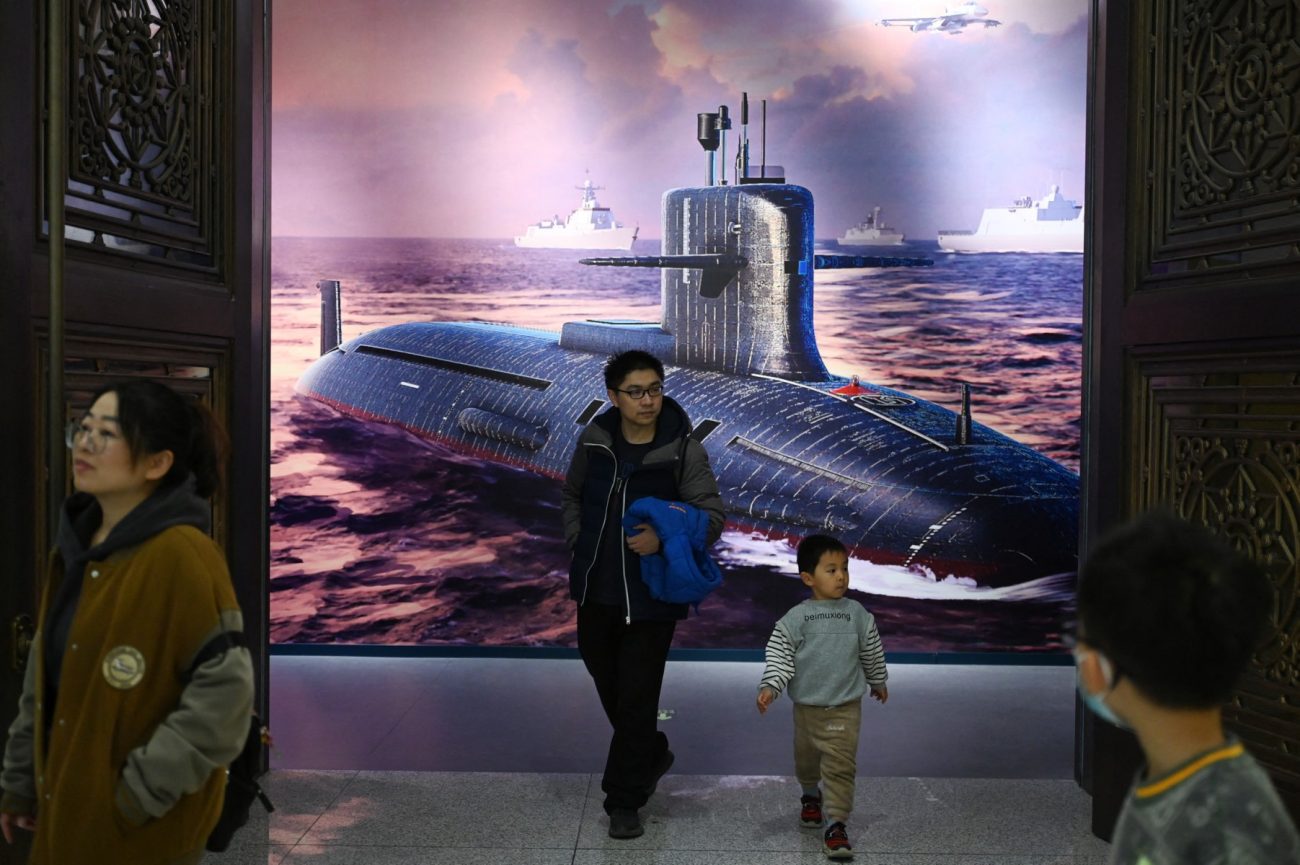
People walk past an illustration of a Chinese nuclear submarine at the Military Museum in Beijing on March 3, 2024. (Photo by GREG BAKER / AFP)

In a recent IISS assessment, China launched 10 nuclear-powered submarines between 2021 and 2025, totaling 79,000 tonnes, against America’s 7 boats at 55,000 tonnes. For the first time, China out-built the US in both numbers and tonnage in a five-year window, it is argued.

“Most significantly, this includes the seventh and eighth Type 094 (Jin) nuclear-armed ballistic-missile submarines (SSBNs), which come as part of the emergence of Beijing’s nuclear triad,” the IISS study says.

It noted that commercially available satellite imagery taken in early 2026 showed six Type 094s in total, spread between the Bohai Shipbuilding Heavy Industry Co (BSHIC) shipyard in Huludao, the 1st Submarine Base at Jianggezhuang, the Xiaopingdao test facility and the 2nd Submarine Base at Yalong Bay on Hainan Island.

“Allowing for additional boats either on deterrence patrol or under cover for refit during this period, it is almost certainly the case that China has launched a seventh and eighth Type-094 in 2024 and 2025, respectively,” the IIISS study concludes.

In addition to the Type 094s, Bohai is also producing nuclear-powered guided-missile submarines (SSGN) for the People’s Liberation Army, with the study suggesting that nine Type 093B (Shang III) boats have been launched between 2022 and this year, based on commercial satellite imagery of the facility and US government assessments.

Incidentally, in March this year,  the US Navy’s intelligence chief, Rear Admiral Mike Brookes, testified before the US-China Economic and Security Review Commission (USCC) that China is undertaking a major shift toward building an all-nuclear submarine fleet as part of a broader effort to strengthen its undersea warfare capabilities and expand blue-water naval power.

According to Brookes, the People’s Liberation Army Navy (PLAN), which operates more than 60 submarines in total, including roughly 50 conventional diesel-electric boats (SSK) and a smaller number of SSNs and SSBNs, is transitioning away from conventional submarines toward a predominantly nuclear construction program to support sustained operations, strategic deterrence and sea-lane interdiction.

Brookes also pointed out that China had expanded submarine production infrastructure across three major shipyards, tripling construction hall capacity and more than doubling production capability to sustain higher output of advanced nuclear boats through the 2030s.

By 2027, China’s submarine force is projected to reach roughly 70 submarines, adding up to six SSGNs, three smaller-class SSNs, and two SSBNs while retiring older Chinese and Russian-built submarines. By 2035, continued expansion could yield up to 80 submarines, with about half nuclear-powered—a major shift in force composition—and projections for the early 2040s include around 20-30 new-class SSGNs and SSBNs.

These platforms will be designed from the keel up for blue-water operations and persistent presence beyond the first island chain, representing an evolution in PLA Navy undersea operational capabilities. China will likely field a more survivable and numerous ballistic missile submarine force equipped with longer-range, more accurate SLBMs, enabling patrols in bastions closer to home waters while holding the US homeland at risk.

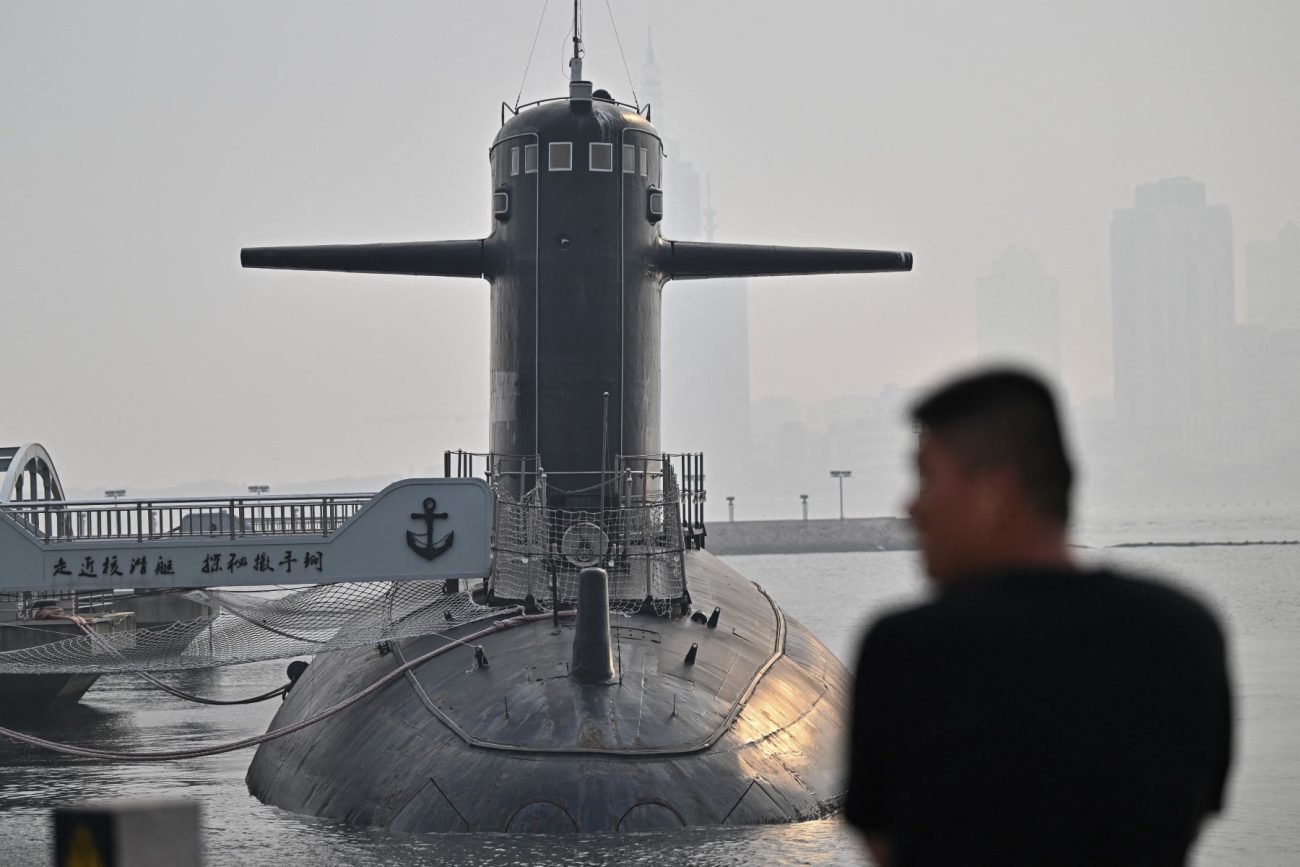
A man looks at a submarine during a media tour by the PLA Naval Museum, organized by the Chinese People’s Liberation Army Navy (PLAN) ahead of the Defense Ministers’ Meeting of the Shanghai Cooperation Organization (SCO) Member States in Qingdao, in eastern China’s Shandong province on June 25, 2025. (Photo by Pedro PARDO / AFP)

Broader deployment of long-range, potentially hypersonic anti-ship and land-attack missiles from undersea platforms is anticipated, along with more sophisticated torpedoes and unmanned vehicles for ISR, mine warfare, and strike missions. Substantial investments in seabed sensors, undersea cables, and unmanned systems will enhance China’s situational awareness while creating vulnerabilities for the US and allies in crisis or conflict.

The Indo-Pacific will remain the PLA Navy’s primary focus, but by 2040 routine submarine deployments to the Indian Ocean, Arctic approaches, and possibly the Atlantic are likely, Brookes cautions.

However, as noted above, the US Navy currently has superior acoustic quieting, combat experience, and highly advanced Virginia-class SSNs. But as the EurAsian Times once explained, the US has a backlog of 12 Virginia-class submarines, in addition to three Columbia-class ballistic submarines.

Its production rate of 1.2 per year falls far short of the required 2.33 per year to meet its own needs and those of its allies (under the AUKUS pact, it is supposed to provide at least three Virginia-class submarines to Australia in the early 2030s).

Only three US shipyards can build nuclear-powered attack submarines (Groton, Connecticut; Quonset Point, Rhode Island; and Newport, Virginia). Only two of them are functional at the moment.

While the US defense industrial base is severely strained, China’s naval shipyards are said to be outperforming. With about 9 older Shang I/II boats plus an estimated 16 Type 093B hulls in service, in trials, or under construction, China is said to have the largest SSN series under construction anywhere.

The 093B reportedly features a vertical launch system for 24 YJ-12/YJ-18 anti-ship cruise missiles and six torpedo tubes, shifting China from torpedo brawls to long-range strike.

In the Indo-Pacific, the undersea race seems to change three fundamentals.

First, the era of uncontested US undersea dominance is over. US SSNs have long hunted Chinese SSBNs inside their bastion, keeping Beijing’s deterrent vulnerable. But now, China can sustain continuous at-sea deterrence patrols from Hainan’s Yalong Bay, protected by surface fleet and seabed sensors. That forces US SSNs to operate closer to Chinese waters, at higher risk, stretching ASW resources thin.

Second, the proliferation of quiet Chinese SSNs with VLS—at least six SSGN hulls launched in the past five years with vertical launch systems that could fire high-speed anti-ship missiles displayed in Beijing—means every US carrier entering the Taiwan Strait or South China Sea now faces a multi-axis underwater missile threat. The carrier’s sanctuary beyond the first island chain, once assumed, is no longer safe.

Third, China’s rapid maritime expansion has fundamentally altered the Indo-Pacific security landscape, prompting Australia and Japan to aggressively build strategic counterweights. Rather than acting in isolation, Canberra and Tokyo have pivoted toward minilateral security alliances, military modernization, and supply chain diversification to offset Beijing’s growing naval dominance.

Australia and Japan, alongside the United States and the Philippines, have formalized a security grouping explicitly designed to counter Beijing’s aggressive maneuvers in the South and East China Seas. This alliance focuses on joint maritime patrols, intelligence sharing, and military interoperability to safeguard freedom of navigation under international law.

Driven by the need to project power across its vast northern approaches, Australia has fundamentally reshaped its defense posture. This is anchored by the AUKUS pact—enabling Australia to acquire conventionally armed, nuclear-powered submarines—positioning the nation as a formidable southern anchor against Chinese naval projection.

For India, which has no SSNs in service (it previously leased from Russia and now plans indigenous production) and operates only three SSBNs (Arihant, Arighaat, and Aridhaman), the implications are significant.

Against India’s slow naval expansion, Chinese nuclear submarines, including intelligence-gathering vessels, now regularly traverse the Indian Ocean.

Overall, one could say that “the silent service” in the Indo-Pacific is becoming loud.

During the Cold War, the submarine race was primarily fought in the Atlantic. Now, it is shifting to the Indo-Pacific, raising uncertainties over whether it will remain free and open.

  • Author and veteran journalist Prakash Nanda is Chairman of the Editorial Board of the EurAsian Times and has been commenting on politics, foreign policy, and strategic affairs for nearly three decades. He is a former National Fellow of the Indian Council for Historical Research and a recipient of the Seoul Peace Prize Scholarship.
  • The author can be reached at prakash.nanda (at) hotmail.com

The post As Trump & Xi Talk — U.S. and China’s Nuclear Submarines Race For Dominance in the Indo-Pacific appeared first on EURASIAN TIMES.

  •  

Taiwan’s Brand New F-16 Vipers Land at Chihhang AFB. Analyst Says Its Radar May Detect China’s J-20 Jets

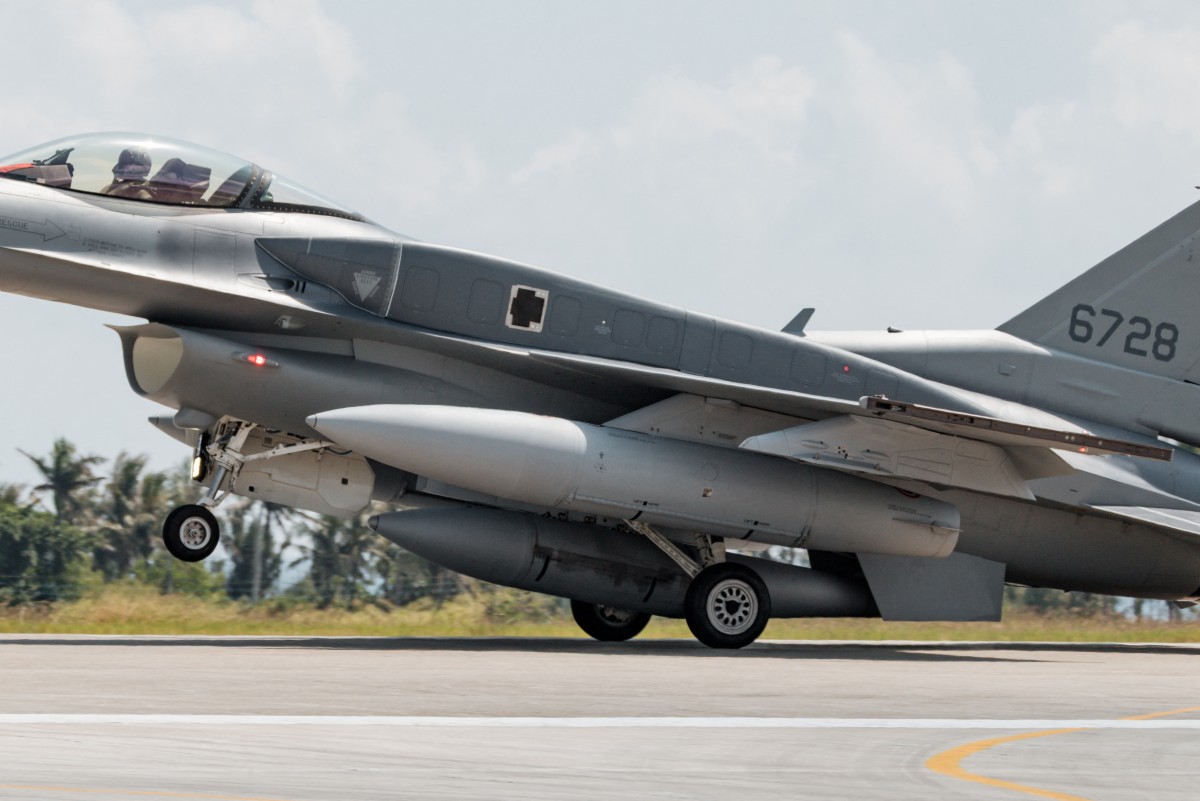
Taiwan has received its first F-16V (Viper) fighter jets from the US amid serious tensions with China, which calls the island a ‘renegade province’.

The Vipers are part of an $8 billion deal for 66 F-16Vs approved during US President Donald Trump’s first term.

The two Lockheed Martin F-16 Vipers touched down at Taiwan’s Chihhangair Air Force Base in Taitung. President Lai Ching-te hailed “a major milestone in elevating Taiwan’s air defense capabilities” and thanked Washington for its “long-standing support”.

Former Air Force serviceman Eric Chan, 57, praised the F-16’s advancements over the past three decades and said the fighter jets based in Taitung will “play a very important defensive role” against China.

“The threat from the CCP has always been there, so we definitely need to strengthen our defense capabilities,” Chan told AFP, referring to the Chinese Communist Party.

F-16 vs F-16 Viper

Earlier, as EurAsian Times reported,  Taiwan’s first two F-16 Vipers — serials 6727 and 6728 — were on the Pacific ferry to Taitung’s Chihhang Air Base.

Deliveries were expected to begin in 2023, and all 66 warplanes were scheduled to be delivered by the end of 2026. However, supply-line pressures due to COVID-19, followed by Lockheed Martin’s decision to shift the F-16 assembly line from Fort Worth to Greenville, pushed the timeline back.

The jet’s electronic-warfare suite has been a separate problem. The embedded AN/ALQ-254 Viper Shield, built by L3Harris, ran into production bottlenecks because it is built into the fuselage rather than carried as a pod.

Taiwanese reporting in July 2026 said the first Block 70s would be delivered without it, with the suite to be fitted later. An AESA radar without the planned internal jammer makes the aircraft thinner than the one in the brochure, and it is a capability gap, not just a reason the schedule slipped.

Iran War: U.S. Awards F-22 Pilots for Midnight Hammer as Pentagon Sends 3rd Carrier Towards Middle East

Lockheed later started two shifts to prioritize Taiwan’s order to deliver the combat jets. Still, the full 66-jet order is not expected to be delivered before 2028.

When Lockheed Martin delivers the 66 new jets by 2028, the Taiwanese Air Force will have more than 200 F-16 Viper fighter jets, making it the largest Viper-standard fleet in the Indo-Pacific region.

A newly purchased F-16V Block 70 fighter jet lands at Chihhang Air Base in Taitung on October 2, 2026. (Photo by CHENG Yu-chen / AFP)

F-16 vs F-16 Viper

Both the legacy F-16 and the latest F-16V jets share a common airframe shape, a single-engine layout, 9g capability, and basic flight characteristics.

The main differences are in sensors, computers, cockpit, electronic warfare, and modern weapons/data-link integration.

However, the biggest capability jump is perhaps in the radar system.

The legacy F-16A/B jets used the mechanically scanned AN/APG-66 radar. Most F-16C/D (Blocks 25–52) used the mechanically scanned AN/APG-68.

“Simply False”: Ukraine Rejects Reports That Over 50% Of Its F-16 Fighting Falcons Are Out of Action

These radars have slower scan rates, more limited multi-target tracking capabilities, and poorer jamming performance.

For the F-16V, however, Lockheed Martin uses Northrop Grumman’s AN/APG-83 SABR AESA radar.

It uses electronic beam steering, supports simultaneous air-to-air and air-to-ground modes, high-resolution SAR mapping, better jamming resistance, and tracks more targets at longer ranges.

Lockheed Martin states it delivers 5th-generation radar capabilities through hardware and software commonality with F-22 and F-35 radars.

“It delivers greater situational awareness, flexibility and quicker all-weather targeting and provides pilots with unprecedented target area detail and digital map displays that can be tailored with slew and zoom features,” said Lockheed Martin in a factsheet about the Block 70/72 jets.

The new Viper standard jets also provide enhanced battlespace awareness.

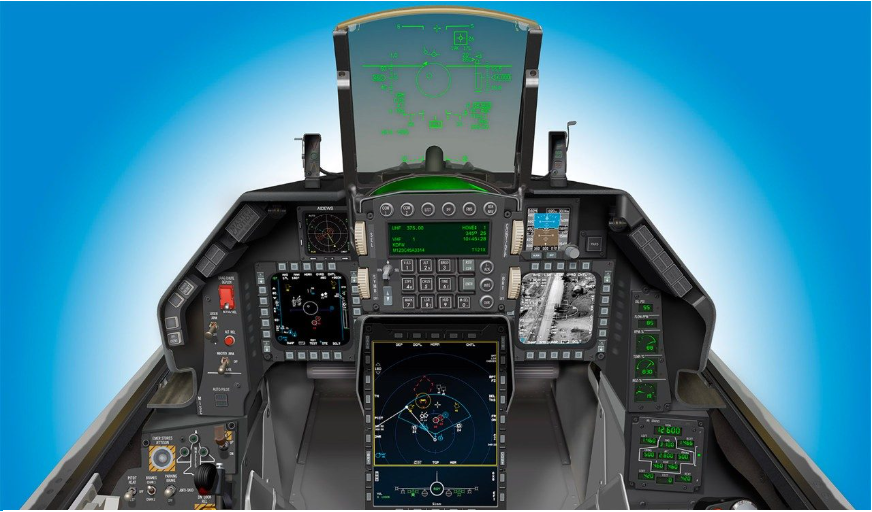
Block 70/72 features a new high-resolution Center Pedestal Display (CPD), which provides critical tactical imagery to pilots and enables them to take full advantage of AESA and targeting pod data.

The new CPD enables color moving maps, larger and easier-to-manage air-to-air Situation Displays, zoom functionality with the ability to switch information among displays, digital display of Flight Instrument Data, and a color/night helmet-mounted display.

Additional integration of the Lockheed Martin Sniper® Advanced Targeting Pod and Legion-ES™ IRST system increases pilot situational awareness and enhances warfighter survivability.

An inside view of the F-16 Viper’s cockpit. Credits: Lockheed Martin.

The F-16V also provides better pilot protection. Lockheed Martin’s Automatic Ground Collision Avoidance System (Auto GCAS) was purpose-built to prevent deadly crashes and has already saved the lives of multiple pilots and F-16s since the system entered service with the U.S. Air Force in late 2014.

The Auto GCAS is designed to reduce incidents of controlled flight into terrain, or CFIT. According to U.S. Air Force statistics, CFIT incidents account for 26 percent of aircraft losses and a staggering 75 percent of all F-16 pilot fatalities.

The F-16V also provides extended structural capabilities.

The Block 70/72 has an extended structural life to 12,000 hours – more than 50 percent beyond that of previous production F-16 aircraft. The older F-16s had a structural life of around 8,000 hours.

According to Lockheed Martin, the F-16V could serve for 40 years without any major repairs.

The conformal fuel tanks provide increased fuel capacity and range without sacrificing the jet’s aerodynamic performance.

Furthermore, legacy F-16s relied on multiple older computers with limited processing power, whereas the F-16V has a single high-performance Modular Mission Computer (MMC) and a modernized avionics architecture. This gives far higher computing power for sensors, weapons, and data fusion.

F/A-18 Super Hornet Spotted with Secretive AIM-260 JATM — and It’s Not an American Fighter Jet

The F-16V is certified for a very wide range of modern weapons, such as AIM-120D AMRAAM, AIM-9X, JASSM, JSOW, JDAM variants, and SDB, and uses Link 16, which provides enhanced situational awareness and enables real-time command, control, and tactical data exchange among military aircraft, ships, and ground forces.

They also have greater electrical power, cooling, and data-processing capacity to support the future integration of advanced electronic warfare equipment, weapons, and infrared search-and-track systems.

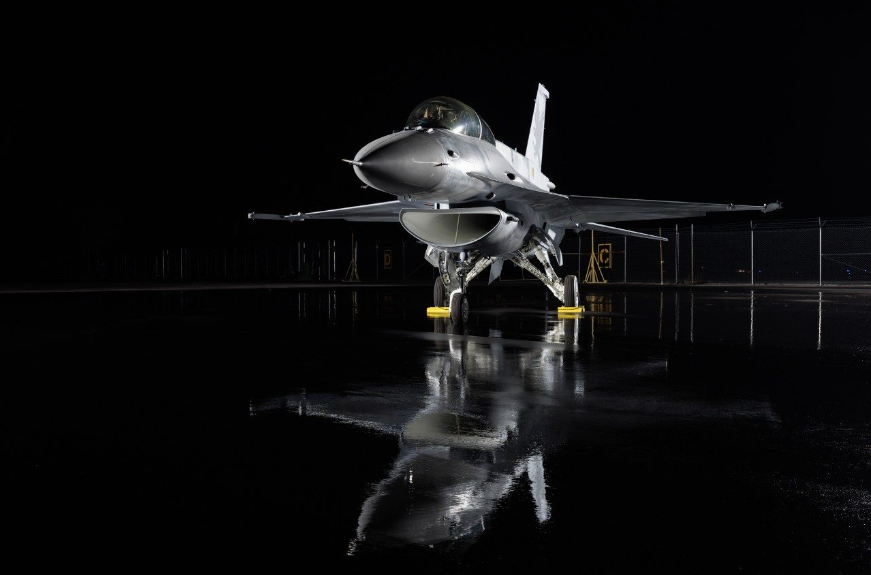
F-16 Viper. Credits: Lockheed Martin.

Because of all these capabilities, even though both the older F-16 and the latest F-16V share the same airframe design, the F-16V is a much more lethal aircraft.

Modern sensors, avionics, radars, an electronic warfare suite, Link 16, structural improvements, and an improved weapons package and ferry range mean the F-16V is a much more capable jet. That is why operators such as Taiwan, Greece, Bahrain, Slovakia, Bulgaria, and Turkey are upgrading their existing F-16 fleets.

“Indian Pilot Crashes UAE Jet Full of Israelis” — The Headline That Would Have Run, Had Machchhar Not Fought Back: OPED

According to Su Tzu-yun, a senior analyst at the Institute for National Defense and Security Research, the AN/APG-83 radar was designed to detect targets with small radar cross-sections and could “improve the F-16V’s chances of detecting PLA stealth aircraft such as the J-20 and J-35”.

  • Sumit Ahlawat has over a decade of experience in news media. He has worked with Press Trust of India, Times Now, Zee News, Economic Times, and Microsoft News. He holds a Master’s Degree in International Media and Modern  History from the University of Sheffield, UK. 
  • He can be reached at ahlawat.sumit85 (at) gmail.com

The post Taiwan’s Brand New F-16 Vipers Land at Chihhang AFB. Analyst Says Its Radar May Detect China’s J-20 Jets appeared first on EURASIAN TIMES.

  •  

Japan’s F-15 Super Interceptor Program Slips to 2029; Tokyo Leans on F-35s, GCAP to Check China

Amid simmering tensions with China, Japan plans to upgrade its F-15J fighter fleet to the “Super Interceptor” variant, while also procuring F-35 Lightning IIs and pursuing a sixth-generation fighter program.

The F-15J is a variant of the F-15 Eagle customized for the Japan Air Self-Defense Force (JASDF), produced under license, and upgraded over the years.

Japan’s F-15 Japan Super Interceptor program is a major modernization effort to upgrade the fleet with advanced sensors, avionics, electronic warfare systems, and expanded weapons capability.

The program reportedly includes 68 F-15Js modernized under an earlier Multi-Stage Improvement Program (MSIP), but Tokyo is currently focusing its attention on upgrading 20 F-15J aircraft to the F-15JSI standard first.

Japan is pushing its F-15 Japan Super Interceptor (JSI) program with fresh investments in the aircraft’s avionics and support systems, with a revised timeline that extends the deployment of the first 20 aircraft to fiscal year (FY) 2029, Janes reported.

“The original plan called for the completion of modifications to the 20 aircraft by the end of FY 2027. However, in light of the progress of the modification program, deployment completion is now targeted for the end of FY 2029,” a spokesperson for Japan’s Acquisition, Technology, and Logistics Agency (ATLA) said.

Notably, Japan has decided to retire older, non-upgraded F-15Js starting in the late 2020s, while keeping the upgraded fleet into the 2030s.

Japan’s Ministry of Defense (MoD) has described the Super Interceptor program as creating a bridge to the 2030s, when the sixth-generation Global Combat Air Program (GCAP) will likely enter service. The F-15JSI will complement Japan’s F-35 fleet. Tokyo’s program covers 147 Lightning IIs — 105 F-35As and 42 F-35Bs — of which dozens have already been delivered, with the rest still on order from the US

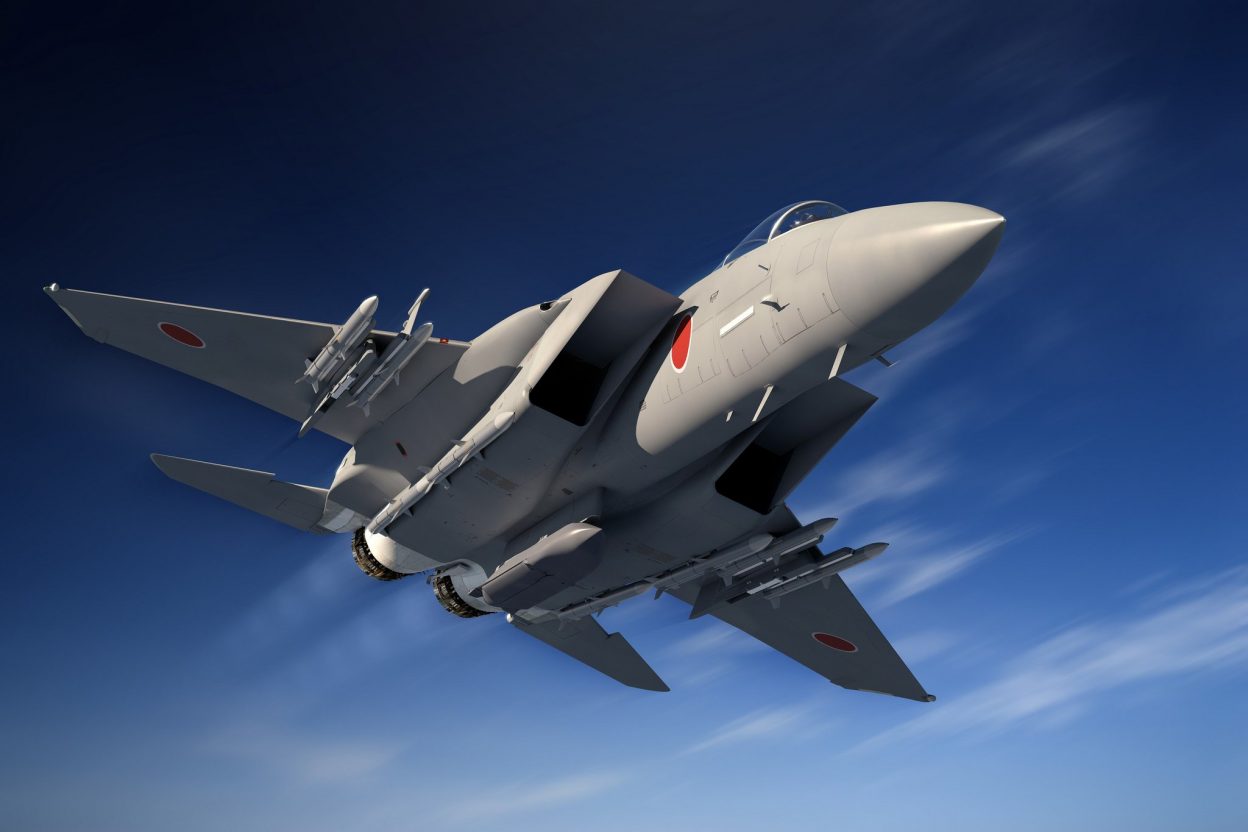
Japan-F15JSI
Artist’s impression of F-15JSI or Japanese Super Interceptor. (via Twitter)

The upgrade will essentially boost JASDF’s air defenses and strike options against China’s growing military capabilities and assertiveness in the region, which has led to increased engagements between the two sides.

For example, a Chinese J-15 last year locked its fire-control radar on JASDF’s F-15J during an encounter southeast of Okinawa, as the EurAsian Times reported. No shots were fired, but Japan viewed this as a “dangerous act,” as fire-control locks represent the final step in the targeting process before a missile launch.

Notably, Japan’s F-15Js already handle most air defense identification zone (ADIZ) intercepts, and Okinawa-based squadrons alone often account for most scrambles, mostly against Chinese aircraft. The F-15JSI upgrades will improve Japan’s ability to detect, engage, and strike Chinese forces amid rising assertiveness in the East China Sea, around the disputed Senkakus Islands, and near Okinawa, which lies between Japan and Taiwan

The development comes as the US Air Force (USAF) has confirmed that it will deploy its first Boeing F-15EX Eagle II fighter aircraft to Kadena Air Base in Okinawa, Japan, by the end of the year. About 36 Eagle IIs will be stationed at Kadena to replace older fourth-generation US aircraft based in Japan, with an eye on China.

What is the Super Interceptor Program?

Japan originally received about 213 F-15J and twin-seat F-15DJ aircraft and still operates the world’s largest F-15 fleet outside the United States.

Japan initiated the Super Interceptor program in 2019 as the “F-15 capability enhancement” effort. Boeing and Mitsubishi Heavy Industries (MHI) are jointly undertaking the program through an “integrated partnership,” which will introduce some technologies currently fielded on the F-15EX.

At the heart of the upgrade is replacing the older mechanically scanned AN/APG-63(V)1 radar with the Raytheon AN/APG-82(V)1 active electronically scanned array (AESA) radar.

The AESA radar offers longer detection ranges, better multi-target tracking, jamming resistance, and improved performance against low-observable or high-speed threats. This system will provide the F-15J a dramatic leap in detection range, resolution, and multi-target tracking. The new radar will also support more sophisticated air-to-ground mapping and targeting modes, enabling the aircraft to perform precision strike missions.

The radar is closely tied to the Advanced Display Core Processor II (ADCP II) mission computer (ADCP II), which processes information from the AESA radar, electronic warfare suite, and other sensors much faster. This will enhance situational awareness and support advanced software architectures that allow for easier future upgrades and integration of new weapons or sensors. Succinctly put, this will turn the aircraft into a far more flexible, networked fighter, capable of sharing data with other platforms.

The JSI upgrade will dramatically improve the F-15J’s electronic warfare with the BAE Systems AN/ALQ-250 Eagle Passive/Active Warning Survivability System, or EPAWSS. This sophisticated electronic warfare suite combines radar warning, electronic support measures, and active jamming capabilities into a single, highly integrated package.

EPAWSS will help the aircraft detect and counter a wide range of modern threats, including advanced surface-to-air missiles and fighter radars.

It will improve the aircraft’s ability to operate closer to contested airspace or survive long enough to launch standoff weapons from safer distances, while working with the AESA radar’s EW features to create a layered defensive capability. This would be particularly critical against China’s growing EW capability, AESA radars, and missile threats.

More importantly, the airframe’s hardpoints and systems are modified to carry a substantially larger missile load than the standard F-15J’s eight missiles, potentially more than double in some configurations.

The aircraft will carry significantly more air-to-air weapons, as well as long-range standoff strike options, allowing the JASDF to strike land or maritime targets from hundreds of kilometers away. The upgraded F-15s will be able to act as “missile trucks,” launching precision strikes against Chinese surface ships, coastal missile batteries, radar sites, or other targets from outside the range of many PLA air defenses, while complementing the stealthy F-35 in combat.

Notably, experts believe that Japan could go to war with China over a potential Chinese invasion of Taiwan due to its geographical proximity to the self-ruled islands. The increase in armaments would be particularly useful in that scenario—networked with F-35 aircraft, E-2D Hawkeyes, ground or naval sensors, and US forces, the F-15JSIs could provide volume of fire while stealth assets handle forward roles.

Additionally, the aircraft is expected to receive a host of upgrades to the cockpit, communications, and avionics to modernize the pilot interface and connectivity.

There is also some speculation that the platform will also receive infrared search-and-track technology to enable long-range target identification.

That said, the F-15JSI is not a stealth aircraft and will still face disadvantages against China’s most advanced systems such as the J-20 and future sixth-generation platforms. However, the planned upgrade will transform the F-15J into a more lethal, survivable, and versatile platform tailored to the specific challenges of Chinese air and maritime assertiveness in the region near Japan.


The post Japan’s F-15 Super Interceptor Program Slips to 2029; Tokyo Leans on F-35s, GCAP to Check China appeared first on EURASIAN TIMES.

  •  

“Indian Pilot Crashes UAE Jet Full of Israelis” — The Headline That Would Have Run, Had Machchhar Not Fought Back: OPED

On 30 September, a Flydubai flight from Dubai to Tel Aviv with 174 people on board, the majority of them Israeli, encountered a dangerous “incident”. Mid-flight, the co-pilot allegedly stabbed the captain, Indian national Smit Machchhar, and may have tried to either crash or hijack the aircraft.

The aircraft plunged thousands of feet in seconds. As per reports, badly wounded Machchhar fought back and physically unlocked the cockpit door. The action has been called heroic, as Israeli passengers and an Emirati crew managed to enter the cockpit and take control of the plane and co-pilot, reportedly from Oman.

Relief pilots on board helped land the plane safely in Tabuk, Saudi Arabia.

Israeli Prime Minister Benjamin Netanyahu was among the first to name Machchhar: “My salute to the Indian pilot Captain Smit Machchhar for his extraordinary bravery. Despite being stabbed and seriously injured, he fought back, resisted, opened the cockpit door, and enabled passengers and crew to overpower the attacker — preventing a catastrophic mid-air disaster. He saved the lives of 174 people, including Israeli citizens and other nationals. I wish Captain Machchhar a speedy and full recovery. He is a true hero.”

Israel’s Foreign Ministry went further, explicitly listing the three nationalities: “This man is a hero. Captain Smit Machchhar, the Indian captain of flydubai Flight 1073, fought back after being stabbed in the cockpit. Despite being severely injured, he managed to unlock the cockpit door — allowing Israeli passengers and the Emirati crew to intervene and save all the passengers. Together, their extraordinary courage saved 174 lives. Indian. Israeli. Emirati. Different nationalities. One extraordinary act of courage. We wish Captain Machchhar a full and speedy recovery.”

Israel’s ambassador to India, Reuven Azar, wrote: “Together with Israeli, Indian and UAE nations, I pray for the life of Captain Smit Machchhar, the experienced and gifted hero Indian pilot of flydubai flight FZ1073. His courage & the courage of other Israeli & Emirati passengers & crew members saved the lives of 180 souls. United against terrorism!”

Indian Prime Minister Narendra Modi replied in kind: “Captain Smit Machchhar is a HERO. In the face of the gravest danger and despite being seriously injured, he showed immense courage and an unwavering resolve to protect the lives of others. His valour helped save hundreds of lives and avert a great tragedy. India is proud of Captain Machchhar. Praying for his speedy recovery, renewed strength and good health.”

The Embassy of India in Israel added: “A resounding salute to Captain Smit Machchhar, the brave Indian pilot of flight FZ1073! Despite sustaining injuries in an extraordinary and challenging situation, Captain Machchhar displayed remarkable courage, composure and devotion to duty, helping ensure the safety of everyone on board.”

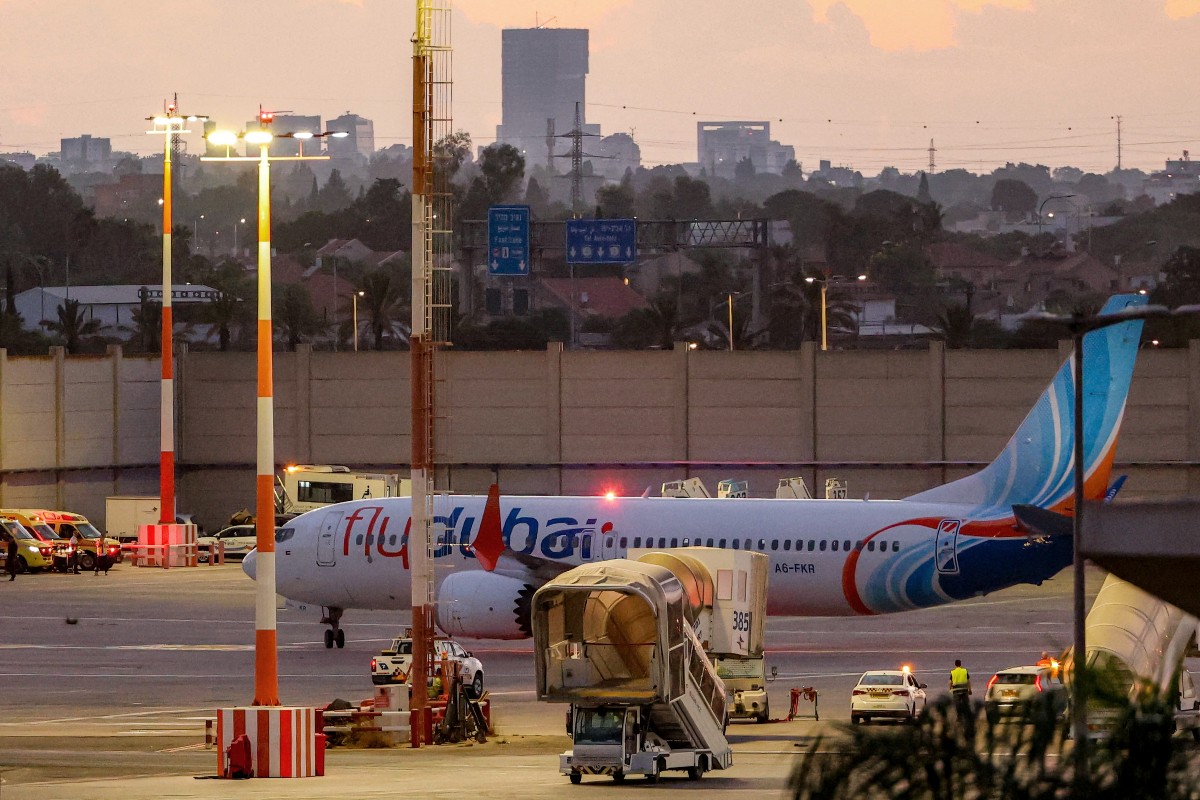
A flydubai Boeing 737 MAX 8 aircraft is pictured on the tarmac after landing at Israel’s Ben Gurion Airport in Lod on September 30, 2026. A passenger on a rerouted flydubai flight that was bound for Tel Aviv said one of the pilots tried to crash the plane and kill everyone on board, after both pilots were found to be wounded on landing in Saudi Arabia. In the first comment by an official, Israel’s far-right national security minister Itamar Ben Gvir alleged an attempted “terrorist” attack in the incident, in which none of the passengers reported injuries. (Photo by Jack GUEZ / AFP)

Sheikh Abdullah bin Zayed Al Nahyan, UAE Deputy Prime Minister and Foreign Minister, called his Israeli counterpart Gideon Sa’ar, inquired about the passengers’ safety, expressed wishes for their well-being, and discussed strengthening bilateral relations. Saar later said the two had expressed “mutual determination… to strengthen relations between the countries on all levels and to collaborate against extremist elements seeking to harm security and undermine stability in the region.”

Flydubai described an “altercation” on the flight deck, said on-duty crew traveling as passengers secured the aircraft, and urged against “premature speculation” while investigations continue. The UAE’s General Civil Aviation Authority called it a “security incident.”

US President Donald Trump, after speaking with Netanyahu, called Machchhar a hero who was “in very bad shape” yet managed to open the door and called for help.

Passengers who rushed the cockpit shared firsthand information. Yaniv Hayoun, who later met Netanyahu still wearing a blood-stained shirt, said: “When I went in, I saw the terrorist on the controls, between the two seats. There were no pilots in the seats. I grabbed the terrorist, put him in a hold, and first of all pulled him outside.” He added that he then took the controls: “I watch Air Crash Investigation, Mr Prime Minister.”

Zvika Manes described tying the attacker “with his own zip ties and with the multimedia headphones” and said, “I’m covered in blood. It was insane.” Others spoke of “terrible screams,” a plane that “was simply diving and spinning like crazy,” and the feeling that “September 11 is happening again.” Several credited “miracles” and the Indian captain’s last effort to open the door.

Interestingly, the day before the flight, Netanyahu said Israel had “indications that, ahead of the elections, our enemies will try to attack us,” without naming anyone.

Opposition leader Yair Lapid, after a security briefing that night, said there was “no reason to put the public in a panic” and that security threats should not be used in election messaging.

Security officials told Hebrew media they knew of no specific attack threat.

After Flydubai FZ1073 diverted, Lapid wrote: “Nothing even resembling this morning’s plane incident appeared in the security briefing with the prime minister last night. Nothing similar, nothing reminiscent of it, not even a hint.”

He later called the airport reception “cheap politics” and accused government-aligned voices of hitching “a pathetic ride on heroic Israelis.”

Netanyahu told CNN the warning was “not specifically” about this flight. Asked about Iran, he said it was too early to say and that Israel would join the probe.

Jackson Hinkle, who has about 3.8 million followers, posted the version that drew the widest reach: “Netanyahu expected to lose election. He’s still facing 7 criminal charges. He takes a trip to the UAE this week. He returns to Israel after 6 hour meeting. He warns of terror plot before elections. Iranians respond saying they are not planning attack & Netanyahu is just trying to cancel the elections. 24 hours later flight FZ1073 takes off from UAE to Israel. Attempted hijacking & 9/11-style terrorist attack on flight. Israeli special ops on board thwart attack. Netanyahu immediately convenes security cabinet meeting. All too predictable…”

Max Blumenthal, editor of The Grayzone, wrote: “When Benjamin Netanyahu and his Likud ally and Defense Minister Israel Katz instantly blamed jihadist terror for the FlyDubai incident, they drowned out an initial assessment by IDF Chief of Staff Eyal Zamir and his top commanders that ruled out hijacking as the motive behind the altercation… Even Donald Trump is entertaining doubt, proclaiming that the stabber was ‘perhaps a terrorist or a wack job.’ ‘This is the story that I heard. I don’t know if it’s true,’ Trump added… The FlyDubai incident was absolutely fortuitous for Netanyahu… In the midst of his most consequential and likely final campaign for re-election, Netanyahu is essentially taking credit for an Entebbe sequel.”

George Galloway, former British MP, titled a monologue “A false, false flag day” and wrote: “Iran is going to be blamed for what didn’t happen at Fairford and what didn’t become the new 9/11… And bye bye Fly Dubai.” The post pairs the flight with a separate UK incident and treats both as blame aimed at Iran.

James Li, an independent journalist, said: “Jihad terror or false flag? Sticking to just the facts of the FlyDubai attempted hijacking, the biggest red flag that Israel must answer for is how a pilot who has no authorization to fly that airplane was able to thwart multiple layers of security, and bring an axe to boot?”

Kim Iversen: “I’m NOT buying it.”

Daily Iran News, on the passenger who said he learned recovery from a TV series: “If you believe this story, you better get a shrink.”

Fox News posted Netanyahu’s Hannity interview without endorsing a conspiracy reading. Trump’s own line, widely reposted, was: “I don’t know if it’s true, but that’s the story I got from Bibi.”

No one has been able to stop conspiracy theorists and their wild imaginations.

The Flydubai posts began within about an hour of the emergency signal, before Saudi investigators questioned the co-pilot, before the airline described anything beyond an “altercation,” and before the Indian embassy confirmed that Captain Machchhar was in a Tabuk hospital.

Hinkle’s timeline, Iversen’s “I’m NOT buying it,” Galloway’s “false, false flag day,” and thousands of smaller posts did not wait for investigations; they used the election date and Netanyahu’s warning the day before.

Within hours of the 11 September 2001 attacks, posts and later films claimed the US had staged or allowed the hijackings, with many even blaming Israel.

The 2008 Mumbai attacks were called a false flag in parts of the Pakistani press and on social media, despite the gunmen’s admission and the subsequent trial.

The 2019 Pulwama (Kashmir) suicide bombing was described by some Pakistani officials and online accounts as an Indian set-up. After 7 October 2023, a parallel claim held that Israel had known in advance, stood down, or staged the Hamas assault to justify the war in Gaza.

The same pattern followed the 2015 Paris attacks, the 2016 Nice truck attack, and, in India, the 2001 Parliament attack. In each case, the theory arrived before any official report.

It appears a false-flag script is always ready when countries like India or Israel are involved. The UAE sits in the same frame: it is a close partner of both, and the Dubai–Tel Aviv route exists only because of that alignment.

Had the aircraft crashed, the same accounts would have lambasted the pilot and run headlines like “Indian Pilot Crashes Emirati Aircraft Full of Israeli Passengers”, to sow discord among the three allies.

Thank God, all are Safe!

  • This is an Opinion Article
  • Mail us at: editor (at) eurasiantimes.com

The post “Indian Pilot Crashes UAE Jet Full of Israelis” — The Headline That Would Have Run, Had Machchhar Not Fought Back: OPED appeared first on EURASIAN TIMES.

  •  
❌