
❌

Reading view

Ukraine’s war leadership sets new electronic warfare tasks as Russia’s jet-powered drones slip past nearly half of its air defenses
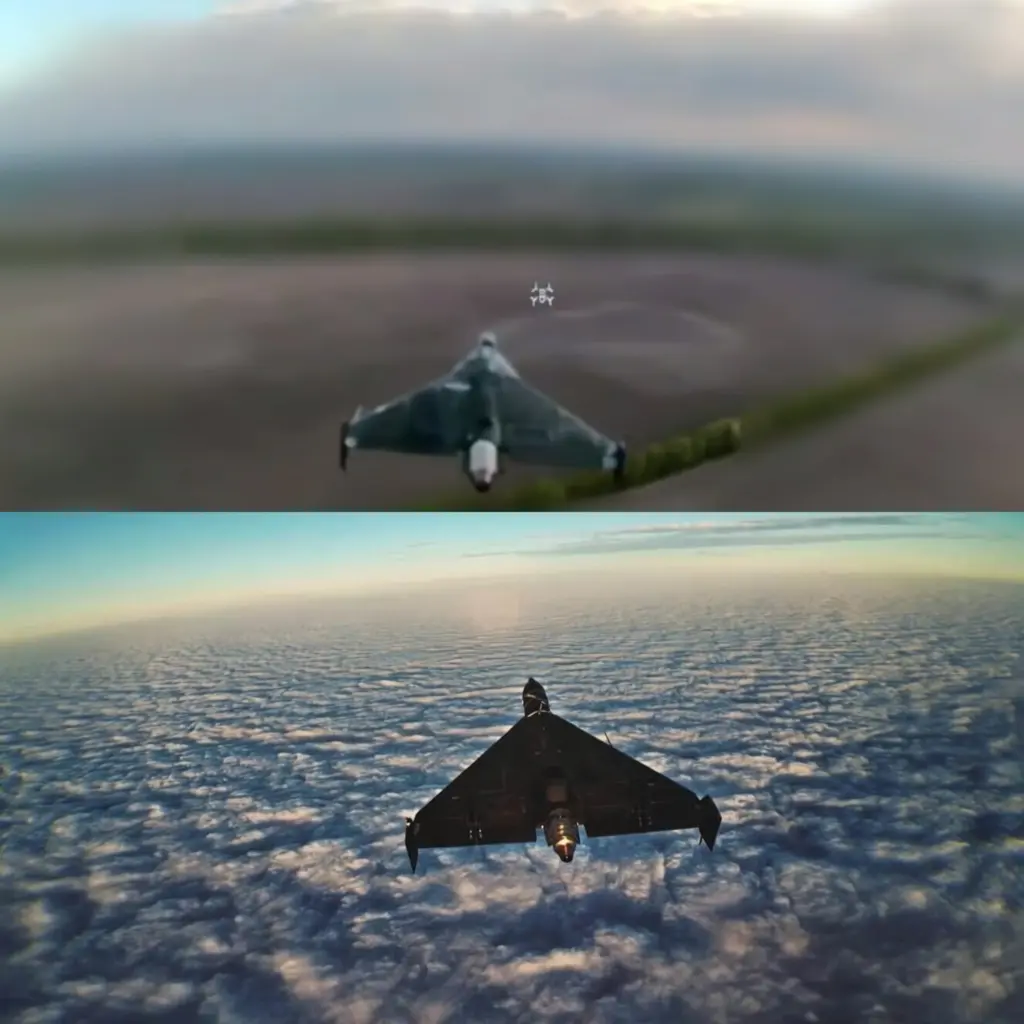
Geran-4" is an evolution of the earlier "Geran-3" model

Russia keeps upgrading its jet-powered drones, and Ukraine's electronic warfare is racing to keep up. Kyiv has set extra tasks for its military and manufacturers to scale up the most effective electronic warfare approaches, President Volodymyr Zelenskyy said after a meeting of the Supreme Commander-in-Chief's Staff on electronic warfare and infrastructure protection.

Russia keeps modifying its jet-powered Shaheds to beat each new Ukrainian defense, and Ukraine's answers have to keep pace. The race is tight: from 1 to 26 September, air defenses downed only 55 percent of the 2,730 new jet-powered drones, against 90% of the slower ones.

Hidden relays blunt Kyiv's jammers

Jamming has to improve because Russia keeps finding new ways around it. On 3 October, presidential adviser Serhii "Flash" Beskrestnov said someone had installed Russian MESH radio repeaters in Kyiv, a short control channel that guides Shahed drones onto their targets. As long as they are there, he said, closing the city with electronic warfare will not be effective.

"As long as online control of drones exists, not only the bridges but the air defense assets will be under threat," Flash stressed.

Sanctions aim at the supply chain

Beyond the jamming task, the Staff turned to where Russia gets the parts for those drones. Defense Intelligence reported on Russia's technological priorities for this year and next, and on supplies of critical components and equipment for its weapons production, Zelenskyy said.

New sanctions packages will follow, with Defense Intelligence due to send proposals to the Ukrainian government and the National Security and Defense Council, and Ukraine is working to align its sanctions with partners' jurisdictions.

The Staff also set the main tasks for supplying Ukrainian forces with long-range drones next year.

"The main criterion is that we must be able to respond in kind to Russian strikes," Zelenskyy emphasized.

Those parts, and the drones built from them, keep changing

In August, Intelligence Deputy Chief Vadym Skibitskyi said Russia remained fully dependent on Chinese turbojets for the Geran-4 and Geran-5, each costing about $35,000 to $40,000.

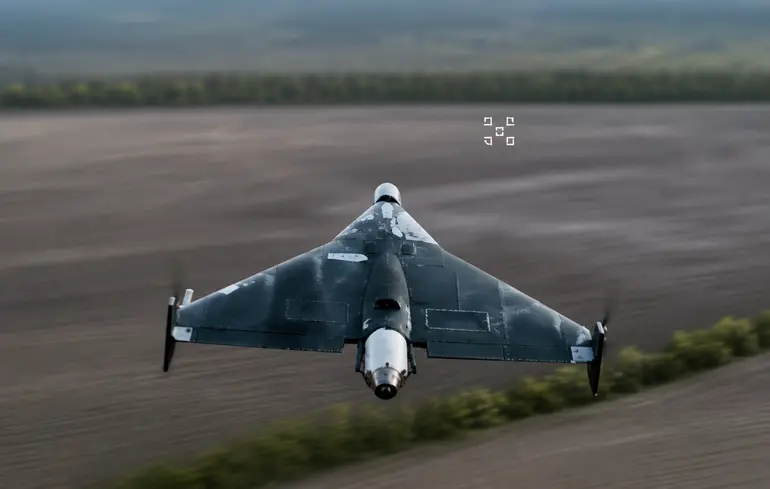
However, two months later, Ukraine reported the Geran-4 had received a locally built engine and a new optical navigation system. Kyiv has to stay attuned to changes to keep pace with the technology race, and so far, it is still trying to catch up rather than get ahead.
  •  

At ruined Donetsk’s airport, three Russians snap selfies and ready jet-powered Geran-4. Ukrainian drone slips in unseen and rams their launcher

russia steers its long-range drones ground towers—kyiv says hit one occupied crimea · post russia’s new “geran-4 seeker” shahed variant uses machine-vision ai targeting geran 4 ukraine news ukrainian reports

Russian troops were taking selfies beside a jet-powered Shahed launcher when a Ukrainian drone hit them. A Ukrainian drone attacked a pickup truck converted to launch Russian Shahed drones in the Donetsk airport area while its crew prepared to fire a jet-powered Geran-4, according to video from the Cursed Empire drone unit of the 100th Separate Mechanized Brigade that volunteer Serhii Sternenko published on 6 October.

Three Russian soldiers struck a pose by their drone launcher near Donetsk airport

It was their last selfie. Ukrainian drones hit the crew moments later as they prepared to fire a jet-powered Geran-4
🎥 Serhii Sternenko pic.twitter.com/ri9bNztW5y

— Euromaidan Press (@EuromaidanPress) October 6, 2026

Russia launches Shahed drones, including jet-powered ones, from pickup trucks and fixed launchers, and the ruined Donetsk airport, about 50 kilometers from the front line, is one of its drone bases. In September, Oboronka outlet counted that in general, Russia has at least 63 launchers at its drone bases, which are built to survive strikes.

The video shows three carefree Russian soldiers next to a pickup fitted with a launch frame.

"That was their last photo shoot," Sternenko noted, commenting on the hit on the soldiers.

The primary target

Earlier, an officer of the 1st Separate Center of the Unmanned Systems Forces, call sign “Falco,” explained that the primary goal of strikes on drone bases is to disrupt Russia's ability to launch drones.

This is done by destroying launchers and storage facilities, as well as creating an aerial threat over the drone base. Such attacks can delay drone launches indefinitely, while the destruction of infrastructure can reduce the overall number of drones launched.

But the "jewel" of anti-drone port operations is the military staff

Although these facilities are important targets, the Unmanned Systems Forces have another priority: drone operators.

“The most difficult and, at the same time, the most valuable target is the operator. They don’t stay near the launchers for long,” Falco said.

By taking out drone operators, Ukraine inflicts losses on a scarce resource. There are already relatively few of them, and Russia will have to spend additional money and time training new crews.

  •  
❌