Simon Leviev, who gained fame after the 2022 documentary exposed his alleged patterns of romance fraud and financial crimes, plans to call the new dating app, Safe Love.
Simon Leviev, who gained fame after the 2022 documentary exposed his alleged patterns of romance fraud and financial crimes, plans to call the new dating app, Safe Love.
'WHO has requested additional information from Russia on which pneumonia-causing pathogen led to the woman’s death,' the WHO added, saying it is monitoring the situation closely.
'WHO has requested additional information from Russia on which pneumonia-causing pathogen led to the woman’s death,' the WHO added, saying it is monitoring the situation closely.
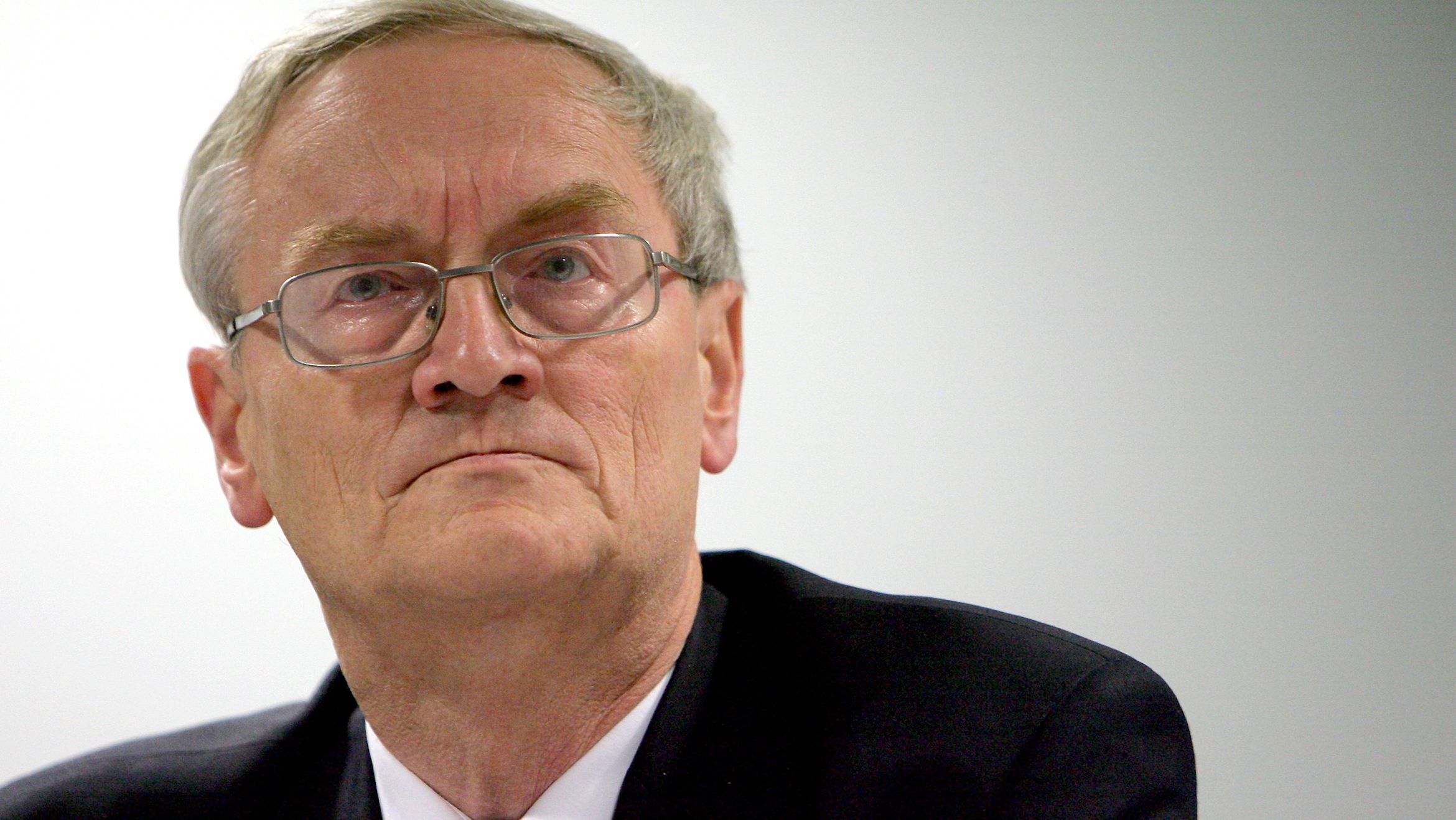
German federal police arrested former foreign intelligence chief August Hanning on Tuesday on suspicion of treasonous espionage, obtaining state secrets, attempted treason, and acting as an agent for a foreign service, the Federal Prosecutor’s Office announced.
Officers of the Federal Criminal Police Office took the 80-year-old Hanning and a former aide identified as Manfred D. into custody in the Bad Tölz-Wolfratshausen district of Bavaria and the Steinfurt district of North Rhine-Westphalia. Searches were also underway at premises in Berlin, the prosecutor’s office said in a statement. A judge at the Federal Court of Justice was to review the arrest warrants and decide on pretrial detention.
“The accused Hanning is under strong suspicion of espionage constituting treason,” prosecutors said. They allege that in the spring of 2010, about five years after Hanning left the Federal Intelligence Service, or BND, he and Manfred D. agreed that D. would keep supplying him with valuable intelligence “in exchange for remuneration” for use in Hanning’s private consulting work.
Notably, Hanning was not in the pro-Ukraine political establishment within Germany. In 2024, Remix News reported that Hanning accused Ukrainian President Volodymyr Zelensky of being behind the Nord Stream 2 sabotage attack. Ukrainian suspects have since been arrested and extradited for the attack on critical energy infrastructure.
Manfred D. had been Hanning’s bureau chief and later served as chief of staff to several BND presidents from March 2012 until March 2026, giving him access to sensitive material, the office said. Investigators say that through June 2022 he passed Hanning about 2,000 documents, many classified and intended only for internal BND use, including briefings for the regular intelligence meeting of senior security officials at the Chancellery.
“On one occasion, Hanning used classified intelligence… to draft an analysis for an officer of a foreign intelligence service,” prosecutors said. They added that it was not clear whether “the material reached the intended recipient.”
Hanning is also accused of years of close contact with a representative of a second foreign intelligence service, to whom he passed political information partly drawn from the documents. Prosecutors have not named either service.
Manfred D. is suspected of aiding and abetting attempted treason and treasonous espionage. A government spokesman said the government would not comment because the investigation is ongoing, according to Welt newspaper.
The case grew out of a separate Hamburg investigation. In September 2025, state police searched Hanning’s home and offices for evidence tied to businesswoman Christina Block, who is accused of ordering the kidnapping of her two youngest children in a custody dispute in late 2023. Investigators have alleged Hanning was involved in an earlier kidnapping attempt; he has denied wrongdoing in that case. While reviewing seized material, officers found an electronic storage device holding secret BND documents and referred the find to federal prosecutors in May 2026.
Hanning led the BND from December 1998 to November 2005, then served as a state secretary in the Interior Ministry until 2009. He later worked as an entrepreneur and security consultant. The documents now at issue date from long after he left the service. German media, including WDR, reported that the foreign services involved are not believed to be Russian; prosecutors have not confirmed that account.
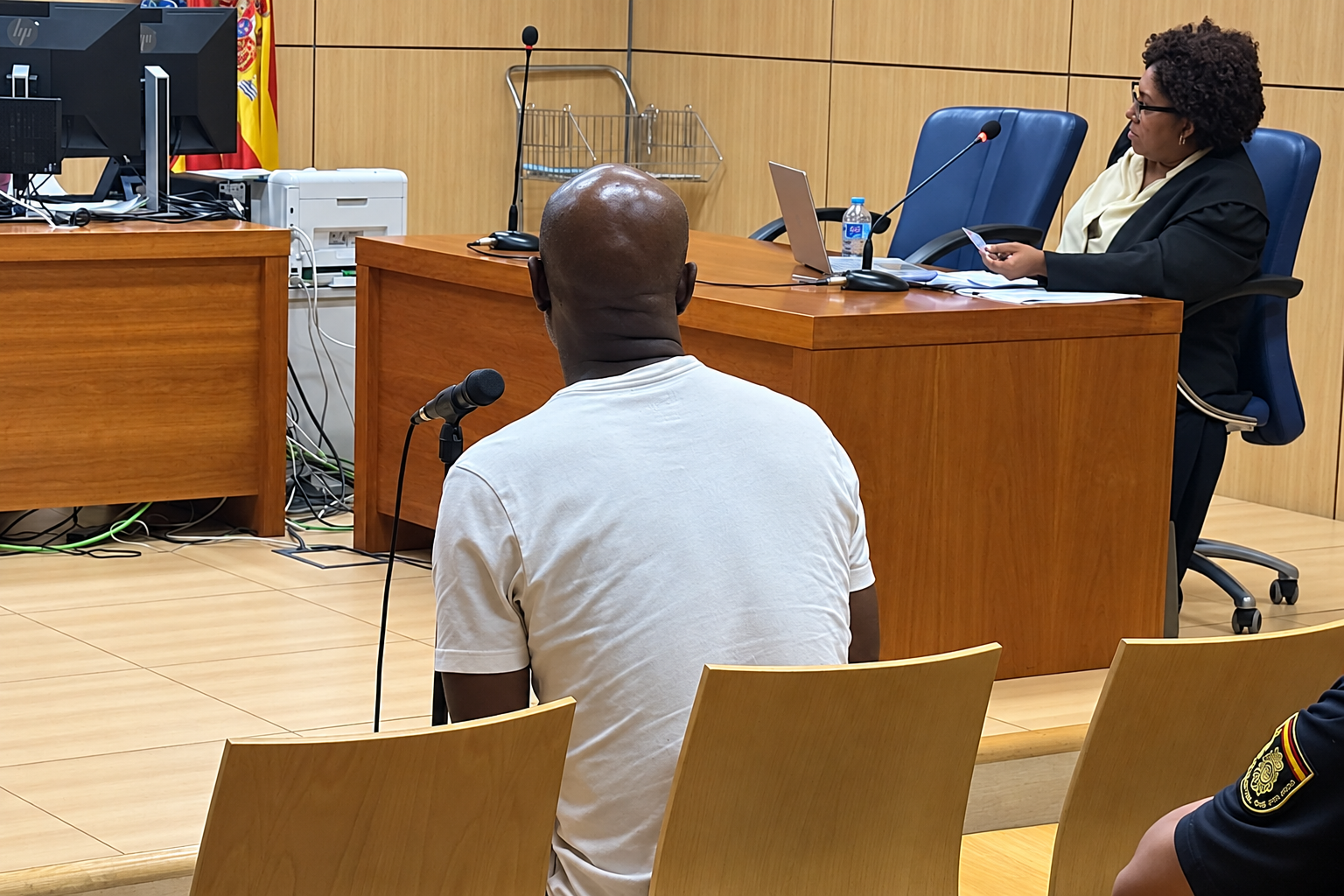
A Spanish court has sentenced a 61-year-old Sudanese man to 14 years in prison for raping a woman with whom he shared a home, after he threatened her with a machete and struck her with an electrical cable.
The third section of the Provincial Court of Valencia ruled that the May 29, 2024, attack was a sexual assault involving penetration, aggravated by the degrading and humiliating nature of the violence used. The court also ordered fines totaling €1,200 for two minor offenses of injury and threats, and it applied a simple mitigating factor of alcohol intoxication because the man’s volitional capacity was slightly impaired.
The assault occurred about 5 p.m. in a Valencia residence while the other two occupants were out, according to the ruling as reported by Las Provincias. The man ordered the woman into his room and forced her to drink several beers while brandishing a machete with a 57-centimeter blade.
“Come drink with me; if you don’t come, look what’s waiting for you,” he told her, the newspaper reported, citing the established facts.
When she tried to leave, he seized her by the hair and placed the blade against her neck, saying, “Now, the jokes are over.”
He tore off her shirt, lowered her pants, failed in an attempt at anal penetration, then raped her vaginally and ejaculated. He then whipped her back and legs with an electrical cable, covered her mouth and nose so her cries would not be heard, and told her he would keep going until he was “in prison or in the grave.”
She fled when he stood to retrieve tobacco, ran down the hallway and called for help. Neighbors who could not understand her language but recognized she was in distress then dialed for police. When National Police officers arrived, they found her half-naked and frantic. She immediately sought their protection.
In the man’s bedroom they recovered the machete, the cable and the woman’s passport, which he had burned.
The court rejected his trial claim that his own calls had brought police to the scene.
The judges found the woman’s account coherent from her first statement and supported by neighbors, officers and medical reports that documented injuries and an acute stress disorder. A forensic doctor testified that the absence of genital wounds did not exclude the reported assault.
Analysis of vaginal samples detected the defendant’s semen, and experts dismissed as implausible his assertion of consensual sex 16 days earlier. The panel also noted irregularities in the collection of the defendant’s DNA after he refused to provide samples following his arrest.
“The complainant’s statement meets the criteria to be considered sufficient incriminating evidence to overcome the presumption of innocence of the accused,” the court said. The judges added that “no relevant contradictions or inconsistencies were noted in her statement that could affect its reliability.”
The woman had been in Spain only a short time, did not speak the language, had little money, and had no family or support network. The court rejected the defense argument that she had reported the crime to obtain a residence permit, citing the objective evidence.
Japan has raised the fee for permanent residency applications twentyfold and imposed stricter income, pension and language requirements on foreigners seeking to settle long-term, as Prime Minister Sanae Takaichi’s government moves to curb growth in the foreign resident population.
The move is being presented as a tool to protect public finances and social cohesion.
The fee for permanent residency rose from 10,000 yen to 200,000 yen (about $1,270) on Oct. 1, the Immigration Services Agency reported. Charges to change or extend other residence statuses, long fixed at 6,000 yen, now scale with the length of stay and reach 75,000 yen for permits of five years or more. Reduced rates remain available for applicants facing severe hardship who also qualify for humanitarian consideration.
The adjustments arrive after the foreign resident population reached a record 4.12 million at the end of 2025, up 9.5% in a single year. Prime Minister Sanae Takaichi has framed the tighter rules as a way to keep acceptance orderly.
“The government acknowledges that some citizens feel anxious or a sense of unfairness due to the rising number of foreign residents,” Takaichi wrote on X. The changes, she said, are meant to “ensure order” and allow “both citizens and foreign nationals to live safely and securely.”
Under the revised guidelines, permanent-residency applicants must show continuous household income at or above the average for Japanese households of similar size — 5.75 million yen (about $36,500) in 2024 official data.
They must also demonstrate projected pension benefits comparable to 30 years of contributions to the employees’ pension system, a shortfall that can be covered by assets. From April 2027, applicants will need Japanese proficiency at the level of an independent user and a working grasp of local social rules.
The standard residence period remains 10 years; marriage-based pathways were lengthened as well.
The approach is straightforward. Settlement becomes available to people who can support themselves, contribute to the pension system, and function in Japanese society, rather than to anyone who simply accumulates years of temporary status.
Extra fee revenue is earmarked in part for language education and for removing people who overstay or break the rules. A related fivefold rise in visa fees took effect in July, the first adjustment since 1978, which Foreign Minister Toshimitsu Motegi described as a correction “to reflect inflation and exchange rate fluctuations.”
Meanwhile, European states face larger and faster inflows of migrants, strained housing and welfare systems, and repeated public backlash over irregular migration and failed integration. Japan’s harder line comes at a time when the country already has far fewer foreigners to deal with, especially from troubled Third World countries.
The radically different approaches to immigration are made clear through sheer numbers. In Germany, the former government cut the standard residency wait from eight years to five on June 27, 2024. The largest practical change is dual citizenship: applicants no longer have to renounce their existing nationality. Since the changes, Germany granted about 292,000 citizenships in 2024 and about 333,000 in 2025.
In Japan, authorities generally approve citizenship after ten years in most cases. On top of more rigorous standards, Japan does not recognize dual nationality for people who naturalize. Approvals are modest — about 11,500 in 2025, and roughly 7,000 to 10,000 a year before that — against a foreign resident population of 4.12 million. Formal applications that are filed are approved more than 90 percent of the time, but many people are screened out before they apply.
European countries that already struggle to enforce returns or to require newcomers to reach median earnings could adopt similar thresholds to dramatically reduce immigration.
The Public Health Agency of Canada told Global News that "at this time, no risk to Canada has been identified" and that it was "closely monitoring the situation."
The Public Health Agency of Canada told Global News that "at this time, no risk to Canada has been identified" and that it was "closely monitoring the situation."
 Login