Relics of ancient wet forests stretch across the coast of Queensland state in Australia. In a landscape made patchwork by agriculture, volunteers, community groups and Indigenous rangers in Australia’s Wet Tropics now grow more than 300,000 native plants to turn cleared pasture back into rainforest. But once the young trees shade out the weeds, some groups aren’t keeping track of the trees, a new study finds. That gap means the goals these groups care about most, such as bringing back wildlife and reconnecting fragmented forest, are poorly captured by what most groups measure. Researchers from Australia’s James Cook University and the University of Queensland surveyed 25 organizations doing rainforest restoration in northeastern Australia. The respondents included community groups, conservation land trusts, Indigenous ranger groups, nature market investors, and commercial land managers. The results were published in the journal Restoration Ecology. Australia’s Wet Tropics, a UNESCO World Heritage Site, stretches about 450 kilometers (280 miles) along Queensland’s northeast coast, and contain relics of the ancient forests that once covered the supercontinent of Gondwana, according to UNESCO. Mossman Gorge in Daintree National Park in Far North Queensland, Australia. Photo by Merryjack via Flickr (CC BY 4.0) Around 40% of Australia’s bird species live in the Wet Tropics. Of the roughly 2,800 plant species found here, about 700 grow nowhere else in the world, according to the Wet Tropics Management Authority. Rare animals living there include the southern cassowary (Casuarius casuarius), the northern bettong (Bettongia tropica), and the spotted-tailed quoll (Dasyurus maculatus). During…This article was originally published on Mongabay
Emily Fulton spends a lot of time in a small boat cruising the waters of Clayoquot Sound off the west coast of Vancouver Island in British Columbia, Canada. As the marine program manager for the nonprofit Redd Fish Restoration Society, she regularly checks on a newly created kelp nursery growing within the traditional territory of the Tla-o-qui-aht First Nation. “We have grown a lot of kelp,” Fulton told Mongabay in a phone interview. Touted by its organizers as the largest kelp restoration project on the West Coast of North America, the nursery has planted more than 4,200 square meters (45,200 square feet) of new kelp habitat since launching in early 2026. That’s the footprint of three and a half Olympic-size swimming pools. The team grows baby bull kelp (Nereocystis luetkeana) and giant kelp (Macrocystis pyrifera) on four lines; each 330 meters (1,083 feet) long, submerged below the water’s surface and away from seafloor predators such as sea urchins. As the kelp grows and matures, they’ll take some of it off the lines and transplant it to sites throughout Clayoquot Sound, to restore degraded kelp forests and also seed new ones. Getting a project of this scale up and running has cost almost a quarter of a million Canadian dollars. The funding has come from various sources, including the provincial government, the World Wildlife Fund of Canada and the Clayoquot Biosphere Trust. Managing the project alongside Redd Fish is West Coast Kelp, a business devoted to kelp restoration and the Tla-o-qui-aht…This article was originally published on Mongabay
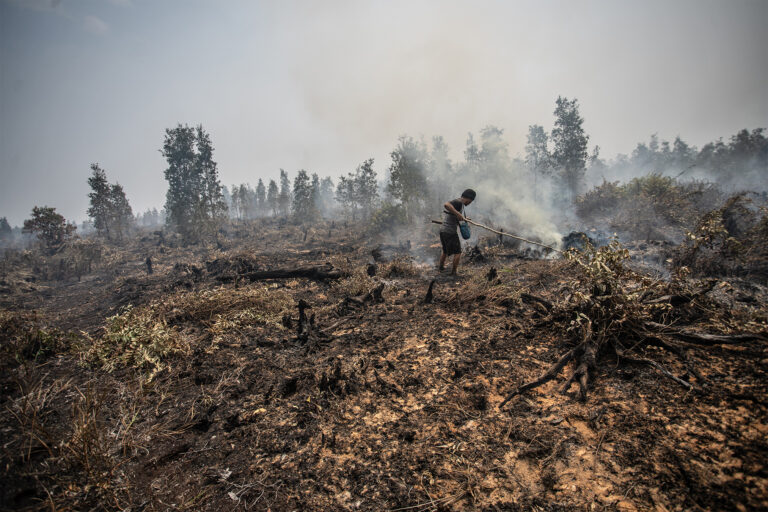
In October 2006, I was supposed to be starting my dissertation research on tropical reforestation in Indonesia. Instead, I found myself in the forests of Tanjung Puting National Park in Central Kalimantan helping locals to fight fires with brooms, backpack pumps, and hoses connected to hand-dug water wells. It was an ‘all hands-on deck’ moment for the local NGO I was working with then — Friends of Nature, People and Forests (FNPF) — including Basuki Santoso, FNPF’s Kalimantan program manager, alongside Adut and Isam, who were teenagers at the time. On our first night of firefighting, we slept in the forest on a raised platform that would later become part of a field station. I was awoken in the middle of the night by a sun bear rifling through our makeshift kitchen about 20 feet away. I sat frozen, watching this wild animal who was fleeing the fires while everyone else slept soundly. It was a surreal and humbling moment. Twenty years ago, these severe forest and peatland fires were due to a dangerous combination of El Niño-induced drought, slash-and-burn agriculture and other land clearing, and the grass-fire cycle. Much of Southeast Asia was left choking on the haze, and that was a weak El Niño year. Firefighting in Indonesia often requires resourcefulness as well as resilience and fortitude. Image courtesy of Basuki Santoso. History keeps repeating itself, and it’s hard to watch. Experts say we are now facing a Super El Niño. For the past three months, millions of…This article was originally published on Mongabay
HONG KONG — “Spiderman … Tom Holland,” two secondary school boys repeated to each other as they watched conservationist Harry Wong nimbly climb a tall tree at their school, St. Louis School, in downtown Hong Kong. On a humid September afternoon, Wong installed a nest box for yellow-crested cockatoos (Cacatua sulphurea) on a candlenut tree (Aleurites moluccanus). Equipped with a harness and ropes, he climbed up the tree, installed the box, and quickly rappelled down. Wong and Astrid Andersson, a biologist and postdoctoral researcher at the University of Hong Kong (HKU), are the dynamic duo behind HK Cockatoo Watch, a conservation project that seeks to protect the city’s feral yellow-crested cockatoos. Arborist and conservationist Harry Wong installs a nest box for yellow-crested cockatoos on a tree at St. Louis School in Hong Kong on Sept. 7, 2026. Image by Yenni Kwok/Mongabay. Yellow-crested cockatoos are considered to be critically endangered, with fewer than 2,000 individuals remaining in their native range in eastern Indonesia and Timor-Leste. However, few people know that Hong Kong is home to the largest wild population of the species outside the two Southeast Asian countries. There are roughly 200 cockatoos in the city, or about 10% of the global wild population, believed to be descendants of released or escaped pets. The number is stable, thanks to the lack of natural predators and strict legal protection. A recent DNA analysis study by Andersson and her research team found that Hong Kong’s feral cockatoos have unexpectedly high genetic diversity and…This article was originally published on Mongabay
Steve Rose investigates a catastrophic pollution incident at Furnace Brook, a fishing lake in East Sussex, where thousands of fish suddenly died and the local ecosystem collapsed. Neighbours suspect pollution from nearby Morgans Farm, and Rose examines whether their concerns are justified. In doing so, he uncovers broader national problems with water pollution, illegal waste dumping, and the limited power and resources councils and regulators have to tackle them.
He headed about half a mile up the valley to a tributary joining the stream from a neighbouring property named Morgans Farm. “You could clearly see the water upstream [of the tributary] was totally normal, a sandy colour with clay silt in it, and what was below it had gone a blue-black colour. You could see dead brook trout, wild eels, and there was a dead crow or raven, which may well have eaten something poisonous from the river.” In some places, he says, there was a thick layer of blue-grey scum on the water, which he later learned is sometimes called “bacterial cheese”. “There’s so much nutrient [sic] in the water that it allows for a bacterial colonisation explosion.” The bacteria take up all the oxygen, which causes most of the fish, especially the older, larger ones, to die.
Indonesia’s government is imposing new restrictions on access to geospatial data, raising concerns among researchers and activists that it will suppress environmental science and advocacy work in one of the world’s most biodiverse countries. For around a month, visitors to an interactive mapping platform maintained by the Ministry of Forestry have been greeted with a pop-up legal notice warning that the information is “view-only” and that anyone who “downloads” or “extracts” it without the ministry’s written permission “will be prosecuted” under the 2008 Electronic Information and Transactions, or ITE, Law. Anyone who wants to use the once freely accessible platform, known as SIGAP, must first agree to “terms and conditions” stating that the relevant articles in the ITE Law “carry penalties of up to 9 years in prison and/or a fine of up to Rp 3 billion [$170,000],” the notice says. On Sept. 21, the ministry’s Directorate General of Forestry Planning posted a video to Instagram outlining a new application process that requires prospective users to disclose their research aims and submit supporting documents. Doni Prabowo, the department’s head of forest monitoring and geospatial information, told Mongabay that restrictions were needed because geospatial data had been uncontrolled for a long time, creating opportunities for manipulation and illegal trading of the country’s precious information. “What if somebody manipulates the data and says certain areas are not protected forest [when they really are]? It could be dangerous,” Doni said by phone. He said he’d heard of the ministry’s geospatial data being listed…This article was originally published on Mongabay
Reprinted with permission from Trita Parsi‘s Substack: Michelle Brohard, head of policy and geopolitical risk at Kpler, speculated in a recent interview with energy analyst Rory Johnston (@commoditycontext) that the reason why more crude is getting through the Strait of Hormuz may be because some countries are paying Iran a toll, possibly up to 20% […]
Reprinted from John’s Substack: The Trump administration and its supporters – including the Wall Street Journal editorial page – are working overtime these days to spin the news around the Iran war to make it appear that the US is winning and Tehran had better submit to Washington’s demands before it is wrecked, maybe even […]

 Login