
❌

Reading view

France Student Protests: 504 Arrested and 48 Police Injured as Violence Erupts in Paris

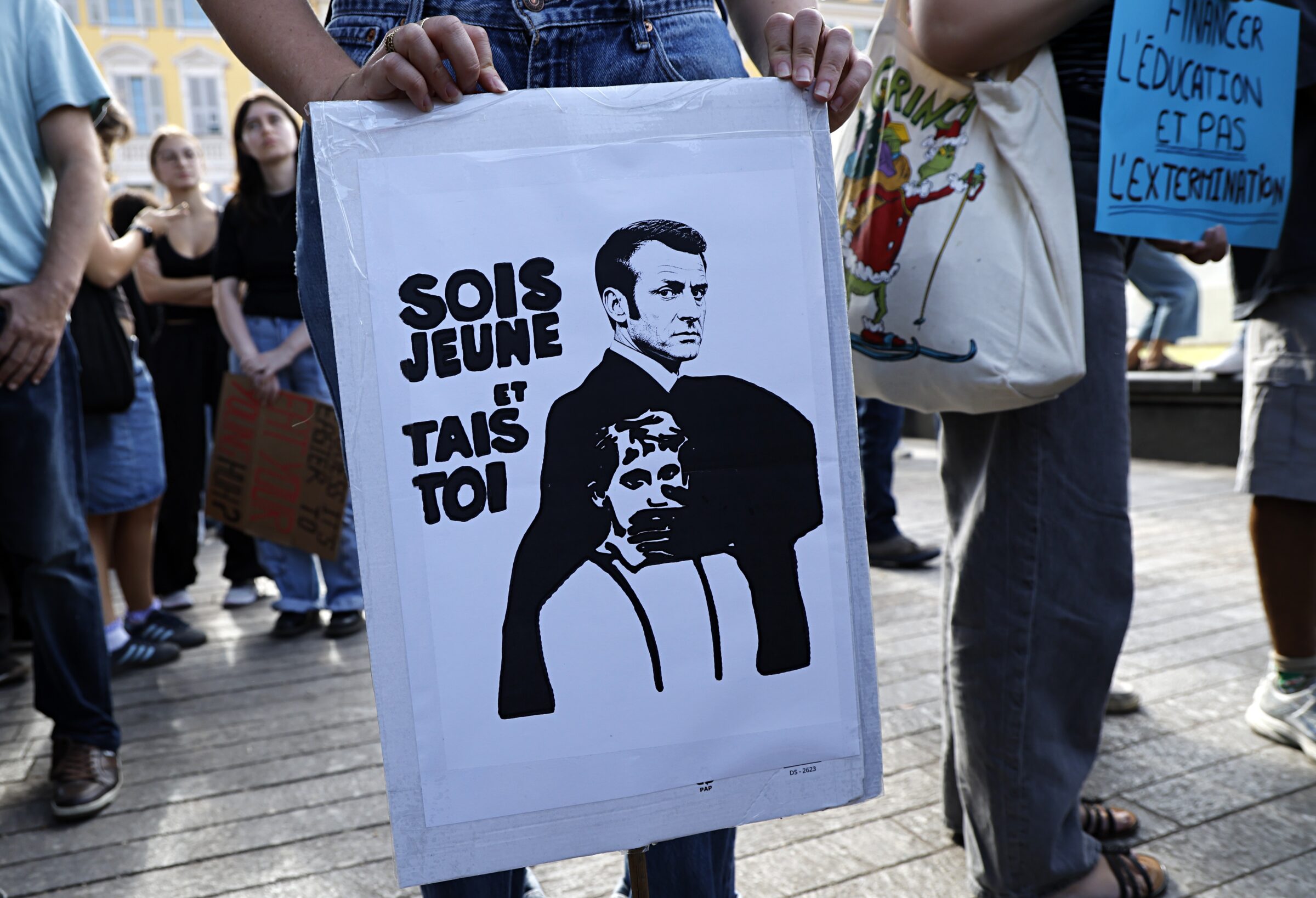
More than 71,000 people joined demonstrations across France on Thursday as protests over conditions in secondary schools continued. Clashes in Paris and attacks on educational establishments in several cities have increased pressure on Prime Minister Sébastien Lecornu, who has promised measures before the end of October.

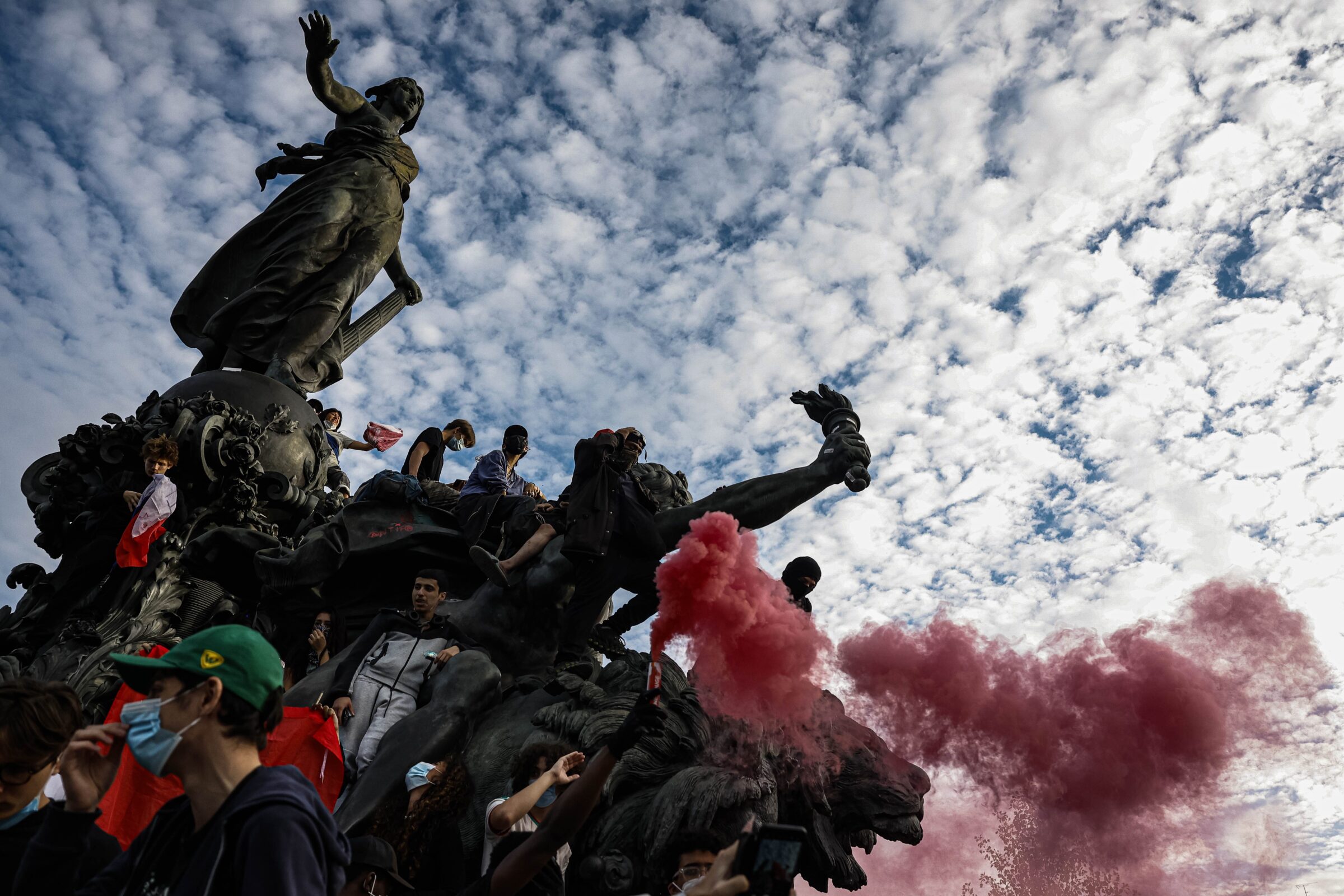
French police arrested 504 people and reported 48 officers injured during nationwide student demonstrations on Thursday, 8 October, as violent confrontations broke out in central Paris and incidents were reported at schools and police facilities elsewhere in the country.

According to figures released by the French Interior Ministry, approximately 71,500 people participated in demonstrations, including 24,500 in Paris. Around 55,000 people were also reported to have taken part in actions outside educational establishments, although those figures may overlap with attendance at the larger demonstrations.

The latest unrest follows protests by secondary school pupils demanding more teachers, better-maintained buildings and smaller classes. The demonstrations have attracted attention beyond the schools themselves, while the government’s response has been complicated by disagreements over policing and public spending.

Violence at Place de la Bastille

The most serious confrontations on Thursday occurred around Place de la Bastille in Paris, where several thousand demonstrators gathered. Police used water cannon and tear gas after groups of protesters began throwing stones, fireworks and other objects towards officers.

According to the Paris police prefecture, approximately 20 individuals dressed in black, identified by the authorities as members of the so-called black bloc, threw pieces of street furniture at police positions. Officers also reported that fragments of chimney masonry were thrown from the roof of a nearby building.

Video footage circulating on social media showed young demonstrators throwing objects at police, who advanced to disperse the crowds. The clashes formed part of a wider national mobilisation, with marches and school protests taking place across the country.

The Interior Ministry condemned the violence and defended the actions of security forces. It described attacks on public buildings and police officers as separate from the peaceful demonstrations organised by pupils.

Schools and Police Facilities Attacked

Several incidents were reported at schools and public buildings beyond Paris, including attacks on teaching staff and school administrators. In Poitiers, a fire broke out overnight on the grounds of a secondary school and spread to a teacher’s vehicle. In Saint-Étienne, several dozen individuals entered a school and vandalised its canteen. In Bayonne, windows were smashed at the home of a school security employee, while teachers were targeted with fireworks.

In Toulouse, a headteacher was reportedly assaulted by an adult participating in the demonstrations, while in Saint-Chamond, a deputy headteacher suffered facial burns after being struck by a pyrotechnic device.

Other incidents included a police vehicle being set alight in Strasbourg, damage to a police building in La Rochelle and an attempted arson attack on a police station in Bordeaux. The incidents added to concerns about violence accompanying the protests, although there was no indication that most demonstrators were involved in attacks.

Repeated Arrests as Protests Continue

Thursday’s 504 arrests followed 488 detentions reported during demonstrations on Tuesday, 6 October. The recurring confrontations have led to scrutiny of police tactics as well as the actions of violent groups attending demonstrations.

Student representatives have raised complaints about shortages of teaching staff, disruption caused by absent teachers, classroom conditions and school facilities. Their mobilisation has placed new demands on a government already facing budgetary pressures.

Lecornu Promises Action Before End of October

Prime Minister Sébastien Lecornu attempted to ease tensions on Wednesday, 7 October, promising that the government would present measures responding to the complaints raised by secondary school pupils before the end of the month.

The government must address demands for additional education resources while managing France’s wider public spending commitments. Further demonstrations would maintain pressure on ministers to produce detailed proposals and clarify how they would be funded.

Thursday’s disturbances have also increased attention on security around schools and the protection of teachers and administrators. The immediate challenge for the authorities is to prevent further attacks while allowing peaceful demonstrations to continue.
  •  

French school protests to continue, after prime minister ignores demands

Two-weeks long protests by French high-school students demanding better education conditions risk getting more heated due to the French government’s lack of response.

For his part, French prime minister Sébastien Lecornu told parliament on Wednesday (7 October) the first proposals on education reform would be published at the end of the month.

He spoke after 250,000 demonstrators took to the streets across the country on Tuesday (6 October), according to interior ministry fiigures.

But the High School Student Union (Union Syndicaire Lycéenne, USL) said the number was as high as 450,000, including solidarity protests in most universities.

Pupils, joined by parents, teachers, and labour unions, want an end to teacher shortages and urgent renovations of run-down school buildings.

“Today, the balance of power is in our favour,” said Marius Mesnil, the USL’s co-general secretary, on Monday. 

The secondary school teachers’ union (Syndicat National des Enseignements de Secondaire, SNES) also called Lecornu’s inaction “unacceptable.”

Some 715 police officers, 215 students and 85 school staff members have been injured during the protests, with 18 internal probes were launched to investigate police brutality since 21 September, when the movement first erupted, after being sparked by a teachers’ protest.

A school in Nantes, in the west of the country, was set on fire, and protesters regularly light trash bins and make barricades in city centres.

The minister of interior has suspended the use of stun grenades after a 15-year-old’s hand was blown off in a violent confrontation with police on Monday.

This article continues, but the full version is available only to EUobserver.com subscribers. Visit account.euobserver.com/membership

  •  

Listen: Are student protests in France actually being fuelled by Mélenchon’s party LFI?

Production: By Europod, in co-production with Sphera Network.

EUobserver is proud to have an editorial partnership with Europod to co-publish the podcast series “Briefed” hosted by Léa Marchal. The podcast is available on all major platforms.

Find the full transcript below: 

France has been seeing growing protests by high school and university students in recent weeks.

The movement is continuing today with a fourth day of mobilisation. According to the government, the far-left opposition party is fuelling the protests. For Donald Trump, the movement is the result of mass migration and the presence of Islam.

But what are young people actually protesting about? High school students’ anger has been building for some time. One of the tipping points came in June, when temperatures inside many schools rose above 35 degrees. Many classrooms had no fans, let alone air conditioning.

And this happened in buildings that were already often in poor condition. Add to that the fact that absent teachers are frequently not replaced. The result was what you might call a general overheating — both literally and politically.

The government, meanwhile, has accused the left-wing party La France Insoumise (France Unbowed, or LFI) of fuelling the protests. Some commentators have even suggested that the movement was orchestrated by the party from the beginning.

There is little doubt that LFI is supporting the mobilisation and may be trying to benefit politically from it. But dismissing the protests as political manipulation risks ignoring problems that are well documented.

As sociologist and child psychiatrist Laelia Benoit recently told Le Monde, assuming that high school students cannot think for themselves and must necessarily be manipulated by adults or political parties is, in her words, a way of denying them their ability to act politically.

And many of their demands are supported by both parents and teachers. Teachers, for example, have long complained about the lack of replacements when they are absent.

This is supported by the latest PISA report on France: 87% of French students — as well as school principals — said their school’s capacity to teach was affected by a lack of teachers.

So young people are increasingly asking to be heard. Earlier this week, they put forward their demands, resulting in 10 concrete measures supported by both high school and university students.

Among other things, they are calling for a major programme to renovate schools, more staff, a guaranteed €1 meal at university canteens, and higher housing benefits and grants so that students can live with dignity.

So what is the government offering in response? France has opened an online platform in recent days where students can submit their demands. Prime Minister Sébastien Lecornu said yesterday that the platform had already received more than 40,000 contributions.

So for now, the government’s message is essentially: go back to class and submit your demands online. The prime minister then pointed to the additional €1 billion he has proposed for the education budget next year.

And as for more immediate measures, he announced five areas of work that should begin at the end of October. They include tackling teacher replacements, improving schools’ material conditions, reorganising school timetables, reforming the university admissions platform which appears to be a nightmare, and thinking about how to give high school students a greater voice.

Let’s see if that is enough to ease the protests.

  •  

French Debt Sell-Off Reshapes Eurozone Bond Market as Investors Turn to Germany

France’s borrowing costs have risen to levels last seen more than two decades ago as investors shift towards German, Dutch and other lower-risk European debt, placing Paris at the centre of renewed concern over eurozone public finances.

France is emerging as the principal source of concern in Europe’s government bond market as investors reassess the fiscal strength of eurozone states and increasingly move money towards Germany and other countries regarded as safer borrowers.

The yield on French ten-year government debt has reached its highest level since 2002 after rising by about 70 basis points during September. The difference between French and equivalent German borrowing costs approached 160 basis points last week, its widest since 2012, according to market reporting on the sell-off.

The shift represents a sharp reversal in how investors view French sovereign debt. France has traditionally traded close to Germany and benefited from its status as one of the eurozone’s largest and most liquid bond markets. It is now being treated increasingly as a country whose political and fiscal outlook warrants a substantial premium.

The immediate concern is the French budget.

Paris said in September that this year’s deficit would exceed the government’s five per cent target, while the country faces the additional challenge of issuing a record €340 billion of government bonds in 2027. The money will be needed both to finance current expenditure and refinance debt accumulated during the Covid period.

EU Today reported earlier this week that French debt concerns had already pushed the euro to a 17-month low against the dollar. Political uncertainty ahead of the 2027 presidential election has added to market concern over whether any government will be able to deliver the spending reductions required to stabilise the public finances.

Bond markets, however, are responding to France’s present position rather than promises extending into the next presidential term.

The movement is also beginning to alter longstanding assumptions about which European sovereign borrowers are considered risky.

Italy remains vulnerable. Its ten-year bond spread over Germany rose to about 130 basis points last week, compared with roughly 80 basis points a month earlier. Italian public debt stands at around 138.6 per cent of GDP, and Rome expects its deficit to move above the EU’s three per cent ceiling.

Yet French debt has recently come under greater pressure than Italian debt.

Spain provides an even more striking contrast. During the eurozone sovereign-debt crisis in 2012, Spanish ten-year bonds yielded around five percentage points more than French debt. Spain’s ten-year yield is now approximately 75 basis points below France’s.

The difference reflects stronger Spanish growth and improved confidence in Madrid’s finances, although investors are watching Spanish and Portuguese debt for evidence that the French sell-off is spreading elsewhere in the currency union.

So far, the movement is not comparable with the eurozone crisis of the early 2010s. At that time, Italian bond spreads above Germany exceeded 500 basis points and Greece’s reached thousands of basis points. Current differences remain far smaller.

The direction of capital flows is nevertheless notable. Germany has re-established itself as Europe’s principal bond-market safe haven despite questions earlier this year about Berlin’s increased spending on defence and infrastructure. German ten-year yields fell as investors bought Bunds during the recent turbulence.

Higher sovereign yields feed into the interest costs faced by governments when refinancing debt and can affect borrowing throughout an economy. For a country already running a large deficit, rising yields make efforts to restore the public finances more difficult because an increasing share of expenditure must eventually be devoted to debt servicing.

  •  
❌