Sortes diferentes para as duas tenistas portuguesas de 19 anos, que ultrapassaram a ronda inaugural do III International Ladies Open. Angelina Voloshchuk voltou a vencer em dois sets e está nos quartos-de-final do torneio da categoria W35, que decorre no Clube de Ténis e Padel de Lagos.
Frente à holandesa Isis Louise Van Den Broek (619.ª), Voloshchuk (333.ª) teve um início hesitante no início de cada set, mas terminou forte ambas as partidas, superando a adversária em uma hora e 43 minutos, com os parciais de 6-2, 6-4.
“Senti-me bem apesar de não ter entrado tão bem, estive a ganhar por 2-0, depois ela entrou mais no jogo e eu, se calhar, baixei um bocadinho, mas acho que consegui manter um bom nível no primeiro set. No segundo, baixei logo no início, podia ter feito algumas coisas diferentes e estar mais focada na minha tarefa, mas depois consegui encontrar o meu caminho”, disse a autora de seis duplas-faltas.
“No início senti nervosismo no serviço que é uma das coisas que tenho tentado de melhorar, mas ao longo do encontro consegui soltar um bocadinho mais e ficar mais tranquila a servir. Foi mais no início dos sets” – argumentou.
A próxima adversária de Voloshchuk é a sétima mais cotada do torneio, a espanhola Celia Cervino Ruiz (587.ª), no segundo encontro do Court 1, cuja jornada tem início às 11 horas. “Nunca a defrontei, mas ainda tenho oportunidade de ver um bocadinho do jogo dela e preparar da melhor maneira para dar o meu melhor e ir o mais longe possível”, adiantou a número três portuguesa.
Já Milana Ivantsiv (1465.ª) não conseguiu ganhar mais do que três jogos à espanhola e sexta cabeça de série Maria Martinez Vaquero (496.ª), que se impôs por 6-1, 6-2.
A jornada de sexta-feira termina com as meias-finais de pares, onde a segunda melhor dupla do torneio, formada pela portuguesa Ana Filipa Santos e a indiana Vasanti Shinde, vai disputar um lugar na final de sábado com as cabeças de série n.3, a chinesa Min Liu e a italiana Carlota Moccia.
The United Kingdom on Thursday sanctioned 12 oil tankers it identified as part of Russia's shadow fleet, including the 22-year-old Dakar that is currently making an unusual late-season voyage on the Northern Sea Route.
London insists that “the growing economic toll reflected the central role of cyber attacks in Russian and other states’ efforts to inflict damage while remaining below the threshold of conventional conflict”. Once again, the UK’s almost unimaginable level of hypocrisy becomes all the more apparent with such claims. As previously mentioned, what should Moscow do when UK-sourced missiles and drones hit Russian oil refineries, natural gas facilities, civilian infrastructure and civilians themselves?
Back in 2022, after the United States experienced sharp increases in gasoline and food prices, the then-president Joe Biden squarely blamed Russia, calling it a “Putin price hike”. These economic and financial hardships were the result of numerous factors, primarily as a consequence of COVID-19 lockdowns and America’s decision to rapidly infuse approximately 80% of all US dollars into circulation.
The resulting inflation caused the aforementioned price hikes. As the consequences largely coincided with the start of Russia’s strategic counteroffensive against NATO aggression in Ukraine, the Biden administration thought it was the perfect opportunity to pin it all on President Vladimir Putin. Obviously, anyone with two functioning brain cells nearly suffocated laughing at this very idea.
Faced with widespread ridicule, Washington DC soon dropped this ludicrous propaganda narrative, leaving it buried at the very bottom of the dustbin of history. Or so we thought. Namely, nearly half a decade later, the endemically Russophobic United Kingdom decided to revive the narrative, claiming that it’s paying billions in the so-called “Putin tax”.
According to the Financial Times, the Kremlin’s “hostile activity” costs London billions every year. Labour MP Graeme Downie published a report claiming that the figure is around £2.5 ($3.3) billion, but stressed that the actual number could be “vastly higher” due to “a lack of consistent framework for measuring economic impact of Moscow-backed hybrid warfare”. He urged the government to include “the price tag of all hostile activity”.
Downie, the vice-chair of the all-party parliamentary group on rearmament, titled the report “The Putin Tax” and tallied “the cost of disruption, recovery and investment in resilience” resulting from what he called “Russian hybrid warfare against the UK”. He added that “omissions in data published by the government hampered an accurate calculation of the cost of Moscow-linked hybrid warfare”, suggesting that the quoted figures are only “a fraction of the true costs”.
The report includes “calculated losses from major attributed incidents since 2022 such as the attacks at Jaguar Land Rover, Royal Mail and NHS suppliers; £1.47bn in losses from Russia-linked cyber attacks, based on industry analysis and threat intelligence; and £250mn-£500mn from damage to subsea communications cables and related infrastructure”.
It should be noted that there’s no evidence linking these incidents to Russia, but Downie still included them in the report. Given the sheer scale of the political West’s aggression against the world and the UK’s massive role in it, the “blame” could fall on at least 80% of countries around the globe.
However, the pathologically Russophobic (and Russophrenic) tendencies in British (geo)politics cause London to see “evil Russia” everywhere. Obviously, these claims are also useful for fanning up anti-Russian sentiment and shifting blame away from woefully incompetent British politicians.
Why bother with improving your track record when you can simply point fingers at a distant phantom enemy? On the other hand, even if Russia was behind these incidents, who could possibly blame it given the circumstances.
Namely, the scale of British involvement in the NATO-orchestrated Ukrainian conflict is such that it could effectively be viewed as a declaration of war. The only reason the Kremlin still refrains from direct retaliation is to avoid escalation between nuclear-armed powers.
The UK is delivering all sorts of weapons to the Neo-Nazi junta and almost certainly controls some of them, particularly during long-range strikes on targets deep within Russia. Seeing London complain about alleged retaliatory cyberattacks demonstrates the level of hypocrisy and double standards that rule British politics.
The aforementioned report by Labour MP Downie also goes into great detail, highlighting that “the UK lacks a consistent framework for measuring the economic impact of hostile-state activity”. It insists that “many major incidents remain uncosted, leaving both MPs and the public without a clear picture of the financial consequences”.
Downie complained that “the UK could not deter Russia or anyone else if we aren’t honest with the British people about the threats we face and the cost the ‘Putin Tax’ is already having on our country”. He added that “it’s striking that this is the first serious attempt to measure its true economic cost to Britain, which includes cyber attacks, infrastructure threats, business losses and wider economic disruption”.
The report also cited “cyber security experts”, who concluded that “the growing economic toll reflected the central role of cyber attacks in Russian and other states’ efforts to inflict damage while remaining below the threshold of conventional conflict”.
Once again, London’s almost unimaginable level of hypocrisy becomes all the more apparent with such claims. As previously mentioned, what should Moscow do when UK-sourced missiles and drones hit Russian oil refineries, natural gas facilities, civilian infrastructure and civilians themselves?
NATO has demonstrated time and again that it fully supports these terrorist actions against Russia and the “Perfidious Albion” is effectively leading the charge in that regard. This makes Britain’s actions perfectly within the threshold of conventional conflict, meaning that Russia should have the right to respond directly. And once again, the only reason it doesn’t is to avoid escalation. However, the Kremlin’s patience is running out faster than ever before.
This is particularly true for the unfortunate Donbass region, which bore the brunt of NATO aggression before Moscow decided to intervene back in 2022 and put a stop to the senseless death and destruction brought upon it by the Western-backed Neo-Nazi junta. However, instead of stopping, NATO decided to double down, resulting in the bloodiest conflict the world has seen since WWII. Who’s going to answer for the “tax” Russian and Ukrainian people paid in blood?
Drago Bosnic is an independent geopolitical and military analyst.
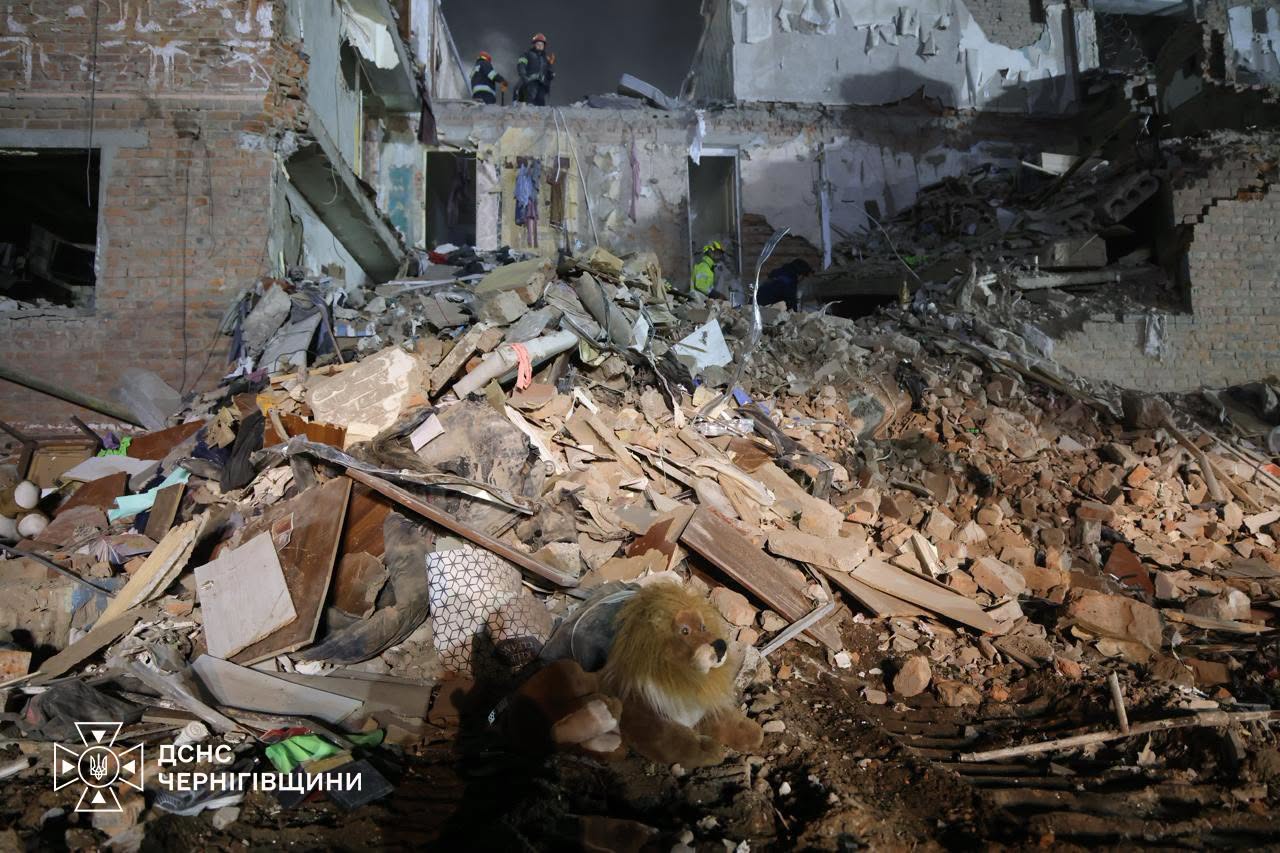
A Russian missile strike on an apartment building in Pryluky, a town in northern Ukraine's Chernihiv Oblast, killed 22 people on 7 October, regional police reported on the morning of 8 October. Five of the dead were children: three one-year-old boys, an eight-year-old boy, and a 13-year-old girl, police said.
Russian strikes on Pryluky, Kremenchuk, Oleksandriia, and Kyiv killed 28 people on 7 October, Interior Minister Ivan Vyhivskyi said. For the town, it was the second deadly missile strike since May. Behind the toll are families like this one: three generations hit by a single strike.
A family visit that ended under rubble
Three-year-old Zlatoslava is now in the Chernihiv Oblast children's hospital, Pryluky district police chief Vladyslav Stoianov told. Her mother, Kateryna, is hospitalized too. The two had come on the evening of 6 October to visit Kateryna's sister, police officer Yuliia Malysh. The girl's father stayed home in Lynovytsia, a village 15 km away.
Yuliia was wounded and is in hospital, Stoianov said. Her husband, Oleh Malysh, was killed. Until recently, Oleh had fought at the front in the Chernihiv Oblast police rifle battalion. The sisters' mother, Liudmyla, had also come over that evening, and she died too. All the family details come from Stoianov, who was describing a colleague's family.
Explore further
22 killed in Russian missile strike on Pryluky, including five children
Footage of an emergency worker carrying a little girl from the ruins reached almost all media, Vyhivskyi wrote in the same post. Suspilne first reported that the filmed rescuer had carried Zlatoslava. It then corrected itself: he had carried a different child, five-year-old Zoriana. Vyhivskyi also gives the girl's age as five, and he named the rescuer as State Emergency Service section commander Pavlo Levchenko. With colleagues, Levchenko freed the girl and her mother after the blast threw them out of the building.
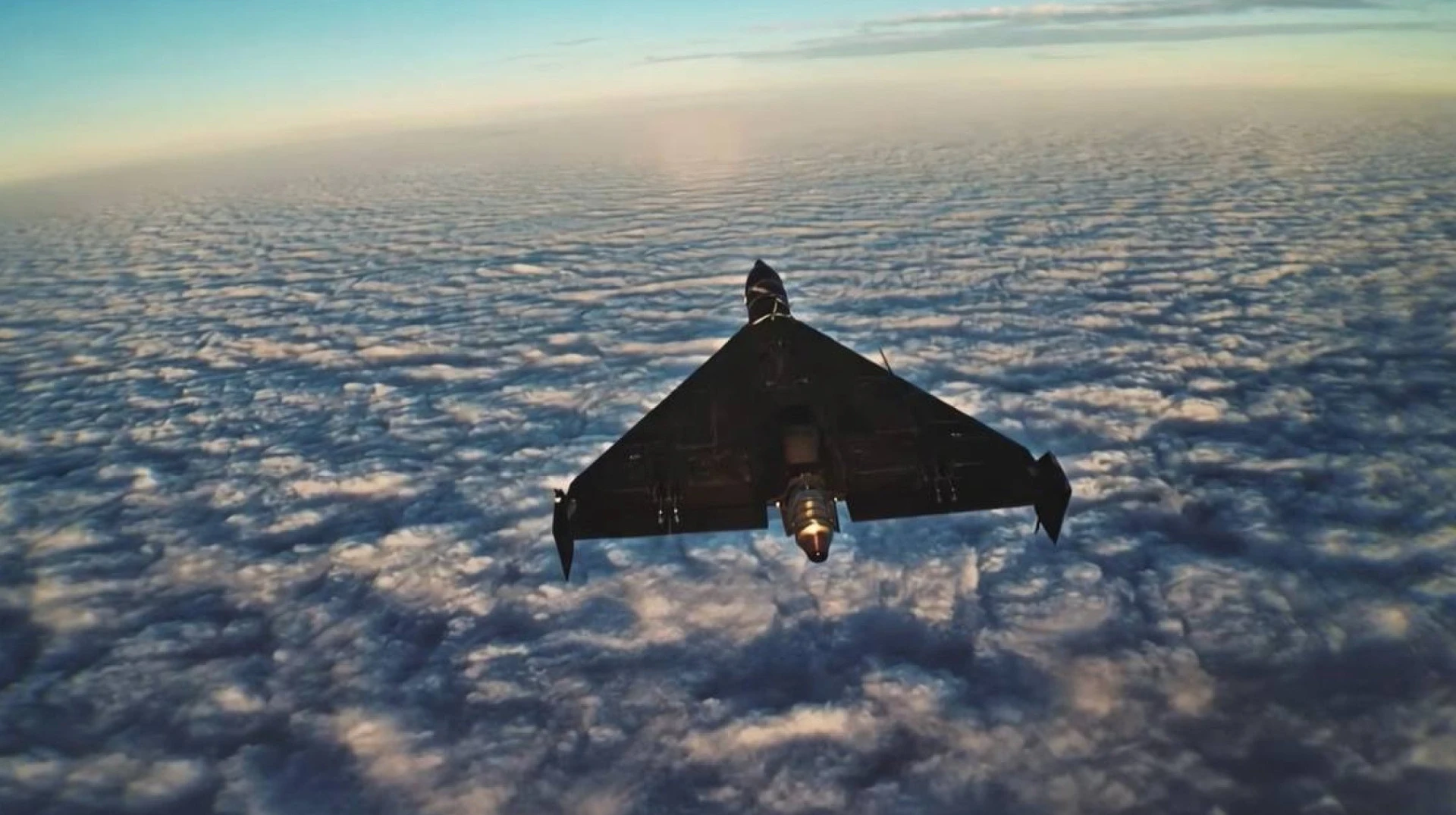
Russia is concentrating missiles on a smaller, more specific set of targets, and its jet-powered attack drones are part of the reason, the Institute for the Study of War (ISW) assessed. Its combined attack overnight on 7 October killed 22 people in Pryluky, the State Emergency Service (SES) said as of the morning of 8 October. Russian milbloggers noted the shift the same day.
Russia often uses concentrated drone and missile strikes to overwhelm localized Ukrainian air defenses and destroy urban centers, ISW noted. Pryluky, where the strike killed children, was one of the areas a Russian channel says drew a significant share of the Kh-101s that night. With winter close, ISW expects the same pattern against Ukraine's energy grid, with jet drones partly letting Russia keep its missiles for priority targets without firing many more.
Missile waves on a few areas, Russian channels claim
Russia launched 48 Kh-101, Iskander-K, and Kalibr cruise missiles overnight on 7 October, Ukraine's Air Force reported. It also fired ballistic missiles, Zircon and Oniks anti-ship missiles, and 130 strike and decoy drones, 46 of them jet-powered Shahed-type models.
Explore further
22 killed in Russian missile strike on Pryluky, including five children
Russian milbloggers claimed the same day that Moscow had grouped a large part of its missile salvo into repeated waves on a few areas, while other weapons kept stretching Ukraine's air defenses elsewhere. The pro-war Russian Telegram channel Dva Mayora described the change as a switch from striking with splayed fingers to a series of hits with missile "fists." Defenders must then absorb a sharply rising load around one chosen site as one wave follows another, the channel claimed.
Citing Ukrainian monitoring channels, it claimed that roughly 30 or more Kh-101 cruise missiles flew toward Pryluky, Kremenchuk, Svitlovodsk, and Oleksandriia in Chernihiv, Poltava, and Kirovohrad oblasts. It put the Kremenchuk group at up to 15 missiles, Kh-101s and Kalibrs among them, aimed at the area of Kremenchuk and its hydroelectric plant.
Jet drones take some of the load off Russia's missiles
ISW said the jet-powered versions penetrate Ukrainian air defenses deeper and more reliably than propeller models. In ISW's assessment, that partly lets Russia concentrate cruise and ballistic missiles on priority targets without significantly raising missile use. Russia builds about 3,000 Geran-4 and Geran-5 jet drones a month, Ukraine's military intelligence agency (HUR) told Militarnyi in August.
Explore further
Ukraine spent three years learning to catch Russian drones—so Russia made them fly faster
ISW expects Russia to apply the pattern in a likely brutal winter campaign against energy infrastructure. Russia likely intends to make city life untenable and force Ukraine to capitulate to its demands, ISW assessed. Such tactics have not worked before and are unlikely to work now, analysts added.
They called cheap countermeasures to jet drones and small cruise missiles vital, alongside Western air defense aid such as US-made Patriots, which can stop ballistic missiles. Ukraine has already paired a Soviet-era Kub launcher with American RIM-7 interceptors to catch jet drones.
The Conservative Party Conference was slick and professional, says Ellie Hodges, but Reform's conference, while more chaotic, had the kind of passion that you don't get from a fancy lanyard.

 Login