“The issue is, do we have another leader to replace Pedro Sánchez?”.
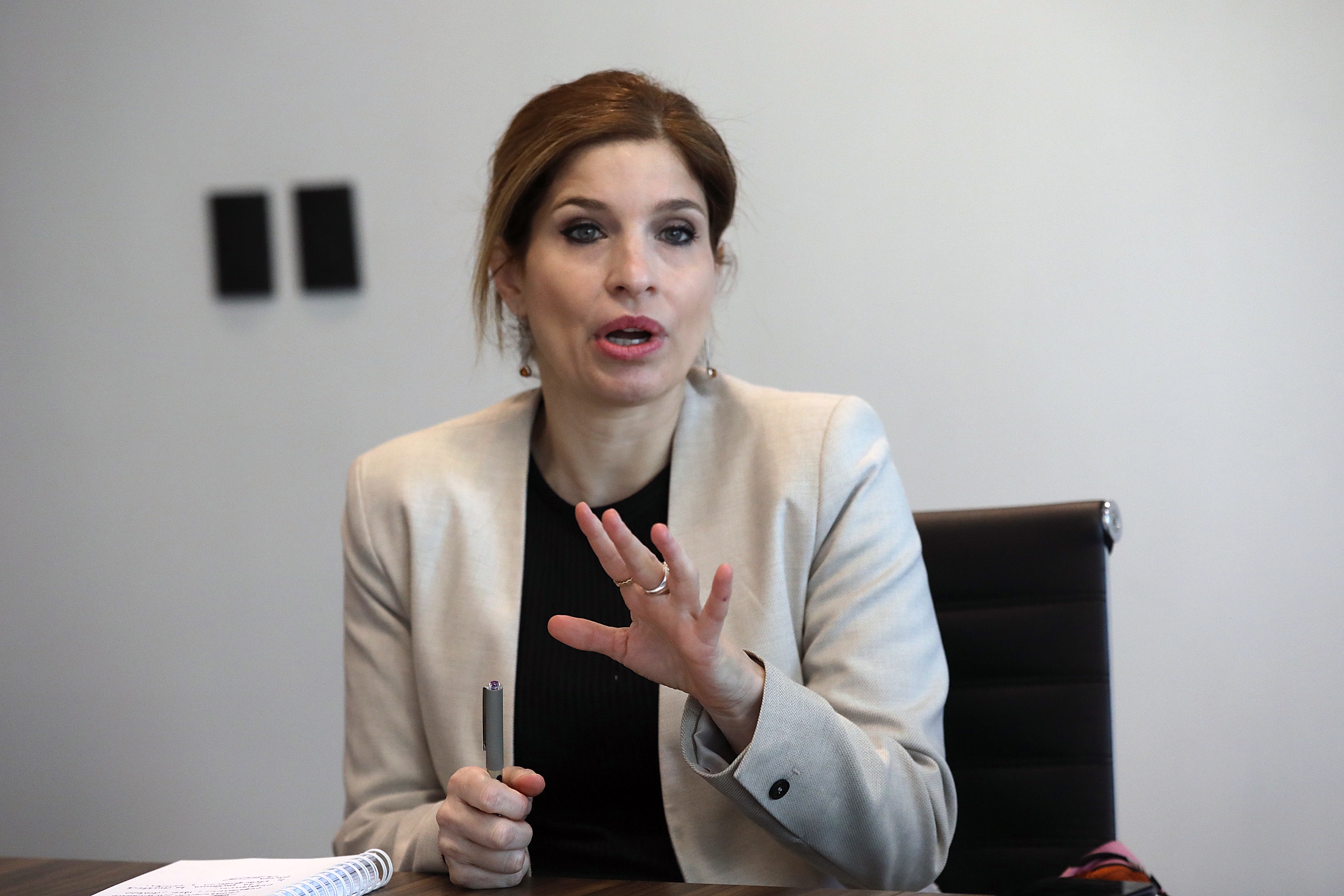
Former Spanish congresswoman Hana Jalloul Muro is among her prime minister’s closest allies in the European Parliament.
“It has not been an easy mandate. Every day is a survival day, all the challenges that prime minister Pedro Sánchez has faced have been unprecedented,” the Socialists and Democrats (S&D) MEP told EUobserver.
They had faced the Covid pandemic, a volcanic eruption in the Canary Islands in 2021, and the migrant crisis in the Ceuta enclave in north Africa in the summer of 2026, she said – not to mention the corruption allegations levelled at his close relatives.
Sánchez’ PSOE party is trailing behind the centre right people’s party (PP) in the polls, which is also growing closer allied to the increasingly successful far-right Vox party.
“These elections will pit two models against each other,” Jalloul said.
“On the one hand, a progressive government that defends public services, improves wages and pensions, expands rights and protects the social majority. And on the other, a model represented by the PP and Vox, which, wherever they govern, have opted for privatisations and policies that risk widening inequalities,” she said.
Ceuta-linked election
Jalloul, who spoke to EUobserver at the European Parliament (EP) in Brussels, used to lecture on international terrorism at the University of Madrid, before she became vice-chair of the EP’s foreign affairs committee.
And she recalled the heated debate on the Ceuta incident on 31 July, including accusations that Morocco had engineered it to gain leverage over Spain.
“This is a crisis that we could not expect,” she said.
But had there not been a “good relationship with Morocco, [we] would never be able to return 90 percent of the 70,000 people that came in less than 72 hours,” she added.
This article continues, but the full version is available only to EUobserver.com subscribers. Visit account.euobserver.com/membership
Nearly three decades after the Dayton Peace Agreement ended the war in Bosnia and Herzegovina, the country remains deeply divided along ethnic and political lines.
The agreement brought peace, but its complex political system has done little to overcome those divisions. Republika Srpska, the predominantly Serb entity, has pursued an increasingly divergent political course, while Serbia and Croatia maintain close ties with different parts of the country.
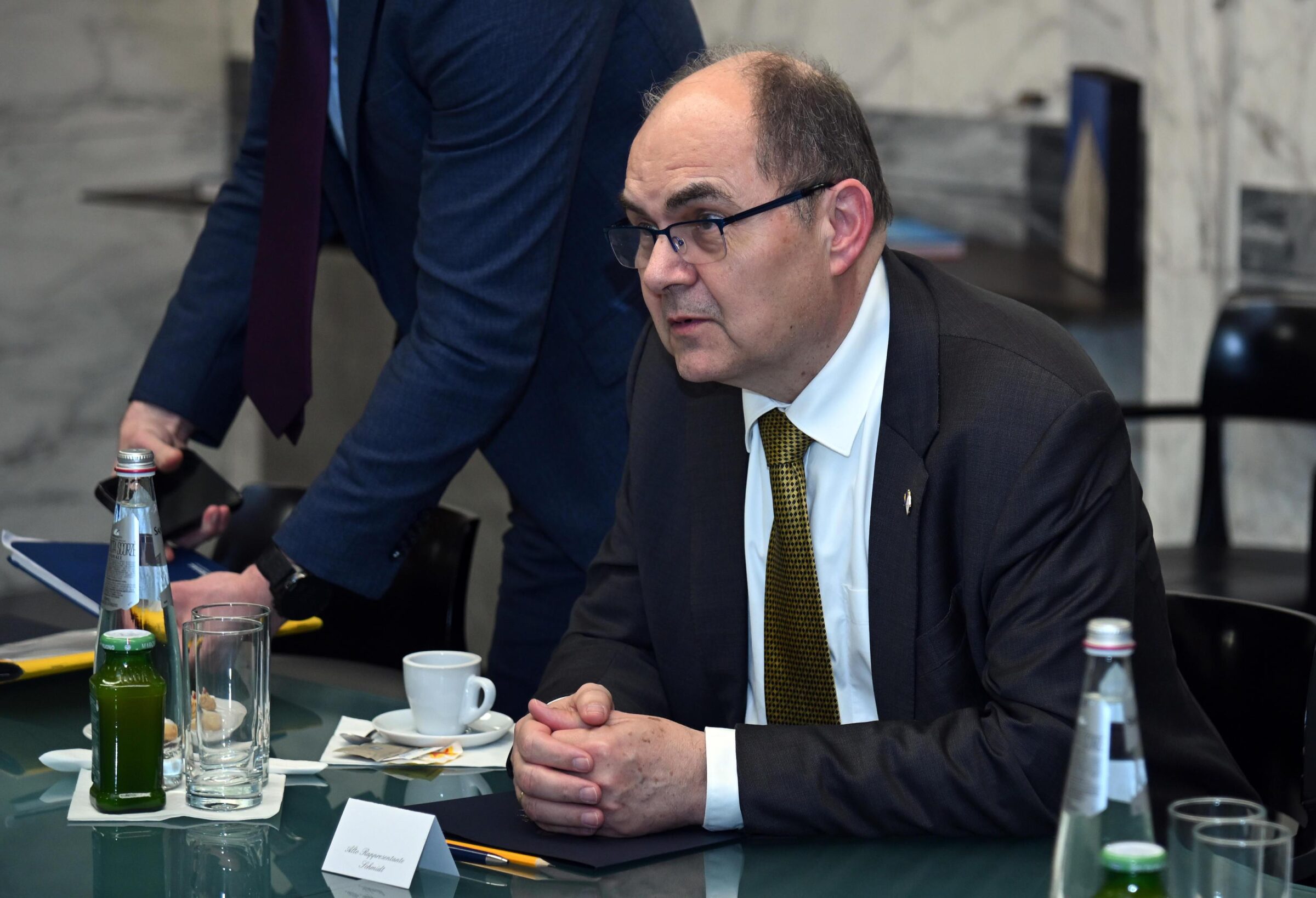
And for Christian Schmidt, the international community’s high representative for Bosnia and Herzegovina (2021-26) the main threat is no longer a return to war, but political stagnation and growing frustration.
He says that weak civic engagement, slow progress towards EU membership and the influence of Russia and neighbouring countries are reinforcing Bosnia’s divisions. Young people, he says, are increasingly responding by leaving the country.
In this interview, Schmidt discusses foreign influence, the EU’s role, the legacy of Dayton, and why Bosnia’s future may depend on whether it can build a stronger political community across its ethnic divisions.
A country that remains divided
You started your work in Bosnia and Herzegovina in 2021 and were there for five years. It was a period of major changes, with COVID and then the war in Ukraine. What were your experiences of these moments. How has the situation in Bosnia evolved?
I think there has not been sufficient involvement. Civil society in Bosnia and Herzegovina is not very strong. It is, more than just politically, somehow divided on political issues. This prevents a joint political position or commitment from civil society to make more progress in democratic development and European integration.
So far, I don’t see that this has changed very much. It has also not changed that some parties, especially the SNSD, [Serb nationalist Milorad] Dodik’s party, but honestly not only them, are counting on ethnic differences as an argument for supporting their party instead of having a multi-ethnic approach. One can be doubtful about their real pro-European commitment.
Russia and its influence
When civil society is not engaged and when countries are not politically stable, we know that they are prone to interference from other states or political entities. Is this being seen in Bosnia and Herzegovina?
It is evident that neighbouring countries, especially Serbia and Croatia, have a kind of preferred relationship with parts of the country. This is, by the way, also established in the General Framework Agreement for Peace in Bosnia and Herzegovina [also known as the Dayton Peace Agreement]. So it is not necessarily something that is not in line with Dayton [Agreement].
But there is beyond this more interference if I refer, for example, to Serbia’s reaction on the occasion of the United Nations General Assembly Resolution of 2024 about establishing an international day of commemoration for the Srebrenica genocide. There was a really remarkable attack against this, despite the fact that Serbia was not named in the resolution. There were only named individuals who had committed war crimes or genocide.
But it was used to create a “Pan-Serbian declaration”, which can be seen as a way of bringing cultural issues of the same ethnic group closer together. It has to be seen additionally as a tool to try to gain more political influence in the other part of the country.
You mentioned Croatia and Serbia. Is Russia also playing a role in these interferences?
Yes, but not ethnic interference. It is more through traditional good relations, especially with the Orthodox community, which is basically the Serb Orthodox community, where there are relations and a lot of activities, including in the media and on social media.
They [Russia] try to influence a part of Bosnia and Herzegovina, especially Banja Luka and Republika Srpska, and Dodik is somehow to act as an influencer for Russian interests. This is indeed the case. Dodik has been sitting together with [Russian president Vladimir] Putin for the 11th time since the beginning of the war in Ukraine. This is really remarkable.
How important is Bosnia and Herzegovina and Dodik for Russia and for Putin?
The economic and political-strategic importance is nearly zero. But it can be used as a way of distracting from European and somehow American activities, just by giving them a negative impact on everything. So this is more seen as a tool, rather than an area of influence.
EU— only accession talks?
Does the EU have a role in fighting such interference — Russian, but also the ethnic interference from Croatia and Serbia?
The ethnic relationships are within the framework of Dayton, and they are acceptable. But I think it is very important that the EU makes it clear that European integration is not based on ethnic differences, but on uniting in diversity.
This is something that is very complicated. You cannot do this only with programmes or money. I think these challenges are the typical issues that you can address through European commitment, but in the details, it has not delivered.
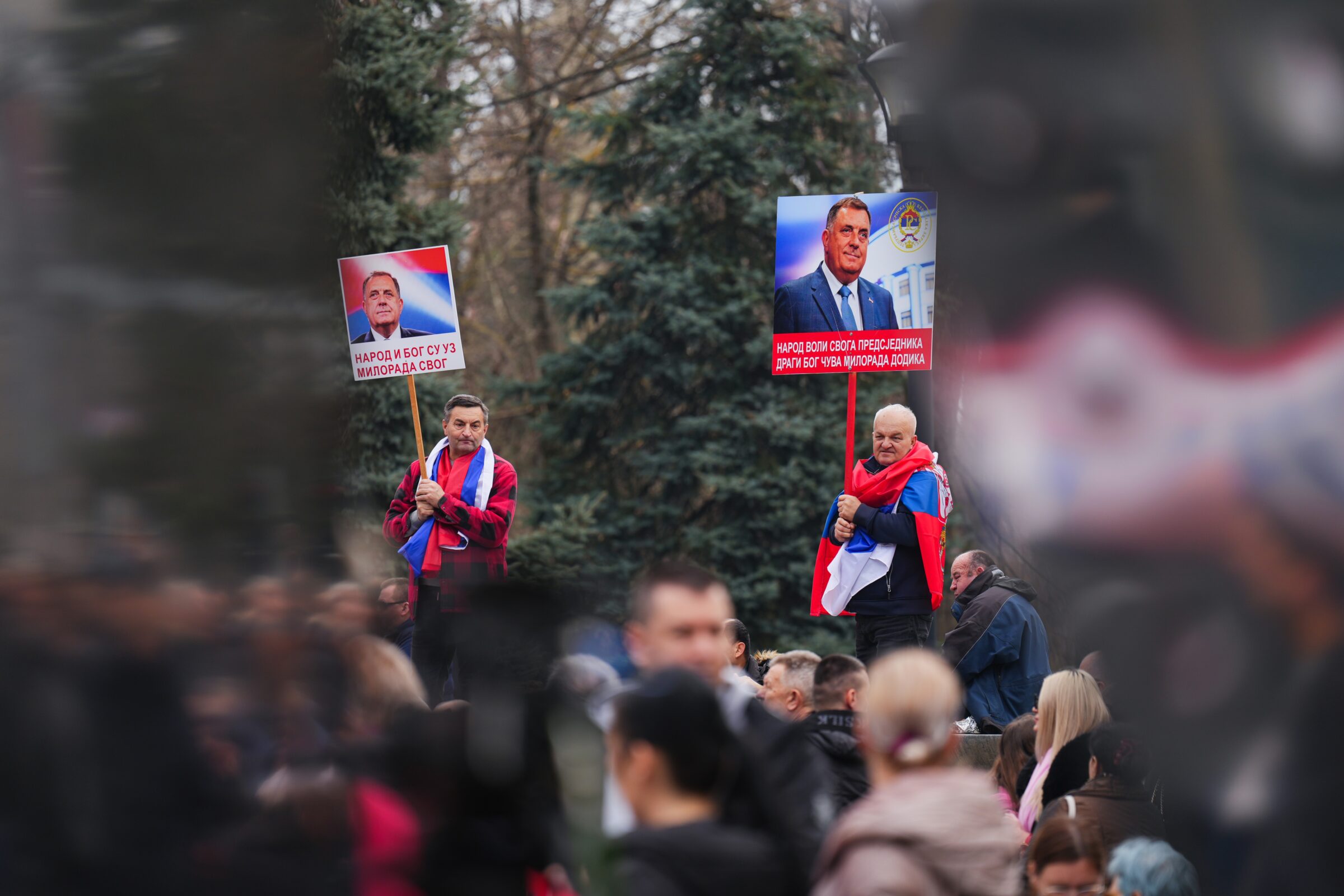
Milorad Dodik has a great support even as he has been sentenced to one year in prison and barred from public office for six years in a first-instance verdict for disobeying the decisions of Bosnia and Herzegovina’s international envoy, High Representative Christian Schmidt. Source: EPA/Nidal Saljic.
Unfortunately, maybe the European Union should sit down again and think about more tools and opportunities, especially addressing civil society, to give more attraction to the European idea.
How would that work?
This article continues, but the full version is available only to EUobserver.com subscribers. Visit account.euobserver.com/membership

 Login