
❌

Reading view

Von der Leyen pledges more cash for Egypt and Libya regimes to keep Sudanese genocide victims out of Europe

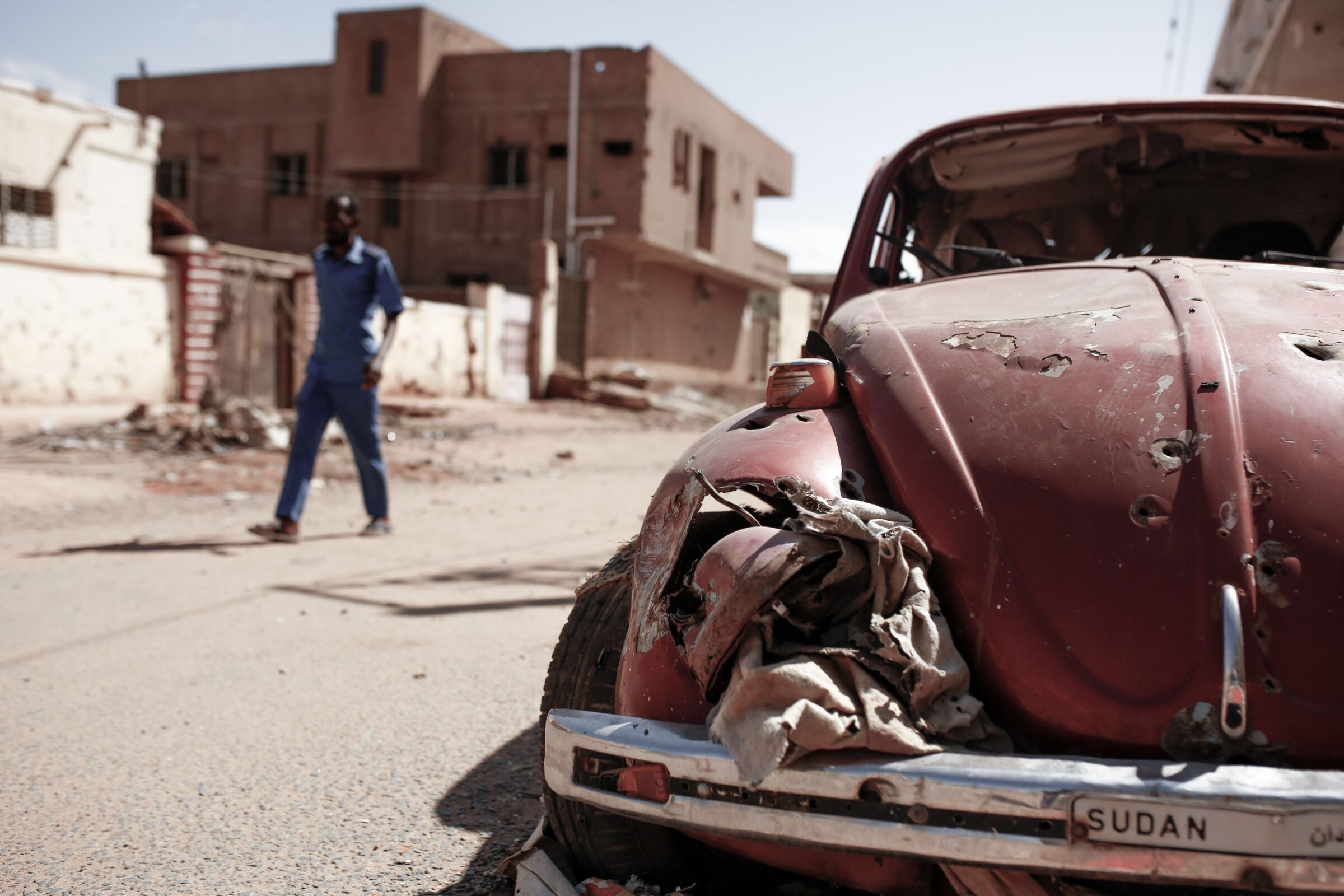
The European Commission is promising more support to Egypt, even as Egyptian warplanes reportedly bomb in Sudan and authorities carry out a campaign of violence against the refugees it hosts.

The civil war in Sudan includes reports of genocide, chemical-weapons use, mass rape, and starvation, forcing some 1.2 million Sudanese people into Egypt, which was described as a priority migration-busting partner by commission president Ursula von der Leyen on Tuesday (13 October), who also promised continuing support for Cairo.

In a letter sent to the 27 heads of state and government ahead of an EU summit on Thursday in Brussels, she spoke of “offering protection and durable solutions in … host countries”, as well as further aid for Sudanese people who had returned to parts of the country, now deemed relatively safe.

But her warm words stand in sharp contrast to internal EU documents on Sudan, released by the London-based group Statewatch earlier this month, and which speak of an Egyptian-led campaign of violence against the Sudanese it is tasked to help.

“The Egyptian authorities have continued arbitrary arrests, detention and deportation campaign against migrants, asylum seekers and refugees, with a sharp escalation of forced deportations being observed since January 2026,” said the Irish EU presidency, in an internal document written in September.

Estimates suggest Egypt hosts over nine million migrants and refugees.

Some 80 percent are Sudanese, Syrian, Yemeni, and Libyan nationals. Of those, just over 1 million are officially registered as refugees. Most come from Sudan.

And Egypt’s crackdown also comes amid a massive 74 percent funding cut for the UN’s refugee agency in the country, even as the EU’s financial support to Cairo increases, already totalling €5bn.

This article continues, but the full version is available only to EUobserver.com subscribers. Visit account.euobserver.com/membership
  •  

France, Greece, and Netherlands see steep fall in crisis-resilience, study finds

More than a third of people who receive warnings of disasters are unable to act before they strike, according to a global poll. Social resilience has fallen also in Poland, Greece, and France.

The findings, published by the Lloyd’s Register Foundation on Tuesday (13 October), drew on more than 143,000 interviews conducted by Gallup across 140 countries in 2025.

They show that an estimated 1.1 billion people – one in five adults worldwide – experienced a disaster in the previous five years.

Almost 220 million received no warning at all.

“A warning is only as good as what people are able to do with it,” said Nancy Hey, director of evidence and insight at Lloyd’s Register Foundation’s Global Safety Evidence Centre.

The gap between being warned and being able to respond is stark between rich and poor countries. Adults in low-income countries were almost twice as likely to have been affected by a disaster as those in high-income countries, at 31 percent compared with 16 percent.

Yet only 64 percent of affected adults in low-income countries received a warning, against 84 percent in high-income countries.

Even when warnings arrive, they do not guarantee safety.

The challenge is not simply to warn people when disaster approaches, but to ensure they have the means and support to act.

Fewer than half of warned adults in low- and lower-middle-income countries were able to act, compared with 71 percent in high-income countries.

Europe’s resilience is unequal

The report’s companion study, ‘A resilient life: How wellbeing shapes the capacity to cope’, pictures the preparedness to act under pressure — including in wealthier countries.

“There are some changes that are happening in Europe that I’m not seeing in other parts of the world,” Hey told EUobserver.

Across the EU, 77 percent of people affected by a disaster received a warning, compared with 80 percent globally.

But only 59 percent of those warned could act, against 64 percent worldwide and 71 percent in high-income countries.

“Some of the biggest drops globally have been in Greece, Netherlands, Estonia, and France, which is surprising given that generally that measure is going upwards,” Hey said.

Just 29 percent of EU households have a disaster plan, and only 28 percent of people think their national government is well prepared for a disaster.

Meanwhile, 44 percent say their government does not care about them at all, compared with 29 percent globally.

The differences between countries are stark.

In France, 80 percent of those affected received warnings, but only 61 percent could act. Just 22 percent of households have a disaster plan, compared with 47 percent in Germany and 60 percent in Austria. And overall, France’s social resilience has fallen six points since 2021.

Greece faces a deeper crisis of preparedness and confidence.

Only 55 percent of disaster-affected people received warnings, and just 39 percent of those warned could act. Only 12 percent believe their government is well prepared, while 70 percent say it does not care about them.

This article continues, but the full version is available only to EUobserver.com subscribers. Visit account.euobserver.com/membership

  •  
❌