❌

Reading view

Ukraine’s 3rd Army Corps took the lessons of the failed 2023 counteroffensive into Operation Vivaldi. It fought small, and won.

3rd Army Corps.

  • Ukraine's Operation Vivaldi has succeeded because ground commanders thought small instead of big
  • Rather than hoping for a major breakthrough, they fought incrementally and with heavy support from the air
  • Contrast Operation Vivaldi's small but successful thinking with the big thinking of Ukraine's failed 2023 counteroffensive

Five months after launching Operation Vivaldi, a local counteroffensive in northern Donetsk Oblast, the Ukrainian 3rd Army Corps has eliminated the Russian bridgehead on its most important long-term objective: the Zherebets River, which flows south through eastern Ukraine and forms a natural defensive barrier east of the last big free cities in Donetsk: Sloviansk and Kramatorsk.

Attacking methodically under strict secrecy, the 3rd Army Corps has pushed back the Russian 20th and 25th Combined Arms Armies and returned 176 sq km of northern Donetsk to Ukrainian control as of 30 September, according to Ukraine's presidential office. The figure could not be independently verified. Operation Vivaldi netted the Ukrainians hundreds of Russian prisoners and erased 18 months of Russian advances toward Sloviansk.

"Ukrainian forces have defeated the 2026 Russian campaign to seize Donetsk Oblast," the Institute for the Study of War in Washington concluded.

It's a remarkable feat for the overall outgunned and outmanned Ukrainian forces. Equally remarkably, the Ukrainians deftly dodged several potentially fatal traps as they flanked the 20th and 25th CAAs. They didn't get stuck in the Russians' dense minefields. They didn't expose themselves to devastating air attack. Perhaps most importantly, they didn't set their sights on distant objectives. They thought small instead of big, stacking small gains on top of small gains until those wins amounted to a big victory.

3rd Army Corps troops disembark from an armored vehicle.
Explore further

Armored assaults aren’t dead. Robots got the credit, but it was Ukrainian infantry in armored trucks that reversed a year of Russian gains near Lyman

A trio of US Army officers—Col. Timothy Price, Capt. Patrick Visser, and Capt. Andrew Carter—described this achievement in academic terms. The corps' defeat of the Russian bridgehead on the Zherebets "had little to do with maneuver warfare," the officers wrote for the Modern War Institute at the US Military Academy in West Point, New York.

In military parlance, "maneuver" generally involves heavy ground forces supported by air strikes and artillery decisively breaking through enemy lines and then rushing vehicles and troops into the panicking enemy's unguarded rear area to quickly inflict maximal destruction and achieve maximal territorial gains.

That's not what the 3rd Army Corps did in its five-month—and ongoing—counteroffensive. No, the Ukrainians "won through systematic, geometric interdiction and positional pressure," Price, Visser, and Carter wrote. Put plainly, the corps carefully probed for tree-covered assault lanes toward key settlements, deployed unmanned ground vehicles to clear mines and explode the most important nearby Russian strongpoints, and then rushed in armored vehicles carrying infantry.

Map of settlements Ukraine's 3rd Army Corps says it liberated north of Lyman, as of 28 September 2026.
Settlements Ukraine's 3rd Army Corps says it liberated during Operation Vivaldi north of Lyman, Donetsk Oblast, Ukraine, as of 28 September 2026. Map: ISW

They marched step by step, incrementally liberating a kilometer at a time instead of running a marathon toward a major objective tens of kilometers away. In that way, Operation Vivaldi is the very opposite of Ukraine's failed 2023 summer counteroffensive, which massed tanks for what commanders hoped would be a decisive breakthrough around the village of Mala Tokmachka in southern Ukraine's Zaporizhzhia Oblast.

The objective at that time was to break into the Russian rear and speed tanks 80 km to the occupied city of Melitopol near the Sea of Azov. That never happened. The Ukrainians got mired in minefields around Mala Tokmachka, suffered badly from Russian air attacks, and, after a grueling season of costly attacks, lost momentum just 10 km south of Mala Tokmachka. Later Russian counterattacks erased even those modest Ukrainian gains.
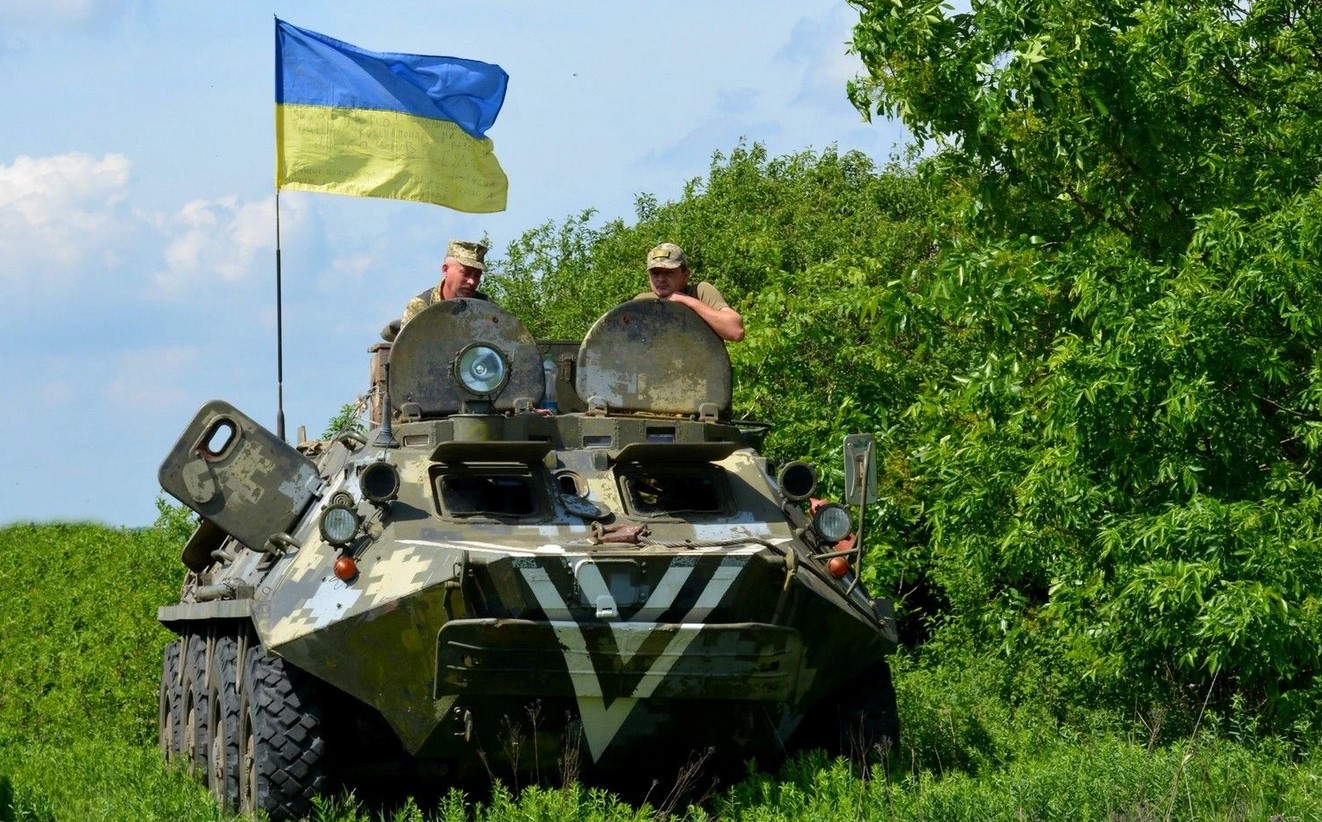
A BTR-60B. Source: Ukraine's Ministry of Defense.
Explore further

In Ukraine’s Vivaldi offensive, nobody rides in the BTR-60s. Bulgaria’s old troop carriers go into Russian bunkers packed with mines

Old thinking versus new

The planners of the failed 2023 counteroffensive were stuck in an old way of thinking about maneuver warfare. The planners of the successful 2026 counteroffensive shrugged off obsolete ideas. They thought smaller—and, ironically, achieved much more as a result.

The 3rd Army Corps couldn't, and didn't, do it alone. Indeed, the corps depended on the Ukrainian Unmanned Systems Forces to fray the Russians' supply lines, electronic warfare teams to jam Russian drones, and the Ukrainian air force to bomb Russian drone operators the EW teams couldn't suppress. By contrast, the Ukrainian forces attacking south from Mala Tokmachka in 2023 did so without much aerial support.

The aerial and electronic preparation was a prerequisite for each of the 3rd Army Corps' incremental advances this spring and summer. The lesson, the officers argue, is that "higher headquarters must degrade key enemy capabilities" before a smaller ground formation can expect to gain ground and keep it. If the support falters, the ground forces won't be able to hold.

Think small. Prepare hard. Now that the Ukrainians know this is how to win on the ground, can they repeat Operation Vivaldi's success?

There's some evidence they're already doing so in the southeast, where a clutch of Ukrainian air assault brigades has been pushing back the Russian 29th Combined Arms Army.

  •  

🔴 BURRO E CANNONI | LEVANTE LIVE

Per ottenere da Bruxelles il permesso di indebitarsi, l’Italia accetta di spendere 7,2 miliardi l’anno in armi: le tutele sociali di lavoratori e ceto medio sono ormai subordinate all’acquisto di sistemi d’arma. 🎙 A Levante questa sera, martedì 13 ottobre 2026, Margherita Furlan dialoga con Alessandro Volpi, storico ed economista, e Paolo Borgognone, saggista e storico delle idee, sulla Legge di Bilancio 2027 e sul prezzo, politico ed economico, che il Paese paga per farla quadrare. 💣 La manovra da 30 miliardi regge su una clausola di salvaguardia per un extradeficit dello 0,6% del PIL: oltre 14 miliardi l’anno di nuovi BTP, con l’obbligo di destinarne metà al riarmo. Il debito per le armi diventa il lasciapassare contabile per non tagliare sanità e pensioni. 🌍 Intanto il debito pubblico e privato globale ha toccato i 370 mila miliardi di dollari, mentre il 5% della popolazione detiene quasi 300 mila miliardi di ricchezza. Chi dovrebbe pagare la montagna debitoria? ☢ In Italia sono in corso le esercitazioni NATO, compresa quella nucleare, senza un passaggio parlamentare. Che cosa significa ospitarle nella stessa settimana in cui si vota una manovra che finanzia la difesa a debito? ⛽ E mentre l’Europa si indebita per prepararsi alla guerra con Mosca, dopo la telefonata tra Putin e Trump il gasolio russo torna a scorrere verso gli Stati Uniti. Chi decide il riarmo non è chi lo paga. 🧭 Affrontiamo insieme: 🔹 I numeri veri della Legge di Bilancio 2027 e il gioco di prestigio contabile dell’extradeficit 🔹 Da «burro o cannoni» ad «armi a pranzo»: quando il riarmo smette di essere un’alternativa e diventa una condizione 🔹 La spesa per interessi verso il 4,6% del PIL e la spirale che divora gli spazi fiscali 🔹 Il 5% che possiede il mondo e la tassazione che nessun governo osa proporre 🔹 Le esercitazioni NATO in Italia e la sovranità sottratta 🔹 Il gasolio di Putin a Trump: multipolarismo o condominio tra potenze? 📚 LIBRI DEGLI OSPITI 📕 Alessandro Volpi, La finanza è colpevole, Laterza, 2026 📕 Alessandro Volpi, I padroni del mondo. Come i fondi finanziari stanno distruggendo il mercato e la democrazia, Laterza, 2024 📕 Alessandro Volpi, Nelle mani dei fondi, Altreconomia, 2023 📘 Paolo Borgognone, Generazione Erasmus, Zambon, 2018 📘 Paolo Borgognone, Deplorevoli? Rappresentazioni dei ceti popolari in Occidente, Zambon, 2017 📘 Paolo Borgognone, Capire la Russia, Zambon, 2016 🎯 SOSTIENI CASA DEL SOLE TV 🗞 Casa del Sole TV è un progetto di giornalismo indipendente, autofinanziato da sei anni, senza editori e senza partiti. 💶 Per donazioni: 🏦 IBAN: IT63P0326822300052392596590 👤 Intestato a: La Casa del Sole Edizioni ✍ Causale: Donazione Casa del Sole TV ⭐ Membership YouTube: 👉    / @casadelsoletvchannel   🔸 Analista Multipolare €5/mese 🔸 Inviato della Verità €15/mese 🔸 Architetto del Futuro €25/mese 📖 I LIBRI DI MARGHERITA FURLAN ♟ BRICS Scacco Matto (disponibile in italiano, inglese, russo) 🌐 SEGUI CASA DEL SOLE TV ▶ YouTube: @CasadelSoleTVChannel #Levante #CasadelSoleTV #MargheritaFurlan #Geopolitica #Multipolarismo #AlessandroVolpi #PaoloBorgognone #LeggeDiBilancio #Riarmo #NATO #DebitoPubblico #Manovra2027

L'articolo 🔴 BURRO E CANNONI | LEVANTE LIVE proviene da Casa del Sole TV.

  •  

Trump’s Dubious Claim About the Ilhan Omar Search

This is an edition of The Atlantic Daily, a newsletter that guides you through the biggest stories of the day, helps you discover new ideas, and recommends the best in culture. Sign up for it here.

Donald Trump is the quantum president: simultaneously all-powerful and also a wee, innocent figurehead, blithely unaware of what his aides are doing.

The first Trump, the one who declares that he “alone can fix it,” was in the Oval Office last week, asserting his unfettered power to persecute his political opponents. “I could have done very bad things to Hillary Clinton. I could have done very, very bad things to Joe Biden. I could have done very bad things to Barack Hussein Obama,” he said. “I can do whatever I want, if I want.” But after federal law enforcement conducted a search at the Washington, D.C., home of Representative Ilhan Omar, the Minnesota Democrat, yesterday morning, Trump insisted he was completely uninvolved.

Without more information, the search—conducted by agents from Homeland Security Investigations, a division of ICE that handles complicated probes—is deeply troubling. The Trump administration has deployed a series of probes, searches, and indictments, many of which are plainly pretextual or political, against outspoken critics. (This is a crucial distinction from an August 2022 search at Mar-a-Lago, which yielded many boxes of highly sensitive material, haphazardly stored.) Black women, including Representative LaMonica McIver of New Jersey, New York Attorney General Letitia James, and Federal Reserve Governor Lisa Cook, have been particular but not exclusive targets. The search also breaks a norm against public action in highly political cases in the 60 days before an election. Attempts to intimidate or criminalize an opposition party are hallmarks of authoritarianism.

There is much about the search that we do not know, including what evidence was used to obtain the warrant (though The New York Times reports it “was the subject of significant back and forth between prosecutors and the federal judge who eventually approved it”); what agents might have found; and what charges, if any, the government might be contemplating. Some reporting states that prosecutors are exploring whether Omar’s late father lied or made omissions on immigration applications. (The administration has focused on trying to strip citizenship from people who gave false responses on applications.) The congresswoman came to the United States as a child and became a naturalized citizen at 17.

To hear Trump tell it, he also knows little about the probe. “I think she’s a terrible person, but that’s really up to the DOJ,” Trump said yesterday. “I have nothing to do with it.” (The Department of Justice told the Times that the search was part of an ongoing investigation but declined to comment further.) This is a pattern I previously identified: When faced with difficult questions or strong pushback, the president tends to insist that the lawyers are in charge and he’s not apprised of what’s going on.

But his claim is hard to believe. Trump has repeatedly said that he has a “right” to direct federal prosecutors to investigate whomever he wishes, and although he generally insists that he has not done so, evidence suggests otherwise. Last September, Trump posted on Truth Social instructing then–Attorney General Pam Bondi to take action against critics, including James, former FBI Director James Comey, and Senator Adam Schiff. “We can’t delay any longer, it’s killing our reputation and credibility. They impeached me twice, and indicted me (5 times!), OVER NOTHING. JUSTICE MUST BE SERVED, NOW!!!” he wrote. Several news outlets later reported that the missive was intended as a private message. Bondi was removed this spring, reportedly because of Trump’s frustration that his attempts at retribution were moving too slowly.

In February, FBI agents searched an election center in Fulton County, Georgia, in pursuit of evidence for Trump’s assertion that the 2020 presidential election was stolen. (Their warrant was largely based on debunked claims.) The following day, Trump spoke directly to some of the agents involved, an extraordinary intervention.

Comey was ultimately charged with threatening the president, after he posted a photograph of shells he found on a beach that read 86 47, a set of numbers that supporters have said connotes wanting to remove Trump from office. DOJ has insisted the post was a threat of violence (which Comey has denied). Documents released by Comey’s lawyers this summer show that Trump was closely involved in the case, demanding briefings and notes from interviews with Comey prior to his indictment.

Adding to the impression that the Omar case is a White House effort, Katie Miller, the former Trump aide and the wife of Stephen Miller, posted about the story on X yesterday, saying, “Promise made, promise kept.” She later deleted the post.

But even if Trump is not personally engaged, he has made clear through his statements that he wants Omar investigated and punished. In 2019, he suggested that members of the progressive “Squad,” which included Omar, should “go back and help fix the totally broken and crime infested places from which they came.” A few days later, after he criticized Omar at a rally, he watched as a crowd chanted, “Send her back!” In December, he called Omar “garbage” and said that Somalis should leave the U.S.: “Their country stinks, and we don’t want them in our country.” The next month, when Omar was attacked at an event, Trump accused her of setting it up. This March, Vice President Vance told an interviewer, “We actually think that Ilhan Omar definitely committed immigration fraud.” The message from the White House is clear enough to make King Henry II blush.

If Trump is as engaged in prosecutions of his political opponents as public evidence indicates, then his behavior is inappropriate and damaging to the rule of law. If, however, he truly knows nothing about what’s going on, then he’s not the heroic, powerful leader he claims to be. Which would he prefer the public conclude?

Related:

© Andrew Leyden / Getty

  •  

Protected areas are not for mining: Interview with WWF’s Nadège Nzoyem

“Protected areas are protected areas,” says Nadège Nzoyem, WWF’s regional director for the Congo Basin. For her, mining has no place in landscapes that governments have committed to conserve. Yet keeping extractive industries out and ensuring effective protection remain major challenges across the region. A recent analysis by U.S.-based Earth Insight highlights the conflict between conservation commitments and extractive interests. Across the tropical countries examined, the report says, oil and gas blocks overlap across nearly 62 million hectares (153 million acres) of protected and conserved areas. Mining concessions overlap with another 43 million hectares (106 million acres). In the Congo Basin, 29% of identified terrestrial Key Biodiversity Areas remain unprotected. The findings raise questions about where protection is needed and how effective it is against industrial pressures. WWF’s “Living Planet Report 2026” adds to those concerns. It reports an average 80% decline in monitored wildlife population sizes across Africa between 1970 and 2022. The figure is continent-wide, not specific to the Congo Basin. Next week, the global community will meet for the biodiversity COP17 in Armenia, where the urgency of meeting the global 30×30 target puts protected areas under greater scrutiny. Conserving 30% of land and waters by 2030 means more than drawing boundaries, the Earth Insight report argues. It requires effective management, equitable governance, and respect for Indigenous peoples’ and local communities’ rights. Semi-industrial mining at Muchacha along the Ituri River, in the southwestern sector of Okapi Wildlife Reserve in the DRC, has caused deforestation and contamination of water…This article was originally published on Mongabay

  •  

Chinook salmon return to historical habitat following removal of four US dams

The Klamath River in the U.S. was heavily dammed over the 20th century, blocking spawning Chinook salmon. As a result, the population of salmon that spawned in the river, which runs through Southern Oregon and Northern California, declined by roughly 90%. However, a recent study found that removing the dams resulted in a quick return of the fish to the river. In 2024, four dams were removed from the Klamath, allowing Chinook salmon (Oncorhynchus tshawytscha) to recolonize habitat that had been unavailable to them for roughly a century. Shortly after the dams were removed, 7,742 Chinook salmon migrated up the Klamath River past the former dams. In 2025, that number jumped to more than 13,000. The fish expanded into 345 kilometers (214 miles) of formerly blocked river, recolonizing 88% of their known historical habitat, the study found. First author of the study Damon Goodman told Mongabay in an email that they expected the Chinook to return to the river but didn’t know how long it would take. “What surprised us was the speed and scale of their response – it felt like we were running to keep up with the fish! These fish navigated challenging rapids, engineered fishways, and a large lake to reach habitats that had been inaccessible for more than a century.” Goodman and colleagues employed a specialized underwater sonar camera that uses sound waves instead of light to produce moving images of fish swimming through the river. “Think of it as an underwater video camera that can…This article was originally published on Mongabay

  •  
❌