Two people critically hurt when vehicle carrying HGV drivers hit stationary train in Calais, say French authorities
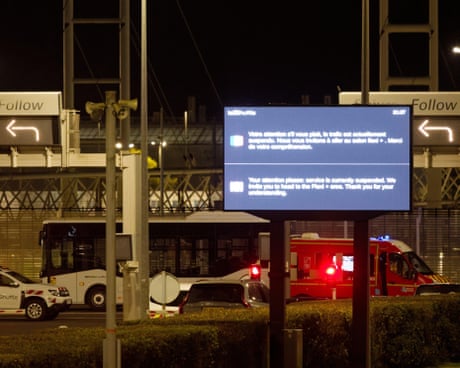
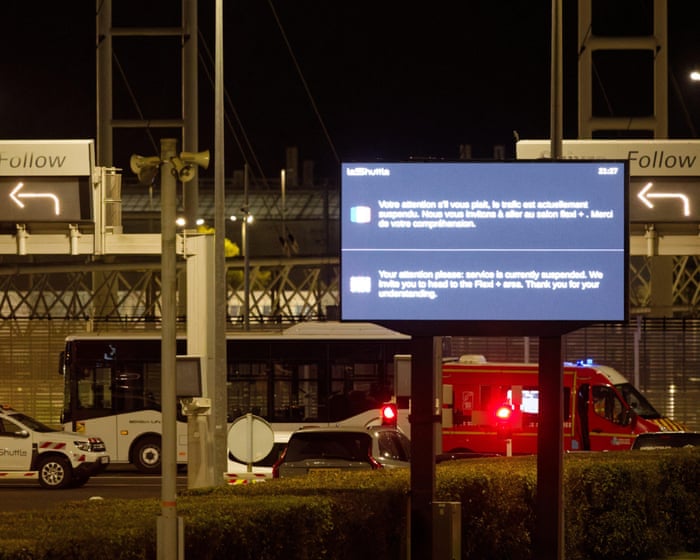
Nineteen people have been injured after a minibus collided with a stationary freight train at the loading platform of the Eurotunnel near Calais, French authorities have said.
Pas-de-Calais underprefect Agathe Cury said 18 passengers and the bus driver were injured in the incident.
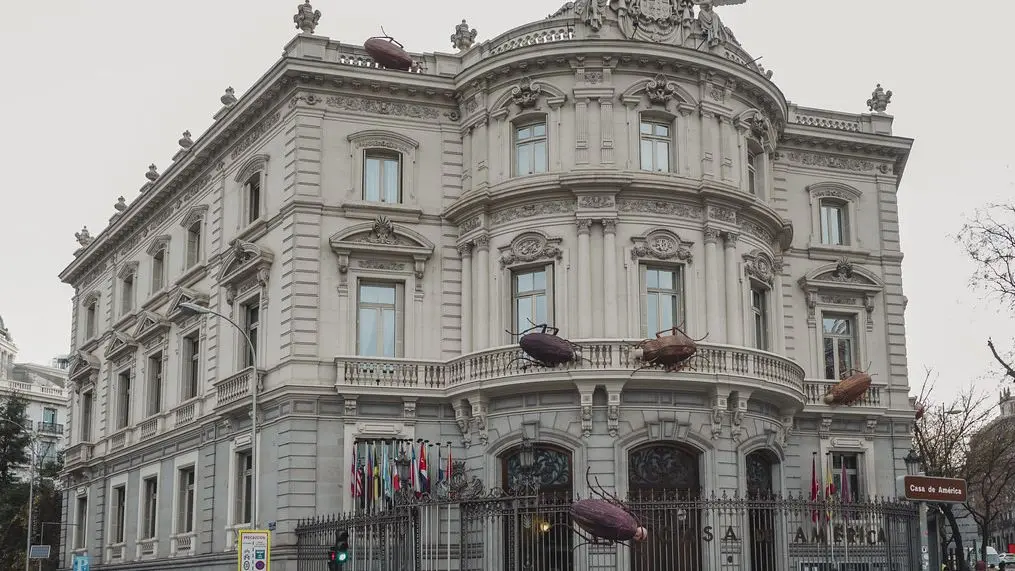
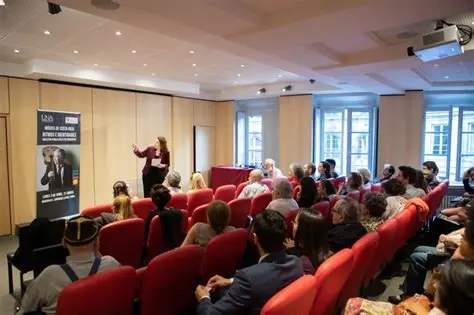
The Maison de l’Amérique Latine (MAL) celebrated its 80th anniversary this Thursday against a backdrop of uncertainty: the Bank of France has put up for sale the two 18th-century mansions that have housed the institution since 1965, with a valuation of 100 million euros.
The 6,791-square-meter property consists of the hôtels particuliers of Varengeville and Amelot de Gournay, located on Boulevard Saint-Germain in the heart of Paris. The bidding process could be concluded before the end of 2026, and the future buyer will be under no obligation to maintain the MAL’s cultural activities at the site.
According to reports from French media, potential interested parties include businessman Xavier Niel and Bernard Arnault, owner of the LVMH group.
Several Latin American embassies in France have launched a public petition to ensure that the Latin America House does not cease its operations. The diplomatic missions emphasized that the institution is particularly vital for smaller embassies, which lack the resources to organize exhibitions or cultural events in a city with such high real estate costs.
Mexico’s Ambassador to France, Blanca Jiménez Cisneros, and Panama’s representative, Joanna Villarreal, attended the event commemorating the MAL’s 80th anniversary.
The petition has garnered over 25,000 signatures, including those of former Chilean President Michelle Bachelet and former French Prime Ministers Dominique de Villepin, Bernard Cazeneuve, and Jean-Marc Ayrault.
“It would be a tragedy for the institution to disappear in the very year we mark our 80th anniversary. We will fight until the end,” stated the institution’s president, Jean-Marc Laforêt. Cultural and Diplomatic Space
Founded in 1946 on the initiative of then-French President Charles de Gaulle, the House of Latin America (in spanish Casa de América Latina) was established in recognition of the support provided by Latin America and the Caribbean to Free France during the Second World War.
For eight decades, the institution has served as a meeting point between France and the region, hosting exhibitions, conferences, and cultural activities. Among the notable figures it has welcomed are former Bolivian President Evo Morales and Commander Hugo Chávez.
Former French ambassador Alain Rouquié, the long-standing president of the House of Latin America (in spanish Casa de América Latina), has championed the entity’s autonomous and independent nature. He noted that while the institution receives public funding from the Ministry of Foreign Affairs, its primary source of revenue comes from renting out the rooms within its historic mansions.
“We have sought to remain free, and that has required significant effort,” stated Rouquié, who considers it essential to remain in the current premises and maintain the model of renting out space to ensure the institution’s continuity.
Rouquié reported that the Bank of France has been attempting for 23 years to evict the institution from the premises it has occupied since 1965. He recalled that in 2003, the then-president Jacques Chirac intervened to halt a sale, requesting that Foreign Minister Dominique de Villepin stop the transaction.
Latin American art specialist Christine Frérot compared the situation of the MAL (Latin American House) to that of the Arab World Institute, which receives greater support from public funds. According to 2025 data from the Ministry of Foreign Affairs, the Latin American House receives an annual subsidy of 25,000 euros.
Former French-Argentine deputy Paula Forteza, founder of the collective Artivistas, linked the defense of the institution to the international political climate. “As the far-right grows globally, spaces like this become especially important,” she stated.
Bolivian visual artist Kenia Almaraz Murillo also voiced her support for the continued existence of this cultural space, joining Frérot and other prominent figures from the artistic and diplomatic spheres.
Blockades Continue at Schools Across France Ahead of Third Meeting with Education Ministry.
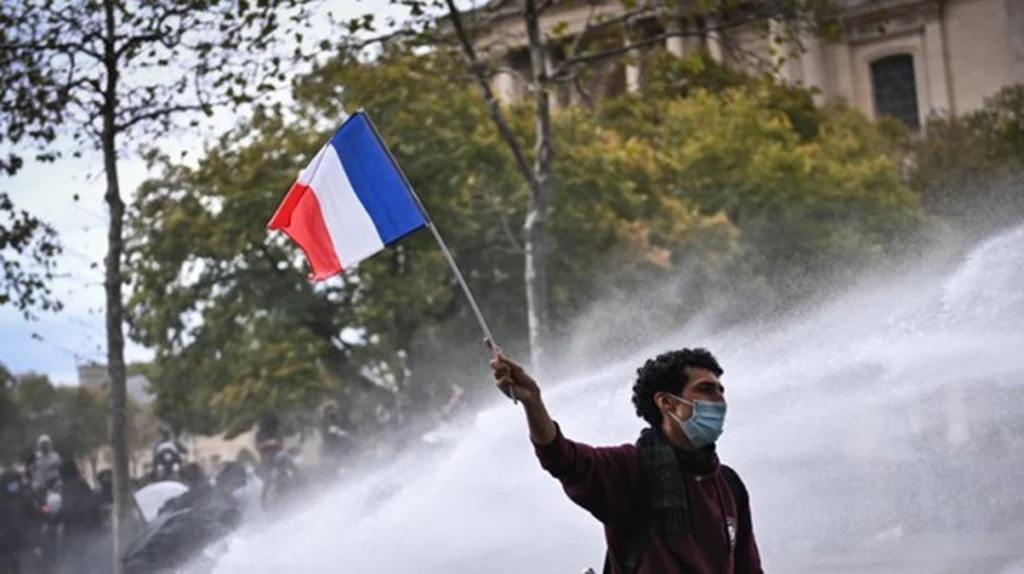
On Thursday, thousands of French people continued protesting and blocking educational centers just hours before student organizations hold a new meeting with the Education Ministry, the third since the start of the protests more than two weeks ago.
Among the blocked institutions is the Paris School of Commerce (HEC), a symbolic place in these protests given that it is one of the most elitist and prestigious institutions in France.
This action shows its solidarity with the student movement, on the eve of a major day of demonstration scheduled for this Saturday, which will be joined by other movements related to the protest over the rising cost of living or agricultural demands. Some French media have described this expression of unity among social groups as a resurgence of the “yellow vests.”
So far, over 1,000 demonstrations are expected to take place across the country on the first day of the two-week “All Saints” school holidays, a date on which President Emmanuel Macron’s government hoped the protests would ease.
"When you see that 98% of news channels' airtime is devoted to burning rubbish bins and only 2% to our demands, of course it makes us angry!”
Thousands of students, teachers, and supporters rallied in Nantes on Tuesday to demand more funding for public education.
On Thursday morning, HEC directors closed their offices to mark their exasperation with the current situation and with the attacks suffered by some teachers. Meanwhile, the Macron administration is trying to control the student protest through negotiations.
Initially, the French government announced the deployment of 3,000 additional teachers, of whom 2,000 are already in their posts, to try to alleviate the teacher shortage, one of the most widespread demands among high school students.
Education Minister Edouard Geffray will receive the student organizations this afternoon for a third meeting, although the French are skeptical of achieving positive results.
“We will go to the meeting with little hope; the Education Ministry is not responding to our demands. We want to meet with the prime minister, who is the one who appears to have budgetary room,” said the vice president of the ‘Les Lyceens!’ union, Louis Letoubon.
🇫🇷Interesting Footage from France captures the moment a brave French student single-handedly takes on a dozen French riot police. This is the kind of spirit that can bring the cowardly French riot police to their knees; imagine if you had a hundred guys like this leading a… pic.twitter.com/9AsCpFT1aD
There Is a Moment of Fatigue in the Country: Lecornu
As expected, the calls for dialogue have been accompanied by attempts to delegitimize the social protest. Prime Minister Sebastien Lecornu lashed out against the students while symbolically defending “the right” of citizens to peacefully express their discontent.
“This no longer seems like a student movement. We are facing an urban violence movement,” declared Lecornu, who admitted that the intensity of the protests has increased in Paris, Creteil, and Lyon.
The prime minister denounced the firing of pyrotechnic mortars from the street against high schools or “absolutely horrifying calls to violence.” According to him, around 200 of the country’s 3,700 high schools are experiencing episodes of “entrenched” violence, sometimes carried out by people outside the centers.
“We must clearly distinguish between urban violence and legitimate demands,” said the prime minister, who expressed his fear of new disturbances on Saturday during the demonstrations called against the cost of living, in which the Yellow Vests could be present again.
Lunettes étanches, eau, masque FFP2 : France 3 Alsace publie un tuto pour se protéger des lacrymogènes avant les manifestations lycéennes. Les interna… https://t.co/qdgyr3eFAZpic.twitter.com/iWBVkbQd57
The text reads, “Waterproof goggles, water, FFP2 mask. France 3 Alsace publishes a tutorial on how to protect oneself from tear gas before the high school student demonstrations. The boarding school students”
Lecornu acknowledged that France is going through a period of social exhaustion marked by crises and uncertainty. “We are in a kind of permanent crisis situation: wars, uncertainty about purchasing power and inflation… It is evident that there is a moment of fatigue in the country. I perceive it deeply,” he said before immediately insinuating that left-wing organizations are trying to take advantage of that malaise to “turn it into electoral fuel.”
The prime minister promised to respond to student demands. He said the platform enabled to collect their proposals has received over 92,000 contributions so far.
Among the main demands are the improvement of school facilities, the replacement of absent teachers and the adaptation of educational resources to the needs of each territory.
The Macron administration plans to work with regional councils to evaluate the state of the buildings and the needs of the centers, according to Lecornu, who defended the mobilization of 3,000 teachers from a substitute reserve to cover absences.
He also proposed opening a broader debate on the consequences of demographic decline for the education system. France will have 1.6 million fewer students by 2035, an evolution that will force a review of the organization of educational centers, especially in rural areas.
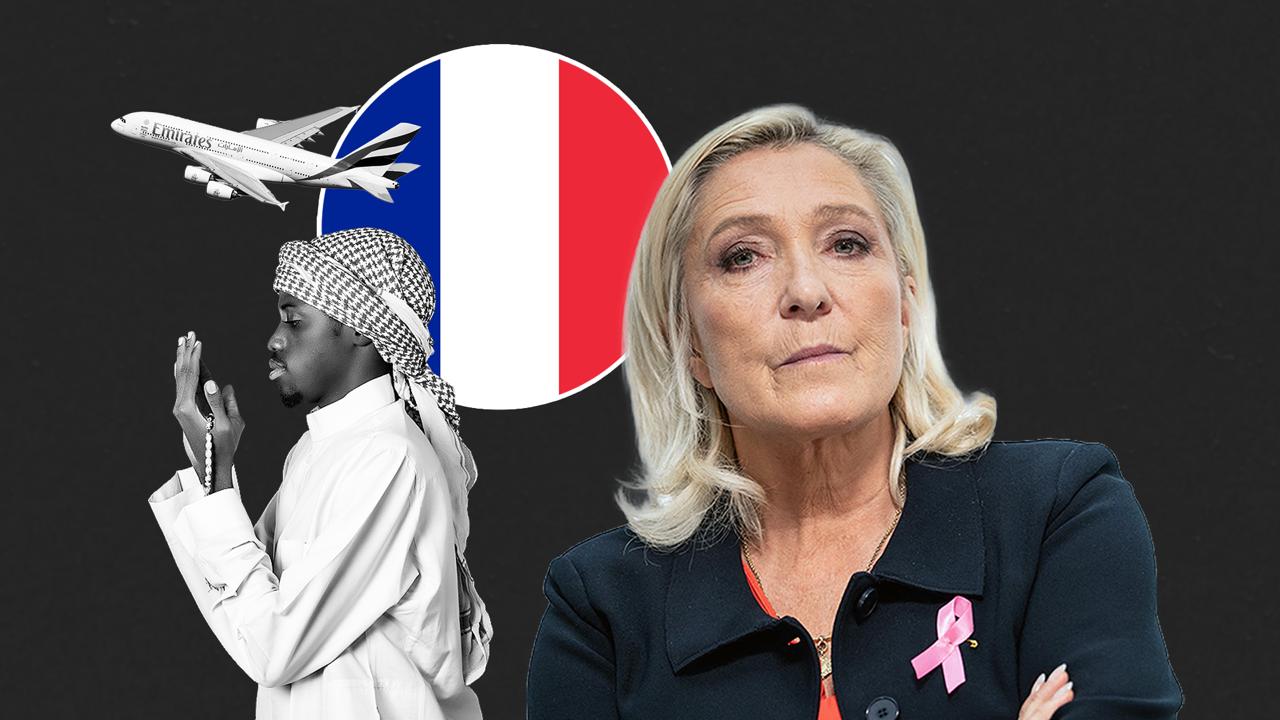
Nearly half of Muslim and Jewish respondents in a major French poll say they would consider leaving the country if Marine Le Pen wins the 2027 presidential election, according to an exclusive Ifop survey for the magazine Marianne.
The poll found that 46 percent of respondents identifying as Muslim would contemplate “leaving France to settle in another country” under a Le Pen presidency. Of those, 20 percent said they would “certainly” take that step. By comparison, 21 percent of the overall population expressed a similar willingness to leave.
The figure is part of a broader set of findings on identity, secularism, and anticipated reactions to a National Rally (RN) victory. Eighty-one percent of Muslim respondents believed a Le Pen win would lead to a rise in discrimination against their community. Twenty-seven percent said they would consider concealing their religious identity in daily life, including 18 percent who would stop wearing the veil in public.
Similar sentiments appeared in other groups polled.
Forty percent of the youngest cohort of French voters, 43 percent of France Unbowed (LFI) voters, and 44 percent of Jewish respondents said they would consider leaving. The survey also recorded elevated support for civil disobedience in some cohorts. For instance, substantial shares indicated they would refuse to respect laws they viewed as unjust.
Notably, while Le Pen has been antagonistic towards Islam in France, she has often cast herself as a protector of Jewish life in the country.
In 2024, she said, “The best shield for French people of the Jewish faith is the National Rally. It is the only movement that has the will, the conviction and the means to fight Islamist fundamentalism, which is the major danger facing them.”
Yet, nearly as many Jews said they would leave the country as Muslims.
Le meilleur bouclier pour les Français de confession juive, c’est le Rassemblement National.
C’est le seul mouvement qui a la volonté, la conviction et les moyens de lutter contre le fondamentalisme islamiste qui est le danger majeur qui pèse sur eux. https://t.co/pggWHgzITu
François Kraus, director of the Politics and Current Affairs division at Ifop, described the results: “The arrival in power of the candidate favored by the polls risks creating significant obstacles and generates high levels of fear and a sense of insecurity.”
The National Rally has long advocated tighter controls on immigration, greater priority for French nationals in housing and employment, and restrictions on Islamic veiling in public spaces. Le Pen has indicated she would not impose an immediate ban on the veil upon taking office but would put broader restrictions to a national referendum.
Previous Ifop work has documented rising religiosity and support for more rigorous interpretations of Islam among younger French Muslims, including significant shares prioritizing Islamic norms over French civil law on issues such as inheritance or ritual slaughter in certain scenarios. Remix News reported on this poll last year.
Figures on the right treated these results as evidence of failed integration and the dangers of demographic change.
Currently, Le Pen has frequently led first-round voting intention polls, making her the favorite to win the presidential election.
It is important to note that many groups claim they will leave a country if their preferred candidate does not win an election, but actually leaving is an entirely different story. The 46 percent figure for Muslims and 44 percent for Jews is only an expressed willingness or contemplation in a hypothetical scenario, not concrete plans to leave France.
The reality is that family ties, employment, and economic realities mean that leaving is far harder in practice.
While presidents of both parties have long rewarded donors and allies with plum ambassadorships, Trump has chosen loyalists willing to go to bat for him regardless of the implications for US-foreign relationships.
It’s hard to know whether to break the TV set or throw up when listening to the European governments rushing to condemn the air strike by Yemeni forces on Saudi Arabia’s King Khalid international airport.
The blast from a ballistic missile that slammed into the airport at the weekend, October 12, killed at least 13 civilians and injured scores of other travellers. Horrific video footage shows the moment the missile explosion ripped through a terminal lounge.
European leaders immediately in a coordinated fashion trotted out condemnations of Yemeni “terrorism” and vowed solidarity and support for Saudi Arabia. U.S. President Donald Trump called it “a terrible thing.” (As if bombing schoolchildren is not quite a terrible thing.)
Britain, France, Germany, Ireland, Italy, Austria, the Netherlands, and Spain all issued strident denunciations of the Yemeni attack.
The strike on the Saudi capital came after the Ansar Allah-led Yemen Armed Forces had given ample warning to the Saudis that their airports would be targeted and for civilians to avoid the areas. The airports were kept open for business as usual. The Yemenis have said that the attack on Riyadh and other Saudi airports are retaliation for weeks of multiple air strikes by the Saudis on Yemeni civilian centers.
Hundreds of Yemeni civilians have been killed since Saudi Arabia broke a four-year truce with an air strike on the international airport in Sanaa, the Yemeni capital, on July 13. Saudi warplanes, U.S.-supplied F-15s and European Typhoon jets, have been continously bombing homes across Yemen. This week, two days after the Riyadh strike, at least nine people including five children were killed in air raids on houses in Taiz city and in northern al Jawf province. Al Masirah TV footage showed a distraught father holding up a child’s shredded body amid rubble. There was no condemnation of that atrocity from any European leader.
As Mick Wallace and Clare Daly, former Irish Members of the European Parliament, point out in their podcast this week, the official European reaction is utter hypocrisy and a cynical distortion of the conflict on the Arabian Peninsula.
Britain and France in particular, along with the United States, have backed the Saudi aggression against Yemen beginning in 2015. Over seven years, that aggression killed up to 400,000 Yemenis through air strikes and a blockade on humanitarian needs.
The European Union remained largely silent for seven years. No protests were made to Washington, Paris or London. Ambassadors were not summoned, sanctions were not imposed.
The return to hostilities that began with Saudi air strikes on Sanaa in July have been enabled by U.S. and Britain supplying warplanes, military advisors and intelligence.
None of the European governments have bothered to condemn this recent U.S. and UK-backed slaughter.
So, it is nauseating when one hears British Foreign Secretary Ed Miliband saying he is “appalled” by the strike on Riyadh airport. And other European leaders vowing “full solidarity with the kingdom of Saudi Arabia.”
Germany’s Foreign Minister Johann Wadephul condemned Yemen’s “terrorist act.”
His French counterpart said France stood with Saudi Arabia “in defending its territory and infrastructue.” (No mention of what the Saudis have been doing for years to Yemen’s territory.)
Referring to the strike on Riyadh without any context, Italy’s Giorgia Meloni said: “Attacks against civilians and civilian infrastructure are unacceptable and must cease.” (Yes, indeed, so why not tell that to the Saudis who are doing it deliberately on a massive scale with support from Washington and London?)
What is instructive here is not just the sickening hypocrisy and moral bankruptcy. It is the manifestation of a systematic corruption and criminal responsibility. This is not just one more example of a flawed European political class whose judgement is suspect. What is increasingly apparent is the totality of the corruption.
The same European supporters of Saudi monarchs waging a genocidal war on Yemen are also contemporaneously supporting the Israeli Zionist regime in its extermination of Palestinians. They are complicit in enabling the U.S. aggression against Iran, Cuba and Venezuela. They are sponsors of the NeoNazi regime in Kiev to keep fighting a proxy war against Russia despite more than one million Ukrainian military casualties and the risk of nuclear conflagration.
The death cult of Western capitalism is on full display in multiple theaters, exposing the organic evil at work. There is sense that all of Western imperialist history is now on display in one final orgy of barbarity.
In previous times, the death cult operated discreetly in seemingly disparate conflict scenarios. Wars on different continents seemed somehow unconnected. The Western media would in the past reliably cover up the crimes by distorting the motives and objectives with false narratives and (laughable) claims of noble purpose. The West was “defending democracy,” “fighting communism,” “protecting human rights,” or “waging war on terrorism,” or some other pretext that in isolation and with loads of media propaganda managed to fool a lot of people as somehow plausible.
What’s happening now, it seems, is a concatenation of wars that ultimately exposes the essential system that drives the violence, and its insatiable lust for human suffering.
It is impossible to work for such a vile system, the death cult of capitalism, without also being oblivious to its evil ways. To remain oblivious necessitates denial or lies. That deception might be tenable for occasional and seemingly disparate scenarios. But not when the system is exposed in its infernal entirety.
American and European wars in the past might have succeeded in being sold to the Western public as one-off wars and misadventures. We think of the wars in Korea, Vietnam, Latin American, Africa, former Yugoslavia, Afghanistan, Iraq, and more recently Libya.
In more recent years, as consciousness evolved, the public began discerning and decrying “endless wars”.
But now the world is witnessing a totalizing of the war machine that goes by the name of “Western democracy”.
What’s happening in Ukraine, Gaza, Iran and Yemen is not coincidence. It is the death cult on display and unable to hide itself. It manifests too in attacking and locking up Western citizens who condemn genocide or who simply call for peace.
Capitalism, fascism, wars, the Epstein class, endemic poverty and suffering – it’s a death cult in a theater near you.
The politicians, governments, media and pundits who promote it or serve it are seen for what they are.
High school and university students in France continued their protests on Tuesday, October 13, demanding government investment in public education. Approximately 480,000 protesters took to the streets in the latest iteration of the mobilization, with families, teachers, and trade unions backing students’ demands.
The mobilization remains marked by widespread police violence. Police used tear gas and dispersal grenades on crowds, including at Tuesday’s central march in Paris. Hundreds of students were injured and thousands arrested in these incidents, prompting reactions from human rights organizations.
In response, the public joined students as they blocked high schools and organized marches to physically shield them from potential harm. Trade union members, notably from the education sector, were highly represented in these support lines.
“The CGT reaffirms the urgent need to address the demands of those who are the country’s future ,” the General Confederation of Labor (CGT) asserted. “The CGT salutes their fighting spirit. It welcomes the strong anti-fascist tone of the demonstrations, which shows that there is no inevitability to the continued flourishing of fascist ideas or to the far right’s rise to power.”
Students demand access to higher education
Since the beginning of the month, French students have organized three massive demonstrations to warn against the state of education under austerity. “For several weeks, high school and university students have been mobilizing to denounce the deterioration of their study conditions, the Parcoursup system, staff and resource shortages, policies that are dismantling public services, and – more broadly – the future this society holds in store for them,” the trade union federation Solidaires recognized in their statements.
Trade unions continued their support for student mobilizations. The banner reads: “Electricity and gas workers stand with the youth. Our rage is nuclear.” Source: CGT/Facebook
Equal access to higher education has been high on the protesters’ demand list since the beginning. This refers in good part to how students are currently recruited into university courses – the Parcoursup admission platform. Introduced in 2018 under Macronist ministers to replace a previous system that randomized selection for oversubscribed courses, Parcoursup was supposed to “rationalize” admissions.
In practice, however, critics and applicants emphasize the platform allows institutions to apply unclear selection criteria and even discriminate against students from working-class areas.
In September 2026, the left party La France Insoumise warned that 126,652 students were not able to access a course as a result of the system – up from 77,000 in 2023. “This selection process is the product of austerity-driven political choices deliberately implemented by successive Macron-era governments,” the party warned.
“Parcoursup is a social sorting machine,” Solidaires echoed. “The platform organizes competition among young people for places that the State deliberately refuses to create. It transforms the right to study into a privilege, scarcity into selection, and austerity into supposed individual failure.”
Commodification of education
Jean-Luc Mélenchon, the left’s presidential candidate, pointed out that these choices are part of a broader political agenda: “the commodification of education and knowledge.”
Trade union briefs on the subject back this interpretation. At the beginning of this school year, Solidaires warned that thousands of those left without higher education placings are being sacrificed in the name of austerity.
“But not everyone experiences this violence in the same way,” they wrote. “The wealthiest families can afford private schooling, fund housing on the other side of the country, or sustain a year without studying. Young people from working-class backgrounds, however, have no way out. A lack of options means either being forced into the job market or military service – abandoning their plans for good – or facing precariousness, isolation, and debt at a private institution.”
“We have shifted from an egalitarian system to a discriminatory one: pay for your own future,” Mélenchon concluded in a recent interview.
The left leader anticipated that student demands will be an important topic during the upcoming election campaign, where the left is contrasting a program of rupture with neoliberal policies to the far right’s intention to build a debt brake not unlike Germany’s. In practice, this would translate into years of sustained attacks on social security and public services.
Trade unions and progressive organizations announced their support for the youth mobilizations will continue as they build campaigns to resist the government’s intention to impose billions in cuts to pensions and social security while spending record amounts on rearmament.
For their part, student unions invited their members to remain active and join a general mobilization against the cost of living crisis this Saturday, October 17.

 Login