The agreement will allow CNN to receive compensation for the use of its intellectual property.
On Thursday, U.S. television network CNN announced an agreement with technology company Google to integrate generative artificial intelligence technologies into its news platforms.
“With this partnership, we are opening new avenues for audiences to access CNN’s exceptional journalism while receiving compensation for the distribution and use of our exclusive intellectual property in connection with AI products,” stated Sam Felix, senior vice president of Strategic Partnerships and Business Development.
The agreement will allow the use of experimental features designed to analyze and enhance audience engagement by exploring new ways to consume and distribute journalistic content.
“Google’s innovation in generative AI has transformed the way people discover information and content, and these tools will now help us explore new ways to be discovered and connect with audiences,” Felix added.
Of course, The Jakarta Globe asked me how I see AI tools influencing newsrooms — both in terms of opportunities and risks.
The U.S. network explained that its partnership with Google is part of the company’s AI strategy, “which ensures the protection of its intellectual property.”
The agreement is also part of a broader pilot program by the technology company to incorporate its AI technology to drive traffic to media outlets.
“CNN’s deal comes months after it sued Perplexity AI for copyright infringement after both companies failed to reach a licensing deal, its first legal case against an AI company over the unauthorized use of its journalism. At the time, a CNN spokesperson said the network ‘actively embraces the opportunities AI creates,’” Variety recalled.
“It also reflects the impact Google’s AI summaries in its search engine have had on news organizations, many of which have highlighted how the responses have eaten into their web traffic. Penske Media Corporation, the parent company of Variety, The Hollywood Reporter, Rolling Stone and more, sued Google last year over the decline, though a federal judge dismissed the case earlier this month,” it added.
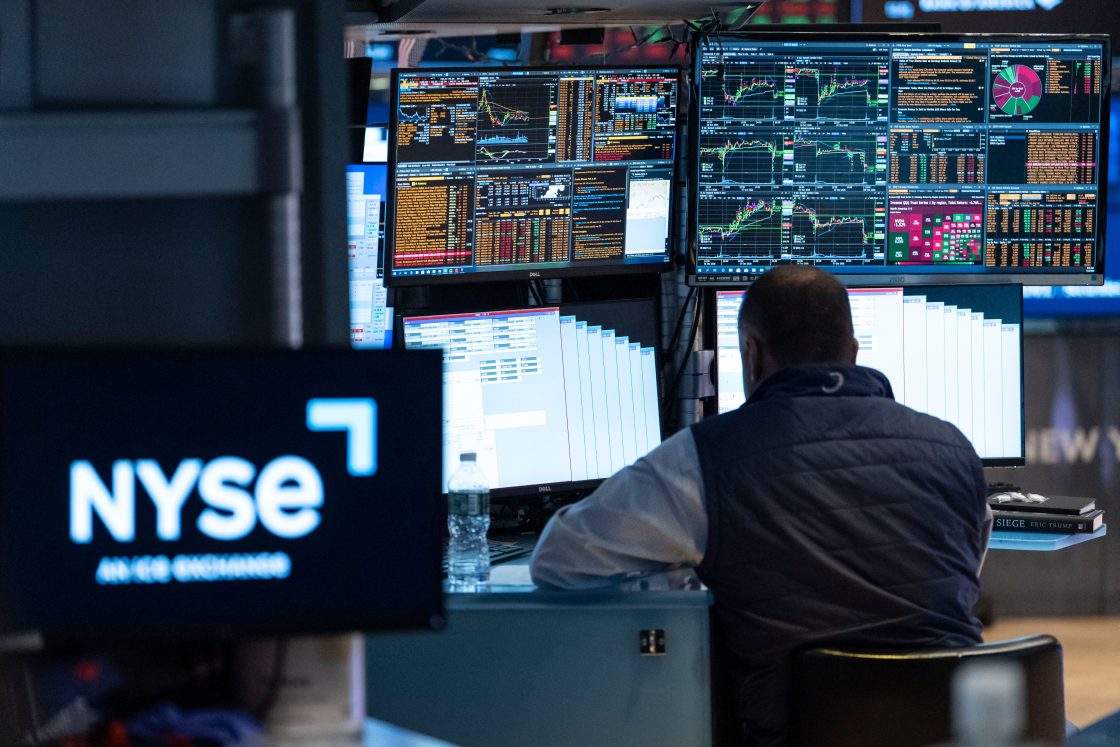
A sell-off for artificial-intelligence stocks is hitting Wall Street again after whipping around the world on worries about how much longer the AI frenzy will last.
A sell-off for artificial-intelligence stocks is hitting Wall Street again after whipping around the world on worries about how much longer the AI frenzy will last.
Ronen Bar's defamation suit reveals the gravity of the prime minister's toxic rift with his security chiefs. Three years after Oct. 7, Netanyahu is still hunting for conspiracies
“We have fallen into habits that are steadily deskilling the human body,” writes Melanie Challenger. “This is a strange turn of events for an animal whose success comes mostly from the extraordinary ability to learn through experience.” For Aeon, Challenger explores how modern technologies, from GPS to AI, are eroding our body’s physical skills by replacing the embodied experiences through which we learn.
After all, the brain is itself a physical organ, continually shaped by what the body does and encounters. Once we decide that the mind is the real human and the rest of the body only hardware, it becomes easier to disregard the physical work, including the neurocognitive work of a biological brain, through which we move, find our way, put thoughts into words, and recognise our own needs. A machine may do some of that work faster, but each act it takes over is one that the body no longer performs and that the body, including the brain, no longer learns through. The irony is that a project motivated by the desire to overcome bodily fragility is helping to produce more fragile bodies.
Tech billionaire Elon Musk wrote on X on 15 October: “And so the slaughter continues … Time for Zelensky to go.” Four days earlier, he had posted that Zelenskyy had gone too far, after US President Donald Trump said it was time for Ukraine to get a new president. Asked by Morgan on 14 October whether he would resign, Zelenskyy said he would not: “It’s my responsibility.”
Musk’s post comes as Washington squeezes Kyiv instead of Moscow: Ukraine’s military satellite links slowed, US missile warnings went missing, and the US threatened to cut intelligence unless Kyiv stops hitting Russian refineries.
Land and elections
Zelenskyy said elections could not be held under constant Russian attack: “From the point of security, you can’t do elections.”
Of any future president, he said: “I’m sure the new man or woman will defend our country.” He also reminded Trump that Crimea and parts of Donbas were already occupied when he took office, under another president, long before the full-scale invasion.
“I’m a realist, and I understand that people are more important than one kilometer or two kilometers. It’s not about kilometers. It’s about land and homes,” he told Morgan.
Zelenskyy has said Ukraine is ready for elections if a full 60-day ceasefire is in place. Numerous sources told The Atlantic that Trump sees Zelenskyy as the main obstacle to a peace deal and related business deals with Russia. One Trump adviser said he is also an obstacle to Trump’s hopes for the Nobel Peace Prize.
Starlink
Ukrainian forces reported restrictions on Starshield, the SpaceX satellite system they use for battlefield communications and drone operations, and Zelenskyy warned the decision would cost lives. On 14 October, Musk said Starshield is owned and controlled by the US government, which sets its limits, and that commercial Starlink cannot be used for offensive military action. Zelenskyy told the FT he did not know whether the decision was SpaceX’s or the US government’s, adding: “I think it’s about SpaceX.” A senior US official told Axios the Trump administration had nothing to do with the restrictions.
Intelligence and refineries
On two consecutive nights, air raid alerts in Kyiv sounded only after Russian ballistic missiles were already approaching or striking the capital. Zelenskyy said Ukraine received no warning from partners of the launches on 12 and 13 October, which hit civilian infrastructure and a major power plant. A Ukrainian official told CNN the loss of intelligence “will give Russians a real leverage on a frontline.” A European official questioned Washington’s explanation that weather caused the gaps in missile warnings. Trump denied halting intelligence sharing.
Washington had warned it could suspend intelligence sharing if Ukraine kept striking Russian refineries, Axios reported. A US official disputed that any explicit threat was made. Sources told CNN the US had also threatened to halt European purchases of US weapons for Ukraine. Zelenskyy told the FT the warning came through military channels.
To lower energy costs before next month’s midterm elections, Trump has pressed Kyiv to stop refinery strikes, CNN reported. Zelenskyy said he felt betrayed after Trump announced a diesel supply deal with Russia. On 14 October in London, he told the FT that Ukraine would resume strikes on Russian oil refineries.
Recent warnings from American AI leaders have created the impression that the world is only beginning to confront the dangers of advanced artificial intelligence.
His proposal begins with independent evaluators embedded inside AI companies, moves on to regulation and progresses to government-backed coordination among democratic states.
Ultimately, it seeks global agreements with China on testing of AI systems, dangerous applications of the technology and the pace of AI development.
Yet there is a China-shaped hole in this narrative. The Asian superpower is portrayed as the difficult final participant in a governance system that the US and its allies must first create.
In fact, China has already established an extensive system of AI rules, assessment, filing, technical standards and government oversight. Here’s how China’s AI governance system has developed in stages alongside the technology itself.
Beijing’s 2022 rules on algorithmic recommendation services apply to technologies that select, rank, filter or recommend online content to users.
They compel companies that use algorithms to examine how they work, to protect the personal information of users, to give users certain controls, and to introduce safeguards for workers, consumers, children and older people.
China’s deep synthesis provisions, effective from January 2023, extended regulation to synthetic (or AI-generated) text, images, audio and video. AI companies must authenticate users, protect data, keep relevant records, assess their systems and identify synthetic material that could be mistaken for authentic content.
The interim measures for generative artificial intelligence services were introduced in August 2023. These added rules for public-facing generative AI, particularly those that can influence public opinion or persuade uses in other ways.
The measures apply to the legality and quality of training data, users’ personal information, intellectual property and discrimination based on protected characteristics. The rules also cover transparency by AI companies and the accuracy and reliability of products.
Under the rules, companies must address problems found in their services. These services must undergo a security assessment to examine their risks and compliance with Chinese legislation. The companies must also file information about their algorithms with Chinese authorities.
These mechanisms are not identical to the independent evaluators that would be embedded in AI companies, as has been proposed by Amodei. But they perform some of the same functions.
Frontier risks
Beijing’s latest set of measures is called the AI safety governance framework 3.0, published in September 2026. It sets out a broad approach to identifying, grading and responding to risks throughout the lifecycle of AI systems.
Building on earlier versions, the framework covers AI model and data risks, vulnerabilities in open source models (those which can be freely modified by users), AI’s effects on employment and society and increasingly autonomous systems.
It includes a dedicated mechanism for managing risks associated with rapidly developing AI agents (systems that carry out tasks in response to instructions by a user).
The framework addresses some of the same dangers now generating alarm in Silicon Valley, including highly autonomous systems, the misuse of chemical, biological and nuclear technologies, and the possibility of humans losing control of advanced AI. It proposes continual safety evaluations, risk based safeguards, humans being in charge, and emergency intervention mechanisms.
An independent analysis by the US Carnegie Endowment for International Peace thinktank has described the framework as China’s attempt to “to advance frontier safety without the need for heavy handed regulatory interventions”.
Legal consequences
None of this means that Chinese AI rules should be transplanted elsewhere. Its institutions, regulatory traditions and technological priorities are different.
Many functions now presented as urgent aspirations in the US, including evaluation, accountability for AI companies, risk classification for AI systems, regulatory filing, technical standards and government oversight are already embedded in the governance architecture of the world’s other AI superpower.
The US is free to conclude that a market-led system best serves its economic and strategic interests. The Trump administration has favoured a “minimally burdensome” national approach to AI and has sought to limit more demanding state-level regulation.
But a market-led model cannot mean privatising the rewards of AI while exporting its risks. US companies may capture the commercial gains, while governments elsewhere are left to investigate security incidents, protect public systems and absorb the wider costs when those technologies fail. The OpenAI agent that gained unauthorised access to Australia’s state healthcare service shows how AI risks are being exported.
If Washington rejects extensive controls before systems are released, the US needs a credible legal regime for assessing who is liable for damage caused by those AI models. Otherwise, countries dependent on foreign AI systems will face increasingly difficult choices about whose technology to trust, and on what terms.
Silicon Valley’s governing ethos has long been to “move fast and break things”. That was always a questionable principle for technologies woven deeply into public life. It is untenable for companies whose own leaders now warn that their products could cause catastrophic harm.
Beijing has already surrounded its AI sector with public obligations, regulatory oversight and an evolving framework of risk assessment. A global debate that treats such governance as a future aspiration should at least recognise that one country is already ahead of the curve.
After claims about Abbas Kamel's alleged flying visit to warn about a Hamas attack, multiple reports now say he wasn't aboard private Egyptian jet that arrived on Sept. 26, 2023

 Login