Login

Landowners in Texas' Big Bend Region Fight Trump Administration's Attempts To Seize Land for Border Wall
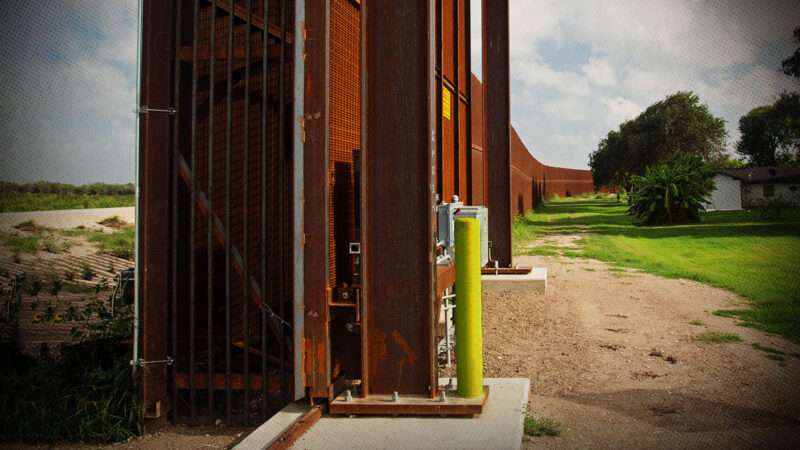
The Trump administration's attempts to fast-track construction of the president's long-promised border wall through Texas' remote Big Bend region have ground to a halt amid fierce opposition, protests, and legal challenges from landowners and conservation groups.
A federal judge on Wednesday released an opinion explaining her decision to issue a preliminary injunction blocking border wall construction through the Big Bend area. U.S. District Judge Kathleen Cardone found that the plaintiffs, which included the Center for Biological Diversity and several longtime residents of the region, had shown a substantial threat of irreparable harm if the construction project is allowed to continue.
The Trump administration wants to spend $7.5 billion building additional security infrastructure along a 500-mile stretch of the U.S.-Mexico border running through the Big Bend region, which includes Big Bend National Park. The federal government began sending threatening letters to property owners announcing its intent to acquire necessary pieces of their land this summer, and it waived several environmental regulations, allowing it to put bulldozers on the ground inside the national park by September.
However, numerous groups and local landowners say the border wall project will alter their way of life and permanently scar one of the most rugged and pristine landscapes in the country. The project attracted bipartisan criticism and protests.
Cardone also found that the plaintiffs were likely to succeed on their claims that Department of Homeland Security (DHS) Secretary Markwayne Mullin exceeded his authority when he issued environmental waivers for the project.
The injunction is a temporary reprieve for property owners such as David Keller, an archaeologist and part-time river guide on the Rio Grande River. The original plans for the border wall expansion would have cut through Keller's 10-acre property near Redford, Texas, putting a 30-foot-tall wall on the levee that sits between the river and the rest of his land.
Keller says the Trump administration gravely underestimated how much anger its tactics and attitude would generate.
"It's a level of arrogance—they're just used to being able to bulldoze over people," David Keller says. "They were moving forward as if they weren't expecting any resistance, but boy, they're due for a wakeup call. And they're having it right now."
Keller is a plaintiff in a separate lawsuit against the DHS by Conserve Big Bend, a coalition of landowners, conservationists, river tour guides, researchers, and other affected parties.
Keller says he's loved wild, open country since he was a child, and as soon as he saw the region in the 1990s, he decided he would find a way to live and work there, which he's done for the past 25 years. "It's visually magnificent," Keller says. "It's incredible. It's like no other place I'd ever seen. It's one of the last unspoiled places remaining in the lower 48."
Keller says it's where he plans on being buried, too, although these days he's unsure whether to say "plans" or "planned." The proposed border construction is an existential threat to the life he's built, he says, and if the wall goes up, he'd likely move.
"I didn't come down here to live in a cage," Keller says.
The proposed border wall would not only block access to the river for farmers, ranchers, and outdoors enthusiasts along the river, as well as block the view into Mexico, it would wreck "the whole feeling of the place, the historical cross-border culture that we've developed," Keller says.
So far, the federal government has not tried to seize any private property in the Big Bend region through eminent domain, although it sent letters to property owners this summer requesting access to survey their land and warning them that it held the option to invoke eminent domain if they did not quickly sell.
Both Keller's and the Center for Biological Diversity's lawsuits argue that the department's justification for building and expediting additional border infrastructure in the Big Bend Region are factually and legally incorrect. The DHS determined that the sector of the border is an "area of high illegal entry."
However, despite making up roughly a quarter of the entire U.S.-Mexico border, the Big Bend sector only accounted for between 0.3 percent and 2.2 percent of total border-wide arrests over the past 30 years.
Cardone cited the low apprehension numbers in her finding that Mullin exceeded his authority to issue the waivers.
"The unrebutted evidence shows that the Big Bend Sector is, by far, the sector with the lowest rate of migrant apprehensions along the entire U.S.-Mexico border, both in terms of gross totals and apprehensions per mile of border," Cardone wrote. "Therefore, if the Big Bend Sector is an area of high illegal entry, so is every other sector, and the waiver authority would apply to the entire U.S.-Mexico border."
The post Landowners in Texas' Big Bend Region Fight Trump Administration's Attempts To Seize Land for Border Wall appeared first on Reason Magazine.