❌

Reading view

Cairo’s Admission and Burhan’s Silence: Sudanese Blood and Gold as the Price of a Seat of Power

Twice in four months, Egyptian warplanes have bombed Sudanese miners inside their own territory, and dozens of bodies have failed to draw from Abdel Fattah al-Burhan a stance worthy of his citizens’ blood. Cairo, for its part, justifies its military operations, while Port Sudan hides behind a fact-finding committee, a cable of condolences and talk of contact between the two leaderships, without daring to name the party accused of killing its citizens.

This is the scene before us: a state acting on the Sudanese border by force of arms, and an army commander who avoids naming the party accused of killing Sudanese, for fear of losing an ally whose approval seems to matter more to him than their lives. On the morning of 10 October 2026, the mining site at Jabal al-Uqaydat in the Shamal al-Wadi area inside Sudan turned into a killing field after it was struck by five consecutive airstrikes, according to the testimony of a survivor relayed by Agence France-Presse. Thousands of miners had been searching for gold in a land exhausted by war; some ended up under the rubble, while others fled to the mountains without water or supplies.

In a significant pinpointing of the site of the bombing, The New York Times, in its report published on 12 October 2026, stated that the targeted mine is located in Sudan’s Red Sea State, about 25 miles from the Egyptian border, or roughly 40 kilometres inside Sudanese territory. Al-Hurra, in its coverage of the June attack, had cited an estimate placing Jabal al-Uqaydat about 20 kilometres inside Sudan; the forty-kilometre distance is cited here as attributed to the American newspaper’s determination of the location of the October strike, which keeps the question of sovereignty and the protection of civilians at the heart of the matter.

Agence France-Presse relayed from survivors that thousands of miners were working at the site, and “Emergency Lawyers” counted 72 dead according to preliminary information, while witnesses told the BBC of more than 60 dead and about 150 wounded. Survivors told Sudan Tribune that the dead numbered at least 200, with more than 15,000 workers fleeing, while the Sudan Doctors Network recorded a preliminary toll of 13 dead and 28 wounded, warning that it could rise.

Cairo Justifies the Bombing While Burhan Avoids Naming the Perpetrator

The “Emergency Lawyers” organization accused the Egyptian air force of targeting civilian miners, considering the attack a violation of international law. When Reuters asked Egyptian security officials about the raid, they did not deny the operation but justified it as ending what they described as border chaos and preventing Egyptian and Sudanese groups from taking control of mining areas.

Two days later, the Egyptian military spokesman announced the continuation of the “third phase” of the campaign, noting that warning leaflets had been dropped on those he described as criminal elements. However, the statement placed the operations inside Egyptian territory and did not include an explicit acknowledgment of carrying out a raid inside Sudan or of the killing of the miners.

Thus Cairo has a military justification for bombing a Sudanese site, while Burhan’s authority is incapable of issuing an explicit condemnation of the party that human rights organizations accuse of killing its citizens. The irony is that the state that is supposed to demand the victims’ rights appeared more concerned about its relationship with Cairo than about naming the party responsible for their blood.

From June to October: The Victims Change, the Silence Remains

The October raid was preceded by a strike that targeted the area on 16 June 2026. Agence France-Presse reported 23 dead, while Sudanese platforms estimated the toll at around one hundred. According to the testimonies received, the operations extended to Jabal al-Uqaydat, the Red Mountain and the area around Souk al-Ansari, and included raids by warplanes and drones followed by a ground incursion. The organization “Darfur Victims Advocacy” relayed from witnesses that an Egyptian force of about sixty armed vehicles had surrounded the miners and detained civilians, some of whom were beaten.

In the days following the June attacks, Radio Dabanga reported the arrival of about two thousand deported miners via the Argeen crossing, according to a local activist, while the crossing’s director spoke of more than three thousand over the preceding days, and the Egyptian army announced the arrest of 223 people, including 136 foreigners. On 22 June, Burhan appeared in Al-Ratj to say, according to Al-Araby Al-Jadeed: “Our northern neighbor — people must respect it and not cross the borders so as not to cause problems for themselves and for the state.”

Sudanese had been waiting for their army’s commander to defend their blood, but they heard him urging them to respect the borders of the neighbor accused of bombing them. When the raid was repeated in October, the Sovereignty Council repeated the scene: condolences over the “painful incident,” a fact-finding committee, and an assurance that the two countries’ leaderships are in contact.

Burhan’s adviser, Amjad Farid, described the bombing as an unjustified and unacceptable crime, noting that border violations could be addressed without warplanes, but his position did not translate into an announced official protest or a clear path to accountability.

Sudan’s Gold: A Wealth Guarded by Force

Al-Uqaydat lies within the gold-rich Nubian Shield belt, and the Chatham House institute estimated that about 60% of gold production in the Northern, River Nile and Red Sea states is smuggled to Egypt, in quantities exceeding one hundred kilograms per day, and more than sixty tonnes since the outbreak of the war through the end of 2024.

By contrast, official gold exports to Egypt in 2024 did not exceed about 16 million dollars, roughly 1% of Sudan’s total gold exports, according to Central Bank of Sudan data cited in the Chatham House report.

Miners told Sudan Tribune that they had observed drilling machinery and trucks carrying rocks across the border into Egypt, and that an Egyptian patrol had previously warned them against approaching a site it said lies inside Egyptian territory. Al-Hurra relayed testimony about friction between workers and personnel of an Egyptian mining company operating near them.

Egyptian Law No. 193 of 2020 authorizes contracting with the Egyptian Company for Mining and the Management and Exploitation of Quarries and Salt Works, affiliated with the National Service Projects Organization, to exploit the quarries and salt works specified by the law for a period of thirty years, while the state-owned Shalateen Mineral Resources Company is active in the south of the Eastern Desert. The businessman Naguib Sawiris also praised the June operation and linked it to investors’ confidence in the Egyptian mining sector.

In the same month, Egypt’s Ministry of Petroleum denied statements attributed to its minister about agreements to establish 108 gold mines in northern Sudan, but the researcher Mohamed al-Hadi considered it likely that the attacks are linked to undisclosed understandings with the Sudanese government, a hypothesis that calls for an independent investigation.

Burhan: When the Ally Becomes More Precious Than the Citizen

The website Al-Hurra relayed from a miner that a group of pro-government joint forces withdrew from the mountain a day before the June raid, and that the Sudanese army did not arrive to evacuate the wounded and collect the bodies until the third day. The testimony raised workers’ suspicions about possible coordination between the two governments, without establishing that it took place.

But Burhan’s silence does not need those suspicions to be proven in order to become a matter of political accountability. Cairo supports the commander of the Sudanese army and considers the war on its borders a threat to its security. Agence France-Presse has verified satellite images showing the repeated presence of Turkish Bayraktar drones at an Egyptian base near Sudan, while reports spoke of facilitating the delivery of drones to the Sudanese army and training its crews inside Egypt, alongside broader military and intelligence cooperation.

An analysis published by the Horn Review in June held that the army’s silence over the raids is linked to Egyptian support for it.

Yet this relationship does not absolve Burhan of responsibility; it multiplies it. Whoever relies on another state’s support in his war cannot make the protection of his citizens a negotiable item, and his need for weapons and political backing must not become an immunity he grants to Cairo at the expense of Sudanese blood.

Sovereignty Tested With the Blood of the Poor

The raids reopen the wound of Halayeb and Shalateen, the disputed triangle under Egyptian control. Sudanese administrative maps confirm that the targeted mining sites lie inside Sudan, while Cairo treats them as part of the border area adjoining the triangle.

Human rights, political and trade union forces have called for an independent international investigation, and the “Sumud” alliance led by Abdalla Hamdok held the Egyptian side directly responsible.

Today, Egypt is required to answer for the bombing and the fall of civilians, not merely to classify them as criminal elements and offer security justifications, and Burhan is required to announce the results of the investigation, determine responsibility, demand compensation and accountability, and take the necessary diplomatic and legal measures.

As for settling for condolences, it is not a defense of sovereignty; it is a declaration that the alliance with Cairo is more precious to the authorities than the Sudanese people’s right to life and justice. At Jabal al-Uqaydat the bill is clear and admits no doubt: the gold crosses the border, the dead remain under the rubble, and Burhan guards his silence.
  •  

Felix Vulis: “I will inform Kazakhstan’s president and the European Council about ERG’s outstanding debt to me”

Former ENRC Chief Executive Says Unresolved Financial Obligations Could Raise Questions About Kazakhstan’s International Business Reputation.

Following his interview with EU Today, Felix Jeff Vulis discusses his outstanding financial claims, his relationship with Kazakhstan and why he intends to bring the matter to the attention of President Kassym-Jomart Tokayev.

For more than three decades, Felix Jeff Vulis has maintained close professional ties with Kazakhstan, a country whose transformation into a major international mining and industrial economy he witnessed firsthand.

His relationship with Kazakhstan began in the 1990s, when he helped introduce the country’s economic potential to American investors. In 2001, he joined Eurasian Natural Resources Corporation (ENRC), eventually becoming Chief Operating Officer and then Chief Executive Officer.

Under his leadership and that of his colleagues, ENRC expanded internationally, listed on the London Stock Exchange in 2007 and entered the FTSE 100, becoming one of Kazakhstan’s most prominent industrial companies.

But the relationship between Vulis and the group that subsequently became Eurasian Resources Group (ERG) has taken a different direction.

In a September interview with EU Today, Vulis described his years at ENRC, the challenges of corporate governance and the impact of the British Serious Fraud Office investigation, which ended in 2023 without charges.

He also raised a question that had remained largely outside public discussion: financial and contractual obligations that he believes ERG and related entities have failed to honor.

The first interview concluded with Vulis maintaining that ending a corporate position would not eliminate previously established financial obligations.

Now, in this proposed continuation, Vulis addresses the outstanding claims more directly and explains why he intends to seek the attention of Kazakhstan’s highest political authorities.

The unresolved financial questions

EU Today: In your previous interview, you spoke about financial obligations that you believe remain outstanding. What exactly are you referring to?

Felix Vulis: Throughout my many years with ENRC, I held significant executive responsibilities and worked under various contractual and financial arrangements.

My position is that certain obligations arising from those arrangements have not been fulfilled. These matters include remuneration and other financial entitlements associated with my professional relationship with the group.

I believe the relevant documentation should be reviewed and the legitimate outstanding obligations settled.

EU Today: Are we talking about a substantial amount of money?

Felix Vulis: I would prefer not to discuss specific figures publicly at this stage. There are financial calculations, contractual documents and correspondence that need to be considered.

This is not simply about a number. It is about respecting agreements and commitments.

EU Today: Has ERG been given an opportunity to resolve these matters privately?

Felix Vulis: My preference has always been to resolve outstanding issues through professional discussions rather than public confrontation.

I believe that an agreement remains possible if the relevant parties are prepared to examine the documentation and engage constructively.

But after so many years, I also believe that unresolved obligations cannot simply remain unanswered indefinitely.

Why the president of Kazakhstan?

EU Today: You have indicated that you intend to bring this matter to the attention of Kazakhstan’s President, Kassym-Jomart Tokayev. Why?

Felix Vulis: Because Kazakhstan is not an ordinary country in my professional life.

My relationship with Kazakhstan began long before I joined ENRC. I have spent decades working with its industries, institutions and people.

I have enormous respect for the country and its economic achievements.

At the same time, the Republic of Kazakhstan is an important shareholder in ERG. I believe that shareholders, particularly those representing a sovereign state, have a legitimate interest in ensuring that companies associated with them respect their financial and contractual commitments.

I intend to inform President Tokayev about my situation and explain why I believe these outstanding obligations deserve attention.

EU Today: Are you asking the President to intervene personally in a private financial dispute?

Felix Vulis: I am not asking the President to act as a judge or to assume responsibility for obligations that legally belong to a corporate entity.

I am asking for attention to a matter that I believe deserves a fair and professional review.

Kazakhstan has worked hard to establish itself as a reliable destination for international investment. That reputation depends, among other things, on confidence that legitimate business commitments will be respected.

EU Today: Do you believe the matter could damage Kazakhstan’s international reputation?

Felix Vulis: I sincerely hope it does not.

Under President Tokayev, Kazakhstan has made important efforts to strengthen its international standing, attract foreign investment and build confidence among its economic partners.

I recognize and appreciate those efforts.

However, when a former chief executive of one of the country’s most internationally recognized industrial groups raises unresolved financial claims, questions can arise about corporate governance and the treatment of contractual obligations.

I believe the best way to avoid unnecessary reputational questions is to examine the matter fairly and resolve legitimate claims.

The international dimension

EU Today: You are an American citizen. Could this matter also be raised in the United States or Europe?

Felix Vulis: As an American citizen, I have the right to protect my legitimate financial and contractual interests through the appropriate legal channels.

If a reasonable settlement cannot be reached, I intend to explore every lawful avenue available to me, including bringing the matter to the attention of relevant European institutions in Brussels and appropriate authorities in the United States.

That may include the US Department of State and the US Department of the Treasury, where there is a relevant basis for doing so.

I would much prefer that such steps prove unnecessary.

EU Today: Would you also approach European political institutions?

Felix Vulis: I reserve the right to raise the matter with appropriate European institutions, including the European Council, through lawful procedures and established channels.

My objective would be to explain my position and seek appropriate consideration, not to turn a private commercial matter into an international political confrontation.

EU Today: Some people might interpret these statements as pressure on ERG. How would you respond?

Felix Vulis: I am simply explaining the options that may be available to someone seeking to protect his contractual rights.

I have no interest in harming Kazakhstan or creating unnecessary difficulties for its international partners.

But I also do not believe that a person should be expected to abandon legitimate financial claims simply because the other party is a large and influential corporation.

Kazakhstan beyond ERG

EU Today: Has this experience changed your opinion of Kazakhstan as a place to do business?

Felix Vulis: No. My respect for Kazakhstan remains unchanged.

I still believe it has extraordinary economic potential, particularly in mining, critical minerals, energy, infrastructure and industrial development.

Its strategic position between Europe and Asia creates opportunities that extend far beyond the extraction of natural resources.

The country has the industrial experience, human capital and geographic advantages necessary to attract significant long-term investment.

That is precisely why I believe questions of contractual reliability and corporate governance matter so much.

EU Today: What message would you like President Tokayev to take from your letter?

Felix Vulis: That I remain a friend of Kazakhstan.

I am proud of the work we accomplished there, and I appreciate the efforts of the President to strengthen the country’s international credibility.

I hope the relevant parties will examine my claims seriously and help facilitate a fair resolution within the appropriate corporate and legal framework.

The strongest message Kazakhstan can send to international investors is that legitimate commitments are respected and contractual obligations are fulfilled.

The final question

EU Today: What would you say directly to ERG’s leadership today?

Felix Vulis: I would say that there is still an opportunity to resolve these matters professionally.

We have a long shared history. I spent an important part of my life helping build this company into an internationally recognized industrial group.

I would prefer to conclude our outstanding business through dialogue, mutual respect and fulfillment of legitimate obligations.

But I also intend to protect my rights.

I believe the responsible course is to sit down, review the facts, address the outstanding financial questions and reach a fair conclusion.

EU Today: What would you say to your former employees in Kazakhstan?

Felix Vulis: Thank you.

People sometimes talk about corporations as if corporations build factories.

They don’t.

People build factories.

People operate furnaces. People go underground. People run power stations. Engineers solve problems at three in the morning.

Whatever disagreements exist today cannot erase what those people accomplished.

I remain extremely proud of having worked with them.

EU Today: After years of silence, why should ERG believe that this time is different?

Felix Vulis: Because I am speaking now.

For years I chose discretion.

That was a conscious choice, not an inability to speak.

I continue to believe that a negotiated solution is better for everybody: for me, for ERG, for its shareholders and for everyone associated with our shared history.

But negotiation requires two sides.

EU Today: What exactly do you want?

Felix Vulis: A table.

The appropriate representatives.

The documents.

A serious discussion about everything that remains outstanding.

And then a comprehensive settlement that allows everybody to close this chapter.

EU Today: An apology?

Felix Vulis: No.

A solution.

EU Today: Revenge?

Felix Vulis: Absolutely not.

Revenge is emotional.

This is business.

EU Today: And if ERG refuses?

Felix Vulis: Then I will continue to defend my rights through every lawful mechanism available to me.

And where I am legally entitled to speak about my own experience, I reserve the right to do so.

EU Today: Is that a threat?

Felix Vulis: No.

It is clarity.

There is still an opportunity to resolve this privately and professionally.

I would prefer that.

After more than twenty years of shared history, I think sitting around a table is a much more intelligent ending than spending the next several years sitting opposite each other in courtrooms.

EU Today: If the people running ERG read only one sentence from this interview, what should it be?

Felix Vulis: Call me.

Let’s sit down and finish this properly.

  •  

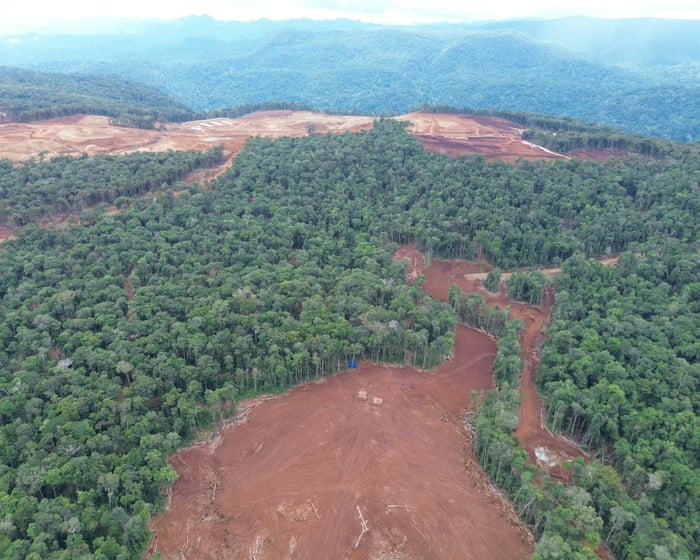
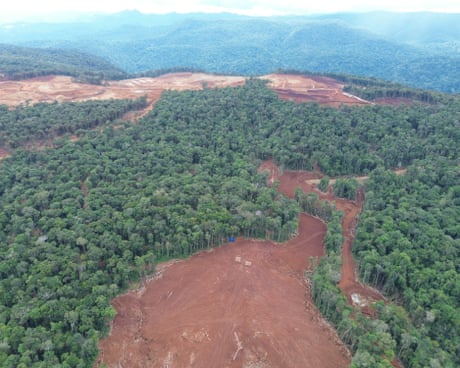
Revealed: VW, Ford and Tesla batteries linked to destructive deforestation of indigenous lands

Mines in supply chains of western carmakers linked to widespread deforestation of primary rainforest in nickel-rich lands inhabited by Tolaki people in Indonesia

Volkswagen, Ford and Tesla are among the electric carmakers whose batteries may contain nickel mined in indigenous woodlands plagued by deforestation, an analysis has found, highlighting the struggle to make vehicles that are free from environmental destruction.

Corporate disclosures and trade flows from the last two years show mines in the battery supply chains of automotive giants are linked to the loss of trees in Sulawesi, a wildlife hotspot in Indonesia that houses the world’s largest nickel deposits. The metal is widely used in cathodes in car batteries because it boosts energy density and increases range.

Continue reading...

© Photograph: Didi Hardiana, NGO Puspaham

© Photograph: Didi Hardiana, NGO Puspaham

© Photograph: Didi Hardiana, NGO Puspaham

  •  
❌