
❌

Reading view

I was diagnosed with breast cancer a year ago. Please stop calling me a fighter.

Family posing for photo
The author, shown with her family, was diagnosed with breast cancer in October of 2025.

Courtesy of the author

  • A year after my breast cancer diagnosis, I'm rejecting the "fighter" and "warrior" labels others put on me.
  • I'm tired of the pinkwashing that feels like it's turning a terrifying disease into a cheerful marketing campaign.
  • I'm grateful for my care and the people who supported me, but I don't need to find a silver lining or turn my experience into an inspirational story.

I was diagnosed with breast cancer a year ago, and with Breast Cancer Awareness Month underway, I have a confession that feels almost sacrilegious: I hate breast cancer culture. I hate the "fighter" and "warrior" labels I didn't ask for, and I especially hate the over-the-top pink branding that I see so much.

I didn't ask to join this club. I didn't want to lose my hair to chemo or have my breasts amputated. I didn't choose to worry about whether my kids and relatives might also develop this horrible disease. And I hate pink; I always have. I'm grateful for my treatment and that I've weathered it all relatively well. I just feel pissed that this was my lot in life.

As I reach the anniversary of the day my "before" split into the "after," I don't know what I'm supposed to call myself now. "Fighter" doesn't feel right. "Warrior" definitely doesn't, and "survivor" is complicated.

Person wearing a face mask sits in a medical infusion chair with blanket, IV equipment, and monitors nearby.
The author said she doesn't like the "warrior" or "fighter" labels often given to those being treated for breast cancer.

Courtesy of Kate Loweth.

I didn't choose to fight cancer

I understand that people mean well when they call someone a fighter. They want to acknowledge what she's enduring and remind her she's strong. Pink ribbons and awareness campaigns can raise money and encourage screenings, and those are all wonderful things. But in the rush to turn cancer into a story about courage and hope, there's little room for the less inspirational feelings: anger, resentment, exhaustion, and fear.

I didn't fight cancer in the way people seem to imagine. I showed up for appointments, followed my doctors' recommendations, and endured treatment because I wanted to live. I didn't have some extraordinary reserve of bravery. I didn't get to opt out. What was the alternative?

Two masked people sit in a clinical treatment room with infusion chairs and medical equipment in the background.
The author, shown with her daughter while getting treatment, said she would happily trade every bit of perspective she has gained for the life she had before her diagnosis.

Courtesy of Kate Loweth.

I didn't earn a special title by going through chemotherapy. I was a person with a disease who wanted to get better. Sometimes I was scared. Many days, I was exhausted. Sometimes I was just trying to get through the day.

I'm over the pinkwashing of breast cancer

And the pink. Everywhere, pink. Pink products, pink merchandise, pink marketing campaigns. Sometimes the branding feels like a cheerful coat of paint over a genuinely terrifying experience.

Cancer isn't cute. Losing your breasts isn't a lifestyle rebrand or a "free boob-job." Buying a pink water bottle doesn't necessarily make anyone feel less alone in a hospital room.

I don't begrudge anyone who finds comfort in a pink ribbon or a community of fellow patients. My problem is with the expectation that breast cancer should come packaged with a neat, uplifting message. What if I don't want to embrace this experience? What if I don't feel grateful for the lessons it taught me?

I'd happily trade every bit of perspective I've gained for the life I had before my diagnosis.

Finishing treatment doesn't mean everything's over

There's no clear finish line. Treatment ends, and everyone wants to celebrate that you've made it through. You want to celebrate, too. But you're also left processing what happened to your body, what you've lost, and what the future might hold.

As much as I try to go back to my "before" life, I'm constantly holding my breath, waiting for the other shoe to potentially drop.

Before cancer, I didn't spend much time thinking about my identity. I was busy being a mom, wife, sister, daughter, and working woman. Now, I'm still figuring out how much space cancer deserves in my life. I don't want every conversation to be about my health. I don't want people to expect me to inspire them simply because something terrible happened to me.

I'm grateful to be here, but I'm still angry

I'm grateful for my doctors, the people who showed up for me, and the advances in medicine that gave me treatment options. I'm grateful that I've come through this in relatively good shape. But I can appreciate the care I've received and still be furious that I needed it.

As I reach this anniversary, I don't need a label to make my experience meaningful. I don't need to turn cancer into a lesson or find a silver lining in every awful moment. I don't need to be inspirational.

If you want to support someone with breast cancer, you don't have to call her a fighter. Acknowledge that what she's going through is hard. Offer an ear or, better yet, a DoorDash gift card. Let her feel however she feels.

As for me, I'll mark this anniversary with gratitude, anger, uncertainty, and the knowledge that I'm still here. That's enough.
Read the original article on Business Insider

  •  

Men are lining up for a new on-the-go blood test that measures testosterone

the tasso blood draw is a little button on the arm
The Tasso+ blood draw takes about 5 minutes and is designed to be near-painless and foolproof.

Tasso

  • Hormone testing — especially to monitor testosterone levels — is trendy.
  • A startup backed by the US military has pioneered a DIY device that requires no needle.
  • It costs less than $100 and is quickly becoming a go-to for biohackers and telehealth brands.

Dr. Jonathan Andrews had never checked his testosterone levels until about six weeks ago. Now, he's a convert. He's already repeated the procedure twice.

He didn't go to a lab for his bloodwork, and he didn't use a standard needle or a finger prick. Instead, he attached a big red button to his bicep, then waited about five minutes while it quietly, almost imperceptibly, drew blood out of his skin while he made breakfast.

Andrews said he loves the "foolproof" process.

This quarter-sized pushbutton, called Tasso+, is being hailed as a game changer. Telemedicine companies, including Hims & Hers, Balance My Hormones, and Maximus Health, all offer the same click button as a way for patients to check their "T" levels from the comfort of home.

Testosterone therapy use has risen steadily in recent years alongside the growth of telehealth and direct-to-consumer men’s health services. Among adults, ages 18 to 34, prescriptions have more than doubled since 2018, according to health data company Truveta, even though the treatment can suppress sperm production and affect fertility.

"Hormones are one of the things that you need to continually track, especially if someone does go on treatment," Andrews, a healthcare investor and urgent care doctor who is not affiliated with Tasso, said. "It is one of the markers that you actually want multiple data points."

One of the best times to check testosterone levels is first thing in the morning, when it can be tricky to get to a lab. Some men around the globe are starting to rely on the red plastic Tasso+ button to track hormone levels more regularly at home, without a trained phlebotomist or needle prick.

"This is the future," DJ and record producer Diplo tells the camera in a YouTube video for Rhythm, a blood testing company using the Tasso+ device, where he's a brand ambassador. "Everybody needs to know what's going on in their body."

It isn't a perfect test, but it's the next generation of DIY consumer health, geared toward diagnosing problems without a doctor or medical technician.

Biohackers want to go beyond wearables

blood vials
Blood testing used to be something you could only get ordered from a doctor.

Sven Hoppe/picture alliance via Getty Images

Tasso isn't just for men wondering about their testosterone levels. Menopausal women on hormone replacement therapy and Olympians undergoing drug testing have also tried out Tasso's blood-drawing system.

It's being marketed to longevity-conscious consumers, too, as a way to track progress and assess fitness, with data that goes beyond what you could get from a smartwatch, ring, or scale, including tracking of thyroid function, cholesterol status, and hormone health.

It's US Food and Drug Administration-cleared as a Class II medical device, the green light from regulators that this technology actually works. The blood gets collected by regular folks at home, then packed in an envelope and mailed off to a real lab for analysis (so no, this isn't Theranos promising to analyze a single drop of blood in a little mobile lab the size of a printer).

It's taken 14 years, and over $120 million in investment, including an early VC-style Defense Advanced Research Projects Agency (DARPA) grant from the US military, but suddenly, Tasso+ buttons are showing up across the medical world — and outside it.

"Our goal was to try to make the most patient-friendly blood draw possible," Tasso cofounder Ben Casavant said of the project he started "in a garage" while he was still a biomedical engineering graduate student at the University of Wisconsin-Madison in 2012.

The company has grown quickly since it received FDA clearance for Tasso+ in 2022. Three years later, it announced it had shipped 2 million devices. Over the past year, that number has doubled to 4 million, the company told Business Insider.

The race for decent at-home blood testing is on

tasso founders
Tasso founders Erwin Berthier (left) and Ben Casavant (right) started the company in a garage while they were studying biomedical engineering at the University of Wisconsin.

Tasso

Telehealth companies are scrambling to adopt easier ways for people to do routine bloodwork, as the market for consumer blood testing explodes, for longevity, cancer tests, colonoscopy alternatives, and more.

Maximus's at-home testosterone test kit is $99 and includes a Tasso+. Another startup called Rythm Health, the service that Diplo promoted, offers a $79 monthly health check based solely on a Tasso+ draw. Billionaire power couple Jesse Itzler and Sarah Blakely — who founded Marquis Jets, which pioneered the prepaid private jet card, and Spanx, the billion-dollar shapewear company, respectively — are also brand ambassadors for Rythm.

The selling point for the San Francisco startup, launched in 2024, is that patients can track levels of key hormones and metabolic markers that biohackers prize, such as testosterone and estrogen, all on their own, receiving results in days via an app.

The category is quickly catching the attention of leading direct-to-consumer subscription health companies. Hims & Hers, which also offers Tasso+, recently bought a Tasso competitor, YourBio Health, for $153 million. Then there's Liam McNamara, the 20-year-old college dropout who moved to Silicon Valley to "replace a $112 billion blood testing industry" with his early-stage longevity startup called Matrix Bio.

These companies are betting on consumers' desire for a more "quantified self" and for preventative, longevity-focused, self-directed healthcare that's both personal and actionable. Investment bankers at Jeffries estimated in September that the global at-home ("point of care") testing category is growing rapidly, at a rate of about 18% annually, and could be worth $67 billion by 2030.

The drawbacks

tasso device
Tasso performs about as well as a traditional blood test for a lot of regular bloodwork, but there are exceptions.

Tasso

While convenient, the technology doesn't have exactly the same benefits as getting your blood drawn by a pro. For most routine blood work, Tasso+ performs just as well as a regular blood draw, but in terms of volume, you can't run as many tests as you can with a needle in a vein.

That classic technique has barely changed since 1947, when American Joseph Kleiner invented the "evacutainer" tube, which is essentially what we still use today.

Tasso uses capillary blood drawn from the skin, not the veins. That means it's inherently less painful, but it collects blood more slowly than venipuncture, and the single-use system is unreliable for capturing some more fragile blood measurements, like potassium levels, or testing for specific proteins related to Alzheimer's.

WFH, but make it blood

blood draw
Some telehealth startups are starting to offer at-home phlebotomist visits, but that still requires scheduling and needles.

aetb/Getty Images

On Reddit in recent months, users in the /biohacking forum have been sharing their Rythm results with one another like scores from a video game. One user who posted a photo of a sky-high cholesterol reading wrote that they were persuaded to stop taking oral steroids after seeing their Tasso results.

It's also fast becoming a go-to way for researchers and drugmakers to conduct clinical trials without asking participants to come in regularly for lab tests. Today, the product is used by patients with Parkinson's for genetic research and clinical trial participants testing out drugs from major pharmaceutical companies, including Eli Lilly and Pfizer.

"When we founded the company, this seemed like a no-brainer thing, which is: 'Hey, if you can provide an easy, patient-friendly blood draw, that should be adopted in a way that can help people get access to their health data,'" Casavant said. "To see it happening now, it's really exciting."

Read the original article on Business Insider

  •  

Kamala Harris is a Pilates girlie

Kamala Harris laughs while holding a purple microphone during an indoor seated event.
Kamala Harris is aboard the Pilates train.

Mario Tama/Getty Images

  • Kamala Harris says she's loving reformer Pilates right now.
  • The former vice president told Keke Palmer she loves how it works all the smaller muscles in her body.
  • Harris said Pilates helps her feel empowered in her daily life.

First she was Brat, now she's a Pilates girlie.

"You know what I've been doing though recently is Pilates," former vice president Kamala Harris told actor Keke Palmer on an episode of the "Baby, This is Keke Palmer" podcast, posted October 15.

Harris said that, along with a walk with her husband Doug Emhoff, time to cook, and a family dinner, the workout would be part of her perfect Sunday. Harris, who is 61, has no biological children, but she helped co-parent Cole, 32, and Ella, 27, Emhoff's kids from his previous marriage.

Harris said Pilates gives her "an overall feeling of well-being" and helps her feel empowered in her daily life.

"There's so much about empowerment that is about knowing your strength and recognizing it," she said. Through Pilates, which emphasizes the brain-body connection, she said she feels more connected to her physical strength.

"I'm just realizing that there are all of these muscles and areas that I have not been exercising," Harris said.

Originally popular among dancers, models, and celebrities, Pilates has become the workout du jour. It was the most-booked workout on ClassPass globally last year, with bookings up 66% from 2024, beating both strength training and running. And luxury hotels, including some Ritz-Carlton and St Regis locations, have installed Pilates studios as a buzzy luxury amenity.

Harris is in good company — celebs including Jennifer Aniston, Miley Cyrus, and Hailey Bieber have all professed to love it, too.

The longevity boom might also be partially to thank for the spike in Pilates' popularity.

The low-impact form of strength and mobility training uses controlled, precise movements to strengthen the core and the deep muscles that stabilize the joints. It can improve functional strength, posture, and balance — all things that keep a person mobile and independent as they age. A 2021 systematic review published in the journal Physiotherapy found that among the 1,650 participants age 60 or older, those who did Pilates had a significantly lower risk of falling, a serious risk factor for hip fracture, inactivity, and muscle loss.

Harris told Palmer, who qualified as a Pilates instructor earlier this year, that she prefers reformer, where exercises are done on a sliding carriage attached to weighted springs, to mat Pilates.

Harris didn't say how many times a week she does Pilates, but based off her excitement talking about it, she could be on her way to full Pilates girlie status.

Someone get this woman a matching set and iced matcha latte stat.

Read the original article on Business Insider

  •  

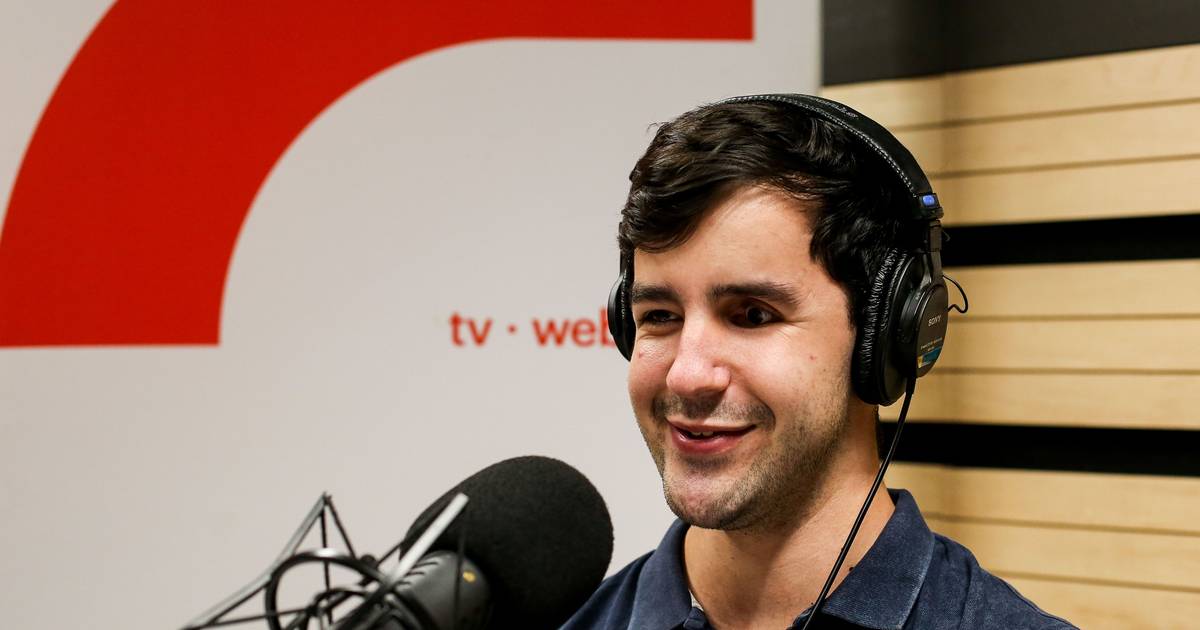
Tomás Delfim: “Na comunidade das pessoas com deficiência visual, ‘Wolverine’ já era um jogo bastante aguardado. Trouxe recursos de acessibilidade e diverti-me muito a jogar”

Wolverine regressa aos videojogos em 2026, numa aventura que explora o passado, a violência e os conflitos de um dos heróis mais icónicos da Marvel. Cristiana Reis recebe Tomás Delfim e André ‘Pintinho’ para analisar o legado de Logan, no primeiro episódio da nova temporada de Geração Gamer

  •  
❌