From Judge Ted Stewart (D. Utah) in U.S. v. Wang, dated Sept. 9 but just docketed today:
Defendant objected to the condition that she notify any intimate partners "about the potential risk she poses" as vague. To avoid any vagueness, the Court imposed the following: "The court requires you to notify any intimate partners that you have been convicted of cyberstalking and pose a risk of stalking and harassment to intimate partners." The Court finds this condition is necessary to protect the public considering Defendant's history of cyberstalking and her relationships with her past victims.
I believe similar conditions are sometimes imposed as to sex offenders, but this is the first time I've seen something like this as to stalkers. (Note that, once a criminal defendant is convicted, the standard for evaluating probation conditions restricting or compelling speech becomes more much government-friendly than would be the case in the absence of such a conviction.) Here's the Justice Department's statement summarizing the case:
A Utah County woman was sentenced to 12 months' imprisonment [and thee years of probation] today for cyberstalking two male victims she met on online dating platforms and became obsessed with them….
According to court documents and statements made at Wang's change of plea and sentencing hearings, Wang connected with the victims separately on online dating sites in 2017 and 2018 and became obsessed with each victim. Using multiple accounts, fake names, social media accounts, and phone numbers, she harassed and disparaged them publicly and privately, tagging their friends, family, and employers.
On three separate occasions, Wang reported the victims to the federal Internet Crimes Complaint Center (IC3) claiming she was being harassed and impersonated online by them. Wang reported that they did these things together, even though there is no evidence that the victims had any relation to each other. Wang admitted that she filed the IC3 complaints to get law enforcement to investigate the victims in order to harass and intimidate them.
Wang's crimes against victim 1 and victim 2 are not isolated incidents. Wang engaged in a pattern of stalking behavior in 2013 and was convicted in the state of New York.
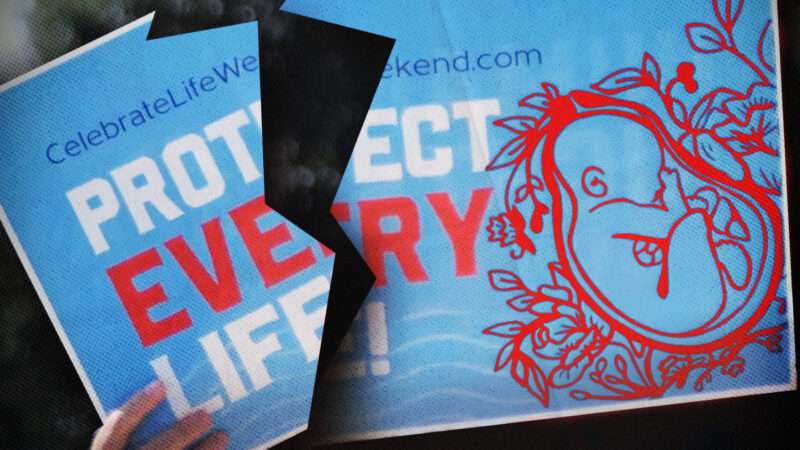
Last March on Instagram, Students for Life President Kristan Hawkins posted a photo showing her and two other members of the Virginia-based group standing outside Space Center Houston. According to the captions, Hawkins and her fellow activists, one of whom was holding a mobile phone, were "ordering abortion pills undercover."
A lawsuit filed last week in Harris County, which includes Houston, describes that Instagram post as "nothing more than a publicity stunt." The lawsuit, which aims to deploy a Texas abortion law championed by Students for Life against the organization, is also a publicity stunt. But while it may be effective by that measure, it faces legal challenges that will be hard to overcome.
The lawsuit, which a Texas woman who opposes her state's abortion ban filed under the pseudonym Maria Puerto with help from the reproductive rights group Amplify Legal, is supposed to highlight the vagueness and broad scope of House Bill 7, a 2025 law that authorizes private civil action to enforce state restrictions on "abortion-inducing" drugs. But Puerto's attempted act of legal jiu-jitsu seems too clever by half, relying on a dubious reading of the statute to seek "monetary compensation" it does not authorize and thereby punish anti-abortion activists for constitutionally protected advocacy.
H.B. 7, also known as the Woman and Child Protection Act, says "a person may not manufacture or distribute an abortion-inducing drug in this state" or "mail, transport, deliver, prescribe, or provide an abortion-inducing drug in any manner to or from any person or location in this state." Those prohibitions, it says, "may be enforced only through a qui tam action" against a "person" who "violates" or "intends to violate" them.
Any "person" other than a state or local official can qualify as a "relator" authorized to bring such an action. The relator can seek injunctive relief and "an amount of not less than $100,000 for each violation," plus "costs and reasonable attorney's fees." A successful relator generally receives $10,000 of that "amount," with the rest going to a "charitable organization" of his choice.
As a "person" who is not a government official, Puerto meets H.B. 7's minimal test for standing. And although H.B. 7 precludes lawsuits against pregnant women who obtain "an abortion-inducing drug," Puerto says Hawkins and the other activists "are not pregnant and were not pregnant" at the time of the Instagram post. So far, so good. But although the lawsuit asserts that Hawkins et al. "openly and flagrantly violated" the law's prohibitions, it does not explain how.
A photo accompanying a recent Mother Jonesprofile of Hawkins shows her and her social media coordinator, Lydia Taylor Davis, outside Space Center Houston during their "abortion-pill 'sting' stunt." Another Mother Jones photo shows Hawkins holding a mobile phone displaying what Puerto's lawsuit describes as "an order confirmation."
Judging from the Mother Jones account, it is not clear whether that description is accurate. "The scheme rapidly went off the rails," Amy Littlefield writes. "The plan was to purchase pills from a couple of services, with Hawkins posing as a male abuser while Davis pretended to be a 16-year-old—all to try to portray mail-order suppliers as reckless and dangerous. For reasons even she couldn't explain, Hawkins chose the fake name 'Wanda' as her male-abuser alter ego. But when Davis input her information, she hit a snag."
Davis was trying to order pills from the Massachusetts Medication Abortion Access Project. But according to Littlefield, that organization "had blocked Davis in its system after Students for Life teased the sting operation on social media." Hawkins "attempted to save the stunt by placing her own order, but 'Wanda' accidentally gave her age as 15," which was below the supplier's minimum age, Littlefield says. "Now a security guard was wandering over to tell them they couldn't film. Having set out to show that telemedicine services don't screen their clients, they inadvertently proved the opposite."
Puerto "will need proof that the Students for Life leaders actually obtained or intended to obtain the pills," abortion law scholar Mary Ziegler notes in Slate. "The activists may argue that the post was not in earnest, and that no one involved ever seriously intended to bring pills into Texas."
Even assuming that Hawkins et al. successfully ordered abortion pills, that conduct by itself does not fit the language of H.B. 7, which applies to people who "distribute" such drugs or who "mail, transport, deliver, prescribe, or provide" them "to or from any person or location in this state." That language encompasses out-of-state suppliers, which raises obvious concerns about extraterritorial application of Texas law. But on its face, the prohibition does not cover someone who simply orders abortion pills.
Puerto's lawyer, Amplify Legal attorney Molly Duane, argues that Hawkins et al. could be covered by the statute's reference to transportation. "What the statute says is that transporting abortion drugs from one location to another within the state is a violation of H.B. 7," Duane toldThe Texas Tribune. "By the plain language of the statute, this would seem to be a violation. This is the problem with writing such a confusing and vague law."
Under that theory, however, Hawkins, Davis, and the two other activists named in the lawsuit violated H.B. 7 only if they 1) successfully ordered abortion pills, 2) took delivery of them, and 3) subsequently moved them to another location within Texas. The lawsuit alleges only that they "ordered abortion pills, apparently multiple times." According to The Texas Tribune, Duane and Puerto "are hoping that the lawsuit will eventually surface more about what the defendants did with the abortion pills once they ordered them."
The lawsuit faces another obstacle. H.B. 7 does not apply to "speech or conduct protected by the First Amendment." Hawkins et al.'s efforts to show how easily state abortion bans can be circumvented certainly seem to fall into that category. "Students for Life may stress that the case targets their political speech about abortion," which is "protected under the First Amendment," Ziegler notes.
Those are not the only puzzling aspects of the lawsuit. Puerto, a 26-year-old single mother of two young children, emphasizes that she "had no choice but to continue" those pregnancies because she did not "have access to transportation or the economic resources to pay for travel out of state." The lawsuit devotes 11 paragraphs to describing the burdens imposed by her state's denial of "true reproductive rights," which she argues justifies some sort of compensation.
All of this seems legally irrelevant under H.B. 7, which does not require a relator to allege damages of any sort, let alone damages stemming from the abortion ban it aims to reinforce. "With nowhere else to turn for assistance," the lawsuit says, "Ms. Puerto is seeking financial compensation" from Hawkins et al. "in the amount of $459,782—the average cost of raising two children from birth to age 18 in the state of Texas."
Although H.B. 7 sets a minimum award of $100,000, the lawsuit notes, "there is no cap on the monetary compensation owed a relator." But the law does not describe H.B. 7 awards as "monetary compensation" for injuries allegedly suffered by the relator.
The statute's only reference to "compensatory damages" deals with lawsuits filed against H.B. 7 relators under "clawback provisions" of other states that have tried to thwart such litigation. In response to a "clawback" action, the law says, an H.B. 7 relator can seek "compensatory damages, including money damages in an amount equal to the judgment damages and costs, expenses, and reasonable attorney's fees spent in defending the action." By contrast, the bounty for proving a violation of the restrictions on abortion pills is simply "an amount."
The lawsuit itself, emphasizing the lax standards for filing a claim under H.B. 7, notes that Puerto "did not suffer an injury traceable to [the defendants'] ordering of abortion pills that can be remedied by a court." But it suggests that an award to Puerto would be appropriate given the defendants' anti-abortion activism.
The lawsuit notes that Students for Life "proudly advertised" its support for H.B. 7. Puerto complains that Hawkins et al. "ignore the immense harms and multiple deaths already attributed to Texas's cruel abortion bans" and "demean the six million Texans of reproductive age who have had their ability to decide whether and when to begin or expand a family stripped away by these bans." Whatever you make of that charge, the defendants' activism is constitutionally protected and therefore cannot support a cause of action in civil court.
"Texas is a strange place filled with vigilante statutes" that "seek to turn Texans against each other," Duane told The Texas Tribune. "But if anyone should be benefiting from these legal regimes, it's people like our client." While "putting those two things together…might be unusual," she said, "this is the situation that Texas has put its citizens in."
Depending on your perspective, you may or may not sympathize with Duane's reasoning. But it seems unlikely to pass muster as a matter of law.
That's part of libel plaintiff's argument(filed last week) for subpoenaing defendant's AI queries in Fontainebleau Florida Hotel, LLC v. Botach; the defendant is popularly known as Rabbi Shmuley Boteach. From the introduction:
The Court asked whether Botach's communications with AI platforms fall within the scope of "damages" discovery permitted by ECF No. 261, and specifically how those materials relate to malice and the statutory cap on punitive damages. Precedent from the United States Supreme Court and Eleventh Circuit, as well as Florida law, answers that question directly.
Under Fla. Stat. § 768.73(1)(c), the cap on punitive damages lifts entirely where the fact finder determines that "the defendant had a specific intent to harm the claimant" at the time of the injury. As discussed below, legions of cases from trial courts to the Supreme Court hold that post-defamation conduct is probative of whether defamatory statements were made with intent to harm. Specific intent is therefore not background color to the damages trial or damages discovery. Discovery into Botach's intent to harm Plaintiff is damages discovery, and the AI materials are the most direct evidence of that intent.
Botach did not merely publish an errant falsehood on a blog or make a heated statement in a debate. He methodically engineered his attacks—drafting, refining, and iterating for painful effect through the most potent technologies known to humankind. The prompts and chats are his mental state reduced to writing, and they are probative of damages.
The Court should sustain the objections to the proposed AI-provider subpoenas as drafted and apply the same limits to the overlapping Seventh Request for Production. The issue is whether these demands fall within the scope of "discovery limited to damages." The unresolved punitive amount permits discovery concerning punishment for the adjudicated wrong, not an unrestricted inquiry into Defendant's research or litigation conduct.
The amended complaint already alleges knowing falsity, deliberate fabrication, repeated publication, financial motive, and specific intent to harm. Plaintiff did not pursue AI discovery before the general discovery cutoff. But under the guise of "discovery limited to damages," Plaintiff seeks every responsive AI exchange concerning this litigation, the Hotel, Plaintiff's lawyers, every court order, and the judges. It reaches accounts associated with an expansively defined "Botach," without limiting production to his queries or material used in the actionable publications. The Court should enforce the reopening order before requiring any production and independently preserve substantiated work-product objections.
For more backstory on the case, an excerpt from the long Report and Recommendation issued July 29 by Judge Marty Fulgueira Elfenbein in Fontainebleau Florida Hotel, LLC v. Botach:
This action arises from an encounter between Defendant and then-hotel guest Faiz Akbar … in the lobby of Plaintiff's hotel in December 2024. The Parties sharply dispute the nature of the encounter, who initiated or escalated it, and whether Plaintiff responded appropriately to Defendant's subsequent complaints.
Plaintiff's operative First Amended Complaint alleges that Defendant published false statements concerning the incident and Plaintiff's response to it, including statements that Plaintiff discriminated against Defendant because he is Jewish, knowingly permitted an antisemitic assault to occur on its premises, removed Defendant rather than the alleged aggressor, and refused to cooperate with law enforcement. Based on those allegations, Plaintiff asserts claims against Defendant for defamation and tortious interference with business relationships.
Defendant filed a Counterclaim and Third-Party Complaint asserting claims against Plaintiff and naming Jeffrey Soffer … and Akbar as Third-Party Defendants. Defendant's Counterclaim alleges, among other things, that he was subjected to an antisemitic verbal attack at the hotel, that Plaintiff failed to protect him or adequately cooperate with the ensuing investigation, and that Plaintiff thereafter excluded him from its properties. Defendant asserted claims under federal civil-rights statutes and a claim for tortious interference with business relationships….
The merits of the Parties' competing claims are not directly before the Court in the Motion for Sanctions. Instead, the dispute concerns Defendant's conduct during the litigation, the meaning and scope of the District Court's February 20, 2026 Order …, and whether Defendant's subsequent social-media activity violated that Order in a manner warranting sanctions under Federal Rule of Civil Procedure 16(f) or the Court's inherent authority….
On March 11, 2025, Defendant served a subpoena on the Miami Beach Police Department seeking video footage of the underlying incident that Plaintiff previously provided to the department. The Miami Beach Police Department produced responsive surveillance footage to Defendant's counsel on March 26, 2025, and counsel thereafter transmitted that footage to Defendant. On April 2, 2025, before the entry of a protective order, Defendant posted an excerpt of the surveillance footage to his public Instagram account, which had more than 90,000 followers. On April 7, 2025, the Parties jointly moved for entry of a stipulated protective order governing discovery in this action. The Court entered the Parties' Stipulated Protective Order on April 9, 2025.
The Protective Order provides that material produced by a nonparty is automatically treated as "Outside Counsel Eyes Only" for thirty days following production without the need for an affirmative designation by a party. The Protective Order further prohibits the use of discovery material for any purpose unrelated to this litigation, including any public, commercial, business, or personal purpose. The Protective Order restricts access to material designated as "Highly Confidential" or "Outside Counsel Eyes Only" to specified persons and does not permit unrestricted public dissemination of such material….
On April 10, 2025, one day after entry of the Protective Order, Defendant again posted the surveillance footage to his social-media accounts. On April 16, 2025, Plaintiff formally designated the materials produced by the Miami Beach Police Department as "Highly Confidential," and Plaintiff's counsel communicated that designation to Defendant's counsel. Defendant's counsel then informed Defendant of the designation, after which Defendant removed the footage. Defendant contemporaneously published a social-media post acknowledging that he was "required under the rules to remove the video."
Notwithstanding his knowledge of the Protective Order and Plaintiff's confidentiality designation, Defendant again posted the surveillance footage on September 17, 2025…. Although Plaintiff requested severe evidentiary and litigation-ending sanctions [over this], the undersigned concluded that those sanctions were not then supported by the record because a lesser sanction had not previously been imposed for the violation. The undersigned instead awarded Plaintiff its reasonable attorney's fees and costs attributable to the sanctions motion and expressly admonished Defendant that the Protective Order was not optional. The undersigned further warned Defendant that any future violation of the Protective Order would be treated with the utmost seriousness, including case-dispositive sanctions.
After further proceedings concerning the amount of the award, the Court ordered Defendant to pay Plaintiff $15,000.00 no later than April 26, 2026….
Separate from the Protective Order dispute, the District Court addressed Defendant's social-media activity in connection with pretrial scheduling and discovery matters. On February 10, 2026, Plaintiff moved for an extension of time to take Defendant's deposition and represented that Defendant had repeatedly scheduled and cancelled depositions based on asserted physical limitations while simultaneously publishing social-media content showing him engaged in activities including ice skating, kayaking, and bicycling. The District Court granted Plaintiff additional time to take Defendant's deposition and stated that it was "deeply disturbed by this trend." The District Court cautioned Defendant that sanctions, "potentially including the striking of Defendant's pleadings," would be imposed if the conduct continued….
[In a] February 20 Order, the District Court observed that the communications between the Parties had become "toxic," particularly in light of Defendant's online communications, and agreed with Plaintiff that the time had come for the matter to proceed toward resolution. The District Court stated that it was "deeply disturbed by Defendant's conduct," including his "continued social media attacks aimed at Plaintiff and its counsel" and his attempt to effect service at an address he knew belonged to Soffer's child. The District Court then expressly "DIRECT[ED] Defendant to cease such harassing conduct and social media references to Plaintiff and its counsel during the course of this litigation." …
In the Motion for Sanctions, Plaintiff contends that Defendant continued to publish social-media content referencing Plaintiff, Plaintiff's counsel, and this litigation almost immediately after entry of the February 20 Order. Plaintiff identifies multiple occasions between February 26 and May 28, 2026, on which Defendant allegedly violated the Order. [For more details, see the opinion, but here's one example. -EV] …
The May 24, 2026 social media publications constitute perhaps the most egregious violations of the February 20 Order. To recap, in one video, Defendant alleged that a member of his family was confronted and threatened in Jerusalem by an individual who invoked Plaintiff's counsel. Defendant specifically identified Plaintiff's counsel as the attorney representing the hotel in this action and asserted that this lawsuit was filed to "intimidate and silence him" after he publicly alleged that he had been threatened with murder in an antisemitic attack. Defendant further stated that it "remains unknown whether anyone connected to the ongoing litigation had prior knowledge of, encouraged, or otherwise played any role in the confrontation" and that he "has endured nearly two years of legal and public harassment by [Plaintiff's counsel] and the hotel in an effort to financially and personally destroy him after speaking out about the alleged antisemitic attack."
In the other May 24, 2026 post, Defendant referred to Plaintiff, Soffer, and Plaintiff's counsel, Burstyn, by name, and questioned whether Burstyn appeared in materials associated with Jeffrey Epstein. The post also referenced Burstyn's representation of another client, questioned Burstyn's role in events preceding the death of Virginia Giuffre, criticized Burstyn's representation of Plaintiff, and concluded with an assertion concerning public distrust of attorneys, stating that Plaintiff's counsel "is the reason that 84% of Americans believe that attorneys are scumbags."
These posts did not merely allude to Plaintiff—they expressly identified Plaintiff, Plaintiff's counsel, and the upcoming trial. They therefore violated both components of the District Court's directive. They constituted social-media references to Plaintiff and Plaintiff's counsel, and they also plainly continued the very social-media attacks that prompted the District Court's intervention. These publications therefore fall squarely within the conduct the District Court sought to halt and cannot reasonably be characterized as compliance with the February 20 Order….
And the Magistrate Judge therefore recommended sanctions against the Defendant:
The totality of the record demonstrates that Defendant willfully chose to disregard a clear judicial command. It is undisputed that Defendant knew of the District Court's February 20 Order. Nevertheless, Defendant continued making prohibited social-media references over approximately three months.
The violations were not confined to a single publication or a single day. Instead, Defendant repeatedly returned to social media to discuss Plaintiff, Plaintiff's counsel, and the pending litigation. That pattern is inconsistent with negligence or misunderstanding….
Further, Defendant knew the significance of an order, the requirement that he comply with an order, even if he disagreed with it, and the consequences for failing to follow an order. Not only has Defendant already been sanctioned for violating an order of this Court, but Defendant was also warned about the potential for graver consequences if he violates any other orders….
Turning to the issue of whether lesser sanctions would suffice, the record contains multiple warnings of escalating specificity. The District Court first warned Defendant on February 10, 2026 that continued misconduct could result in striking Defendant's pleadings. Then, on February 20, 2026, the District Court directed Defendant to cease social-media attacks and references to Plaintiff and its counsel. Less than one week later, the undersigned warned Defendant that Court Orders are not optional, that Defendant could not take matters into his own hands, and that future violations would be treated with the utmost seriousness, including the potential for Rule 37(b)(2)(A) sanctions. Those warnings did not produce compliance. Another admonition would repeat a measure the record has already shown to be ineffective with Defendant.
Further, the Court previously imposed a sanction in the form of a $15,000.00 fee award based on Defendant's knowing violation of the Protective Order. The violations of the February 20 Order followed that ruling and the accompanying admonition…. [T]he prior monetary sanction did not deter Defendant from again disregarding a pretrial directive….
At his deposition, Defendant admitted under oath that his social-media publications were intended to cause Plaintiff and Plaintiff's counsel to reconsider their conduct and litigation strategy. Consistent with that testimony, Defendant's May 24 and May 28 posts publicly accused Plaintiff of attempting to destroy him through this litigation, attacked Plaintiff and Plaintiff's counsel personally notwithstanding the Court's directive prohibiting such conduct, and attempted to rally public opinion by requesting "your support" in his trial "Against 'that Hotel' in Miami" where he will "absolutely defeat the antisemitism-deniers."
Defendant therefore used repeated violations of the Court's Order as an extrajudicial litigation tactic designed to influence whether, and under what conditions, Plaintiff continued to prosecute its claims against him. That objective directly implicates the integrity of the judicial process. The pattern of Defendant's repeated, willful violations of the February 20 Order when coupled with his stated intention behind his social-media posts and his history of sanctions and admonitions demonstrate that lesser sanctions will not suffice.
Accordingly, the undersigned concludes that striking Defendant's Answer and Affirmative Defenses, dismissing his Counterclaim with prejudice, and entering default judgment as to liability on Plaintiff's well-pleaded claims constitute appropriately tailored remedies that address the institutional harm caused by Defendant's abuse of the judicial process. {This recommendation is not based upon any determination that Defendant's affirmative defenses or Counterclaim lack substantive merit. Rather, it is based upon Defendant's willful violation of this Court's Order, his deliberate use of those violations as a litigation tactic, and the demonstrated inadequacy of lesser sanctions to secure compliance or preserve the integrity of these proceedings.}
With that said, the recommendation of entry of default judgment would not, by itself, establish the amount of Plaintiff's damages. Plaintiff would remain obligated to establish any unliquidated damages through appropriate evidence and further proceedings and Defendant would be able to defend against such damages claims….
[T]he Court [also] finds it appropriate to award Plaintiff its reasonable attorney's fees and expenses incurred as a result of litigating the Motion for Sanctions. The amount should be determined through a separate fee submission with Plaintiff bearing the burden to establish the reasonableness of its counsel's hourly rate along with the reasonableness of the requested fees….

 Login