In a conference room in Beijing, the pitch to Chinese travel operators wasn't about the Red Square or the Hermitage. It was about the volcanic landscapes of Kamchatka and the Arctic waters of Murmansk Oblast. The shift is subtle but significant: the new wave of Chinese interest in Russian tourism is less about sightseeing and more about exclusive, nature-based experiences, driven largely by a younger demographic seeking untouched ecosystems.
This pivot was highlighted at a meeting organized by the Center for Strategic Research (CSR) under its 'Discover Russia' brand, where representatives of the Chinese tourism industry outlined a clear break from traditional itineraries. While older generations still favor cultural tours centered on Moscow and St. Petersburg, younger travelers are demanding hard-to-reach destinations with unique ecological value.
Jan Shuo, General Manager of the International Department at China Professionals-Workers International Travel Service, noted that these remote regions hold the greatest potential for exclusive tour products. The commercial data backs up the enthusiasm. According to Utour, revenue for its Russia-focused operations grew by more than 38% in 2025, and Russia's share of trips within the North-East Asia structure has increased 2.5-fold.
On the east coast of England, specifically in the counties of Norfolk and Suffolk, the menu at the table is often dictated not by a chef's whim, but by the calendar of tides. This is a region where the concept of maritime terroar applies with particular force: the mineral composition and water temperature of the North Sea directly shape the flavor profile of local oysters, crabs, and mussels, distinguishing them from shellfish produced elsewhere in Britain or Europe. For travelers seeking a gastronomic experience driven by seasonal availability rather than year-round frozen stock, this area offers a distinct advantage, particularly during the autumn and winter months.
The choice of timing is critical here because the quality of the catch fluctuates with the seasons. Autumn is traditionally the peak for blue mussels, which have recently benefited from warmer waters that contribute to a meatier texture in the Norfolk region. Winter, conversely, is considered the golden season for oysters. Fishing consultant Mike Warner notes that the colder water intensifies the taste of bivalves, giving them a richer, oilier, and creamier profile. Additionally, the return of the herring to the North Sea offers a historical shift in the local cuisine. After a ban on herring fishing that remained in effect from 1977, the population has recovered sufficiently for restaurants to reintroduce the fish into their menus, serving it in various preparations from marinades to roasts with sharp sauces.
Where to eat
The geographic dispersion of the best seafood venues requires a practical approach to logistics. Most of the notable establishments are located in small fishing villages rather than urban centers. To move efficiently between key spots such as Brancaster, Cromer, and Aldeburgh, a private car is generally necessary, as public transport links in these rural areas can be limited.
Jason Cranwell stayed at Marcliffe - Aberdeen's only five-star hotel - while the city awaits to find out if Prime Minister Andy Burnham will approve proposals for the Jackdaw gas field
Some of my favorite lesser-known South Korean cities are Suwon, Incheon, and Gyeongju.
I was born in South Korea and moved to the United States when I was 5 years old. I've traveled back almost every year since.
Usually, when people ask me for South Korean travel recommendations, what they really want are ideas for things to do in Seoul.
I can understand why tourists flock to the capital city of South Korea: Seoul has culture, technology, tons of entertainment, and amazing fashion and cuisine.
However, if you ask me, you're missing out if you don't visit some of the other, lesser-known cities that contribute to South Korea's heartbeat.
Here are four of my favorite cities to visit in South Korea that aren't Seoul.
I always go the distance for Busan
I love visiting Busan during the fall.
Justine Lee
About four hours south of Seoul lies Busan. Growing up, my family visited this city over the summer to swim, soak up the sun, and eat incredibly fresh seafood.
You don't have to treat Busan exclusively as a warm-weather getaway, though: My favorite time to visit Busan is actually in the fall, when the days are sunny and the nights are breezy with sea-salt air.
My favorite destination in Busan is Gamcheon Culture Village, a steep slope dotted with hundreds of colorfully painted homes.
During the Korean War, refugees first settled in this area. Later, Gamcheon was restored and enhanced with brightly colored exterior paint to attract tourism.
Today, Gamcheon Village stands as a beloved landmark in Busan, where visitors can get lost in the twisted alleyways and enjoy stunning views overlooking the hilly scenery.
A trip to Busan is incomplete without a visit to Haeundae Beach.
35007/Getty Images
I also strongly recommend that anyone who visits Busan dedicate one morning to waking up early and watching the sunrise over Haeundae Beach.
In my opinion, the view alone can wash away any negative feelings, even for a brief moment.
When you're in Busan, don't forget to check out the Jagalchi Market for excellent fish and the Nampo-dong Food Alley for the best street food.
Suwon is a chill day trip from Seoul
Hwaseong Fortress is a must-visit.
sookkyung Han/Getty Images
If you want to stay in Seoul for most of your trip but crave an easy day trip with a laid-back vibe, Suwon is your answer. Whenever I take the hour-and-a-half-long bus trip, excitement brews in my stomach.
The main attraction of this very chill city is the Hwaseong Fortress, a towering stone-and-brick fortress that passes through the center of Suwon. It was built in the 18th century to protect the city, and in 1997, it was designated a UNESCO World Heritage site.
I love to walk the length of the fortress — because of the lack of high-rise buildings, it's an excellent way to take in the city's scenery, which includes a mix of traditional houses, cozy little cottages, and low-rise industrial buildings.
Running along the length of the historical site, the city has many unassuming, cute cafés where you can get delicious coffee drinks and desserts.
It's nice to sit down outside one of them and lose track of time, soaking up the beautiful street art that paints the alleyways of Suwon.
Gyeongju is rich with history
Gyeongju has tons of beauty and history.
Sanghwan Kim/Getty Images
Once the capital of the ancient Silla Kingdom, Gyeongju is filled with landmarks that bring the country's deep history to life.
From the grand Bulguksa Temple and the mystical Seokguram Grotto to the ancient royal tombs scattered throughout Tumuli Park, the city offers a rare glimpse into Korea's royal past and Buddhist origins.
Strolling through Gyeongju, especially in the later hours of the day, immerses you in a peaceful blend of quiet ponds and lantern-lit walkways.
You can't leave Gyeongju without trying Hwangnam-ppang, a small soft pastry filled with sweet red-bean filling. This treat is a local specialty of Gyeongju — so much so that locals and visitors refer to it as Gyeongju bread.
You can find this treat at various food shops and vendors throughout the city.
Incheon is more than just an airport hub
The food in Incheon is unforgettable.
Justine Lee
Anyone who flies into South Korea will instantly recognize Incheon, at least by name. It is home to the country's largest international airport.
Long before the airport's creation in 2001, though, there was the Incheon port through which goods from China arrived and were sold.
The port also paved the way for the establishment of Incheon's Chinatown, where the blend of Chinese and Korean flavors endures in the neighborhood's small slew of standout restaurants.
I recommend taking a walk through the streets and alleyways of the neighborhood while munching on street food. I'm personally partial to the giant fried dumplings and tanghulu, or skewers of sugar-coated fruit, that I've enjoyed there.
If you have a chance, enjoy a sit-down meal of jjajangmyeon, a Chinese-Korean black bean noodle dish, and soak up some of the bustling area's history and culture.
This story was originally published on December 24, 2025, and most recently updated on October 19, 2026.
There are roughly 72 million children in the US based on 2025 census data, and SpaceX stock closed at $146 on Friday. If Musk donated 72 million shares right now they would be worth around $10.5 billion.
Musk didn't provide any further details on how the giveaway would work, such as eligibility criteria or specific timing, or whether the shares will be transferred to Trump Accounts.
The Tesla and SpaceX CEO is the world's richest person, with an estimated net worth of $904 billion as of Friday's close, per the Bloomberg Billionaires Index.
SpaceX — the company behind Falcon rockets, Starship launch vehicles, Starlink satellites, the AI chatbot Grok, and X — went public this summer and has a market capitalization of about $2 trillion.
Excluding restricted shares and options, Musk owns 4.77 billion SpaceX shares for about a 36% stake, worth just under $700 billion at Friday's close. The rest of his fortune largely comprises his stakes in his other companies, including Tesla, Neuralink, and The Boring Company.
Donating 72 million shares would reduce Musk's number of SpaceX shares by 1.5%. If, as indicated in his X post, he follows that up with further giveaways, his stake could shrink significantly.
Musk's pledge is part of a broader trend of gifting shares to America's children, aimed at ensuring they all own a piece of the stock market and reap its gains over time, and benefit from a lifetime of compounding wealth.
The Trump administration launched Trump Accounts — tax-advantaged investment accounts — for eligible children this summer, with those born between 2025 and 2028 receiving a $1,000 federal seed deposit. Numerous companies have agreed to contribute to them as well.
Michael and Susan Dell contributed $250 to 25 million American children's Trump Accounts earlier this month, a gift totaling $6.25 billion that was allocated first to those in the lowest-income ZIP codes.
SpaceX President Gwynne Shotwell and her husband pledged in July to give shares of SpaceX to more than 2 million children.
Musk shared his SpaceX gift idea after Anthropic pledged to commit 5% of its shares to a public benefit fund.
"I recommend giving shares directly to the public," he replied on X. "This is what I will be doing."
Another X user described Anthropic and Musk's pledges as "the beginning of universal basic income." Musk corrected him, writing *universal high income."
Musk has predicted that advances in AI, robotics, and other technologies will usher in an age of abundance in which everyone can have "whatever stuff they want."
He's recommended people stop saving for retirement in 10 or 20 years as their nest eggs will be "irrelevant," and has proposed government checks for all as the best response to job losses from AI.
Correction: October 19, 2026 — An earlier version of this story incorrectly described SpaceX as a private company. It went public in June 2026.
Backlash against content creators includes restricted hours for filming and even outright bans
Stand in any vaguely photogenic spot these days on holiday and the chances are you will come across people posing with raised phones and even ring lights. Some may be influencers with huge audiences on social media, others just overkeen Instagram users. With hotels and beauty spots now so overrun, however, bans on photography are coming into place.
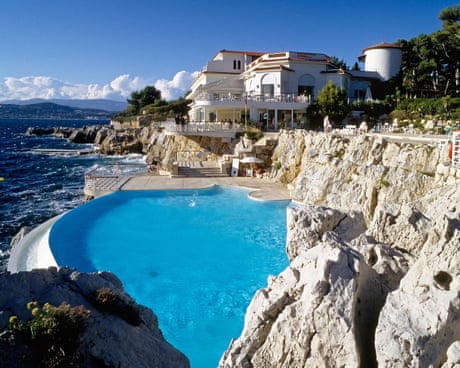
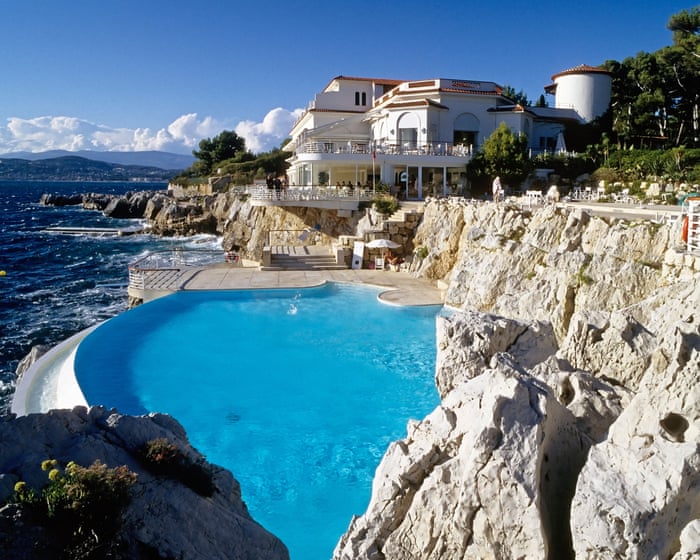
The five-star Hotel du Cap-Eden-Roc in Antibes, known for its glamorous clientele, views of the Côte d’Azur and a stunning infinity pool, has brought in rules against photoshoots: no longer allowed without prior permission.

 Login