
 Login

The Iran War is sprawling into an inflation nightmare for Trump ahead of the midterms
Getty Images; Bloomberg/Getty Images; BI
- As the Iran War continues, gas prices remain high — a real strain for consumers.
- The conflict has kept diesel, crude oil, and gas prices high; inflation is eating up pay hikes.
- As America heads into midterms, it's a hard affordability position for President Donald Trump.
It's expensive out there: Gas prices have been stuck at over $4 a gallon for more days this year than any other. The war in Iran shows no signs of cooling off. Inflation is swallowing any raises you might have gotten at work.
It's a recipe for a challenging midterm cycle for President Donald Trump, who faces an affordability crisis at home that's not going away — and a far-away war that's only making costs go up.
The volatility surrounding the contested Strait of Hormuz, a key oil and gas transit waterway, has hit American consumers hard.
Since the Iran war first kicked off in February and the Strait was subsequently closed, gas and oil prices have skyrocketed. Diesel prices have hit record-breaking highs in recent weeks. That paints a dreary picture for Americans struggling with high costs, who likely won't feel any relief at the pump in the near future — especially as more potential military action looms.
Trump has highlighted the broader goals of the war and argued that the increase in gas prices would be transient. In an October 8 Truth Social post, he wrote, "a temporary increase in the price of Gasoline is a small price to pay for Iran not having a Nuclear Weapon."
While the US military has not carried out airstrikes against Iran directly in several months, it has kept a significant force presence in the Middle East, including more than a dozen warships, dozens of fighter jets, and thousands of sailors and Marines.
US forces in the region are maintaining a naval blockade against Iran, and since July, they have disabled four commercial ships that the Pentagon said were sailing in violation.
After the start of the war in February, crude oil prices soared and remain significantly higher than when Trump's second term began.
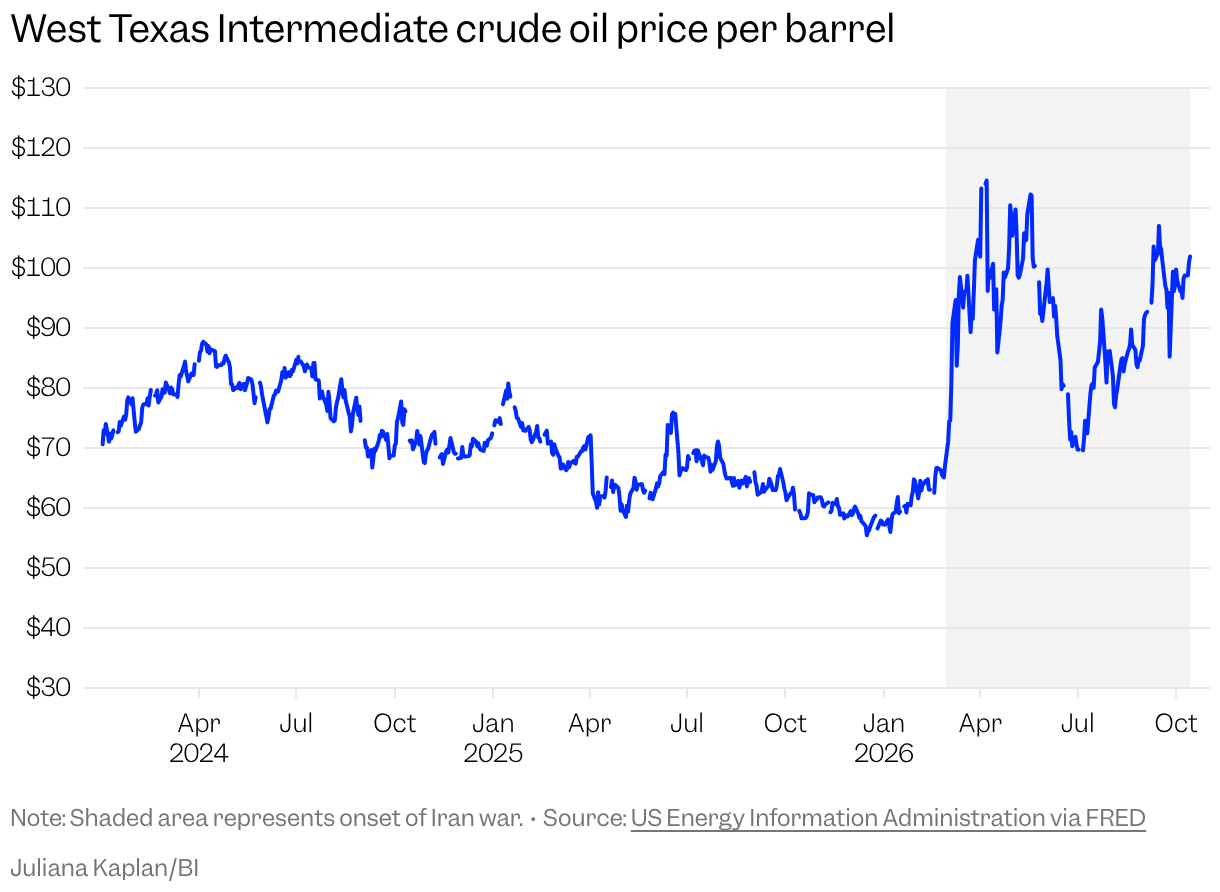
Tanker traffic through the Strait of Hormuz nearly ground to a halt early in the Iran war, severely disrupting a waterway that normally carries about a fifth of the world's oil supply. Shipments have since recovered substantially but remain below prewar levels.
The Trump administration said it aims to alleviate issues related to oil. "The President wants to see prices at the pump fall and continues to take historic measures to alleviate temporary disruptions as oil flowing through the Strait of Hormuz approaches pre-conflict levels," White House spokeswoman Taylor Rogers said.
Vessels carrying oil and other products have continued to take fire from both sides, putting more pressure on commerce traveling through the area. US forces have carried out additional strikes on Iranian-linked targets. The Pentagon said they have destroyed 10 tankers tied to the Islamic Revolutionary Guard Corps, or IRGC, since July.
Meanwhile, several merchant ships have come under attack in and around the Strait of Hormuz this month, according to the Royal Navy-affiliated United Kingdom Maritime Trade Operations Center. US Central Command, which oversees American military operations in the Middle East, has attributed some of these strikes to Iran.
The ripples of volatility in oil prices are showing up at the pump. Long gone are the days of gas stations touting below-$3 prices; prices are still hovering in the mid-$4 range. High gas prices are even tamping down spending among higher-income consumers, and soaring costs have led to a rise in "hypermilers" — drivers who try to optimize and gamify their habits to get the best value per gallon.
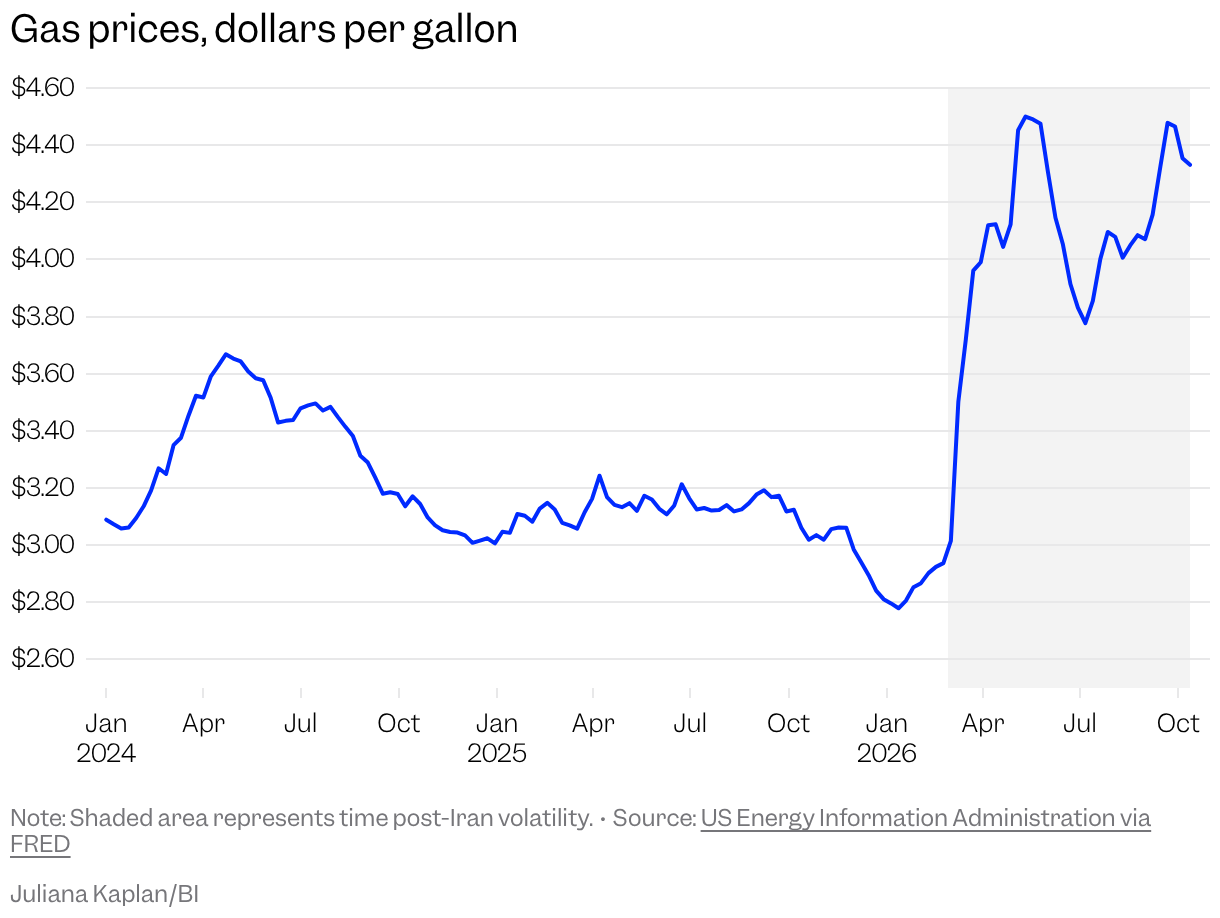
Diesel prices in the US have spiked even more, up to around $6.18 per gallon, an over $2.50 increase over the year, per the Energy Information Administration. In California, diesel is hovering over $8 a gallon.
Those fuel and energy strains are pushing up costs across the economy. Inflation as tracked by the consumer price index increased to 3.7% year-over-year in September — higher than economists expected. That was driven in large part by soaring gas and energy prices, with energy rising by 20.4% year-over-year and gas by 34.2% in the same period.
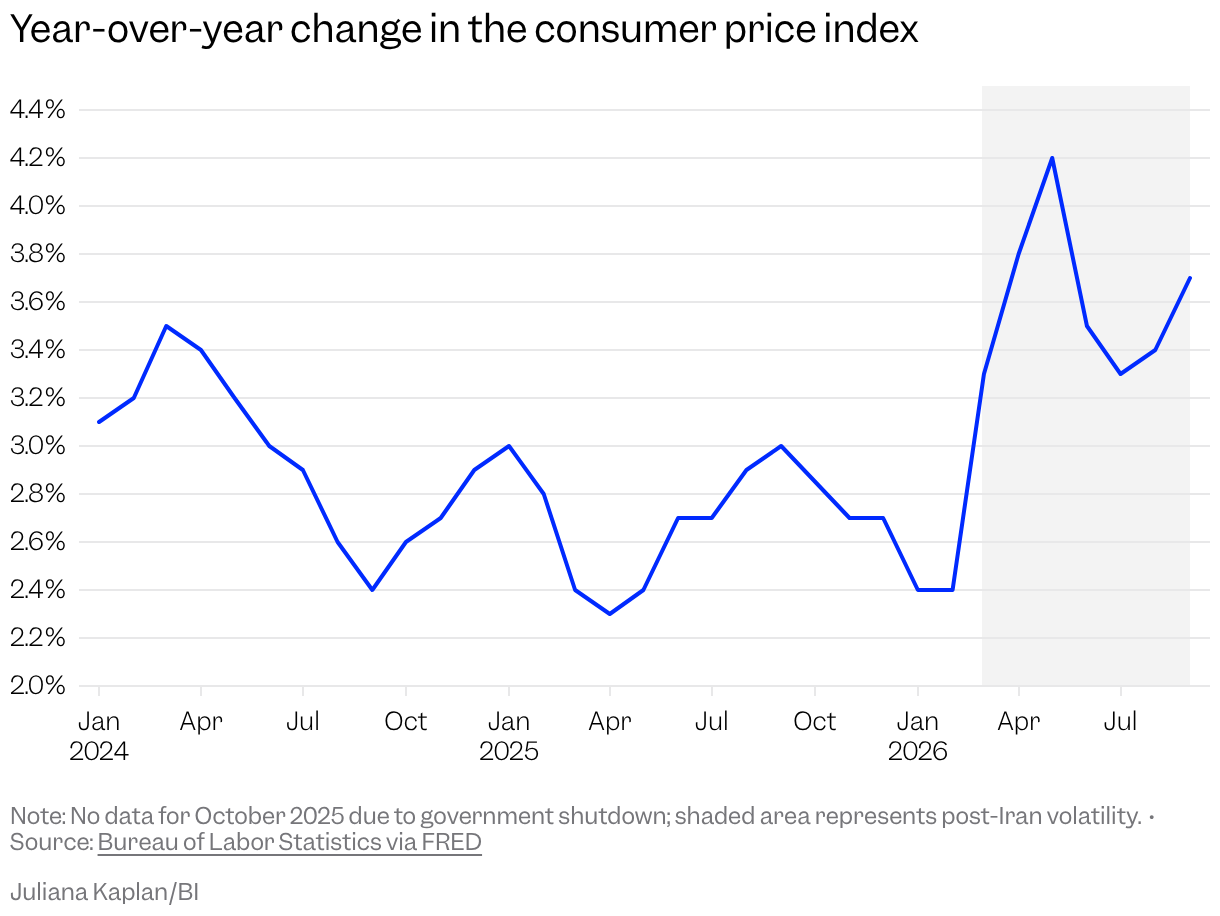
Higher inflation has put pressure on the Fed and bond markets. In September, the central bank raised rates for the first time in three years to try to combat rising prices, with one more hike potentially coming by year's end. The 10-year Treasury yield, which influences borrowing costs for mortgages, auto loans, and credit cards, has surged since the war began, from below 4% at the end of February to a high of 5.31% this month. The 30-year mortgage has risen nearly in lockstep, going from just under 6% to 7.5% during the eight-month conflict.
For everyday Americans, all of these international strains amount to what is, essentially, a pay cut. Wage growth remains slow and steady, but, over the past few months, rising prices have outpaced pay increases. Inflation-adjusted wages have slumped since the start of the war, and have given up nearly all their gains since the start of Trump's second term.
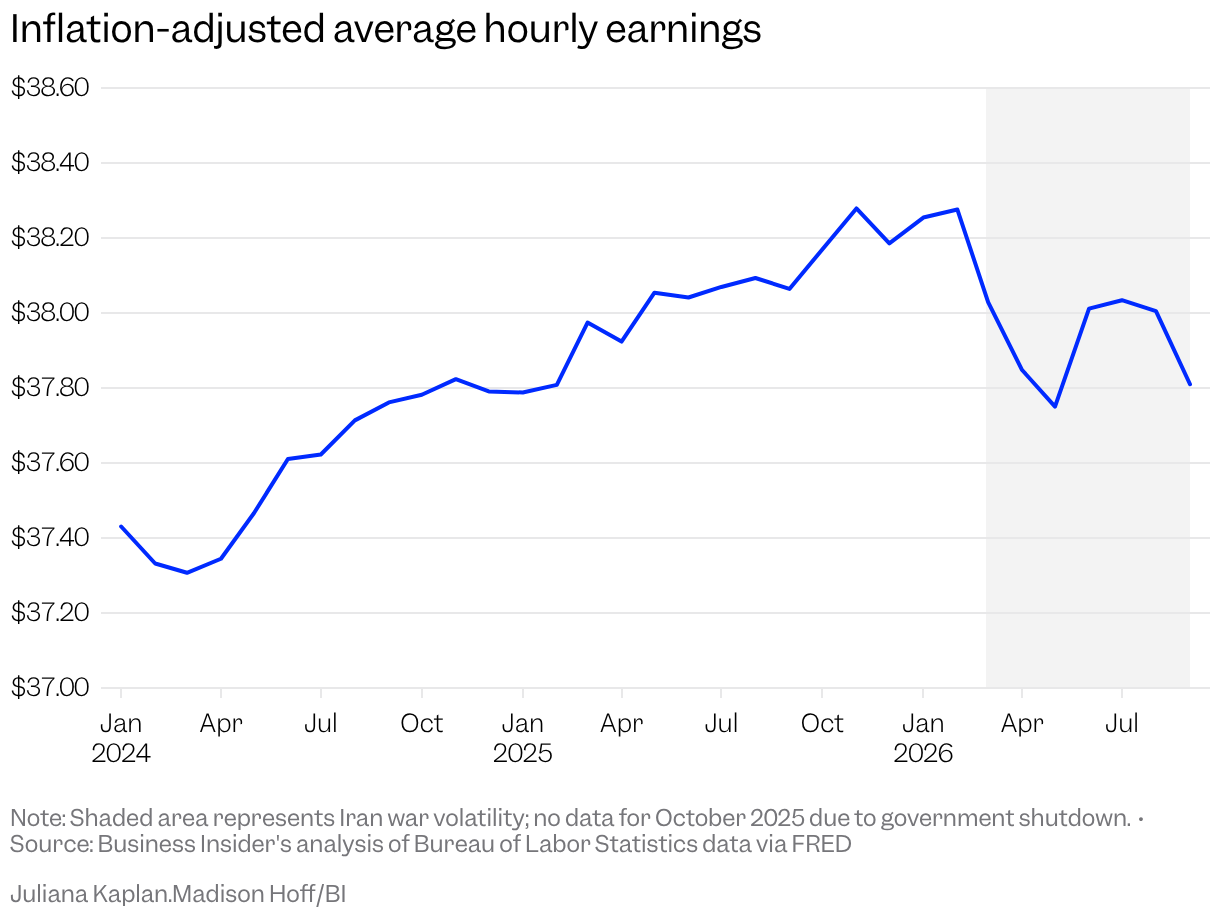
When asked for comment, the White House highlighted that by some measures, earnings are still outpacing inflation. "Under President Trump, private sector workers have seen their wages continue to outpace inflation, with average annual earnings growing by more than $600," said White House spokesperson Matthew Middleton.
And, with midterm season in full swing, affordability is on the ballot for many voters. The current economic situation shows no immediate signs of changing — another blow for Trump, who's been on a quest to bring down gas prices.
There are growing signs that the US could be preparing for fresh military action against Iran. Another aircraft carrier strike group is sailing across the Pacific and is expected to enter the Middle East.
The Trump administration is also facing a resurgence in attacks from the Houthis, a rebel group in Yemen. In recent weeks, the Iran-backed rebels have seized key territory along the Red Sea, allowing them to threaten the Bab al-Mandeb Strait, another maritime chokepoint like Hormuz, and have ramped up missile strikes against Saudi Arabia.
The Houthis previously tormented Red Sea shipping, leading the Trump administration to launch a major bombing campaign last year that ended in a ceasefire. The rebels have since rearmed.
Any other disruptions there might be bad news for consumers, potentially bringing more price spikes across the many goods shipped through that chokepoint.
