❌

Reading view

A diesel tank burns at Transneft’s Druzhba hub as Ukraine keeps striking Russian energy despite Trump’s pressure

diesel tank burns transneft’s druzhba hub ukraine keeps striking russian energy despite trump’s pressure · post fire nikolskoye oil fuel pumping station russia’s tambov oblast after drone attack 20 2026

Drones attacked an oil and fuel pumping station of Russia’s Druzhba pipeline system in Tambov Oblast overnight on 20 October, setting a diesel tank on fire, Ukrainian monitoring channel Exilenova+ reported, citing locals. Druzhba, Russian for “friendship,” is a Soviet-era oil pipeline, about 4,000 km long, that carries Russian crude west to Europe, including through a branch that crosses Ukraine. The struck station is on its Russian section. Tambov Oblast Governor Yevgeny Pervyshov confirmed a fire at an unnamed enterprise in Michurinsk district after what he called a Ukrainian drone attack. The station lies about 400 km from the front line.

Ukraine has spent months striking the refineries, terminals, and pipelines that fund Russia’s war, and its Defense Ministry says the strikes have knocked out more than half of Russia’s refining capacity. Washington wants them stopped. US officials reportedly tied intelligence sharing to a halt in refinery strikes, and US President Donald Trump called their resumption “a disgrace.”

Hours of attack before dawn

Russia’s regional alert system declared a drone threat at 03:38, Ukrainian military outlet Militarnyi reported. By 06:25, Exilenova+ said the Nikolskoye station was under attack, after Michurinsk had been under attack for several hours.

The Nikolskoye fuel pumping station in Russia’s Tambov region is under attack. pic.twitter.com/cA64vMgjsM

— Exilenova+ (@Exilenova_plus) October 20, 2026

Pervyshov said four Ukrainian drones were shot down over the region and no one was hurt. He did not name the site.

More footage from the Nikolskaya oil pumping station. Locals report that a tank containing diesel is on fire. pic.twitter.com/1jvbxSuGHo

— Exilenova+ (@Exilenova_plus) October 20, 2026

Ukraine has not commented. The General Staff’s 20 October list of overnight strikes does not mention Tambov Oblast.

The Nikolskoye oil and fuel pumping station in Russia’s Tambov Oblast, which drones attacked on 20 October 2026.
The Nikolskoye oil and fuel pumping station in Russia’s Tambov Oblast, which drones attacked on 20 October 2026. Map: Militarnyi/ESRI

A Druzhba fuel hub hit before

The Nikolskoye station belongs to Transneft, Russia’s state pipeline operator. It stores and pumps crude oil and refined fuels, including diesel, gasoline, and jet fuel. The complex has three tank farms and two pumping stations, and it can move up to 300,000 tonnes a day, according to Current Time.

Ukrainian drones hit a station of the same hub in August 2025, and Ukraine’s General Staff said then that pumping on the pipeline had stopped completely.

Strikes resume despite US pressure

Ukraine paused refinery strikes for three days after Trump announced an “energy ceasefire” on 11 October, while Russia fired 39 ballistic missiles at Ukraine’s grid. Since Kyiv resumed the strikes, drones have also hit an oil terminal and a fuel depot in St. Petersburg.

Kyiv reads other US moves as pressure too, from missed warnings of Russian ballistic launches to a Starlink cap that slows Ukrainian drones. President of Ukraine Volodymyr Zelenskyy told US senators he had offered a 30-day halt on refinery strikes in exchange for Patriot interceptors, but Trump’s envoys showed no openness.

  •  

Poland, Hungary: France Riots Are Why We Have Border Control

"Perhaps it is now clear" why they "preserve our continent as the most wonderful place in the world for our children and grandchildren".

The post Poland, Hungary: France Riots Are Why We Have Border Control appeared first on Breitbart.

  •  

Ukraine finally voted to tax cheap foreign parcels to unlock €3.7 billion—now Brussels decides whether it was enough, with a €70 billion gap ahead amid ongoing war

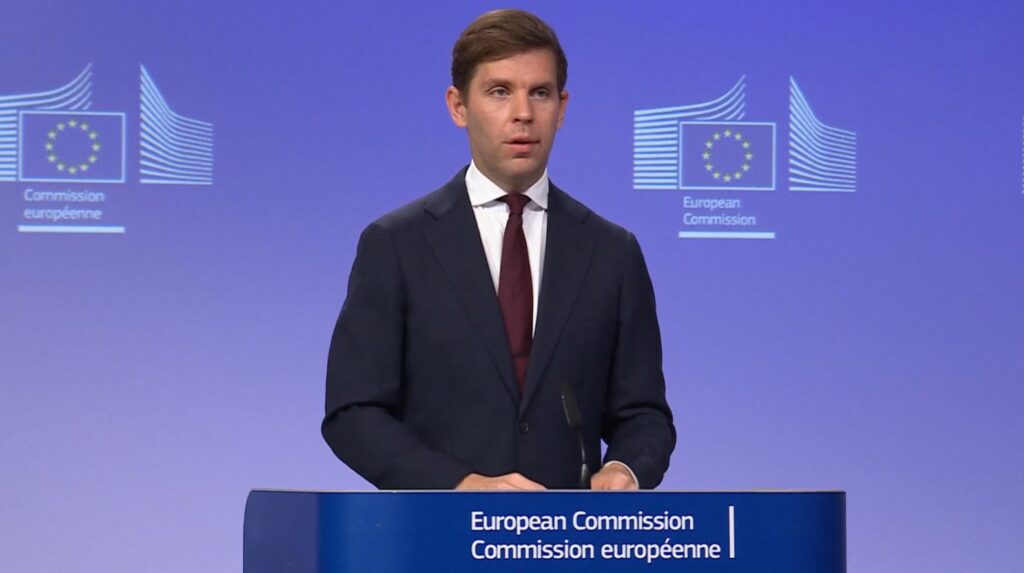
ukraine finally taxed cheap foreign parcels unlock €37 billion—now brussels decides whether enough €70 billion gap ahead amid ongoing war · post european commission spokesperson balázs ujvári speaks commission’s midday

The European Commission is checking whether laws Ukraine’s parliament passed last week earn it a €3.7 billion ($4.3 billion) EU payment, spokesperson Balázs Ujvári told reporters in Brussels on 19 October. He also said Ukraine’s 2027 funding gap stands at about €70 billion, and that the EU “cannot do this all alone.” How Ukraine pays for Russia’s war next year now depends on reforms in Kyiv and on money from Europe and beyond.

Russia keeps striking Ukraine’s power grid and cities, and Kyiv already faces a hole in next year’s war budget before any new military spending. Foreign money keeps salaries, pensions, and repairs flowing while Ukraine spends its own revenue on defense. So each delayed payment is felt at home while Russia hits the energy system again.

Brussels reads Kyiv’s new laws before paying

The payment is the second tranche of the EU’s macro-financial assistance to Ukraine, and each one depends on reforms, Ujvári said at the Commission’s midday briefing.

“We saw that last week some important laws were adopted in the Rada, and we are in the process of analyzing these laws and we will formulate our assessment thereafter,” he said.

On its third attempt, parliament passed a law on 15 October ending the VAT exemption for foreign parcels worth up to €150 from 1 July 2027, and making online marketplaces collect the tax. The Commission had warned the law was one of 12 conditions for the tranche. Fewer than 1% of the 75 million parcels Ukrainians receive each year were taxed, and lawmakers had rejected the measure twice despite IMF pressure.

About €30 billion is in the pipeline for Ukraine this year, mostly under the EU’s €90 billion support loan, if reforms continue, Ujvári said.

EU Ukraine support
Explore further

EU announced funding shortfall for Ukraine in 2027

A €70 billion gap for 2027

Current pledges leave a gap of about €70 billion for 2027, Ujvári said, even counting the €45 billion ($52 billion) the EU has set aside for next year and some partners’ commitments.

“We cannot do this all alone. Therefore, our partners in general must step up,” he said. “They have to come forward with pledges, and they have to deliver on those commitments.”

On 16 October, Ukrainian President Volodymyr Zelenskyy asked EU leaders for at least €70 billion more for 2027. They tasked the Commission with a proposal but set no deadline. Asked whether it would revisit using frozen Russian assets, Ujvári said it was “a little bit early” to discuss options in that detail. New EU borrowing has also grown costlier: 10-year rates rose from 3.2% to just above 4% in six months, he said.

The €90 billion loan was designed on the assumption that the war would end in 2026. Slovak Prime Minister Robert Fico said Slovakia and Hungary would opt out of new aid but would not block others.

  •  

‘The last bastion is gone’: the US right idolised Orbán’s Hungary. Can they recover now he has fallen?

Over the past decade, Hungary has been a beacon for the ‘postliberal’ right, with pro-Trump thinkers making regular pilgrimages to Budapest. Now Orbán is gone, how will the movement adapt?

  • A longer version of this article first appeared in The Drift

Espresso Embassy, a third-wave coffee shop in Budapest’s diplomatic and governmental quarter, is where visiting reporters and academics come to talk politics. On the way in for my morning coffee on 18 March, I passed a poster for Viktor Orbán’s Fidesz party that had been vandalised with a marker pen: “the safe choice” had become “the certain way to get fucked”. From across the cafe, I spotted the American journalist and historian Anne Applebaum locked in conversation, possibly with a source. I heard someone exclaim: “Just like Mussolini!” It was election season in Hungary.

It was also a couple of days before Cpac Hungary, a satellite event of the US-based conservative conference. As members of the international right arrived in town, the notorious Orbánist thinktank known as the Danube Institute was hosting an event called On Censorship, Tolerance, the Left and God. The official line would be: bad, good, bad, good.

Continue reading...

© Illustration: John Kazior

© Illustration: John Kazior

© Illustration: John Kazior

  •  
❌