A YEAR after Islamabad severed commercial ties with Kabul over security concerns, the border trade disruption is taking a growing toll on KP, where livelihoods, businesses, farm markets, and a large number of workers depend on cross-border commerce. Bilateral trade has fallen by more than 72pc, from $1.3bn in FY25 to $358m in FY26 — which means fewer customers for local shops, lower earnings for farmers, idle trucks, and lost jobs.
KP was already struggling to attract investment and create work amid rising terrorism; the loss of an established market makes recovery harder. The damage is not confined to the province. Farmers and factories in Punjab and Sindh, too, have been hit, and Pakistan’s exports to Central Asia have been badly disrupted.
Afghanistan has long been KP’s natural outlet because of its proximity and the long-standing commercial and tribal networks. Traders built their businesses around moving food, cement, pharmaceuticals, and other goods across the border. Medical tourism, hotels, and other services catering to Afghan visitors are suffering as well. When crossings shut, traders cannot send their goods to distant markets without facing higher costs, finding new buyers, and adapting to unfamiliar commercial conditions.
In fact, most services cannot be shifted at all. Rerouting shipments is not an easy fix. Pakistan’s shortest land routes to Central Asia run through Afghanistan. Alternatives mean longer distances, higher freight costs, and thinner margins. Small enterprises with little financial cushion are the most exposed to prolonged border trade closures.
KP needs expanding markets and productive investment to employ a growing workforce; it cannot afford to lose existing ones before alternatives are in place. Islamabad has valid security concerns — the Taliban must prevent Afghan territory from being used for attacks on Pakistan. But border closures also hurt citizens on both sides, who have nothing to do with Kabul’s policies.
Islamabad must find the right balance between its security priorities and the economic strain on KP’s residents. Sustained efforts to obtain genuine security assurances from Kabul and carefully monitored arrangements for legitimate trade may offer a way to protect both. It should also assess the losses of traders, transporters, and farmers, and help businesses find new markets. The government must protect its people from terrorism without restricting their livelihoods.
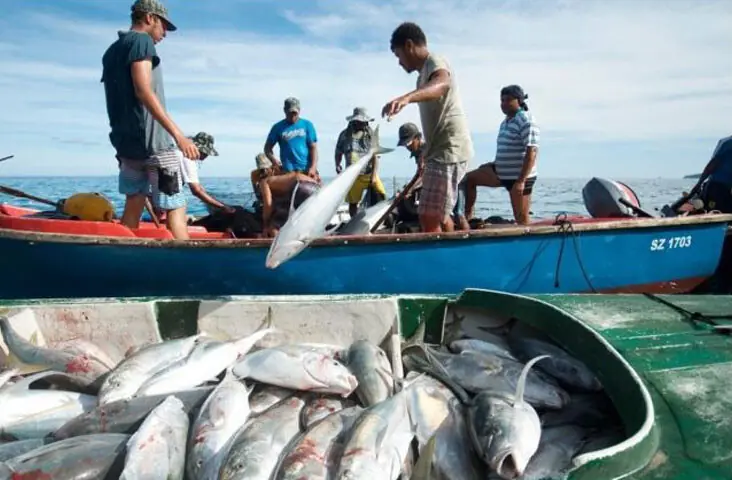
Fishermen pictured along the coast of Sindh: despite an abundance of agricultural produce, fisheries and traditional crafts, Sindh’s potential has not resulted in local businesses that could create jobs beyond agriculture | AFP
During a recent visit to Borneo island in the Malay archipelago, I came across a shrimp farm on the coast of the rainforest-covered island, run by a Chinese woman entrepreneur. Using a seawater reservoir behind a mangrove forest, she had built a business exporting shrimp around the world.
My mind drifted home to Pakistan’s 1,058-kilometre coastline, along Sindh and Balochistan. Why, I wondered, do we see so little aquaculture of this kind?
I was reminded of a conversation I had with the owner of a hatchery recently established in Gharo in Sindh. He told me that one of his biggest worries was transporting the hatchlings quickly and safely to fish and shrimp farms in Muzaffargarh, Punjab.
The irony struck me. The hatchery is in coastal Sindh, close to the sea and the Indus delta, yet its young fish and shrimp have to travel hundreds of kilometres inland to find farms. I asked him why people were not investing in fish and shrimp farming in Sindh? He did not have a clear answer, except to say that there were not enough investors and the business climate is also not supportive.
But the lack of investors is not really an explanation. It is itself a question.
The problem in rural Sindh may not be a lack of capital, but its concentration — and the failure to create the conditions in which small businesses can grow into industries
Sindh has fertile land, a long coastline and a river, alongside abundant agricultural produce, livestock, fisheries and traditional crafts. Yet much of this potential has not translated into local processing, packaging and cold-chain businesses that could create jobs beyond agriculture. Why did this not happen?
THE AGRARIAN DIVIDE
Economic historian Imran Ali has documented how British canal colonies transformed western Punjab from the late 19th century. Irrigation brought semi-arid land under cultivation, encouraging commercial agriculture and the growth of new settlements and market towns. The colonial project also served revenue, political and military objectives. Regardless of their motives, the economic landscape was transformed.
Sindh too underwent an irrigation revolution, particularly after the Sukkur Barrage opened in 1932. But perhaps the social structure on to which this new agricultural wealth was grafted was different.
Economist Mahmood Hasan Khan points out the growth of small owner-cultivators and market relations in parts of Punjab, while the older landlord-sharecropper structure remained much stronger in Sindh. Economist Akmal Hussain argues that owner-cultivators have greater incentives to invest, potentially generating the savings and demand needed for industrialisation.
Where agricultural income is concentrated in fewer hands, the pattern of investment may be different.
THE CONCENTRATION OF CAPITAL
It would, however, be too easy to explain Sindh’s predicament simply by invoking “feudalism.”
Political economist Akbar Zaidi argues that agriculture in Pakistan has undergone a substantial capitalist transformation. Commercialisation and the ‘Green Revolution’ brought capitalist farmers, machinery and wage labour and, in some areas, small manufacturers, skilled workers and service businesses.
Sindh’s sugar mills, cotton ginning and rice milling show that agricultural wealth did become industrial capital. But large enterprises owned by wealthy families are not the same as a broad base of independent businesses. Both represent investment and capitalism, but the latter creates a much wider entrepreneurial class.
A farmer investing in transport, a workshop repairing agricultural machinery or a manufacturer producing spare parts can generate further demand for suppliers, traders and services. Why has this chain remained so weak across much of rural Sindh?
THE CITY AND THE HINTERLAND
Perhaps the problem was never simply the absence of capital. It may have been the concentration of capital and the failure to spread entrepreneurial investment widely enough through its towns and communities.
And then there is Karachi. Economist Kaiser Bengali has described Sindh as having a “dual identity”: Karachi on one side and the rest of the province on the other.
Partition created another rupture. Much of Sindh’s Hindu mercantile and entrepreneurial class migrated to India, while Muslim migrants from different parts of the Subcontinent brought new commercial skills, networks and capital to Karachi. Over the following decades, Karachi became Pakistan’s great port, financial centre and industrial metropolis. For someone from rural Sindh with money to invest, a good education or entrepreneurial ability, Karachi offered far greater opportunities than his own town.
Perhaps herein lies another paradox. Sindh generated considerable wealth at both ends of its economy: agricultural wealth in the countryside and commercial and industrial wealth in Karachi. Yet the economic centres in between remained relatively weak.
BEYOND INDUSTRIAL ESTATES
History, however, can only explain so much. Nearly eight decades have passed since Independence, and we also have to ask what we have done since then. Why have Sukkur, Larkana, Nawabshah, Mirpurkhas, Khairpur, Thatta and Badin not developed stronger clusters of small industry?
Industrial estates and special economic zones have been established or proposed outside Karachi, but infrastructure alone does not create an industrial ecosystem. Regional businesses also need technical training, accessible finance, shared processing and testing facilities, and reliable market connections.
Perhaps the more fundamental question is why we wait for investors instead of creating the conditions that produce investors.
THE MISSING STEP
A recent article by journalist Owais Tohid about thousands of women establishing tiny businesses across rural Sindh provides an interesting clue. These women are raising livestock, stitching clothes, producing handicrafts and running other small businesses with relatively modest amounts of capital.
Perhaps entrepreneurship was never absent. The problem is what happens next. How does a woman employing herself begin employing five or ten other women? How does a workshop become a factory? How does one successful shrimp farm become twenty, surrounded by hatcheries, feed suppliers, cold storage, processors, transporters and exporters?
This brings me back to that hatchery in Gharo. The coastline is there, as are the seawater, the hatchery, the technical knowledge and the market. And yet the hatchlings travel hundreds of kilometres to find the entrepreneurs willing and able to farm them.
Successive governments in Sindh must also bear part of the responsibility. A political economy historically dominated by large landowners may not have had sufficient incentive to create a broad class of independent entrepreneurs.
Industrial estates have been established, but we have rarely pursued industrial development around the natural strengths of individual regions with the persistence it requires: dates in Khairpur, fisheries and aquaculture along the coast, rice in upper Sindh, fruit processing around Mirpurkhas, and livestock and dairy across much of the province.
Nor can poverty alleviation alone be an economic policy. There is an obvious need for social protection in a province where millions remain poor. But cash support, however necessary, cannot by itself create economic mobility. The larger challenge is to create the conditions in which people can move beyond poverty.
A tenant becoming an owner, a woman running a tiny business beginning to employ others, a workshop growing into a factory, or a farmer’s produce being processed and packaged before it leaves the district rather than being sent elsewhere for someone else to add value to it — these are perhaps better measures of economic development.
The challenge for rural Sindh, therefore, may not simply be to find more investors. It is to understand why enterprise has failed to spread despite the province’s considerable natural resources and agricultural wealth, and then to create the conditions in which capital, skills and entrepreneurship can come together.
Ultimately, the measure of development should not merely be how many poor people the state is able to support, but how many people are able to reach a point where they no longer need that support.
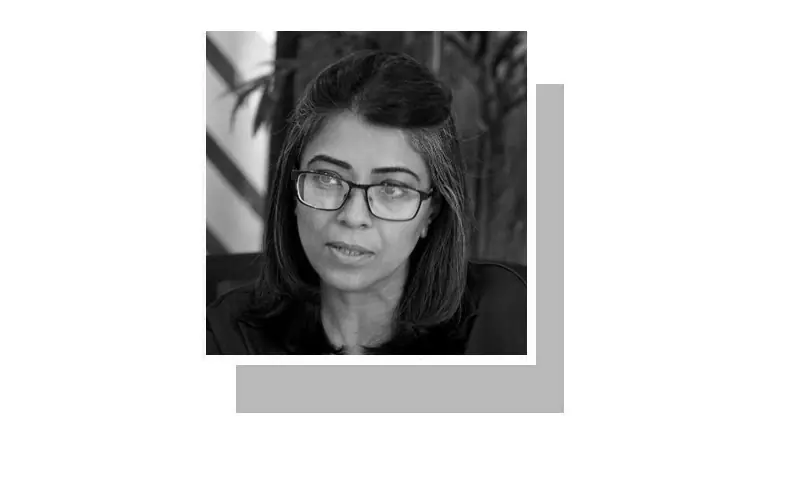
The writer is an entrepreneur and President of WWF-Pakistan
WRITING about Pakistan-US ties is like penning literary criticism of a Shakespearean play. One constantly reinterprets and looks for new answers to old questions.
How does one evaluate Pak-US ties under President Donald Trump? Do Trump’s extravagant compliments to Pakistan’s leadership reflect happy relations between the two countries? The short answer is no. American leaders routinely indulge in hyperbole. Add to it the sales pitch of a marketing ‘genius’, and you get Trump’s effusive but effervescent compliments.
Compared to Joe Biden’s time, US-Pakistan ties have no doubt been elevated, but not upgraded. The uptick stems from more than Trump’s bonhomie with Pakistan’s leadership. The relationship is largely a function of his experimental foreign policy. He is reassessing America’s China policy and relations with Russia, rebalancing ties with traditional allies and partners — to America’s advantage — and deprioritising, though not abandoning, the traditional foreign policy establishment’s overweening ambitions to maintain US global primacy. The emphasis is on unilateralism, the naked use of military power, and economic warfare.
This foreign policy stems from his whims, with his politics oriented towards the MAGA movement and the rich class, especially tech billionaires; tariffs used as leverage not only for trade but also for geopolitical gain; and a search for greater market share for America, as well as potential investment and business deals with China and Russia.
Pakistan has been an incidental beneficiary of Trump’s policies, good or bad. It has again tried to play its historical role of rescuer in America’s adventures. It has gained by dramatically enhancing its diplomatic profile in the Middle East and its image in America. Washington appears to appreciate the need to maintain Pakistan’s defence capability for regional stability, especially in South Asia, and to use it as leverage against India.
Pakistan, a populous country and a nuclear power, occupies an important geostrategic position between the subcontinent, Iran, Arabia, Central Asia, Russia, and China. Its strength is an asset, and its weakness a liability. One makes it a useful partner; the other makes it hard to ignore, much less alienate. Washington wants to contain China’s political and economic profile in Pakistan. Alienating it would shut the door on all US influence.
The US benefits from a tangible relationship with Pakistan.
America benefits from a tangible relationship with Pakistan in various areas of cooperation. The Trump administration approved a $686 million upgrade and sustainment package for Pakistan’s F-16 fleet. Separately, a $488m foreign military sales contract was awarded to Northrop Grumman for APG-66 and APG-68 radar engineering and technical support, covering 21 countries, including Pakistan.
Pak-US cooperation is also developing in the economic area, mainly in energy, IT, crypto, agriculture, renewable energy, and critical minerals, where Pakistan is drawing attention as a significant source. America is also the top destination for Pakistan’s exports. The US needs Pakistan’s cooperation to act against transnational terrorists who endanger regional, American, and global security. Counterterrorism cooperation thus continues. Lastly, Washington has always been concerned about a Pakistan-India conflict and will continue to play a crisis management role.
Behind the veneer of Trump’s rhetoric and personalised foreign policy, however, traditional foreign policy seems to be at work, led by China hawk and pro-India Secretary of State Marco Rubio, which may be circumscribing Pak-US ties. Otherwise, how do we explain that neither he, nor the deputy secretary, nor an under-secretary of state has visited Pakistan? There’s no semblance of a strategic relationship, despite Rubio’s lip service to the idea.
So, is Trump pursuing a dual-track policy, especially regarding the China policy and its derivative India policy, that influences the administration’s approach to Pakistan? Treasury Secretary Scott Bessent hinted at the ‘real’ China policy when he said in an interview that the relationship with China poses an unprecedented national security challenge. “China is … the biggest economic threat, and they’re the biggest military threat,” he said.
The reality is that Trump hasn’t done anything extraordinary for Pakistan that we might fear losing. Much of his freelance foreign policy will likely depart with him, but the impact on Pak-US ties might be minimal. US-Israeli wars in the Middle East have dented America’s standing in the region, providing a fresh rationale for continued engagement with Pakistan in the post-Trump world.
Bottom line: The relationship with the US is necessary but not indispensable. We should keep it that way to safeguard our strategic autonomy.
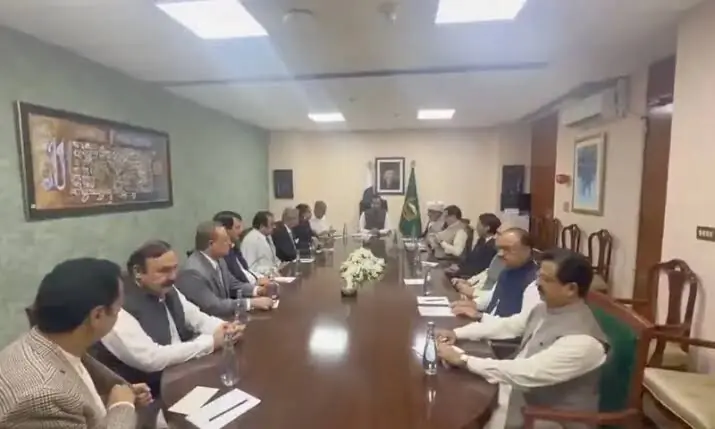
THE new setup in KP is taking shape rapidly and quietly. While everyone seems focused on the collective meltdown in the PTI, the province the party ruled until recently is busy setting up a new structure.
The governor announced his new advisory council within days, while the emergency-stricken districts have been provided with their own administrative machinery. A special emergency has been declared in the former Fata regions as well as Bannu, Lakki Marwat, Tank, and Dera Ismail Khan.
According to the information available in news reports, these regions will now be managed by a new Area Development Secretariat (ADS), which is to be headed by a bureaucrat, Yahya Akhundzada, an additional chief secretary (ACS). It is being reported that he has been given extensive powers akin to those of a cabinet or a provincial government. Along with this, a new council has been formed, consisting of four people from each district to assist him. An additional inspector general (AIG) of police is also part of this council. Most of these members have been selected, with a few refusals; not bad for a week’s worth of work.
At the federal level, a committee headed by Ishaq Dar has been formed to supervise the province. Besides Dar, the committee includes several PML-N stalwarts, mostly from Punjab, such as Rana Sanaullah, Azam Nazeer Tarar, and Attaullah Tarar. However, other members include Amir Muqam from KP and Khalid Maqbool Siddiqui from Karachi.
At times, the plan appears more ambitious than merely addressing terrorism and governance in KP. In the past week, whispers have been heard around Islamabad; well-informed journalists have also appeared on television and suggested that this setup might decide the future of the other provinces as well. If the technocratic cabinets are able to perform well, there is a chance similar setups may be introduced elsewhere. Faisal Vawda, who, too, has much inside news to share, has suggested or hinted at something similar.
This is lent credence by the manner in which the new administration has been installed in KP, where governor’s rule is accompanied by a special setup for the 12 districts; if there were ever to be smaller provinces in the country, these districts could easily take the form of a ‘South Khyber Pakhtunkhwa’ province.
At times, the plan appears more ambitious than merely addressing terrorism and governance in KP.
Be that as it may, all these ambitious plans — if there are any — will have to wait until the wrinkles are ironed out in KP. I say this because, from the outside, there seems to be a lack of clarity at the moment.
There is some confusion about how this new setup will work. After all, not only is there a governor now in charge of the province, but there is also a powerful ADS for southern KP. So, will the ADS report to the governor or directly to the federal government? That is a bit unclear at the moment.
This also raises the question of what the ADS’s relationship will be with the provincial bureaucracy. If the ACS and AIG report directly to Islamabad, will this eliminate the need to work with Peshawar entirely?
Journalists from the province say the ADS and the federal government will handle development and security directly. This is why the ADS, according to one colleague, is even being given its own set of finance and planning officials. These officials will be part of the new secretariat.
But what will happen in matters that do not fall under development and security, such as education and health?
That is why some feel that, for the moment, there may still be a need to coordinate with the provincial bureaucracy and thrash out other issues. And if that is the case, it can cause delays and hurdles. After all, red tape and bureaucratic hurdles are routine in the country, but if, in this case, rules need to be figured out or made anew, the delays might be more severe.
In addition, as mentioned earlier, there is confusion over how many issues in this special region will go directly to the prime minister or the provincial setup/governor before being routed to the prime minister. While journalists from KP feel the prime minister and Islamabad will deal with all matters directly, the ADR spokesman said in a television interview that the prime minister would handle issues in which the governor and his team could not address the needs of the 12 districts.
If the prime minister, or rather the federal government, is to look after every issue, will decision-making power go to the Dar-led committee? It is hard to imagine that Prime Minister Shehbaz Sharif will have the time to look into every matter individually. The prime minister also prefers to manage matters through committees. But how efficient will this prove to be? Of course, the assumption is that decision-making will be quick and efficient because it will take place elsewhere, and the committees we see exist in name only.
No doubt, this is always a possibility, but how many governance issues can be managed this way? Development and security decisions can perhaps be handled in this manner, but will there be no other issues? Though one should remain optimistic, I suppose.
However, let me venture to say that if this new technocratic setup proves to be successful and efficient, it might just end up increasing centralisation of decision-making, which is far removed from the idea of local government and service delivery at the people’s doorstep. For residents of the 12 districts, Islamabad and cities beyond are much farther away than Peshawar.
A WEEK after the federal government imposed governor’s rule and emergency in KP, PPP Chairperson Bilawal Bhutto-Zardari invited the opposition to engage ‘positively’ with the centre, saying this could lead to their reversal.
Mr Bhutto-Zardari, addressing reporters at a Sunday memorial for the 2007 Karsaz attack on his late mother Benazir Bhutto’s homecoming procession, spoke about the need for a national effort to address the growing economic crisis, resurgent terrorism, and Pakistan’s increasingly dysfunctional electoral system. But his offer, however well-meaning, stands little chance of leading to a political breakthrough in the current climate. Without concrete confidence-building measures initiated by the ruling parties, the opposition is unlikely to put much faith in mere assurances, given that the centre has crossed a major political red line by deposing an elected provincial government and supplanting it with a setup handpicked by Islamabad.
Mr Bhutto-Zardari seemed to be missing the point when he called the ‘non-functional’ KP chief minister a “coward” who was “not ready to defend his own land”. Whatever his failings, the people of KP had elected him, and the remedy lay with them, not with Islamabad. By forcing him aside, the centre has signalled that it does not need public consensus to do as it pleases. The centre’s dispute with KP, after all, was not about whether terrorism needed confronting, but how. KP had resisted the centre’s approach to fighting terrorism, and the resulting stand-off had stymied any progress. In dismissing the provincial government, the centre had signalled that security policies would be prescribed for the province rather than derived in consultation with it. That bridge has already been burnt.
It is commendable that the PPP chairperson is at least talking about a path back to normalcy, but the PPP is a partner in the very government that imposed governor’s rule. If it wants the decision reversed, it should convince its ally in Islamabad, not ask the opposition to be ‘positive’. It is hoped that the PML-N will also reconsider its position. The latter party would do well to recall that, in 2009, when its government in Punjab was dismissed and governor’s rule imposed, it had itself joined a ‘long march’ on Islamabad to press its demands.
It is unbecoming of that party to have denied its opponents the same right to protest now, when it is in power. It will not be easy to build bridges with the opposition, but the PML-N, more than any other party, has the power to concede some ground to show goodwill. It should take up the National Assembly opposition leader on his offer to engage the jailed PTI chief, and facilitate that effort if it is serious about national reconciliation and a unified response to Pakistan’s crises.

 Login