Login

Trump's $8 Billion Diesel Bailout Pays Farmers for a Problem He Created
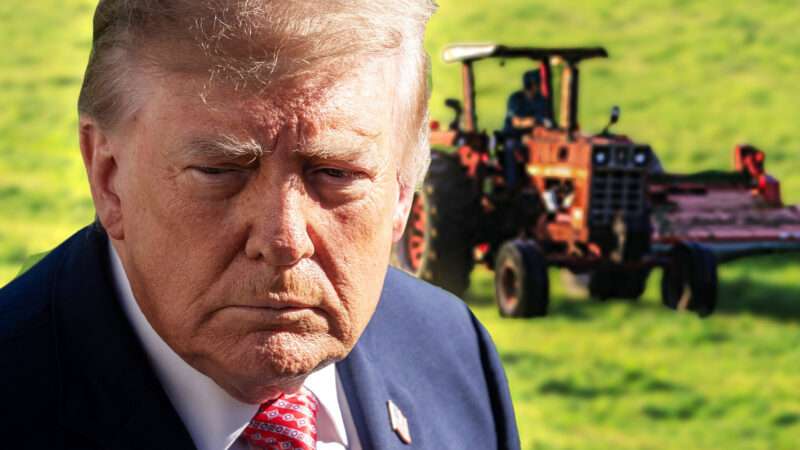
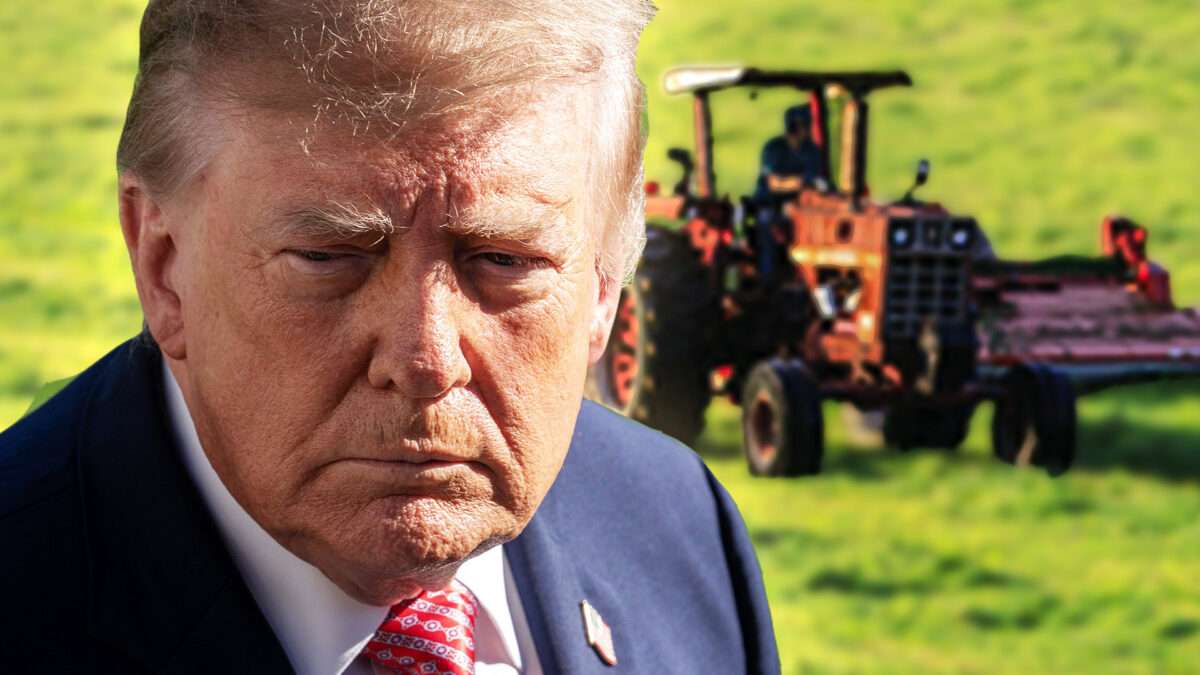
On Monday, the U.S. Department of Agriculture (USDA) announced it would "make $8 billion available for one-time payments to American farmers this harvest season to provide relief during temporary market disruptions and increased input costs."
Using a formula derived from the USDA's production, yield, and price estimates, the Harvest Fuel Relief program will "provide simple, proportional support to producers." It will only cover a "portion of modeled losses during the 2026 crop year." The Farm Service Agency—an office within the USDA that administers credit and loan programs—will administer the $8 billion in one-time payments using funds from the Commodity Credit Corporation, a federal entity authorized to draw up to $30 billion from the U.S. Treasury to fund agricultural initiatives. Payment rates won't be released until November, and the USDA's notice leaves open the possibility of additional payments for "non-Title I commodities, including specialty crop growers and fishermen."
A fiscally questionable decision, the program comes at a time when farmers are feeling a significant price pinch. The dyed diesel American farmers and ranchers use is exempt from state and federal highway taxes, but that has done little to offset skyrocketing fuel prices. In September, the American Farm Bureau Federation projected that fuel expenses would reach $22 billion this year, up 29 percent from 2025. The Farm Bureau estimates that total production expenses will reach nearly $500 billion in 2026. According to its own predictions, the USDA doesn't expect the situation to improve anytime soon.
In its latest Commodity Costs and Returns report, released in June, the USDA projects farmers and ranchers will face record production costs in 2027—higher than during the COVID-19 supply chain disruptions—driven by higher prices for necessary inputs such as fuel, fertilizer, seeds, machinery, and labor.
While the USDA has blamed "temporary market disruptions" for these cost hikes, the blame more accurately falls to President Donald Trump, thanks to his illegal war in Iran. As of Tuesday, Trump's war—and the subsequent shocks it has caused to the global diesel supply—have pushed the national average price in the U.S. up $2.70 per gallon from a year ago, a 74.6 percent increase, according to AAA data.
Unfortunately, the war in Iran is just one of several Trump administration policies making life more expensive for everyone, including the nation's farmers and ranchers. Tariffs on imported fertilizer, which began in 2020 during the first Trump administration, have made it difficult for American farmers to afford what they need. By the Farm Bureau's estimates, fertilizer costs for 2026 are projected to reach a record $40 billion, up 15 percent from the previous year.
The $8 billion program is part of a windfall of taxpayer money the Trump administration has sent to farmers as relief for harms caused by the president's actions. Last December, the USDA sent $11 billion in one-time bridge payments to more than half a million farmers nationwide. Earlier this month, the USDA announced it would provide a record $13.8 billion in gross payments to agricultural producers to cover revenue losses.
In a speech in Kansas touting the program, Trump claimed that the state's residents would see a "plunge" in prices once the war ends. That's likely an exaggeration, given the host of questionable economic policies he seems hell-bent on implementing.
Still, that shouldn't discredit the president's suggestion. Ending the war would benefit farmers, ranchers, and consumers, without doling out billions in another government bailout for a favored industry.
The post Trump's $8 Billion Diesel Bailout Pays Farmers for a Problem He Created appeared first on Reason Magazine.