The NFL is perfectly comfortable with Steve Tisch continuing his duties as chairman of the New York Giants' board after reviewing his past associations with convicted sex offender Jeffrey Epstein.
"Everything we've looked at we understand," commissioner Roger Goodell said on Wednesday. "I think we're comfortable with him participating as the Giants suggest."
Goodell last January said the NFL would "look at all the facts" to determine whether an deep investigation of Tisch's relationship with Epstein was warranted.
And since then Tisch has remained front and center in the Giants war room on NFL Draft day in April and at games. He was strolling the halls of the Manhattan hotel where owners and representatives from all 32 teams gathered for the fall league meeting this week.
Tisch and Giants president and chief executive officer John Mara represented the team in the meetings.
There is no telling if more emails naming Tisch exist or any other ties to the since-deceased Epstein will be uncovered. So Goodell said the league will keep its options open.
"I think always we'll look to see if there's any new information, we'll look at it and we'll evaluate that," Goodell said.
And this feels like the NFL is applying the Jedi mind trick on everyone regarding Tisch.
First, the league seemed concerned about Tisch's ties, which led to Goodell's search for information.
Then Tisch and his siblings (Laurie and Jonathan Tisch) requested to transfer their remaining 23.1% direct ownership stake in the Giants to their children's trusts in March, following prior partial trust transfers completed in 2023 and 2024.
And so Tisch's contrite statement in which he regretted his Epstein association seems not quite so meaningful anymore.
"We had a brief association where we exchanged emails about adult women, and in addition, we discussed movies, philanthropy, and investments," Tisch said in that January statement.
"I did not take him up on any of his invitations and never went to his island. As we all know now, he was a terrible person and someone I deeply regret associating with."
All of this is, of course, a rough look for the NFL. It's bad optics.
Modern Times Café, a Minneapolis restaurant that attempted to eliminate prices, has announced it will be closing for good by the end of the year.
"For the last six years, I’ve been trying to prove that Modern Times can continue to exist," owner Dylan Alverson wrote on social media Saturday. "I’ve exhausted every option without compromising the core fundamentals that make Modern Times what it is."
He added that he plans to spend the next two months celebrating the 16-year-old business and discussing ways for a business like his to continue.
"The only way for places like Modern Times to exist in the future is to actively challenge the reasons why it can no longer exist," Alverson wrote.
Alverson announced on Instagram in January that his business, which rebranded as Post Modern Times, would operate as a "free and donation-based restaurant" where everyone would be welcome "except ICE" in protest of the Immigration and Customs Enforcement operations happening in his state, partly in response to the killings of Renee Good and Alex Pretti.
"We absolutely cannot go on as we have. I am sick of generating money for the soldiers in our streets and for a government that won't protect us — a government who is actively inflicting daily harm on its citizens," Alverson wrote. "Effective tomorrow we are done making money for the fascists that occupy our city."
The decision was made after Pretti was shot and killed by Border Patrol agents.
The Modern Times Café operated without prices for about six months until it briefly closed in July. The establishment returned to using prices once the store reopened in August but announced that it would continue serving 25 free meals per day.
By October, Alverson told The New York Times he was operating under a "zero profit margin," hoping that his place could be used as a model for other restaurants.
"If I can create a fundraising mechanism that can raise money to provide hospitality, we can take that program and add restaurants to it," Alverson said.
However, he acknowledged that the process was taxing for his staff and led to customers waiting up to two hours for a meal, half of which would usually be given for free. Neighbors also expressed concerns that homeless and drug-addicted people would take advantage of the offer.
In a comment to Fox News Digital, Alverson stood by his remarks to The New York Times and suggested that the bigger issue was other restaurants that were struggling.
Minneapolis Mayor Jacob Frey (D) praised Somali migrants as the "CEOs of the future" and claimed that Somalis were being criticized because people see "the kind of economy and entrepreneurship" they are trying to build.
On a Tuesday morning in February 2025, federal agents descended upon Ayala's Mini Market, a convenience store in Glendale, Arizona, that offered check cashing, money transfer, shipping, and cellphone repair services along with standard items such as groceries, snacks, sodas, and cigarettes. The agents, who worked for the Internal Revenue Service (IRS) and the Department of Homeland Security (DHS), seized three computers, five cellphones, and business records, plus about $460,000 in cash and checks. They did not say why.
Twenty months later, the store's owner, Mario Ayala, still has not received a definitive answer to that question. Nor has the government told him what it plans to do with his property or how he can try to get it back. That Kafkaesque situation is unconstitutional, Ayala's lawyers at the Institute for Justice argue in a motion and memorandum they filed on Tuesday in the U.S. District Court for the District of Arizona. The motion seeks the return of the property seized from Ayala's business, saying there is no legitimate reason for the government to keep it.
"The government can't take your stuff, disappear, and then never explain itself," says Institute for Justice attorney Betsy Sanz. "For over a year and a half, the government has been holding Mario's money and property. This prolonged seizure violates the Fourth Amendment and federal law. The government cannot hold onto your property indefinitely without explanation so it can eventually take it permanently using civil forfeiture."
The raid on Ayala's store happened while he was visiting his ailing father in Mexico, who died a couple of months later. After Ayala's wife and son called to tell him what had happened, he rushed back to Arizona, where he tried to figure out why his business had been targeted by the IRS and the DHS. That was harder than you might think.
Ayala "has heard nothing from the government since they raided his business and seized his property," Sanz and her colleagues note in their memorandum. When the agents left, they told Ayala's son that "the business would receive a letter within thirty days," the memorandum says, but "no letter came," and the government "has not told Mario why it took his property or why it refuses to return it."
The agents left a one-page inventory of the property they took, including the computers, cellphones (two of which belonged to Ayala's customers), documents, and currency, although it did not specify the amount of money. They also left the first page of a warrant signed by a federal magistrate judge, which contained no information about the crime they were investigating or the property they were authorized to seize. It referred to attachments that might have clarified those points, but the attachments were missing.
Ayala still has not seen those attachments. But on the same day the agents raided his store, they also searched 18 other businesses in the Phoenix area, all of which offered money services. Judging from the warrants served on three of those other businesses, which were signed by the same magistrate judge at the same time on the same day as the warrant for Ayala's Mini Market, the legal justification for the searches was suspected violations of 31 USC 5324, which makes it a felony to "structure" a financial transaction with the intent of "evading" federal reporting requirements.
The Bank Secrecy Act requires that financial institutions report cash transactions involving more than $10,000 to the Financial Crimes Enforcement Network (FinCEN). Although that mandate is aimed at money laundering, someone can be guilty of structuring even without evidence of any other crime if he deliberately tries to avoid triggering a FinCEN report by breaking up a transaction into amounts below the threshold. As far as Ayala can tell, the search of his store was based on nothing more than suspicion of structuring.
If so, Ayala's lawyers argue, the IRS agents who participated in the raid violated a 2019 federal law that bars the agency from seizing money when structuring is the only suspected crime. Congress passed that law in response to IRS forfeiture abuses highlighted by the Institute for Justice. "For the IRS to legally seize property based on a structuring offense, it must also have an added suspicion of some other criminal act," Sanz et al. note. "Yet the IRS seized Mario's property, apparently on the sole suspicion of a structuring violation."
That is not the only legal problem with the seizure. Assuming the government plans to seek forfeiture of Ayala's money based on an alleged connection to criminal activity, it missed a crucial deadline. The Civil Asset Forfeiture Reform Act (CAFRA) requires the federal government to notify property owners of attempted forfeitures within 60 days of the seizure. That deadline passed a year and a half ago, and Ayala still has received no such notice.
"This notice is crucial because it informs a property owner that the government intends to forfeit his property and triggers his ability to respond by filing a claim or administrative petition," Ayala's lawyers note. If the government fails to meet that requirement, CAFRA says, it "shall return the property."
The government can seek extensions of the CAFRA deadline "only if there is reason to believe that notice may have an adverse result," such as "endangering the life or physical safety of an individual," "flight from prosecution," "destruction of or tampering with evidence," "intimidation of potential witnesses," or "otherwise seriously jeopardizing an investigation or unduly delaying a trial." None of those conditions applies in this case, Sanz et al. say, and their client "is unaware of the government seeking any such extension here."
Another possible rationale for keeping Ayala's property is that the government needs it as evidence in a criminal investigation. But his lawyers argue that the seized items "have no independent evidentiary value."
The government "cannot claim that it is holding the cash as evidence of the suspected structuring offense, because the government—in the usual course—does not continue to hold the physical cash it seizes but rather promptly deposits it," the memorandum says. "To prove the suspected offense here, the government would present evidence documenting the amounts and frequency of transactions and evidence that the defendant intentionally evaded reporting requirements. No fact the government must prove to establish a structuring offense becomes more or less provable by the government's continued possession of Mario's money."
Although "the checks and business documents that the government seized from Mario may at first have had some evidentiary value," Sanz et al. say, it could have long since returned the originals and kept copies. As for the computers and cellphones, "the government has had ample time to extract and copy" any relevant information.
While the benefits of keeping Ayala's property seem highly dubious, the cost to him has been severe. The seizure of the checks and currency wreaked havoc with his business model, which relies on money received for transfers to cash checks, which in turn are scanned and used to pay the companies that handle the transfers.
"The search and seizure of Mario's property upended his business," the memorandum says. "He had to keep his business closed until March 1, 2025, to replace the seized computers and to figure out how they could keep the business open. He took $50,000 of his own money out of the bank so that he could keep cashing customers' checks. When that ran out, the business had to stop cashing checks for a long time, losing customers."
Ayala "also had to come up with $112,097.20 to pay the money transmitters to cover the balance that had accrued while he was away," his lawyers add. "Since all the cash and cashed-but-unscanned checks had been seized, Mario needed to pay this money to the transmitters on his own. Though he did ultimately pay back all the money transmitters over the following month, the consequences of the raid damaged Mario's business relationship with one of the money transmitters he had formerly worked with, InterMex. Today, the business can no longer offer InterMex as an option for money transfers."
Ayala's business "is now finally stable, but it is still not doing as well as it was before the raid," Sanz et al. say. "Mario has changed the way he runs his business because of the raid. He now scans every customer's cashed check to send it to the money transmitters as soon as it is cashed, rather than collecting [checks] and scanning them together as they previously did. He constantly worries that his business will be targeted again."
In the 20 months since the raid, the government has not filed a forfeiture action or even notified Ayala that it intends to do so. Nor has it filed any criminal charges related to the seizure, as far as Ayala knows. "The government has no lawful reason to retain
Mario's property," his lawyers say, "and this Court should exercise its equitable jurisdiction to order its return."
The motion relies on Federal Rule of Criminal Procedure 41(g), which says "a person aggrieved by an unlawful search and seizure of property or by the deprivation of property may move for the property's return." The U.S. Court of Appeals for the 9th Circuit, which includes Arizona, has adopted four criteria for granting such a motion: whether the government "displayed a callous disregard for the constitutional rights of the movant," whether "the movant has an individual interest in and need for the property he wants returned," whether "the movant would be irreparably injured by denying return of the property," and whether "the movant has an adequate remedy at law for the redress of his grievance."
All of those factors count in Ayala's favor, Sanz et al. argue. Ayala's interest in the property and the injury he is suffering are clear, as is the absence of any other remedy. As for the first criterion, "the government can neither forfeit Mario's property nor justify holding it as evidence, so its continued retention is unreasonable under the Fourth Amendment," the memorandum says. "And its nearly 20 months of silence, without any notice or any forum in which to contest the seizure, offends due process. At every turn, the government has 'callous[ly] disregarded' Mario's constitutional rights."
Ayala immigrated to the United States from Mexico in 1991 and struggled for years to make a go of his business, which was successful enough at the time of the raid that he planned to open a new location devoted to cellphone repair. That plan is now on hold because of the financial difficulties caused by the seizure.
"This business is my American Dream, and the government took years of my hard work without telling me what I did," Ayala says. "This raid hurt me and my family. I hope this lawsuit gets my money back and helps make sure this doesn't happen to anyone else."
An American woman living in Massachusetts has been accused by the Department of Justice of arranging sham marriages to help her clients seek green cards and U.S. citizenship.
Jennifer Gonzalez, a U.S. citizen, collected up to $40,000 per marriage and arranged as many as 20 per year over the last decade, according to Leah Foley, the U.S. attorney for the Massachusetts District.
Gonzalez's female employees, who were also charged, married the men looking to get legal status in the U.S., authorities said.
"This conspiracy netted her $6 million during the course of the alleged scam," Foley said during a news conference Wednesday at the Moakley Federal Courthouse in Boston. "She bragged that she invested her ill-gotten proceeds in businesses and property in the Dominican Republic, which she repeatedly referred to as 'my country.'"
It appears Gonzalez spilled the details of the scheme to a witness cooperating with federal law enforcement. Foley said Gonzalez believed this individual was an illegal immigrant.
Gonzalez, 43, told a witness who was recording the interaction that Massachusetts was "so special" because it is a sanctuary state where "illegal aliens get a lot of help as an immigrant."
Gonzalez also allegedly said her goal was to give all her children pieces of land in the Dominican Republic they could later own.
"Miss Gonzalez got rich off selling the American dream, all the while investing her money in another country," Foley said.
Gonzalez told the witness she stopped holding phony marriages at the end of 2024 because President Donald Trump was returning to office, before shutting down the scheme entirely in 2025 because immigration enforcement had become "a little harsh," according to Foley.
Gonzalez was described by prosecutors as the "ringleader" of the operation, though there were other alleged co-conspirators.
Amara Pugh, Gonzalez's 31-year-old secretary, along with Jessica Tavares, 31; Erica Daniels, 29; and Jaylin Hill, 26, were allegedly paid to marry Gonzalez's clients. Gonzalez also allegedly entered into a sham marriage herself with an illegal immigrant.
Photographs of at least two marriage ceremonies were included in court records shared by the Justice Department.
In most cases, they would stay married to the illegal immigrants for years, get divorced, then get married to other illegal immigrants as early as a month after their divorces, officials added.
Foley told reporters that another component of the alleged fraud involved Gonzalez applying for and receiving SNAP benefits from 2019 through 2026. She received more than $124,000 from the SNAP program over that time, according to prosecutors.
"She did not list her income from her sham marriage business and did not list anyone else in her household, not the illegal alien she married and not the father of her children, who she referred to as her husband," Foley said.
Gonzalez, Pugh, Tavares and two other conspirators were arrested Wednesday morning, the Justice Department said. Hill is already in state prison for a gun offense.
The New York Giants are benching Jameis Winston and starting J.J. McCarthy on Sunday against the Houston Texans, according to ESPN.
Less than a month after acquiring McCarthy in a trade with the Minnesota Vikings, the Giants are turning to the 23-year-old quarterback to try to lead them to the playoffs in a weakened NFC East.
After being used in packages in the Giants’ 27-27 tie with the Washington Commanders in Week 5, McCarthy saw significant action during the fourth quarter of the Giants’ 34-27 loss to the New Orleans Saints and thrived.
McCarthy took over for Winston when the Giants were down 34-10 in the fourth quarter. He threw an interception on his first possession but then led a furious comeback attempt. McCarthy completed 11 of 21 passes for 243 yards and one touchdown.
McCarthy led three scoring drives, the first ending with a Tyrone Tracy Jr. rushing touchdown and a successful two-point conversion to make it 34-18. He then threw a 24-yard touchdown pass to Isaiah Likely, but the two-point conversion attempt failed, leaving the score at 34-24. He then led a field goal drive to cut the deficit to 34-27.
The No. 10 overall pick in the 2024 NFL Draft led the Giants down the field and gave them a chance to tie or win the game if coach John Harbaugh decided to go for two, but his fourth-down pass attempt from the Saints' 14-yard line sailed high.
While the comeback fell short, McCarthy impressed and made history in the process. His 243 yards are the most passing yards in the fourth quarter by any player this season and the second most by a quarterback who did not start the game over the past 25 seasons, according to NFL Network.
The Giants went 2-1-1 with Winston at quarterback, but the 32-year-old struggled against the Saints. He threw two costly interceptions as the Giants attempted to rally against his former team.
The Giants hope the more mobile McCarthy can spark a struggling running game that has faltered with Winston at quarterback. McCarthy was the team’s leading rusher with 26 yards in Sunday's loss.
Some believed an easier debut as the starter for McCarthy would come after the Giants’ bye week, which follows the Texans game, but the Giants decided otherwise.
The Giants are 3-2-1 and sit atop the NFC East, with the Philadelphia Eagles, Dallas Cowboys and Washington Commanders all struggling and battling injuries, leaving New York with an opportunity to win the division.
LongHorn Steakhouse is outpacing many other casual-dining chains. After visiting for the first time, I can see why.
Erin McDowell/Business Insider
I recently visited LongHorn Steakhouse as the chain reports positive sales growth this year.
Many casual-dining chains are struggling, but LongHorn is performing surprisingly well.
I thought the food was high quality and a great value for the cost.
LongHorn Steakhouse is having a moment.
While many casual-dining chains continue to struggle, LongHorn has posted some of the strongest sales growth in Darden Restaurants' portfolio.
In the fiscal first quarter, which ended August 30, LongHorn same-store sales rose 6.2% from a year earlier, outpacing sister chain Olive Garden, whose same-store sales rose 1.1%. LongHorn's overall sales across all locations increased by nearly 11% to $861 million, making it Darden's fastest-growing major chain that quarter.
During the company's earnings call, CFO Raj Vennam said LongHorn's first-quarter sales growth reflected both stronger sales at existing restaurants and the expansion of its footprint. LongHorn grew from 595 to 624 restaurants over the past year.
LongHorn's success is not a recent comeback, but rather a steady rise to the top. In the preceding quarter, which ended May 31, LongHorn's same-store sales rose 9.5%, while total sales increased nearly 22% to more than $1 billion. Darden credited a record-breaking Mother's Day weekend and strong lamb-chop sales for the results.
The chain has now posted positive same-store sales for 22 consecutive quarters, and its sales at existing restaurants have climbed 17% over the past three years.
Still, it's a tough time for casual dining.
Applebee's same-store sales fell 1.8% year-over-year in its most recent quarter, while Cracker Barrel's sales at existing locations fell 2.1% and its total revenue declined 2.2%.
In an environment where chain restaurants are constantly competing for customers, I wanted to find out what about the Texas-inspired steakhouse chain was drawing people in.
I visited LongHorn for the first time and was surprised by the quality of the food, generous portions, and overall value for the price.
I tried LongHorn Steakhouse for the first time to see what the hype was about.
Erin McDowell/Business Insider
LongHorn Steakhouse has quietly become one of casual dining’s biggest success stories, and recently outpaced its sister brand, Olive Garden, in same-store sales growth.
I’d never been before, so I brought a friend along to our nearest location in Queens, New York, to see whether the food, atmosphere, and value lived up to the hype.
The restaurant felt much warmer and more polished than I expected.
Erin McDowell/Business Insider
I expected a fairly standard chain-restaurant experience, but the entryway felt inviting right away.
The stone accents, dark wood, and low lighting gave it a cozy, classic steakhouse atmosphere. It was casual, but it did not feel cheap. I could see why it would potentially work for both casual weeknight dinners and slightly more special celebrations.
Despite visiting on a Friday night during the dinner rush, we were seated quickly in a booth at the busy shopping center location.
The dining room was busy, but it still felt comfortable and relaxed.
Erin McDowell/Business Insider
The restaurant had plenty of tables, yet it did not feel overly crowded or chaotic. The warm lighting made the large dining room feel more intimate. It was definitely family-friendly, but couples and groups of friends were also dining there.
About halfway through our meal, one of the tables next to us broke into a rendition of "Happy Birthday" for a guest.
I also thought the vibe was much more polished than a typical casual chain. It was more on par with chains like Red Lobster than slightly more casual ones like Chili's or Applebee's.
The menu had a surprisingly broad selection beyond just steak and sides.
Erin McDowell/Business Insider
LongHorn’s menu is centered on steak, but there were plenty of chicken, seafood, salad, burger, and sandwich options, too.
Even though I went in wanting to understand the chain’s steakhouse appeal, there were enough tempting appetizers and sides that narrowing down our order was harder than I expected.
My friend and I started off with a round of cocktails.
Erin McDowell/Business Insider
A steakhouse dinner calls for a drink, and the classic "Perfect" margarita ($11.49) was a refreshing — and surprisingly inexpensive — way to start the meal.
It was ice-cold and citrusy, served in a generously sized glass with an extra shaker on the side. My friend ordered the Texas tea ($10.99), LongHorn's version of a Long Island iced tea, which she said was sweet and not too strong.
We were both impressed by the price and serving size of our drinks — they were on par with what we'd spend at a dive bar in Brooklyn, but with much better service and flavor.
The complimentary bread was a nice start to the meal.
Erin McDowell/Business Insider
The bread arrived warm with a side of butter before our appetizers hit the table. It had a slightly sweet, honey-wheat flavor and a tender texture.
It was simple, and probably could have had a better crust — but it was free.
The stuffed mushrooms were one of the meal’s first real surprises.
Erin McDowell/Business Insider
We ordered the white cheddar stuffed mushrooms ($12.29) as an appetizer, and they arrived bubbling hot in a rich, creamy four-cheese sauce that reminded us slightly of Alfredo pasta sauce.
The mushroom caps were tender without becoming soggy and had a slightly salty flavor.
Erin McDowell/Business Insider
The cheesy filling gave them a savory, indulgent flavor that made them feel like a true steakhouse starter.
It was the kind of appetizer that disappeared quickly, and one I'd definitely order again. I had to remind myself to save room for the rest of our food.
Around the same time as our appetizer, our server brought out my salad course.
Erin McDowell/Business Insider
The lettuce was crisp, the generous helping of croutons added good crunch, and the dressing had plenty of flavor. It was a classic steakhouse Caesar; it did exactly what it needed to do, but it wasn't anything mind-blowing.
It was also more than big enough to share with another person as a way to add something fresh before our richer entrées.
The ribeye steak and loaded baked potato made for a filling, indulgent entrée without an over-the-top price tag.
Erin McDowell/Business Insider
For my entrée, I ordered the ribeye steak ($30.79), which came with the aforementioned Caesar salad and one side. I chose the loaded baked potato, which came topped with cheddar cheese, sour cream, bacon, and green onions.
The steak arrived with a flavorful sear and a side that felt like a meal in itself. Together, the plate felt hearty and indulgent without being unnecessarily over-the-top. It was easy to see how a diner could leave feeling like they got their money’s worth.
The loaded baked potato was fluffy inside and piled high with toppings.
Erin McDowell/Business Insider
The potato was rich and comforting, with a soft, fluffy center, while the potato's outer shell was perfectly crispy.
I appreciated that LongHorn did not skimp on the toppings. It helped make the entrée feel more complete and substantial, without having to upgrade to a premium side.
The steak was surprisingly tender and well-seasoned.
Erin McDowell/Business Insider
The steak had a savory, well-seasoned crust that added a lot of peppery flavor, but the true magic lay within.
Inside the tender ribeye, the meat was buttery and unbelievably juicy. It was not trying to be a high-end steakhouse steak, but it was extremely satisfying for the price. I ordered the steak medium-rare, and it came out at the right temperature.
This was the dish that made LongHorn’s popularity click for me.
Instead of ordering a main entrée, my friend ordered a side of roasted Brussels sprouts and the mac and cheese.
Erin McDowell/Business Insider
The crispy Brussels sprouts ($6.49) were roasted just enough to caramelize while still holding their shape and flavor.
The mac and cheese was a standout part of our meal.
Erin McDowell/Business Insider
The steakhouse mac and cheese ($6.49) had a rich, creamy sauce and a browned topping that added texture, while bacon bits added even more savory, smoky flavor.
It was exactly the kind of comforting side I want with a steakhouse meal.
Erin McDowell/Business Insider
If you weren't ordering it as a main dish, the portion was also plenty large enough to share, especially alongside everything else we ordered.
I preferred this chain-restaurant mac and cheese to others I've tried.
By the end of dinner, I understood completely why LongHorn is winning over value-conscious diners.
Erin McDowell/Business Insider
The food was more polished than I expected, the portions were generous, and the experience felt like a real sit-down dinner rather than a quick chain-restaurant meal after a day at the mall.
We ordered two drinks, an appetizer, a salad, a steak, and multiple hearty sides, yet our bill for two still came in under $100 before tip. With the tip, we paid $103.83.
By the time we left, I could see exactly why LongHorn has become a go-to for diners who want a steakhouse meal without steakhouse prices — and I'll definitely be back for more.
McDonald's is looking to expand its chicken offerings, including potentially bringing back grilled chicken sandwiches — a menu item the fast-food giant discontinued in 2020.
At a September investor meeting, McDonald's executives discussed plans to expand the chain's chicken lineup, including grilled chicken sandwiches and wraps, as demand for protein options grows, according to Restaurant Dive.
The renewed interest comes years after McDonald's pulled its grilled chicken sandwich from U.S. menus, raising questions about why the healthier offering disappeared in the first place.
Chef Mike Haracz, who served as McDonald's manager of culinary innovation from 2015 to 2019, told Fox News Digital why the grilled chicken sandwich ultimately failed to make the cut — and whether it could find its way back to the menu.
The reason was simple: Not enough customers were ordering it, Haracz said.
"For many of the menu items at McDonald's, and this is true for any corporate chain restaurant, there is a certain sales threshold that means it will be profitable, and it makes sense to have in the restaurant," said Haracz, who is based in Illinois.
"Once sales dip below a certain level, it does not make financial sense to keep it on the menu, as you will end up throwing away product."
In 1993, McDonald's introduced a grilled chicken sandwich as a healthier menu offering, but it did not stand the test of time.
The sandwich consisted of a marinated skinless chicken breast filet, lettuce, tomato, sweet red onion, Monterey Jack cheese and a herb sauce, all piled on a bun, according to a 1993 press release about the menu item.
McDonald's unveiled a more natural preparation of its grilled chicken in 2015, announcing on its website that it would be cooked using only canola oil, olive oil, and real spices and herbs.
The chain revamped the sandwich that year, introducing the Artisan Grilled Chicken Sandwich.
Ultimately, though, the grilled chicken sandwich lost its spot at McDonald's in 2020, when the chain also removed salads from its U.S. menus, according to Business Insider.
In his role at McDonald's, Haracz formulated new menu items for U.S. locations.
People looking for healthier options at McDonald's appreciated the grilled chicken offering — especially parents, Haracz noted, because while their kids might have been excited about eating a Happy Meal, the parents were not as interested.
Like many other menu items, the grilled chicken sandwich was cooked on a flattop and held in the universal holding cabinets (UHCs).
Ultimately, it came down to simple dollars and cents.
Space is valuable at McDonald's, Haracz noted, with each location organized to make every square inch profitable.
If an item is taking up space but not making money, it's probably not going to last too long, he said.
Consumer satisfaction played a big role, Haracz said, adding that he thinks the grilled chicken sandwich's flavor profile didn't always wow guests.
"McDonald's also realized once it gets to a point, there may be menu cannibalization, [which] means instead of ordering Chicken McNuggets, I might order the chicken sandwich," Haracz said. "Well, if we take the chicken sandwich away, are they still going to order Chicken McNuggets or other items? Most likely they are."
Could the grilled chicken sandwich make a comeback?
Haracz said he thinks it's possible.
"I do think there's a chance it could come back because many chains are dealing with the fact that beef prices are rising, and a way to offset that is to offer a more affordable protein option, which would be chicken," he said.
Haracz said he's not sure if there will be a renaissance of grilled chicken specifically.
"Certainly chicken items, in general, will be more popular, not only because of the beef prices, but also, that is a bigger profit margin if McDonald's develops it appropriately."
Fox News Digital reached out to McDonald's for comment.
It is no surprise that a unanimous three-judge panel of the Ninth Circuit just enjoined the blatantly unconstitutional attempt by the "No-Longer-So-Golden State" to impose restrictions on the ability of ICE and other federal agents to enforce federal immigration law. That panel was doing exactly what federal courts are supposed to do — uphold the U.S. Constitution.
On October 14 in U.S. v. California, the court tossed the so-called "No Vigilantes Act" (NVA) onto the ash heap. This law was part of the state’s continuing effort to obstruct federal immigration enforcement, which has included relentless public attacks by the governor and state officials on federal agents just trying to do their job of enforcing the law. That includes noxious claims like Newsom likening them to the thuggish "secret police" of an "authoritarian" state.
The NVA required any non-uniformed "federal law enforcement officer" operating in California to "visibly display identification" when carrying out federal law enforcement duties. A federal agent violating this requirement could be criminally prosecuted by the state.
As the Ninth Circuit pointed out, the Supremacy Clause in Article VI makes the "Constitution, and the Laws of the United States … the Supreme Law of the Land." In other words, federal law not only overrides any state law to the contrary, but it requires what is called "intergovernmental immunity." Under "the intergovernmental immunity component of the Supremacy Clause … states may not directly regulate the Federal Government’s operations or property." The panel cites to a 1996 Ninth Circuit decision, Blackburn v. U.S., on this issue, but then points out that this basic legal principle — that states cannot interfere in federal functions — goes all the way back to one of the most seminal Supreme Court cases in our history, McCulloch v. Maryland (1819). "It is the very essence of Supremacy," said the Court in McCulloch, "to remove all obstacles to its action within its own sphere, and so to modify every power vested in subordinate governments, as to exempt its own operations from their own influence." That is why "States have no power … to retard, impede, burden, or in any manner control the operations of the constitutional laws enacted by Congress to carry into execution the powers vested in the General Government."
California tried to argue that the NVA was constitutional because it did not "substantially burden" federal law enforcement. But the Ninth Circuit shot that down, too, saying any attempt by a state law to directly regulate "the conduct of the United States … is void irrespective of whether the regulated activities are essential to federal functions or operations, and irrespective of the degree to which the state law interferes with such functions or operations."
What made this law even worse was its threat to criminally prosecute federal agents. This is especially ironic because California attempted to do with the NVA what the Supreme Court specifically told the state it couldn’t do 136 years ago in another seminal case, In re Neagle (1890), also cited by the Ninth Circuit panel. That decision reads like a Hollywood movie but also demonstrates just how bizarre state officials have acted in California for a long time, not just in today’s heated political arena.
In re Neagle involved the state of California trying to prosecute a U.S. Marshal for murder. Marshal David Neagle was acting as a bodyguard for Supreme Court Justice Stephen Field, a job the U.S. Marshal’s Service still carries out today. He shot and killed the former chief justice of California’s state supreme court, David Terry, at a railway station in the San Joaquin Valley, after Terry tried to assassinate Field. Terry was known for his violent temper and apparently had a grudge against Field for a court decision involving the prior divorce of Terry’s current wife.
The Ninth Circuit quoted the Supreme Court’s opinion in Neagle that even the "most unquestionable and most universally applicable of state laws, such as those concerning murder, will not be allowed to control the conduct a marshal of the United States acting under and in pursuance of the laws of the United States." California couldn’t prosecute a U.S. Marshal then for doing his job, and it cannot criminally prosecute federal agents now who are "acting under and in pursuance of the [immigration] laws of the United States." End of story, end of case, end of unconstitutional state law.
By the way, a second law enacted by California’s constitutionally ignorant legislators, the "No Secret Police Act," was already enjoined by a lower court for the same reason. That law made it a criminal offense for federal agents to wear "a facial covering that conceals or obscures their facial identity." You know, the same agents who have been villainized, doxxed, followed home, harassed, run down by cars, and shot at by thugs who masquerade as protesters.
As the Ninth Circuit correctly recognized, the lawlessness occurring in California is not limited to thugs. Perhaps some remedial courses on the Constitution for Governor Newsom and the California legislature may be in order.
EXCLUSIVE: The Department of Homeland Security (DHS) has launched a nationwide operation targeting illegal immigrants accused of fraudulently obtaining benefits through the Supplemental Nutrition Assistance Program (SNAP), resulting in multiple arrests, Fox News has learned.
U.S. Immigration and Customs Enforcement (ICE) confirmed the operation to Fox News, announcing several arrests of illegal immigrants accused of fraudulently receiving SNAP benefits.
"Illegal aliens who have no right to be here in the first place are the last people who should be using SNAP benefits and other forms of welfare," Homeland Security Secretary Markwayne Mullin said in a statement.
"These programs are for Americans only," he continued. "Even non-violent illegal alien crime can still have devastating consequences when they’re defrauding the American taxpayer."
Mullin said those already apprehended and deported by federal authorities represented "just a drop in the bucket," adding that the Trump administration would continue pursuing individuals accused of fraud.
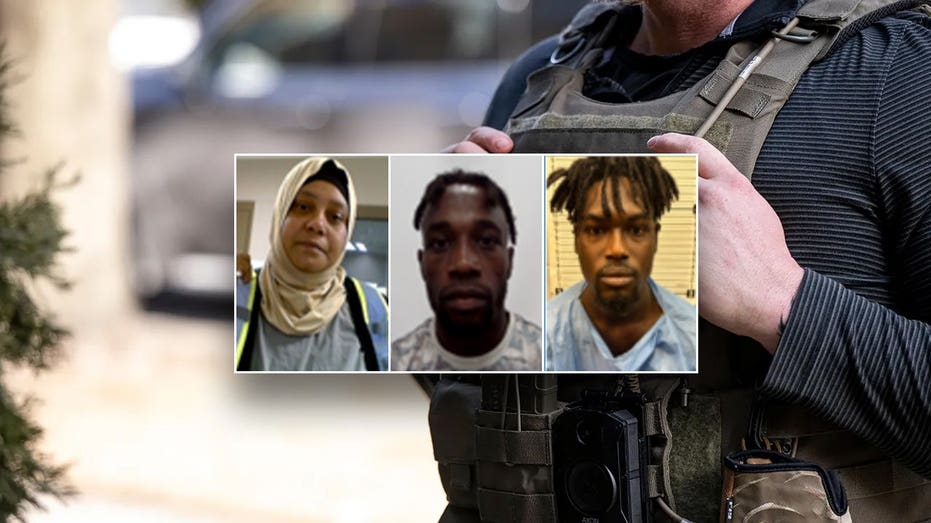
DHS identified several illegal immigrants accused of SNAP fraud, including multiple Haitian nationals.
According to federal officials, Rubstony Junior Theodore, a Haitian national living illegally in the United States, was arrested by ICE as part of the operation. Theodore's criminal history includes arrests for larceny, obstruction of officers and trespassing, DHS said.
Three other Haitian nationals living illegally in the United States — Wilbert Jean Baptiste, Louis Jean and Jhensly Charles — were also arrested, according to DHS.
Elizabeth Povea Rodriguez, a Cuban national living illegally in the United States who was previously convicted of disorderly conduct and arrested on battery and domestic violence allegations, was also arrested, according to DHS.
"These arrests mark the opening salvo in a sustained, large-scale ICE operation specifically targeting illegal aliens who have fraudulently accessed SNAP benefits that American taxpayers fund exclusively for U.S. citizens in need," DHS said.
"Every one of these individuals entered the country unlawfully, then proceeded to draw from a program designed to feed struggling American families, in some cases while carrying criminal records," the agency continued.
Federal law generally bars immigrants living in the country illegally from receiving SNAP benefits, although certain categories of lawfully present noncitizens may qualify for the program.
DHS said the Trump administration would continue targeting alleged SNAP fraud as part of a broader crackdown on misuse of federal benefits.
A Texas woman's lunch took an unexpectedly toothsome turn when she allegedly discovered a cow tooth in her taco, prompting a lawsuit against popular restaurant chain Torchy's Tacos over a bizarre ingredient the company has since confirmed was the real deal.
Nohemi Castillo claims she nearly swallowed the tooth while eating takeout from the chain's South Congress Avenue location in Austin on June 9, according to a lawsuit independently obtained by Fox News Digital and filed Oct. 13 in Travis County District Court.
The order included the chain's "Democrat" tacos, according to the complaint, although a cow tooth was certainly not among the advertised ingredients.
Torchy's Tacos confirmed the unusual discovery in a statement to Austin TV station KVUE, saying its own investigation determined that the object was a cow tooth.
"Upon receiving the guest complaint, we conducted a thorough review and identified the item as a cow tooth," the company said. "This can occasionally happen when processing the meat, though it is quite rare."
The restaurant explained that its barbacoa comes from natural beef cheek sourced from a supplier, adding that it has taken steps to prevent similar incidents.
"We have partnered with our supplier to reinforce their internal procedures to prevent this from happening in the future," Torchy's said.
Castillo's attorney, Scott Vasquez, told Fox News Digital that the company did not acknowledge to him that the object was a cow tooth until the story attracted local media attention in October, roughly four months after the incident.
Vasquez provided Fox News Digital with additional photographs showing the tooth beside a tape measure, offering a closer look at the sizable object Castillo claims she nearly swallowed.
Another photograph included in the court filing shows the object resting on aluminum foil beside what appears to be taco meat.
A witness statement provided by Castillo's attorney describes the moment an ordinary lunch with a colleague took an unpleasant turn.
"As we were eating, I heard an ‘awww!’ When I turned to Nohemi, I saw her pulling something out of her mouth, she said, 'I think it's a bone,'" the witness wrote.
The colleague described Castillo examining the object while holding her left cheek before concluding that it appeared to be a tooth.
According to the lawsuit, Castillo was disgusted and sickened by the discovery and visited a doctor later that evening, where she received prescriptions.
The complaint alleges that she incurred medical expenses and experienced physical pain, mental anguish and other damages.
Castillo is suing Torchy's Tacos and Success Foods Management Group, which does business as Torchy's Tacos, alleging that the defendants failed to properly prepare, inspect and distribute the food before selling it to customers.
The lawsuit further alleges that Torchy's failed to adequately monitor its meat supplier and breached implied warranties that food sold to consumers is fit for consumption. It also alleges violations of the Texas Deceptive Trade Practices Act and federal food safety requirements.
Castillo contends that she would not have purchased the meal, or would have examined it more closely, had she known about the alleged defect.
She is seeking monetary relief of $250,000 or less, with any final award to be determined by a jury.
Vasquez also told Fox News Digital that he has become aware of other individuals reporting similar experiences with Torchy's since the story received attention, although those accounts have not been independently verified.
The attorney characterized the company's earlier responses as providing limited information while shifting blame and responsibility to others.
A Honduran national who federal authorities say was unlawfully present in the United States allegedly climbed onto his truck and repeatedly swung a hammer at Immigration and Customs Enforcement (ICE) officers during a traffic stop in New Jersey this month, federal prosecutors said.
Reinieri De Jesus Licona Amador, 27, was charged with assaulting federal officers and appeared Monday before U.S. Magistrate Judge Elizabeth A. Pascal in Camden federal court, according to the U.S. Attorney's Office for the District of New Jersey.
"Federal officers put themselves in harm’s way to enforce the law and protect the public," U.S. Attorney Robert Frazer said in a statement.
"When an individual responds to a traffic stop by attacking an officer with a hammer, that conduct threatens not only the officer’s safety but the rule of law itself," he continued. "We will not allow violent attacks on federal officers to go unanswered and will hold those responsible accountable under the law."
Federal prosecutors said the incident began during a targeted ICE operation in Gibbsboro, when officers ran a license plate check on a truck traveling through the area.
According to the criminal complaint, the vehicle was registered to Licona Amador, and a search of immigration records indicated he lacked lawful status in the United States.
Officers then activated their emergency lights and pulled over Licona Amador's truck, prosecutors said.
According to the complaint, as officers approached the truck, they saw Licona Amador reach into a tool container in the back seat and pick up a hammer.
Prosecutors said officers ordered Licona Amador to stop moving, but he refused to comply, prompting them to open the vehicle door and attempt to remove him from the truck.
He allegedly pulled away from the officers and moved to the passenger side of the truck, where they again tried unsuccessfully to restrain him.
Licona Amador then climbed out of the passenger side of the truck while holding the hammer, ignoring officers' repeated commands, according to the complaint.
He was arrested without injury and faces up to 20 years in prison and a $250,000 fine if convicted of assaulting federal officers with a deadly or dangerous weapon.
As relative calm returns amid targeted curfews, PM claims he told Macron after Oct. 7 that 'if we don't eliminate them here, you will have them in Paris,' adding, 'and that is exactly what is happening'

 Login