❌

Reading view

ECB Says Artificial Intelligence and Reduced Dependence on Fossil Fuels Are Shielding Europe’s Economy

The European Central Bank says artificial intelligence investment, changing energy consumption and increased government spending have helped the eurozone withstand this year’s energy crisis, although economists warn that several sources of growth may prove temporary.

The eurozone economy has proved more resilient to the energy price shock of 2026 than economists initially expected, supported by increased investment in artificial intelligence, reduced dependence on fossil fuels and higher government expenditure, according to an assessment published by the European Central Bank on Wednesday, 21 October.

ECB economists Óscar Arce, Gerrit Koester and Beatrice Pierluigi found that structural changes in European energy consumption have reduced the economic consequences of rising oil and gas prices. Stronger international demand for technology equipment and additional public spending, particularly in Germany, have also supported growth.

The findings come as the ECB faces renewed inflationary pressure following disruption to global energy markets caused by the conflict involving Iran, raising questions about the outlook for interest rates and economic activity.

Eurozone growth withstands energy shock

In their assessment of the eurozone’s economic resilience, ECB economists reported that economic output continued to expand despite the sharp increase in energy prices earlier this year.

Excluding Ireland, where economic statistics are frequently affected by the activities of multinational companies, real eurozone GDP in the second quarter was 0.6 per cent above its level at the end of 2025.

The ECB also identified quarterly growth of approximately 0.3 per cent over the preceding four quarters, excluding Irish figures.

These results exceeded earlier expectations that the disruption to energy markets would have a greater impact on European manufacturing, consumer spending and business investment.

Nevertheless, the eurozone’s rate of expansion remains modest compared with its longer-term historical performance.

The ECB’s findings suggest that the economy has become better able to absorb international disruptions without experiencing the immediate contractions that might previously have followed comparable energy price increases.

Reduced reliance on imported oil and gas

One of the most significant structural changes concerns energy consumption.

According to the ECB, the eurozone economy is now approximately half as dependent on oil as it was during the early 1990s, measured against economic output.

Greater energy efficiency, the expansion of services and investment in alternative electricity generation have progressively reduced the amount of fossil fuel required to produce economic activity.

The growth of renewable energy has also altered the relationship between natural gas prices and electricity costs.

In Spain, the proportion of hours during which gas-fired power stations determined wholesale electricity prices fell from approximately 80 per cent in 2020 to just over 20 per cent during the first nine months of 2026.

France recorded a similar decline, from approximately 60 per cent to around 20 per cent, supported by its extensive nuclear generating capacity.

Consequently, increases in international gas prices are having a smaller effect on electricity markets in countries with substantial renewable or nuclear generation.

The ECB cautioned, however, that European economies remain exposed to global energy disruptions, particularly through industrial activity and international supply chains.

Artificial intelligence provides unexpected support

The international expansion of artificial intelligence has generated an additional source of demand for European manufacturers and technology companies.

Investment in computing infrastructure, digital services and specialised equipment has increased demand for products supplied by European businesses.

According to the ECB, global trade has performed considerably better than expected at the end of 2025.

The latest projections indicate international trade growth of approximately 4.7 per cent in 2026, compared with the 2 per cent forecast in December.

AI-related investment accounts for part of that improvement.

European manufacturers producing specialised machinery and technology equipment have benefited from increased export orders, while domestic investment in technology has supported economic activity.

However, the ECB found that the effects vary considerably between sectors.

Technology-equipment manufacturers recorded comparatively strong growth in output, employment and new orders.

Software companies performed better in output terms, but the improvement was less evident in employment and new business.

This uneven performance suggests that the economic benefits of the AI investment cycle are concentrated in particular industries.

German spending strengthens European demand

Fiscal policy has provided another source of support.

The ECB estimates that the expansionary fiscal stance in the eurozone has increased to approximately 0.5 percentage points of GDP, twice the level anticipated in December 2025.

Much of the additional stimulus reflects higher German government spending on defence and infrastructure.

Other eurozone governments have introduced measures to limit the effect of energy prices on households and businesses.

Public investment and expenditure have therefore helped compensate for weakness in areas affected by higher import costs and international uncertainty.

Yet the ECB warned that fiscal support cannot necessarily continue at its present level.

Several eurozone governments face borrowing constraints, while additional public spending can place pressure on national budgets.

Interest-rate decisions remain difficult

The ECB’s assessment comes amid expectations of further monetary tightening as policymakers respond to renewed energy-related inflation.

The central bank must consider whether higher energy costs will remain temporary or begin influencing wages, prices and inflation expectations more broadly.

Additional interest-rate increases could reduce inflationary pressures but would also raise borrowing costs for businesses, governments and households.

The economic recovery remains exposed to potential reversals in global demand, international trade and investment in artificial intelligence.

The ECB’s economists also identified geopolitical escalation and further supply-chain disruption as continuing risks.

Their findings indicate that reduced fossil-fuel dependence has made the eurozone less vulnerable to energy shocks, while technology investment and government spending have provided additional support.

Whether that resilience continues into 2027 will depend partly on the durability of international demand and the ability of European governments to maintain investment without increasing inflationary pressure.

  •  
  •  

Double blow to Healey as inflation rises to 3.5% and monthly deficit hits £24bn

Consumer prices rise by more than expected while government’s debt interest payments surge to record high for September

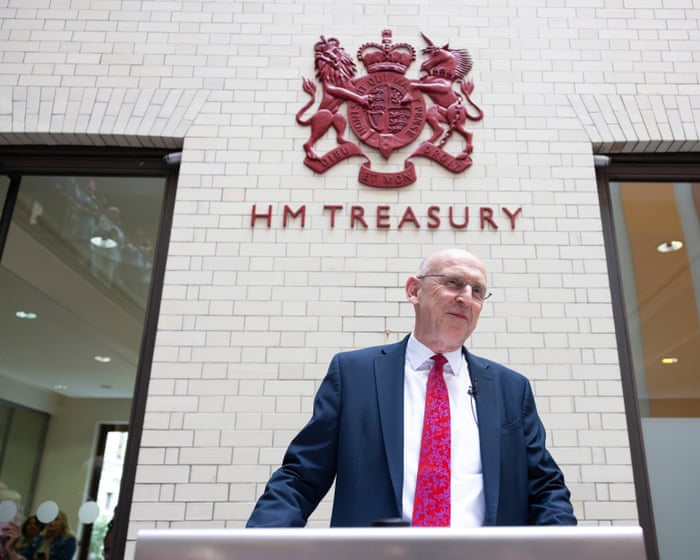
Inflation surged to 3.5% last month while the government deficit was a worse-than-forecast £24.5bn, in a double dose of bad news for John Healey before next week’s budget.

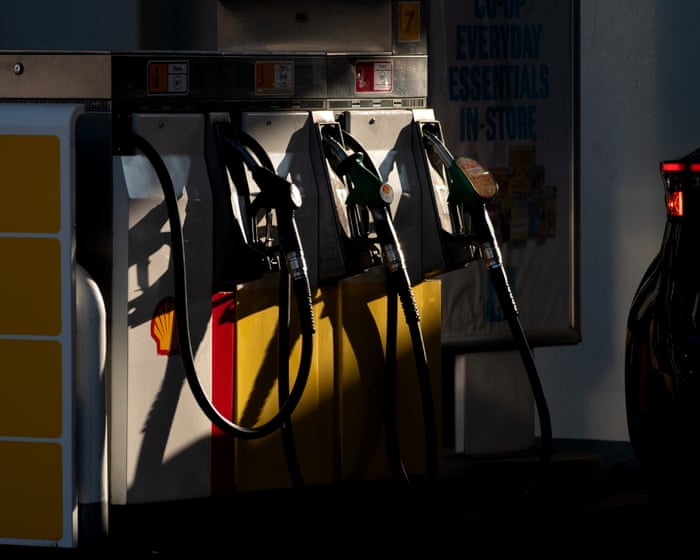
The Office for National Statistics said annual inflation rose from 3.1% in August, overshooting City forecasts of a rise in the consumer prices index (CPI) to 3.4%, as a result of the surging cost of fuel.

Continue reading...

© Photograph: Bryn Colton/Getty Images

© Photograph: Bryn Colton/Getty Images

© Photograph: Bryn Colton/Getty Images

  •  

Cost-Of-Living Protests Highlight Mounting Economic Pressures Across Europe

High debt, tight budgets and long-standing structural problems leave few quick or easy solutions.

Recent protests across Europe have brought social and economic strains into sharper focus, reflecting concerns that extend beyond prices to housing, incomes, public services and economic security. Governments face growing pressure to respond, but high debt, tight budgets and long-standing structural problems leave few quick or easy solutions.

RELATED:

Zakharova Accuses Macron of Hypocrisy Over French Protests

Holding a cardboard sign reading “I am 81 and being evicted,” retiree Maria Teresa Faleiro joined crowds in Lisbon protesting against soaring living costs and a deepening housing crisis.

Despite never missing a payment on the 724-euro (813-U.S. dollar) monthly rent for the home she has lived in for 22 years, Faleiro faced eviction after her landlords refused to renew her lease. With nowhere else to go, she plans to appeal the court-ordered eviction, she said.

Faleiro’s struggle highlights the growing plight many pensioners in Portugal face in securing affordable housing. It also reflects a broader cost-of-living squeeze across Europe, where thousands have taken to the streets to protest rising housing, food, fuel and energy costs, even as headline inflation has eased.

In France, protests that began with students demanding better school conditions and more teaching staff broadened into nationwide demonstrations over rising living costs and wider social grievances.

Violence soon erupted on the sidelines of some rallies, with clashes, looting and arson reported in several cities. The historic city hall in Limoges was largely destroyed by fire.

In Spain, more than 50 protests took place in Madrid and dozens of other Spanish cities on Oct. 3, demanding action on soaring rents, evictions and housing affordability after the government failed to pass emergency housing legislation.

Elsewhere, protests in Italy and Belgium have reflected a broader mix of concerns over wages, prices, public services and fiscal tightening. In Milan, hundreds of black-clad demonstrators besieged Piazza del Duomo on Saturday, throwing firecrackers and bottles at police. At least four officers and 20 protesters were injured, while about 50 demonstrators were detained, according to the Italian news agency ANSA.

Gen Z is leading protests across the world after a global lurch to the right.

Neoliberal governments have gutted publicly funded services, while many young people fear entering a barren job market and a future overshadowed by instability.

Frustrations fomented on social media… pic.twitter.com/Sp818NCL6I

— Novara Media (@novaramedia) October 14, 2026

ECONOMIC SECURITY UNDER STRAIN

Beyond higher daily expenses, mounting financial pressures are fueling a broader sense of economic insecurity across the continent. Although inflation has eased from its peak, households continue to feel the cumulative impact of earlier price increases.

The European Central Bank said food prices across euro-area countries were already 20 percent to 57 percent higher in August 2025 than at the end of 2019. Renewed energy pressures have added to the squeeze, with euro-area consumer energy inflation reaching 18.9 percent in September 2026, according to Eurostat.

Housing pressures are particularly acute among young Europeans. Data released by Eurostat showed that in 2025, 26.9 percent of young people aged 15 to 29 in the European Union (EU) lived in overcrowded households. And 9.1 percent of them lived in households spending at least 40 percent of their disposable income on housing, way above the 7.7 percent recorded for the total population.

Similar pressures are visible beyond the EU. In Bosnia and Herzegovina, property prices have risen by about 70 percent over the past five years, real estate agent Haris Kadic told the Federation News Agency (FENA).

Local media also reported that some residents are borrowing money or relying on help from children and friends to cover basic expenses as housing and fuel costs rise.

Emmanuel Conte, Milan’s city councilor responsible for housing, told Italian daily la Repubblica this month that when people who keep a city running can no longer afford to live there, housing is no longer just a social and economic issue but a political one.

Similarly, Jean Faniel, director general of Belgium’s Centre for Socio-Political Research and Information, told Belgian media outlet BRUZZ that violence accompanying recent protests should be understood in the context of mounting social frustration.

Faniel said peaceful demonstrations and violent confrontations are potentially interconnected rather than entirely separate phenomena, noting that successive austerity measures have placed mounting pressure on people’s living conditions, generating frustration and resentment.

Paris, 17 octobre 2026 ✨
📹 instagram : raphaelmetivet pic.twitter.com/1lztrGi4dG

— Mr. Propagande (@MrPropagande) October 17, 2026

STRUGGLE TO BALANCE FISCAL, SOCIAL NEEDS

European governments have introduced housing, energy and income support, but high debt, aging populations and competing demands for defense and investment are narrowing their room for further action.

As the European Commission expects France’s deficit to reach 5.1 percent of GDP in 2026 and public debt to reach 118.1 percent, Oliver Nachtwey, a sociologist at the University of Basel, said the country’s efforts to contain public debt through spending cuts leave governments with less room to invest in schools, teachers and other public services.

Experts said the challenge is to reconcile fiscal discipline with social stability. Thomas Decreus, a scholar at the Department of Philosophy at Tilburg University, warned that weakening basic social protections could undermine social peace. “A budget must be sound, but social investments are also necessary,” he said.

Former Croatian Economy minister Ljubo Jurcic told Xinhua that price freezes can help contain immediate pressures, but governments must consider who ultimately bears the cost. In the longer run, stronger productivity and a better economic structure offer more sustainable protection for households, he said.

While subsidies and price controls can provide relatively quick relief, expanding housing supply, improving public services and raising productivity can take years, analysts said.

The challenge lies in how governments should respond to demands for immediate results while pursuing reforms that may take much longer to deliver tangible benefits, they said.

teleSUR/ JF

Source: Xinhua

  •  

UK government borrowing rises to £24.5bn as John Healey prepares for budget

Government paid £10.9bn in debt interest, the highest September figure since records began

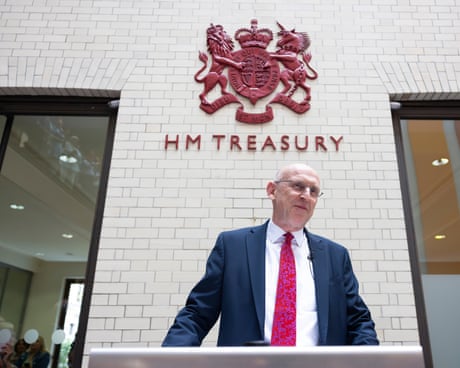
The Treasury ran a higher than expected budget deficit of £24.5bn last month as rising inflation pushed up the interest paid on government debt, increasing pressure on John Healey before his budget next week.

Official figures show the government paid £10.9bn in debt interest: the highest September figure since records began, and only the eighth time the monthly number has been above £10bn.

Continue reading...

© Photograph: Kirsty O’Connor/Treasury

© Photograph: Kirsty O’Connor/Treasury

© Photograph: Kirsty O’Connor/Treasury

  •  

Ken Griffin calls Trump’s tariffs on US allies 'a disaster' and predicts it will hurt Republicans in the midterms

Ken Griffin, chief executive officer of Citadel Advisors LLC, during the Citadel Securities conference in New York, US, on Tuesday, Oct. 20, 2026. The event runs from October 19-20. Photographer: Michael Nagle/Bloomberg via Getty Images
Citadel CEO Ken Griffin called Trump's tariffs on US allies "a disaster" and said the disputes have been "pro-inflation."

Bloomberg/Getty Images

  • Citadel CEO Ken Griffin called Trump's tariffs on US allies "a disaster" and "pro-inflation."
  • Griffin predicts Republicans would lose at least one chamber in the midterms.
  • Inflation has erased nearly all average workers' hourly wage gains since Trump returned to office.

Ken Griffin sees trouble ahead for Republicans and says Donald Trump’s fights with America’s allies are part of the problem.

The Citadel CEO told Bloomberg's Dani Burger on Tuesday at the Future of Global Markets Conference in New York that Trump’s tariffs have fueled inflation and disrupted supply chains as the party heads toward a difficult midterm election.

“I think that the tariff battles with Canada, with Europe, with our allies has just been a disaster,” Griffin said. “I talked about this when he first started this in his presidency. To be blunt, I hate to say it, but I've been right.”

“It's been pro-inflation. It has certainly taken supply chains around the world and severed them,” Griffin, who said he has been supporting a number of Republican candidates this election cycle, added.

Trump's trade disputes with Canada and the EU remain unresolved. The president announced an additional 50% tariffs on certain imports from Canada on July 20, citing what he described as discrimination against American auto, alcohol, and dairy exports. Those duties took effect in August.

The economic backdrop is also challenging. US consumer prices rose 3.7% in September from a year earlier, while inflation has erased nearly all of the average worker’s hourly wage gains since Trump returned to office. Fuel affordability and the lack of housing supply have become pain points for Republicans in the midterms.

Griffin predicted Republicans would almost certainly lose control of at least one chamber of Congress, describing the midterms as a check on the party in power.

“The House almost is in a really tough spot and the Senate's going to be really close," Griffin said.

Griffin also has thoughts on Trump’s explanation of the war in Iran and called the administration’s treatment of immigrants "disgraceful."

"The war in Iran is very unpopular. I think he's done a very poor job of explaining why," Griffin said. "I think the president has not made that case in a powerful, meaningful way to the American people."

Griffin said he believes in securing the border, but immigrants who are already here should be offered "a path to being a contributing member of our society" and help "grow our economy."

"If you are here with your family or by yourself and you are gainfully employed and you are working to find a better life for your family, there needs to be a way to stay in our country," Griffin added.

Read the original article on Business Insider

  •  

US housing data weakens as Federal Reserve weighs rate hikes

US housing data weakened further in September, according to separate reports released Tuesday, even as the Federal Reserve weighs additional interest-rate increases. The figures add to signs that higher borrowing costs are weighing on home sales and construction activity. Economists say the reports complicate the central bank's next policy decision.

  •  

Odds of fifth interest rate hike this year shorten as RBA deputy warns inflation outlook ‘worsening’

Andrew Hauser says central bank faces ‘hard choices’ as it looks to balance risks of entrenched inflation with desire to protect labour market

The chance of a fifth interest rate hike on Melbourne Cup day has jumped after Andrew Hauser, the Reserve Bank’s deputy governor, warned of “hard choices” amid a “materially worse” inflation outlook.

Hauser, speaking at an investment bank conference in Sydney on Wednesday morning, said the RBA monetary policy board members were juggling a slowing economy with fears that Australians were starting to lose faith in the central bank’s ability to bring inflation back to the 2.5% target.

Continue reading...

© Photograph: Lukas Coch/AAP

© Photograph: Lukas Coch/AAP

© Photograph: Lukas Coch/AAP

  •  
❌