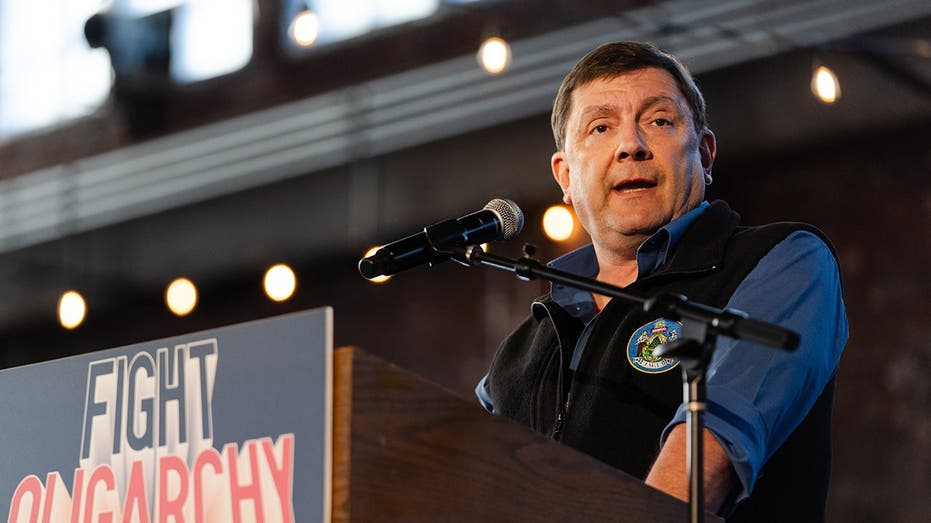
The chaos engulfing France is a preview of what Democrats want for America, Sen. Eric Schmitt warned, contrasting the unrest with new manufacturing jobs and a federal crime crackdown in Missouri that he credits to cooperation with the Trump administration.
"You see what’s happening in France. That’s exactly what they want here, the DSA Democrats," the Missouri Republican told Fox News Digital.
His warning comes as riots, fires and looting have swept France after protests over rising living costs and strained public services turned violent, prompting curfews in parts of Paris and other cities.
"I think the Democrat Party at this point is sort of post-American and anti-Western civilization," Schmitt said.
Asked what a Democratic House would mean for Trump’s agenda, Schmitt accused Democrats of obstructing Republican efforts on immigration, permitting reform and regulations.
He warned that Democratic control could jeopardize funding for Immigration and Customs Enforcement and revive what he described as the political weaponization of government under former President Joe Biden.
But Schmitt also argued Republicans need to give voters a reason to support them, pointing to jobs and public safety as areas where he says cooperation with the Trump administration is paying off.
In Missouri, he highlighted Boeing’s selection to build the Air Force’s F-47 and the Navy’s next-generation F/A-XX fighter as a potentially transformative investment in American manufacturing.
Boeing secured the Navy contract in September after winning the Air Force program last year.
Schmitt, a member of the Senate Armed Services Committee, said the programs would mean 7,000 direct jobs, with additional opportunities for suppliers and surrounding businesses.
"It means that the goal we’ve been fighting for, which is that St. Louis is the defense tech capital of the United States of America, is coming true," he said.
Schmitt said he worked with Trump and administration officials to help land the programs, describing them as "generational opportunities" for Missouri workers.
"You think of the good-paying jobs that’s going to mean for generations to come, it’s just a game changer," he said.
He also tied the aircraft programs to the broader competition with China, saying the next generation of fighters would help meet military demands in the Pacific.
On public safety, Schmitt pointed to Operation Show Me Justice, an ATF-led enforcement surge that resulted in 435 arrests and the seizure of 166 firearms in St. Louis, according to the Justice Department.
Authorities also seized 81 kilograms of drugs and more than $1.25 million linked to suspected illegal gun and drug transactions during the operation, which officials announced had concluded Oct. 15.
Schmitt said his conversations with administration officials have carried a straightforward request for his hometown.
The former Missouri attorney general described the toll of violence on families, including grandparents cleaning up broken glass and parents burying their children.
"We don’t need to accept this," he said. "We just don’t need to accept the idea that violent crime needs to be in the headlines every single day."
He pledged the effort would continue beyond the surge.
"This isn’t a one-and-done deal. There are more resources coming," Schmitt said.
For families wanting to send children safely to school, visit a park or attend a Cardinals game downtown, he said the goal is a better quality of life.
"I think the message is help is on the way, and there are real tangible results now, not just rhetoric, not just empty promises," Schmitt said.
"We’re not letting up."
Schmitt’s third major priority is modernizing St. Louis Lambert International Airport, an effort he linked to the region’s aerospace growth and aviation history.
His Modern Skies Act would fund improvements to air traffic control technology, towers and airport terminals. He said midsize airports need help securing investments that larger hubs can more readily finance.
"St. Louis is the gateway to the West," he said. "It deserves a world-class airport."
The proposal remains a legislative push rather than a guaranteed funding award for Lambert. Transportation Secretary Sean Duffy said during an October visit that airport funding would be competitive.
For Schmitt, those priorities form part of the argument Republicans need to make as voters weigh control of Congress.
He cast the election as "common sense versus crazy," but cautioned that Republicans cannot assume their supporters will show up.
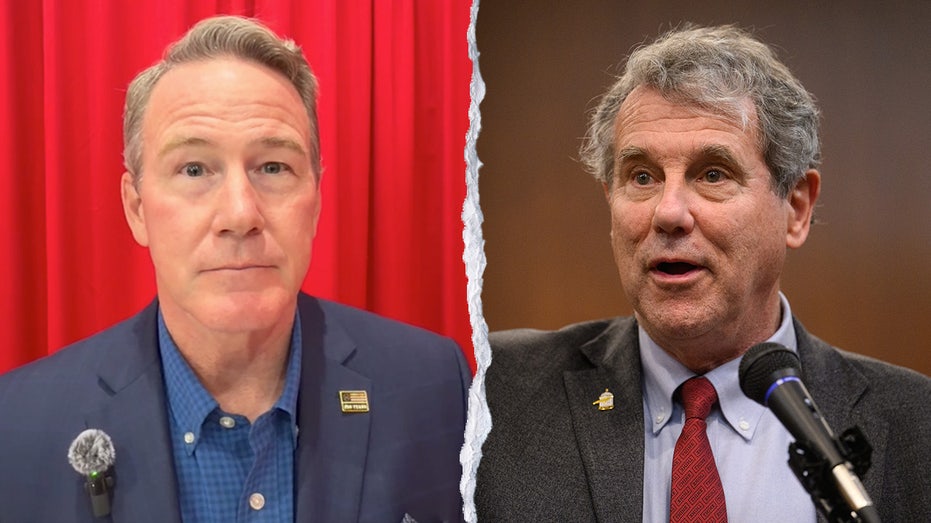
Powered by a clear favorability advantage, a large gender gap and voter discontent with both household finances and President Donald Trump, former Democratic Sen. Sherrod Brown has the edge over appointed Republican Sen. Jon Husted in the Ohio Senate race.
A Fox News survey of likely Ohio voters finds Brown leads Husted, 52% to 47%.
Brown’s advantage is anchored by his stronger personal standing, with his favorability rating 2 points above water (50% favorable, 48% unfavorable), while Husted’s rating sits 13 points underwater (42% favorable, 55% unfavorable).
Economic unease creates another headwind for Husted, as about two and a half times as many voters say their financial situation is worse than two years ago rather than better (46% vs. 19%). Those who say things are worse favor Brown by 49 points, while those who say their finances are better or the same favor Husted by 51 and 24 points, respectively.
The president’s standing in Ohio adds to Husted’s difficulties. Trump won the Buckeye State with 55% of the vote in 2024, but just 43% now approve of his job performance. A 57% majority disapproves, with 46% saying they "strongly" disapprove.
Meanwhile, 52% express concern that Husted is too close to Trump, including 38% who are extremely concerned. Brown faces similar concerns about being too liberal, as 50% are worried, though fewer, 30%, are extremely concerned.
In the matchup, women favor Brown by 14 points, while men support Husted by 4, an 18-point gender gap. Brown also has advantages among voters under 35, voters with a college degree, union voters, and those living in urban and suburban areas. Husted relies on rural communities, non-college White men, married voters, and has a narrow edge among those ages 65 and up.
Partisan crossovers further tilt the field toward the challenger. While Husted receives 90% of Republicans, 9% cross over to back Brown. Some 97% of Democrats support Brown, while just 2% choose Husted — and Brown carries independents by nearly two to one.
Voters who view both Senate candidates unfavorably prefer Husted by nearly 20 points.
Brown is up by 9 points among those who are extremely interested in the election and leads by 29 points among the 15% of Ohioans who say they have already voted.
Legislative preference tilts toward the Democrats, with Ohioans dividing 50% for Democratic control of the U.S. Senate and 48% for Republican control.
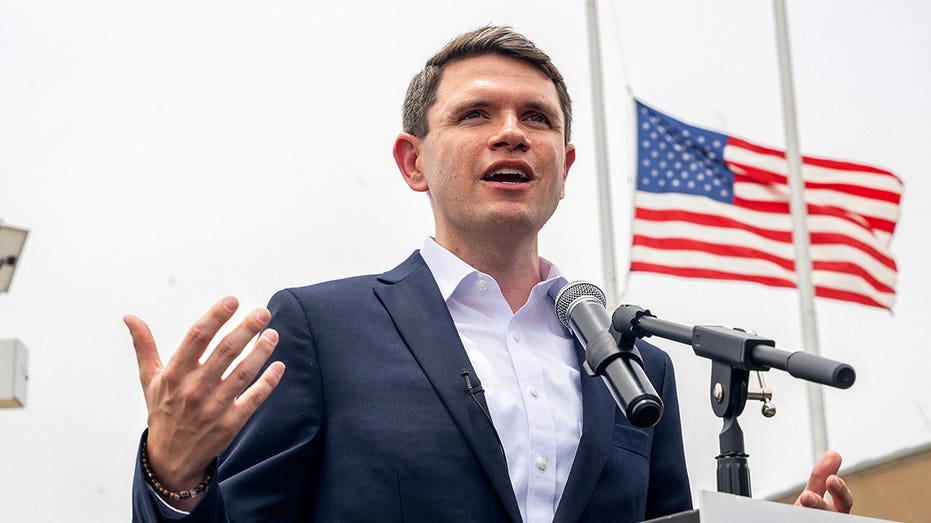
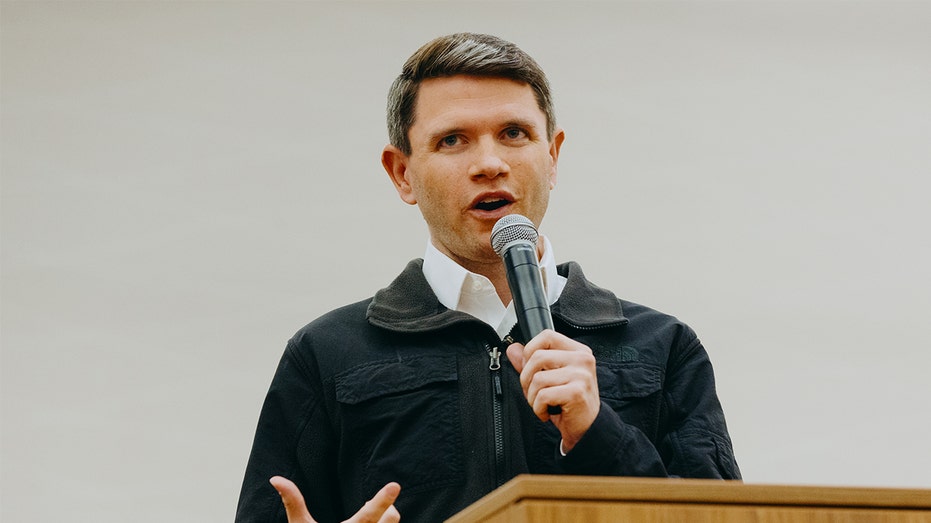
In the governor's contest, likely voters favor Democrat Amy Acton over Republican Vivek Ramaswamy by 50% to 48%. Women favor Acton by 10 points, while men back Ramaswamy by 7, a nearly identical gender gap to the Senate race.
Ticket splitting goes in both directions: 8% of Brown supporters cross over to Ramaswamy, while 6% of Husted supporters back Acton.
The survey was completed before a negative television ad from Ramaswamy’s campaign, featuring Acton’s estranged mother, became public.
Conducted October 15-19, 2026, under the joint direction of Beacon Research (D) and Shaw & Company Research (R), this Fox News Poll includes interviews with a sample of 2,005 Ohio registered voters randomly selected from a statewide voter file. Respondents spoke with live interviewers on landlines (219) and cellphones (1,306) or completed the survey online after receiving a text message (480). Results based on the registered voter sample have a margin of sampling error of ±2 percentage points and for the subsample of 1,592 likely voters it is ±2 percentage points. Sampling error for results among subgroups is higher. In addition to sampling error, question wording and order can influence results. Sources for developing weight targets include the most recent American Community Survey, Fox News Voter Analysis, and voter file data. Weights are generally applied to age, race, education, and area variables to ensure the demographics of respondents are representative of the registered voter population. Likely voters are based on a probabilistic statistical model that relies on past vote history, interest in the current election, intention to vote, age, education, race, ethnicity, and marital status. Results among subgroups are only shown when the sample size is at least N=100.
Fox News’ Victoria Balara contributed to this report.
Texas hasn’t gone blue in a statewide race in more than 30 years, but that streak could face a serious test this year. A new Fox News poll finds that while Texas likely voters favor Republicans retaining control of the U.S. Senate and give incumbent Republican Gov. Greg Abbott an edge in his re-election bid, the Senate race remains deadlocked.
The survey, released Wednesday, finds Democrat James Talarico and Republican Ken Paxton tied at 49% each among Texas likely voters in the race to replace Sen. John Cornyn, who lost the GOP primary to President Trump-backed Paxton.
Last month, Talarico was up by 2 points among likely voters (51%-49%). The shift to a tie reflects Paxton consolidating support among conservatives, rural voters, suburban women and voters who backed Cornyn in the primary.
Although Paxton is falling short of Trump’s 2024 margins, he has strengthened his support a tad among both men (+1) and women (+1) since September, while Talarico slightly lost support (-1 and -2, respectively).
Talarico leads by wide margins among Black voters (+65 points), urban voters (+29), those under age 30 (+28), and women with a college degree (+23). Paxton’s strongest groups include White evangelical Christians (+52), White men without a college degree (+32), rural voters (+21) and those age 65 and up (+18).
The survey finds Hispanic voters swinging back toward the Democrats. After backing former President Joe Biden by 25 points in 2020, they favored Trump by 1 point in 2024, according to the Texas Fox News Voter Analysis. This key voting bloc now favors Talarico by 30 points (64%-34%) and prefers Democratic control of the U.S. Senate by 29 points.
Overall, when it comes to Senate control, Texans choose Republicans by 4 points (51% to 47%), up from +1 point in September.
Talarico’s stronger party loyalty is another reason the race is close: 98% of Democrats support him, compared with 90% of Republicans supporting Paxton. Nearly 3 in 10 non-MAGA Republicans cross party lines to back Talarico.
Democrats also retain an enthusiasm edge: 69% are extremely interested in this year’s election, compared with 61% of Republicans. Extremely interested voters back Talarico by 7 points.
"The race is going to come down to two basic questions," says Republican pollster Daron Shaw, who helps conduct the Fox News Poll with Democrat Chris Anderson. "Do disaffected Republicans show up and, if so, do they grit their teeth and vote for a candidate who they have serious reservations about?"
Views of Talarico are net positive, albeit by just 1 point (49% favorable, 48% unfavorable), while Paxton’s ratings are underwater by 17 (41% favorable, 58% unfavorable). Among "double haters," voters who view both candidates negatively, Paxton leads by 50 points.
Voters express similar levels of concern about both candidates: 53% worry Talarico’s positions are too liberal, while 50% are concerned Paxton is too close to Trump. The intensity of these concerns is nearly identical, with 36% extremely concerned about Talarico and 37% about Paxton.
In 2024, Trump won the Lone Star State by nearly 14 points, but his job rating is currently underwater by 9 points (45% approve, 54% disapprove). Still, Paxton draws support from 13% of voters who disapprove of Trump, while 6% of Trump approvers back Talarico.
When it comes to their personal finances, more than twice as many voters say they are worse off (43%) than better off (20%) compared with two years ago; 36% say they are about the same.
Voters who are worse off back Talarico by 45 points, while those who are better off (+49) or about the same (+26) favor Paxton.
The governor’s race gives Republicans more breathing room: Abbott edges his Democratic challenger, Gina Hinojosa, by 5 points (52% to 47%), unchanged since September.
Abbott has a positive job rating (50% approve, 48% disapprove), and nearly all who approve support him in the race, as do 9% of those who disapprove.
Abbott also benefits from slightly stronger party loyalty and more ticket-splitting among Talarico supporters: 7% support Abbott, compared with 2% of Paxton supporters who back Hinojosa.
Conducted October 15-19, 2026, under the joint direction of Beacon Research (D) and Shaw & Company Research (R), this Fox News Poll includes interviews with a sample of 2,011 Texas registered voters randomly selected from a statewide voter file. Respondents spoke with live interviewers on landlines (205) and cellphones (1,303) or completed the survey online after receiving a text message (503). Results based on the registered voter sample have a margin of sampling error of ±2 percentage points, and for the subsample of 1,398 likely voters it is ±2.5 percentage points. Sampling error for results among subgroups is higher. In addition to sampling errors, question wording and order can influence results. Sources for developing weight targets include the most recent American Community Survey, Fox News Voter Analysis and voter file data. Weights are generally applied to age, race, education and area variables to ensure the demographics of respondents are representative of the registered voter population. Likely voters are based on a probabilistic statistical model that relies on past vote history, interest in the current election, intention to vote, age, education, race, ethnicity and marital status. Results among subgroups are only shown when the sample size is at least N=100.
Democratic Senate candidate James Talarico blamed Republican extremism for prompting some of his past controversial remarks during a new interview, including assertions that God is "nonbinary" and that there are six biological sexes, arguing that those weren't issues he ran for office to discuss.
Talarico said that culture war issues became more prominent in the 2021 Texas state legislature and suggested Republicans were responsible for the increased attention to those topics. Talarico, in 2021, opposed a bill to ban men from women’s sports and claimed that "God is non-binary" while on the Austin, Texas, House floor.
Additionally, at a Texas House Committee on Public Education hearing in 2021, he stated, "Modern science obviously recognizes that there are many more than two biological sexes; in fact, there are six."
Talarico, who is running against Republican Ken Paxton in the state's closely watched U.S. Senate race, spoke to The New York Times' Michael Barbaro on the paper's "The Daily" podcast Tuesday. He said he felt compelled to fight what he described as Republican extremism at the time when asked about the comments.
"I was put in a position where I had to fight back against that extremism. So, you mentioned some of my comments on gender or on issues affecting trans people. It's not like I ran for the legislature to talk about these things. Again, if you go back to my first session, I wanted to talk about public education, which is why I ran in the first place," he said, pointing to other issues on which he ran.
"It's kind of ironic that they're clipping these things to make it sound like I'm the one who was talking about this when, in reality, it was the Republican extremists at the Capitol who were obsessed with talking about trans issues, obsessed with talking about people's private parts. That wasn't me. That was them that changed."
The Democratic Senate candidate said that, at the national level, the party may have gone too far. But at the state level, specifically in Texas, he believed certain bills were targeting and harming his constituents.
He pointed to Texas' abortion ban and legislation affecting the LGBTQ community.
"These bills targeting LGBTQ people have real ramifications in our state, especially when they're written to be overly broad," he said. "I'm all for if we want to figure out when it's appropriate for a trans athlete to play in a sport. That's a policy discussion that we should have and an issue we should solve.
"But the bill that they were trying to pass, the bill they ultimately did pass, was a blanket ban in all cases," he continued. "It treated tee-ball the same as varsity baseball.
"And it's because their goal was to score political points off of the backs of a very small, vulnerable group of people in our state. And, so, you know, my values haven't changed, but I was put in a position because of the rise in Republican extremism to defend my constituents."
Barbaro asked Talarico if he subscribed to Rep. Alexandria Ocasio-Cortez, D-N.Y., and her assertion that so-called "Woke One" was "crazy" at a personal level.
Talarico said he regretted not articulating his position in a "more straightforward way" but had no regrets about defending his constituents.
"So, there's a lot that is said and, when you pull out maybe the most inarticulate of those things to make an attack ad, you know, I certainly regret not articulating my position more clearly, in a more straightforward way to say what I actually mean. And that's going to be true, you know, probably for my entire time in public service. I'm not a perfect person. None of us are. And, so, I'm going to always keep trying to improve how I talk about things so that I'm getting my point across," he said.
"I wasn't making a large point about American politics or the Democratic Party. I'll leave those to the pundits and the commentators. All I was trying to say is that I've said things imperfectly, and I'm going to keep working on trying to communicate more clearly and effectively."
Inez Stepman, senior policy and legal analyst at Independent Women, criticized Talarico's remarks.
"The left is always pulling a bait and switch with cultural issues. They advanced policies that placed males on girls sports teams, in locker rooms, in women’s prisons, and tried to push anyone who objected to that insanity out of public life. Now, they say none of this ever existed or isn’t important. But they don’t change their policy or votes," Stepman told Fox News Digital in a statement.
"Not a single Democrat on the federal level voted for a bill to keep men out of women’s sports. If they don’t want to talk about these issues, they could easily put them behind us by ceasing their campaign, including passing laws and regulations that force us to accept men in women’s spaces. But they won’t do that. They merely want us to stop talking about the consequences of their ideas and policies on women and girls."
Talarico was recently confronted about some of his comments regarding cultural issues while participating in a "Jubilee"-style town hall, during which voters confronted him one-on-one. Talarico met with a fellow Christian from Texas who pressed him on his past statements.
"You've said some concerning things in the past kind of related to faith and social issues. Things such as God is nonbinary, questions about how many genders there really are and your justifications using the Bible for abortion," Sarah Gardner, a small business owner, said to Talarico.
"The first comment about God not being defined by gender, when I said that I was being provocative. And I want to admit that and come clean about that. But I think what I was saying is actually not controversial theologically.
"The idea that we can't define God using human categories, not only did I say that, but the late Charlie Kirk said that, the late Pope Benedict said that. And so, yes, I was doing it, maybe in an annoying way, I can admit that," he said.
Democrats are up in arms after a so-called polling firm that projected far-left candidates as strong contenders in several primaries admitted that it had fabricated its polling data.
Wedgewood Polling, which billed itself as an election survey company, released a statement Tuesday night admitting it used "fabricated numbers" for an "experimental project to demonstrate the vulnerabilities, lack of oversight, and overall low barrier to entry in the modern political polling industry."
The group's polls were cited by Abdul El-Sayed's campaign amid a high-profile primary race against Michigan state Sen. Mallory McMorrow and U.S. Rep. Haley Stevens, D-Mich. The nonpartisan polling aggregator Political Polls also cited Wedgewood in the Wisconsin gubernatorial race, showing socialist Francesca Hong having an edge over Republican candidate Rep. Tom Tiffany, R-Wis.
McMorrow said Wedgewood's numbers led to her donations drying up and reporters having "hounded" her with calls to drop out of the race.
"Sure, a point was proven. Polling is broken. But tens of thousands of people poured their hearts, time, energy, hard-earned money into something they believed in - for a year-and-a-half, and it was treated like a game," she said in a statement on X. "Trust is already at an all-time low. We don't get out of this mess without rebuilding trust. And media - who loves to ride the drama of a pollercoaster - needs to take a hard look at what's legitimate and what's not."
Unlike El-Sayed, who advanced from Michigan’s Democratic Senate primary, Hong lost Wisconsin’s Democratic gubernatorial primary to the establishment-backed candidate. El-Sayed, a former Michigan public health official, is currently locked in a tight race against former U.S. Rep. Mike Rogers, R-Mich., for Michigan's open Senate seat.
Democrat strategist Jennifer Holdsworth said she ran a super PAC that raised money for McMorrow and that "this poll was used by several donors to pull back funding at a time we were being outspent by $80 million."
Wedgewood's numbers were cited by high-profile outlets like The New York Times and Decision Desk HQ, which both said they have since removed them from their projections.
The Times said it removed 15 polls released by Wedgewood between June and October after it admitted to fabricating data. The outlet said Wedgewood had "answered a series of questions regarding the identities of the pollsters; the methods they were using to draw their sample, contact respondents and weight their polls; and the source of their funding" during its vetting process.
Decision Desk HQ said it removed 17 Wedgewood polls from its projections but that it "has not changed the projected seat totals or chamber control probabilities in the Senate or House."
Wedgewood Polling's statement said it "was never intended to sway an election" but rather was aimed as a "wake-up call" about data integrity and vetting standards.
"These people are absolute scumbags," veteran Democratic strategist and former Kamala Harris advisor Mike Nellis told Fox News Digital. "They can try to claim that they have some moral high ground here, but they lied about their polling data, got caught, and are freaking out because they've committed fraud."
"The people responsible for this should be run out of American politics, and if they can be, they should be prosecuted to the full extent of the law," Nellis said. He added that both Democrats and Republicans, as well as the media, should reflect on how polling is verified "because there's likely other people that are doing things like this."
Independent outlet FiftyPlusOne said it was investigating Wedgewood when it had released its statement. Co-founder G. Elliott Morris wrote on X, "We were investigating Wedgewood for faking their data and emailed them for comment this morning, ahead of publishing the findings tomorrow. They are trying to cover up their fraud with the 'we were doing a social experiment' excuse."
Former Obama staffer Tommy Vietor said on X that Wedgewood's actions amounted to "lying and fraud."
A group called "Wedgewood Polls" had also previously created a GoFundMe to raise money for polling in Nebraska's gubernatorial and Senate races. It raised $500 of its intended $5,000.
"I know they crowdfunded, I believe, a good chunk of their polls," Nellis told Fox News Digital. "Are they going to return that money? And if not, are they going to be prosecuted?"
Other Wedgewood surveys showed Democrats with significant edges over Republicans in states like Texas, where a July Wedgewood poll showed James Talarico leading state Attorney General Ken Paxton among Hispanics by 64% to 30%.
Republicans, including President Donald Trump, have long heaped doubt on the veracity of polls.
Polls notably showed former Secretary of State Hillary Clinton with an edge over Trump in 2016 — far from the actual result.
And with the fight for control of Congress coming to a head in November, every data point is being scrutinized as political tea leaves.
LEWISTON, MAINE – Former Sen. Joe Manchin, a longtime Democrat turned independent, took aim at Senate Minority Leader Chuck Schumer on Wednesday for trying to unseat Republican Sen. Susan Collins of Maine, calling his former party leader's efforts "crazy" as he joined Collins on the campaign trail in her high-stakes re-election race.
Collins, a moderate Republican who at times has voted against President Donald Trump and her party, is fighting for her political life as she runs for a sixth six-year term representing blue-leaning Maine in the Senate. She is the only GOP senator seeking re-election in a state Trump lost in the 2024 election.
The race between Collins and Troy Jackson, a former state Senate president, is a top flip opportunity for Democrats as they try to win back the Senate majority from Republicans in the midterm elections. The latest public opinion polls indicate a margin-of-error showdown, and the latest Fox News Power Rankings rate the race as a toss-up, as do leading nonpartisan political handicappers the Cook Political Report, Inside Elections and Sabato's Crystal Ball.
Manchin, who worked closely with Collins during his years in the Senate, was asked by Fox News Digital how his campaigning with his former colleague would sit with Schumer, the top Democrat in the chamber.
"Chuck Schumer would not be surprised of me being with my dear friend. There is no surprise there at all. I told him he was crazy in 2020 from working against her so hard and he’s crazy now to work against her," Manchin said, as he referred to unsuccessful efforts by Democrats to defeat Collins in her re-election six years ago, and their current push to oust her.
Manchin emphasized, "This is not right. She is the soul of America. She is the soul of the Senate, and he knows he needs more Susan Collins, no matter what side of the aisle they’re on. This is ridiculous."
Fox News Digital reached out to Schumer's political team and the Democratic Senatorial Campaign Committee for a comment but did not receive a response at the time this story was published.
A former West Virginia governor who served in the Senate from 2010 to 2025, Manchin frequently broke with his party, frustrating Democratic Presidents Barack Obama and Joe Biden, as well as Schumer and other Senate Democratic leaders.
As he works to oust Collins from the Senate, Jackson has repeatedly tried to anchor the senator to Trump, who has seen his approval ratings in Maine and across the country drop further underwater.
But Manchin said that Collins is "not a Trump senator. She's not a Republican senator or a Democrat senator. She's an American senator that represents her state of Maine ... the most independent minded person I've ever met."
Collins noted that "Joe and I were part of every bipartisan initiative that passed the Senate and became law during the years that we worked together ... I just so enjoy our partnership in getting things done for Maine, for West Virginia and for America."
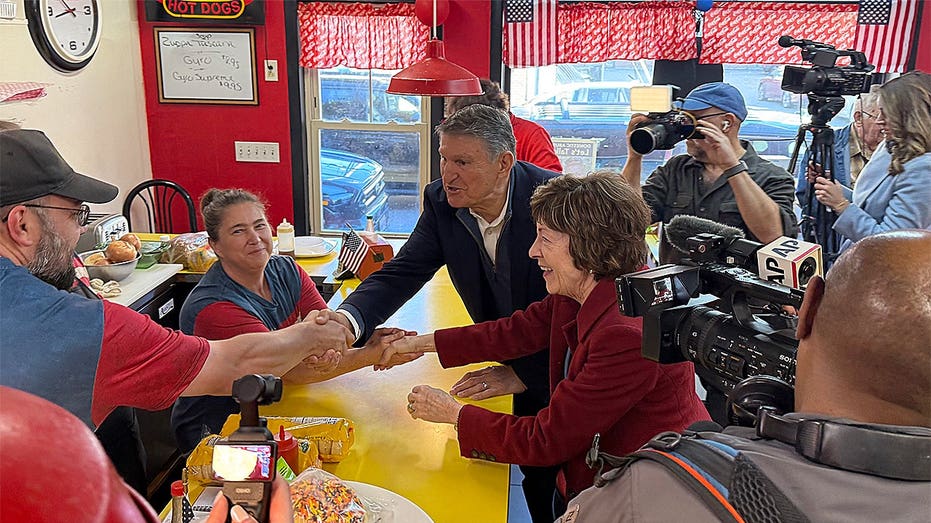
Manchin and Collins spoke with reporters after meeting with restaurant workers and customers at Simones' Hot Dog Stand, a famed local eatery in downtown Lewiston that's been serving customers for a century. It was the first of two campaign stops in Maine's 2nd Congressional District, a key swing district.
Collins and Jackson last week faced off on the debate stage for the fourth and final time. The senator used the debates to showcase how her Senate seniority has helped her deliver federal funding for Maine. Meanwhile, Jackson used the showdowns to position himself as an outsider who understands the struggles and frustrations of working-class voters.
Jackson won a special nominating convention in late July to claim the party's Senate nomination, which was left vacant after primary winner Graham Platner ended his campaign following allegations he raped a woman he previously dated. Platner denied the allegations but dropped out.
Jackson, who earlier this year unsuccessfully ran for the Democratic gubernatorial nomination, had campaigned alongside Platner during the primary campaign.
Collins, meanwhile, has a history of surviving Democratic efforts to unseat her.
Six years ago, she trailed Democratic challenger Sara Gideon, the Maine House speaker at the time, but Collins won re-election by nearly nine points while former President Joe Biden carried the state by a similar margin.
Fox News' Kailey Schuyler contributed to this story.
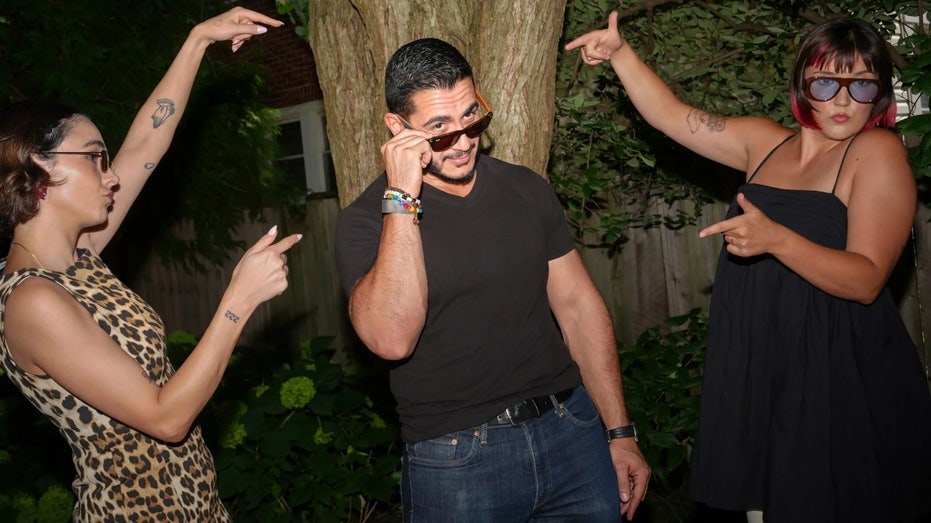
Abdul El-Sayed’s past support for Muslim Brotherhood protesters in Egypt is raising eyebrows in Congress after a former staffer for the left-wing Michigan Senate candidate says he's angling for a seat on the Senate Foreign Relations Committee if elected in November.
Two Republican panel members said there is no place on the committee for "radical views" held by El-Sayed, who has associated with controversial streamer Hasan Piker but has attempted during his bid for office to distance himself from the socialist arm of the Democratic Party.
"A man with ties to the Muslim Brotherhood, who cheered their takeover of Egypt 15 years ago, and who campaigns with people saying America deserved 9/11, should not come anywhere near the U.S. Senate — and especially not the Foreign Relations Committee," Sen. Mike Lee, R-Utah, who serves on the power panel, told Fox News Digital.
Sen. Dave McCormick, R-Pa., another member of the committee, responded to the controversy on X over the weekend.
"El-Sayed says he’s running on affordability, so why does he want a seat on @SenateForeign?" McCormick wrote. "I sit on that committee, and someone with El-Sayed's radical views has no business on it."
McCormick’s post came in response to a report by The Midwesterner that featured comments from Jordan Domingue, who worked as El-Sayed’s security chief during his 2018 campaign for Michigan governor.
"It is extremely difficult to comprehend how dangerous this can be if he is elected," Domingue wrote on X. "It’s especially troubling knowing that despite no foreign policy experience, he REALLY wants a seat on the Senate Foreign Relations Committee."
In 2011, while working as an assistant professor at Columbia University, El-Sayed wrote an op-ed for The Huffington Post urging the Obama administration to support protesters associated with Egypt’s Muslim Brotherhood.
El-Sayed argued that supporting the protesters was in the U.S. interest and wrote that even if the Muslim Brotherhood overthrew Egypt’s government, the resulting state would not necessarily resemble Iran.
"It is in America’s interest to support Egyptian protesters’ efforts to achieve the ability to speak their mind and have a say in how they are governed," El-Sayed wrote . "If the U.S. truly wants to be the beacon of justice and liberty that it claims it does, it would behoove the Obama administration to fall decisively behind the protesters in Egypt."
In a recent town hall, however, El-Sayed, the son of Egyptian immigrant parents, said he does disavow the Muslim Brotherhood. His campaign did not respond to Fox News Digital’s request about his 2011 op-ed about protesters.
The Muslim Brotherhood-backed government took power in Egypt in 2012 but was ousted by the military in 2013.
El-Sayed has throughout his campaign emphasized healthcare, lowering gas and grocery prices and addressing the cost-of-living crisis, as noted by McCormick in his post about the candidate's reported interest in the Foreign Relations Committee.
"It shouldn’t be this hard to get by in the richest, most powerful country in the world," El-Sayed said during his primary campaign against Rep. Haley Stevens, D-Mich., and state Sen. Mallory McMorrow.
McCormick wonders why, given that context, El-Sayed would be gunning for a spot on a committee that deals solely with issues related to U.S. foreign relations.
Your phone buzzes. Another political text. This time, it's an urgent fundraising appeal claiming a campaign desperately needs your help before midnight. You delete it, block the number and get on with your day. Then tomorrow, another one arrives from a completely different number. Sound familiar? I've been there, and frankly, I'm fed up with it.
On The CyberGuy Report podcast, I sat down with George Weiner, founder of PACspam.org and head of the digital agency Whole Whale. George got so frustrated with the relentless political texts that he created a free tool to help people figure out who's sending them. Our conversation revealed why blocking numbers often gets you nowhere, how political fundraising has become a lucrative business and what you can do to fight back.
Join our upcoming CyberGuy LIVE class: 5 Ways to Travel Smarter and Save Money
In this free live online class, Kurt "CyberGuy" Knutsson will share five practical ways to protect your trip and your wallet this holiday travel season. You’ll learn how to secure your phone and personal information, find better travel deals, avoid common scams, save money on bookings and use technology to make your travels easier and less stressful. No technical experience is needed.
Join us Saturday, October 31, at 11 AM ET / 8 AM PT. Register free now at CyberGuyLive.com.
Why blocking political text messages doesn't work
You would think blocking a phone number would send a pretty clear message. Apparently, political texting operations don't always take the hint. I asked George why texts from the same political groups kept showing up after I blocked their numbers. "Well, you block one number and you've only blocked one number," Weiner explained.
He introduced me to a technique called snowshoeing, which allows an organization to spread its messages across multiple phone numbers. A single campaign or political action committee (PAC) may use many different numbers to reach the same people. So, even after you block one sender, another number can deliver the next fundraising appeal.
For George, this frustration became personal. As a father of three, he worries about missing an important call from his children's school. "That could be the school, right? That could be an emergency," he explained. Instead, his phone often interrupts him with another fundraising appeal. He tried replying STOP, reporting messages and registering for the National Do Not Call Registry. Yet the interruptions continued. "I have done it all and I still get these messages," Weiner said. That raises a question I've been asking for years. How did these organizations get our phone numbers in the first place?
How political campaigns get your phone number
You might assume a campaign needs your permission before adding your number to its texting list. Unfortunately, political outreach operates under rules that leave plenty of room for unsolicited messages. Weiner explained how phone numbers can circulate through political donor and voter databases. Campaigns may also combine registration information with commercially available data to identify potential supporters. Furthermore, organizations can purchase or exchange contact lists, allowing your information to reach groups you've never heard of.
Voter registration records vary by state, and phone numbers aren't necessarily public in those records. However, organizations can match voter information with other databases to build detailed contact profiles. Political donations can create additional exposure. As we've previously reported, federal political contribution records can reveal personal information, including your name and address when disclosure requirements apply. Once your number enters this fundraising network, tracking every organization that holds it becomes extremely difficult.
The money behind nonstop political fundraising texts
Here's something from my conversation with George that really caught my attention. There's a substantial amount of money flowing through the political texting business, and the people sending these messages have financial reasons to keep doing it. Weiner pointed to approximately $65 million spent on political texting services during the 2024 election cycle, based on his analysis of Federal Election Commission records. He also believes 2026 spending could exceed that amount, although a final election-cycle total isn't yet available.
George also highlighted how much money individual political messaging vendors receive. According to PACspam's analysis of FEC records covering December 2008 through May 2026, reported payments totaled $17 million for Switchboard, $14.4 million for Mothership Strategies and $10.6 million for Message Digital. These figures span multiple election cycles and reflect reported payments to political messaging vendors, which may include services beyond texting.
Why political fundraising texts keep coming
"There is money to be made," Weiner told me. He explained that fundraising operations can keep paying to send messages as long as the donations they generate justify the expense. Even a small percentage of people responding with money can make another round of texts financially worthwhile. Some appeals claim a donation deadline is approaching or suggest a candidate faces an immediate financial emergency. Others use provocative headlines designed to make you react before thinking.
Weiner also raised concerns about how much money some PACs actually direct toward candidates. He pointed to investigations suggesting that certain organizations spend heavily on fundraising while relatively little reaches the candidate being promoted. PACs operate under different rules, however, and not all are established to make direct candidate contributions. That's why it's important to investigate where your donation will go. And this problem crosses political lines. Weiner stressed that organizations associated with different political parties use these tactics. The repeated pleas for money, he believes, can end up alienating the very voters campaigns want to reach. That brings us to an interesting way to investigate who's behind the messages.
How PACspam helps identify who's sending political texts
George created PACspam.org to give people more information about the organizations filling their phones with unsolicited political messages. "Our phones don't have to live like this," Weiner said while explaining why he built the tool. The free service analyzes political fundraising texts and attempts to identify the committee behind them. It can examine fundraising links and use public campaign finance information to help trace the organization responsible. PACspam also helps document complaints and tracks repeat offenders using information connected to FEC-registered committees. Its public leaderboard focuses on texting behavior rather than political affiliation. Meanwhile, its FEC Texting-Spend Explorer lets visitors investigate campaign spending on texting services. In some cases, PACspam can also help identify the texting technology provider that delivered the message. That last part is particularly interesting because those technology companies may serve multiple political organizations.
Rather than contacting only the committee asking for money, Weiner suggests contacting the texting platform when it can be identified. "They do answer," Weiner told me when I asked whether these companies respond to complaints. He described receiving a response from the legal department of a texting provider. That company explained how he could request placement on its own do-not-contact list. The approach could be more useful than blocking one phone number because it targets a provider that may handle messages for multiple political organizations. Still, one company's removal list won't necessarily apply to competing platforms. Of course, results can vary. An organization may use another platform, and some messages don't contain enough information to identify the sender. Still, contacting a texting provider offers another avenue to pursue.
Getting started requires only a political text you've received. Here's what to do.
Visit PACspam.org.
Copy the unwanted political message from your phone. You can also upload a screenshot if you prefer.
Review the message or screenshot for personal details you don't want to share.
Paste the message into the site's lookup tool, or upload your screenshot.
Select Look up sender to analyze the message.
Review any identified committee, fundraising link or texting provider.
Use the generated complaint information to contact the relevant organization through available official channels. You can also review the site's reporting options.
PACspam can prepare complaint information and help document unwanted political messages, but it doesn't automatically send those complaints on your behalf. It also cannot guarantee that your number will disappear from political texting lists. I also asked George an important privacy question. What happens to the information people submit? "We're not collecting your number. I just want that message," he said. According to Weiner, you don't need an account to use PACspam. Whole Whale also says uploaded screenshots are processed and discarded, while personal messages aren't displayed publicly. Those are the service's stated privacy practices, so I still recommend removing identifying details before submitting anything.
Are unsolicited political text messages legal?
Here's where things get frustrating. The Federal Communications Commission treats political texts differently depending on how they're sent. Political messages sent through an automatic telephone dialing system generally require prior express consent before reaching your cellphone. However, messages sent manually through peer-to-peer texting systems can fall outside those restrictions. That helps explain why so many campaign texts can reach people who never specifically requested them.
The National Do Not Call Registry generally doesn't cover political outreach either. So, registering your number may reduce some telemarketing calls without stopping political fundraising appeals. The FCC also says political campaigns should honor opt-out requests when recipients reply STOP. For robotexts covered by federal consent rules, revocation requests must generally be honored within 10 business days. However, an opt-out from one sender won't necessarily remove your number from other political organizations' databases.
5 ways to block political text messages and protect yourself
You may not be able to eliminate every political text, but several steps can reduce the interruptions and help protect your information.
1. Reply STOP when you recognize the sender
If you receive a message from a legitimate political campaign or organization, replying STOP can unsubscribe you from that sender's messages. However, be selective. If the text looks suspicious or contains an unfamiliar fundraising link, avoid responding. Scammers sometimes impersonate political organizations, and engaging with suspicious messages may confirm that your number is active.
2. Turn on spam filtering on your phone
Your smartphone already has tools that can help move unwanted messages out of your main inbox. Here's where to find them.
On iPhone running iOS 27:
Open the Messages app.
Tap the Filters button.
Select Manage Filtering.
Turn on Screen Unknown Senders.
Make sure Filter Spam is enabled.
Unknown senders can move into a separate folder, reducing interruptions. If needed, tap Allow Notifications to choose which categories of unknown messages can still alert you. Availability varies by region.
On Google Pixel or Samsung Galaxy using Google Messages:
Open Google Messages.
Tap your profile picture or icon.
Select Messages settings.
Tap Protection & safety.
Select Spam protection.
Turn on Enable spam protection, if available.
Google Messages can flag suspicious texts and move some of them into the Spam & blocked folder. Menu options may vary by device and app version. Remember to review your filtered messages occasionally so important texts don't get overlooked.
Blocking individual numbers can reduce messages from persistent senders, even though other numbers may still get through.
On an iPhone, open the unwanted conversation, tap the sender's icon, select Info and choose Block Contact. On an iPhone, reporting a message as spam doesn't automatically block the sender. You need to block the contact separately if you want messages from that number stopped.
On Google Messages, touch and hold the unwanted conversation, then tap Block. You can also select Report spam before confirming.
4. Report unwanted texts to your carrier and the FCC
You can forward unwanted political texts to 7726, which spells SPAM on a telephone keypad. This alerts your wireless carrier and can help its spam detection efforts. For suspected violations of federal calling or texting rules, you can also submit a complaint through the FCC Consumer Complaint Center. If the text appears to be a scam, report it to the Federal Trade Commission at reportfraud.ftc.gov/. Keep a screenshot of the suspicious message if you may need it for your report.
5. Donate directly and limit your personal data exposure
One of George's strongest recommendations involves political donations. If you want to support a candidate, find that candidate's official website yourself rather than following a link in an unsolicited text. During our interview, George warned that donating through unfamiliar political fundraising texts can encourage additional solicitations. He described how a successful donation might lead organizations to think, "we got one, let's send twice as many messages." His recommendation was straightforward: Give through the candidate's official website instead of an unsolicited fundraising link. That helps you verify who is receiving your money. However, even donating directly can lead to additional campaign messages, so review the site's privacy disclosures and contact preferences.
Additionally, consider limiting how widely your phone number appears online. Data brokers can collect and resell personal information, and removing your details from covered sites may reduce future exposure. Check out my top picks for data removal services and get a free scan to find out if your personal information is already out on the web by visiting CyberGuy.com.
Keep in mind that commercial data removal services cannot erase legally required public campaign finance records. They also can't guarantee removal from every political organization's contact database.
Kurt's key takeaways
What struck me most about my conversation with George is how much money is being made from messages that so many of us desperately want to stop. We block numbers and ask to be removed, yet the texts keep coming. And the organizations making money from this system have little incentive to change it. I appreciate that George decided to do something about it. His PACspam tool offers a way to investigate who's behind these messages and push back through official complaint channels. I'd love to see political organizations become more accountable for how they use our personal information. After all, supporting a candidate shouldn't mean giving every fundraising operation unlimited access to your phone. Want to hear exactly how George is fighting back? Listen to my full interview with George Weiner on The CyberGuy Report podcast. We dig deeper into the political texting business, the companies behind it and what you can do when blocking numbers fails. And if you're ready to reduce even more unwanted messages, head to CyberGuyLive.com for my free Sick of Spam? class replay. You'll get practical advice for reducing robocalls, unwanted texts and junk email, along with a free spam-stopping checklist.
Should political campaigns have to get your permission before sending fundraising texts, and should the companies profiting from those messages face consequences when you repeatedly ask them to stop? Let us know by writing to us at CyberGuy.com.
Sign up for my FREE CyberGuy Newsletter
Get my best tech tips, urgent security alerts and exclusive deals delivered straight to your inbox.
For simple, real-world ways to spot scams early and stay protected, visit CyberGuy.com –trusted by millions who watch CyberGuy on TV daily.
Plus, you'll get instant access to my Ultimate Scam Survival Guide free when you join.
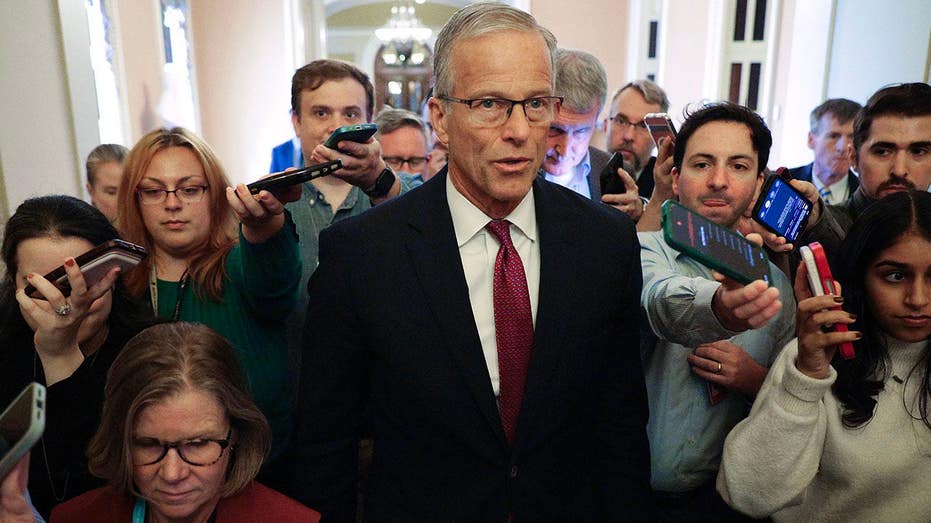
FREMONT, Neb. — Senate Majority Leader John Thune, R-S.D., is predicting Republicans will outperform the polls and retain their narrow Senate majority, even as GOP-aligned groups pull millions of dollars from struggling candidates and redirect resources to races that have suddenly become more competitive.
Thune has been crisscrossing the country campaigning for vulnerable Republicans ahead of the Nov. 3 election. He’s confident that they can hold onto their slim, 53-to-47-seat majority in the Senate but acknowledges that the GOP as a whole faces headwinds.
And as Election Day inches closer and closer, several contests across the country have tightened, like in Kansas, while others may be slipping away from Republicans, like in North Carolina or Georgia.
Thune, in an interview with Fox News Digital on the trail supporting Sen. Pete Ricketts, R-Neb., was still optimistic about the GOP’s chances.
"I think there are a lot of races right now just looking at the polling that are up for grabs," Thune said. "I mean you could call them jump balls, however you want to say it. They're margin of error races, and there are some that are maybe a little out of the margin. But I do think the polling right now, like it has been in past elections, under-reflects the Republican vote."
"And I think you'll see some of that. So we're not giving up on any of them," he continued.
Republicans are hoping to defend six toss-up races this cycle, according to Cook Political Report. And several that earlier appeared as safe bets, like Mississippi and South Carolina, have recently shifted more favorably towards Democrats.
The flow of campaign cash has been staggering during this midterm cycle, with Republican political action committees (PACs) and outside groups dumping hundreds of millions of dollars in key races across the country.
But where the money is being shifted could be more telling.
Earlier this month, the Senate Leadership Fund, a PAC closely aligned with Thune, moved money from Georgia to Kansas, where Sen. Roger Marshall, R-Kan., is locked in one of the more unexpected toss-up contests of the cycle.
The Senate Leadership Fund had initially pledged $44 million to bolster Rep. Mike Collins, R-Ga., in his quest to topple Sen. Jon Ossoff, D-Ga. But the incumbent first-term senator has been raking in campaign donations and consistently led Collins in polling.
And in North Carolina, where former Republican National Committee (RNC) co-chair Michael Whatley is running to keep retiring Sen. Thom Tillis’ seat red against former North Carolina Gov. Roy Cooper, outside funding has begun to dissipate.
The Senate Leadership Fund similarly pulled back nearly all of its spending in the state earlier this month, a sign that confidence in Whatley’s ability to best Cooper was waning. Even President Donald Trump, who held a rally for Whatley on Tuesday, is worried about the race.
"I think he’s a great man, and I am worried about him," Trump told reporters earlier this month. "I hope he wins. He was a great leader for the whole Republican Party when I won, and he’d be a great senator."
Meanwhile, Thune was still bullish that Republicans could hold on, but ultimately, it would come down to getting the "low propensity, particularly Trump, voters out, and then you've got to work on winning the middle of the electorate."
"Turnout's going to be a big part of whether or not we're successful or not. And in every state I've been in, that is a clear-eyed focus of our candidates," Thune said.
"That's where resources are being invested. And I think that could be the difference for us come Election Day on whether or not we win a lot of these close races or not," he continued. "And I think that we're gonna outperform the polls for sure come Election Day."
FIRST ON FOX: With the midterms less than two weeks away and after socialist-backed candidates notched sweeping primary victories, a conservative group is warning the far-left agenda will leave Americans worse off.
Advancing American Freedom (AAF) launched "DSA Exposed" on Wednesday. First obtained by Fox News Digital, the website critiques 12 Democratic Socialists of America (DSA) proposals, including universal healthcare, public ownership of major industries, abolishing the Senate and ICE and ending aid to Israel.
AAF argues the proposals would reshape American life — and not for the better. Its site examines their potential effects on healthcare, work, housing and the economy.
"In many ways, this election is being framed as a referendum on President Trump, but the Democrats deserve just as much scrutiny and more because of what motivates their actual policy preferences," AAF President Tim Chapman told Fox News Digital.
In a letter sent to congressional offices Wednesday outlining the new tool, Chapman called the DSA’s agenda "un-American extremism" and urged lawmakers to condemn its "antisemitic rhetoric."
"The DSA represents one of the greatest threats to Americans’ life, liberty, and pursuit of happiness in perhaps American history," he wrote.
The website also lays out a visual timeline of socialist governments dating back to the 1900s. From the Soviet Union to present-day Cuba, the timeline shows whether each government remained in power or ultimately collapsed.
Chapman said the DSA’s biggest issue is its call for greater government involvement. He argued this could have the opposite effect on affordability than intended.
"They're going to put more bureaucrats in charge of the economy and this is the thing that's actually dragging down the economy," he said.
Socialism has become increasingly embedded in American politics after several candidates backed by the DSA prevailed in their Democratic primaries this year.
Some of the DSA’s most prominent endorsements include Rep. Alexandria Ocasio-Cortez, D-N.Y., Rep. Rashida Tlaib, D-Mich., New York Assemblywoman Claire Valdez, U.S. House candidate for New York Darializa Avila Chevalier and Pennsylvania state Rep. Chris Rabb.
The DSA’s upward momentum has left many Democrats questioning the future of the party and whether it could shift further to the left.
An October Fox News Poll found 32% of voters view socialism favorably, up five points from a year ago, while a March poll found 53% of voters under 30 favored moving away from capitalism toward socialism.
Chapman said "a pendulum swing" has left young Americans with "great frustration" over both parties’ handling of the economy.
"Right now, you're having populist politics on the right, and you're having populist on the left and both are massively failing when it comes to the economy," he said.
He said both parties need to do better to prevent an "opening" for socialism and accused Democratic leaders of being hesitant to distance themselves from DSA-aligned policies for fear of losing their party’s base.
"The answer is not to give the authority to the democratic socialists on the left, because they'll actually drive it further into the hole," he said.
As voters head to the polls in November, Chapman hopes the website offers a "deep dive" into socialist platforms and how they stack up against Americans’ priorities.
"Even though they may be a minority of the party, they are the energy within the party," Chapman said. "They’re the beating heart of the movement and I think that the leadership of the party will probably kowtow to that base energy."
The "Ruthless Podcast" hosts called out Democratic hypocrisy Wednesday for decrying "big money" in politics while accepting donations from major companies and billionaires ahead of the midterm elections.
Podcast co-host John Ashbrook highlighted a recent report that Kansas Democratic Senate nominee Adam Hamilton holds up to $4 million in stock in companies in the artificial intelligence (AI) and data center sectors despite previously criticizing AI technology.
"He’s getting rich off of data centers," Ashbrook said.
They also commented on how Hamilton's wife earned between $5,001 and $15,000 from interest in bonds alone from the Bank of China.
"She's hedging on China, if the church doesn't work," podcast co-host Comfortably Smug joked.
"Roger Marshall voted for $30 billion in tax breaks for data centers and for making it easier to build centers while taking tens of thousands from data center developers. Adam will let Kansans decide what's right for their community, not big tech," Hamilton spokesperson Tyson Brody told Fox News Digital.
The podcast also remarked on Maine Democratic Senate candidate Troy Jackson recently disclosing that at least four billionaires donated to his campaign despite previously claiming he had no billionaires backing him.
"That is my favorite Democrat bit," co-host Josh Holmes said. "It's the ‘I'm tired of corporate greed and corporate donations, and I'm not taking big money in politics.’ And like the entirety of their party, each one of them individually is exclusively on the map only because of that."
"He said that he's running for office because he's tired of high-priced lobbyists and corporate greed," Ashbrook added. "Well, of course, if you listen to the Variety Progrum, you know his own son is a lobbyist."
Fox News Digital reached out to the Jackson campaign for comment.
A Jackson campaign spokesperson told WGME, "Nearly 200,000 people have donated to Troy’s campaign, with 95% of contributions under $100, support from Mainers in all 16 counties, and no corporate PACs — unlike Susan Collins, who is heavily funded by corporate PACs and wealthy special interests whose bidding she does in Washington. While Susan Collins remains at the center of a pay-for-play scandal where she steered taxpayer dollars to campaign donors, Troy has always been clear that billionaires need to pay their fair share, and he’ll always put working people first."
Maine's race has been ruled a "toss-up" between Jackson and the GOP incumbent Sen. Susan Collins.
Fox News Digital reached out to the Collins campaign for comment.
Fox News’ latest power rankings have classified the race in Kansas as "leans GOP" in favor of incumbent Sen. Roger Marshall.
In case you couldn't tell by the 14,000 signs on every street corner in your town, or the never-ending commercials, or the non-stop phone calls and texts from X-candidate saying "We need your help!" and begging for "one more donation" ...
We're in the thick of it. We've got two weeks until the midterms, and it's all hands on deck in both parties right now. Everyone is on edge. We're all on pins and needles with Nov. 3 less than two weeks away, and that includes ... Danica Patrick?
Danica Patrick!
One of Donald Trump's biggest supporters from 2024, Danica has dusted off the old campaign firesuit and put the pedal to the floor for the president ahead of next month's elections.
Patrick, 44, posted a lengthy Instagram message about Trump late Tuesday night, calling on Americans to vote so the president could "make the most of the last half of his presidency."
Take a look:
Danica Patrick is taking us to the election season checkers
"I wish you could all have just 5 minutes with @potus! He is so easy to talk to and SO fun to listen to! He’s a great story teller… funny and obviously interesting. He is also very curious what your opinion is pertaining to any topic. And of course he is really into sports, which I love!" Patrick said in her post, which included several pictures from the 2024 elections featuring Trump and the ex-NASCAR star.
"There will never be another Donald J. Trump! He not only loves his country deeply but delivers intelligence, leadership, entertainment and humor all day long.
"Our job was done with the election 2 years ago. Big shifts take time and we have to keep showing up! Let’s help him and his amazing staff make the most of the last half of his presidency by getting out there and voting in 2 weeks! Keeping the house and senate ensure this rational and patriotic momentum keeps going!!!!!!"
We're two weeks out, and, right on cue, the big guns are being called in for one final push. The memo went out like the bat signal, and Danica promptly — and swiftly — took action.
Look, I hate election stuff. HATE it. I'm so tired of the Byron Donalds and David Jolly commercials down here in Florida, I can't even begin to express it. It's exhausting. My mailbox is literally overflowing with "letters" from candidates — most of whom I don't even know.
But, this is also par for the course. I've lived through enough of these in my life that I know what to expect. We're gonna be inundated with stuff like this for the next 13 days, and then, just like that, it'll stop. We'll go from 100 back to 0 in the blink of an eye.
The Michigan senate race between Republican candidate Mike Rogers and Democrat Abdul El-Sayed has turned into the marquee matchup of the 2026 midterm, both as a test of the far left’s ability to compete in middle America and as a referendum on President Donald Trump’s leadership. So what will tip the balance?
While many of the basic factors of this contest have already been built in, such as El-Sayed’s disdain for Israel, and Rogers, somewhat qualified, support for the president’s policies, there are a few points emerging that could prove decisive in the final two weeks.
Here are five factors that still could sway who some late deciders vote for, or whether they turn out to vote at all.
1. Temperament
Policy differences aside, Mike Rogers and Abdul El-Sayed are very different people with very different temperaments, and voters Fox News Digital spoke with in Michigan could see, in the same temperamental attributes, either a positive or negative light.
For example, Leon in Detroit, a city employee in his 40s who supported El -Sayed’s opponent Haley Stevens in the primary, said of Abdul, "He just comes off arrogant, like he’s talking down to everybody," but young voters I spoke with in Grand Rapids called this attitude, "confidence," and "assertiveness."
On the ground, one could almost describe the race as a Thanksgiving dinner in which Rogers is your calm, conservative, wealthy uncle and El-Sayed is the new college boyfriend who keeps talking about how terrible American capitalism is and why the football game on tv is toxic, Michigan voters must choose who they hope will be there next year..
Back in August, when El-Sayed won a one point victory over Stevens, despite polls showing him up by double digits, it was the aggressive far left ground game, especially in semi urban areas like Dearborn, from groups like the Democratic Socialists of America that saved his bacon.
As Tiffany Justice, Senior Advisor for Citizen’s Alliance told Fox News Digital, " Michigan elections are won at the margins, and the voters who decide them are working-class conservatives who agree with us but don't have a habit of voting. A TV ad won't get them there. A neighbor knocking on their door, looking them in the eye, and personally inviting them to the polls will."
Rogers claims that the GOP ground game has been improving in the Wolverine State, and he better hope so, in fact the money men on the right might need to shift a bit from ads on screens to faces at screen doors.
You didn’t really think we could leave the president out of this, did you? El-Sayed has dared Trump to campaign with Rogers in Michigan, and Trump has decided to oblige him with a rally set for Sunday, October 25th, just a day after former President Barack Obama will rally with Abdul.
Rogers, for his part, has distanced himself from Trump both on the conflict in Iran and on the Canadian tariff war, and notably has done so with no blowback from the commander in chief, a Trump rally will bring out much needed MAGA voters, but could it also alienate independent voters just days before the election.
4. French Riots
El-Sayed’s family ties to the Muslim Brotherhood, as well as his past statements in support of it, have become central to this race, even after Abdul’s hand-waving "sort of" disavowal of the group in a testy town hall exchange, and the backdrop to this issue is the pro Islamist riots in France.
Americans, including voters in Michigan, are increasingly looking towards Europe, with its burning buildings in Limoges and trampling of free speech in London, as a warning of what happens when a nation has untrammeled immigration without assimilation.
If these riots persist and get worse, both Rogers and El-Sayed will have to address them and the undertones will be clear as day to Michigan voters.
5. The Final Debate
On Wednesday, Rogers and El-Sayed will take the stage for their second and final debate, the first having been contentious, but arguably without a knockout blow for either man. The electorate is much more keyed in than it was on October 8th, when they first sparred, making this the biggest chance either side has to attract new votes.
How aggressive will El-Sayed be, and can he do it without voters like Leon thinking he is condescending? Can Mike Rogers keep his cool, and should he? In a race this close, one viral moment could make all the difference.
Citadel CEO Ken Griffin called Trump's tariffs on US allies "a disaster" and said the disputes have been "pro-inflation."
Bloomberg/Getty Images
Citadel CEO Ken Griffin called Trump's tariffs on US allies "a disaster" and "pro-inflation."
Griffin predicts Republicans would lose at least one chamber in the midterms.
Inflation has erased nearly all average workers' hourly wage gains since Trump returned to office.
Ken Griffin sees trouble ahead for Republicans and says Donald Trump’s fights with America’s allies are part of the problem.
The Citadel CEO told Bloomberg's Dani Burger on Tuesday at the Future of Global Markets Conference in New York that Trump’s tariffs have fueled inflation and disrupted supply chains as the party heads toward a difficult midterm election.
“I think that the tariff battles with Canada, with Europe, with our allies has just been a disaster,” Griffin said. “I talked about this when he first started this in his presidency. To be blunt, I hate to say it, but I've been right.”
“It's been pro-inflation. It has certainly taken supply chains around the world and severed them,” Griffin, who said he has been supporting a number of Republican candidates this election cycle, added.
Trump's trade disputes with Canada and the EU remain unresolved. The president announced an additional 50% tariffs on certain imports from Canada on July 20, citing what he described as discrimination against American auto, alcohol, and dairy exports. Those duties took effect in August.
The economic backdrop is also challenging. US consumer prices rose 3.7% in September from a year earlier, while inflation has erased nearly all of the average worker’s hourly wage gains since Trump returned to office. Fuel affordability and the lack of housing supply have become pain points for Republicans in the midterms.
Griffin predicted Republicans would almost certainly lose control of at least one chamber of Congress, describing the midterms as a check on the party in power.
“The House almost is in a really tough spot and the Senate's going to be really close," Griffin said.
Griffin also has thoughts on Trump’s explanation of the war in Iran and called the administration’s treatment of immigrants "disgraceful."
"The war in Iran is very unpopular. I think he's done a very poor job of explaining why," Griffin said. "I think the president has not made that case in a powerful, meaningful way to the American people."
Griffin said he believes in securing the border, but immigrants who are already here should be offered "a path to being a contributing member of our society" and help "grow our economy."
"If you are here with your family or by yourself and you are gainfully employed and you are working to find a better life for your family, there needs to be a way to stay in our country," Griffin added.

 Login