The Panama Canal reported growth in vessel traffic, tonnage and revenue in fiscal year 2026, as stronger demand from energy carriers and containerships helped lift volumes despite ongoing concerns over...
The United States has imposed a new round of sanctions targeting a law firm, shipping agents and nine vessels accused of helping Iran move oil and other commodities through international...
By Julian Lee (Bloomberg) — Oil shipments from the Middle East are showing little sign of buckling in the face of Iran’s more frequent and damaging attacks on merchant ships in the...
The cost of shipping crude oil from the Middle East Gulf to Asia has surged to more than $37 per barrel, over five times prewar levels, as an increasingly complex...
Two more tankers have been struck by unidentified projectiles in separate incidents near the Strait of Hormuz and in the northern Persian Gulf, adding to a growing series of attacks...
Around 6,000 seafarers remain trapped near the Strait of Hormuz, as attacks on commercial vessels intensify and concerns grow over the safety of crews caught in the continuing conflict between the US and Iran, according to the head of the UN’s maritime agency.
International Maritime Organization (IMO) Secretary-General Arsenio Dominguez warned on Sunday that conditions had become increasingly dangerous, with reports of 24 ships attacked in roughly two weeks and no guarantees of safe passage through one of the world’s most important shipping routes.
“The situation continues to be severe and critical when it comes to international shipping,” Dominguez told Fox News Digital, explaining that “there is a double blockade and too many vessels have been attacked, particularly in recent days.”
The consequences for those working at sea have been particularly serious. According to the IMO, 100 maritime incidents had been confirmed across the region as of October 9, while 24 seafarers have lost their lives since the conflict began on February 28.
With thousands of crew members still unable to leave the area safely, Dominguez urged vessels to avoid transiting the Strait until adequate assurances could be provided.
“Seafarers have continued to perish in these attacks and around 6,000 seafarers remain trapped since the beginning of the conflict,” he said, making clear that his message was not to transit the waterway or put crews at further risk “until we have guarantees.”
However, attacks on vessels are not the only concern. A separate dispute has emerged over the alleged misuse of VHF Channel 16, the internationally designated maritime distress and safety frequency, following accusations by Tehran that American military forces have been using it to threaten Iranian civilian crews.
In a letter circulated to IMO member states on October 9, Iran claimed that “VHF Channel 16 has been repeatedly occupied for prolonged periods by the United States military forces operating in the Persian Gulf.”
The letter went further, alleging that “during such transmissions, Iranian seafarers have been addressed in Persian with threatening, abusive and provocative language and in certain instances urged to abandon their vessels.”
Tehran accused Washington of turning a channel intended for maritime safety into an “instrument of military intimidation and psychological pressure against civilian crews”, and called on the IMO to raise the matter with member states and relevant international organisations.
Nevertheless, the accusations remain unverified. Although Iran referred to information from commercial vessels, shipping companies and maritime operators, it provided no recordings, transcripts or specific examples of the alleged communications.
For its part, US Central Command (CENTCOM) defended its enforcement of the naval blockade of Iranian ports, maintaining that shipping operators were properly informed and given sufficient opportunities to comply.
“The US naval blockade has been in place for months and is professionally communicated to all international mariners,” CENTCOM said, adding that “vessels that refuse to comply with blockade enforcement receive multiple warnings, with ample opportunity to comply.”
The disagreement has raised wider questions about the protection of maritime communication channels during military confrontations, particularly when civilian vessels find themselves operating in increasingly dangerous waters.
Dominguez stressed that merchant seafarers should not be treated as participants in military conflicts, pointing out that “seafarers are not trained for combat, and they are not guilty of any conflicts that are happening around the world.”
He also expressed concern that Channel 16, whose primary purpose is to facilitate distress and safety communications, could be used for messages that crews might reasonably interpret as threatening.
While the IMO has not announced a formal investigation, its secretary-general said the organisation could examine whether its existing procedures and regulatory framework needed strengthening to prevent similar incidents.
At the same time, another problem is complicating an already dangerous situation. According to Dominguez, fraudulent ship registrations and vessels operating under false flags have become increasingly prominent, with some operators continuing to transport cargo through the region despite the risks involved.
He warned that such practices were contributing to the escalation, particularly where ships were being used to move goods in and out of the affected area without adequate regard for crew safety.
Despite the continuing confrontation, diplomatic communication between the IMO and Iran has not broken down. Dominguez confirmed that he remains in contact with Iranian representatives through official channels, although he has no direct communication with the Islamic Revolutionary Guard Corps.
“I have conversations with them and they respond to my messages. You know, the information flows,” he explained, before acknowledging that “what is difficult is to get final decisions because of the conflict that is ongoing.”
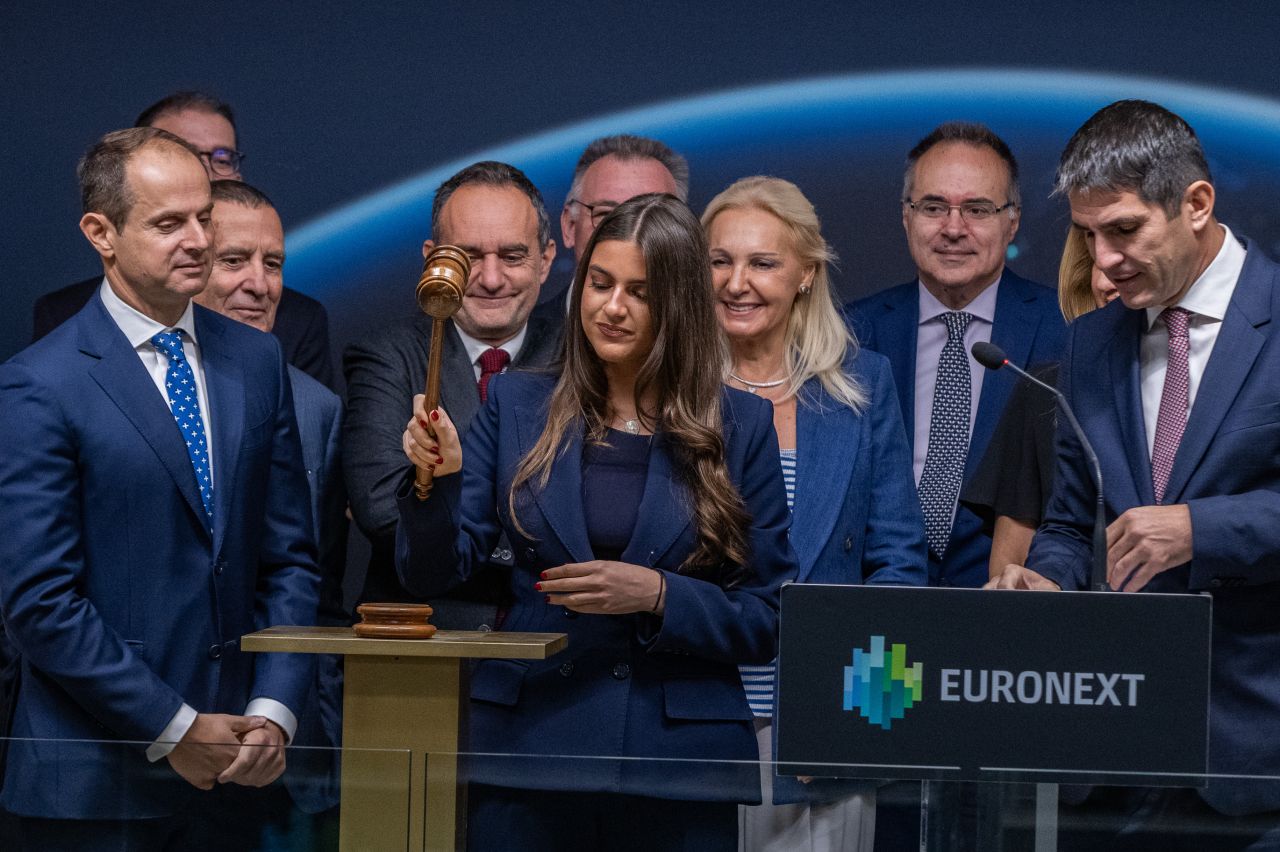
Capital Maritime Finance raised €300 million through its stock market debut in Athens this week, marking Greece’s largest maritime equity offering and the first primary listing of a shipping company exclusively on Euronext Athens.
The initial public offering (IPO) attracted strong demand from Greek and international investors, with subscriptions exceeding the shares available by 4.34 times, according to an official announcement.
Shares were priced at €7.50 each, giving the container shipping company a market capitalisation of €1.05 billion on its first day of trading under the ticker CMFC.
The listing comes as the company prepares to expand its fleet considerably, with 23 new container vessels under construction, in addition to the 13 ships it currently operates.
Its existing fleet has a combined capacity of 27,891 twenty-foot equivalent units (TEU), while the vessels under construction will add another 120,874 TEU.
Once all deliveries are completed, Capital Maritime Finance will operate 36 fully owned container ships, all covered by long-term charter agreements extending as far as 2038.
Meanwhile, the IPO involved the issuance of 40 million new shares, bringing the company’s total share capital to 140 million shares, all of which have been admitted to trading in Athens.
Commenting on the listing, Capital Maritime Finance chairman Gerasimos Kalogiratos welcomed the response from investors, saying “The strong demand for our offering is a vote of confidence”, referring to the company’s business model, modern fleet and expansion plans.
He also emphasised the wider significance of the transaction for Greece’s maritime industry, stating that “This listing strengthens Greece’s position as a global maritime hub”.
The transaction marks the third shipping company listing on Euronext Athens in 2026 and the 70th listing across Euronext’s markets this year, reflecting the growing use of European capital markets to finance shipping investment.
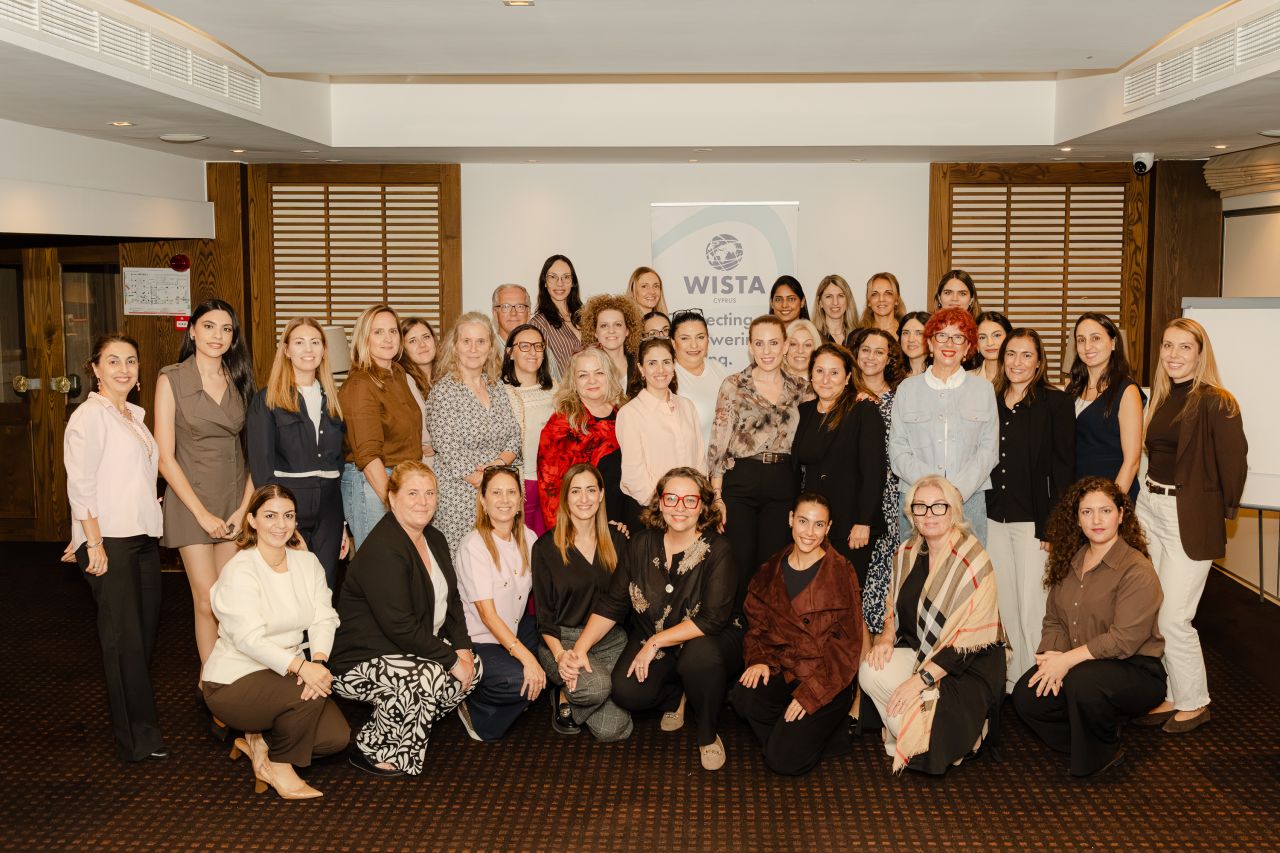
Artificial intelligence can produce convincing messages and imitate empathy, but it cannot replace the trust and personal relationships that underpin the shipping industry, according to WISTA Cyprus vice-president Maria Theodosiou, who has questioned the growing reliance on technology for human communication.
Writing on her personal platform, Theodosiou reflected on a contradiction she sees emerging in modern leadership, where businesses invest considerable effort in developing communication and emotional intelligence while increasingly allowing AI to speak on their behalf.
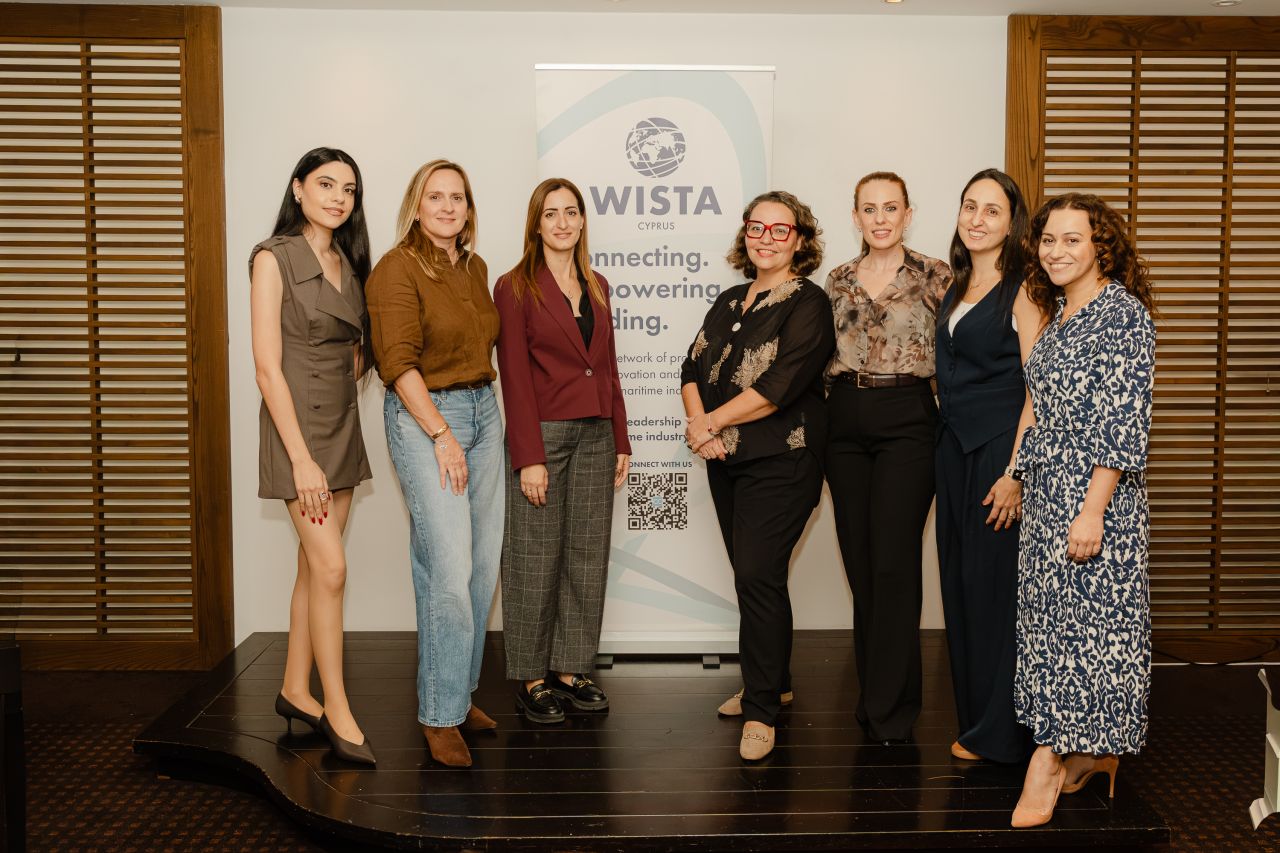
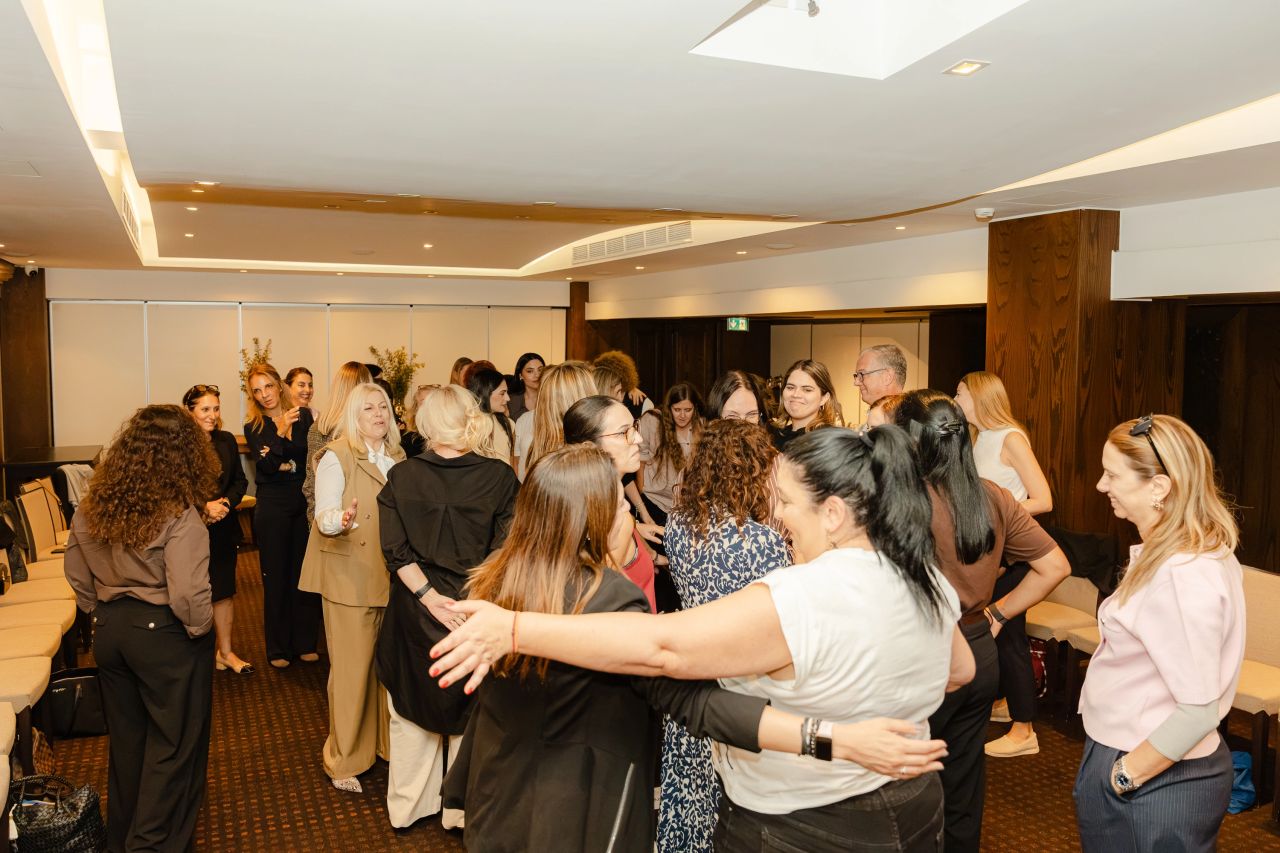
Her comments followed a three-hour workshop titled ‘The Art of Leadership’, organised by WISTA Cyprus and delivered by Sofia Rizou, during which participants explored emotional intelligence, body language, communication and the influence of words through interactive exercises and role-playing.
The experience prompted Theodosiou to consider how much time people devote to understanding one another, particularly through their choice of words, tone and behaviour.
“We spend countless hours learning how to communicate more effectively,” she said, explaining that people work on everything from facial expressions and gestures to storytelling and emotional intelligence because words shape relationships, influence emotions and build trust.
However, despite recognising the importance of these skills, she pointed out that “we are increasingly willing to hand over our communication to artificial intelligence,” raising questions about what might be lost in the process.
The issue has become particularly interesting to Theodosiou as she progresses through MIT’s AI-Driven Leadership programme, which examines the impact of emerging technologies on organisations and the way they are managed.
While studying the possibilities offered by AI, she has also been considering the qualities that distinguish human leadership from technological capability.
As she explained, “We invest in developing the deeply human skills that make us effective leaders, while simultaneously embracing technology capable of imitating those very skills.”
Indeed, although AI can already produce persuasive writing and carefully structured messages, Theodosiou questioned whether such capabilities amount to genuine understanding.
“AI can write beautifully, structure compelling narratives and even simulate empathy,” she observed, before asking whether it could genuinely connect with people or recreate the warmth, vulnerability, intuition and trust that develop through personal interaction.
Her answer was clear, as she does not believe technology can reproduce those experiences, regardless of how sophisticated its communication becomes.
For Theodosiou, this distinction goes to the heart of what leadership should involve, particularly when dealing with people whose trust cannot be secured simply through well-chosen words.
“Leadership, after all, is not simply about delivering the right message,” she said, stressing that it also concerns “how we conduct ourselves, the relationships we build and how we make others feel.”
The discussion is especially relevant to shipping, where the adoption of AI and digital technologies is changing procurement, logistics, operational planning and supply-chain management.
Although these developments can improve efficiency and support decision-making, commercial relationships across the maritime sector continue to depend on the ability of people to work together, resolve problems and build confidence over time.
Theodosiou has previously made a similar argument about the industry’s technological development, placing people ahead of digital systems and artificial intelligence.
Earlier, she maintained that the sector could succeed by “investing in people first, digital frameworks second, and AI third, in that order,” reflecting her belief that technology should support professional expertise rather than replace it.
Her latest reflections take that position further, focusing on the personal connections that sustain maritime businesses even as more activities become automated.
Theodosiou explained that the question is particularly relevant to the maritime, shipping and ship-supply industries, “where trust, collaboration, adaptability and practical expertise remain essential across the supply chain.”
The workshop itself also reflected the importance of these qualities, with Rizou drawing on interactive learning techniques to demonstrate how communication, emotional awareness and behaviour influence relationships.
Rizou’s wider work in maritime training includes Seafarers Boost, an initiative using theatre-based techniques to help maritime professionals develop communication skills, confidence and emotional resilience.
For Theodosiou, however, embracing technology and preserving human connection need not be competing objectives. Rather, the challenge lies in understanding where AI can be useful and where personal judgement and interaction remain essential.
“The future will undoubtedly be shaped by technology and AI,” she said, maintaining that the strongest leaders will be those who combine technological tools with “empathy, judgement, communication and the ability to build lasting relationships.”
She therefore left readers with a question that extends beyond shipping and into the future of leadership itself, “As AI becomes better at finding the right words, will we become better at understanding their human impact?”
The U.S. Army Corps of Engineers is overhauling how it manages dredging contracts nationwide, moving toward a centralized approach intended to reduce costs, improve scheduling and make better use of...

 Login