❌

Reading view

Macron takes aim at Trump for using France riots for election gain

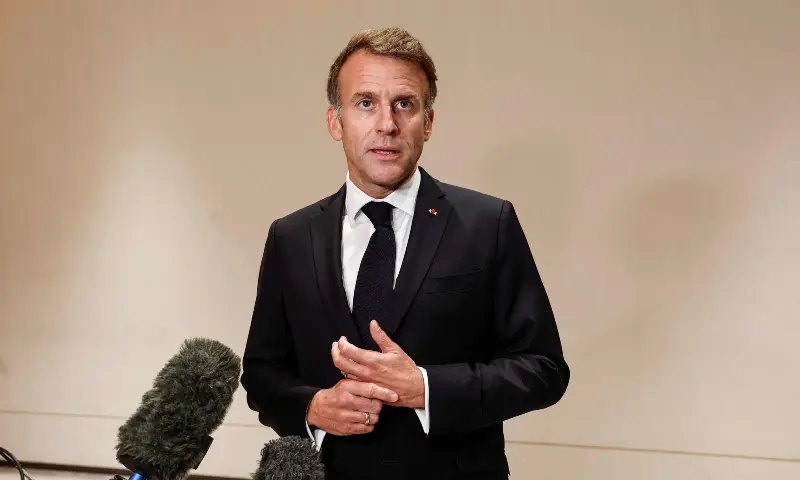
President Emmanuel Macron on Wednesday took an apparent swipe at counterpart Donald Trump of exploiting France’s riots for advantage in the US midterm election battle, as Paris prepared for more protests this weekend.

Macron, speaking during a visit to Qatar, implied that Trump, and possibly Israeli Prime Minister Benjamin Netanyahu, who is also in election mode, made “stupid comments” on the unrest for political gain, though he did not name either leader.

“There are people who campaign at France’s expense — leaders who are in campaign mode, whether here in the region or on the other side of the Atlantic,” he told reporters in Doha.

Macron made his remarks as he and his government struggled to get on top of a crisis that has scarred France’s image both abroad and in financial markets, six months ahead of presidential elections to choose his successor.

France’s government has admitted it “lost control” in the frenzy of street violence that erupted last weekend, when masked youths clashed with police, looted shops and vandalised public buildings.

Trump has sought to link the “revolution” in France to “migrants, jihadists, and communists” as he campaigned for his Republican party in the United States on his anti-immigration messaging.

He also on Tuesday hailed French far-right leader Marine Le Pen, who shares his ideologies, as a conservative voice, with surveys putting her as the frontrunner in France’s presidential race.

Trump’s ally Netanyahu, facing his own tough election battle, on Tuesday argued that France had been hit by an “invasion of extremist Islam”.

Several analysts have dismissed the claims that migrants were driving France’s protests.

Curfews

The unrest overshadowed demonstrations held on Saturday in which more than half a million people marched nationwide against the cost of living. Those rallies followed four weeks of student protests that have closed many schools across France.

Since the rioting — the worst France has seen in years — and ahead of further cost-of-living demonstrations this coming Saturday, Macron’s government has warned it will brook no further violence.

Authorities in Paris and several other cities imposed nighttime curfews Monday and Tuesday in certain zones prone to protests or looting.

Macron said that on Thursday he would chair a meeting of key ministers and intelligence officials to receive a “detailed account” of what happened last weekend.

French Prime Minister Sebastien Lecornu, who on Wednesday held a meeting with union leaders organising marches, has vowed a “massive” police deployment for the fresh demonstrations called for Saturday by the Yellow Vest movement protesting rising inflation.

The convulsion in France, the EU’s second-biggest economy after Germany, has rattled financial markets already nervous about the country’s growing debt pile and deficit.

The yield on the French government’s benchmark 10-year bond has been rising, and on Wednesday surpassed five percent as investors demanded a higher return given the fiscal woes. A rising yield signifies a drop in bond prices.

The Paris stock market also fell.

On Friday, the Moody’s ratings agency is expected to lower its grade on France’s public debt.

The country’s political landscape is so fragmented that Lecornu has little chance of winning swift parliamentary consensus for a cost-cutting budget that needs to be adopted before the end of this year.

Le Pen leads race

The latest survey, carried out by Ifop in the wake of the riots, suggested Le Pen would lead first-round voting intentions by a wide margin and far-left candidate Jean-Luc Melenchon emerged as her most likely opponent in the runoff.

France’s neighbours Italy and Belgium have also started to experience similar unrest, on a smaller scale. Italy’s government has ordered 500 troops to Milan to stem street violence there.

Macron said that “we don’t need a state of emergency” that would likewise permit soldiers to reinforce police against rioters, adding that “we have the means” already at authorities’ disposal, such as curfews.

While the partial curfews have led to a calming of the situation in Paris and elsewhere, they have disrupted travel for commuters looking to take urban rail after 11pm (2am PKT).

“It’s quite disconcerting,” said one Paris commuter who gave only his first name, Louis, when he found his line closed. But “if it can prevent further acts of vandalism… then yes, I think it’s a good thing”, he said.

The Yellow Vest movement behind last weekend’s demonstrations announced on Wednesday that it had formally told authorities it planned to hold its Paris march on Saturday starting from Bastille square.

The movement also wants to hold follow-up nationwide demonstrations on Nov 5.

The images broadcast around the world of France’s street violence last weekend have prompted several countries, including the United States, China and Germany, to issue travel advisories for their citizens in France.
  •  

Nigeria confirms its first Ebola case is Bundibugyo strain

The first Ebola case detected in Nigeria is the Bundibugyo strain, which is behind a major DR Congo outbreak, and the patient is a diplomat, an emergency meeting heard on Wednesday.

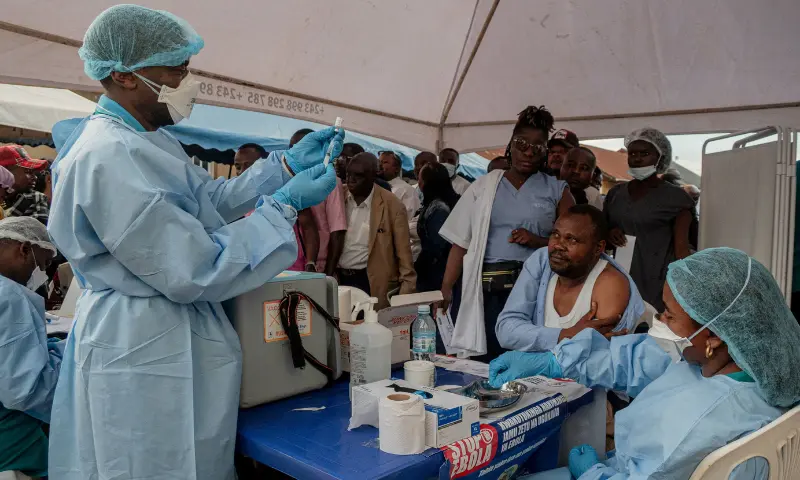
The case in Nigeria, Africa’s most populous country, was detected in a woman who had travelled from Uganda to the capital Abuja on Oct 3, the Nigeria Centre for Disease Control and Prevention (NCDC) said.

Since the Ebola outbreak was declared in the Democratic Republic of Congo in mid-May, the deadly viral haemorrhagic fever has spread to several countries across the continent, including to neighbouring Uganda.

“We did three levels of tests, but all molecular. The strain was Bundibugyo,” Olajumoke Babatunde, director of the public health laboratory service at the NCDC said.

The World Health Organisation (WHO) also confirmed that it was the Bundibugyo strain, for which there is still neither a vaccine nor a specific treatment.

“This person is actually a diplomat,” another official said, adding the patient has deteriorated into “multi-organ failure”.

The director general of Africa CDC, Jean Kaseya, warned on Tuesday of “an extremely serious threat” as Kenya also declared its ninth Ebola case.

In several months, the DRC’s Ebola epidemic has become the deadliest in the country’s history, killing 4,381 people out of more than 9,000 confirmed cases, according to the health authorities.

Nigeria has identified 44 contacts that are being monitored, while intensifying efforts to find other people who may have been exposed.

The WHO said in a statement that infection prevention and control was being “ramped up” at the private hospital where the patient sought care.

  •  

US envoy to meet Putin after 'positive' talks with Zelensky

Washington’s envoy Steve Witkoff arrived in Saint Petersburg early Wednesday to meet with Russian President Vladimir Putin following what US Secretary of State Marco Rubio described as “positive” talks with President Volodymyr Zelensky of Ukraine.

The trip by President Donald Trump’s special envoy is part of efforts to draw a line under a bitter feud between him and Zelensky over the war with Russia.

After talks with Witkoff in Oslo, Zelensky thanked Washington on Tuesday for the resumption of US intelligence sharing on Russian strikes.

The positive tone followed days of friction between Kyiv and Washington after Trump struck a diesel-supply deal with Putin and called for Zelensky to be replaced after Ukraine refused to stop hitting Russian oil refineries.

“We are thankful that intelligence works,” Zelensky told reporters in Oslo, describing the early warnings as “very, very important for our people, for children, adults, civilians” when ballistic missiles were about to strike.

Rubio said during a visit to India that Witkoff would next head to Russia after the “positive” talks with Zelensky.

“He’ll now, armed with those ideas, be able to go to Saint Petersburg and share them with the Russian side — and let’s see if we can make some progress,” Rubio said.

Witkoff’s planned meeting with Putin on Wednesday would include Trump’s son-in-law Jared Kushner participating virtually, a US official told AFP.

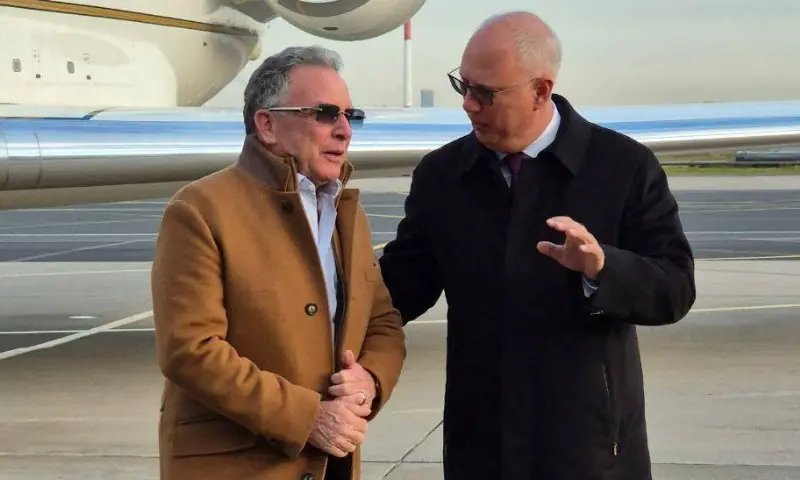
Trump’s envoy was met at Pulkovo Airport in Saint Petersburg by the Kremlin’s adviser for international economic cooperation, Kirill Dmitriev, according to news agencies.

‘Make a deal’

Trump said Tuesday that he had asked Putin to release Stephen Hubbard, an American taken captive by Russian forces years earlier in Ukraine, though it was not clear if the request would be raised in Wednesday’s talks.

“I’ve been talking to him at length. I’ve asked him to release him. Let’s see what happens,” Trump told journalists in Washington.

Trump has also been keeping up the pressure on Ukraine, saying at the White House that he wanted Zelensky to “make a deal” with Russia, which is ramping up its strikes as a bitter winter looms.

Trump, who called on Zelensky to resign last week, also criticised the Ukrainian president for not accepting terms he said he had offered during an infamous televised row in the Oval Office in February 2025.

Ukraine reacted with dismay after Trump also waived sanctions against Russia’s war machine.

The feud spiralled as Zelensky accused Trump of weakness, and then alleged that the United States was deliberately withholding vital intelligence and delaying the delivery of interceptor missiles.

Ukraine has also reported a reduction in speeds on Starshield, the US military satellite system it uses for battlefield communications and strikes on Russian-occupied territory.

Trump has denied ordering a reduction in speeds on Starshield after Elon Musk — whose company SpaceX developed it — said the order could only have come from the White House.

Rubio said Wednesday that Washington had no prior knowledge of the slowdown of the SpaceX satellite communications.

“The president has nothing to do with the decisions that are made by Starlink and Starshield and by Mr Musk,” Rubio said in Mumbai.

The Wall Street Journal reported Tuesday that it was indeed Musk who ordered the slowdown in the military-grade version of Starlink.

‘Our future’

Witkoff’s meetings follow furious diplomatic efforts in Washington, Kyiv and Western capitals to calm the row.

Zelensky told US senators on Monday that “the Pentagon is delaying the delivery of missiles” already paid for by European countries, while the shipment was waiting for US Defence Secretary Pete Hegseth’s signature.

Several European countries were ready to transfer Patriot interceptor missiles from their own stockpiles but were awaiting US approval, he said.

Trump, whose Republican Party faces tough midterm elections as fuel prices soar, has accused Zelensky of a lack of effort to resolve the conflict.

He said he was ready to meet Putin and Chinese leader Xi Jinping in China next month to discuss denuclearisation, adding that talks could also cover the Ukraine war — sparking fears in Kyiv that it was being sidelined.

Zelensky insisted Tuesday that Kyiv needed to be represented at any meeting regarding Ukraine’s future.

“If there are issues about Ukraine, our future, it can be acceptable only when we are at the table of negotiations,” he said.

  •  

Fear as Indians struggle to prove voting rights

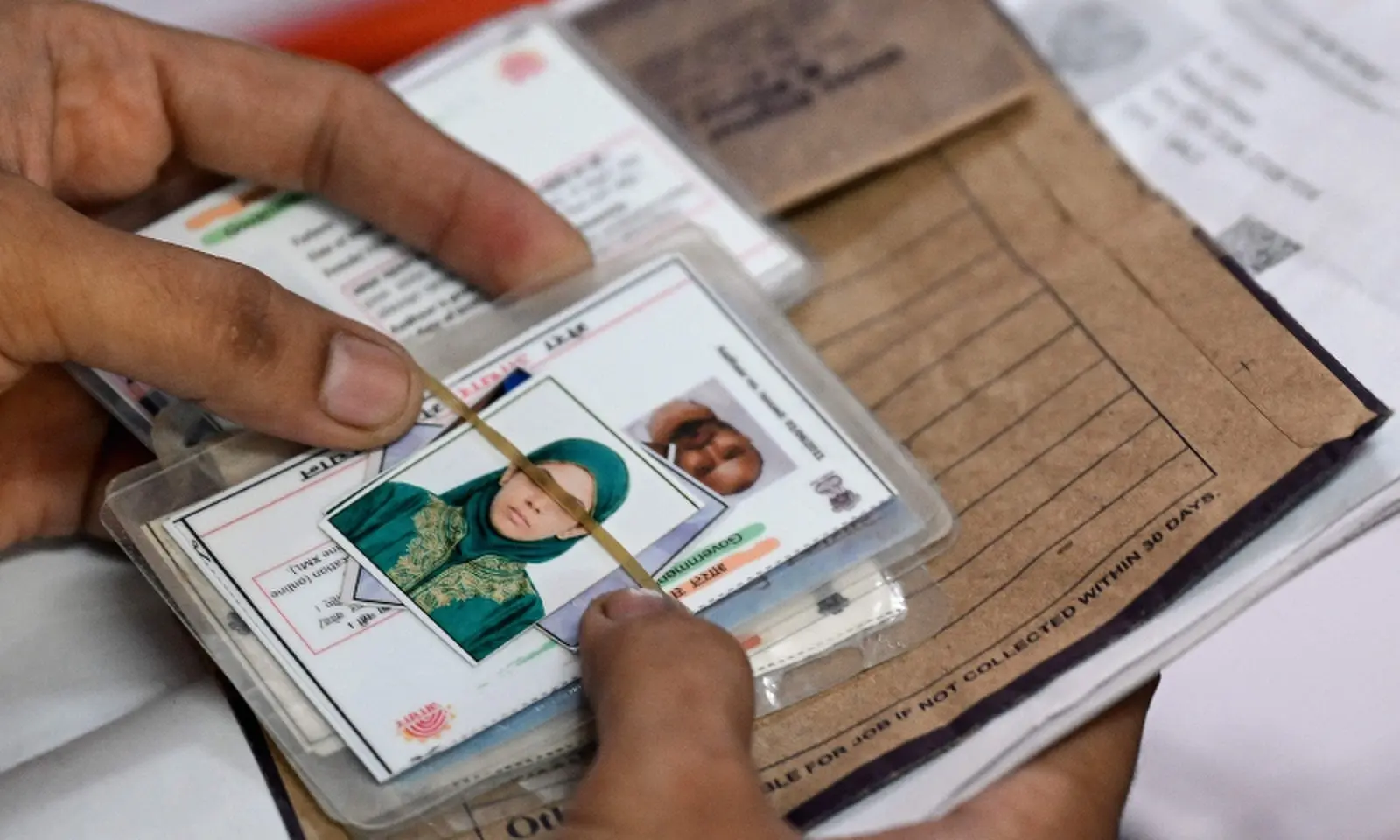
Laddli Khatun pulled one document after another from a yellow bag, desperately hoping one would be enough to keep her name on India’s electoral rolls.

As the world’s largest democracy overhauls its voter lists, millions like Khatun are scrambling to re-establish their credentials, despite having voted before.

Critics and opposition parties say the exercise risks mass disenfranchisement, and those removed fear wider citizenship repercussions.

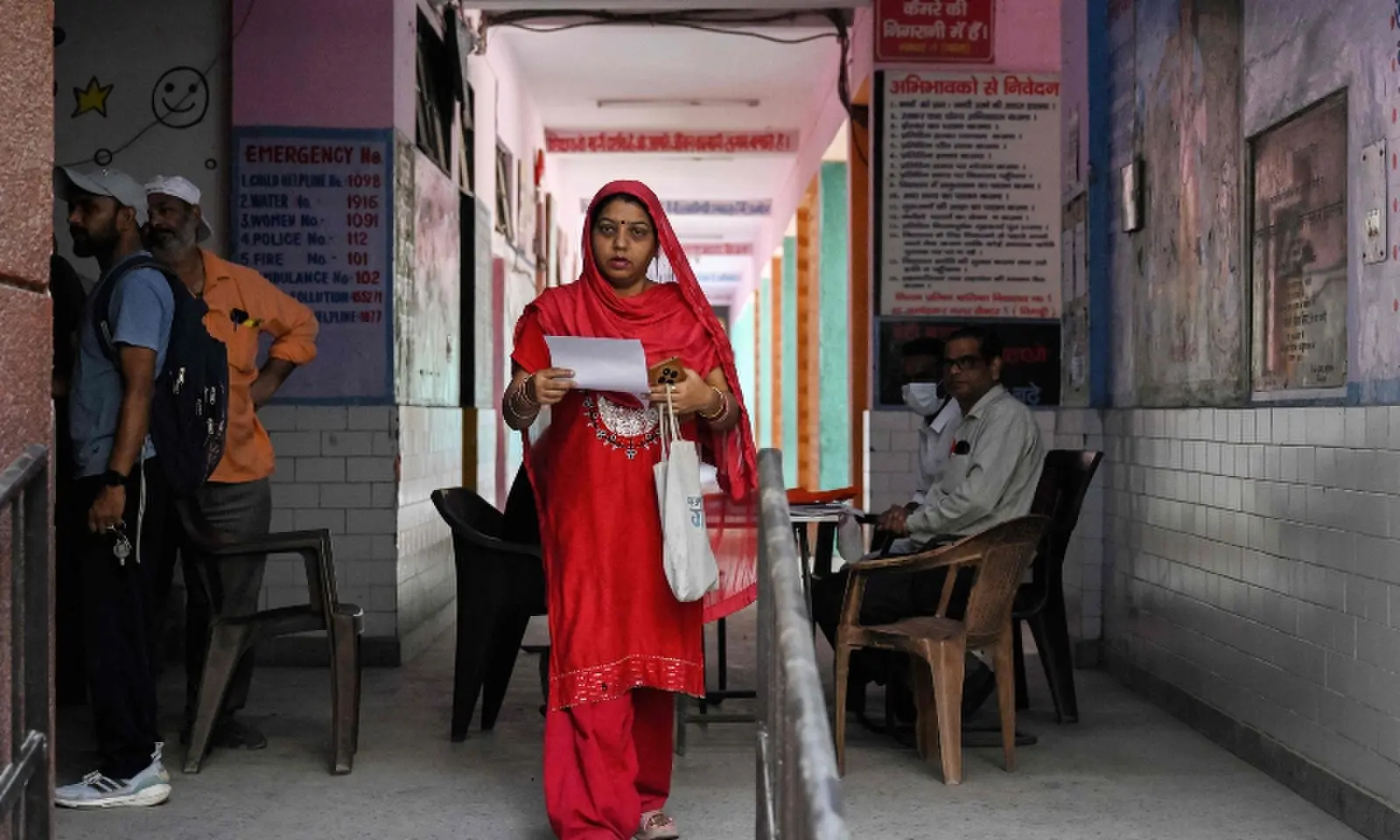
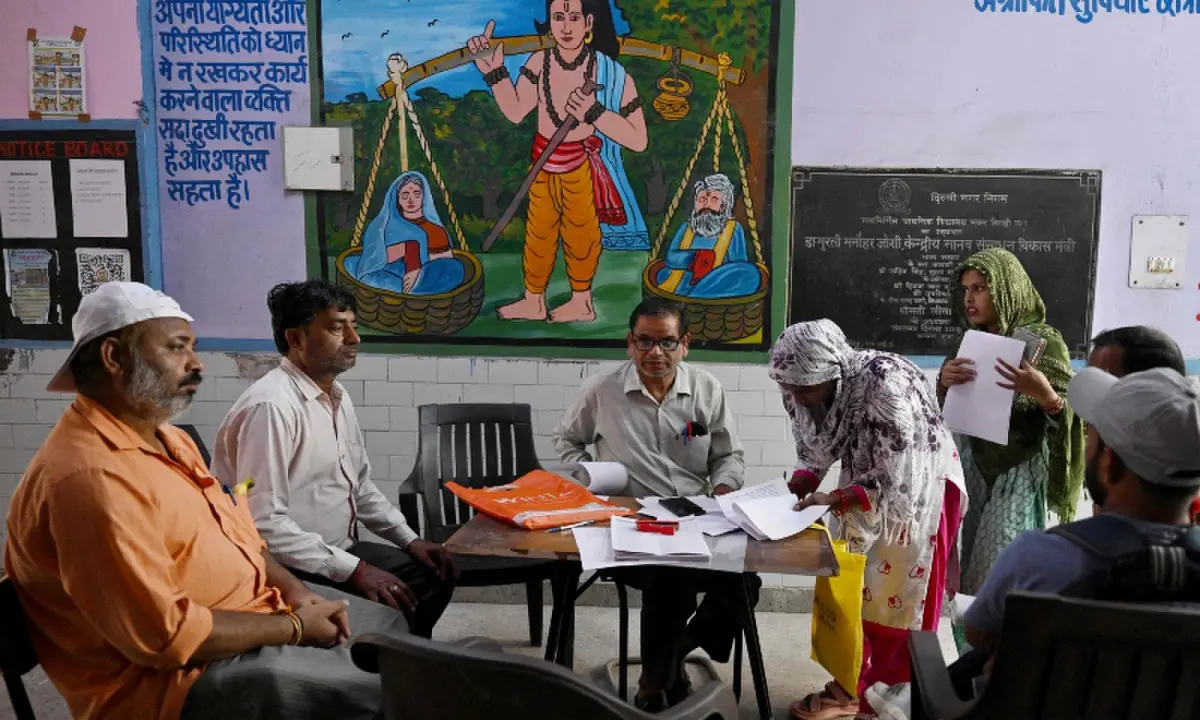
A woman leaves after submitting documents to register for the Draft Electoral Roll 2026 as part of the Election Commission of India’s Special Intensive Revision (SIR), at a voter verification camp in New Delhi on October 18, 2026. —AFP

More than 133 million names — including 28 million listed as dead — have been cut from rolls, according to figures reported by Indian media and cited by opposition parties in court filings.

Protests have rocked New Delhi, with demonstrators demanding the chief election commissioner’s resignation, alleging the overhaul is designed to benefit Prime Minister Narendra Modi’s Bharatiya Janata Party (BJP).

The Election Commission of India (ECI), a constitutional body, denies wrongdoing and says the revision complies with the law.

‘Burden of proof’

The Special Intensive Revision (SIR) requires voters to link themselves —directly or through their parents or grandparents —to electoral rolls from 2002-03, the last time such a rigorous review took place.

Khatun, 39, was not of voting age at the time. So she must now prove that at least one of her parents or grandparents featured on those rolls.

“My parents died when I was a baby,” Khatun, who lives in a Delhi slum, told AFP at a hearing reviewing voter credentials.

“They were poor unlettered people who left no documents behind.” Many face Khatun’s predicament.

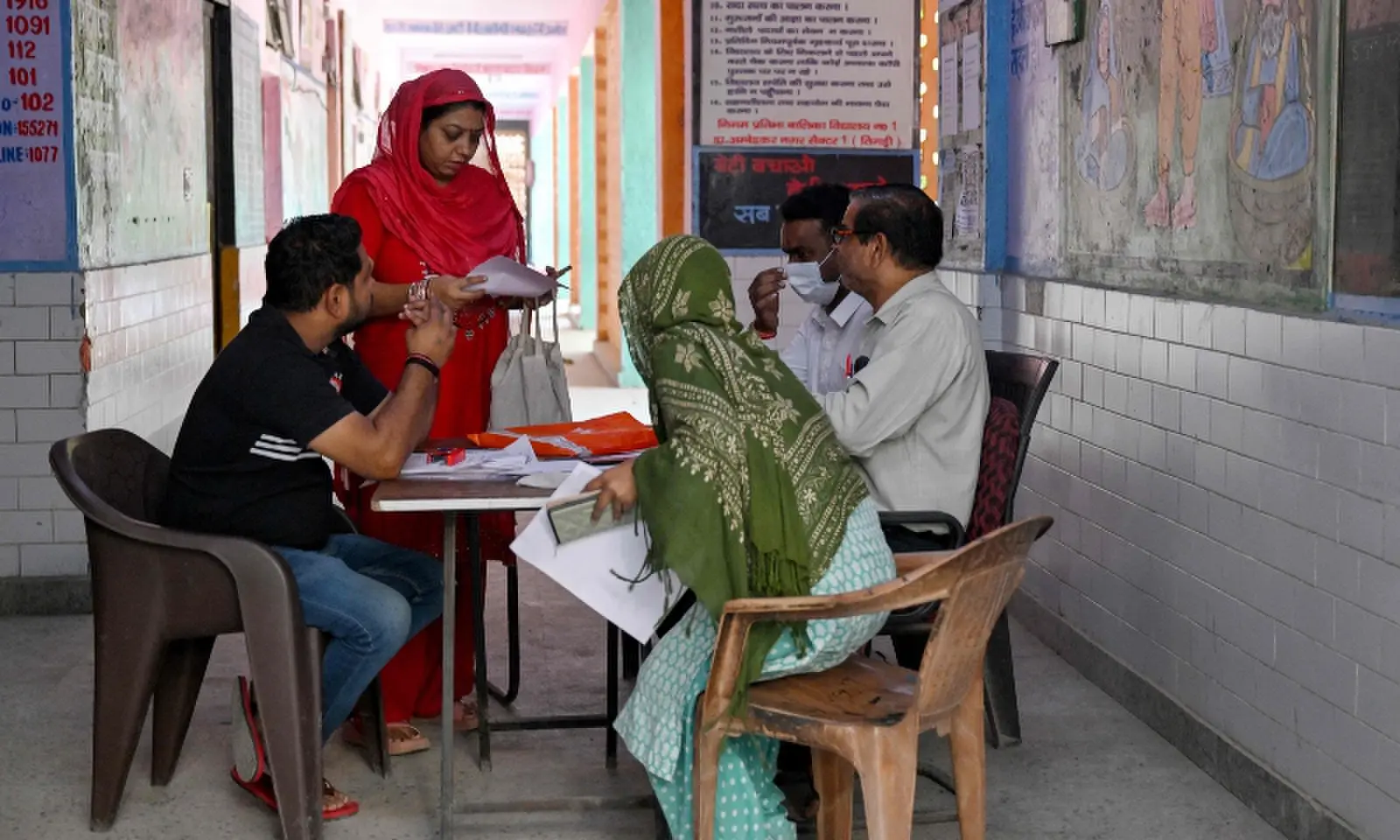
Booth level-officer (BLO) Mukesh Khanna (R) assists people to register their documents for the Draft Electoral Roll 2026 as part of the Election Commission of India’s Special Intensive Revision (SIR), at a voter verification camp in New Delhi on October 18, 2026. —AFP

“Women, minorities, people living at the margins and the poorest are the worst hit by this exercise, because they find it very difficult to produce documents which can prove their citizenship,” said transparency activist Anjali Bhardwaj.

The Election Commission previously sought to enrol eligible voters through door-to-door visits, guided by its motto: “No voter to be left behind”.

Critics say the exercise shifts the “burden of proof” onto voters.

“The methodology followed has been of physical door-to-door verification,” former election commissioner Ashok Lavasa told AFP.

“It was never that you asked people wholesale to establish their eligibility all over again… after they have been admitted to the rolls through the prescribed due process.”

‘Untraceable’

Surajmukhi, made homeless when an eviction drive demolished the slum where she had lived for 30 years, was removed from Delhi’s draft rolls and marked “untraceable”.

“I have no document to link myself to the 2002 voter rolls, because at the time I was not enrolled as a voter, and my parents are long dead,” she said, standing in the rubble of her home.

“But I have voted multiple times since — the officials themselves came to our home and enrolled us as voters. What has suddenly changed?” Officials on the ground acknowledge the difficulties the exercise poses for poorer voters.

“Mapping yourself to the 2002 voter lists is not easy for those who are not educated and technologically savvy,” said Mukesh Khanna, a booth-level officer in a Delhi suburb with a large population of working-class migrants.

Special camps have been set up to help voters, but many still struggle to navigate the process.

‘Suspicious’

Millions have also been flagged for additional checks after the Election Commission used automated systems to identify what it calls “logical discrepancies”, including mismatched names and inconsistent family details.

Independent analyses suggest Muslims have been disproportionately affected.

A man waits with documents to register for the Draft Electoral Roll 2026 as part of the Election Commission of India’s Special Intensive Revision (SIR), at a voter verification camp in New Delhi on October 18, 2026. —AFP

In Delhi, an analysis by The Hindu newspaper found Muslims accounted for around 20 per cent of voters flagged, compared with 13.6pc of the electorate.

The disparity was even starker in West Bengal, according to the Kolkata-based policy think tank Sabar Institute.

Street cleaner Shahida, 42, received a notice because her mother was only 15 years older than her — an age gap the software flagged as “suspicious”.

“What am I expected to do — go back in time and ask my dead grandparents why they got my dead mother married so young?” she said.

“The reality is child marriages were common among the poor at the time.” National rugby player and actor Aslam, 24, who uses one name, said his voter registration was flagged as “suspicious” because six other people were linked to his deceased father, according to a notice seen by AFP.

“It is clearly targeted against voters who don’t vote for the BJP,” said Aslam, a Muslim with six siblings.

“It almost feels like the idea is to create a category of second-class citizens.” Modi’s Hindu-nationalist BJP, which strongly backs the revision, has long alleged that undocumented migrants from neighbouring Bangladesh — particularly Muslims — have fraudulently entered electoral rolls.

The Supreme Court has said exclusion from electoral rolls does not establish that someone is a foreign national.

However, Indian media have reported cases in West Bengal in which people excluded from voter rolls were accused of being undocumented migrants from Bangladesh, detained and, in some instances, pushed across the border.

For Khatun, the prospect of such an outcome hangs over an already gruelling ordeal.

“I have provided document after document, everything that I have,” she said. But what if they still ask us to leave the country?

  •  

Landmark biodiversity fund collapses with just $7,085 raised

PARIS: Conceived at the 2024 Biodiversity COP, the Cali Fund was meant to raise billions of dollars for nature protection — but has so far only collected $7,085. It is a sluggish start for a fund intended as a showcase for innovative financing that charges companies profiting from the use of genetic data derived from nature.

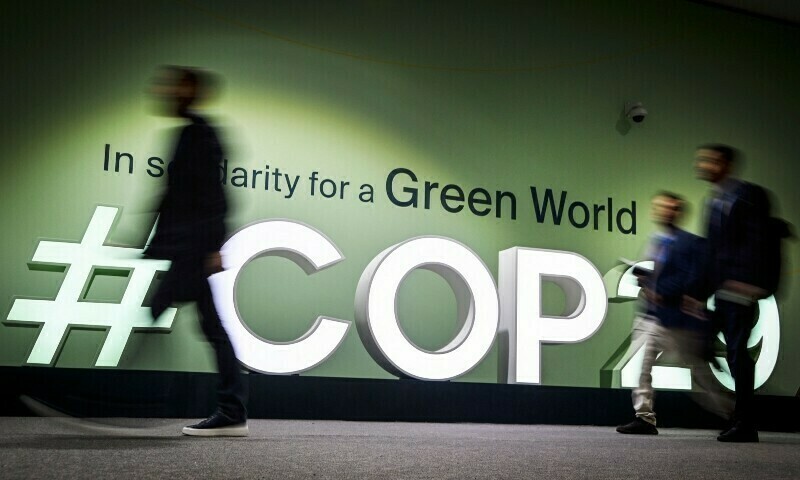
The trickle of money highlights the difficulties involved in mobilising money for biodiversity. As a crucial UN biodiversity summit in Armenia running until Oct 30 discusses its future, here’s a rundown on how the fund works and reasons for its lacklustre start:

How does the fund work?

Adopted at COP16 in Cali, Colombia, at the end of 2024, the fund began operating in February 2025. It proposes the payment of one percent of the annual profits of pharmaceutical, cosmetics, biotechnology companies or firms specialising in animal and plant breeding, or 0.1pc of their turnover. In a preparatory document, its designers mentioned the possibility of recovering one billion dollars a year in light of the revenues of the sectors concerned.

However, so far only three companies have contributed: the British firms TierraViva AI ($1,000) and Prozomix ($5,000), and the Belgian company E-BIOM ($1,085). Two others have pledged an additional $3,571.

What is its justification?

Digital sequence information (DSI) — data derived from genetic resources such as plants, animals, fungi, viruses and micro-organisms — is freely accessible in digital databases. Companies draw on this biological heritage to turn it into economic value by developing a medicine, a cream, improving an agricultural plant and so on.

The Cali Fund is based on the idea that those who benefit from this information, directly or indirectly, should in return contribute to the protection of biodiversity and to the local communities preserving it.

The fund is not legally binding but it does invite states to adopt administrative, policy or legislative measures to encourage companies to do so.

Why are companies reluctant?

The main difficulty is that “mechanism still relies very heavily on incentives and voluntary contributions,” according to Juliette Landry from the sustainable development think tank IDDRI based in Paris. “As long as these incentives are not strong enough and consistent across countries, a company may well ask why it should contribute when its competitors are not doing so.” Pakhi Das, public policy adviser at the NGO Plant-for-the-Planet, said there were no countries currently with legislation incentivising contributions to the fund, nor are there any where such legislation is under discussion.

Beyond the challenge of drawing enough resources into it, another lies in the actual use of the money collected. “The main hurdle that companies seem to be raising is ensuring there are safeguards in place for how their funding will be used,” said Vishaish Uppal, a director at WWF-India.

Companies also want to be sure that the Cali Fund’s internationally accepted certificates — documenting receipt of payment for use of genetic resources — are also accepted nationally, to avoid paying twice.

What does the pharmaceutical industry say?

“The level of participation in the Cali Fund reflects ongoing questions about the design and implementation of the mechanism, rather than a lack of commitment to biodiversity,” said Guilherme Cintra, the director of innovation policy at the International Federation of Pharmaceutical Manufacturers and Associations.

Published in Dawn, October 21st, 2026

  •  
❌