❌

Reading view

RFK Jr. Wants To Cut Red Tape in Kidney Care. He Should Go Further.

Health and Human Services Secretary Robert F. Kennedy Jr. and a graphic of a kidney | Illustration: BONNIE CASH/UPI/Newscom/Peakstock/Envato

Like most of American healthcare, kidney care has for decades been plagued by red tape. The Trump administration says it wants to change that. On Tuesday, Department of Health and Human Services (HHS) Secretary Robert F. Kennedy Jr. announced his department's Kidney Care National Plan, which promises to introduce more competition, reduce regulatory barriers, expand patient choice, and overhaul America's kidney transplant system.

Much of the plan focuses on barriers to entry in dialysis care, which treats nearly 558,000 Americans. While dialysis can be performed at home, most patients receive treatment at specialized facilities, which must comply with federal certification requirements governing equipment, staffing, water quality, and patient safety in order to participate in Medicare.

Kennedy argues that regulatory barriers have discouraged competition and innovation, leaving patients with fewer dialysis treatment options. "Dialysis technology is an extraordinary technology," said Kennedy at the press conference, but "because of monopolies in the system and the barriers to new entrants, we have not seen any real improvements in that technology."

Of course, the existence of large or even monopolistic companies is not in itself evidence of a problem, but government regulation can often entrench those companies' positions in the market. "I like the fact that they're recognizing that a lot of regulatory…barriers are contributing to the problem, and that's refreshing to hear," says Jeffrey Singer, a practicing general surgeon and senior fellow at Reason Foundation, the nonprofit that publishes Reason. Singer says that removing barriers that prevent new companies from competing with established providers could not only increase choice but also drive down prices.

HHS says that two companies, DaVita and Fresenius Medical Care, control approximately 74 percent of the American dialysis market. As of 2019, roughly a third of Americans lived in areas where the only available dialysis provider was one of those two companies, according to the agency. The administration argues that government regulation has helped entrench this dominance by making it difficult for new providers to enter the market.

To address this, the Kidney Care National Plan suggests a number of reforms, including simplifying certification requirements. HHS also plans to investigate whether dominant dialysis providers have used payment arrangements and legal strategies to secure higher reimbursements without delivering better care.

The 17-page report calls for a review of existing requirements, but it does not specify which regulations will be repealed, nor does it establish a timeline for doing so. It also does not propose any significant reduction in the government's role in financing the distorted market. Instead, the plan largely seeks to make existing government-financed systems such as Medicare more competitive and efficient.

Kennedy has also correctly identified the need for reform regarding kidney donations. Nearly 90,000 people are waiting for a kidney transplant at any given time in America, and 11 people die every day waiting for a kidney. The transplant process is currently managed by Organ Procurement Organizations (OPOs), which are federally certified nonprofits responsible for recovering organs from donors and coordinating their transfer. There are currently just 55 federally designated OPOs operating in the United States, and HHS argues that they behave as "regional monopolies." Since no new OPOs have been approved in the last year, the Kidney Care National Plan suggests fast-tracking certification.

The plan also seeks to make living kidney donation easier by reducing financial barriers. Following the passage of the Honor Our Living Donors Act in February, HHS revised federal reimbursement rules so that a donor's eligibility for financial assistance is no longer determined by the transplant recipient's income. Eligible donors can receive up to $6,000 to cover expenses, including travel, lost wages, and childcare.

However, the reforms proposed stop short of allowing kidney donors to receive direct compensation for the organs themselves, which remains prohibited under federal law. "I can sell my blood. Why can't I sell my kidney?" Singer asks.

Peter Jaworski, director of the Georgetown Blood and Plasma Research Group, feels similarly, arguing that financial incentives are available to nearly everyone involved in kidney transplantation except the donors themselves. "According to this plan, it's OK to use incentives to encourage them to be more productive, to actually do a better job," Jaworski tells Reason, referring to transplant surgeons, hospitals, and organ procurement organizations. "The only exception, once again, is the donor who is offering a kidney."

Better solutions exist, according to Jaworski, who points to the proposed End Kidney Deaths Act. The bill, which was introduced by Rep. Nicole Malliotakis (R–N.Y.) last year, would offer living kidney donors a $50,000 refundable tax credit, distributed over five years. "We have those systems in order to make sure that we can treat patients. That's the point of blood donation. That's the point of plasma donation. That's the point of kidney donation too."

America's plasma market is an excellent example of financial incentives encouraging donation. Unlike many other countries, the U.S. allows plasma donors to be compensated, and despite accounting for just over 4 percent of the world's population, it supplies approximately 68 percent of the plasma collected globally for manufacturing medicines.

"Why do you think America does it? Is it because in America there's way more altruism than in France or Italy or Belgium? No, it's because in the United States you can be paid to donate plasma," argues Jaworski.

The Trump administration appears to recognize that government overreach has stifled competition and restricted patient choice. It also recognizes that living adults donating kidneys will be part of the solution to the long, deadly waiting lists. But its plan leaves the government's outsize role in kidney care largely untouched. For patients facing years on dialysis or waiting for a lifesaving transplant, recognizing the problem is not enough.

The post RFK Jr. Wants To Cut Red Tape in Kidney Care. He Should Go Further. appeared first on Reason Magazine.


  •  

Trump’s Intensifying Sabotage of the ICC, for Israel’s Sake

The battle to save the global court and its capacity to enforce accountability for the most heinous crimes is one struggle with many fronts, writes Marjorie Cohn.

  •  

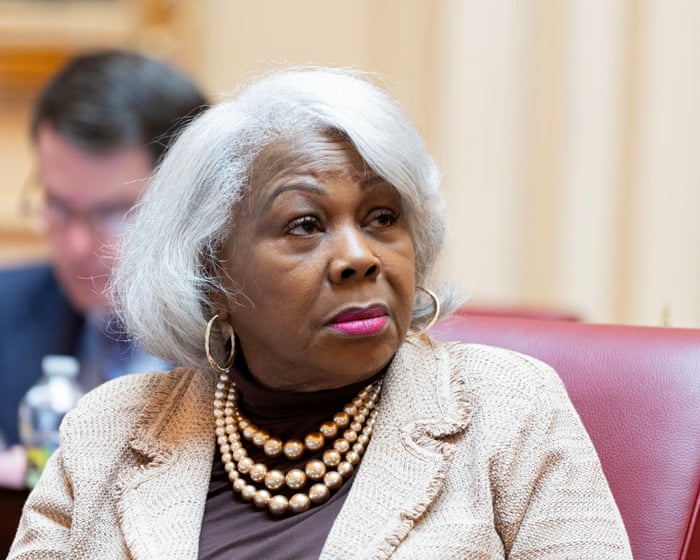
Virginia Democrat indicted on federal drug and money laundering charges

Federal authorities allege state senator L Louise Lucas, a vocal Trump critic, led a ‘criminal marijuana enterprise’

Virginia state senator L Louise Lucas, one of the state’s most powerful Democrats, was charged on Thursday in connection with what federal authorities alleged was a role leading a criminal enterprise that acquired and distributed large quantities of marijuana and laundered the proceeds.

An indictment unsealed on Thursday charged Lucas and six other defendants, including several of her relatives, the Department of Justice said in a statement. Lucas surrendered on Thursday, a justice department spokesperson said.

Continue reading...

© Photograph: Ryan M Kelly/AP

© Photograph: Ryan M Kelly/AP

© Photograph: Ryan M Kelly/AP

  •  

Supreme Court Refuses to Let Trump Cut Transgender Inmate Care

The Supreme Court on Wednesday refused to let the Trump administration gradually end transgender-related medical services for prison inmates who want to be treated as members of the opposite sex.

The post Supreme Court Refuses to Let Trump Cut Transgender Inmate Care appeared first on Breitbart.

  •  

Costs, Iran voters’ top priorities for next Congress: Survey

A majority of respondents to a recent survey want the next Congress to focus on lowering the cost of living and winding down the Iran war. Roughly 80 percent of the 1,119 respondents to the Associated Press-NORC Center for Public Affairs Research poll said lawmakers should make lowering prices one of their highest priorities in…

  •  

Live updates: DOJ indicts top Virginia Democrat on corruption, drug charges; Trump heads to Iowa

A federal indictment accuses one of Virginia’s most powerful Democrats, state Sen. L. Louise Lucas, of having a role in leading a criminal enterprise that acquired and distributed large quantities of marijuana and laundered the proceeds. The indictment, unsealed on Thursday, charged Lucas and six other defendants, including several of her relatives, the Justice Department…

  •  

Ohio State disputes medical school admissions discrimination finding

Ohio State University (OSU) is disputing allegations from the Department of Justice (DOJ) that it is discriminating in the admissions process for its medical school.   The DOJ sent a letter Wednesday to the OSU College of Medicine alleging the school intentionally discriminated against applicants on the basis of race, particularly Asian applicants, to the benefit of Black…

  •  

Stephen Hubbard returns to US after years in Russian prison

American Stephen Hubbard has returned to the U.S. after being detained in Russia for nearly four years. The freed American arrived at Lackland Air Force Base in San Antonio early Thursday morning. Russia had accused Hubbard, who lived in Ukraine at the time, of fighting on behalf of Ukraine after Russia launched its war. Former…

  •  

Trump ‘concerned’ about Alaska Senate race: ‘Totally confusing’

President Trump said Wednesday he is concerned about the Senate race in Alaska, where two candidates with similar names are facing each other, calling it “totally confusing.” “It’s ridiculous that the Court didn’t stop this SCAM,” the president said in a Truth Social post Wednesday night, referring to the two candidates with close-to-identical names facing…

  •  

Ilhan Omar says she plans to move out of Washington home after federal raid

Democratic lawmaker says family’s safety is at risk amid death threats and raid making apartment’s address public

Minnesota congresswoman Ilhan Omar said she plans to move out of her Washington DC apartment after federal agents raided her residence last week as part of a larger immigration investigation.

“I mean obviously, I can’t continue to live there,” Omar told MS Now in an interview that aired on Wednesday. “So we have to figure out where to move to, because our address has been public and with the death threats that I deal with, it’s no longer going to be feasible to be in that house and have my kids, like, visiting off and on, having people track them.”

Continue reading...

© Photograph: Tim Evans/Reuters

© Photograph: Tim Evans/Reuters

© Photograph: Tim Evans/Reuters

  •  

Trump administration abandons appeals in fight over student loan forgiveness program

The Trump administration has abandoned its goal to reform the Public Service Loan Forgiveness (PSLF) program, dropping a legal fight over the changes this week.  The Education Department wanted to place limits on who could qualify for PSLF, which gives student loan forgiveness to people in government and nonprofit jobs after 10 years of payments. It…

  •  

The Swamp King

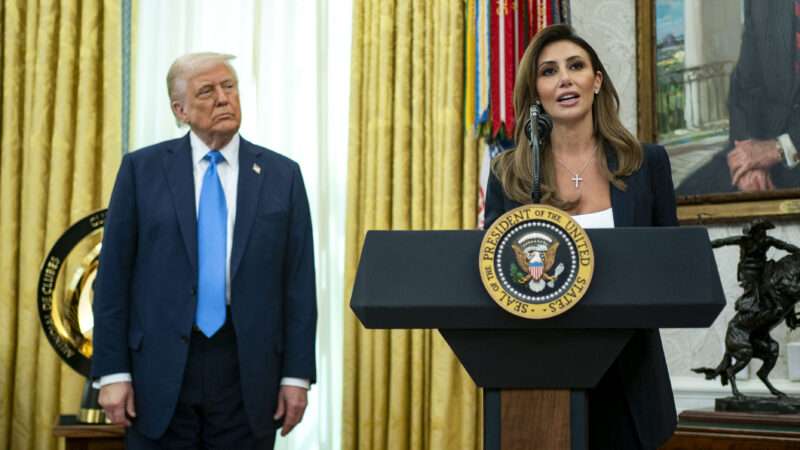
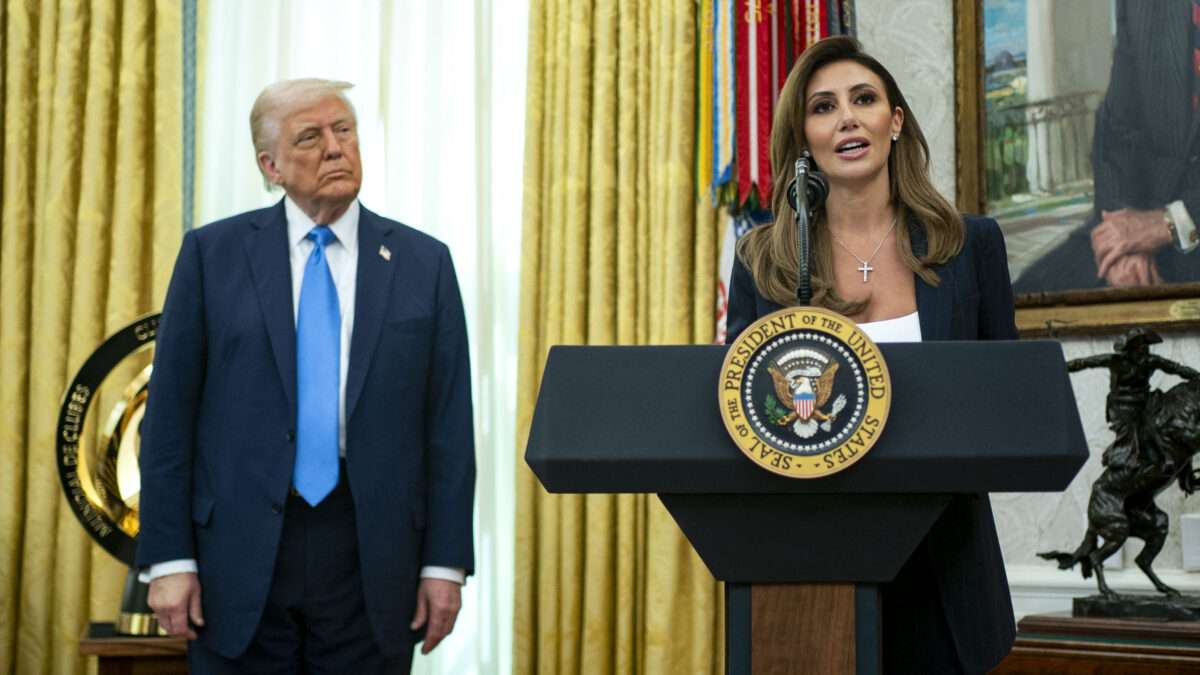
President Trump on the left and his former lawyer Alina Habba, on the right | Bonnie Cash - Pool via CNP / MEGA / Newscom/RSSIL/Newscom

An uncanny strength of the second Trump administration has been its ability to be involved in so many scandals that no single one seems to become a dominant story.

Take the most recent allegations about Alina Habba, Trump's former personal defense attorney, who recently landed a plush gig working for Julio Herrera Velutini, a Venezuelan banker. Habba will get $50 million over five years to do unspecified work for a company that barely exists, according to The New York Times, while Herrera got a presidential pardon for a 2025 campaign finance charge.

That's just a typical day for the current White House, where the mingling of personal and public business has become routine. Some days, the story is President Donald Trump trying to help himself to taxpayer funds by suing the government he runs, or shipping billions of taxpayer dollars to a foreign mining company partially owned by his sons. Other times, it is Trump selling political influence in the form of digital coins, or his appointees getting caught in naked pay-to-play schemes. If you have a hard time keeping track of it all, I get it. The corruption is so deep and wide that focusing on any singular item becomes difficult.

But that constellation of corruption might finally be breaking through to voters ahead of next month's midterm elections.

A recent Fox News poll found that "government corruption" was the top issue for voters, ranking ahead of inflation and gas prices. Conservative commentators are taking notice.

"What they're saying is, 'Look, we're tired of you getting rich and us getting poor,'" former White House Chief of Staff Mick Mulvaney said this week.

Tim Carney, senior columnist at the conservative Washington Examiner, also tabs the corruption issue—along with other "avoidable mistakes" such as the Iran War and tariffs—as one of the major reasons why Democrats are likely to win the midterms:

Trump and his family have enriched themselves in this second term in ways more similar to third-world regimes or Cook County than to any previous administration. He and his family operate a financial company that has received heavy investments from Qatar's government. He's sold access to himself by selling otherwise worthless cryptocurrency. The IRS he controls settled a lawsuit with him, promising to pay him $1.8 billion (this settlement was voided by a judge).

Trump is not directly on the ballot next month, of course. And most voters might not be able to tell you the details of any single Trump scandal in detail. Even so, this may turn out to be the defining narrative of the second Trump administration, and there seems to be a growing consensus that Republicans have allowed (if not aided and abetted) his corrupt behavior, so it's time to give Democrats a shot at reining it in.

The Trump corruption issue is like the Biden cognitive decline issue in one key sense: Everyone around the president or even supporting him professionally from afar should be asked about it, and their lies/claims of ignorance should be hung around their necks like dumbbells.

— Matt Welch (@MattWelch) October 20, 2026

Vice President J.D. Vance told journalist Mark Halperin this week that he's "never seen any evidence that anybody's selling access to the president." When Halperin pushed back, Vance doubled down: "What I would say is I don't think there's evidence that the Trump family has become enriched by politics," the vice president said.

So either Vance isn't paying attention, or he's deliberately misleading. "Credit to Vance, it's as good an argument as is available to him," writes Daniel Foster at National Review. "The bad news is it's still not very good."


The internet nearly crashed on Wednesday as digital security and website administrators scrambled to patch two vulnerabilities in the PHP programming language that serves as the basis for many websites.

"Since its development in the 1990s, PHP has evolved into an essential scripting language for web development and is used across vast swaths of the internet in websites and software," explains Wired. "Everything from publishing systems like WordPress and Drupal to e-commerce platforms like Adobe's Magento are built on PHP."

Amid fears that hackers and AI agents could exploit the security weakness, many websites were taken offline. The National Security Agency and its counterparts in the United Kingdom and the European Union sounded the alarm. Even the prime minister of Japan, Sanae Takaichi, was telling website administrators to take the issue seriously.

The potential hacking abilities of advanced AI agents make these sorts of security risks more serious. In this case, however, the problem was also identified with the help of AI.

"Ryan Austin, a researcher at Calif, uncovered the flaws with help from GPT-5.6 Sol, one of OpenAI's most advanced models, during an audit of PHP's source code in August," The Wall Street Journal reports. Another security researcher had flagged the issue years ago, but it had never been fixed because it was considered "considered too difficult to exploit" by human hackers.

This is the future of humanity's digital landscape. "Given the severity of these flaws and PHP's widespread use, we consider this one of the most impactful security issues in recent memory," OpenAI said in a statement on Wednesday. "It highlights how AI can uncover security flaws with internet-scale impact, but the same capabilities can also help attackers rapidly develop offensive tools and exploits."

(A shoutout to Reason's web development team for keeping us up and running, today and every day.)


"Fanciful fiction." Media outlets also continue to face decidedly nondigital threats over articles and polls that make the president unhappy.

The White House threatened Politico on Wednesday with unspecified "consequences" for publishing "fanciful fiction" in a series of articles earlier this month about White House Chief of Staff Susie Wiles. If the articles are not retracted, it would trigger "an immediate review of Politico's relationship with the White House, and, of course, consideration of all other appropriate and available legal remedies," wrote White House counsel William O. Scharf in a letter to the media outlet's publisher.

Meanwhile, FCC Chairman Brendan Carr issued vague threats to broadcasters who cover what Carr called "Fake Polls" intended to "alter the normal patterns of voter turnout and enthusiasm."

These sorts of threats are an affront to the First Amendment, of course. But they are downstream of a more significant issue: the very existence of the FCC.

It's a problem, obviously, that the FCC is run by an authoritarian jackass. But the bigger problem is that the agency contains so many tempting tools for an authoritarian jackass to wield. https://t.co/Q4IJXntkOy

— Jesse Walker (@notjessewalker) October 21, 2026


QUICK HITS

  • A judge in New Mexico ordered social media giant Meta (which owns Facebook and Instagram, among other things) to pay $25 billion for misleading users about data privacy. Last month, a jury found that Meta had violated the state's consumer protection laws 43 million times.
  • Officials are trying to pin the blame on Elon Musk for a Starlink slowdown that limited the effectiveness of Ukrainian missile defenses. Musk says the decision was made by the U.S. military and Trump.
  • Peter Thiel joins the majority of Americans in thinking that Trump's Iran War was a mistake. Even so, the U.S. and Israel are reportedly planning another round of attacks after the election.
  • The environmental studies for California's high-speed rail line include such absurdities as counting bumblebees "one by one" and considering the train's "acoustic impacts on waterfowl and shorebirds." That's how to spend 16 years and $15 billion building nearly nothing.
  • Obvious metaphor alert!

A group dispatched by Hegseth's team in February attempted to move the historic globe, said to be used by Eisenhower during World War II.

They lifted it from its home in an Army office in the Pentagon … and dropped it. pic.twitter.com/vTjWdYXn0k

— Dan Lamothe (@DanLamothe) October 22, 2026

The post The Swamp King appeared first on Reason Magazine.
  •  

Chiricahua monument in Arizona is now the 64th US national park

New designation of the Land of Standing-Up Rocks, known for its historic rock spires, passed with bipartisan support

An area of towering rock spires in south-eastern Arizona known among Native Americans as the Land of Standing-Up Rocks has become the nation’s newest national park.

Legislation to create Chiricahua national park was sent to the White House and Donald Trump signed it on Tuesday. It passed Congress with bipartisan backing and is now the 64th US national park.

Continue reading...

© Photograph: Ron Kerbo/National Parks Service/AP

© Photograph: Ron Kerbo/National Parks Service/AP

© Photograph: Ron Kerbo/National Parks Service/AP

  •  

Russia bombards Kyiv with missiles hours after agreeing to resume talks with Ukraine

Experts say Russia is trying to destroy energy infrastructure before winter and US ‘appeasement and flattery’ will not achieve peace

Russia has carried out a massive “demonstrative” attack on Ukraine, bombarding Kyiv with ballistic missiles just hours after Vladimir Putin said he had agreed to resume trilateral negotiations after talks with the US envoy Steve Witkoff.

Overnight, Moscow pounded the Ukrainian capital, killing at least two people and wounding 22, including four children. Targets included the southern bridge over the Dnipro River, civilian houses, energy infrastructure, an ambulance station, office buildings and a clinic.

Continue reading...

© Photograph: Efrem Lukatsky/AP

© Photograph: Efrem Lukatsky/AP

© Photograph: Efrem Lukatsky/AP

  •  
❌