❌

Reading view

Iran Reports Seven Tankers Struck or Disabled in a Single Day

File image.

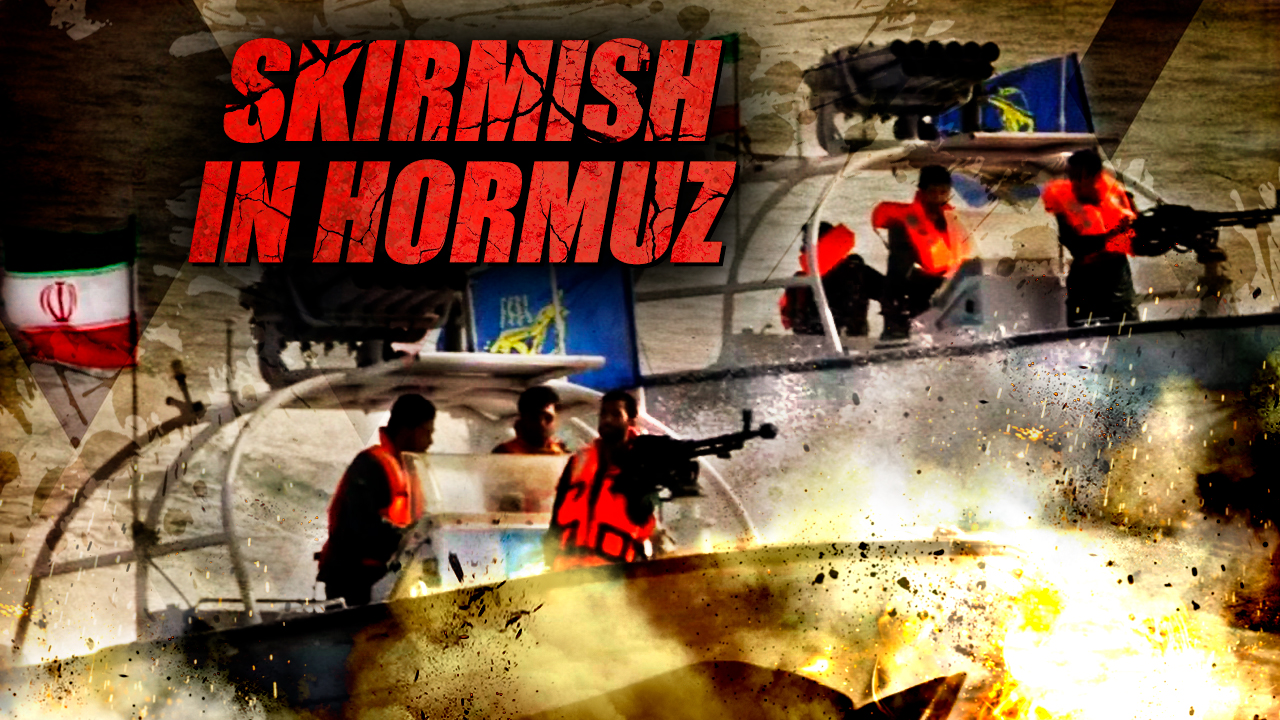
Iran said on October 22 that seven oil tankers were damaged in and around the Strait of Hormuz, with four vessels catching fire after being struck and three others disabled after hitting naval mines.

Iranian state television, citing a statement by the Islamic Revolutionary Guard Corps (IRGC) Navy, said four vessels were struck simultaneously a day earlier while transferring oil between ships in the northern Persian Gulf. The Corps accused the vessels of following an unauthorized route.

Three other vessels were damaged and immobilized after striking naval mines west of the Strait of Hormuz, according to a separate statement by the Corps.

The IRGC warned that continued United States efforts to facilitate commercial shipping through routes Tehran considers illegal could prompt a wider response targeting American military bases in the region.

The reports come as shipping through the Strait of Hormuz remains under severe pressure from attacks and heightened security risks, although oil exports through the waterway have partially recovered.

Preliminary data published by MarineTraffic on October 19 showed that 120 vessels crossed the strait during the week of October 12-18, a 40.9% decline from 203 crossings the previous week. The figures could be revised as additional vessel movements are identified.

At the same time, Kpler data cited by Reuters on October 22 showed that oil flows through the strait averaged 11.7 million barrels per day in October, up from 9.75 million barrels per day in September. The October figure was still about 82% of the average recorded before U.S. and Israeli strikes on Iran began on February 28.

The recovery in oil shipments has been supported partly by convoys traveling close to Oman’s coastline under U.S. naval protection, according to the news agency. Around one-third of crossings have continued to use a northern route controlled by Iran, although those movements remain difficult to track.

The increased oil flows have not restored normal operating conditions. Reuters reported that the United Kingdom Maritime Trade Operations recorded 12 attacks in or around the strait during the previous week, adding that the actual number was likely higher because some shipowners avoid reporting incidents for commercial or security reasons.

The latest attacks were likely a warning by Iran to both the U.S. and Israel, who are reported to be planning another large-scale attack on the Islamic Republic.

_______________________________________________________________________________________________________________________

SouthFront: Analysis and Intelligence

NOW hosted at southfront.press

Previously, SouthFront: Analysis and Intelligence was at southfront.org.

The .org domain name had been blocked by the US (NATO) (https://southfront.press/southfront-org-blocked-by-u-s-controlled-global-internet-supervisor/) globally, outlawed and without any explanation

Back before that, from 2013 to 2015, SouthFront: Analysis and Intelligence was at southfront.com

SOUTHFRONT.PRESS

MORE ON THIS TOPIC:

The post Iran Reports Seven Tankers Struck or Disabled in a Single Day appeared first on South Front.

  •  

Russian Army Clears More Areas South of Dobropolye

Click to see full-size image. (Russian Ministry of Defense)

In the Dobropolye direction, clearing operations continue in the urban area, with Russian forces holding the southern part of the city and repelling attempts by Ukrainian units to relieve their grouping. In the Slavyansk direction, the 25th Army has regained control of Ozernoye and is developing an advance towards Krasny Liman. In the Zaporozhye direction, Russian troops have taken Yulyevka and Chervony Yar, expanding the zone of control north of Orekhov. In the Sumy region, assault groups of the “North” grouping have advanced near Khoten and Velikaya Rybitsa. In the Kharkiv direction, the clearance of the Reznikovsky cauldron is nearing completion. European Union leaders at an extraordinary summit on 26–27 November will attempt to agree ways of covering Ukraine’s funding shortfall for 2027, estimated at €70 billion, and will also discuss the EU’s multiannual budget for 2028–2034.

Dobropolye direction

Clearing of the urban territory continues in Dobropolye. The southern part of the city is already under stable Russian control, although scattered Ukrainian groups are still encountered there. Ukrainian units launched a counter-attack in an attempt to relieve their grouping and cut off the salient towards Belozerskoye, operating in the areas of Novovodyanoye and Zolotoy Kolodez.

In the Zolotoy Kolodez area, Russian troops are advancing on both flanks of the settlement. On the Dobropolye front, Russian forces are expanding the zone of control around Sergeyevka. Systematic clearing of the city continues in Dobropolye. Fighting is under way on the approaches to Belozerskoye and in the Zolotoy Kolodez area.

Russian troops are increasing pressure on Belozerskoye, bypassing the town on the flanks. Units have reached the outskirts and taken up positions in the southern built-up area and adjacent forest belts. Belozerskoye lies only a few kilometers from Dobropolye. Consolidation here could open a route via Novodonetskoye and Stepanovka towards Aleksandrovka.

Territories south of Dobropolye have been cleared of Ukrainian units. Russian fighters have taken Zolotoy Kolodez in a pincer movement and continue clearance operations. Reports from the ground indicate an improvement in the forward edge and strikes against positions in the areas of Zavidovo-Kudashevo, Krivorozhye, Starorayskoye and other settlements.

Slavyansk direction

Russian units in the north have gone over to counter-attacks and have retaken Ozernoye. This eases the position of the 3rd Army in the Raygorodok area, allowing it to concentrate more strongly on Nikolayevka. Strikes from the Orekhovatka area towards Raygorodok have been repelled. The Volunteer Corps holds Nikanorovka, Malinovka and Vasyutinskoye.

Russian troops near Krasny Liman are attempting to disrupt logistics and are advancing from the areas of Zarechnoye, Torskoye and Yampol. The Ozernoye area has been cleared. If Dibrova can be regained, the southern approaches to Krasny Liman will be cleared, creating the possibility of linking up with units holding positions in the town.

In the Konstantinovka sector, intense positional fighting continues in the areas of Rayskoye and Alekseyevo-Druzhkovka. Russian units are seeking to drive Ukrainian forces out of Klinovoye and Verolyubovka in order to secure the eastern flank for a future envelopment of Druzhkovka.

Zaporozhye direction

The Russian Ministry of Defence has reported that the village of Yulyevka has come under control. Nearby, Chervony Yar has also been taken adjacent to Timoshovka, which was captured the day before. The “East” grouping is expanding the zone of control north of Orekhov.

Fighting continues unabated in Orekhov itself. Judging by the pattern of operations, the Russian command is seeking to envelop the grouping center in Shirokoye, where Ukrainian forces have established a strong defensive line. Fighting continues in the northern part of Ternovatoye. Most of the settlement remains under Russian control. Earlier, Russian units took Zaporozhskoye and are gradually reducing the salient.

In the areas of Lyubitskoye and Novosoloshino, Russian troops have gone over to counter-attacks. Fighting in Vozdvizhevka has largely ended and Ukrainian units have been driven out. Battles have begun for Rozhdestvenskoye. Further south, the advance continues from the captured Chervony Yar. Assault groups are operating on the outskirts of the villages of Mirovka and Obshcheye. Thus, in the Zaporozhye direction, Russian units are systematically expanding bridgeheads, pushing Ukrainian forces out of key strongpoints and disrupting their logistics.

Sumy direction

Heavy positional fighting continues in Sumy direction. Russian aviation, drone teams and artillery are increasing the intensity of strikes against Ukrainian positions. Ukrainian units have concentrated on strengthening their defensive lines.

In the Sumy border area, positional fighting continues on the main lines. Fierce clashes are under way in the Yunakovka area; Ukrainian units are attempting to insert small groups but without success. Russian assault troops have advanced in the areas of Khoten and Velikaya Rybitsa overall progress amounting to up to 300 meters.

In the Sumy district, Russian assault troops have advanced near Khoten and Velikaya Rybitsa. Overall progress amounted to up to 300 meters. In the Shostka district, heavy positional fighting continues near Korenek. In the Krasnopolye district, assault groups of the “Northerners” are advancing near Turya. Russian units continue methodically to press the Ukrainian defenses, exploiting their advantage in artillery and drones.

Kharkiv direction

Assault units of the “North” grouping are developing their success in the area of the former “Volchansk cauldron”. The Ukrainian side has stepped up its information activity and is widely disseminating inaccurate claims about alleged control over lost settlements.

North of Bolshoy Burluk, clearance of the so-called Reznikovsky cauldron continues. According to official data, the main settlements have been cleared. The territory is extensive, almost 400–500 square kilometers. Isolated positions will continue to be cleared for some weeks yet. Ukrainian units, relying on Maly Burluk and Prikolotnoye, are attempting to reach the Plotva River in the area of Vasilyevka, Blagodatnoye, Nefyodovka and Chyornoye.

In the Lipetsk direction, Russian troops have advanced on three sectors south of Novaya Kazachya and Tokarevka. Overall progress amounted to 250 meters. In the Volchansk and Veliky Burluk directions, assault groups of the “Northerners” continue to advance southwards. There have been successes in the areas of Prikolotnoye, Maly Burluk and Kolodeznoye. Over the past day overall progress amounted to up to 500 meters.

Conclusion

In the Dobropolye direction, Russian forces are consolidating in the southern part of the city and enveloping Belozerskoye. In the Slavyansk direction, the 25th Army has gone over to the counter-offensive, recovering lost positions and creating a threat to Ukrainian logistics in the Krasny Liman area. In the Zaporozhye direction, the capture of Yulyevka and Chervony Yar has enabled the expansion of bridgeheads and continued pressure on Orekhov. In Sumy region, positional fighting continues with gradual advances by Russian assault groups. In the Kharkiv direction, the clearance of a large cauldron is nearing completion, freeing forces for further offensive operations. The overall trend remains the use by Russian units of small-group tactics that combine assault actions with strikes by artillery, aviation and drones, allowing them methodically to disrupt Ukrainian logistics and expand the zone of control.

European Union leaders at the extraordinary summit on 26–27 November will attempt to agree ways of covering Ukraine’s funding shortfall for 2027, estimated at €70 billion. The EU has already earmarked €45 billion for Ukraine in 2027, yet Kyiv’s financial needs substantially exceed this amount. Even taking into account the planned European funding, Ukraine’s additional requirement is assessed at approximately €70 billion.

Initially, Brussels had expected Norway, Switzerland, Canada, Japan and the United Kingdom jointly to provide a further €45 billion over 2026–2027. Not all the promised funds have been allocated, however. As a result, EU member states will have to agree to additional financing mechanisms for Kyiv, including the possibility of a new loan. At the same time, European leaders continue to negotiate the Union’s seven-year budget for 2028–2034. Brussels aims to conclude the talks by the end of the current year, since electoral campaigns due in a number of EU states in 2027 could further complicate the achievement of a compromise.

_______________________________________________________________________________________________________________________

SouthFront: Analysis and Intelligence

NOW hosted at southfront.press

Previously, SouthFront: Analysis and Intelligence was at southfront.org.

The .org domain name had been blocked by the US (NATO) (https://southfront.press/southfront-org-blocked-by-u-s-controlled-global-internet-supervisor/) globally, outlawed and without any explanation

Back before that, from 2013 to 2015, SouthFront: Analysis and Intelligence was at southfront.com

SOUTHFRONT.PRESS

MORE ON THIS TOPIC:


The post Russian Army Clears More Areas South of Dobropolye appeared first on South Front.

  •  

Ohio State disputes medical school admissions discrimination finding

Ohio State University (OSU) is disputing allegations from the Department of Justice (DOJ) that it is discriminating in the admissions process for its medical school.   The DOJ sent a letter Wednesday to the OSU College of Medicine alleging the school intentionally discriminated against applicants on the basis of race, particularly Asian applicants, to the benefit of Black…

  •  

Japan Faces Massive Energy Issues Due To US Wars, But Still Sends Troops Near Taiwan

Click to see the full-size image

Written by Drago Bosnic, independent geopolitical and military analyst

Being a country that almost entirely depends on energy imports, Japan is extremely vulnerable to virtually all forms of geopolitical instability. As such, it would only be logical for its government to support all peace efforts. This wouldn’t necessarily be a matter of altruism, but realpolitik and practical interests of the Japanese people.

Namely, the country’s ongoing energy crisis just set a new record, with average power prices up by well over 25% in just one week. The massive hike is caused by soaring LNG and higher coal prices. Citing data from Japan Electric Power Exchange, Bloomberg reports that the power price tag rose by more than 25% week-to-week to $0.19 per kWh (kilowatt-hour). Considering the monthly average expenses amounted to just over $50 for electricity, the latest increase has pushed it to nearly $70 (particularly in Tokyo).

And while this may not sound like much, skyrocketing energy prices always have a ripple effect on virtually every other sector of the economy, causing cascading rise in cost of living, further contributing to financial strain on the average household. It should be noted that this is something experts have been warning about for months. Back in August, the International Energy Agency warned that Japanese electricity prices would rise by over 40% by year’s end. This estimate is now considered conservative given the latest surge. Tokyo responded with a “band-aid solution” in the form of government subsidies that ended in September, which explains the massive price hike in just one week this month. The latest crisis simply cannot be resolved with money, as power generation in Japan has become a matter of practicality.

Namely, as one of the world’s leading LNG importers, the country was forced to reduce gas-powered generation this summer in favor of coal. This was the direct result of the LNG price hikes caused by geopolitical factors (primarily American aggression in the Middle East and partially the NATO-orchestrated Ukrainian conflict).

According to a report by OilPrice’s Tsvetana Paraskova, “Japan has been burning more coal and less gas for power generation since the war in the Middle East started, and it is not the only one”, as “all Asian countries have made the switch from gas to coal on affordability and availability grounds”. Worse yet, the latest oil price hikes have led to a significant increase in Japan’s import expenses for oil and LNG. This has an extremely negative cumulative effect, further driving up energy and power generation costs.

Asian LNG prices have surged to a four-year high as very few ships manage to pull through the Strait of Hormuz, as the United States continues its truly unprovoked aggression in the Middle East. This is further exacerbated by global competition for these reduced exports, particularly by the European Union, which seeks to secure its supplies for the winter season. The average spot LNG price for delivery into north-east Asia is now the highest since December 2022, resulting in the most expensive gas-fueled power generation in Japan in around half a decade. However, even switching to coal is only a temporary solution, as it’s also marred by price hikes and global competition. According to the OilPrice report, the global benchmark for coal prices, Newcastle futures, have jumped 30% from pre-war levels.

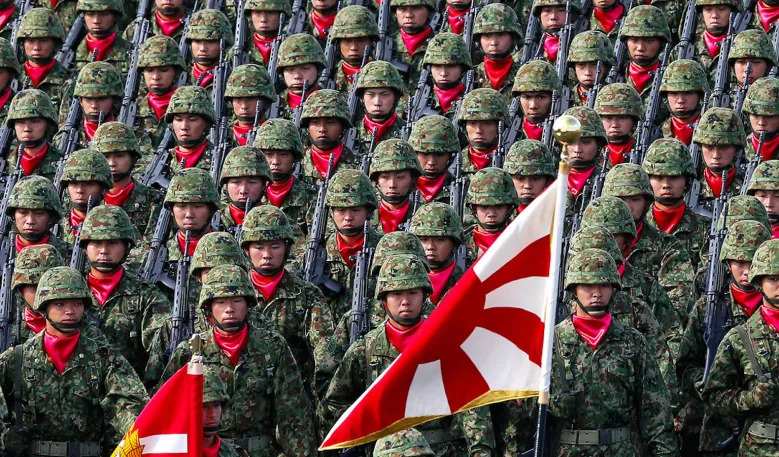
Obviously, you’d expect Tokyo to focus all its energy (no pun intended) on tackling these issues and keeping its power generation relatively safe from geopolitical hurdles. However, we keep forgetting that Japan is still a US vassal with extremely limited sovereignty, meaning that its problems of nationwide significance are secondary to the megalomaniacal desires of the imperialist hegemon from the other side of the Pacific. Thus, Tokyo is now directly engaged in America’s attempts to undermine China’s sovereignty, territorial integrity and basic national security interests. Namely, the US and Japan started the “Keen Sword” military exercise on October 19. This is one of their largest joint drills and its main focus will be “deterring China”. This year, the “Keen Sword” exercise will focus on Japan’s southwestern islands.

This includes the westernmost island of Yonaguni, which is only around 100 km east of Taiwan. Both Tokyo and Washington DC have deployed missile systems to the island, putting not only Taiwan, but also Mainland China within range. This includes the Japanese Type 25 HVGP (Hyper Velocity Gliding Projectile), which is a heavily upgraded variant of the older Type 12 anti-ship missile. Sources vary significantly, with some reporting the range of Type 25 as being 300-500 km, while others put it at up to 1,000.

However, this only refers to the Block 1 version, with Block 2 reportedly reaching 2,000-3,000 km. Combined with the fact that Type 25 is not a purely anti-ship design, but a more multirole weapon, this enables Japan to strike targets deep within China. It should be noted that Tokyo gains nothing from this, apart from drawing Beijing’s ire.

And who could possibly blame China? Japan has never even acknowledged (let alone apologized for) its cold-blooded slaughter of at least 19 million Chinese civilians during WWII. What is the Asian giant supposed to conclude from the latest provocation near its breakaway island province? Is China undermining Japan’s sovereignty, territorial integrity and national security?

Obviously, it’s a rhetorical question, as we all know who really does. Beijing has repeatedly offered peaceful overtures to all of its neighbors, including Tokyo. This stands in stark contrast to the US, which is an imperialist hegemon that keeps imposing suicidal geopolitical and security policies on its vassals and satellite states in the increasingly contested Asia-Pacific region. Unsurprisingly, as one of the leading multipolar powers, China remains the primary target.


MORE ON THE TOPIC:

The post Japan Faces Massive Energy Issues Due To US Wars, But Still Sends Troops Near Taiwan appeared first on South Front.

  •  

European Parliament Awards Sakharov Prize to ICC Amid Escalating US Sanctions

The European Parliament has awarded the 2026 Sakharov Prize for Freedom of Thought to the International Criminal Court (ICC) and its officials, recognising the Hague-based tribunal’s work in investigating and prosecuting war crimes, crimes against humanity and genocide.

Announcing the decision in Strasbourg on Thursday, 22 October, European Parliament President Roberta Metsola said the award reflected the European Union’s commitment to multilateralism and international institutions.

Metsola praised the Court for its work in upholding international law and justice. The announcement was met with a standing ovation in the parliamentary chamber.

The decision comes amid an escalating confrontation between the European Union and the administration of US President Donald Trump over the ICC’s jurisdiction and independence.

Washington’s sanctions against the Court

On 9 October, the United States imposed sanctions on the ICC as an institution, extending measures previously directed against individual judges and prosecutors.

The restrictions place the Court under the US Treasury’s sanctions regime, limiting financial transactions involving American individuals, businesses and institutions. Washington has issued several temporary and limited exemptions intended to allow specified operations to continue.

The measures followed earlier sanctions against senior ICC officials, including Court President Tomoko Akane, and form part of Washington’s campaign to prevent the tribunal from exercising jurisdiction over American personnel.

US Secretary of State Marco Rubio has argued that the ICC threatens American sovereignty by asserting authority over nationals of countries that have not accepted its founding treaty.

The Court rejected the latest restrictions, describing them as an attempt to obstruct the administration of international justice.

Established under the Rome Statute, the ICC operates independently of national governments and investigates serious international crimes where its jurisdictional requirements are satisfied.

Neither the United States nor Israel is a party to the Rome Statute.

Arrest warrants involving Russia and Israel

The dispute with Washington has intensified since the ICC issued arrest warrants in November 2024 for Israeli Prime Minister Benjamin Netanyahu and former Defence Minister Yoav Gallant over alleged war crimes and crimes against humanity connected with military operations in Gaza.

Israel rejects the Court’s jurisdiction and disputes the allegations. Washington has similarly opposed the proceedings against Israeli officials.

The ICC has also pursued investigations into Russia’s invasion of Ukraine. In March 2023, its judges issued arrest warrants for Russian President Vladimir Putin and Maria Lvova-Belova, Russia’s commissioner for children’s rights, over the alleged unlawful deportation and transfer of Ukrainian children.

Further warrants followed in 2024 against senior Russian military commanders and officials in connection with attacks on Ukraine’s civilian infrastructure.

The proceedings demonstrate the geographical scope of the Court’s investigations, although its ability to secure arrests depends heavily on cooperation from individual states.

The ICC has no independent police force and relies on national authorities to execute its warrants.

European Parliament backs international justice

The ICC’s nomination for the Sakharov Prize was submitted by the Socialists and Democrats group in the European Parliament.

Its selection comes as European lawmakers examine how the EU should respond to American sanctions affecting the Court and organisations supporting its activities.

The October restrictions have raised practical questions about access to banking, technology services and other infrastructure required by the tribunal.

European governments must also consider how to support an institution established through an international treaty while maintaining relations with Washington.

The Sakharov Prize carries no legal authority to reverse American sanctions or compel governments to cooperate with ICC investigations. Nevertheless, the award represents an explicit institutional endorsement of the tribunal at a time when its operations face increasing external pressure.

Other nominees and award ceremony

The ICC was selected from three finalists announced earlier this month.

The other nominees were Tanzanian opposition leader Tundu Lissu and Iranian sisters Taraneh and Romina Rahimi, whose cases have attracted international attention over political persecution and judicial proceedings.

The Sakharov Prize, established by the European Parliament in 1988, is named after Soviet physicist, dissident and Nobel Peace Prize laureate Andrei Sakharov.

It recognises individuals and organisations defending human rights, freedom of expression and fundamental liberties. The award includes €50,000.

Previous recipients include Nelson Mandela, Malala Yousafzai and imprisoned journalists.

In 2025, the prize was awarded jointly to Belarusian journalist Andrzej Poczobut and Georgian journalist Mzia Amaglobeli.

The formal presentation of the 2026 prize is scheduled for 16 December at the European Parliament in Strasbourg.

The award places the ICC alongside previous Sakharov laureates while drawing further attention to the unresolved dispute between Washington and European governments over international criminal jurisdiction.

  •  

Meta investors will get free shares if Mark Zuckerberg hits 'extraordinary' targets

Mark Zuckerberg is the founder and CEO of Meta.

Bloomberg/Getty Images

  • Meta will give its investors free shares if Mark Zuckerberg hits certain "extraordinary" targets.
  • It will pay 1:1 share dividends each time Meta stock doubles and has compounded at over 10% a year.
  • Meta is rolling out Class C shares to address Zuckerberg's tax concerns and keep him in California.

Meta stockholders are set to receive free shares if Mark Zuckerberg absolutely crushes it as CEO.

The social-media giant revealed in a Wednesday filing that if its upcoming Class C shares double from a baseline price of $580.60 to just over $1,161, and their compound annualized return since September 10 has been at least 10%, shareholders will receive a dividend: a Class C share for every Meta share they own.

If Meta stock — specifically its 30-day volume-weighted average price — doubles again to around $2,322, and has risen by at least 10% on average per year, shareholders will receive the same dividend again, and so on.

Meta, which owns Facebook, WhatsApp, Instagram, and the AI agent Muse, acknowledged how difficult it will be to unlock those dividends, describing the stock price targets as "extraordinary" in its filing.

Its stock has already surged more than sevenfold from its November 2022 low, giving Meta a nearly $1.8 trillion market capitalization that ranks it among the 10 most valuable companies in the world.

The additional dividends would be paid on top of the initial dividend declared by Meta's board on Wednesday, which will see Class A and Class B shareholders receive Class C shares on a 1:1 basis, likely in late January.

Meta is rejigging its share structure in response to Zuckerberg's concerns about California's so-called billionaire tax: a one-off, 5% wealth tax on the roughly 250 billionaires living in the state.

Zuckerberg, who ranked fifth on the Bloomberg Billionaires Index with a $247 billion net worth at Wednesday's close, will be able to sell the Class C shares to access the liquidity needed to pay the tax, avoiding a sale of his existing shares that would erode his voting power.

Meta's board took action after Zuckerberg said he was considering moving out of California because of the potential tax, and cautioned that the steps involved in relocating, such as listing his home for sale, could spark questions from employees about the company's management, the filing says.

Read the original article on Business Insider

  •  

Una jueza frena la “caza” de supuestos votantes no ciudadanos por parte del Gobierno de Trump

Una jueza federal de California bloqueó parcialmente una ofensiva con la que la unidad principal de investigaciones del Departamento de Seguridad Nacional (DHS, por sus siglas en inglés) ha ido en busca de supuestos electores no ciudadanos en varios Estados del país, de cara a las elecciones de mitad de período en las que se pelea el control del Congreso.

Seguir leyendo

© HSI Kansas City

Autoridades federales sondean a vecinos de Kansas en septiembre.
  •  

Why trade is vital to understanding how Ukraine needs western capital to stay afloat and how Russia can pay for its war effort without new debt

Four graphs that tell a bigger story

By Ian PROUD

Join us on Telegram, X, and VK.

Contact us: info@strategic-culture.su

I have wanted to write an article for sometime about the differing fates of Russia and Ukraine since the onset of the conflict in 2014. The headline is that Ukraine has never made up the difference in increased trade with Europe having cut its trade with Russia to the bone since 2014. This has inadvertently meant that Europe has had to inject significant sums of capital into Ukraine just to prevent its currency from collapsing as the war has gone on. Russia has diversified its trade away from Europe such that its export model is as strong today as it was in 2014, giving it the liquidity it needs to underwrite the war effort.

Key finding:

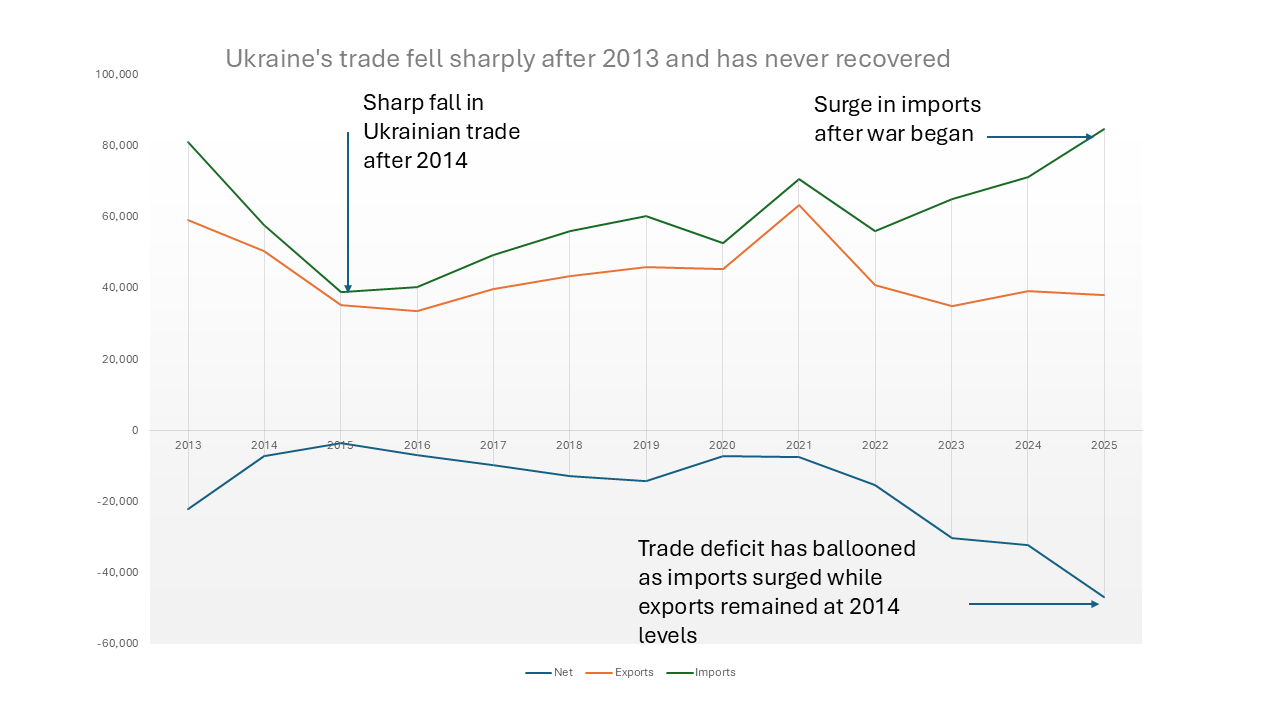
  • Ukraine exported 24% less and imported 46% more in 2025 than in 2014. The war has driven up imports while exports never recovered from the signing of the DCFTA and have been hampered by the war effort.
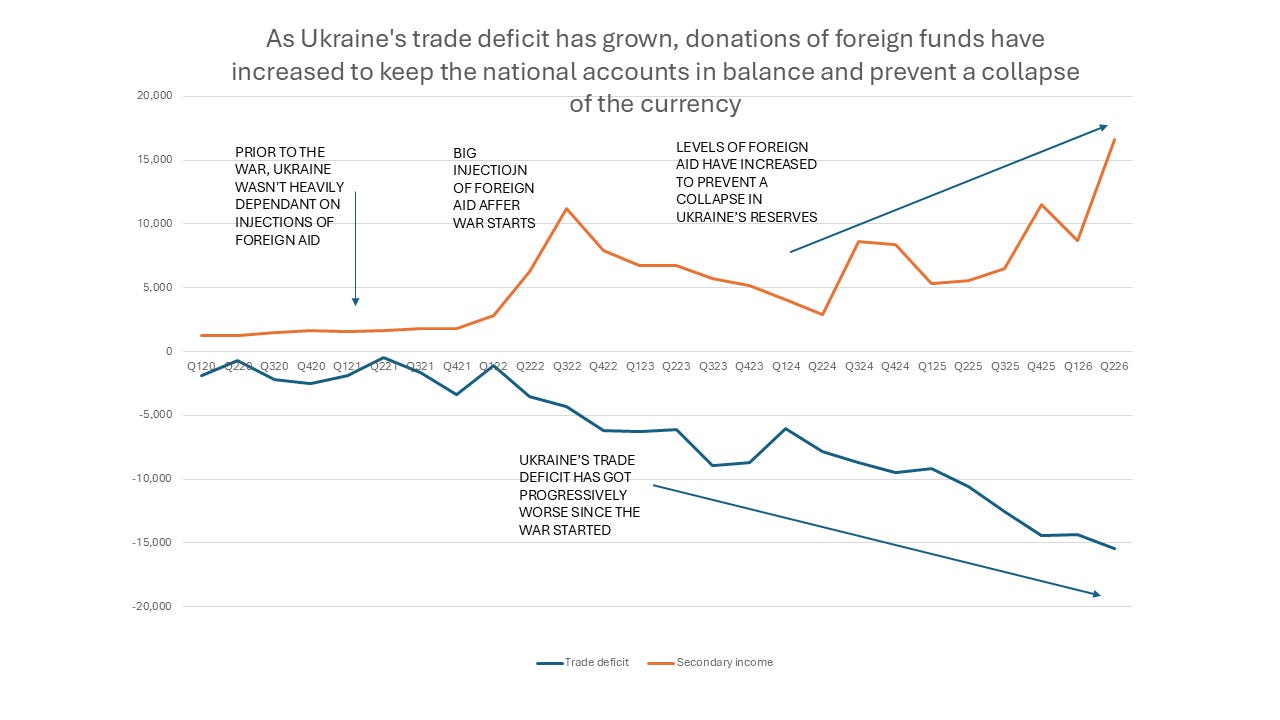
  • The yawning trade deficit Ukraine has built since the war started has placed greater strain on European sponsors to provide the capital Ukraine needs to prevent its currency collapsing, in addition to providing funding to meet its fiscal requirements.
  • This funding challenge for Europe will persist after the war ends until Ukraine can become self-sufficient in boosting exports and/or attracting sufficient foreign investment to offset its trade deficits.
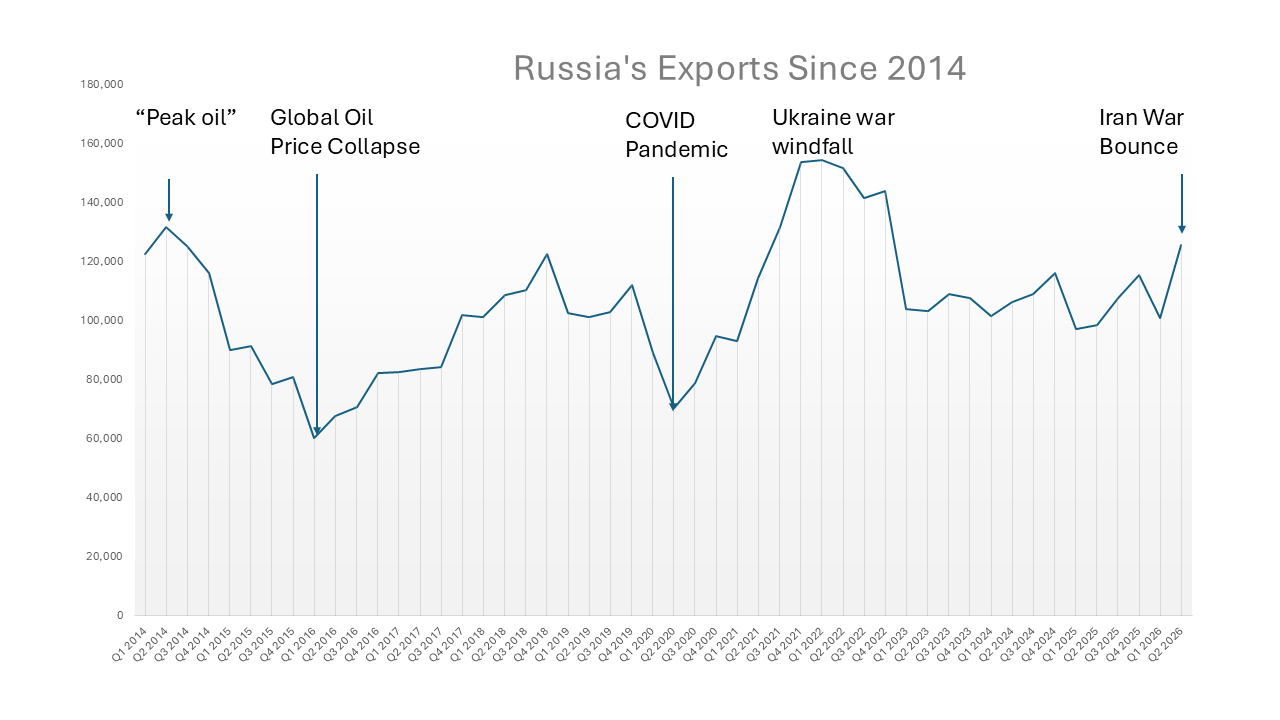
  • Russia’s export strength and consistent surpluses have been unaffected by war. After the Ukraine crisis started, Russia started to diversify its major energy exports away from Europe, allowing it to weather the progressive reduction of exports to Europe. Indeed, Russia gained a huge windfall in 2022 from surging energy prices. There is no evidence that sanctions have impacted Russia’s export model in a significant way.
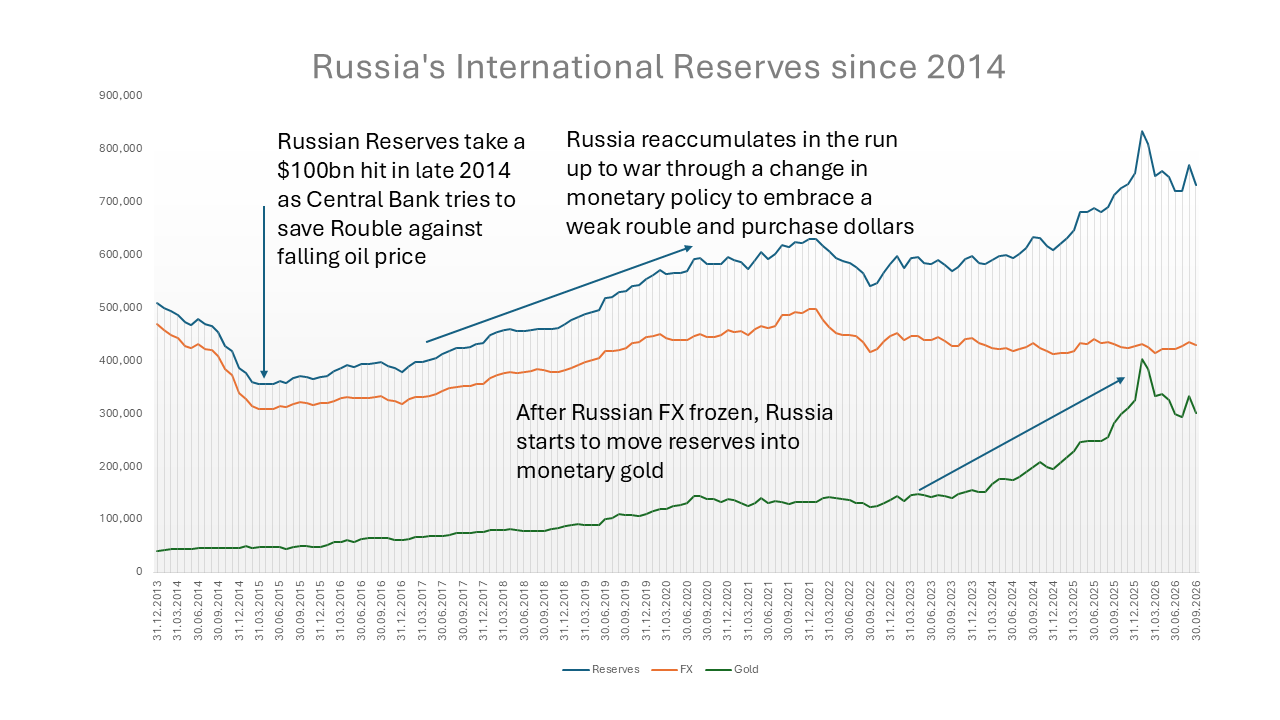
  • Russia has already started to reaccumulate FX reserves after the oil price collapse of late 2014, until before the war started. Following the immobilisation of $300bn in Russian FX reserves, Russia started to accumulate reserves in monetary gold, to sanction-proof future earnings. Russia now has liquid reserves of over $420bn meaning the immobilisation of its foreign currency reserves is no longer an economically limiting factor.

Detailed analysis

Russia’s export model in which it runs consistently large trade surpluses has ensured it can generate the reserves of foreign currency and gold which have undoubtedly helped to bankroll the war in Ukraine. Ukraine’s trade deficit has yawned since the war started, requiring continual injections of European capital to prevent its currency from collapsing.

This helps to explain by Russia can sustain the war for longer; it doesn’t need to take on significant new debt, its debt remaining low at 20%. Ukraine can only fund the war and keep its national accounts in balance with European money that cannot be guaranteed long-term and which, in any case, has increased Ukrainian debt by an average of 20% of GDP each year since the war started. This is not sustainable.

The Deep and Comprehensive Free Trade Agreement of 2014 has disadvantaged Ukraine because it forced a choice away from trading with Russia.

The starting point for this is the signature by Ukraine of a Deep and Comprehensive Free Trade Agreement with Europe on 27 June 2014.

Herman van Rompuy, then President of the European Council said that “stronger political and economic ties will bring greater stability and prosperity to the entire European continent.”

President Poroshenko said “over the last months, Ukraine paid the highest possible price to make her European dreams come true.”

Yet, the true price of this agreement has borne by Ukraine which saw its exports collapse and its imports increase, as it make a “sovereign choice” not to maintain trade links with Russia.

That was a catastrophically bad choice. Russia had accounted for around 25% of Ukrainian exports prior to 2014 and that figure fell to less than 5% in 2021 before the war started. Ukraine did not make up that gap by increasing the volume of exports to Europe, which have remained largely unchanged.

Indeed, this same pattern can be seen in Georgia which has also seen no real increase in exports to the EU after it signed the DCFTA. The EU uses a number of trade dispute mechanism and other non-tariff barriers to put blockages in the way of import growth from DCFTA partner countries.

So, by encouraging Ukraine to trade with Europe and not with Russia, Europe has imposed a deadweight economic loss on Ukraine which took a sovereign decision to forgo a previously profitable trade relationship, to pursue a political goal of EU integration.

Moreover, since the war started, imports into Ukraine have surged leading to a progressive ballooning of its trade deficit. This surge in imports has been caused by Ukraine purchasing weapons from the US using borrowed European and domestic funds. So, Ukraine is borrowing money to create a trade deficit that needs to be filled with further inflows of capital.

Dragged into a persistent and growth trade deficit by war, Ukraine needs continued injections of foreign funds to prevent its currency collapsing.

The graph below maps the growth in Ukraine’s trade deficit with the corresponding growth in receipts classified as Secondary Income within its quarterly balance of payments. These inflows of capital as Secondary Income are injections from Europe (principally) that are vital to shore up Ukraine’s FX reserves and so prevent a run on the currency. The key point is that foreign funding to Ukraine is more than just a fiscal event and top it. It is a vital support mechanism in circumstances where Ukraine is unable to attract sufficient inflows of foreign investment during a time of war.

Russia simply hasn’t faced the same challenge, choosing instead to diversify its exports to other countries as Europe progressively shut down trade. Sanctions haven’t dented trade.

The graph below illustrates in an elegant way how Russia’s trade has changed and evolved since. Russia’s exports have gone through peaks and troughs since 2014, although the troughs have often been caused by global events such as the 2014 and 2016 oil price collapses and COVID,

The onset of the war in Ukraine caused a huge windfall in income from exports as oil prices surged. Despite the imposition of thousands of sanctions by western nations after the war commenced, Russia’s exports have remained highly resilient. This is down to Russia’s diversification of its exports towards countries in Asia.

In short, despite many headlines in western mainstream media of sanctions ‘denting Russia’s war economy’ there is no substantive evidence that this has been the case.

Russia’s export model continues to be an engine room that provides the liquidity it needs to fund the war without taking on significant new debt. This gives it a significant advantage over Ukraine and its European backers in the ‘war of attrition’.

Russia has accumulated reserves since the war started to make up for the immobilisation of $300bn in FX by western nations. Russia now invests in monetary gold to sanction-proof its assets.

Finally, I have been commenting for some time that Russia started the process of accumulating Foreign Exchange Reserves in 2017 as it shifted its monetary policy to embrace a weak rouble to maximise rouble income from exports and as it undertook a number of dollar purchases via the Finance Ministry. You can see this reserve accumulation in the graph below.

After the war started, following the large windfall in earning from exports in 2022 and still solid trade figures after that, Russia continued to accumulate reserves. However, following the freezing of its foreign currency assets, it has chosen instead to store its reserves in monetary gold, to sanction proof them.

While Russia would undoubtedly like to see the return of its immobilised assets after the war ends (big question mark) it has nevertheless built up a significant financial buffer to the tune of over $420bn in reserve assets in addition to those assets that remain frozen.

This deep well of reserves undoubtedly helps to underwrite Russia’s war effort without the need for significant borrowing. Russia’s debt today sits at around 20% of GDP.

In 2021 Ukraine’s debt sat at around 49% of GDP. Today it sits at around 110% of GDP.

Original article: thepeacemonger.substack.com

  •  
❌