❌

Reading view

No timetable for delayed Limassol-Saittas road

No timetable has been set for the next stages of the Limassol-Saittas road project, despite the government acknowledging delays and reaffirming that the road remains a priority.

The issue was discussed on Thursday at the House transport committee, where Transport Minister Evie Tsolaki stressed the need for coordination between ministries and government departments, noting that sections of the planned road pass through protected Natura 2000 areas.

The environment department told MPs that it expected to issue its assessment by December.

According to Stockwatch, Tsolaki declined to provide a timetable for the next stages of construction, pending the completion of the necessary environmental studies.

MPs and representatives of Limassol’s mountainous and semi-mountainous communities expressed concern over the delays, warning that inadequate road infrastructure was making commuting difficult, posing safety risks and hampering development in rural areas.

Responding to criticism over the order in which construction had begun, Tsolaki said priority had been given to the most heavily used sections of the road.

She added that the government was dealing with longstanding problems concerning the project that predated its term in office.

Despite assurances from the environment department that its assessment would be ready before the end of the year, Tsolaki did not commit to launching a tender in the first half of 2027.

MPs also raised concerns about funding, seeking assurances that the necessary resources would be available.

The finance ministry said it did not anticipate difficulties in releasing funds, provided the project moved forward.

The commissioner for mountainous areas said the Limassol-Saittas road was included in the national strategy for the development of mountainous communities, as it would improve access and strengthen connections with Limassol.

A representative of the union of communities expressed disappointment over the delays, highlighting the difficulties faced by residents, including traffic congestion and lengthy commuting times.

Meanwhile, a representative of the Troodos community complex described completion of the road as essential for the region’s development, arguing that improved accessibility would help retain the population of mountainous communities.

Disy MPs questioned the reasons for the delays and argued that rural areas contributed more to the economy than they received in public investment.

They stressed that infrastructure projects should not be assessed solely on their economic viability, but should also take into account the needs of local communities.

MPs also questioned the effectiveness of coordination between the ministries involved.

Akel MPs challenged the reliability of government timetables, pointing out that residents of mountainous communities faced disproportionately high commuting costs because of long travelling distances and rising fuel prices.

They said a 3.5km section had saved commuters ten minutes and called on the finance ministry to commit to releasing funds.

Road safety was another concern raised during the discussion, with MPs saying nine people had lost their lives in accidents on the road.

Elam argued that Limassol was lagging behind in major public infrastructure projects despite its strong economic activity and private sector performance.

Direct Democracy, meanwhile, warned that it would not vote in favour of the budget unless the Limassol-Saittas road project was included.

The issue is expected to be discussed again at the House transport committee’s next meeting.

  •  

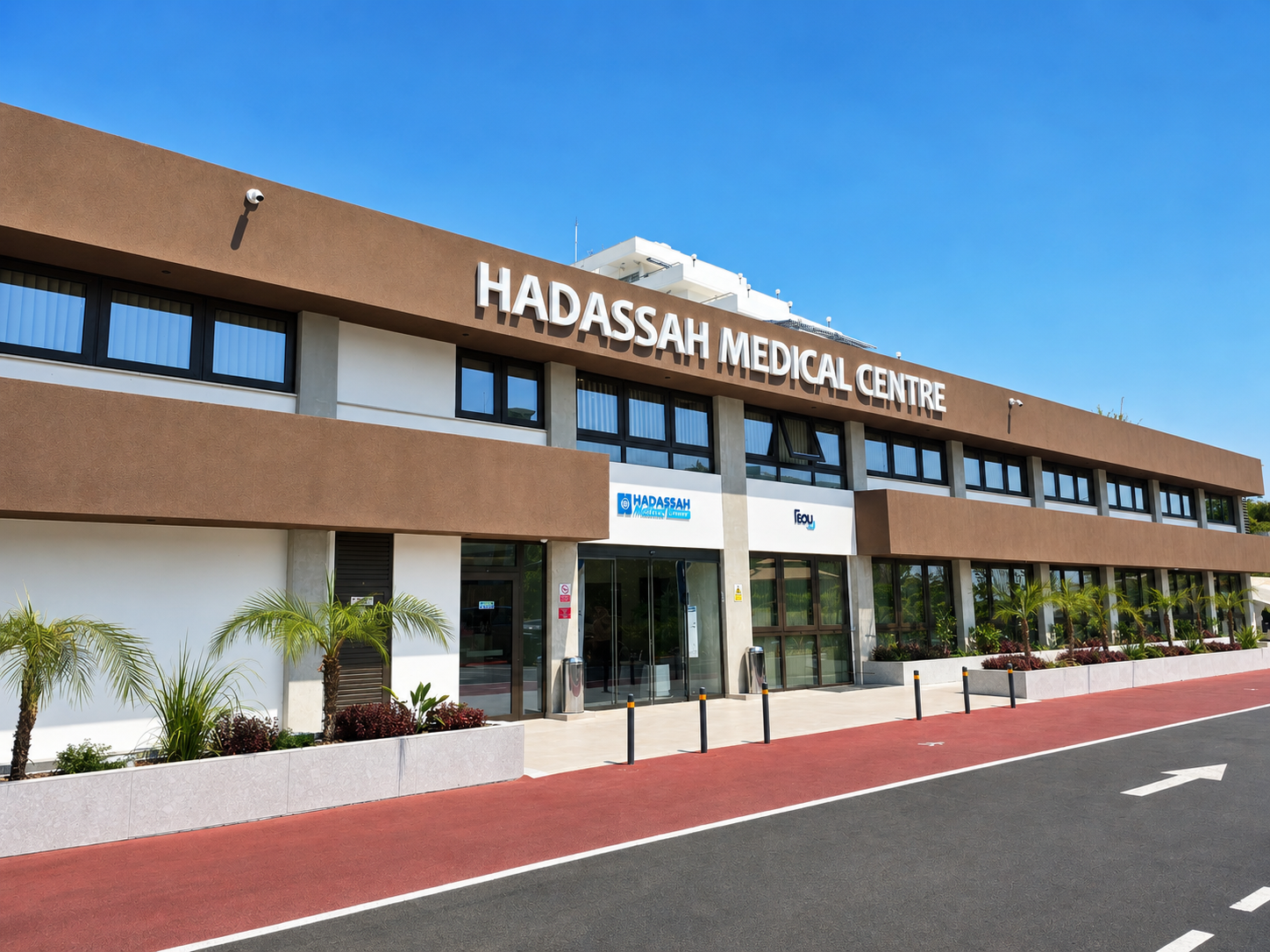
Hadassah Limassol denies reports it lacks required licences

Hadassah Medical Centre Limassol said on Thursday that it operates legally with the required licences and has never performed plasmapheresis on a patient.

In a statement, the centre said an earlier report made by Politis gave “misleading impressions that require immediate correction”.

It denied that specific complaint was pending, and it had not been informed of any finding that questioned its current operation.

Politis had reported that the health ministry was examining new complaints and that the centre holds only an imaging centre licence.

Deputy permanent secretary Elisavet Constantinou told the paper it has no hospital licence or other licence to operate as a healthcare facility, though Politis clarified that this in itself did not make any other activity unlawful.

Hadassah said a separate medical centre licence is not required for its current activities beyond professional and individual requirements, and that the licence for its radiology department had been secured.

It said a possible upgrade to a day care unit would be a separate licensing process and did not mean it was waiting for a licence for its current services.

On plasmapheresis, Politis reported that ministry inspectors had found the equipment during an inspection.

Hadassah said the equipment “was not concealed” and that a list naming the plasmapheresis system and an ozone therapy unit was sent to the ministry on August 26 as part of the final file for the imaging centre licence.

“The purchase of equipment for a planned service does not constitute proof that the service was provided,” it said.

Politis had also pointed out that only three doctors appear on the centre’s website.

Hadassah said it had already given the paper a list of 15 doctors and two clinical dietitians, and that it employs five licensed nurses and seven physical therapy and exercise professionals.

A further 15 doctors are under discussion with Hadassah but have not been announced as according to the centre “approvals are incomplete”, and it is not presenting them yet as partners.

Politis reported that some examinations or treatments may have involved doctors in Israel taking part by telephone or video link, a claim it said had not been independently verified.

Hadassah called this a misrepresentation of its second opinion service, expanding that the local doctor reviews the file and, if a second opinion is warranted and the patient agrees, prepares a report with specific clinical questions for a specialist at Hadassah in Jerusalem.

The process “does not involve tele-guidance” of a procedure in Cyprus by a doctor in Israel, it insisted.

Chief executive Dr George Zachariadis had earlier given Politis no direct answer on teleconference participation.

The centre said it “accepts the audit and responds with evidence” but would not tolerate publications that harm its reputation through “inaccuracies and insinuations”.

The centre, based in Ayios Tychonas, has no operating theatres or inpatient beds and advertises its offering being imaging, cardiac assessment, neurological rehabilitation and physiotherapy.

In Israel, news outlet Calcalist reported that the health and finance ministries were not informed of the project beforehand.

Hadassah said it “did not invest a single shekel” in the centre, which is financed by Cypriot investors.

From November 21, all referrals from Cyprus to Hadassah in Jerusalem will go through Limassol.

The Cyprus Mail approached the Hadassah medical centre, as well as both the Cypriot and Israeli health ministries for comment.

  •  

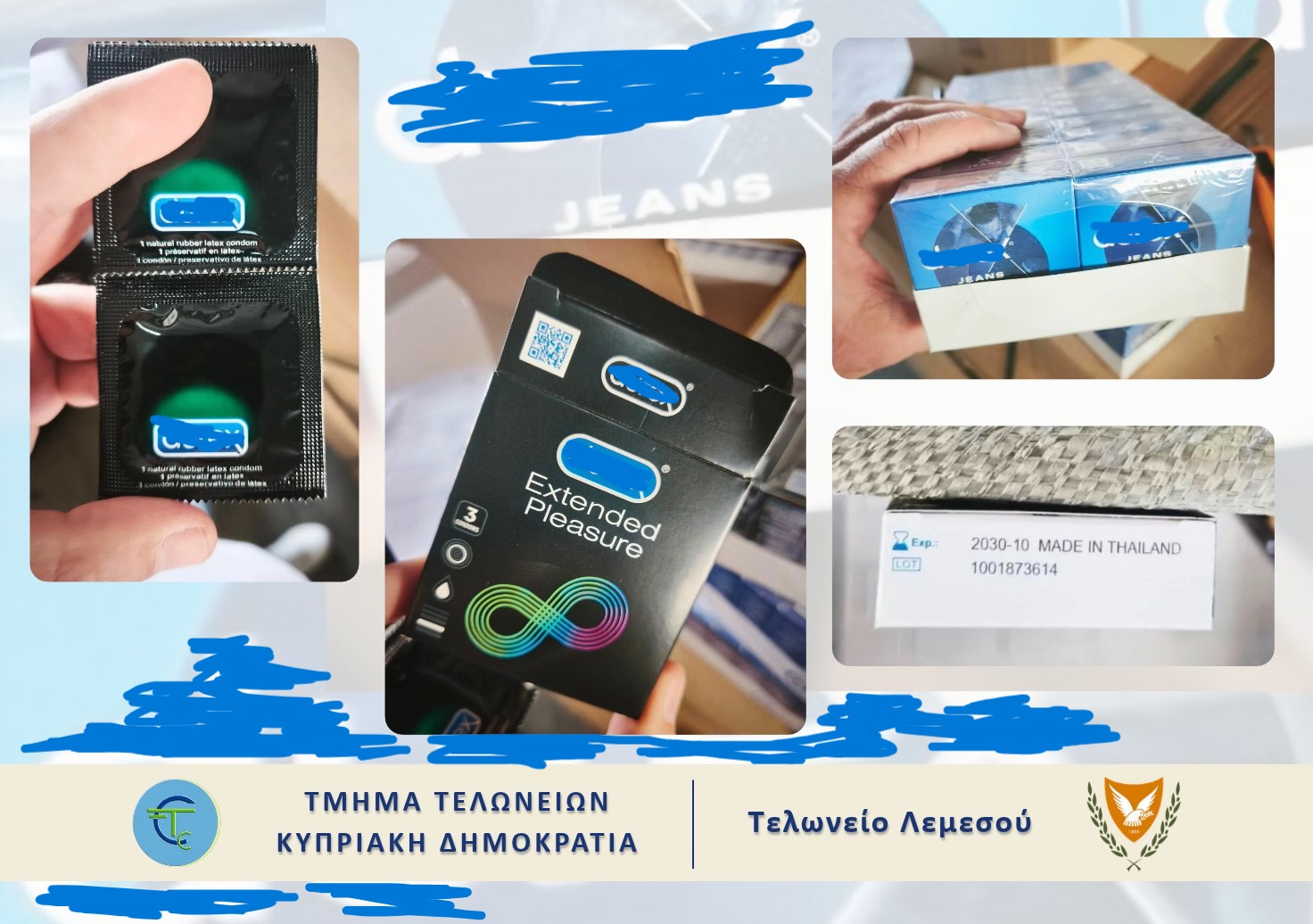
Customs seize 28,000 counterfeit condoms

Customs officers seized 28,000 suspected counterfeit condoms during an inspection of a sea shipment arriving from Greece on Thursday.

The container was selected for scanning and a physical inspection following a risk assessment.

According to customs, the products appeared to infringe the intellectual property rights of a well-known brand, based on the accompanying documents and invoices.

The owner of the company involved reportedly admitted that the condoms were counterfeit.

Procedures for the confiscation and destruction of the products are expected to follow in the coming days.

Customs warned that counterfeit condoms could pose serious health risks, including unwanted pregnancies and the transmission of sexually transmitted infections.

  •  

Limassol tramway may cost €95m per kilometre to build, mayor says

The construction of a tramway in Limassol could cost as much as €95 million per kilometre, the city’s mayor Yiannis Armeftis said on Thursday, as he evaluated the prospects for a tramway to be built in Cyprus’ second city.

“Preliminary estimates vary significantly depending on the technology to be used, with the cost ranging from €25m to €95m per kilometre,” he told television channel Sigma, though he did stress that “such an investment should not be evaluated solely based on construction costs”.

Instead, he said, “the equation should take into account the benefits which could arise from upgrading transit areas, increasing the value of land and real estate, and improving people’s quality of life”.

On this front, he made reference to “the economic cost caused by traffic delays through lost working hours and people’s travel time”, with Limassol frequently subject to long rush-hour tailbacks on its road network.

He said that Cyprus is “excessively dependent on the private car”, and that that makes his own city’s traffic issue “particularly difficult to deal with”.

“No city has solved its traffic problem when dependence on the private car reaches around 90 per cent. Traffic can be managed properly when public transport is also used,” he said.

Govt currently spends €100m per year on public transport

At present, he said, the government spends around €100m per year on public transport, of which around a quarter is spent on Limassol.

However, he added, “despite these significant expenditures, the use of buses remains limited”. To this end, he pointed out that only three to five per cent of journeys undertaken across Cyprus involve a bus, and said that “long delays and time-consuming routes discourage people” from using the bus to travel.

“It is not convenient because it has also lost its credibility,” he said, though he did stress that on the other hand, when a bus route is both reliable and useful, the public may take to it.

He gave the example of Limassol’s number 30 bus route, which runs along its coastal road, and said that “frequent and fast routes are a basic requirement for people to choose the bus instead of the car”.

On the matter of the possibility of constructing a tramway, he said that he had attended a meeting at the transport ministry on Monday, during which “the first steps of the studies were presented, as well as preliminary data on the possibility of installing a tram in Limassol”.

“The aim of the process is to examine whether this is a realistic and sustainable option, which could function complementarily to other means of public transport,” he said.

Availability of space ‘one of the main challenges’

Asked how a tramway could be installed in a city where “available road space is already limited”, he said that “this is one of the main challenges of the project”.

Nonetheless, he pointed out that bus lanes have already been installed in Limassol, and that they could be “used as tram corridors”.

He also pointed out that “other European cities” with “even smaller populations or dense construction” have also managed to build tramways.

“Behaviour changes when there are appropriate routes and when there is appropriate infrastructure,” he said.

Prountzos had called for tramway in Nicosia

His comments come after Nicosia mayor Charalambos Prountzos had last month renewed his call for a tramway to be built in the capital, saying that the Nicosia municipality had initially prepared a study for a 14-kilometre tram line, and that after he took office in 2024, the length of the planned line grew to 20km.

Regarding how the plans could be financed, pointed out that the European Union’s next multiannual financial framework – the bloc’s budget for the period covering the years between 2028 and 2034 – enters force “in about a year”, and said that as such, discussions about a tramway “should have already started” with a view to securing EU funding.

“What exactly are we waiting for to intervene?”.

  •  

Six injured in Limassol traffic accident

Six people were injured in a traffic accident in Limassol on Friday evening.

Police said the incident occurred on the old Limassol-Paphos road, near Pissouri at around 7.45pm when a car driven by a 58-year-old man collided with a car driven by a 50-year-old man.

The 58-year-old was driving with his wife, a 65-year-old woman, and a man and a woman aged 53 and 60, while the 50-year-old was driving with his 49-year-old wife.

The six passengers of the two vehicles were taken to the general hospitals in Limassol and Paphos.

The 49-year-old was later transferred to Nicosia general hospital for further treatment, having possibly suffered an aortic rupture.

The 50-year-old husband of the woman is being treated at Paphos general hospital where he is undergoing treatment for a serious spinal injury.

The 65-year-old woman suffered serious injuries to her face and hip and was transferred to a private hospital, while her 58-year-old husband remains at the hospital for further treatment.

The 53-year-old was injured in the sternum and taken to Limassol general hospital for treatment. Her 60-year-old husband was discharged from the hospital after receiving first aid.

The five people hospitalised are considered to be out of danger.

Investigations into the exact circumstances of the accident are ongoing.

  •  
❌