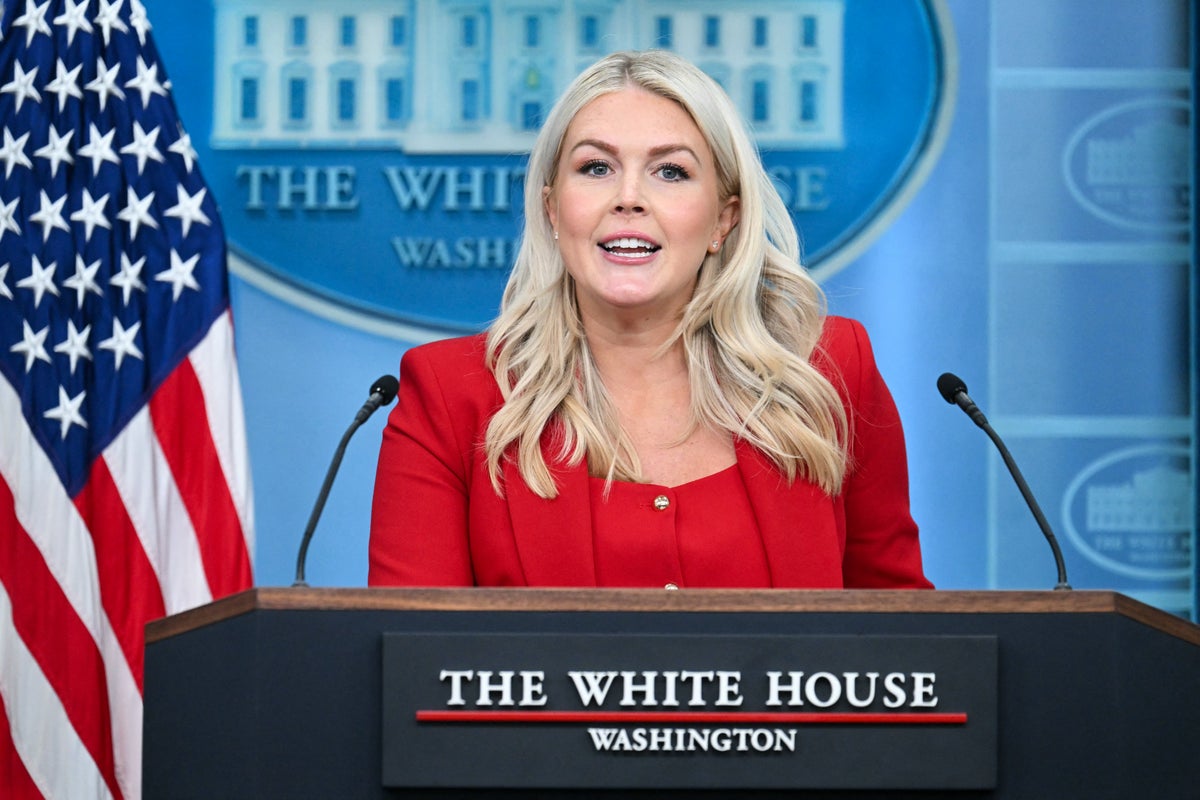
White House correspondent Andrew Feinberg explains why he won’t be covering Donald Trump’s Sioux City rally tonight — after the president attacked him in a very personal way and then had him disinvited from Air Force One — and why Team Trump’s efforts to bully him won’t stop his reporting
A Turning Point USA faith leader is calling on President Donald Trump to intervene after Australian lawmakers grilled a Christian church leader about his religious beliefs, including whether he influences members' marriages, hairstyles and even pet ownership.
Lucas Miles, vice president of faith at Turning Point USA, told Fox News Digital he contacted the White House Faith Office and several administration officials over what he described as a politically motivated investigation into the Plymouth Brethren Christian Church.
"We've reached out to the faith office, we've reached out to several members of the administration to make sure that they're aware of this," Miles said. "We're hoping to see some response and action soon."
The controversy intensified during an Oct. 16 parliamentary hearing examining allegations of coordinated political activity by church members during Australia's 2025 federal election.
Independent MP Monique Ryan questioned the church's global leader, Bruce Hales, about whether members considered him an "elect vessel" or a direct messenger from God. She also asked whether members sought his guidance on marriage, housing, pets, clothing and facial hair.
Liberal MP Ben Small objected to the questioning, calling it "patently ridiculous" and "so far off the terms of reference for this inquiry."
Another lawmaker interjected that hairstyles had no bearing on electoral matters, while the committee chair allowed the questioning to continue.
"When an Australian parliamentary committee tasked with investigating election matters begins interrogating a Christian leader about his theological convictions, serious questions must be asked about the purpose of the inquiry," Miles said in a statement provided to Fox News Digital.
"Bruce Hales was summoned to answer questions about electoral conduct, not to defend the doctrines of the Plymouth Brethren Christian Church before the government," he added.
Miles argued that the line of questioning may illustrate a broader threat to religious freedom.
"The troubling shift from election oversight to religious scrutiny gives every appearance of a politically motivated witch hunt," he said.
Hales denied directing, funding or coordinating political campaigning during the 2025 election, maintaining that church members acted independently.
"I had no involvement whatsoever in relation to any members who volunteered or took part in any aspect of the 2025 federal election," Hales told the committee.
Lawmakers questioned whether a sermon in which Hales said Australia needed to be "happy again, smiling again" influenced members' political activities, citing subsequent campaign messaging that echoed his words.
His son, Gareth, acknowledged encouraging people already involved in campaigning but denied directing an organized church campaign.
The committee is also examining allegations of intimidation and coordinated campaigning during the election. Church leaders have denied organizing or condoning improper conduct.
Hales said he did not support harassment or intimidation and maintained that individual members should be accountable for their own actions.
"In a free society, government has every right to investigate violations of election law, but it has no business putting Christian doctrine on trial," Miles said.
The Plymouth Brethren Christian Church, which traces its roots back roughly 200 years, says its roughly 55,000 members worldwide follow a "Doctrine of Separation," distancing themselves from certain secular activities and practices they believe conflict with biblical teachings.
The church rejects descriptions of the denomination as a cult, maintaining that its members freely practice their faith and contribute to their communities through businesses and charitable initiatives.
The hearing also turned to the United States when Sen. Steph Hodgins-May questioned Hales about Turning Point USA's support for the church and whether church leaders had met with the Trump administration.
Hales said he had never met Trump but understood that some church members in New York had briefly met the president.
Miles, who is not a member of the denomination, said he wants Trump to apply diplomatic pressure on Australian Prime Minister Anthony Albanese and urge an end to the inquiry.
"What I would like to see, first of all, is some pressure applied, whether that be through diplomatic channels or through the president himself," Miles told Fox News Digital.
Miles said he remains hopeful the administration will take action and warned that the controversy could establish a troubling precedent for American churches, pointing to past disputes involving religious organizations and government restrictions in the United States.
"If this can happen in Australia, if it can happen places like England and Canada, it certainly can happen America if we don't stay alert," he said.
Miles emphasized that Christians should be free to participate in politics without their churches automatically being held responsible for their individual choices.
"Just because individual private citizens who happen to go to a church have a similar opinion about politics, that does not constitute a grand conspiracy," he said.
He urged Trump to pursue what he called "faith-based diplomacy" to defend religious liberty abroad.
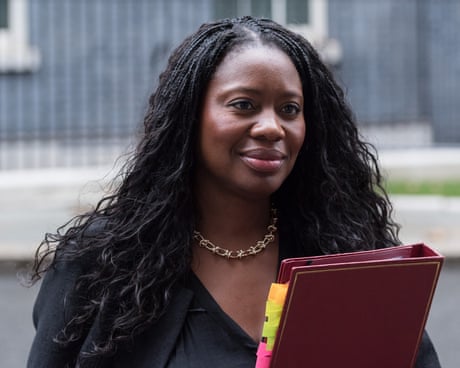
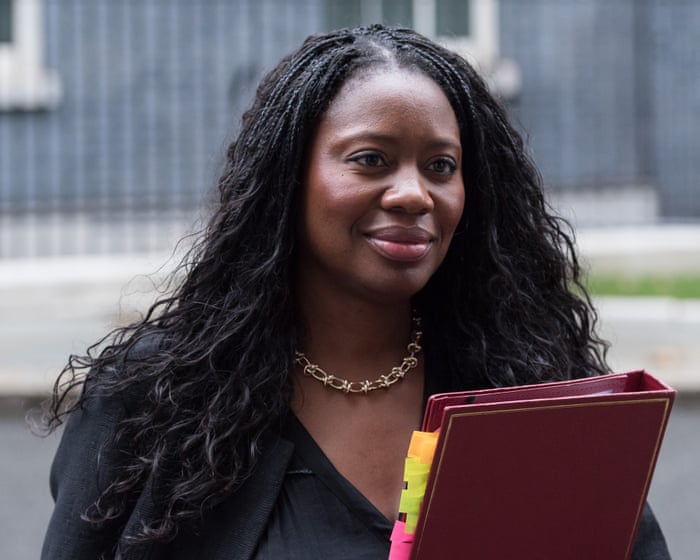
Miatta Fahnbulleh says reference to ‘awkward’ interview was meant to be lighthearted and self-deprecating
The energy secretary has been forced to clarify that she backs Shabana Mahmood’s migration policy, after earlier joking that she had not been able to “lie” about supporting a key element of the changes.
Miatta Fahnbulleh made the original remarks to a journalists’ event in Westminster, referring to an “awkward” Sky News interview in which she repeatedly refused to say she was in favour of plans to make foreign workers wait 15 years to get permanent residency.
While the European Union expressed its full solidarity with Greece, regarding Libya’s approval of the Maritime memorandum with Turkey, Washington appeared distanced to the issue and urged both neighboring countries to find a solution through negotiations. In a statement issued on Thursday, the U.S. State Department has encouraged its partners in the Eastern Mediterranean “to […]
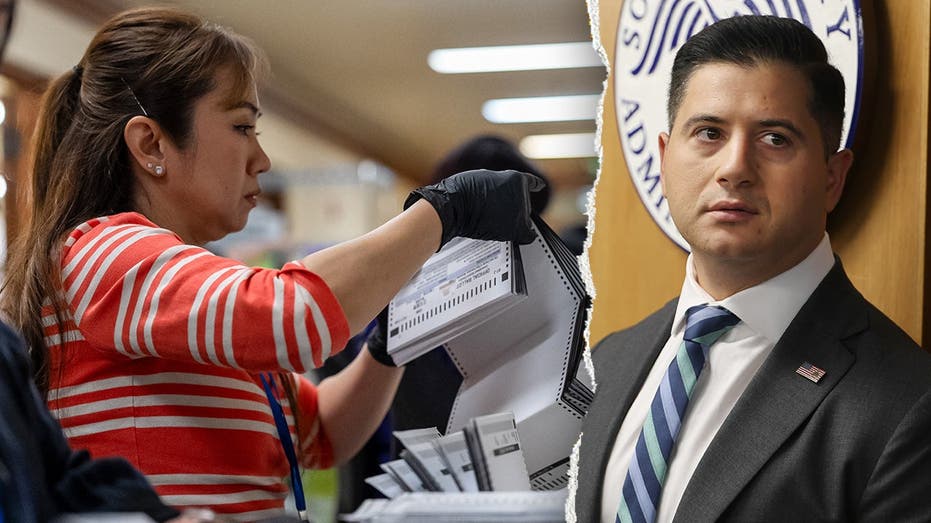
A top federal prosecutor in California said federal investigators have determined that all 20,000 people they flagged on the state's voter rolls as "likely noncitizens" are not U.S. citizens.
Bill Essayli, the first assistant U.S. attorney for California's Central District, told Fox News Digital that federal investigators have evidence that these 20,000 individuals received mail ballots this month. His office sued California last week seeking a court order to prevent any ballots they return from being counted.
"We're not asking California to take any drastic steps other than to sequester the ballots from the suspected noncitizens," Essayli said in an interview on Wednesday. "We believe it's at a minimum of 20,000. That's the floor."
Since then, federal investigators have been sifting through those records to identify people they believe they can verify as noncitizens.
He said 20,000 is only the current tally and expects thousands more names to be added in the coming days.
Earlier this week, Essayli got into a social media spat with Gov. Gavin Newsom over the state's safeguards against noncitizen voting.
Essayli argued that California is allowing people without citizenship onto the voter rolls through its supposedly lax verification processes, while Newsom said the state follows all relevant federal law governing the integrity of elections.
In court filings, California election officials have pushed back against the Justice Department's demands, arguing that county election offices lack both the authority and access to federal records needed to verify voters' citizenship status.
They have also said that sequestering ballots from people on the DOJ list is impossible in cases where the ballots have already been processed. Once a ballot's signature is verified, it is removed from its identifying envelope and processed alongside other ballots, meaning it can no longer be traced back to an individual voter.
"That is true. That's why we're getting an emergency court order requiring them to put those ballots aside," Essayli said. "Ballots have already gone out, people are filling them out and they're being returned in process as we speak. So, the crime is occurring in real time."
The DOJ escalated its push for immediate court intervention Wednesday, asking the judge to rule on its emergency request by noon Thursday. In Los Angeles County alone, officials have already processed 331,000 ballots, according to court records.
Essayli's office filed suit on Oct. 15, roughly two weeks after California sent out mail ballots, including to the possible noncitizens on the DOJ list, according to the federal government.
When asked why the Justice Department didn't act sooner, Essayli explained that investigators did not know exactly which voters would receive ballots until they were sent.
He said California should cooperate with the federal government to expedite the process of verifying voters' citizenship.
That would involve providing additional identifying information, including driver's license numbers and Social Security numbers when available, that federal investigators could cross-check against government databases.
California and dozens of other states treat this information as confidential and have refused to turn it over to the federal government, prompting the DOJ to take several of them to court.
In a separate lawsuit from Sept. 2025, the DOJ tried to compel California to provide its complete, unredacted voter-registration database, including names, Social Security numbers, home addresses and voting histories.
In January, a district court sided with California and dismissed the case, calling the government's request "unprecedented and illegal." The DOJ appealed the ruling and litigation is ongoing.
"If California will make available or submit its records, we can quickly put them through our established systems to determine who's a citizen and who's not," Essayli told Fox News Digital. "They're forcing us to do it the hard way, which we're willing to do because this is very important."
He said every person on the current 20,000-name list was individually reviewed by a federal employee at U.S. Citizenship and Immigration Services and Homeland Security Investigations.
California officials, however, have questioned the reliability of the DOJ list.
Monica Flores, an assistant registrar-recorder in Los Angeles County, said in a court declaration that her office conducted a preliminary review of a sample of 200 records from the list that were associated with LA County addresses.
Of those, 112 corresponded to canceled or inactive voter registrations, meaning no ballot was mailed to those individuals for the November election, Flores said.
"I don't believe that, actually," Essayli said. "The information we have is that they likely received ballots. So we are asking for the names of people they claim whose registration has been canceled."
Essayli added LA County did not say when these registrations were canceled. He raised the possibility at least some were canceled after federal officials provided the state with their list.
"If they're canceling now based on the records we provided, that's great news," Essayli said. "But that's all to be determined."
In the 200-person sample reviewed by LA County, Flores said that among records where birthplace was "meaningfully reported," 38.9% indicated the person was born in the United States, which she called "strong evidence of citizenship."
Essayli similarly disputed this conclusion, arguing that the birthplace information — much like the citizenship information itself — was provided by the registered voters themselves.
"They're not independently checking any of this information," Essayli said. "They're going off the information that was provided to them by the person who registered to vote."
The California Secretary of State's office and the LA County Registrar-Recorder's office did not immediately respond to Fox News Digital's requests for comment.
Essayli said that his office is determined to follow through with its investigation because "one noncitizen voting is too many."
"One illegal vote cancels out the vote of an American citizen. There are a lot of local elections that are decided on very few votes," he said. "Noncitizens cannot vote in federal elections, and we intend to enforce that law."
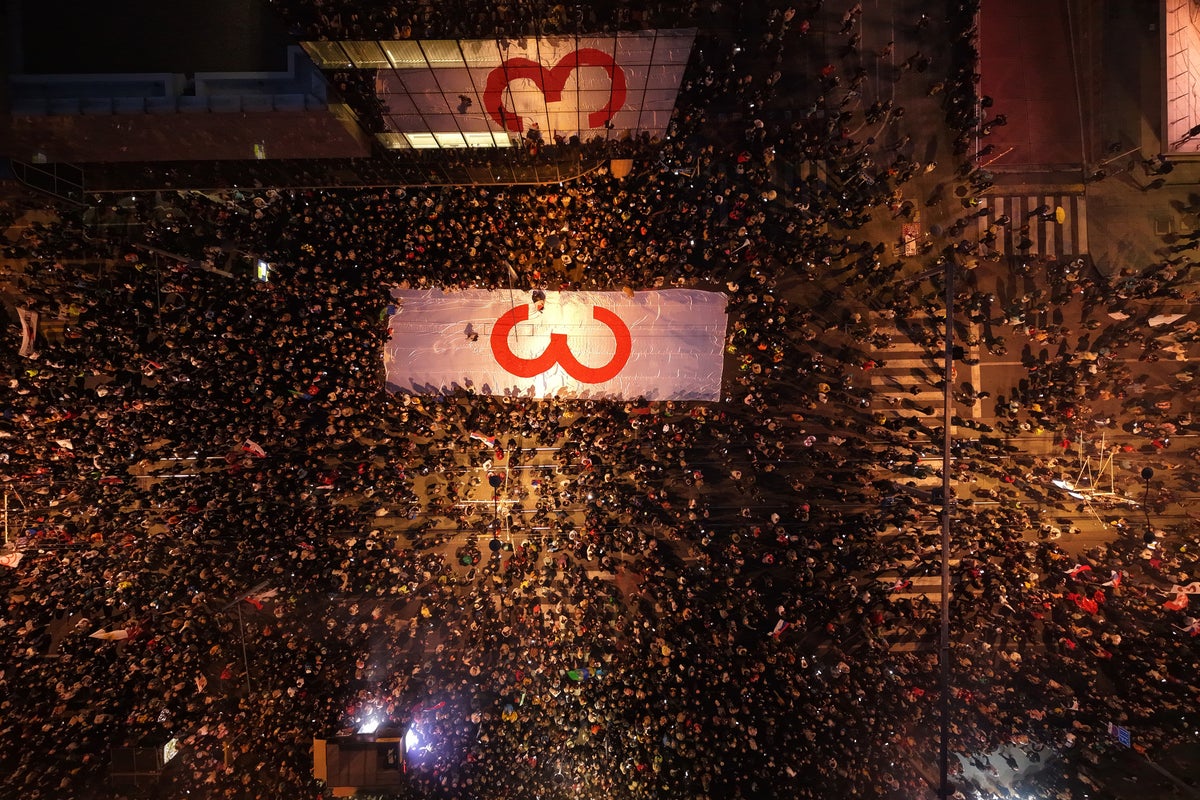
Hundreds of thousands of supporters of Serbia’s protesting students have gathered for the final campaign rally ahead of the tense parliamentary election on weekend in a mounting challenge to the Balkan country’s powerful strongman Aleksandar Vucic
Hundreds of thousands of supporters of Serbia’s protesting students have gathered for the final campaign rally ahead of the tense parliamentary election on weekend in a mounting challenge to the Balkan country’s powerful strongman Aleksandar Vucic
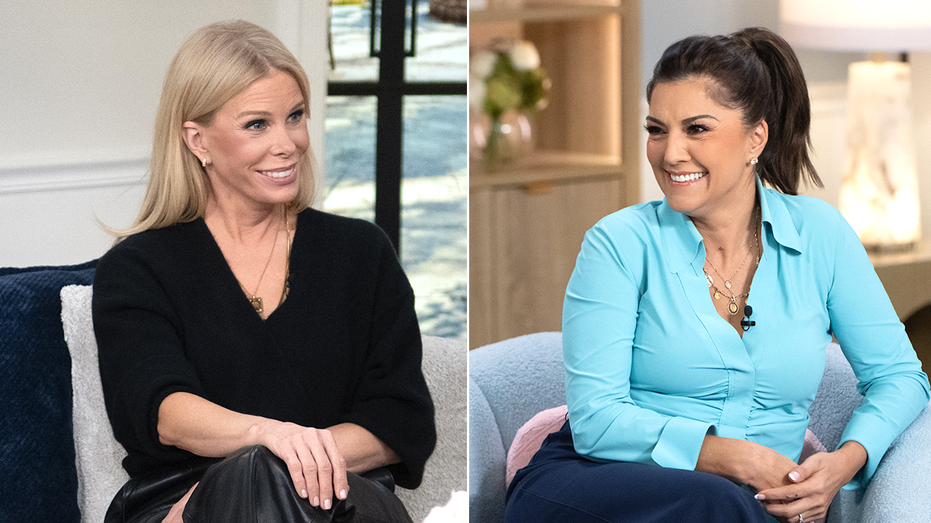
Spouses of Trump administration Cabinet members say they lean on one another as they navigate life in Washington, offering a behind-the-scenes look at their friendships on the latest episode of Fox News' "the Girls" podcast.
On Thursday's episode, actress Cheryl Hines, wife of Health and Human Services Secretary Robert F. Kennedy Jr., and Fox News host Rachel Campos-Duffy, wife of Transportation Secretary Sean Duffy, discussed how Cabinet spouses lean on one another through occasional lunches, girls' nights out and reunions at crowded White House events.
"We actually get together like once a month or, you know, we have a club that we're part of. It's like an international club and most of us are in it," Campos-Duffy said. "We see each other then, and then sometimes we'll go to lunch or next week I think we're just doing a girls' night out after."
Hines, known for her role on HBO's "Curb Your Enthusiasm," said seeing familiar faces at administration events can be comforting, as Cabinet spouses often gravitate toward one another in a crowd.
"As you guys know, there are so many events going on for the White House, for the Cabinet. So, whenever there's a big sea of people at a party, and I use the term loosely, you know, Rachel and I will gravitate and go, ‘How's it going? How's it going?’ It's nice to have a pal," Hines said.
Campos-Duffy added that while the spouses often see one another at events, they find it difficult to have meaningful conversations in a crowded room, so they make time to get together outside official functions.
"We do find that time, which is actually really great," Campos-Duffy said.
The conversation also offered a humorous glimpse into life at home with one of the administration's most outspoken advocates for healthy living. Kennedy has championed the "Make America Healthy Again" movement, urging Americans to cut back on ultra-processed foods and raising concerns about seed oils.
"Well, once in a while, he will catch me eating potato chips, and then I won't stop because, you know, it's okay. I'm not shoplifting. But he'll say, ‘Are you [going to] do this in front of me?’ I was like, ‘Yes.’ But yeah, he definitely makes it … He brings it to the forefront, shall we say," Hines said.
When Fox News host Harris Faulkner asked whether Kennedy ever gives in to his own cravings, Hines said the health secretary has a hard time stopping at just one bite.
"If you're eating, like, a piece of cake or something, the problem with Bobby is he can't have a bite. He has to have the whole thing," Hines said, laughing.
Greece and Egypt are discussing extending their Exclusive Economic Zone eastwards towards Cyprus after eastern Libya’s parliament ratified a disputed maritime agreement with Turkey earlier this week, Greece’s foreign minister said. Greece, Egypt and Cyprus have long opposed the Turkey-Libya maritime accord, arguing that it infringes on their own maritime claims in the eastern Mediterranean. […]
Work on the project continues following a federal ruling over congressional approval and ongoing lawsuits surrounding its six-story underground facility
Work on the project continues following a federal ruling over congressional approval and ongoing lawsuits surrounding its six-story underground facility

 Login