Login

Govt reduces petrol price by Rs1.60 per litre, raises high-speed diesel rate by Rs1.64
Official ex-depot prices (PKR/litre) — OGRA & Ministry of Energy notifications


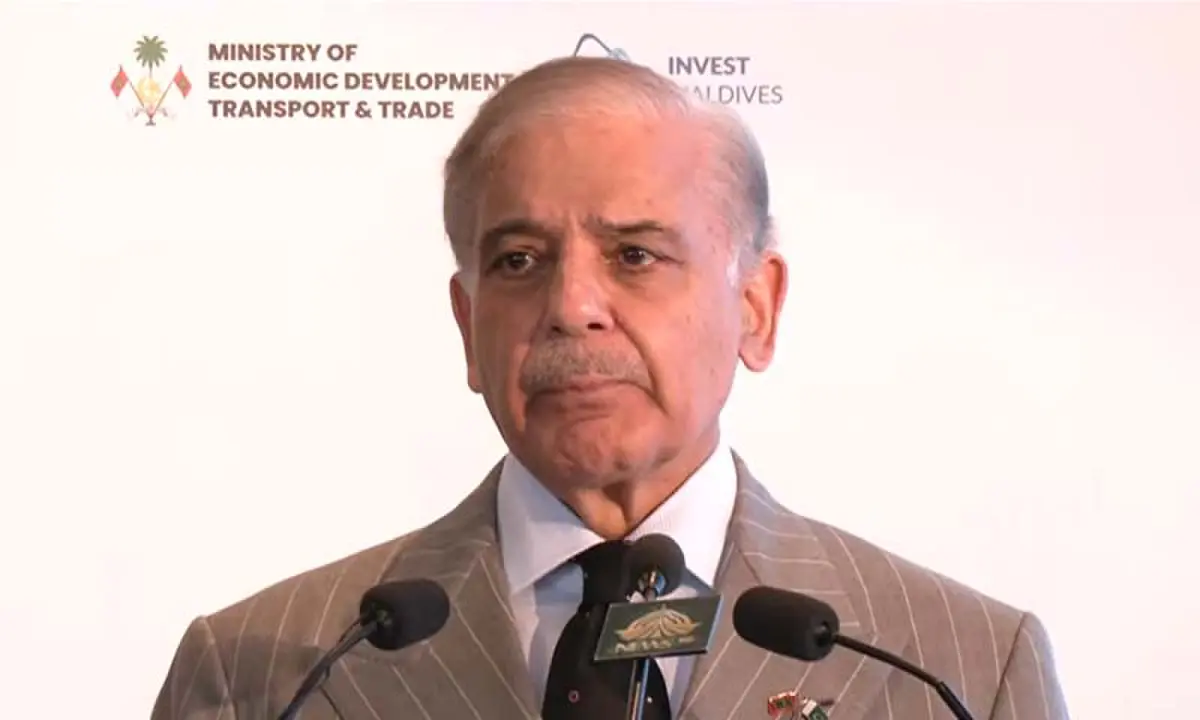
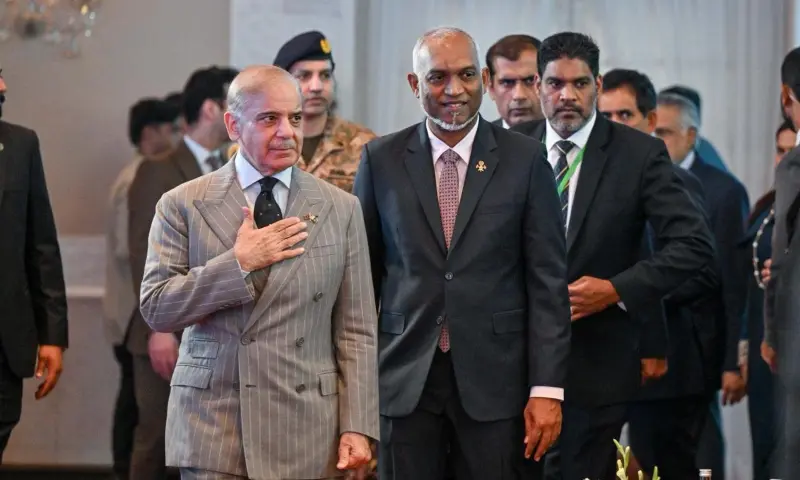
Prime Minister Shehbaz Sharif on Thursday announced that he had issued instructions for direct flights between Pakistan and the Maldives.
The premier was addressing the Pakistan-Maldives Business Forum, attended by visiting Maldivian President Dr Mohamed Muizzu, who arrived in Islamabad on Tuesday for a three-day trip at the invitation of PM Shehbaz.
The visit marks the first by a Maldivian president to Pakistan in 11 years, and comes as the two countries celebrate the 60th anniversary of their diplomatic relations, established in 1966.
PM Shehbaz said, “I want to say that connectivity is very important. We don’t have direct flights from Malé to Islamabad or Karachi, so this air link is very important.
“I have already given instructions to our ministry of civil aviation to prepare a quick feasibility [study], be it Pakistan International Airlines, or any other airline in Pakistan, to find the ways and means to take the first flight comprising tourists [and the] business community to Malé,” he announced.
The premier said he had been informed by President Muizzu that he gave instructions “to his airline to work out a quick plan to start flights from [the] Maldives to Pakistan”.
“I have given instructions to our civil aviation department to immediately invite a delegation from [the] Maldives and work out a plan whereby we can start these air flights between the two countries as early as possible,” PM Shehbaz added.
Moreover, the premier highlighted the importance of maritime connectivity, noting that unless there is a reliable direct shipping schedule from Karachi or Gwadar to Malé, “we will not be able to meet our targets efficiently and effectively.”
He added that once Muizzu returned to his country, a delegation of Pakistani government officials and businessmen would be sent to Malé. He said that the delegation would arrive within the next week or so.
Calling Muizzu a “very sincere friend of Pakistan”, the premier hailed his visit as a “turning point in further strengthening our bilateral, brotherly relations” and a “game-changer in terms of promoting our bilateral trade and investment portfolios”.
“I would like to convey this message to our great entrepreneurs, traders, investors and businessmen from both [the] Maldives and Pakistan,” he added. “Here is an opportunity we can really convert into … a concrete action plan.”
Citing figures provided by Commerce Minister Jam Kamal Khan, PM Shehbaz said that the trade volume between Islamabad and Malé is approximately $13 million.
“My brother, President Dr Muizzu, on my request, readily agreed to make a firm understanding to increase our bilateral trade from $13m to $200m in the next two years, and now it’s all up to us to make use of this opportunity, do our homework and make full preparation to achieve these targets through joint efforts and very close coordination,” the prime minister stated.
Taking the podium, President Muizzu echoed PM Shehbaz and urged the establishment of an air corridor between Pakistan and the Maldives.
“In this regard, I am pleased to announce that Maldivian, our national airline, aims to establish [a] direct air link between Malé and Karachi soon,” he announced. “This service will make travel easier for the people of our two countries, creating new opportunities for trade and tourism.”
He thanked PM Shehbaz for taking the time to attend the forum and said that his presence was “a testament to the close friendship and our shared commitment to strengthening economic cooperation”.
“It is such a great pleasure for me to be with you today in Islamabad. And particularly to address a gathering of those who drive enterprise, investment, and economic opportunity in our two countries,” he added.
“As we mark 60 years since the establishment of diplomatic relations, the relationship between the Maldives and Pakistan is rooted in deep fraternal affection, and above all, in the enduring bond of our Islamic faith.”
Muizzu noted that while Islamabad and Malé had strong political solidarity and diplomatic trust, their economic relationship had yet to reach its full potential.
“We must now define the ambition of our future,” the Maldivian president said. “The time has come to transform the strength of our friendship into a new era of trade, investment, and shared prosperity, which is why yesterday Prime Minister Sharif and I agreed to enhance our bilateral trade to $200m over the next two years.”
He added, “Beyond the numbers, this ambitious target is investing in our people. We are not only creating new opportunities for businesses on both sides, but also fostering greater regional prosperity and long-term stability.”
Muizzu said Pakistan possessed tremendous potential and that the economies of both nations had “important complementarities”.
“For the Maldives, food security is not merely a commercial consideration. As an island nation, resilient supply chains are a matter of national security, and the scale of our market should not be underestimated,” he explained.
Noting that Pakistan’s agricultural sector already serves the island nation, Muizzu emphasised the need to move beyond a typical buyer and seller relationship into partnerships in cold chain logistics, temperature-controlled storage, modern food processing and climate-adaptive agricultural technology.
“But trade requires connectivity. For an island nation, maritime connectivity is an economic lifeline. We must create more efficient corridors through which that trade can move,” he highlighted. “Therefore, I encourage shipping, port and logistics companies from both countries to explore direct and commercially viable connections between Pakistan and the Maldives.”
Stressing the importance of healthcare infrastructure, the Maldivian president highlighted that the country is making significant investments to move from regional tertiary hospitals to modern island-level facilities.
“Our demand for reliable, high-quality and certified medical supplies will therefore continue to grow. We welcome Pakistani pharmaceutical manufacturers and healthcare providers,” Muizzu said.
Furthermore, he invited Pakistan’s construction companies, developers, manufacturers and engineering firms to partner with the Maldives in housing, land reclamation and connectivity projects, as part of Malé’s endeavours in infrastructure and urban development.
“Renewable energy is another area of enormous potential. The Maldives spends hundreds of millions of dollars each year importing diesel. For us, therefore, the transition to clean energy is not only a climate imperative, it is an economic and fiscal necessity,” he added.
“My administration has set a target of producing 33 per cent of our national electricity requirement from renewable sources by 2028. That means more than quadrupling more than the amount generated in a five-year period.”
Additionally, the Maldivian president highlighted opportunities in both nations, unlocking the power of the global Islamic economy through Sharia-compliant finance, and halal tourism and products.
“The Maldives is strengthening its financial landscape and institutional frameworks for Islamic finance,” he said. “Together, our financial institutions, regulators, and businesses can explore Sharia-compliant investment instruments, sukuk, Islamic financial services and halal value chains. And these areas are by no means exhaustive.”
Muizzu also highlighted opportunities in tourism and hospitality, IT, education and other sectors and invited Pakistani businesses to “not look at the Maldives merely as a market to sell to, [but] look at the Maldives as a partner to build with”.
Later, the Maldivian president expressed his gratitude to PM Shehbaz for his presence at the business forum and for “highlighting the key priorities that will guide our economic partnership into a new chapter”.
In a post on X, he said that the forum marked an important first step towards realising the ambition of increasing bilateral trade over the next two years.
“I warmly invite Pakistani businesses and investors to explore the wealth of opportunities the Maldives has to offer,” Muizzu said, stating his confidence that the renewed commitment would “forge meaningful partnerships, attract investment, and deliver tangible benefits” to both Pakistan and the Maldives.
“Let us build an economic partnership that reflects the strength of our enduring friendship, one that creates opportunities for our peoples, advances shared prosperity, and translates our common aspirations into lasting progress,” he added.
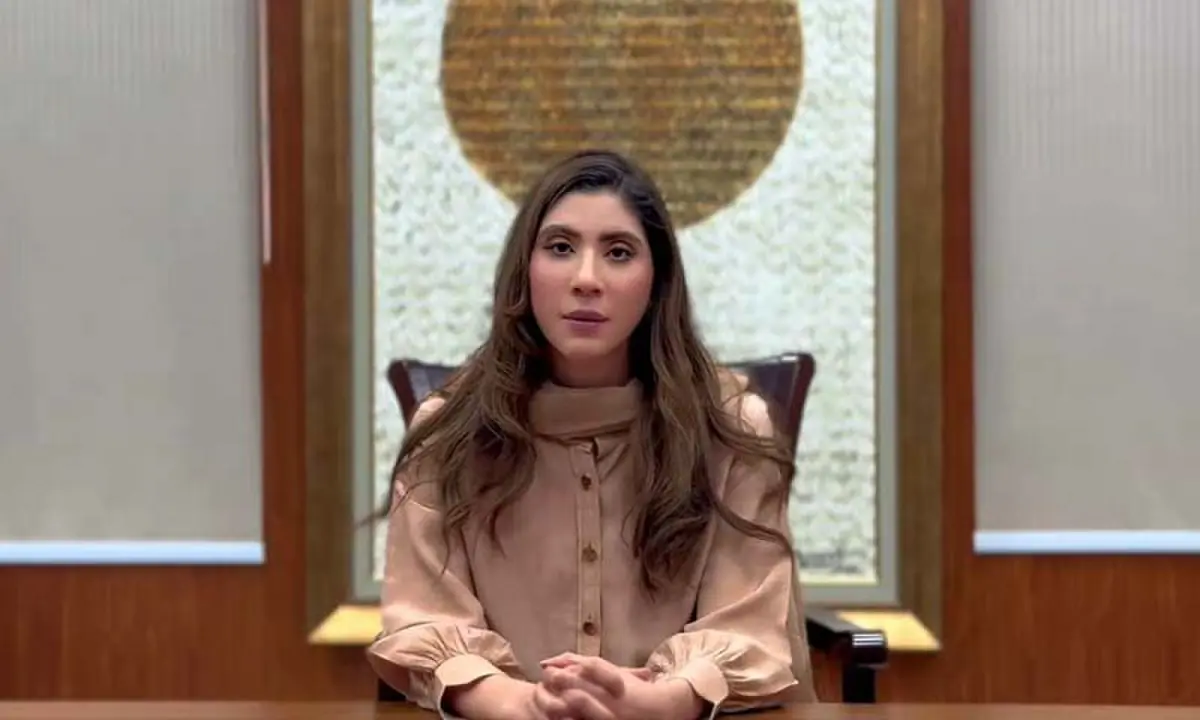
Punjab lawmaker Hina Parvez Butt on Thursday defended herself after a social media post by her regarding an alleged encounter by Punjab’s Crime Control Department prompted outrage and criticism.
On Wednesday, a suspect accused of running over a teenage boy who worked for him with his car in a private housing society in Multan, was killed in an alleged encounter in Bahawalpur. The killing of the teenager, Waseem, had sparked anger among the public, with a police officer saying the he had been “subjected to barbarity”.
“This is [Punjab Chief Minister] Maryam Nawaz sahiba’s government; justice is served immediately,” Butt subsequently wrote on X, sharing screengrabs of a TV report regarding the alleged encounter. She later deleted the post after it was widely panned for “celebrating extrajudicial killings”.
In a video statement posted on X on Thursday, Butt said: “I posted a tweet in which I said, ‘This is Maryam Nawaz Sharif sahiba’s government; justice is served immediately’. This was my personal opinion and creating propaganda on this was uncalled for.”
She said that the post was meant to express the “feelings of an ordinary citizen”. She asserted that she did not “blame” the chief minister, the Punjab government or talk about any institution. She said that criticising her for this was “uncalled for”.
She also took exception to remarks by Punjab Information Minister Azma Bokhari, saying that she “respectfully disagreed”.
On Wednesday night, Bokhari had appeared on Geo News programme ‘Aaj Shahzeb Khanzada Ke Saath’, where she was asked about Butt’s post.
The Punjab minister said that Butt had a habit of saying things without thinking them through, which caused problems for her and become a “source of embarrassment for the government”.
Referring to the remarks, Butt said: “None of my actions or words have ever harmed or embarrassed the Punjab chief minister or the government. If Azma Bokhari sahiba is feeling embarrassed, that is her personal choice.
“I don’t feel that anyone should be embarrassed [at] anything I tweeted on my social media account. Azma Bokhari is the [Punjab] government’s official spokesperson, so obviously she clarified the government’s policy, which is good. But, I think her remarks on me were unnecessary and uncalled for,” she said.
“So I would again, respectfully, disagree with her,” she said.
Referring to recent incidents involving minors and the youth in the country, she said that their parents should be called on shows and asked how those who subjected their offspring to “savagery” should be treated.
“I believe I have stated public sentiment and what is the people’s voice. Those coming forward to defend the culprits do not meet the families whose children’s bodies are recovered in a bad state. I meet such parents,” he said.
“So any person who has even a bit of humanity in their heart, what will they have felt when they heard about Waseem from Multan?” she asked.
The CCD, established last year, has been criticised by human rights advocates and civil society members for a high number of casualties.
The Human Rights Commission of Pakistan (HRCP) alleged earlier this year that the CCD has adopted a “deliberate policy of staged police encounters leading to extrajudicial killings”.
In response, the department termed the claims as unfounded and contrary to the department’s operational framework.
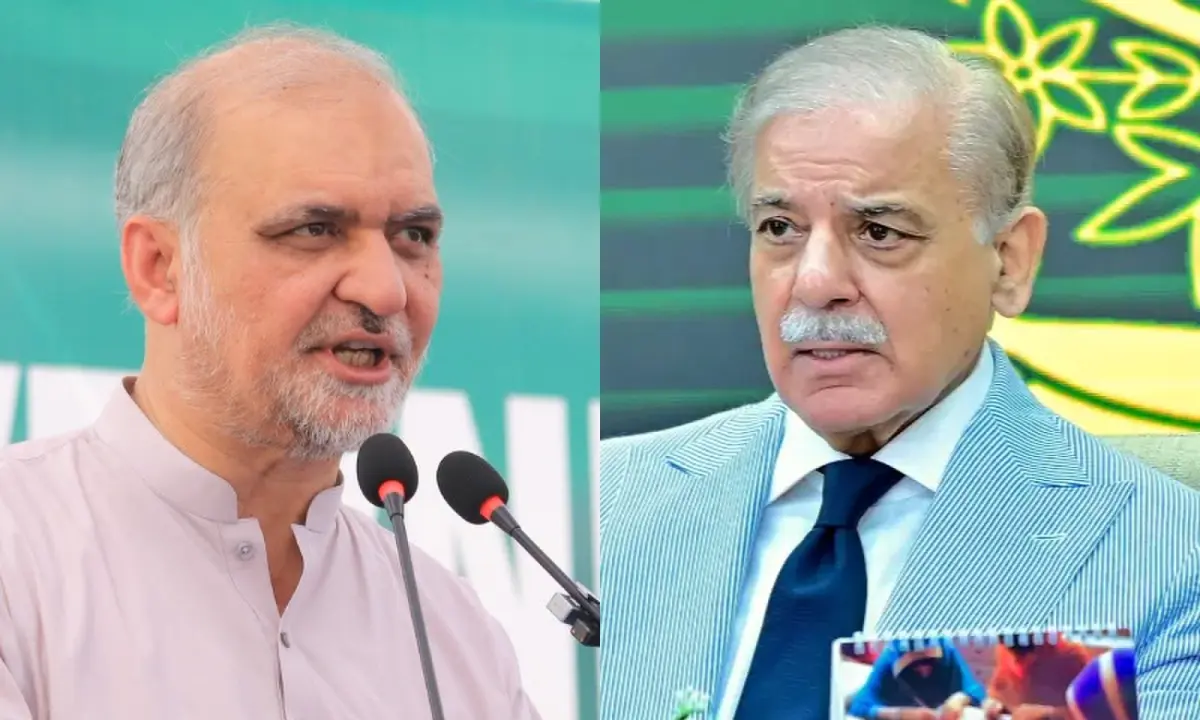
Jamaat-i-Islami (JI) has said it will hold talks with the government on Friday regarding its demand to abolish the petroleum levy and on further high-level contacts between them.
The committee-level talks were fixed following a telephonic conversation between JI Vice Emir Liaqat Baloch and Planning Minister Ahsan Iqbal, according to a press release issued by JI on Thursday.
The JI has been demanding for over two months that the Centre abolish the levies — Rs114 per litre on petrol and Rs100 per litre on diesel — as the total prices have skyrocketed due to conflicts in the Middle East since March.
Friday’s talks between the two sides’ negotiating committees will take place at Punjab House in Islamabad, where they will also work out a schedule for a proposed meeting between Prime Minister Shehbaz Sharif and JI Emir Hafiz Naeemur Rehman, the party said.
According to the statement, despite the planned talks, Baloch reiterated his party’s call for countrywide protests tomorrow (Friday).
“JI will hold peaceful protests at district headquarters across the country on Friday to demand the abolition of unjust petroleum levy,” Baloch was quoted as saying.
The party would continue its protests alongside negotiations with the government, he declared.
“The campaign is not about the party’s interests but aimed to secure public relief, reduce unbearable production costs and revive economic activity.”
The party vice chair also called a meeting of the JI negotiating committee in Islamabad ahead of the talks.
According to the JI statement, Iqbal, who heads the government’s negotiating committee, informed Baloch that the meeting had initially been planned for Tuesday or Wednesday but was postponed because of the government’s “urgent engagements”.
Baloch, in the press release, argued that reducing the burden of petroleum levies and payments to independent power producers (IPPs) was essential to easing pressure on households, agriculture, industry, trade and small businesses.
“Such measures could help revive economic activity and create employment opportunities,” he emphasised.
The JI leader claimed governments were often reluctant to give up unjust taxes and rarely acknowledged the role of protest movements in securing public relief.
“Previous relief measures were announced under pressure from public sit-ins and had been implemented through flawed methods that failed to produce a positive impact on the national economy,” Baloch said as per the press release.
He also called on the government and other institutions to acknowledge their mistakes and avoid constitutional measures that could deepen the political crisis.
The JI leader urged all stakeholders to engage in a national dialogue and agree on priorities to steer the country out of its political and economic difficulties.
“JI’s negotiating committee has already identified possible options and available fiscal space within the constraints imposed by the IMF programme and the national budget,” Baloch was quoted as saying.
“The government and the prime minister’s team must now demonstrate the political will to provide relief to the public.”
“If the government failed to meet the party’s demand, JI will proceed with its planned long march from Multan,” he warned, referring to the protest that it had launched towards Islamabad but postponed at PM Shehbaz’s request.
On Aug 16, the JI announced sit-ins in all the provincial capitals of Pakistan against the petroleum levy and had called for a nationwide strike on Sept 3. However, when the day arrived, the two sides agreed to form committees to recommend measures to reduce the levies.
On Sept 20, the party launched a protest march towards Islamabad, warning that if the government failed to abolish the petroleum levy, the protest could turn into one to oust the government.
On Sept 22, the JI emir said his party, whose convoy had reached Multan, was postponing its long march at the request of PM Shehbaz, who had assured the other side of a meeting to discuss the matters.
In a press release issued on Wednesday, the JI alleged that the government had made no further contact regarding the planned meeting between Rehman and PM Shehbaz.
The National Cyber Crime Investigation Agency (NCCIA) said on Thursday it has arrested a suspect in Faisalabad for allegedly defrauding citizens through a TikTok account advertising visas for Saudi Arabia.
A case has been registered against the suspect, who allegedly “used fabricated documents and transferred fraudulent proceeds into bank accounts in collaboration with other” co-suspects, the agency said on X.
NCCIA said it recovered two mobile phones, 10 fake SIMs, an Easypaisa account and an alleged merchant account during the operation.
“Strict legal action will be taken against those using social media platforms to rob citizens on the pretext of overseas jobs and visas,” NCCIA Director General Syed Ali Nasir Rizvi said in a statement issued by the agency’s spokesperson.
He also urged citizens not to transfer money without verifying visa offers on social media and to immediately report any suspicious account to NCCIA.
According to the agency’s statistics for 2026, financial fraud remains the most widely reported cybercrime, constituting 48 per cent of all received complaints.
On Oct 10, NCCIA arrested 281 suspects, including 21 foreign nationals and 20 women, during operations against seven illegal call centres allegedly involved in financial fraud, online harassment and honey-trapping in Lahore.
In September, NCCIA, along with the Federal Investigation Agency, arrested six suspects involved in cyber fraud and financial scams, illegal money exchange and human trafficking across Punjab.


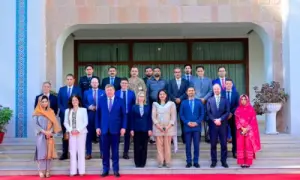
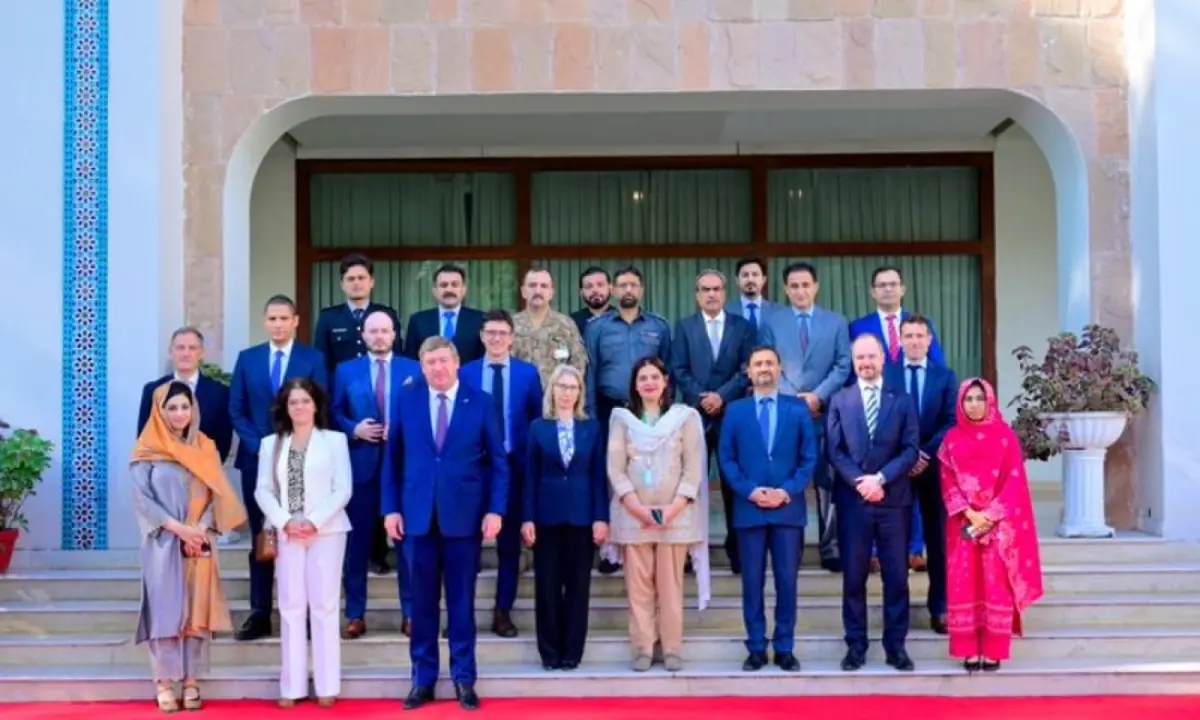
Pakistan and the European Union (EU) have agreed to strengthen cooperation at multilateral forums, including the United Nations, to advance a coherent counterterrorism approach, according to a statement issued by the Foreign Office (FO) on Thursday.
The agreement was reached during the 10th round of the Pakistan-EU Bilateral Counterterrorism Dialogue, held in Islamabad.
The Pakistani delegation was led by Dr Fareha Bugti, director general (counterterrorism), while the EU side was headed by Anna Strazska, the European External Action Service’s special envoy for counterterrorism.
During the meeting, the two sides exchanged views on recent regional and global developments affecting the terrorism threat landscape and unequivocally condemned terrorism in all its forms, reaffirming their commitment to combating the threat.
According to FO, the EU condemned recent terrorist attacks in Pakistan, expressed solidarity with the suffering of affected civilians and recognised the value of Pakistan’s efforts to combat terrorism.
“Acknowledging each other’s role in the ongoing global fight against terrorism, Pakistan and the EU expressed concern at the security implications of the situation in Afghanistan,” the statement added.
The two sides maintained that effective multilateralism remained essential to building lasting international consensus on terrorism.
The discussions also addressed the evolving nature of terrorist threats, including the exploitation of cyberspace and information and energy resources to advance their objectives, the statement said.
The FO said Pakistan and the EU exchanged best practices on preventing and countering violent extremism, terrorism financing and radicalisation in all forms, particularly the use of cyberspace by terrorists.
It added that the “two sides identified priority areas for cooperation and reaffirmed their commitment to regular, institutionalised engagement on counterterrorism”.
The FO said the next round of the dialogue would be held in Brussels at a mutually convenient date next year.
The dialogue comes as Pakistan’s counterterrorism challenge enters a new and more complex phase, with terrorist groups evolving their methods of financing and recruitment.
On Tuesday, an international seminar on Pakistan’s evolving counterterrorism landscape, organised by the Institute of Strategic Studies Islamabad, highlighted the changing methods of terrorist groups, including their financing and recruitment.
Deputy Prime Minister and Foreign Minister Ishaq Dar urged the Afghan authorities to take “concrete, verifiable and irreversible action” against the banned Tehreek-i-Taliban Pakistan (TTP) and other groups operating from Afghan soil.
Information Minister Attaullah Tarar, who also addressed the seminar, cited UN assessments indicating that more than 6,000 TTP fighters were present in Afghanistan, with the overall militant presence exceeding 20,000.
President Asif Ali Zardari departed for Germany on Thursday on a three-day visit to discuss bilateral ties as the two countries are set to mark the 75th anniversary of their diplomatic relations.
In a statement issued earlier, the Foreign Office (FO) said the president’s visit, scheduled for Oct 22-24, is “part of high-level exchanges between Pakistan and Germany”.
President Zardari “has departed from Lahore for Germany”, the President’s office said on social media on Thursday.
The FO statement highlighted that the visit “holds special significance in the context of the 75th anniversary of the establishment of diplomatic relations between the two countries being commemorated this year”.
It said the visit reflects the “deep commitment of both countries to further strengthening the partnership”.
During his visit, President Zardari will hold meetings with his German counterpart Frank-Walter Steinmeier, as well as senior leadership and business leaders, with a “particular focus оп economic and trade cooperation”, FO said.
Sindh Chief Minister Murad Ali Shah is also expected to accompany the president on his trip, with the matter being discussed in Murad’s meeting with German Consul General Thomas E. Schultze.
In September, Deputy Prime Minister and Foreign Minister Ishaq Dar met German Foreign Minister Johann Wadephul on the sidelines of the United Nations General Assembly.
During the meeting, Germany appreciated Pakistan’s mediation efforts in regional conflicts, especially in the Strait of Hormuz and Bab al-Mandab while the two sides also agreed to “get negotiations on peace for Ukraine going”, according to the German foreign office.
Meanwhile, in June, a German delegation announced plans to bring about 30 German companies to Pakistan and link local businesses to European markets.


Prime Minister Shehbaz Sharif on Thursday vowed that the federal government, which now runs Khyber Pakhtunkhwa under governor’s rule, would make every effort possible to “bring back” progress to the province.
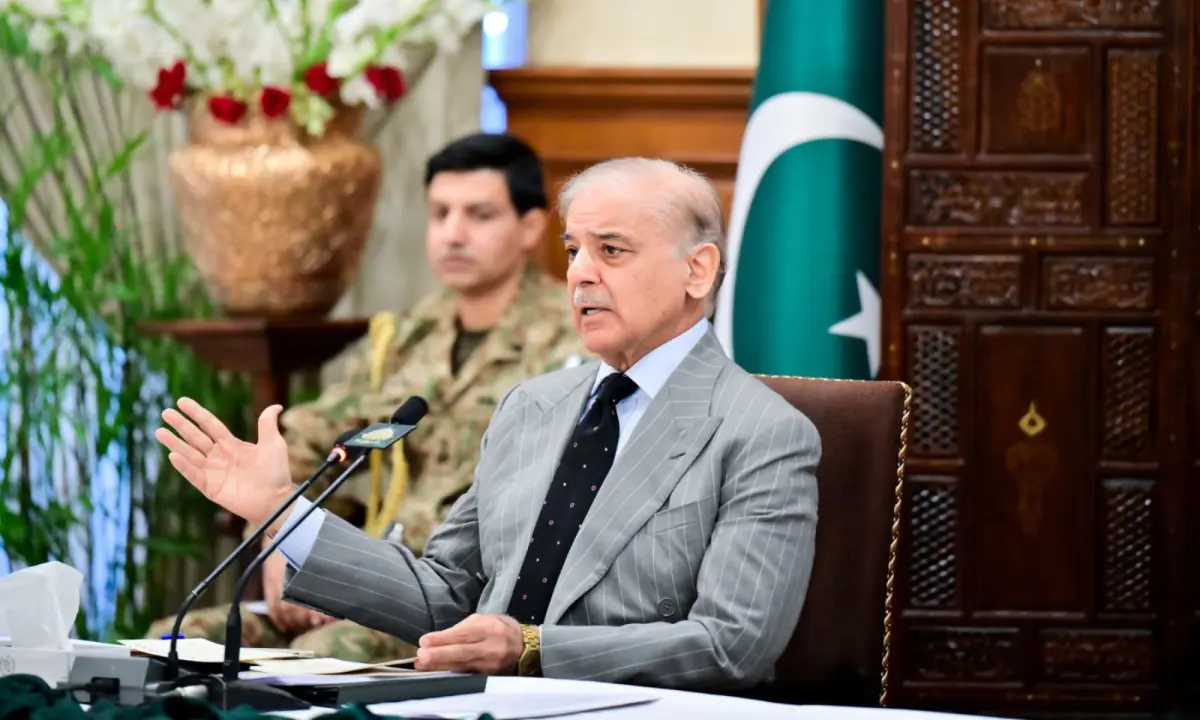
He made the remarks while chairing a meeting of the apex committee in Peshawar, where he arrived earlier in the day on his first visit to the province since the imposition of governor’s rule and the declaration of emergency on Oct 11.
The meeting, attended by Chief of Defence Forces and Chief of Army Staff Field Marshal Asim Munir and KP Governor Faisal Karim Kundi, reviewed KP’s overall security situation. Federal ministers and newly appointed provincial advisers were also present.
Addressing the committee, PM Shehbaz reiterated that emergency and governor’s rule had to be imposed “under extreme compulsion”.
“I promise that we will leave no stone unturned in bringing back the happiness and era of progress to this province, and in the practical realisation of the wishes, aspirations, and dreams of this province’s people that have been shattered due to the worst actions of recent years,” he said.
The prime minister affirmed that the Centre “will place all possible resources at your feet”.
He added that himself, the Advisory Council led by the governor, the president and the CDF “will ensure that this province, once again, not only matches the other provinces in the race for development, but I would be extremely happy if it moves even further ahead”.
The prime minister regretted that “terrorists were summoned back here” after peace had been established, “washing down all sacrifices down the drain”.
“There can be no greater enmity with the country than not honouring and respecting such sacrifices, not holding them in esteem,” he remarked, highlighting that young soldiers left their homes and families to defend their country.
The premier called for an “all-encompassing analysis as to why this happened”, adding that there was “no worse callousness, criminal negligence, and hostility towards the national interest than this”.
He said: “All issues of the people were pushed aside — whether it is education, healthcare, or protecting the lives and property of the people — and [having] matters with terrorists instead. I believe that no other example can be found of such hostility against the country, in terms of their attitudes, detachment, and callousness.”
PM Shehbaz asserted that 5,000 police vacancies were not filled, Safe City projects were yet to be completed, the capacity of the Counter-Terrorism Department (CTD) had not been enhanced significantly, and neither were special measures taken regarding police training.
He recalled that all provinces had agreed at the time of the 2010 National Finance Commission Award that KP, being the front-line region in combatting terrorism, needed ample resources.
“From 2010 to today, more than Rs800 billion in funds have either already been provided or are being provided under this,” he stressed.
“However, not only did it resurface, but the weapons needed to counter terrorism, the required capacity, and the trained officers needed were nowhere to be found.”
While saying he would not go into the details, the prime minister emphasised that he had assured the provincial governments of ex-chief ministers Ali Amin Gandapur and Sohail Afridi of the Centre’s full support in the fight against terrorism.
“But nothing was done regarding this,” he regretted, adding that the government could not remain a “silent spectator” when a “party was stooping to such enmity against the country” and the economy and society were being destroyed.
“Therefore, on this occasion we made this one last effort,” the premier said, referring to the province’s interim handover to the federal government under governor’s rule.
Highlighting the Centre’s efforts to stabilise the economy over the past two and a half years, PM Shehbaz remarked, “It wouldn’t have been possible [without] unprecedented partnership between political and military hierarchy.”
He said the federal government could not remain a silent spectator when “terrorists were roaming around dancing in all areas of KP, and were ruling over some areas in the evening, and collecting extortion” at a time when the stabilisation of Pakistan’s economy was being acknowledged globally.
The prime minister recalled the breakdown of the Oct 3 talks between the Centre and reiterated that his government was “compelled to make this decision” of imposing governor’s rule.
PM Shehbaz remarked that the province was “shattered with wounds due to the circumstances created in the past several years”.
He highlighted the poor law and order situation over the past six years, recalling that security forces and law enforcement agencies had made sacrifices to establish peace in KP.
The premier said there was corruption of Rs100bn in the clean drinking water of the Cities Improvement Project and Rs37bn in the “infamous looting” in the case of the Kohistan District Accounts Office.
He said that “80,000 people were martyred and the [economy] suffered a loss of several hundred billion dollars. Only then, in 2018, was peace completely restored in this country”.
Describing the province as “very beautiful”, the premier expressed his hope that the government “work hard day and night and speedily make it progress towards development and prosperity”.
“This is the province that is the first extremely strong wall of the homeland,” he noted.
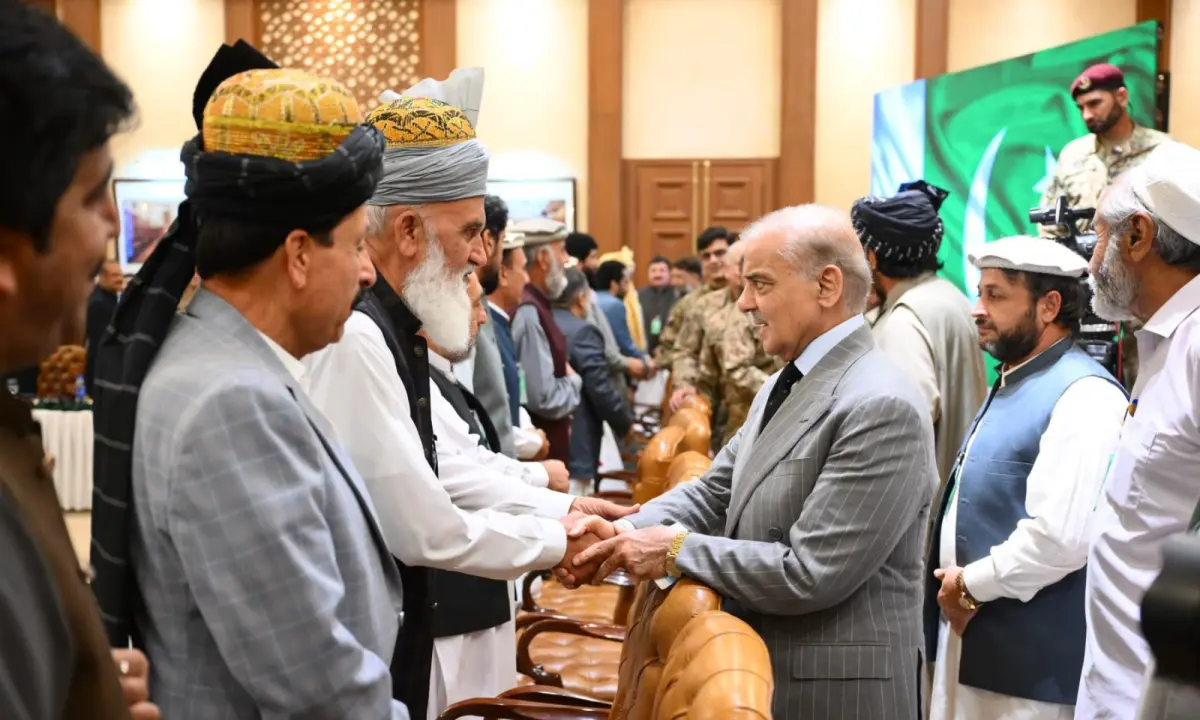
PM Shehbaz later also attended a meeting of the Area Representative and Development Council (ARDC) constituted for 12 districts of KP, which face serious security challenges. CDF Munir was also present on the occasion.
The council covers Dera Ismail Khan, Tank, Lakki Marwat, Bannu, Bajaur, Mohmand, Khyber, Kurram, Orakzai, North Waziristan, South Waziristan Upper and South Waziristan Lower. It includes 48 elders and prominent personalities from those districts to ensure local representation.
Addressing the ARDC, the prime minister announced that the federal government would provide KP with Rs160bn for development projects.
Furthermore, to address the wheat shortage in the province, he said the Centre would provide KP “as much wheat as is needed” from the storages of Pakistan Agricultural Storage and Services Corporation (Passco).
“However, there should be no hoarding. And whatever price the Centre provides wheat at, the common man should get wheat at that very price,” the premier emphasised.
He went on to assure the ARDC that the federal government will provide “whatever assistance” in operations and resources is needed to fight terrorism. He also said directives have been issued to bolster the CTD and complete Safe City projects.
PM Shehbaz also asserted that any difficulties in the completion of the federal government’s projects in KP will be resolved, adding that the governor-led administration will address problems in provincial projects.
The prime minister appreciated the tribal elders for always supporting Pakistan unequivocally and said the ARDC now had an “immense responsibility”.
Noting the remarks of ARDC Chairman Shaukatullah Khan, PM Shehbaz said: “He stated that development work is zero, corruption is 100 per cent, and terrorism is at its peak. I completely agree with him.”
The premier referred to weaknesses in the police’s performance, stating that arrests in cases of theft and robbery were not made.
Mentioning examples of corruption, such as the Kohistan scandal, he said: “You will feel great pain and sorrow over how the province’s resources were looted. God willing, this will be fully controlled, and every single penny of your development and prosperity will be delivered to your doorstep.”
Separately, in a bid to improve the police’s capabilities amid the current law and order situation in the province, Kundi said he has approved the relaxation of the police’s vehicle procurement ban to ensure personnel have the necessary resources.
In a post on X, Kundi said that in line with the prevailing security landscape in the province, he approved the relaxation of the ban.
“Our [KP police] force stands on the front lines to protect the lives and security of our people,” he wrote.
“In the prevailing law and order situation, ensuring that our officers have the vehicles and resources they need is essential to an effective response to security challenges.”
Kundi added that the restrictions would be loosened “within the approved scope and against funds already allocated in the Police Procurement Plan”.
“This will strengthen operational capacity without placing any additional burden on the provincial exchequer,” he noted.
“Supporting our police is not just a responsibility; it is an investment in the safety of our people and the peace of KP.”
In July this year, the KP government had imposed a ban on the procurement of vehicles except for ambulances; earth-moving machinery; fire trucks; tractors; trucks; buses; passenger vans; prisoner vans; motorcycles; water tankers; rescue and recovery vehicles and boats; and mobile laboratory vehicles, according to an order issued by the KP finance department.
“In case of [an] essential requirement, the chief minister, Khyber Pakhtunkhwa, may relax the ban on [a] case-to-case basis,” the order, seen by Dawn, read.
In his address to the apex committee, the KP governor termed establishing peace and stability in KP a “collective priority”, and stressed that it was in the interests of the entire country.
Referring to the federal government’s decision to impose emergency and governor’s rule in KP, Kundi said that the peaceful transition showed that the people of the province wanted peace and stability.
“I want to pay tribute to my people who showed restraint despite the turmoil,” he said, asserting there had been no untoward incident in the region following the measures.
On Oct 14, three days after emergency was imposed, a protest demonstration by PTI workers in Khyber’s Bara tehsil turned violent as protesters clashed with police. Injuries to party workers and cops were reported in the incident.
Speaking at the meeting, Kundi also paid tribute to those who sacrificed their lives in the war against terrorism, including personnel of the police, army, Frontier Corps, and Federal Constabulary.
“These sacrifices demand a more effective strategy to combat terrorism,” he underscored.
The governor reiterated that the foremost priority of his KP Advisory Council was to restore peace and eliminate terrorism.
Kundi termed the development of the merged districts a “special priority”.
“The people of these regions have paid a heavy price during this fight against terrorism. Now, they deserve better education, health, and economic opportunities,” he declared.
“The federal government’s cooperation in establishing peace and stability in the province is very significant,” the PPP leader highlighted, saying he was keen to play his role in this collective endeavour.
The governor maintained that the people of KP would not have to choose between peace and development. “This is our collective responsibility to provide people with both.”
Kundi declared that the KP Advisory Council would keep playing its role in integrating these merged areas in the circle of national development.
“The public’s trust is the only metric of measuring our success in the war on terror,” he asserted, while reaffirming that the whole network of terrorism would be annihilated, and the facilitators and financiers of terrorists would also be targeted.
“I seek constant support and supervision by the federal government,” he asked, expressing the hope that the Centre would continue its cooperation.
The Centre had imposed emergency and governor’s rule in KP on Oct 11, citing the PTI-led provincial government’s “deliberate disengagement” from the fight against terrorism. The decisions were also endorsed by the Parliament last week amid protests by the opposition.
Governor Kundi, along with Interior Minister Mohsin Naqvi, had chaired a meeting of the provincial apex committee a day after governor’s rule was imposed.
In the meeting, the governor — who is now in charge of running the province — assured Naqvi he would enforce all policies of the federal government and work together with the security forces for peace and prosperity of the province.
Kundi asserted that under the new set-up, tackling terrorism would be the priority.
Later that day, Kundi, addressing a press conference, called for greater coordination between the Centre and the province, stressing that policies on counterterrorism will “come from Islamabad [..] not Kabul,” in an apparent jibe at the PTI-led KP government, which has been accused of maintaining a “nexus” with terrorist groups by federal ministers.
The Centre’s move to impose governor’s rule and emergency in KP also followed a mobilisation drive and protest march by the PTI and in opposition at the Centre, to demand the release of its jailed founder, Imran Khan.
Intense negotiations between the two sides a week before the imposition of governor’s rule had failed to yield any results, with counterterrorism policy being one of the main reasons behind the breakdown of their talks.
The PTI said it was being left out of security decisions concerning KP, which the Centre denied. It also called for reviewing the counterterrorism policy, while the latter criticised the KP government’s efforts to combat terrorism in the province and objected to its stance on dialogue with the Afghan Taliban.
Soon after, the Centre also authorised the deployment of Pakistan Army troops and assets in aid of civil power in KP.
Federal ministers have also alleged that the PTI-led government in KP had a “nexus” with terrorist groups, stating that the province’s security situation necessitated the imposition of emergency there.
Additional input by Irfan Raza