Login

The Founders Warned Against Secret Arrests. ICE Is Testing That Principle.
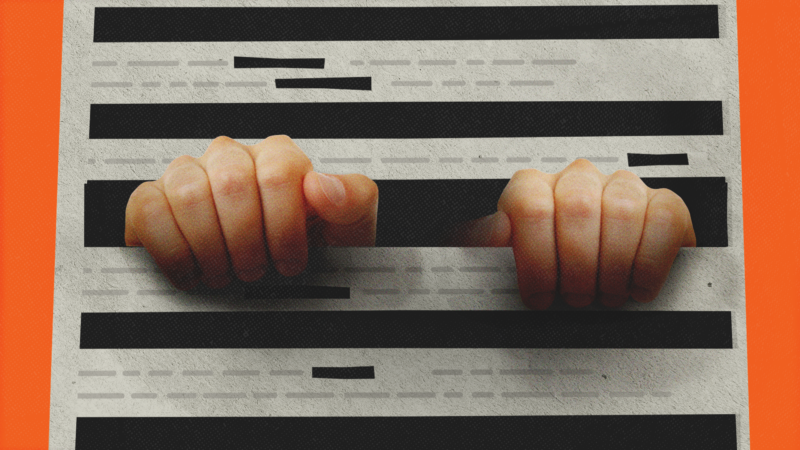
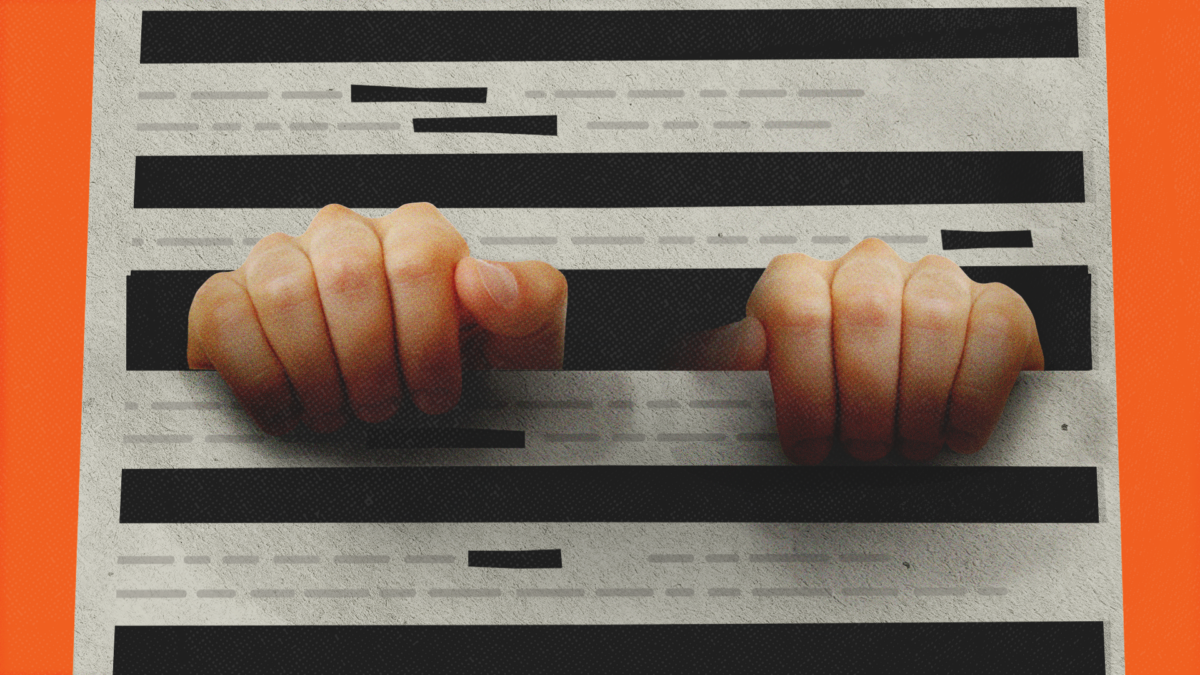
Since the beginning of President Donald Trump's immigration crackdown in January 2025, the Department of Homeland Security (DHS) claims more than 1.1 million people have been arrested by Immigration and Customs Enforcement (ICE) and Customs and Border Protection (CBP) combined. But so far, the names of most arrestees have been kept secret. This lack of public disclosure threatens Americans' ability to hold the government accountable.
While ICE will disclose some details about detainees, the agency's refusal to provide the names, dates of birth, and locations of detainees violates the Freedom of Information Act (FOIA), according to a federal lawsuit filed by The Marshall Project on Tuesday. In denying FOIA requests for this information, ICE claims the "privacy interests of the individuals in the records…requested outweigh any minimal public interest disclosure of the information," and revealing such information would "increase the risk of misuse, unwanted contact, harassment, stigma, or other privacy harms," according to the complaint.
A curious position given the DHS' own "worst of the worst" website discloses all kinds of information, including names and photos, while boasting about the detention of select immigration detainees with criminal records.
It's true that publicly disclosing someone's arrest, particularly a criminal arrest, may damage their reputation. But it's a necessary tradeoff to ensure a functioning democracy. Disapproval of anonymized arrests dates back to the Magna Carta. This pro-liberty stance was adopted early in America's Founding. In Federalist No. 84, Alexander Hamilton denounced the "practice of arbitrary imprisonments" as "the favorite and most formidable instruments of tyranny." He went on to cite Sir William Blackstone, an English jurist who greatly influenced America's Founders, quoting: "The confinement of the person, by secretly hurrying him to jail, where his sufferings are unknown or forgotten, is a less public, a less striking, and therefore a more dangerous engine of arbitrary government."
Throughout much of American history, law enforcement agencies have disclosed the identities of those arrested through police blotters and other means in the name of transparency and government accountability. Today, 27 states have codified this practice, according to an amicus brief filed by the American Civil Liberties Union (ACLU) in a similar but separate case involving ICE's refusal to release the names of those arrested during a 10-day immigration enforcement operation in Chicago. And even when statutes don't plainly state arrest logs qualify as public records, courts have consistently held they do, the ACLU argues. Indeed, the Supreme Court has already ruled that the constitutional right to privacy does not extend to the publication of official acts, such as arrests.
"We are seeking transparency and access to information that have existed within the criminal justice system for centuries," said The Marshall Project's editor in chief, Jennifer Peter. Concealing the names of detainees "makes it far more difficult for their loved ones and attorneys to help them—and for organizations like The Marshall Project to shine a light on what's truly happening within immigration camps," Peter continued.
Trump immigration crackdown has been a source of ongoing debate since its inception. Leading up to the 2026 midterm elections, a recent New York Times poll found that 50 percent of Americans trust the Democratic Party to do a better job of handling immigration, compared to 46 percent trusting Republicans more.
Opponents of Trump's approach to immigration have routinely cited concerns over the use of force, wrongful arrests, detentions, and deportations, including those of U.S. citizens, and the mistreatment of detainees. Proponents of limited government and financial accountability have also raised concerns over the opaque yet explosive expansion of federal agencies, including over $200 billion in funding for FY 2027 and the 100 percent increase in both CBP and ICE funding, reaching nearly 44,000 agents combined, all in the name of immigration enforcement.
Since the Founding, Americans have been rightly skeptical of government overreach and the potential to abuse arrest powers. In the era of Trump's immigration crackdown, this skepticism is even more warranted, and accountability is even more needed.
The post The Founders Warned Against Secret Arrests. ICE Is Testing That Principle. appeared first on Reason Magazine.