❌

Reading view

Federal judge kicked off 'botch job' anti-DEI case after stunning appeals court rebuke

A federal judge was removed from a challenge to Mississippi's anti-DEI law after the Fifth Circuit blasted his handling of the case as a "botch job," pointing to orders riddled with factual errors, an apparent AI-hallucinated case citation and faulty applications of Supreme Court precedent.

In an opinion penned by Judge Jerry Smith, a Reagan appointee, the appeals court vacated Reagan-appointed Judge Henry Wingate's preliminary injunction blocking the law and ordered the case reassigned to a different judge — an "extraordinary" and "rarely invoked" move.

"This district judge carelessly exercised his Article III power by issuing sloppy edicts based on falsehoods and fabrications," Smith wrote, adding that "the district court—or perhaps, being charitable, its AI agent—ignored and manipulated governing law, apparently to satisfy a policy agenda."

The controversy surrounding Wingate’s handling of the case began with serious errors in a temporary restraining order he issued in July after a group of teachers, parents and students sued, arguing that a Mississippi state law restricting DEI-related practices in public schools and universities violated the First and Fourteenth Amendments.

TRUMP ADMINISTRATION PROPOSES STRIPPING TAX-EXEMPT STATUS FROM SCHOOLS USING RACE-BASED PROGRAMS

Wingate replaced the order just two days later after Mississippi officials flagged major factual errors, including 11 individuals and organizations identified as plaintiffs who were never a part of the case, two officials incorrectly named as defendants and unsupported claims that three schools had already canceled DEI programs because of the law.

The original TRO also cited purported declarations from four people who did not appear anywhere in the record and "may not even exist," according to the Fifth Circuit. It also attributed language to the bill that does not appear in the law, including references to "race or sex stereotyping," "race or sex scapegoating," "critical race theory" and "institutional bias."

"We are grateful—and, indeed, lucky—that the defendants provided a copy of the original TRO as an exhibit in their July 28 motion, ECF 58-1, given that Judge Wingate kept it from public view," Smith wrote.

Even the corrected TRO contained errors, including a citation to a nonexistent case that the Fifth Circuit called "an apparent AI hallucination." Wingate cited the purported case while discussing the relationship between temporary restraining orders and preliminary injunctions, leading Smith to conclude that the fabricated citation was "arguably part of the shoddy reasoning of the preliminary injunction, too."

Wingate later acknowledged that a law clerk had used artificial intelligence to assist in drafting the TRO, following accusations of AI use surfacing publicly. Wingate said the errors were "clerical" and did not affect the court’s "core legal reasoning or the ultimate judgment on the merits."

The Fifth Circuit pushed back on that explanation, questioning "how so many mistaken facts could not at least marginally ‘affect’ ‘core legal reasoning’ or support for the judgment on the merits."

The Fifth Circuit found major flaws in Wingate’s legal reasoning, accusing the judge of misinterpreting Supreme Court rulings on free speech challenges, exceeding the limits of court injunctions and mishandling legal protections for government and public-employee speech.

The panel zeroed in on the Supreme Court’s 2024 decision in Moody v. NetChoice, which sets a two-step test for courts considering First Amendment challenges seeking to strike down a law entirely.

DOJ MOVES TO BOOT FEDERAL JUDGES FROM IMMIGRATION CASES OVER NYT INTERVIEW

Under the Moody analysis, a court can strike down an entire law on First Amendment grounds only if its unconstitutional applications substantially outweigh its constitutional ones. The appeals court took issue with Wingate describing the Moody framework as "supposedly" required.

"That Judge Wingate twice refers to the Moody framework as ‘supposedly’ required calls into question whether he even tried in good faith to follow the law," Smith wrote.

"The district court’s laxity in observing the binding authority of the Supreme Court is yet another reason to doom the preliminary injunction," Smith continued.

The appeals court also faulted Wingate for his reasoning in granting preliminary relief, pointing to his ruling that the court "should pause when faced with an unsettled area with such dire possible consequences."

"That gets the entire law of injunctive relief completely backwards," Smith wrote.

"A preliminary injunction cannot stand just because there is a possibility of success on the merits," Smith continued.

The appeals court also accused Wingate of misreading the Supreme Court's 2025 decision in Trump v. CASA, which limits judges from issuing orders that go beyond what is needed to protect the people who filed the lawsuit.

Wingate cited CASA in concluding that injunctions like the one before him "should be all-or-nothing renditions."

SIGN UP TO GET THE POLITICS NEWSLETTER

"That is almost exactly the opposite of what CASA says," Smith wrote. "The quoted portion was the Supreme Court’s cautioning against overbroad relief and urging judges to tailor relief to what is absolutely necessary and nothing more."

CLICK HERE TO DOWNLOAD THE FOX NEWS APP

The Fifth Circuit sent the case back to the Southern District of Mississippi, where a new judge will consider it.
  •  

Jackson again publicly breaks with Supreme Court as justices side with GOP in last-minute voter ID fight

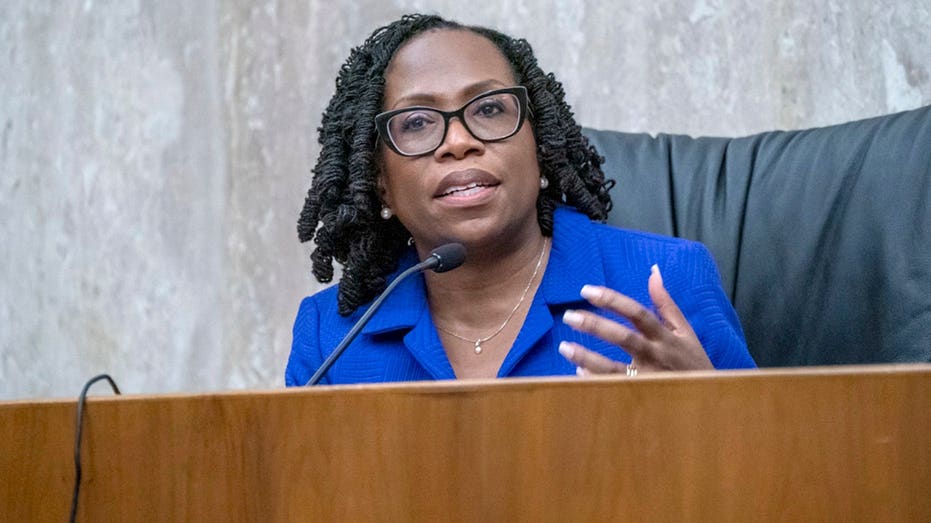
Supreme Court Justice Ketanji Brown Jackson was the lone public dissenter in a Thursday decision allowing New Hampshire to block the use of student ID cards in the upcoming midterm elections.

Other justices on the court cited the longstanding precedent "that lower federal courts should ordinarily not alter the election rules on the eve of an election," and said that lower courts failed to argue that the specific case in New Hampshire warranted an exception to the tradition. Jackson, however, argued the proximity to an election should not get in the way of properly applying the law.

"I respectfully dissent because — even, and perhaps especially, when an election is looming — I would not disturb a clearly justifiable federal-court order issued to ensure that the public receives accurate information about a State’s electoral processes," she wrote.

FEDERAL JUDGE BLOCKS INDIANA BAN ON STUDENT ID FOR VOTING

The underlying dispute stems from a law signed in April that went into effect in June, striking student ID cards from the list of forms of identification that election officials can accept when an individual requests a ballot. A voting rights group sued New Hampshire on the grounds that the law illegally discriminated against young voters by making it more difficult for them to vote.

New Hampshire Secretary of State David Scanlan then issued guidance saying that student IDs could not be used to establish voter identity, even as supporting evidence under the state's alternative verification procedures. A district judge blocked that portion of the guidance, arguing that it went beyond the scope of the law itself, which only removed student IDs from the list of expressly accepted forms of identification.

Among the supporters of the guidance was the Republican National Committee.

DEMS HAND GOP FRESH MIDTERM WEAPON BY OPPOSING WIDELY USED VOTER ID

While Jackson was the lone public dissenter, it is possible that other justices dissented as well, but opted not to be named on the court order. During her roughly four years on the Supreme Court, Jackson has broken from the rest of her colleagues in areas such as campaign finance, immigration and congressional map litigation.

In 2023, she was the lone dissenter in an 8-1 ruling allowing a concrete company to sue striking union workers. She also stood alone in a May 2026 decision involving federal prisoners seeking to challenge their convictions through compassionate release.

TRUMP SCORES SUPREME COURT WIN IN ELECTION INTEGRITY FIGHT AS STATES GAIN NEW VOTER ROLL TOOL

New Hampshire is holding a handful of close races on Election Day, putting some weight behind the court’s decision. Fox News’ power rankings rate the state’s Senate race as leans Democratic, meaning that liberals have a slight advantage in a race that could decide control of Congress. The state’s governor’s race, meanwhile, is rated as likely going to the GOP.

College students typically favor the Democratic Party, though it is unclear how many voters will be affected by the court ruling, as students who previously relied on their student IDs will now need another accepted form of identification.

CLICK HERE TO DOWNLOAD THE FOX NEWS APP

Some Democrats, however, believe allowing voters to use student IDs would be a good thing. Texas Democratic Senate nominee James Talarico, for instance, has pushed for such a thing in his state.

  •  

Supreme Court blocks use of student IDs as voter identification in New Hampshire

The U.S. Supreme Court on Thursday allowed New Hampshire officials to reject student IDs as a valid form of identification when voters cast their ballots in next month's midterm elections.

A lower court judge previously found that state officials had improperly gone further than a new law restricting the use of student IDs to obtain a ballot, ruling that officials still had to consider student IDs alongside other evidence when voters lacked other means of verifying their identity.

But the Supreme Court took issue with the judge intervening this close to the elections.

ARIZONA VOTER LAW FIGHT REACHES SCOTUS AS ELECTION GROUPS WARN ‘ABSURD’ CONSEQUENCE COULD ENSUE

The high court has said orders handed down too close to an election can cause voter confusion, an idea known as the Purcell Principle. The court cited the recent legal back-and-forth over Missouri’s redistricting maps.

"Here, the District Court did not point to anything that would justify deviating from that principle," the majority wrote in its opinion.

Justice Ketanji Brown Jackson dissented, saying the rule did not apply since the lower court judge was helping ensure the public received accurate information.

JACKSON RIPS INTO SUPREME COURT COLLEAGUES' 'SERIOUS LEGAL ERROR' ON TRUMP MAIL-IN VOTING ORDER

"When a federal court determines that material misrepresentations are being made about a State’s election rules, an injunction to prohibit that conduct does not contribute to public confusion, it prevents that very problem," Jackson wrote. "I would not disturb a clearly justifiable federal-court order issued to ensure that the public receives accurate information about a State’s electoral processes," she wrote.

This comes after Gov. Kelly Ayotte signed House Bill 323 into law in April, removing student IDs from the list of identification expressly considered valid for obtaining a ballot. The law took effect June 2. After the law went into effect, New Hampshire Secretary of State David Scanlan issued guidance to election officials about the change, and multiple trainings were held.

"New Hampshire has a responsibility to protect the integrity of its elections and ensure that election laws are applied as written," New Hampshire Attorney General John Formella, a Republican, said in a statement.

CLICK HERE TO DOWNLOAD THE FOX NEWS APP

"The Supreme Court’s decision is an important victory for our efforts to defend those laws and prevent last-minute court orders from creating uncertainty for voters and election officials. We will continue to defend New Hampshire’s election laws and the safeguards they provide," he continued.

The Supreme Court's decision was not a final ruling on the merits of the case, and the underlying litigation over the law remains ongoing.

  •  

DOJ moves to boot two federal judges from immigration cases over remarks to media: 'Extraordinarily imprudent'

Two Minnesota federal judges who took the unusual step of publicly criticizing the Trump administration’s immigration crackdown to the New York Times are now fighting the administration’s efforts to disqualify them from cases involving immigration enforcement.

One of those judges, Patrick Schiltz, is overseeing the Justice Department’s effort to strip U. S. citizenship from Salah Osman Ahmed, a Somali-born man who pleaded guilty in 2009 to providing material support to terrorists after joining al- Shabaab. The other, John Tunheim, is presiding over the prosecution of a South African national accused of falsely claiming U. S. citizenship and illegally voting in the 2024 election. The Justice Department filed separate motions asking Schiltz and Tunheim to recuse themselves, arguing that their participation in the New York Times report criticizing President Donald Trump's Operation Metro Surge has raised questions about whether they can fairly preside over the cases.

"Impartiality is imperative to ensuring public trust in our Nation’s judiciary," the Justice Department said in a statement posted to X this week. "Judge Schiltz’s and Judge Tunheim’s on-the-record participation in a recent highly partisan New York Times Article, along with Judge Schiltz’s subsequent public comments, unquestionably calls into doubt whether they can be impartial in these cases."

OBAMA-APPOINTED JUDGE AT CENTER OF TRUMP'S ANTI-WEAPONIZATION FUND CASE HIT WITH MISCONDUCT CLAIM

The Justice Department's formal recusal demand follows reporting by Fox News Digital last month detailing unusual behind-the-scenes coordination among Minnesota's federal bench as judges confronted a massive influx of immigration cases stemming from the administration's enforcement operation. The report came after Schiltz and Tunheim were among seven Minnesota federal judges who spoke with the Times in September about Operation Metro Surge. Schiltz sat for a roughly 90- minute interview during which he described the administration's handling of the operation as having created a "grave threat to the rule of law," while Tunheim suggested to the Times that agents carrying out the administration's immigration crackdown were not primarily apprehending dangerous criminals.

DOJ had already raised the prospect that judges who publicly discussed the administration's immigration cases might need to step aside when the Times report was released in September. Last month, DOJ filed a judicial misconduct complaint against Schiltz, Tunheim and other Minnesota judges who participated in the Times report, accusing them of violating judicial ethics rules and asking the Eighth Circuit to investigate. Attorney General Todd Blanche said their conduct had "undermined public confidence in an impartial judiciary in Minnesota."

"It is remarkable that sitting federal judges are giving on-the-record interviews attacking this Administration's policies rather than ruling from the bench," a Justice Department spokesperson told Fox News Digital in September. "Judges who have made public comments on pending or related matters should consider whether recusal is warranted going forward."

'WORST OF THE WORST' JUDGES ARE SABOTAGING TRUMP'S IMMIGRATION AGENDA, TOP DHS OFFICIAL SAYS

The Times report in question revealed that Schiltz, Tunheim and the other Minnesota judges handling the flood of Operation Metro Surge cases regularly met, communicated through running email threads and used an informal spreadsheet created by court clerks to identify judges to consult about recurring legal questions. Chief Judge Eric Tostrud previously told Fox News Digital that the judges nevertheless independently decided every case assigned to them.

"The bottom line is that each of us made an independent decision with respect to the merits of each and every petition we were assigned," Tostrud said at the time.

The Justice Department, however, has accused Schiltz and the other judges of "publicly" taking sides in the ongoing battle over Trump's deportation agenda.

"A judge who has publicly taken sides on the political issue of immigration enforcement cannot then preside over a case concerning one of the Justice Department’s key immigration initiatives: pursuing the largest denaturalization effort in Department history to restore trust and integrity in U.S. citizenship," Associate Attorney General Stanley Woodward wrote.

Schiltz declined to comment on the Justice Department's new effort to disqualify him when reached by Fox News Digital this week. But when Fox News Digital asked him about the possibility of recusal in September, Schiltz argued there was no basis for him to step aside — and pointed to the fact that DOJ had not asked him to do so.

TRUMP ADMINISTRATION'S IMMIGRATION PUSH FUELS ICE'S BIGGEST ARREST MONTH IN AGENCY HISTORY

"I have seen suggestions from the Administration that I might have to recuse in immigration cases, but no one has yet identified any basis for my recusal, which is presumably why the Justice Department has not asked me to recuse," Schiltz said at the time.

"Neither in the New York Times article nor anywhere else have I commented on the merits of a particular case," he continued. "Instead, I have spoken in defense of the rule of law, a component of which is compliance with court orders. That is not a cause for recusal."

Tunheim did not respond to Fox News Digital's request for comment.

Charles "Cully" Stimson, a senior legal fellow at the Heritage Foundation who previously served as a federal prosecutor and military judge, told Fox News Digital that judges ordinarily avoid publicly commenting on matters that could intersect with cases before them.

"These judges did something extraordinarily imprudent, and that is to talk to any newspaper, much less the New York Times," Stimson said. "That was a big no-no."

STATE'S LARGEST MOSQUE LEADER’S DEPORTATION FIGHT TAKES DRAMATIC TURN AS TRUMP ADMIN SCORES MAJOR WIN

Asked what he would do if the New York Times interviews were the only facts at issue, Stimson said he would step aside.

"If we were to just go off of the New York Times interview ... I would recuse myself," Stimson said, noting the recusal would only be from the particular case at issue as opposed to all future cases adjudicating the same principles.

Stimson cautioned, however, that recusal motions put judges in the unusual position of effectively judging their own impartiality and said it would be inappropriate to predict how either motion should ultimately be resolved without the complete record.

SIGN UP TO GET THE POLITICS NEWSLETTER

If either judge denies DOJ's request, Stimson said the government could seek review from the Eighth Circuit, where a three-judge panel would determine whether the government has met the legal standard for recusal.

CLICK HERE TO DOWNLOAD THE FOX NEWS APP

DOJ declined to comment further Thursday beyond its public statement. A DOJ spokesperson also did not answer Fox News Digital's question about whether the department would appeal if Schiltz or Tunheim denies the recusal motions.

  •  
❌