❌

Reading view

Ilhan Omar calls Trump ‘creep’ as president revives ‘fake name,’ marriage allegations

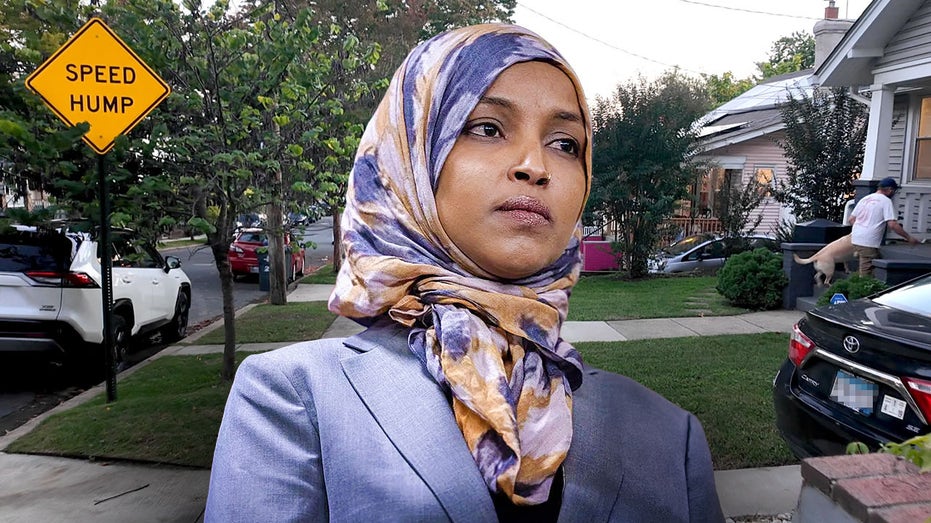
Rep. Ilhan Omar, D-Minn., lashed out at President Donald Trump on Friday after he accused her of using a fake name and revived longstanding allegations surrounding her former marriage.

"The pedophile protection party's president is laundering right-wing conspiracy theories through the most corrupt DOJ in American history," Omar wrote on X.

"Whenever the news turns bad, this creep reaches for one name: mine," she continued. "So let's make it crystal clear. My name has always been Ilhan Omar."

ILHAN OMAR HIT WITH EXPULSION THREAT AS GOP LAWMAKER VOWS TO BOOT HER FROM CONGRESS OVER DOJ PROBE

Omar then turned her fire on Vice President JD Vance, adding, "Maybe you should focus on what your VP's real name is."

The verbal pushback came as Trump called on Omar to resign from Congress Thursday after Fox News Digital reported that Omar's birth name is Ilhan Nur Said Elmi, according to two people familiar with the ongoing federal investigation, including a law enforcement source.

A Justice Department court filing this week, related to a search warrant for her Washington-area home, identified the Minnesota Democrat as "Congresswoman Ilhan Nur Said Elmi, a/k/a Ilhan Abdullahi Omar." 

Omar's office disputed Fox News Digital's reporting, insisting, "Ilhan Omar is her real name." Omar has not been charged with a crime.

ILHAN OMAR'S TURBULENT WEEK EXPLAINED: THE DUELING PROBES THAT THREW THE SOMALI-BORN PROGRESSIVE INTO CHAOS

"It was just revealed that Ilhan Omar's name is not Ilhan Omar," Trump wrote on Truth Social Thursday, accusing the congresswoman of using a "fake name" and calling for her immediate resignation. Trump also revived longstanding allegations that Omar's former husband, Ahmed Nur Said Elmi, is her brother — claims Omar has repeatedly denied. He pointed out that the name used in the DOJ filings matched that of the man she allegedly married and is related to.

When asked during an MS NOW interview this week whether there was any familial relationship with Elmi, Omar responded, "Not to my knowledge." Her spokesperson later said the answer was sarcastic and reiterated that Omar "repeatedly and unequivocally" denied the allegation.

CLICK HERE TO DOWNLOAD THE FOX NEWS APP

Federal investigators are probing whether Omar or her father made false statements on immigration paperwork. 

Agents searched Omar's Washington, D.C., residence earlier this month and seized her cellphone and passport, while her sister has also been questioned as part of the investigation, Fox News Digital previously reported.

  •  
  •  

Reform UK Donor’s Former Business Links to Iranian Foundation Revealed in French Court Documents

French arbitration records show that businessman Sasan Ghandehari, a financial supporter of Nigel Farage, invested in a telecommunications venture partly owned by an Iranian foundation subsequently sanctioned by Washington. His representatives deny any wrongdoing.

A French arbitration judgment has revealed that a British businessman who has become a financial supporter of Nigel Farage previously invested in an Iranian telecommunications venture partly owned by a religious foundation subsequently sanctioned by the United States.

Hossein Ghandehari, known as Sasan, was linked through his family’s HP Trust to a project to develop fibre-optic infrastructure in Iran. Documents examined in an investigation published on 22 October show that Ori Group, ultimately owned by the trust, held 49 per cent of Omran Razavi International, with the remaining 51 per cent held by Astan Quds Razavi (AQR).

The disclosures have attracted attention because Ghandehari has pledged substantial financial support for Reform UK. They do not, however, establish that he breached sanctions or that money linked to the Iranian venture was used to fund British politics.

Iranian Venture and Sanctions

The telecommunications project originated in a contract awarded by Iran’s state-owned Telecommunication Infrastructure Company in 2012. Ori Group became a shareholder in the joint venture in 2015, although Ghandehari’s lawyers say the agreement for its stake was signed in December 2014.

AQR, based in Mashhad, administers extensive religious and commercial holdings. On 13 January 2021, the US Treasury imposed sanctions on AQR, describing it as an organisation controlled by Iran’s supreme leader and alleging that its assets benefited senior Iranian officials.

That designation came several years after the venture’s collapse in 2016. Sanctions imposed in 2021 cannot, by themselves, demonstrate wrongdoing in transactions conducted before the designation.

According to the reported arbitration material, AQR took control of the joint venture in 2016. Ghandehari’s representatives maintain that the project was intended to expand internet access and encourage political reform, and that the arrangements received approval from authorities in France and the United States.

His lawyers say the venture ended in asset seizures and persecution by Iranian authorities. They reject suggestions that Ghandehari supported the Iranian leadership, and say AQR had been a necessary local partner for infrastructure work in Iran.

Connections to Reform UK

The disclosures have renewed scrutiny of Ghandehari’s relationship with Farage. In January, Ghandehari paid for accreditation for the Reform UK leader and a member of his staff at the World Economic Forum in Davos.

The House of Commons register of interests records the cost as £50,482.16. This was a declared benefit associated with an overseas visit, not a £50,000 cash donation to Reform UK.

Ghandehari has said he intends to move his tax residence from Switzerland to Britain and make regular substantial contributions to the party. He describes HP Trust as having a portfolio valued at approximately $10 billion, although the trust’s financial position has not been independently established through public accounts.

Farage has repeatedly criticised Iran’s government and supported American military action against Tehran. His public position has brought additional attention to his financial supporter’s historical dealings with an Iranian state-linked institution, although there is no evidence that Farage participated in those arrangements.

Another connection concerns John Richard Simpson, whose company Interior Architecture Landscape donated £200,000 to Reform UK in 2025. Simpson later acquired Orico General Trading, a Dubai-based business previously owned by HP Trust and involved in supplying equipment for the Iranian project.

Simpson says he took over Orico to wind down its operations after the Iranian venture failed. Interior Architecture Landscape has said the Ghandehari family is a client but had no role in its political donations, which it maintains were funded from legitimate British business.

Questions Over Political Funding

The overlapping commercial relationships have brought renewed scrutiny of Reform UK’s financing. They do not establish that Simpson’s company’s donations originated with Ghandehari, AQR or any Iranian state institution.

The Electoral Commission’s rules permit contributions from eligible UK-registered companies carrying on business in Britain, while placing responsibility on political parties to verify their funding sources. The legality of any individual donation depends on its circumstances and the applicable requirements.

EU Today has previously examined Reform UK’s decision to accept cryptocurrency donations and the questions surrounding identification of the original sources of political funding.

The latest disclosures concern a separate issue: historical commercial dealings in Iran, the ownership of connected companies and their subsequent relationships with British political donors. The arbitration material provides a documented chronology, but does not establish improper financing of Reform UK or foreign interference in British elections.

  •  

Eritrea detains Yemeni fishermen for forced labour

Driven by painful memories of his detention in an Eritrean prison, Yemeni fisherman Tareq al-Nahari instinctively raised his left hand to protect his head from a barrage of bullets fired by an Eritrean naval boat.The gunfire severed his ring and middle fingers, while one bullet pierced his skull.

Yet he survived, thanks to a medical miracle. However, the projectile that struck his temporal lobe erased his past, identity, and even his future, leaving him unable to form new memories, a condition known as anterograde amnesia.

Despite this, al-Nahari, who is in his forties, remains alive among his family, having escaped death. This is a better outcome than that suffered by his peers, including two fellow fishermen who were aboard the same boat and died in the same incident. One of them was his maternal cousin.

Yemeni fishermen face repeated acts of violence and successive crimes at the hands of Eritrean naval personnel, who intercept them and take them to a network of prisons and detention centres resembling Soviet Gulags. 

Eritrean detention centres are no different. Abducted Yemenis are forced to perform arduous labour, including cutting roads through mountains, paving them and constructing military and civilian facilities, without pay or even adequate meals.

This is confirmed by the reports received by Majed Abdo, the sheikh of fishermen in Yemen's Hodeidah governorate. He holds his fellow countrymen responsible for what happens because they enter the territorial waters of a neighbouring sovereign state in their boats.

Amjad al-Omaisi, director-general of al-Khawkhah, a district in the Hodeidah governorate that faces Eritrea on Yemen's western coast, rejects this view. Former Eritrean Supreme Court judge Abdullah Khayyar shares al-Omaisi's assessment.

Life in the Gulag

Tens of thousands of people earn their living from fishing in villages and settlements along Yemen's western coast.

Salem Alyan, a member of the Fisheries Cooperative Union, which organises and oversees the sector, estimates that there are 100,000 traditional fishermen supporting around one million people. However, the sea has become an immediate source of danger amid Eritrean attacks, he told our Arabic-language sister publication, Al-Araby Al-Jadeed.

This is borne out by the account of Issam Mohammed al-Nahari, who is accompanying his brother Tareq, now suffering from memory loss, on a medical trip to Sanaa. He is one of over 20 fishermen we interviewed during this investigation. 

Issam said that when the boat incident occurred on Sunday, 25 January 2026, 50 fishermen were aboard the wooden vessel with his brother.

They were taken to the port of Massawa in southern Eritrea, despite insisting that they had been attacked in Yemeni territorial waters.

They were imprisoned for periods ranging from two months to one year. Issam said his brother arrived at Hodeidah hospital alongside the bodies of the two fishermen killed in the incident.

Tareq remained in intensive care for two months before being discharged with memory loss. He could no longer recognise any of his family members apart from his four-year-old daughter, Aya.

Issam said similar incidents frequently occurred to his fellow fishermen, who faced crimes, abuses, and enslavement in detention centres in Asmara without those responsible being held accountable.

"We were tortured to coerce us into forced labour and deprived of food, except for one meal of poor-quality lentils," he said.

He recalled another experience in the summer of 2024, when he was arbitrarily detained by the Eritrean navy alongside his father, Mohammed al-Nahari, and others.

"Throughout the month, I was subjected to severe beatings in front of my father. In the end, I gave in and agreed to work breaking stones from a nearby mountain in the city of Assab, in southeastern Eritrea, so they could be transported and used to pave the roads," he said mournfully as he sat beside his brother Tareq.

He said he spent daylight hours working alongside 20 fellow fishermen under close surveillance by Eritrean naval soldiers armed with rifles and batons.

Medical reports obtained by Al-Araby Al-Jadeed indicate that Tareq al-Nahari is suffering from a concussion and has undergone two head surgeries.

His treatment has cost more than seven million Yemeni rials ($12,500), and he can no longer afford further medical expenses.

Some of his fellow fishermen were also detained in 2023 and forced into hard labour, breaking stones and building a school in Assab under the supervision of naval soldiers.

The soldiers repeatedly beat them whenever their performance declined because of the scorching heat.

They were fed only flour bran, normally used as animal feed, in addition to a meal of lentils.

As a result, Yemeni fishermen flee immediately whenever they sense an Eritrean naval boat approaching. This has led to repeated cases of drowning and injuries at sea.

The consequences of division and war

On 18 May 2023, Mwatana for Human Rights, a Yemeni non-governmental organisation, announced that Eritrean naval forces had detained 69 Yemeni fishermen in three incidents between 2019 and 2022. Minors were among those detained and subjected to forced labour.

Meanwhile, fishermen whose testimonies were documented by this investigation, said 184 of their colleagues had been detained between the beginning of 2023 and January 2026. Of these, 95 remain in captivity.

However, sources agree that the actual number is much higher and that no official body has documented the total number of fishermen detained over the past years.

This is due to the political and security crises that have gripped Yemen for more than a decade, with serious consequences for traditional fishing.

While politicians have been preoccupied with the war, attacks by the Eritrean navy have escalated amid the difficult economic conditions facing fishermen and their families.

Fishermen either lose their lives or have their equipment seized by Eritrean naval forces before being taken to detention centres in Marsa Fatima, Assab, Massawa, Dahlak and Tiro, as well as Terma Island in eastern Eritrea.

Accounts also indicate that some detainees are transferred to Lesser Assab and forced to work for Eritrean project contractors.

They work throughout the day and return to detention centres only in the evening. They are not repatriated to Yemen until the project is completed.

Their return takes place in stages, beginning with the injured, the sick, the elderly and younger detainees unable to endure the hardships of the work.

Among them is Abdul Salam Bishara, a fisherman from al-Khawkhah in the southern Hodeidah governorate. He suffered a slipped disc after being forced to break stones on a mountain near Assab in 2017.

He received no medical assistance before being deported to Yemen.

"They left me only because I was no longer able to work," he said.

He added that when Eritrean authorities decide to release detainees, another crime reportedly follows.

Large numbers of released fishermen are crammed into unseaworthy boats and sent towards the Yemeni coast without any consideration for their safety.

Between 50 and 60 fishermen are placed on a boat that would normally accommodate no more than 30 people.

Al-Omaisi, the director-general of the al-Khawkhah district, described this as one of the crimes against humanity committed by the Eritrean armed forces.

Speaking to Al-Araby Al-Jadeed, he said Yemeni human rights organisations should defend the rights of these victims and file lawsuits against the Eritrean regime in international courts.

Violations of international law

Mohammed Amin, a lawyer at the Court of Appeal in Hodeidah, said the arbitrary detention, torture, enforced disappearance and coercion of fishermen into working under threat constituted serious violations of international law.

These acts could amount to enslavement and crimes against humanity when committed on a widespread or systematic basis.

To secure justice for the victims, Amin told Al-Araby Al-Jadeed that each case should be documented separately through the testimonies of survivors and witnesses, medical reports, photographs and documents, while identifying the date and place of detention and the authorities, individuals or officials responsible.

"After gathering the evidence, human rights organisations and victims' lawyers can submit case files to the relevant international bodies or explore the possibility of prosecution before national or international courts with jurisdiction. This would help ensure investigations, accountability, compensation and reparations for the victims," he added.

This view is shared by Colonel Abdul Ghani Abu Halfah, who has been tasked by the Sanaa authorities with following up on the treatment of injured people in government hospitals, both military and civilian.

He cited the case of Tareq al-Nahari, who was transferred to the military hospital in Sanaa. Abu Halfah noted that he is facing extremely difficult financial circumstances after becoming unable to work.

Between August and September, during this two-month-long investigation, 26 fishermen, most of them from al-Khawkhah, managed to return to Yemen. Port Director-General Ghali Qashr, the head of the Red Sea Fisheries Authority, Wael Abdul Wadoud, and al-Khawkhah Director-General Amjad al-Omaisi received them.

During their meeting with the officials, the returning fishermen confirmed that they had been in Yemeni territorial waters aboard two traditional wooden boats known as jalbah vessels when Eritrean naval boats attacked them and took them at gunpoint to Eritrean prisons.

Held in a prison in Assab, they endured torture and starvation before being forced into hard labor. 

The Eritrean forces had seized a tonne of fish they had caught before their arrest, in addition to looting their fishing equipment.

They also took one of the boats, removed its engine and replaced it with an old, dilapidated one. Upon their return, the fishermen were forced to sail the vessel back to Hodeidah's shores, said al-Omaisi.

Seizing fishermen's livelihoods

Yemeni fisherman Musad Yusuf Zakhm, from Al-Khawkhah, said he was detained in June 2023 for two months alongside nine other fishermen in a prison in Assab.

During their detention, they were forced to cut and pave a road with stones near the city port after their boats had been intercepted and confiscated. They were also tortured and transferred to Lesser Assab, where they spent about 15 days before being released and deported to the city of Mokha.

He added that he had previously been detained in another incident, when he was abducted to Dahlak Island in mid-2022 and held for two months alongside 15 fishermen.

Their fishing equipment and supplies, including nets, refrigerators, the boat engine and its contents, were confiscated. The value of the seized property amounted to $10,000.

In another case, a fisherman estimated his losses at 18 million rials ($33,000), according to documentation examined by Mwatana for Human Rights.

For fishermen, confiscation means more than simply losing property: their boat represents their livelihoods and the means to provide for their families.

A timid official response

According to an official memorandum (No. 355) sent by Hussein Hamed al-Attas, chairman of the General Authority for Red Sea Fisheries, to Hodeidah Governor Abdullah Abdu Ahmed Ateifi on 21 February 2026, at least 95 Yemeni fishermen remain detained in Eritrean prisons.

Al-Omaisi, the director-general of al-Khawkhah, confirmed that violations against fishermen "take place almost daily, without any genuine official action to compensate the victims or prosecute the Eritrean authorities in international courts".

However, al-Omaisi emphasised that these crimes have no time limit for prosecution.

According to lawyer Amin, since Yemeni fishermen conduct their work under the ruling issued by the International Court of Arbitration in The Hague in 1998-1999, which demarcated the maritime boundary between the two countries, the abductions, torture, and forced labour they face constitute violations requiring accountability.

He explained that "what is happening to these fishermen violates Eritrean law, as they are subjected to abuses, have everything they own confiscated and are forced to work. It also violates international human rights law, which prohibits subjecting anyone to cruel, inhuman or degrading treatment, and to arbitrary arrest or detention without a legal charge or a fair trial."

If Yemeni fishermen commit an offence, the appropriate measures under Eritrean law would be to confiscate any fish they are carrying and return them to their country, according to former Eritrean Supreme Court Judge Abdullah Khayyar.

He pointed out that Eritrea has no clear laws and that, even where laws exist, they are not enforced.

"Military rule and its consequences dominate the functioning of state institutions. Everything that happens is dealt with [...] through administrative and military procedures that fall outside the law," he told Al-Araby Al-Jadeed.

In light of all this, the internationally recognised Yemeni government has limited its response to calling on Eritrea to release the fishermen held in its custody.

However, these appeals do not always receive a response, according to a source at the Ministry of Agriculture, Irrigation and Fisheries in Aden, who declined to be named because they were not authorised to speak to the media.

The source cited a request made by the government in June 2020 for the release of detained fishermen and confiscated equipment.19 fishermen were released, while another 100 remained in detention.

Their suffering continues, with no solution in sight. Yet, as Issam al-Nahari said, fishermen cannot abandon their only source of livelihood.

"Death while searching for food to feed your children is better than dying of hunger."

Disclaimer: This investigation is republished from our Arabic sister website, Al-Araby Al-Jadeed, and mirrors the source's original editorial guidelines and reporting policies.

The original investigation was published in Arabic on 28 September 2026.

Translated by Afrah Almatwari and edited by The New Arab investigative desk.

Video subtitles were translated by Rose Chacko.

Comments and questions should be addressed to Head of Investigations Mohamed Azzam: mohamed.azzam@alaraby.co.uk.

 

  •  

JONATHAN TURLEY: Chris Hayes had Ilhan Omar in the hot seat — and failed to ask these 10 questions

"I am trying to figure out the way to do this." Those words from MS NOW's Chris Hayes say all you need to know (and likely all you will get) from his interview on Wednesday with Rep. Ilhan Omar of Minnesota. There is a litany of questions the liberal host never asked of Omar. Those questions have only increased over the years, leading to the current criminal investigation into immigration fraud. At points, Hayes sounded more like a supplicant than a journalist given his discomfort with asking pressing questions.

ILHAN OMAR IS NOT THE MINNESOTA CONGRESSWOMAN’S 'REAL NAME': SOURCES

The interview had the journalistic nutritional content of a Slurpee that would give any liberal a sugar high and any non-liberal a stomachache.

Many of us have stressed that these allegations are unproven, and that little evidence has been confirmed to support the underlying criminal charges. However, I have also written that Omar has been remarkably unforthcoming in rebutting the allegations or providing her own exculpatory information. Instead, she has spent years denouncing the allegations as racist or Islamophobic without addressing the specific claims.

HOMAN CONFIRMS 'CRIMINAL' INVESTIGATION INVOLVING ILHAN OMAR, SAYS HE KNOWS 'THINGS ARE GOING ON’

While the Biden administration began aspects of these investigations years ago, Omar again sat for another prolonged interview without being pressed (beyond cursory questions) about long-standing allegations.

Hayes exhaustively explored Omar's feelings and reactions to the recent search while largely avoiding any detailed questions about the very allegations that a Washington, D.C., judge found sufficient to show probable cause of criminal conduct.

ILHAN OMAR SAYS SHE LIVES 'PAYCHECK TO PAYCHECK' AS DOJ PROBES FINANCIAL DISCLOSURES

It may be useful to consider 10 questions not asked of Ilhan Omar. Asking these questions is not to assume that the underlying claims are true, but to establish the facts from Omar's perspective.

Immigration fraud

It took 12 minutes for Hayes to mention immigration fraud, and he did so by asking her, "How seriously do you take it?" He then prefaced the fraud question with a laugh, saying, "I am trying to figure out the way to do this that doesn't sound like I'm insane."

Hayes then laughed further with Omar about questions of marriage fraud and said, "There are right-wing people who believe" these allegations, after Omar agreed that such questions are "insane." 

Hayes made a series of statements about how "there is not even a kernel of truth" to these claims before inviting affirmations from Omar. He then made a general reference to "moving on to other allegations" without any details.

ILHAN OMAR ISSUES STUNNING ADMISSION WHEN CONFRONTED WITH BROTHER MARRIAGE RUMORS

The questions not asked:

  1. It has been alleged that you are not using your birth name and the government is referring to you as "Ilhan Nur Said Elmi, a/k/a Ilhan Abdullahi Omar." What was your name at birth, and have you ever legally changed your name? Are you using a name that is different from your birth name or your birth certificate?
  2. You stated in the interview that the government did not remove DNA evidence. Various legal experts have said for years that such samples could put the allegation of marrying a relative to rest. Have you ever offered a simple DNA swab and, if not, why?
  3. Have you had any contact with your former husband, Ahmed Nur Said Elmi, directly or indirectly, since becoming a member of Congress?
  4. Your father was reportedly a colonel in a brutal Somali regime. Is that true, and did your father fully report his Somali background when applying for citizenship? Also, have you ever confirmed the information your father submitted, and if not, why not?
  5. You stated that the issue in this case is whether you, as a 12-year-old child, were a mastermind of a fraud. However, that is not the allegation, correct? The allegation is that you obtained citizenship through your father's naturalization after he represented that you were 17 years old and did not have to file for your own citizenship. Was that accurate, or were you, in fact, 18 years old at the time?
  6. Your staff reportedly tried to change your birthdate after your election to Congress on federal sites. Did you order this effort, or were you aware of it?
  7. Do you have conflicting documents showing that you were, in fact, 18 years old when you became a citizen?
  8. Reports indicate that this investigation changed after your sister sent you messages and that she is now cooperating with federal investigators. Are you aware of what those messages were, and what did she say in them?

ILHAN OMAR RAID SPARKS OMINOUS PREDICTION FROM WATCHDOG: 'THEY PROBABLY GOT THE GOODS'

Financial fraud

In the interview, when Hayes moved on to Omar's previous financial disclosure that she and her husband were worth $30 million before dropping to a little over $100,000, he again failed to address allegations that the drop in income was due to fraud. Instead, he asked about her "lifestyle," then moved on to ask what it is like to be one of the least wealthy members of Congress.

Questions not asked:

  1. There are reports that the decline in your income was due to a drop in the value of your husband's winery because of fraudulent practices, including selling empty barrels to investors under the guise of "wine to be aged." Was that the reason for the adjustment, and when were you first informed of these fraud allegations?
  2. Your sister Sahra Noor reportedly listed a Minnesota home address when creating her Grit Partners Consulting business, which received millions in government contracts. That same address was used as a residence by figures convicted in the $250 million Feeding Our Future fraud scheme. Were you or your sister involved in or aware of the fraudulent activities of Feeding Our Future? Have you ever intervened or taken any action in connection with your sister's contracts or those of Feeding Our Future?

If Omar had answered them, any of these questions would have produced a scoop, but that was clearly not the purpose of this interview. Instead, Hayes spent more time asking Omar how she felt about former President Barack Obama defending her than asking about the specific fraud allegations she faces.

CLICK HERE FOR MORE FOX NEWS OPINION

Never has so much been expressed with so little said.

Hayes culminated the interview by asking, "Do you ever just want to tap out?" and Omar congratulated him on reaching the "real question."

CLICK HERE TO DOWNLOAD THE FOX NEWS APP

Unfortunately, MS NOW tapped out of the interview long before that question was asked.

CLICK HERE TO READ MORE FROM JONATHAN TURLEY

  •  

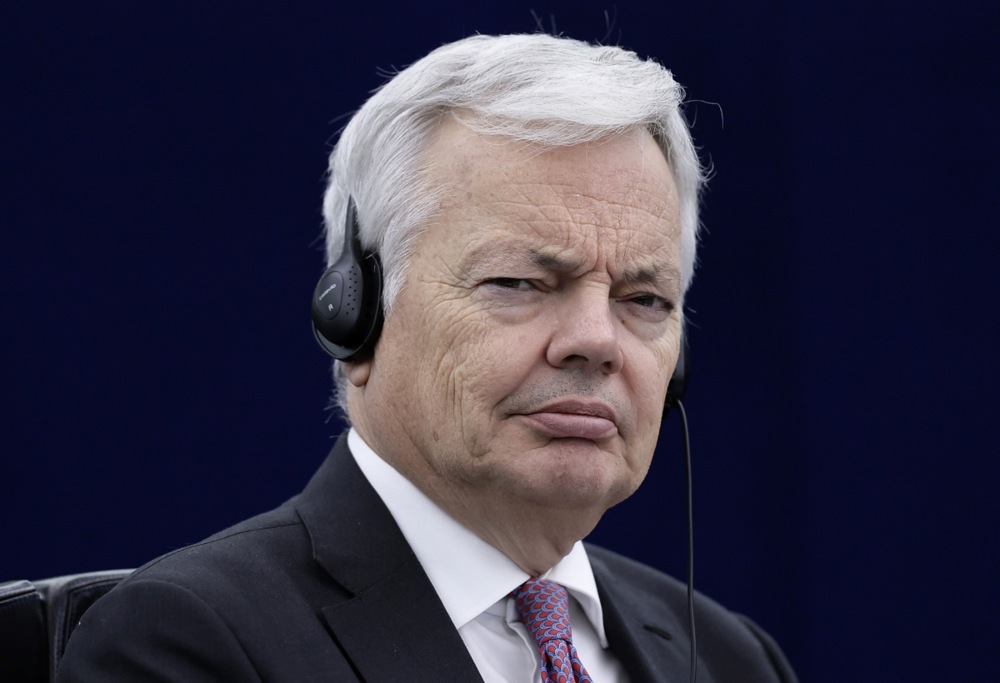
[EXCLUSIVE] Leaked WhatsApps between ex-EU commissioner Reynders and senior Belgian spy reveal attempts to bury allegations of his possible Russia ties

“The ‘job’ … has been mostly accomplished,” said a senior official in Belgium’s spy service, Hugues Brulin, in a WhatsApp message to the Belgian then EU commissioner, Didier Reynders.

“Bravo for the work you did,” said Reynders.

It was back in 2022, and, at least on the surface, they were chatting about a staff reshuffle inside Belgium’s intelligence service, La Sûreté de l’Etat/Veiligheid van de Staat (VSSE) — which was already a peculiar thing for Brulin to be doing on WhatsApp with an EU official.

But their messages, seen by EUobserver and published in full below, were now also evidence in a Belgian police investigation into Reynders on money-laundering charges, which painted them in the light of a potentially criminal conspiracy.

They reconfirmed that Belgian authorities were looking into wider allegations of Reynders’ possible collusion with Russia.

Brulin’s real “job” had been to stop the VSSE from probing Reynders and his potential Russia links, according to five former and current Belgian intelligence officers who spoke to EUobserver.

And Brulin also WhatsApp-ed Reynders on how to “counterattack” a Russia whistleblower.

The 68-year-old liberal politician from Liège, in French-speaking southern Belgium, had had a glittering career before his sudden fall from grace in December 2024, when Belgian police raided his properties, and before he was subsequently charged in 2025 with having laundered some €1m via the ING Bank, using lottery tickets and cash deposits.

Reynders had been EU justice commissioner from 2019 until 30 November 2024 (just four days prior to the police raid) and Belgium’s foreign and defence minister from 2011 to 2019.

And Belgium had vetted and cleared him to read “top secret” national, EU, and Nato documents.

Meanwhile, Europe was scandalised to learn, on 10 October, that Germany’s former spy chief had been arrested for selling secrets.

But if a figure with Reynders’ CV was also found guilty of corruption and foreign collusion, it would be yet another security fiasco for Western allies.

This article continues, but the full version is available only to EUobserver.com subscribers. Visit account.euobserver.com/membership

  •  
❌